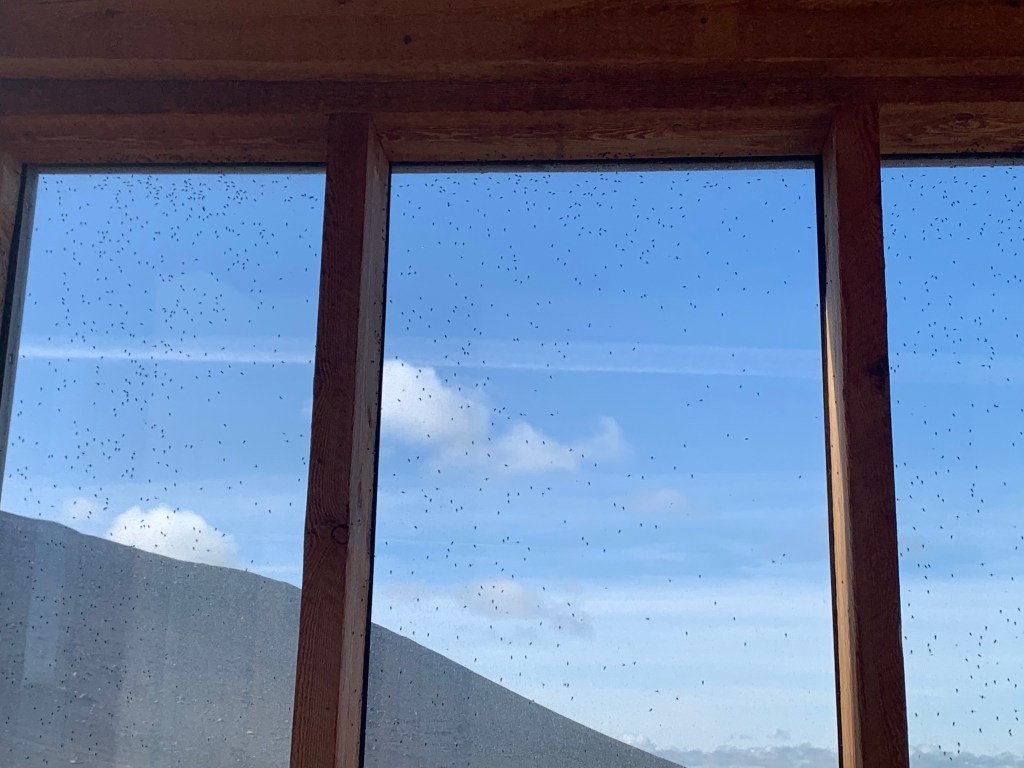
So we know that the Mývatn region was known for gnats, but the quantity with which these little monsters swarm around one’s head is simply incomprehensible. You will end up with them in your eyes, ears, nose, and most certainly will consume a large number. I believe this is what it’s like to be a baleen whale – consuming tiny creatures in obscene quantities.
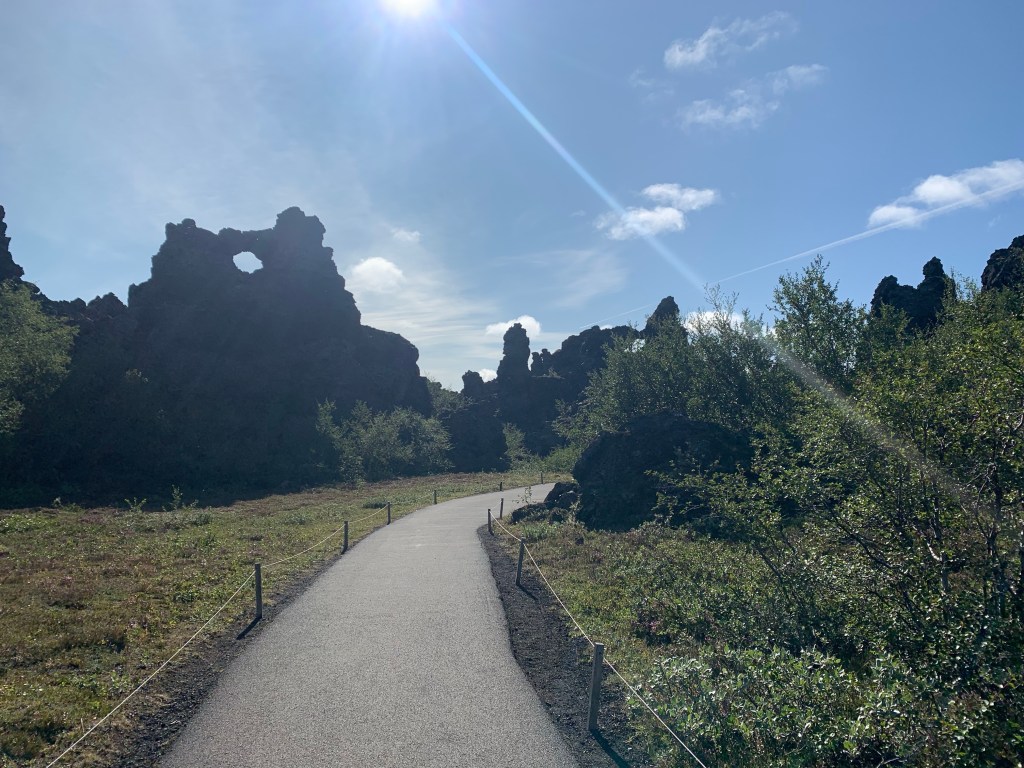
We started the day with a walk along Dimmuburga. This is a ridge formed by the pushing of techtonic plates. Baby mountains, effectively. The place is the birthplace of countless legends about trolls – that the rocks are trolls who freeze in the sunlight and come to life at night. I’m sure it has other interesting characteristics, but we struggled to appreciate it and made it about a kilometer before we had to turn back because of the gnats.
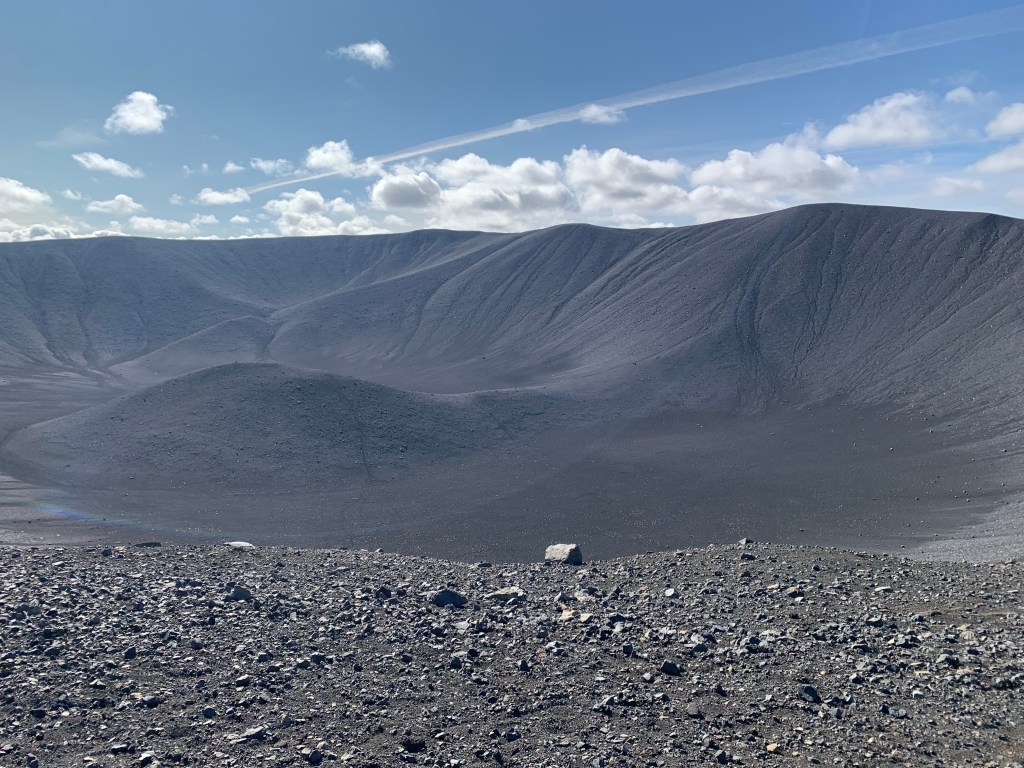
We then meandered over to Hverfjall – a massive crater from an explosion that would be notable elsewhere in the world but in Iceland is just one of many such things. Again, the gnats were fierce and they show up even in my photos as they obscure parts of the lens of my DSLR. Anna-Sophia was totally overwhelmed by the gnats, so again, it was a speedy ascent and descent.
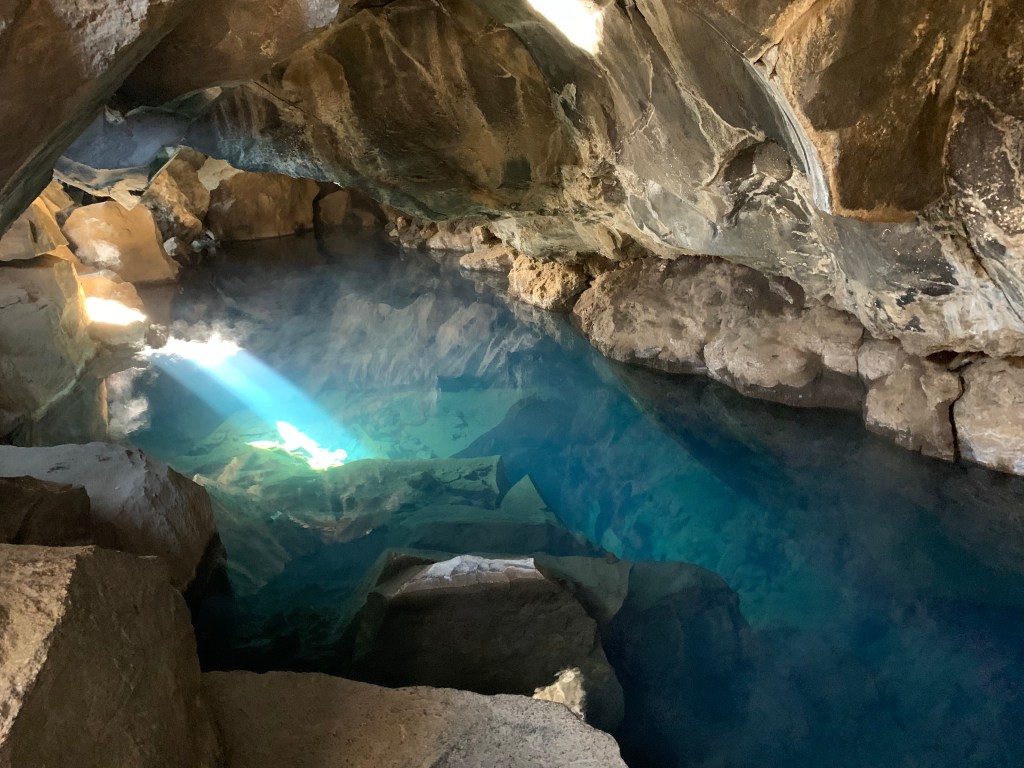
Last stop of the morning is Grótagjá, a hot spring cave. This is not a pool for swimming – the temperature hovers around 50 degrees Celsius, but it is stunning to see. Going into the cave again reminded all 3 of us that we do NOT enjoy caves, tunnels, or other enclosed places, and the fact that the last steps involved crouching under a massive boulder perched on top of a rock the size of a basketball did not make it easier to convince ourselves to go in, but then the view…
We had a noon date at Mývatn Nature Baths and as we headed that way, we prayed that the gnats would be afraid of the water or the steam or something – anything – that kept them away for a few minutes. I didn’t realize Mývatn featured the same silica-heavy milk-blue water as the Blue Lagoon, so I was quite excited when we got there to see that AND few gnats.
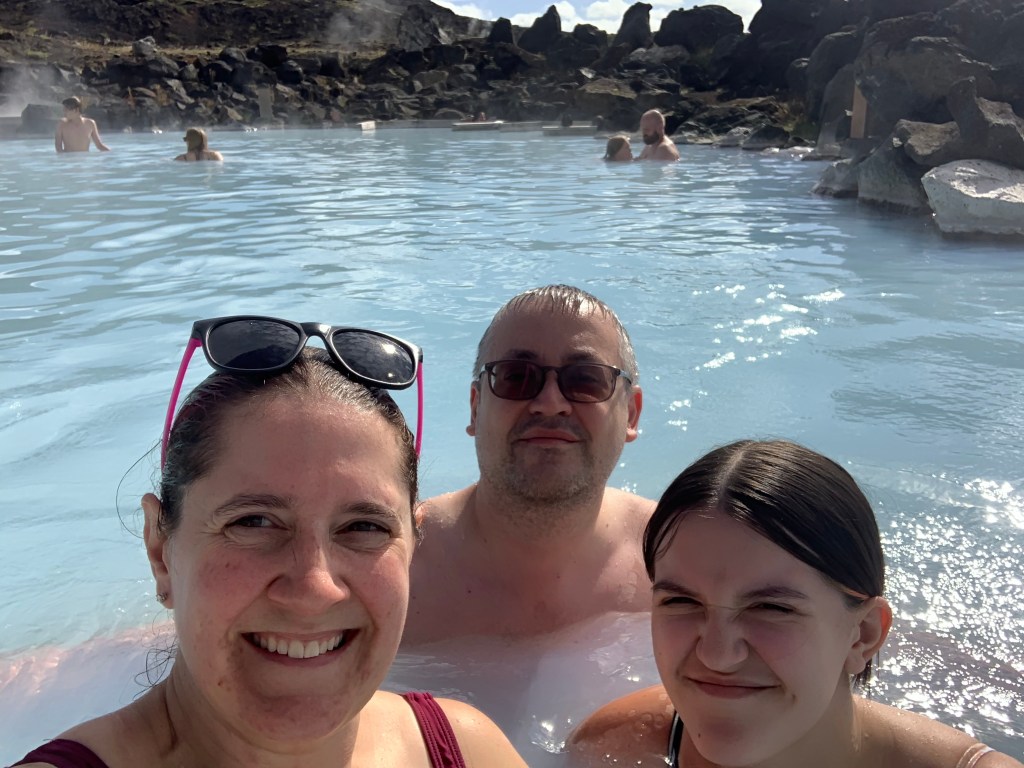
We spent about 75 minutes in the water, allowing every ounce of our being to relax. This type of experience is truly stress-relieving unlike anything else I can think of. For a brief moment, my brain tried to transition to thinking about serious things like the house condo conversion work I have to do, but then my body – which was fully relaxed – vetoed the idea of serious thought and slipped back into its relaxed state (which is not a state I fall into naturally or easily). Thus my goal of 4-5 hot tubs/pools on this trip.
After a delightful (and much needed!) shower, we ate lunch in the van/camp/kitchen. This little camper is quite comfy for most of our needs. Not the best bed I’ve ever slept on, but also not the worst (and much warmer/more comfortable than a tent).
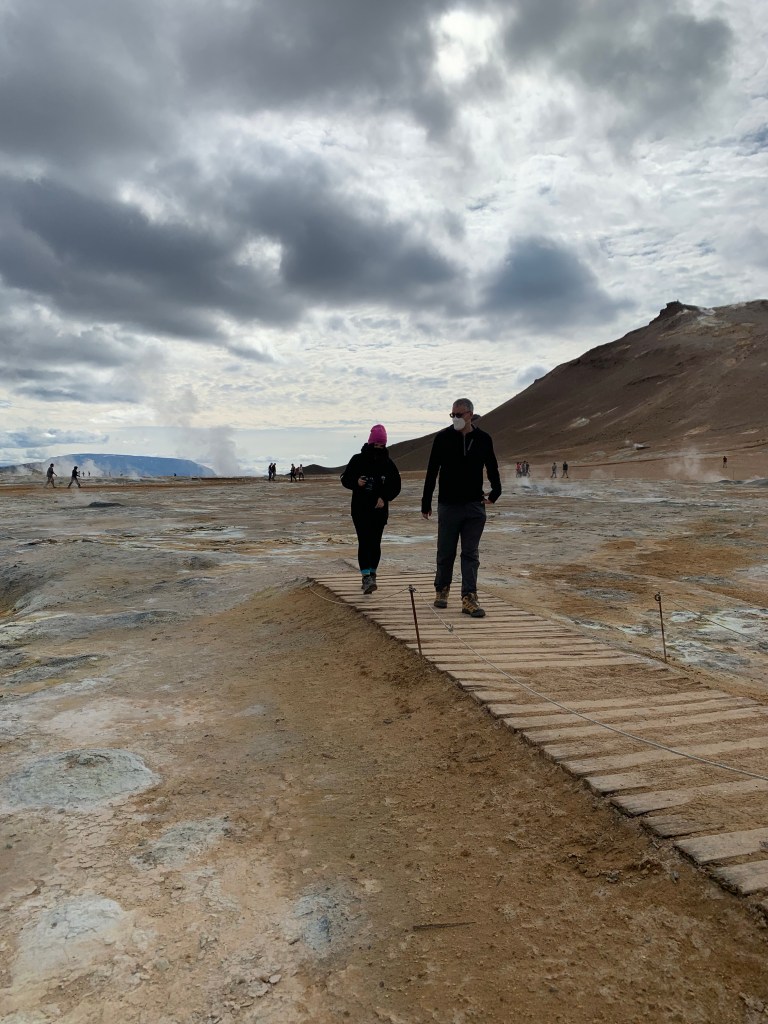
The geothermal area around Námajfall was next. As with all Icelandic geothermal areas, the officials have substantially more trust in tourists to use good sense than American officials do. At home, features such as mud pots and steam vents would be surrounded by steel fencing with signs every 4 feet about dangers and reminding visitors to stay on the path. In Iceland, you get a few 8” stakes in the ground and some twine designating where the ground may swallow you whole or boil you alive.
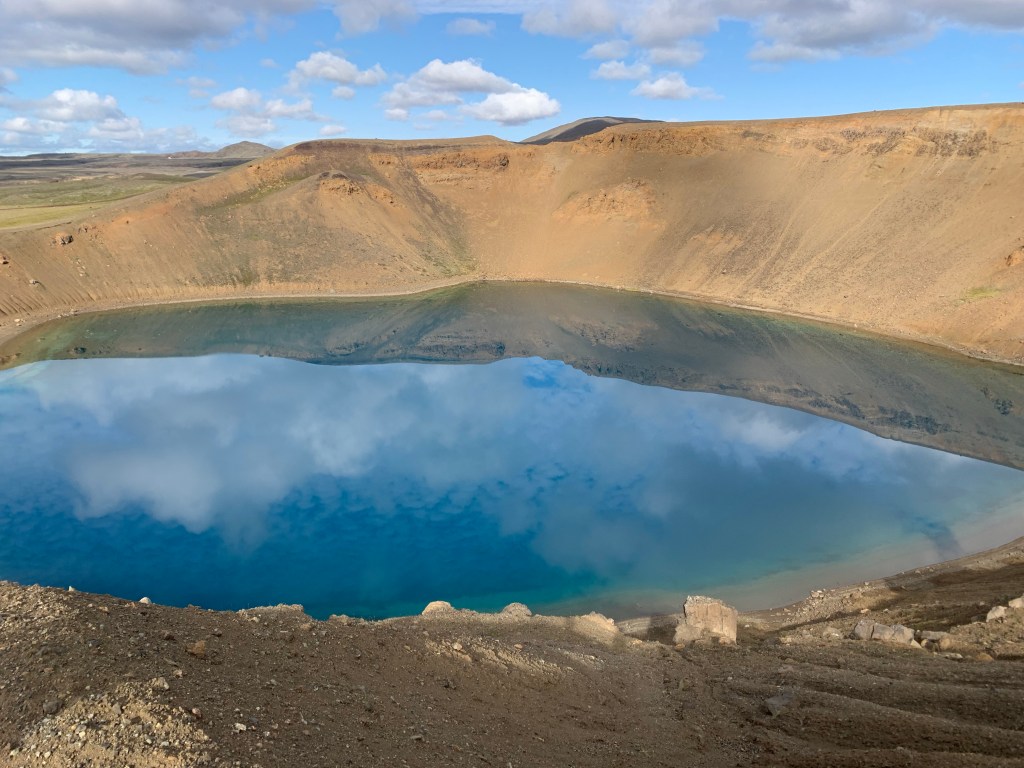
After meandering through the geothermal features, we headed over to Krafla – or, more accurately, to Viti crater in the Krafla region. This is one of those places that you see printed and think “it can’t really be that color” but then find out that it is. What most impressed me here was that the human eye can see both the depth of the water in the crater and the reflection of the clouds on the water surface simultaneously. The camera images don’t do it justice at all.
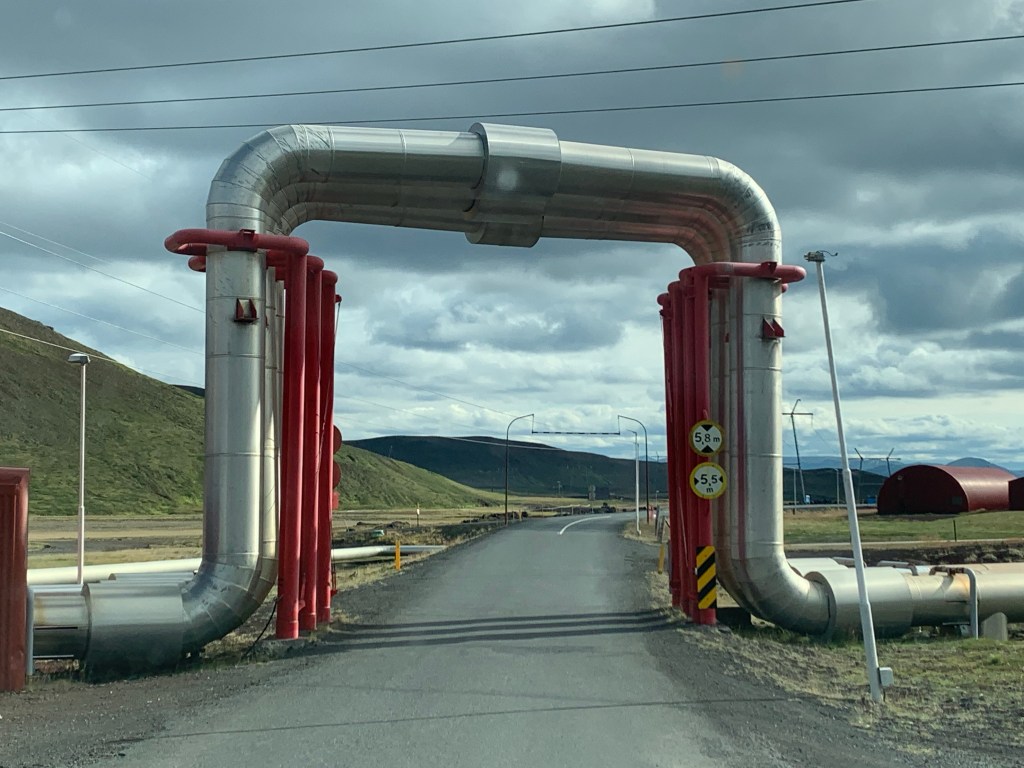
The crater is surrounded by more geothermal features, but those are quite common in Iceland and we felt satiated with the one we saw already so we skipped it. We did enjoy driving through the large geothermal power plant – especially the novelty of driving under some of the large pipes that cross-crossed the landscape.
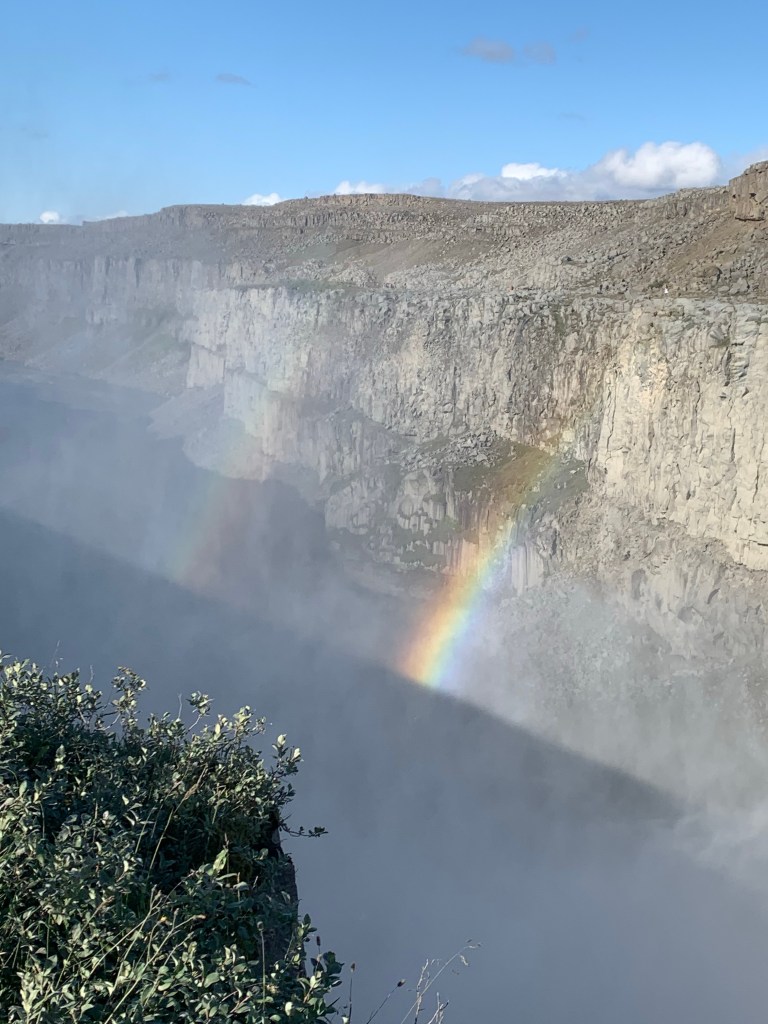
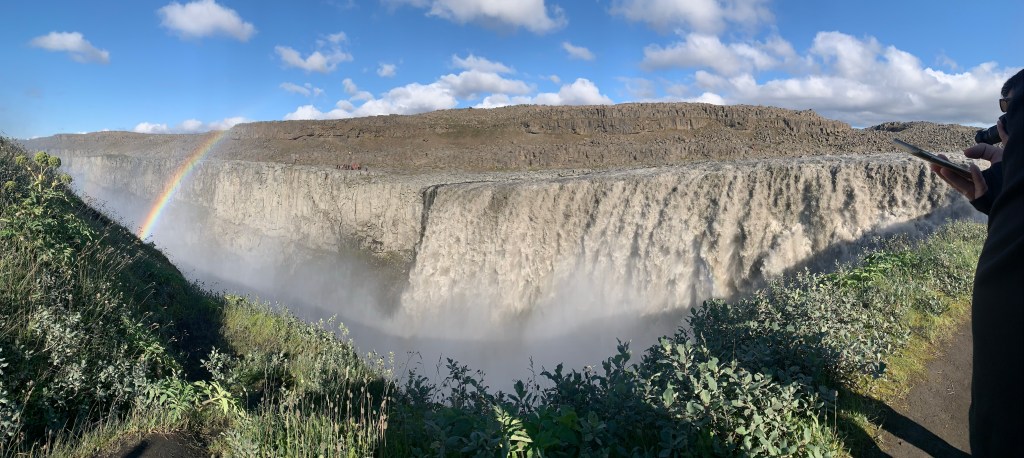
Waterfalls are another sight that becomes rather repetitive after some time in Iceland so we choose our stops carefully. Dettifoss was billed as not the largest nor the widest, but as one of the most powerful waterfalls in Europe. I wasn’t really sure what that meant, but multiple sources said not to miss it so we went.
That was worthwhile. As you approach the waterfall, you can feel the pounding of the water as it drops into the canyon below. The spray catches the sunlight on a sunny day like what we had and creates rainbows. Anytime there’s a rainbow, you know you’ve made a good choice. Like a warm and fluffy towel right from the dryer, they just make my heart happy.
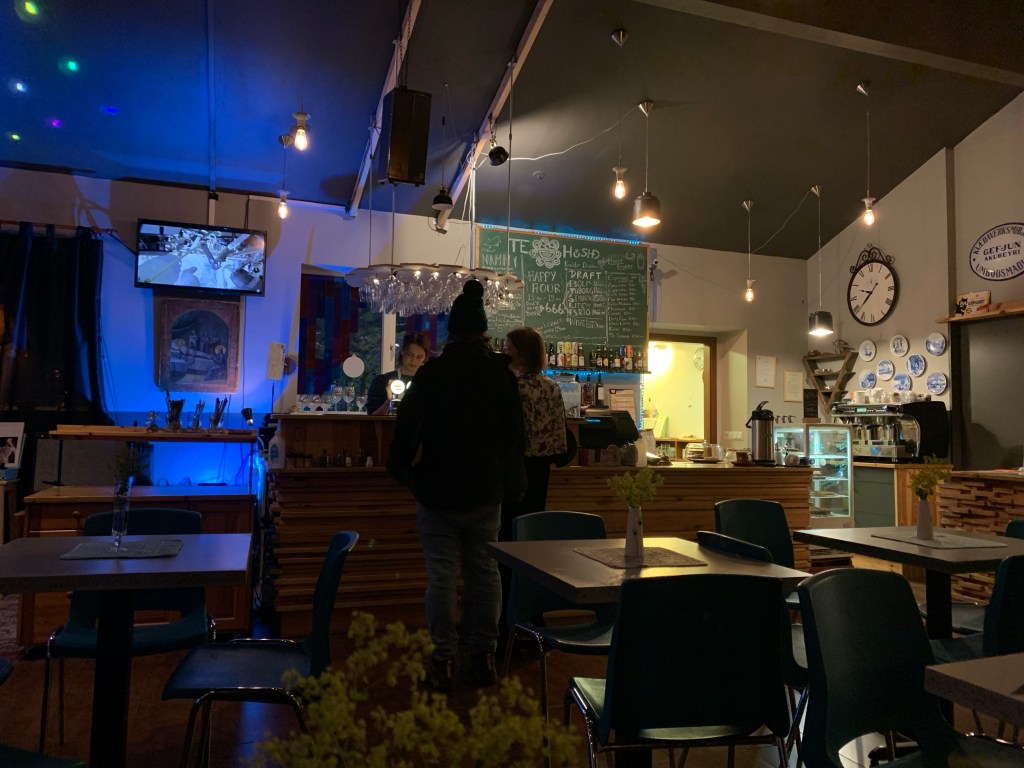
After an hour of enjoying the views (and the sunshine!), we drove off to camp in Eglisstaðir on Iceland’s eastern side. We had laundry to do (yay!), had a pint of local beer at the hostel/folk bar next door, and then managed to fall asleep easily.

 Vacation Days