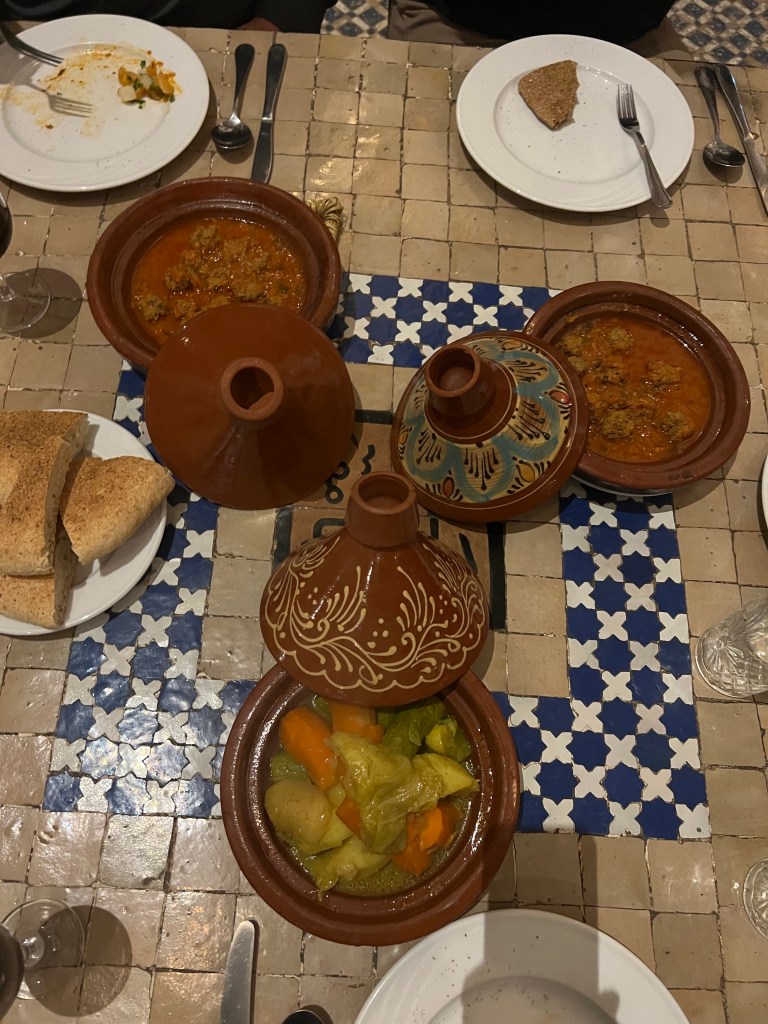
Oh my gosh, the food. Amazing. Every…single…time! Dinner last night included the best eggplant-tomato salad imaginable – and I usually don’t like eggplant at all! I had tagine vegetables, Anna-Sophia had tagine lemon chicken, and Luke and Melissa had tagine meatballs in a deliciously seasoned tomato sauce. (Auto-correct insists that I meant to type raging instead of tagine…raging chicken is a hilarious alternative to tagine chicken!) Breakfast today was a variety of bread and bread-like things, an assortment of spreads (strawberry preserves, apricot preserves, honey, butter, argan oil), fresh orange juice, olives, and coffee. I simply adore the fact that Moroccans believe olives belong at every table, be it breakfast, lunch, snack, or dinner. I agree! We had a very hearty breakfast before meeting up with our guide for the day.
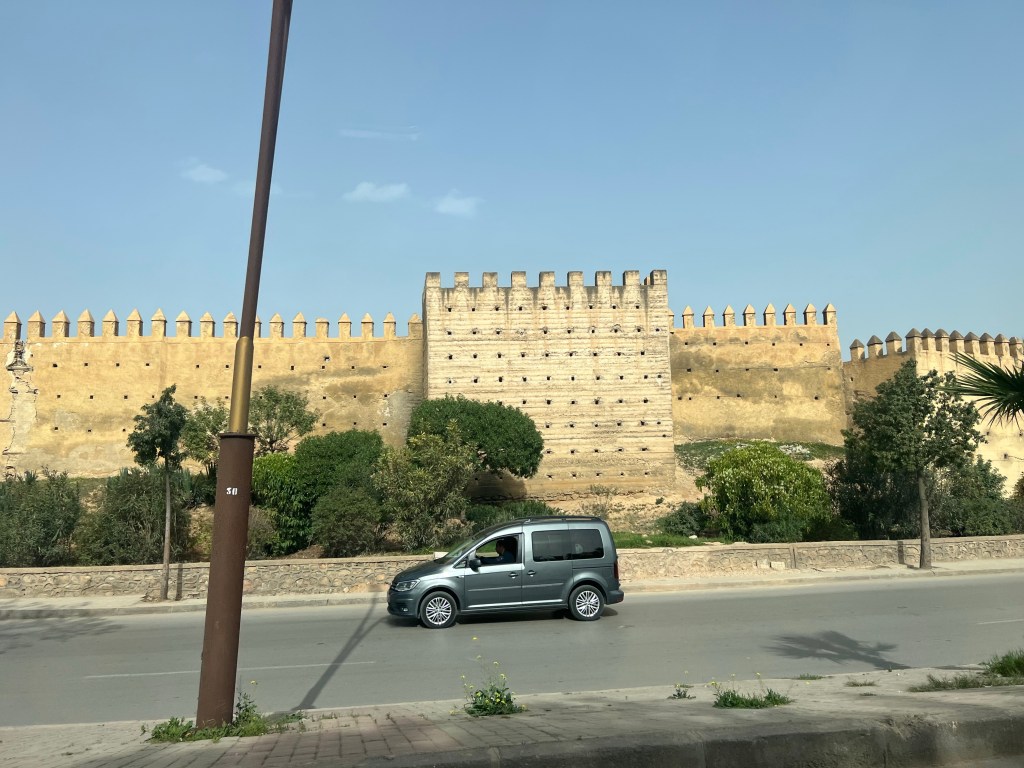
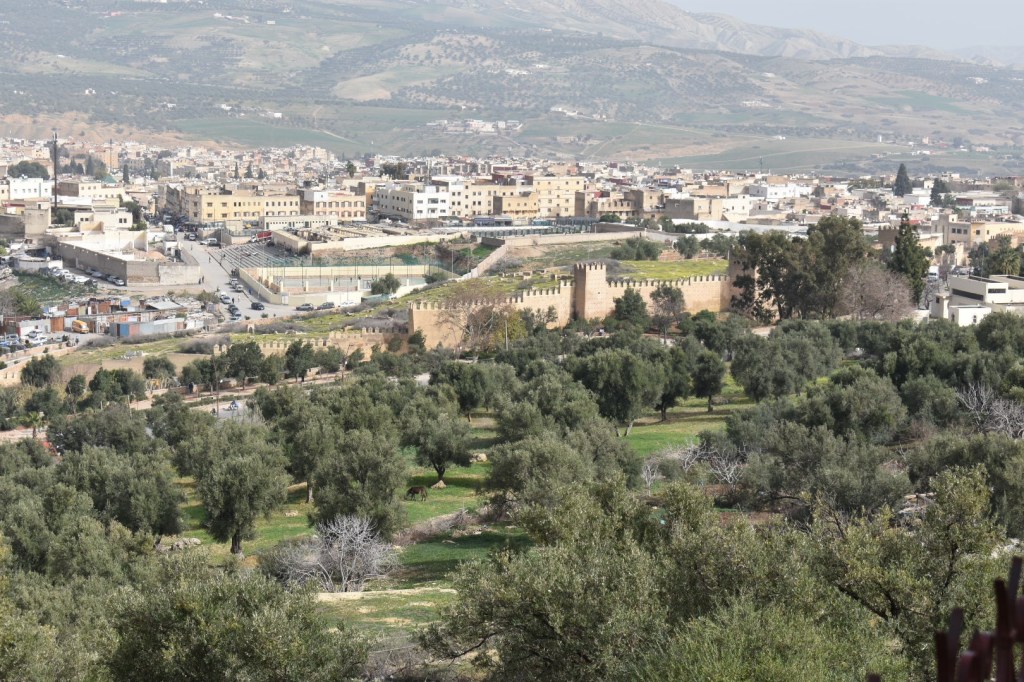
Fes is an old city..9th century is when it got its start. Like all old cities, it is ringed by a wall designed to protect inhabitants from invaders. This city wall, in many locations, also defines the old medina, where we are staying. These city walls remind me of what a 6 year-old would draw when given the prompt “castle walls” for an art project.
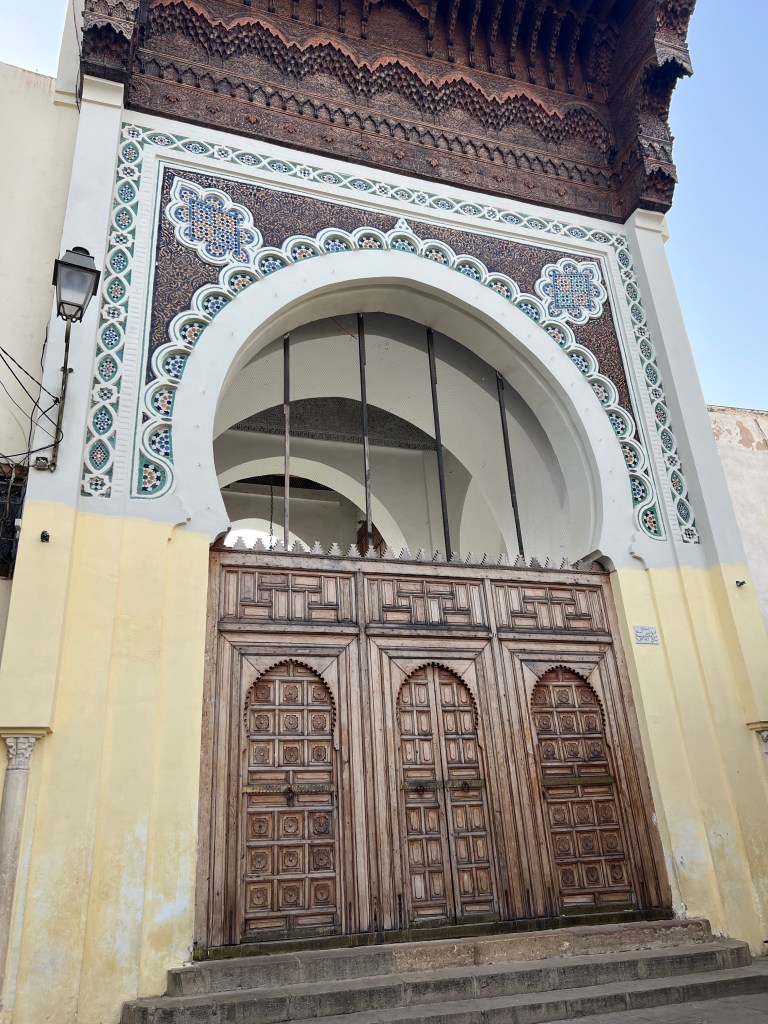
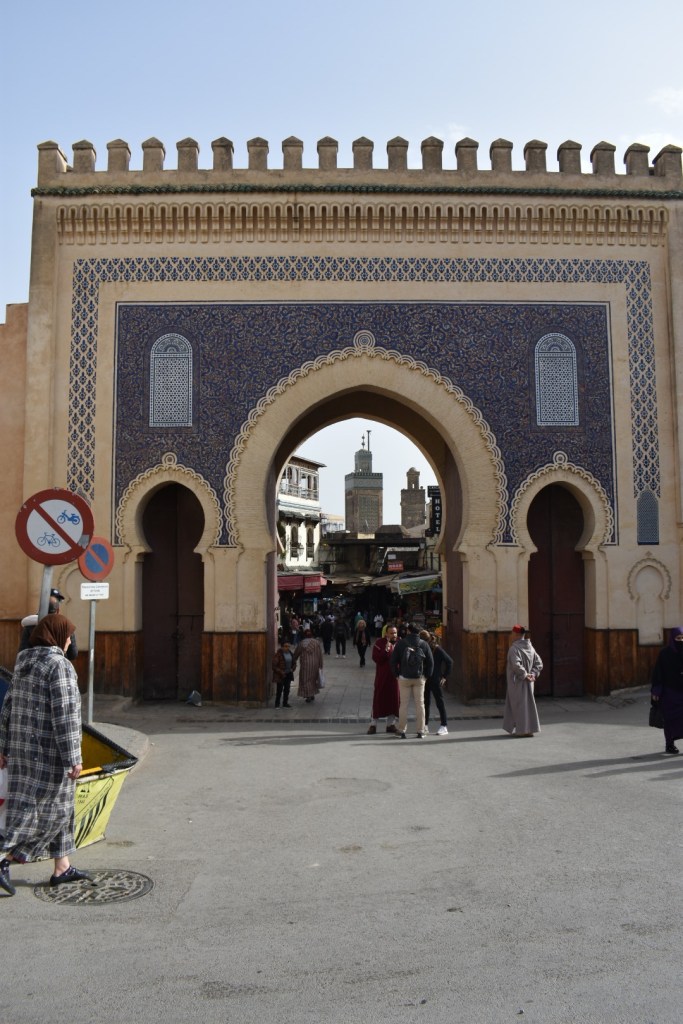
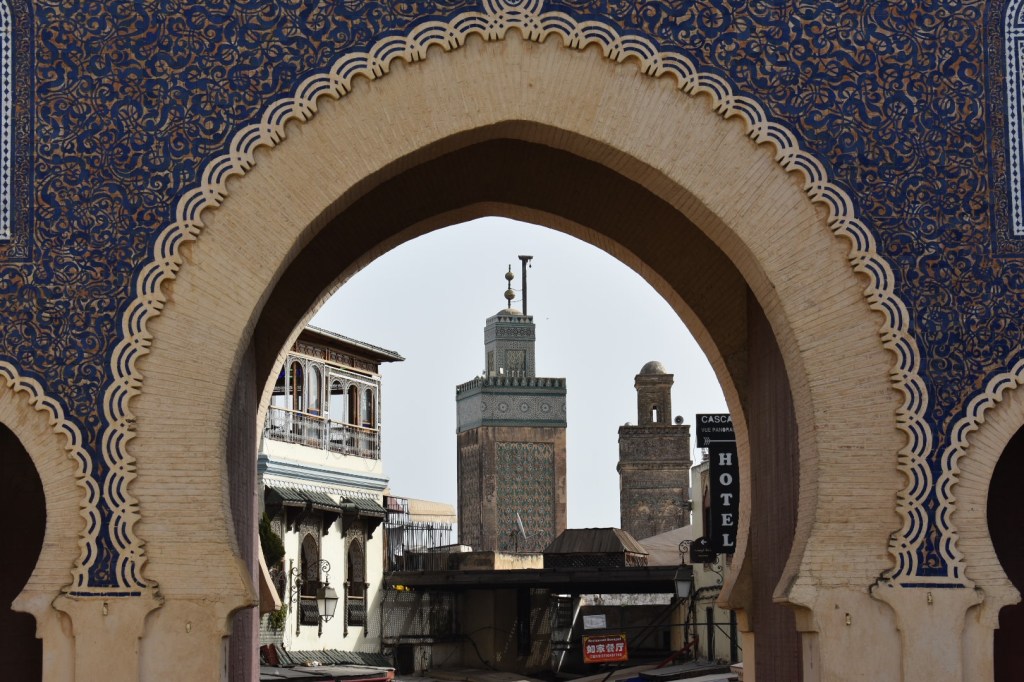
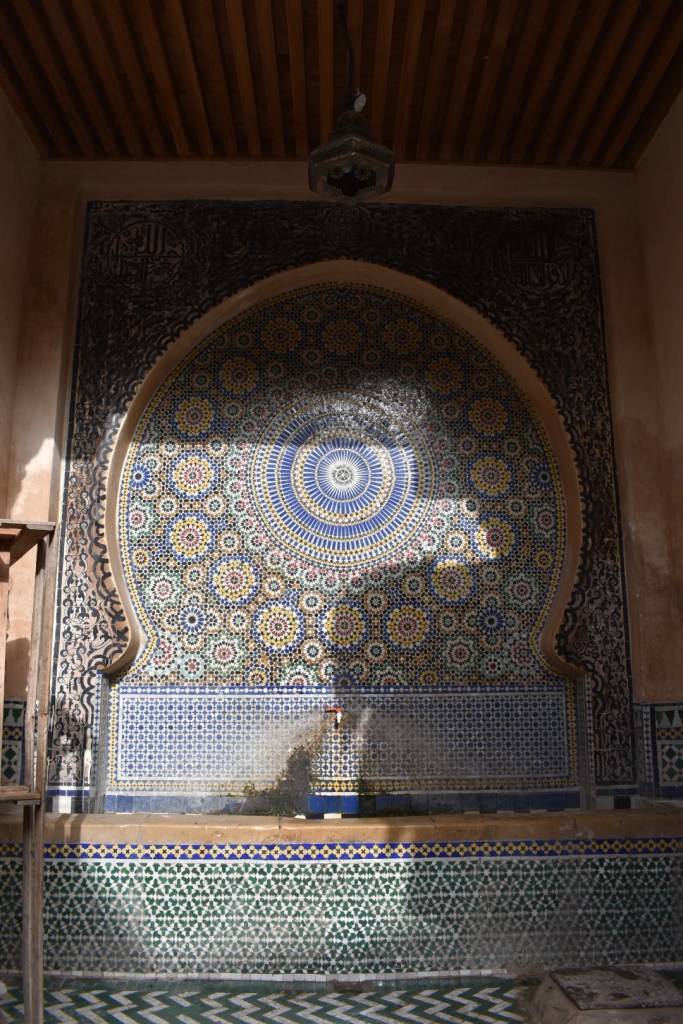
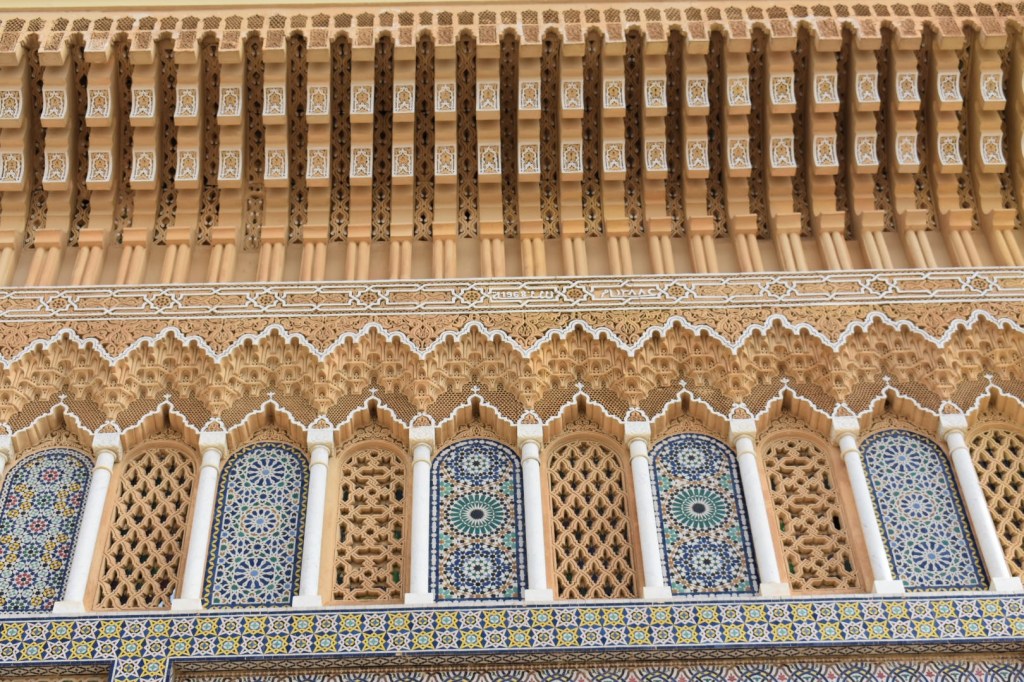
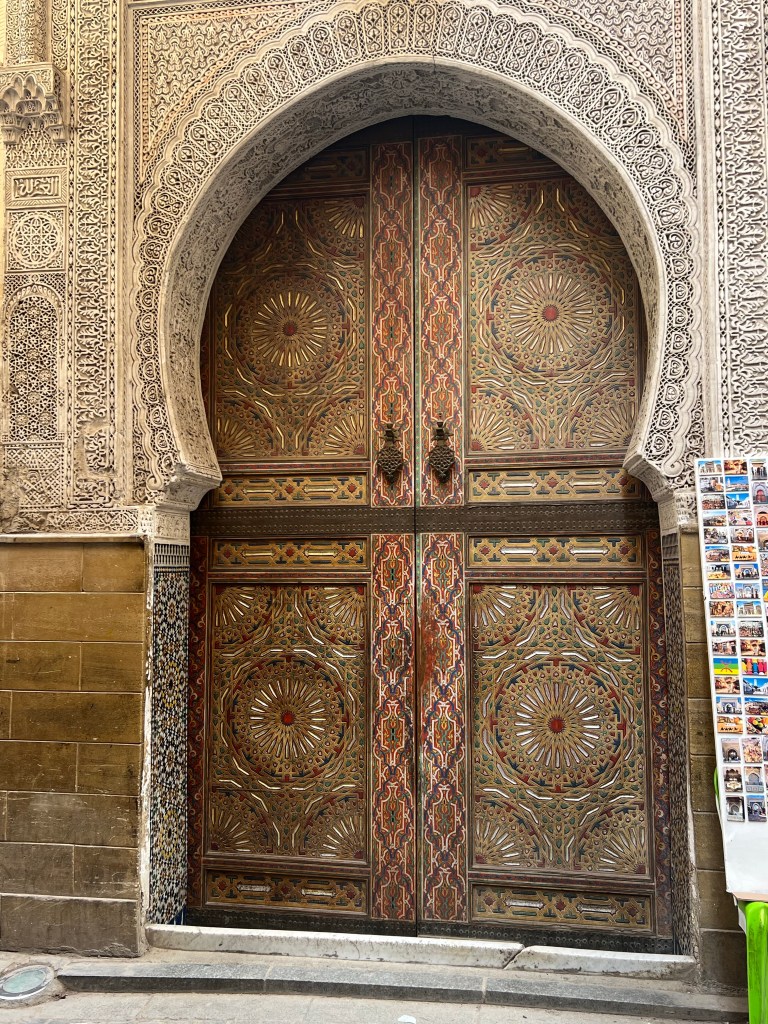
These city walls are breached by 14 gates (Luke and Melissa just reminded me that 7 is a lucky number in Islam, so 2 x 7). As is the hallmark of Fes, these gates are adorned with intricate tile mosaics, mostly in vibrant blues (Fes) and greens (Islam). Similarly gorgeous are the public fountains on every other block.
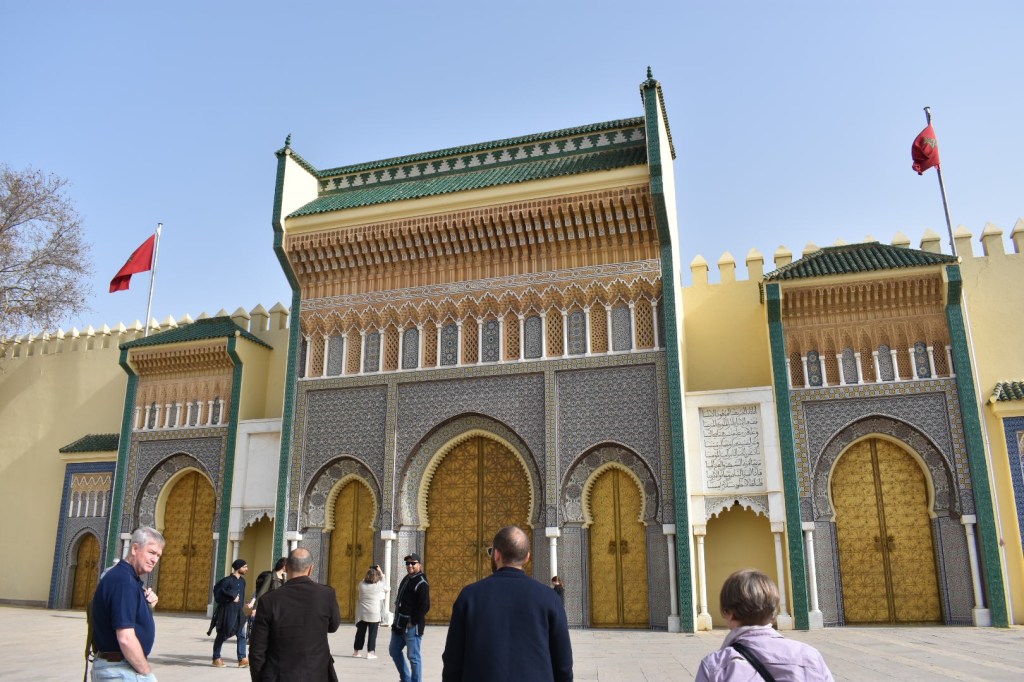
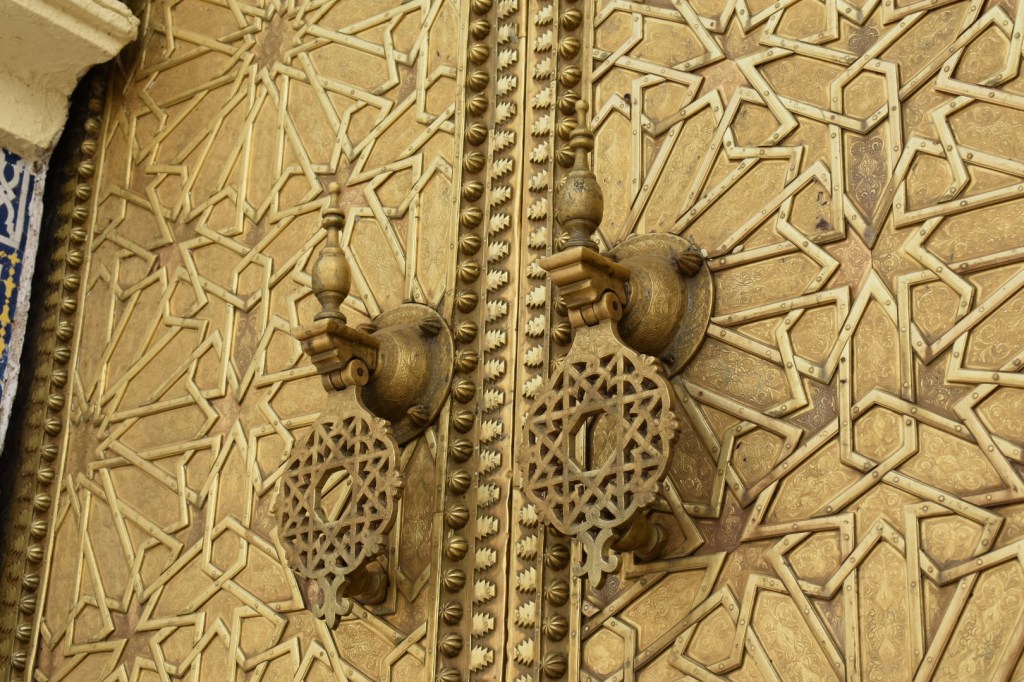
Anna-Sophia and I wanted to see the Jewish area (mellah), so we piled into a taxi and headed out of the medina. The Jewish people in Morocco settled just outside of the royal palace. Morocco has been a relatively welcoming nation for Jews, but it was still wise to live near the palace so if trouble came, they were close to protection. In this neighborhood, balconies were built on the exterior of the home because Jewish tradition does not have the same concerns for modesty and protecting women from the gaze of men. Other than the palace and different architectural styles, there wasn’t much else unique about the neighborhood so we moved along.
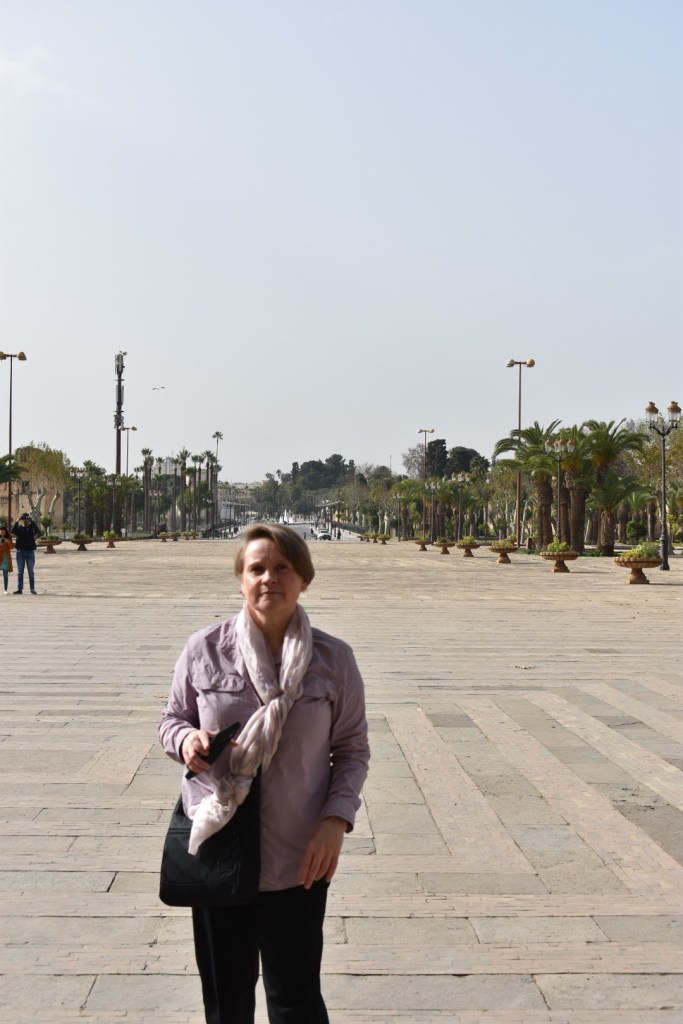
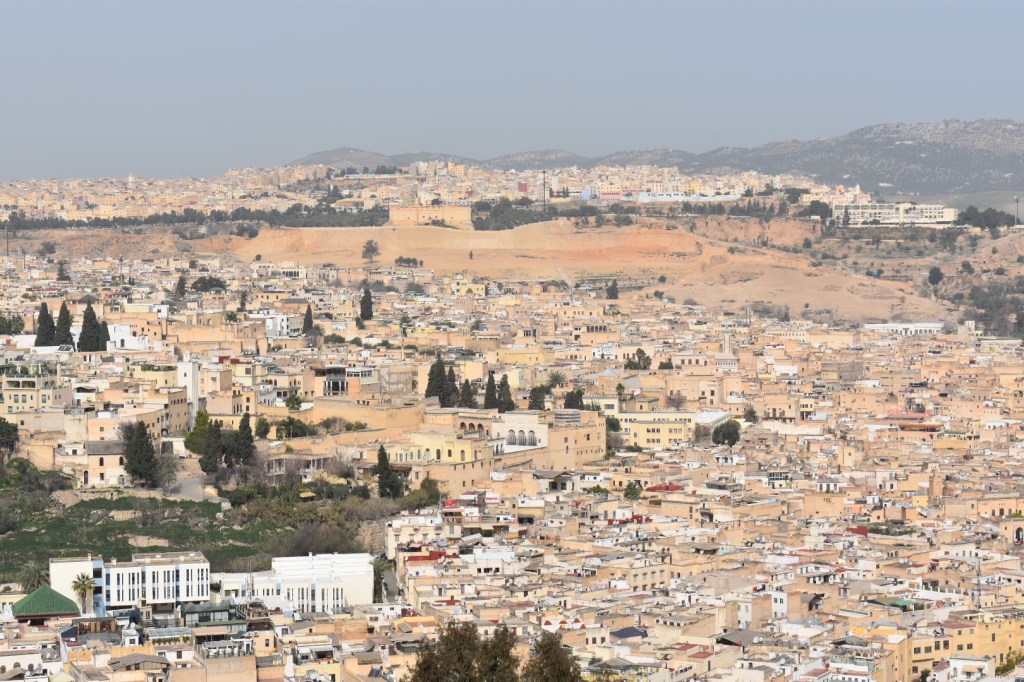
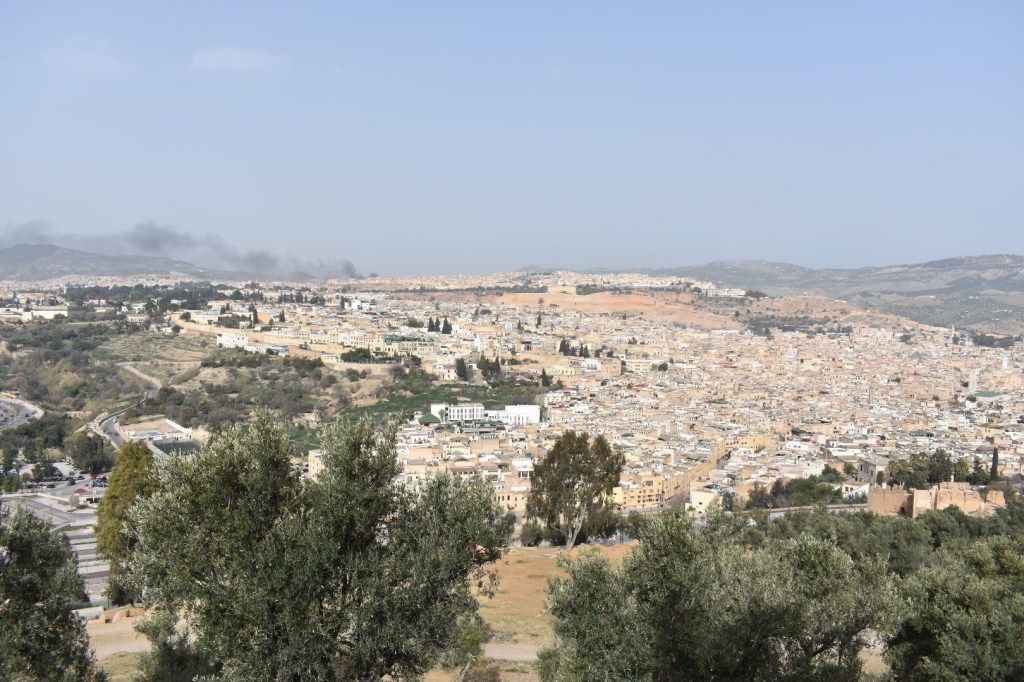
We drove up to an old military building to enjoy panoramic views of the city. The medina in the foreground, new city on the hilltop, and contemporary roads and traffic along the city edge.
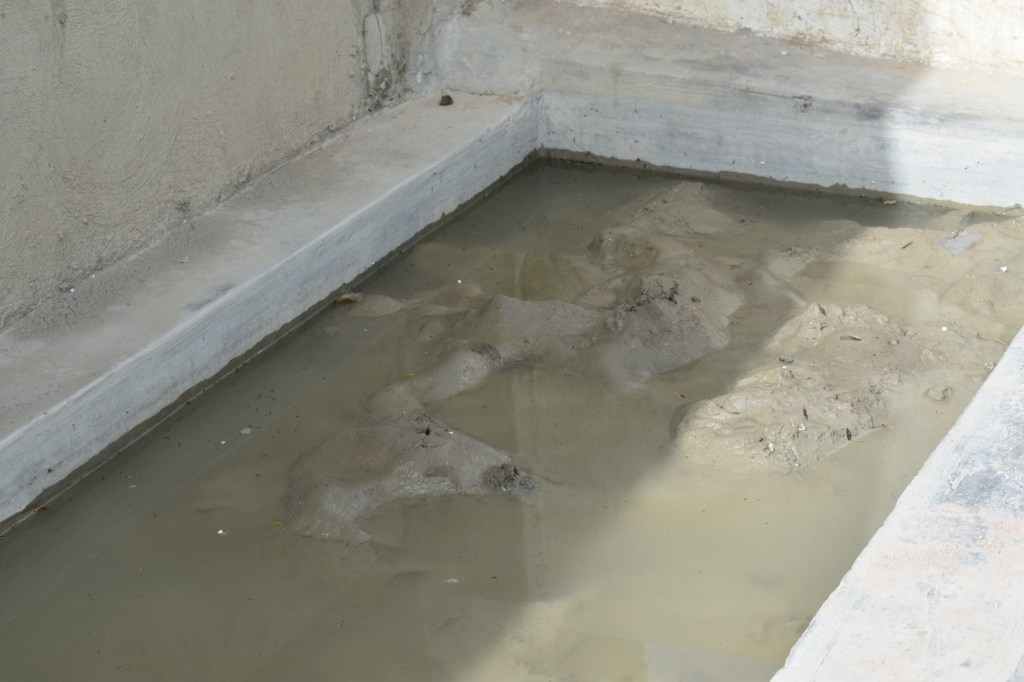
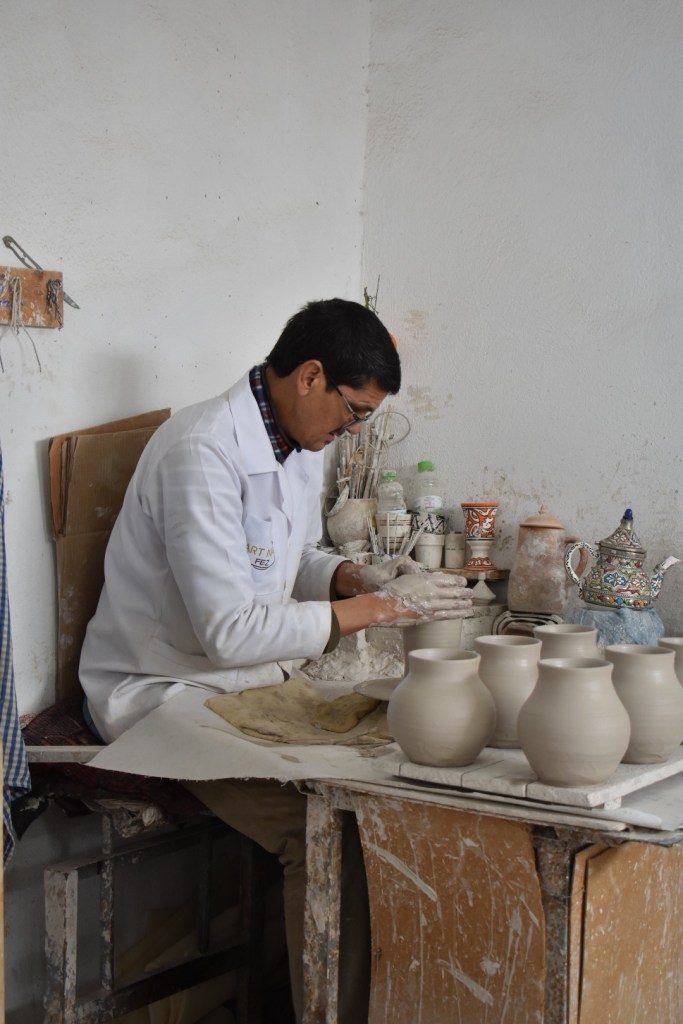
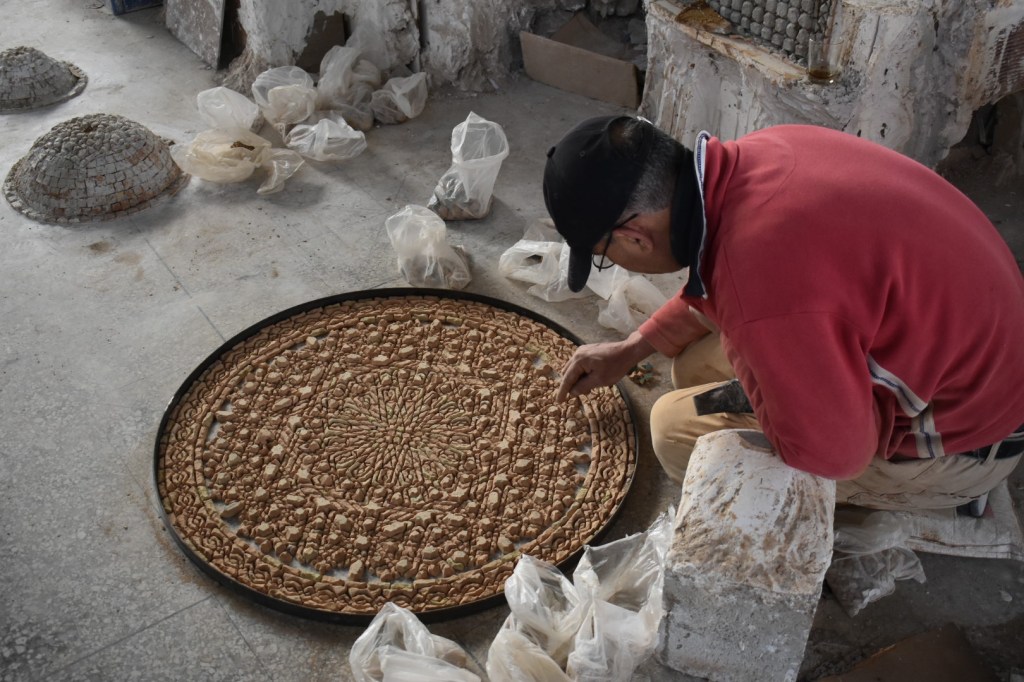
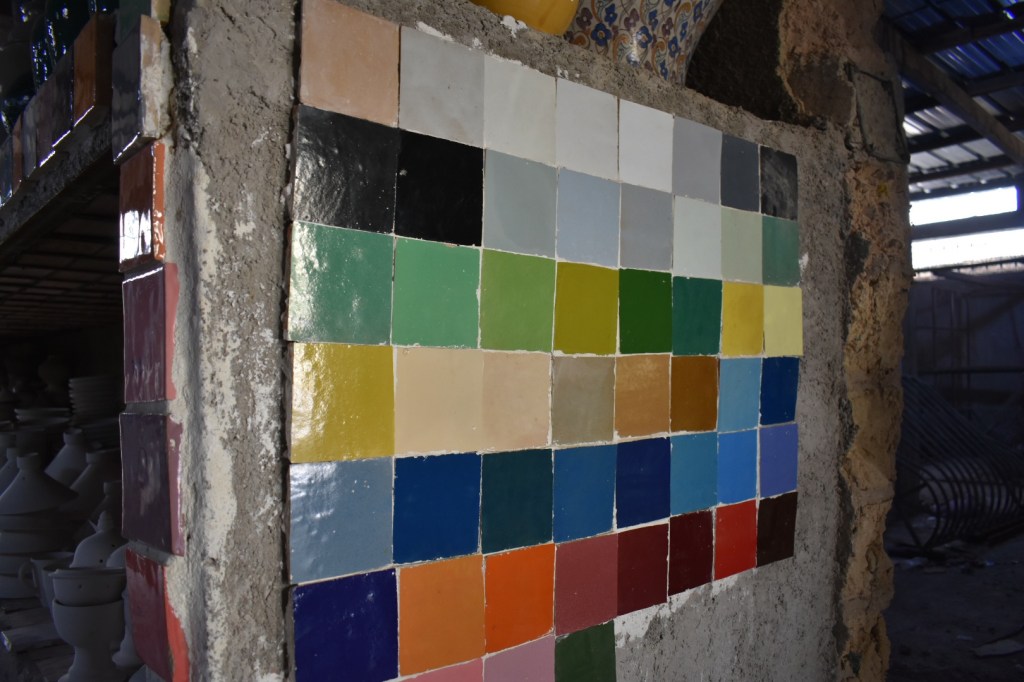
Next up was a ceramic manufacturer. We learned about the grey clay found locally and the soaking process that changes it from rock to (eventually) moldable clay. It then moves to be fired in a kiln. Historically, that was done outside the city in brick kilns using olive pits as fuel (so *that’s* where all of those pits go!), but now many things are fired in Italian-made gas ovens. From there, artisans stencil the clay, paint it, glaze it, and re-fire it. Mosaics are assembled from hand-cut chips of tile, assembled upside-down, and then glued to a board so they can be installed with reasonable efficiency. We made some small purchases, and Melissa ordered a custom table which I will quietly covet. 🙂
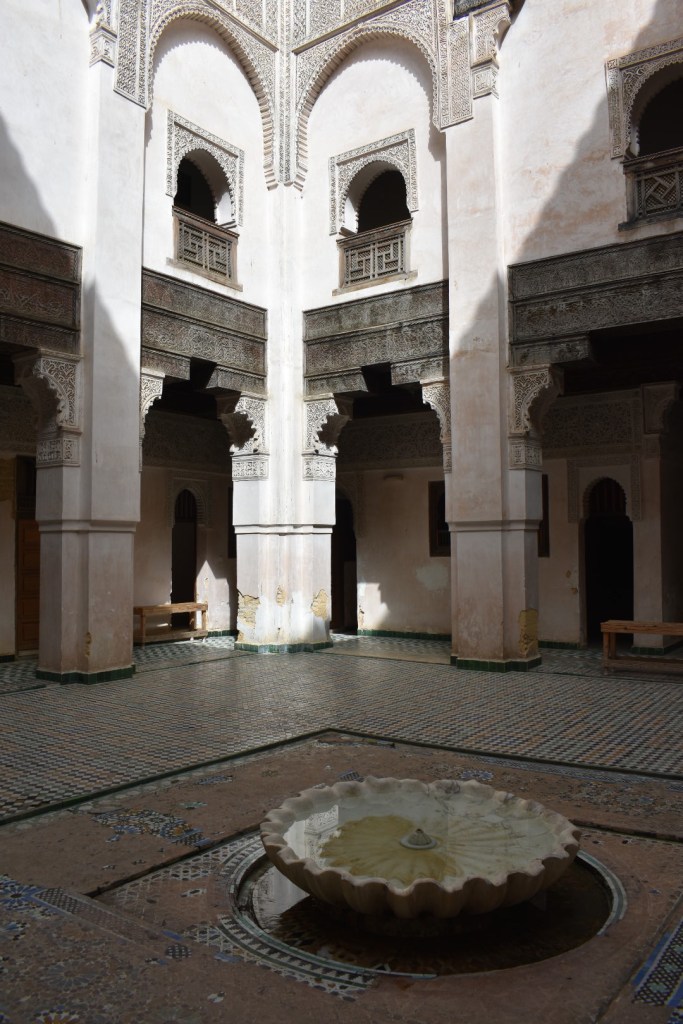
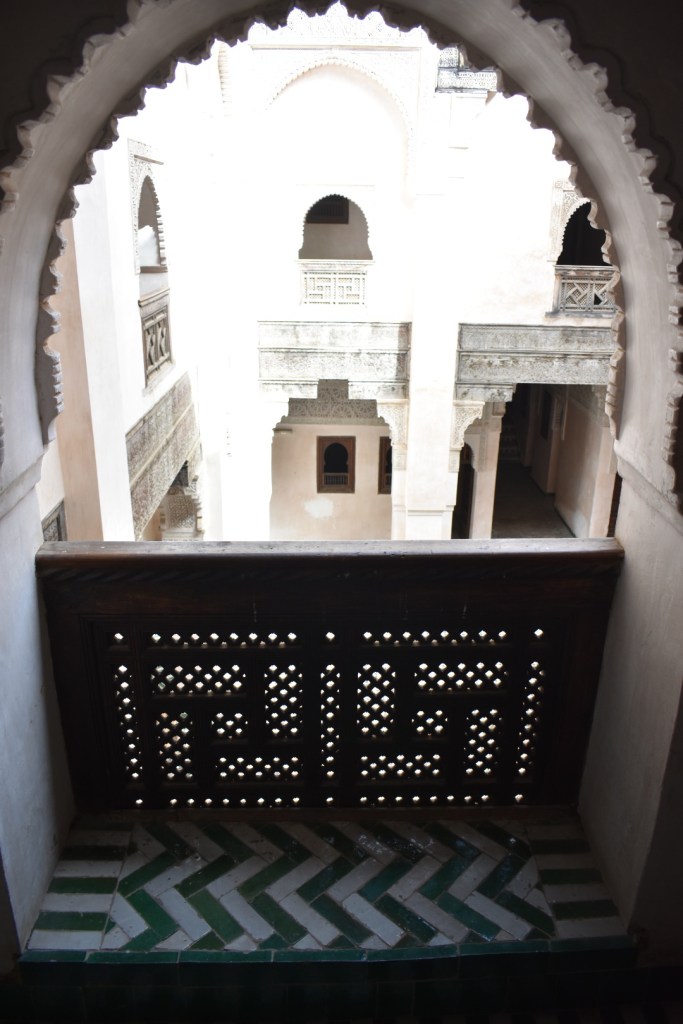
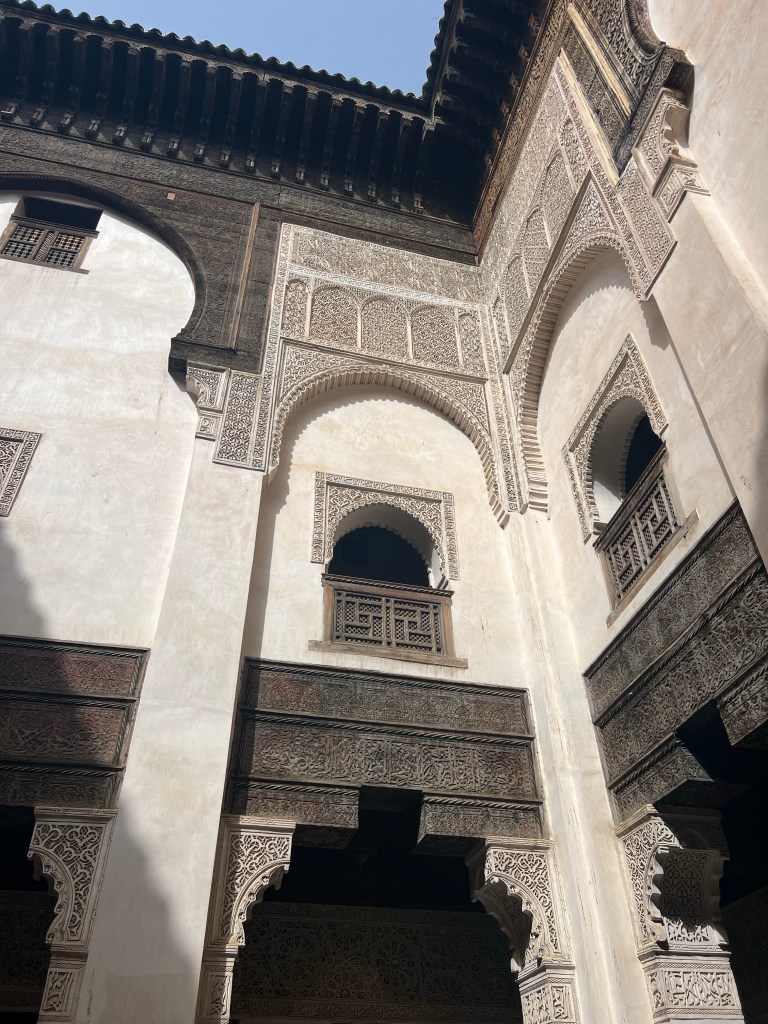
Back in the medina, we were able to look inside Madrasa al-Attarine, a Koranic school. 250 boys would’ve lived in this school when it was active. The rooms are incredibly tiny, and I truly can’t imagine living in a room barely big enough to lie down in, but then again, the pious religious life has never been my calling.
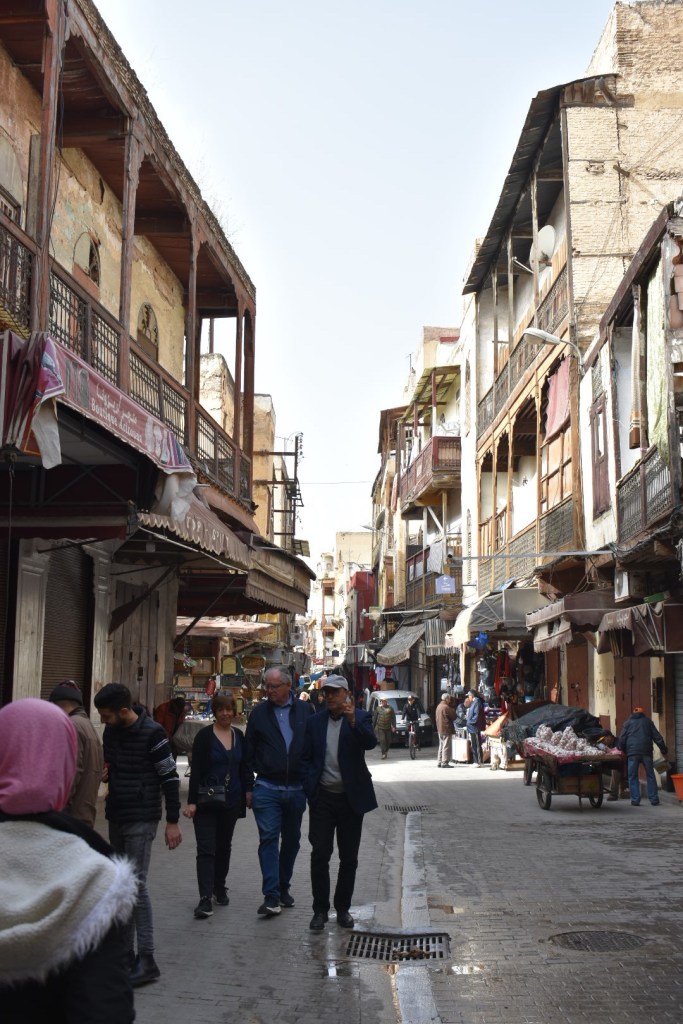
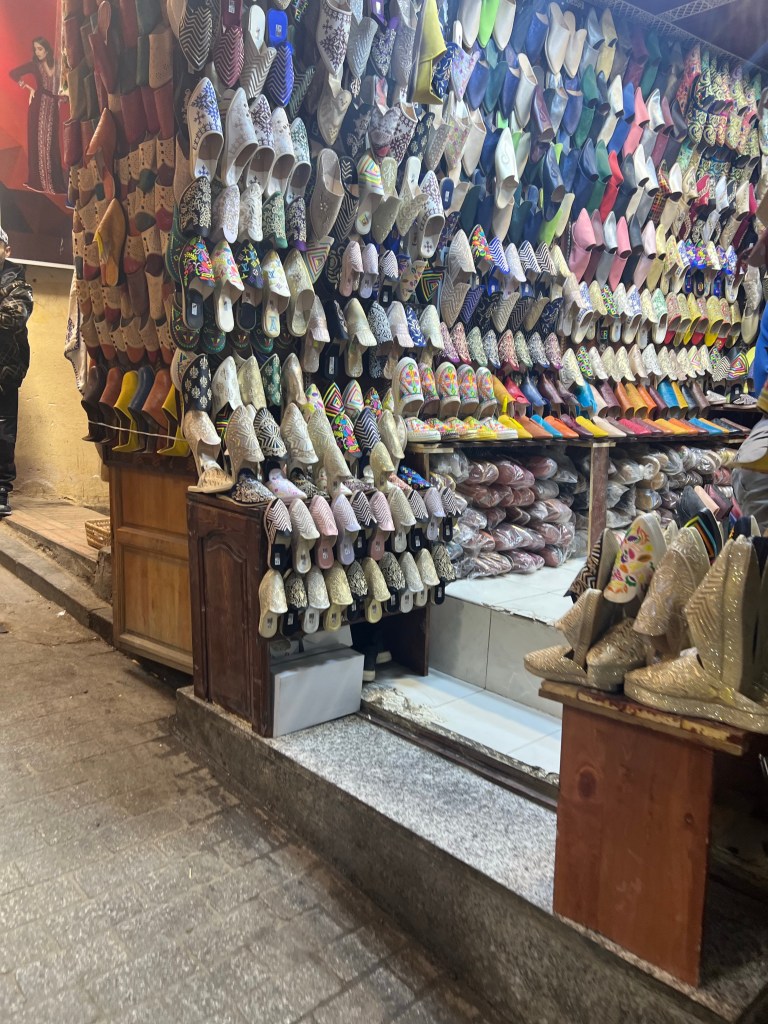
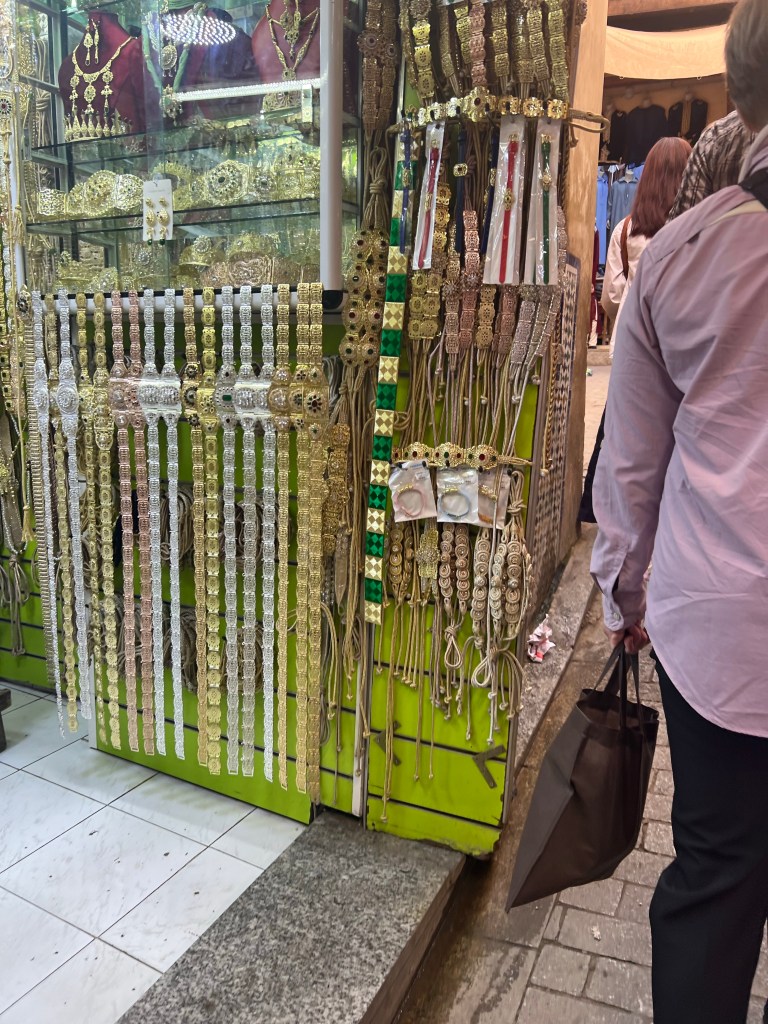
The medina is complete chaos. Apparently there are sections, but sectioned chaos still rounds out to be chaotic. Slippers, fabric, dates, so many things for sale!
We passed several more mosques, which always seemed to spring out of nowhere. In Istanbul, they are massive and impossible to miss, but in Fes, they are sneaky.
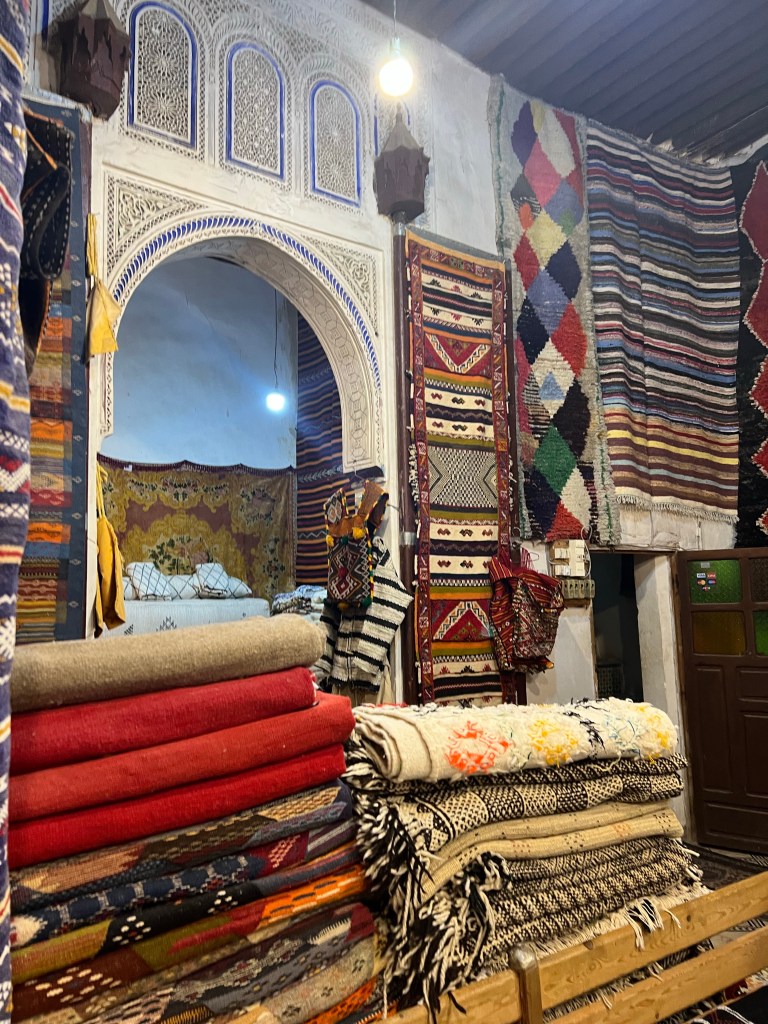
In addition to the ceramics, we also went to a Berber rug manufacturing house. I must admit, I seem to have a soft spot for these kinds of rugs. Thankfully, I went with a smaller rug than what I bought in Turkey (my house isn’t big enough to support two giant rugs!). Men make blankets (horizontal looming) and women make the blankets (vertical weaving). I can’t imagine I’d have the patience for such handiwork. 😉
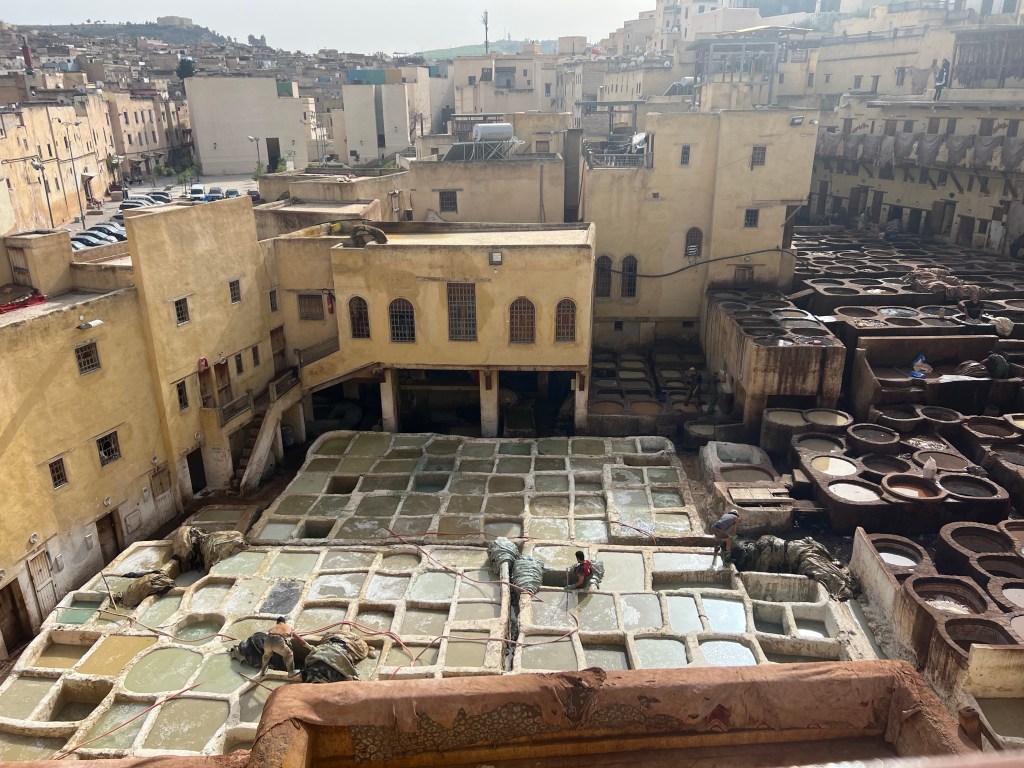
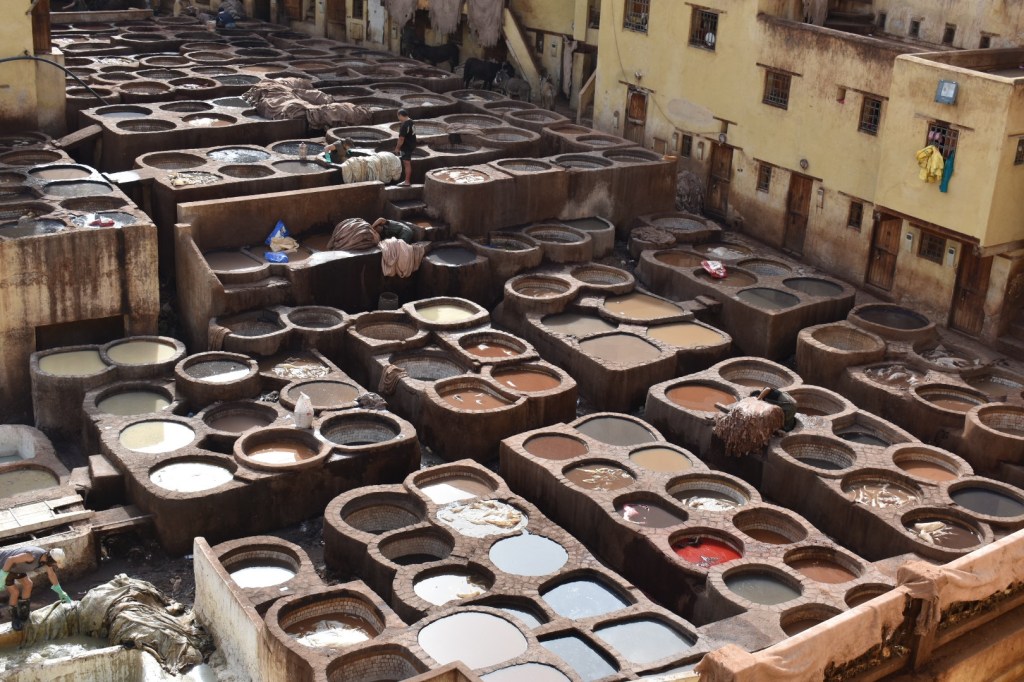
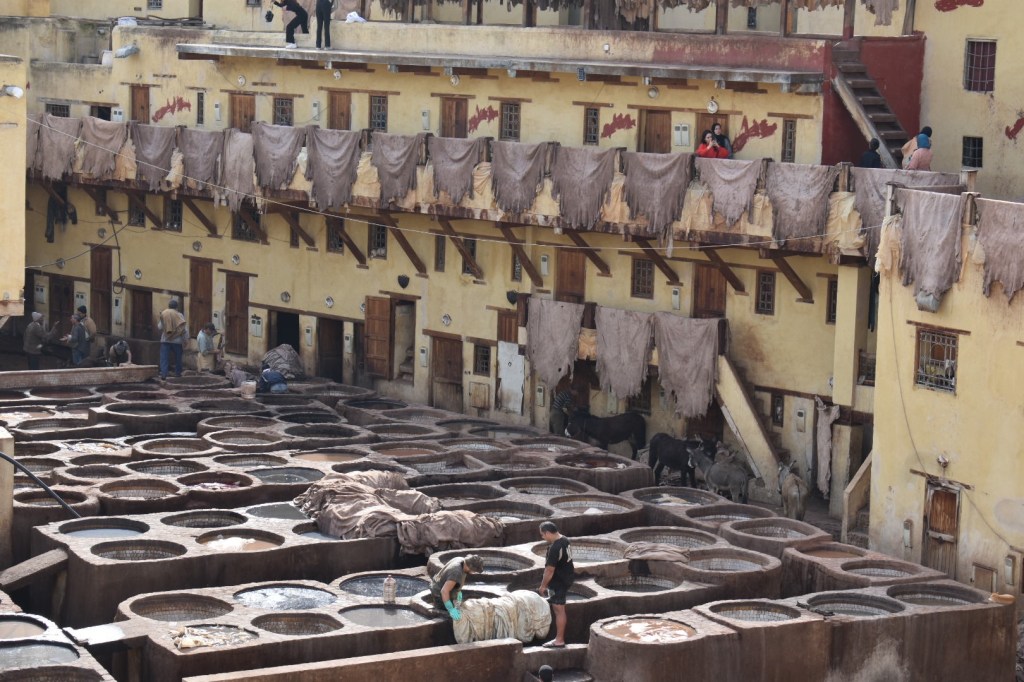
Last main stop of the day: the Chouarra Tannery. I’d heard the stench is very strong, but a gentle breeze helped to keep things quite tolerable. They explained to us how the raw hides come from the slaughterhouse and spend one night in a vat of water, lime, and pigeon droppings. Yes, pigeon droppings! (In other countries, they use horse urine or guano, so the excrement part isn’t that unusual). After 24 hours, they go to coloring vats, where they get soaked and pounded for 6 days to absorb the desired color. As with the tile, there are only a small number of base colors used to create the rainbow of finished leather colors. Here I resisted making any purchases – having no leftover space at home helped to keep me in check!
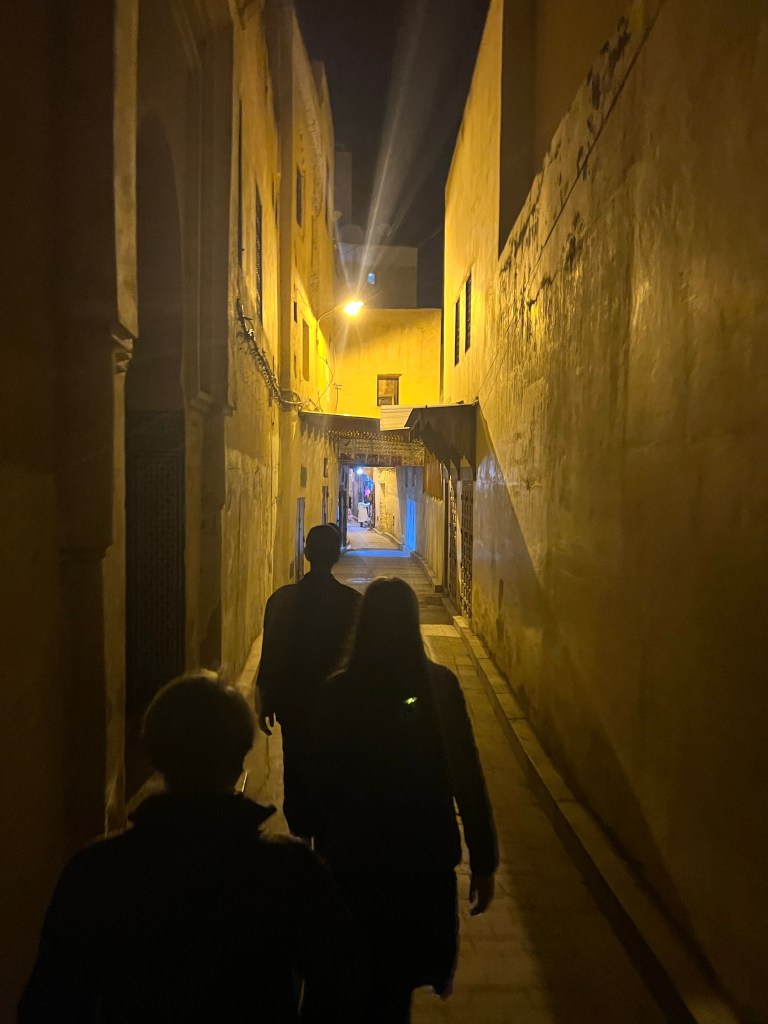
By 4pm, we were back at our riad. We got a bottle of wine and enjoyed the rooftop deck for a bit before heading out to dinner. Thankfully, the restaurant sent a runner to get us and to bring us back or we would never have managed to find the restaurant or our riad. Not only did I feel better knowing we were being guided by somebody who knows the way, but the city is also almost exclusively male territory at night. Most women are at home, and men go to coffee shops to watch soccer games on tv, or they hang out in the street. I never felt unsafe, but I also don’t see any reason for a group of obvious tourists (3 of whom are female) to push it by being out late and unguided.
We saw a bunch of things today, yet I know we barely scratched the surface of this crazy city. I don’t really understand why Fes gets such an understated billing in guide books – I though it was a pretty wild and unusual city, and I could see spending more time here to get better acquainted with the rhythm.

 Vacation Days