Oddly, we will be in Portugal twice this year. We are here now for Marnie’s birthday, and will be in the Azores over Thanksgiving for Luke’s 50th. The two trips will be wildly different.
We left Boston at 10:45 at night and landed just before 9am in Lisbon. Subtract a 5 hour time difference and 60-90 minutes from each end of the flight for meal service (who needs or expects dinner on a flight departing at 10:45 at night?!) and you will have not nearly enough time leftover for sleep.
Two sleep-deprived individuals successfully navigated the airport, subway, and train to make the journey from Lisbon to Coimbra.
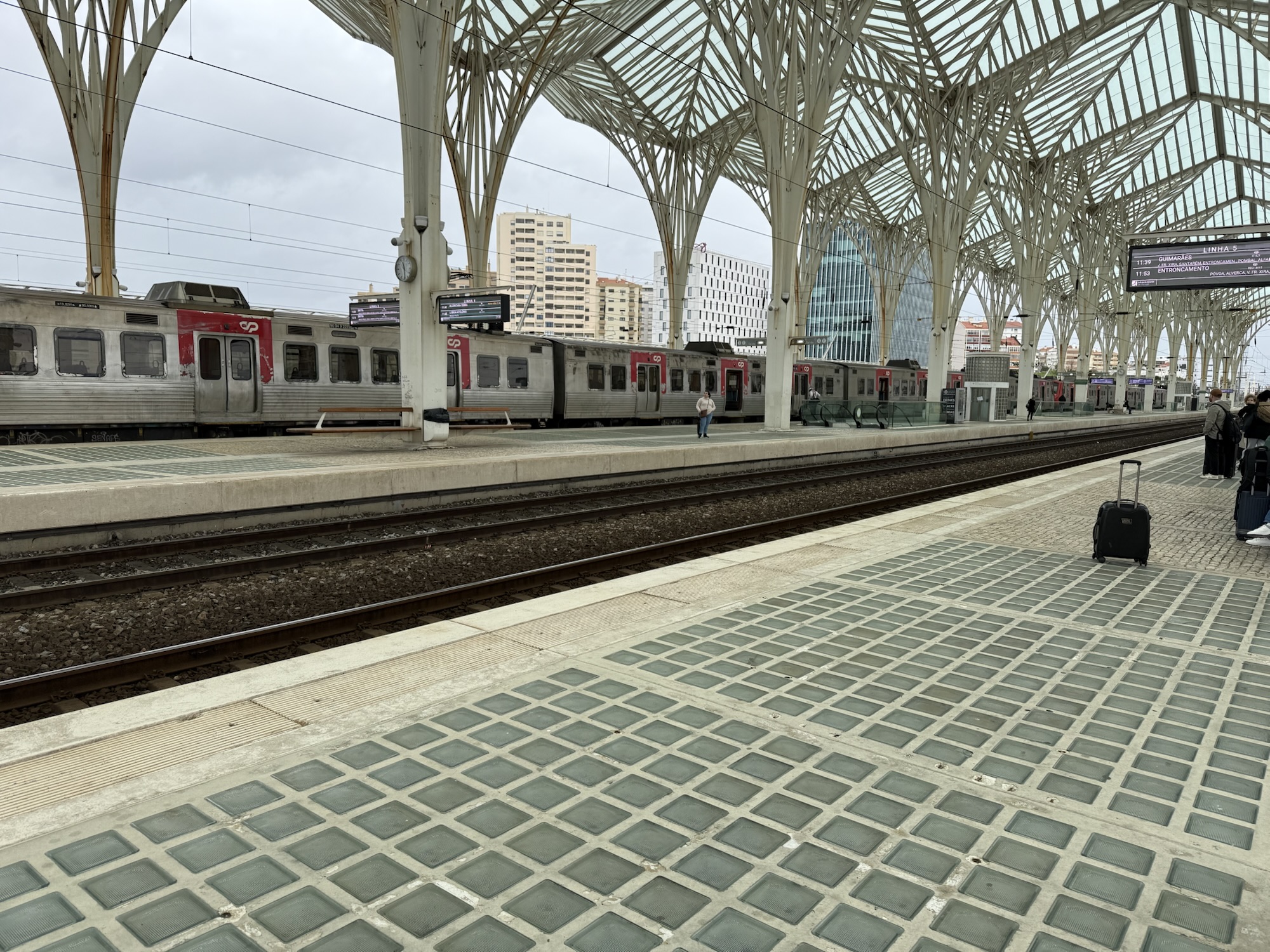
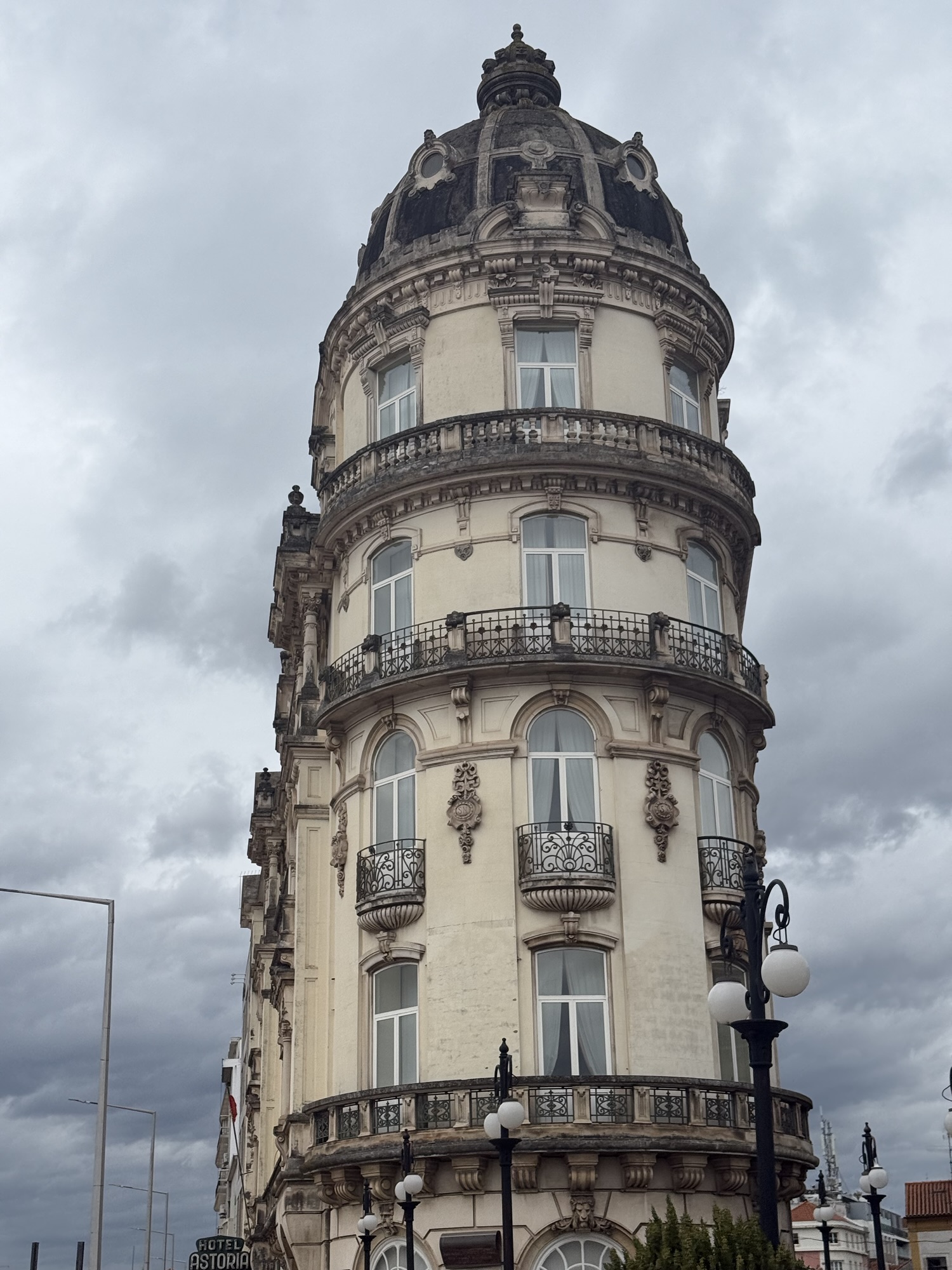
Oriente station, LisbonOur hotel in Coimbra
Coimbra is cute. Hilly, of course, but cute. Several pedestrian-only streets, lots of pretty buildings, and stairs. So many stairs. Walking around here is a phenomenal workout. We spent the first afternoon mostly walking around to stay awake, pausing for a snack in an outdoor cafe.
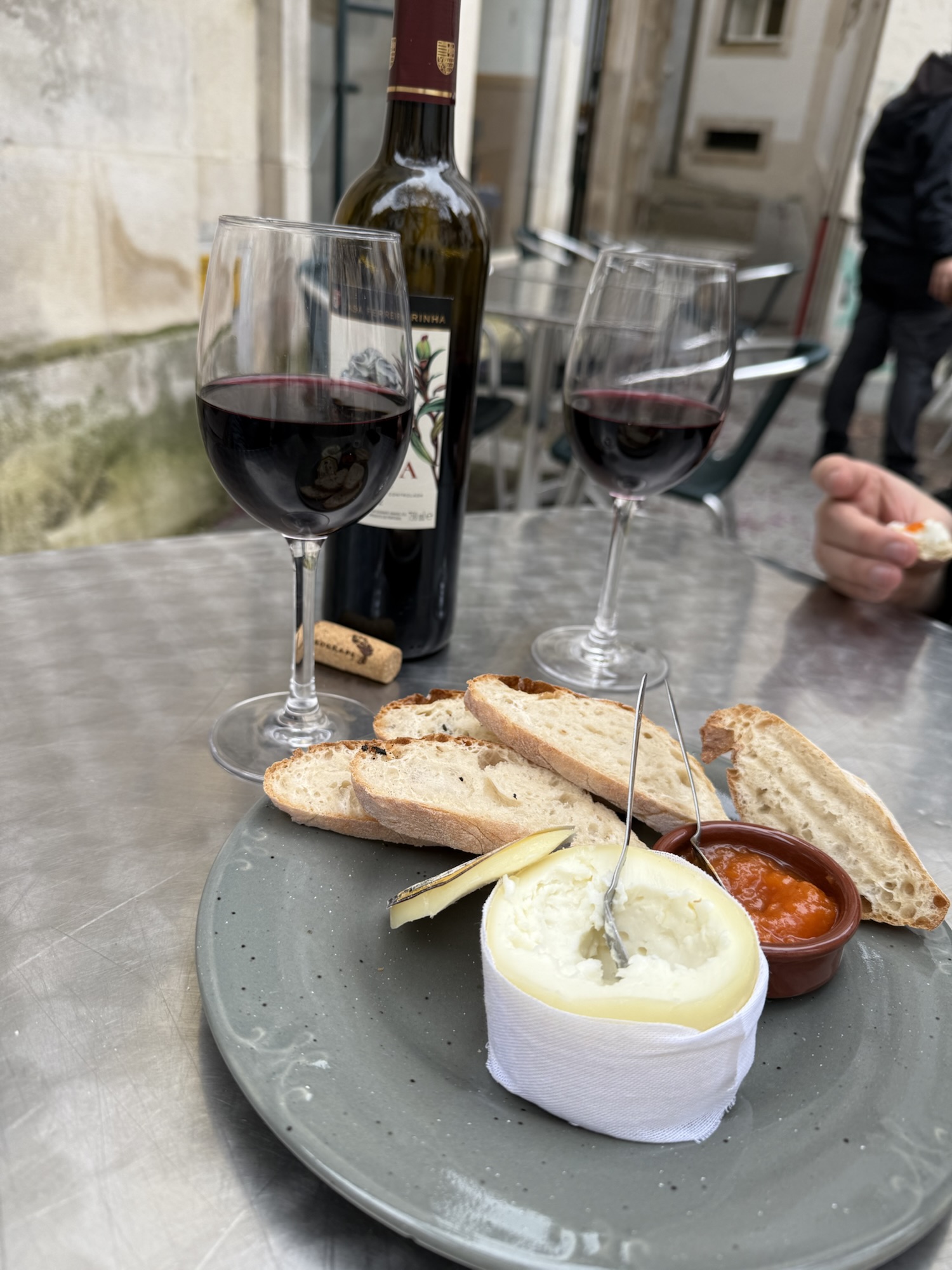
Wine + cheese = best snack!
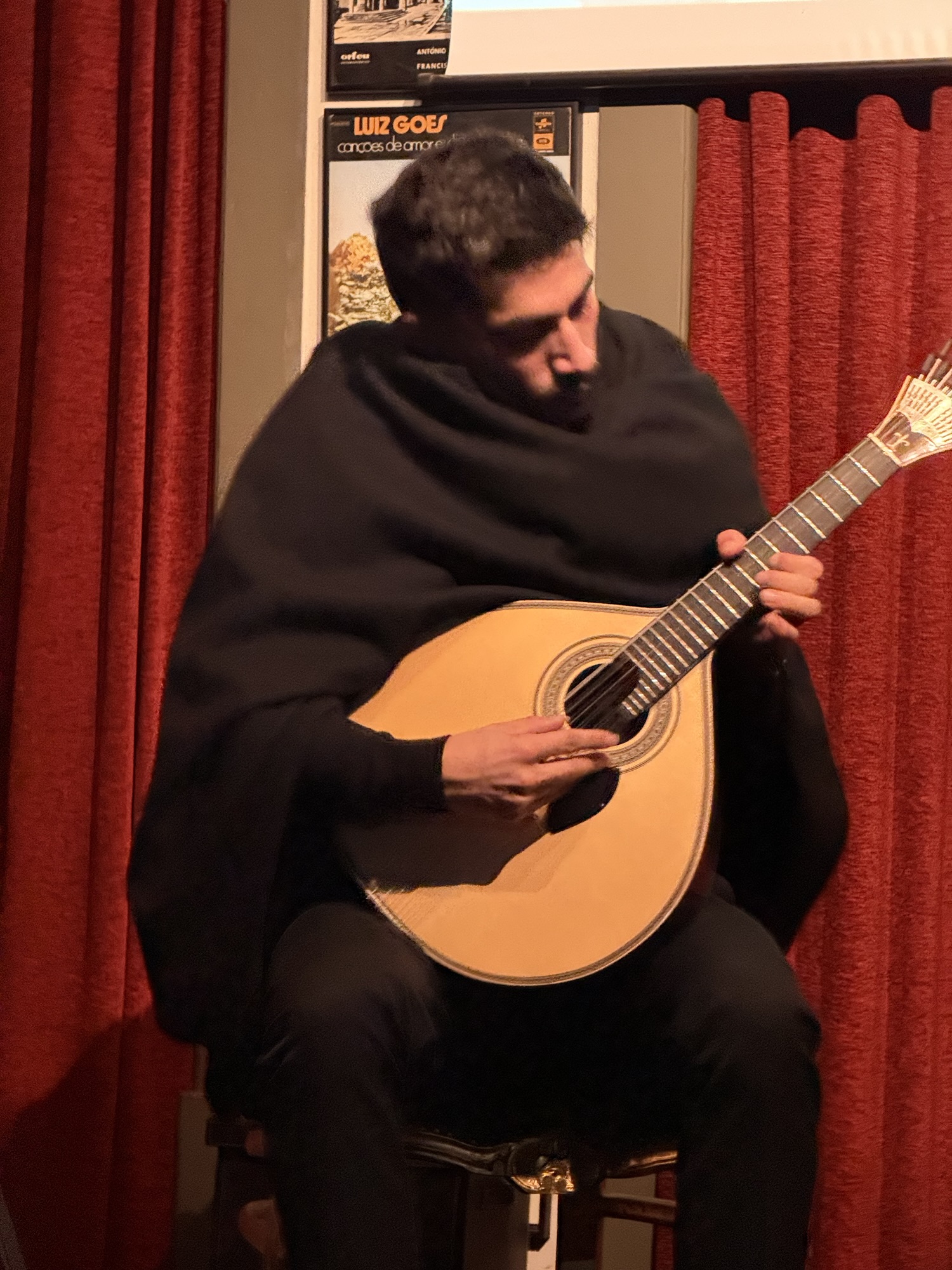
Portugal has a musical tradition called fado, which is vocal music, usually somber or melancholic, accompanied by guitar (traditional and Portuguese). Coimbra has their own style of fado, exclusively performed by men. Think of the ballad Romeo might have sung to Juliet in her balcony and you get the idea. We went to a performance by local fado artists. It was quite nice, but sooo hard to stay awake (we were tired, warm, and listening to music…a recipe for sleepiness).
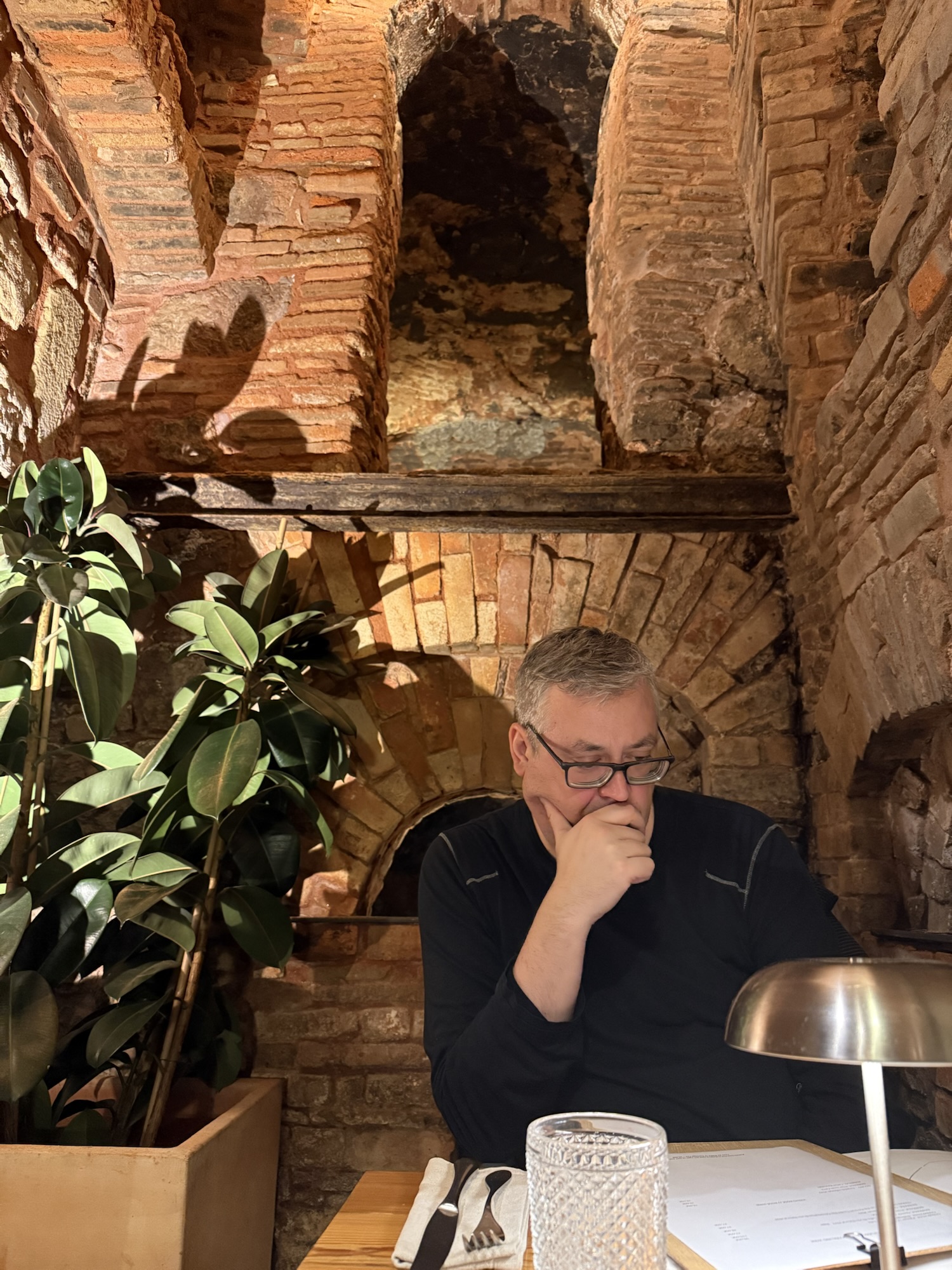
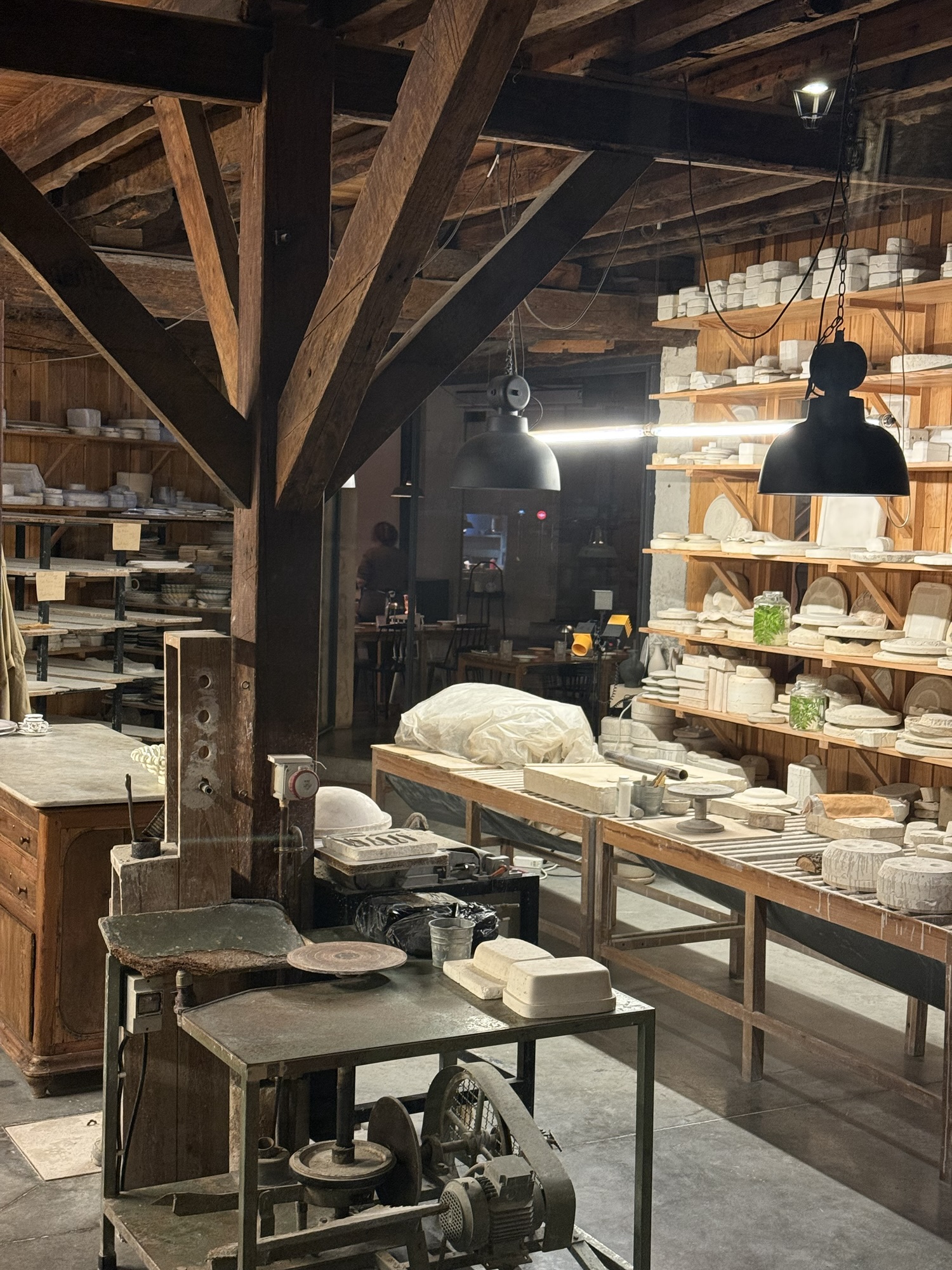
Luke found a fancy restaurant for dinner that is adjacent to a pottery factory (in fact, half of the factory was turned into a restaurant, so there are fires and kilns all over). Luke had duck, and I had barley in a herbed cheese sauce with mushrooms. It was all excellent, and the space was super cool.
Luke in a kiln chimney, contemplating a duck dinnerPottery factory
Coimbra is a university town, so nearly everybody speaks English. We’ve learned how to say “thank you” (obrigada for me, obrigado for Luke), and that’s pretty much all we need. It is remarkably comfortable here. Maybe not quite big enough to be entertaining for the long haul (its 2021 population was 140,000), but certainly enjoyable enough for 4 days.
Our last day was the one I was most excited about: the Panama Canal. I chose to do the full transit so we could experience all 3 locks: Miraflores, Pedro Miguel, and Gatún.
Another 5:30am pickup took us to the marina where we boarded the Pacific Queen.
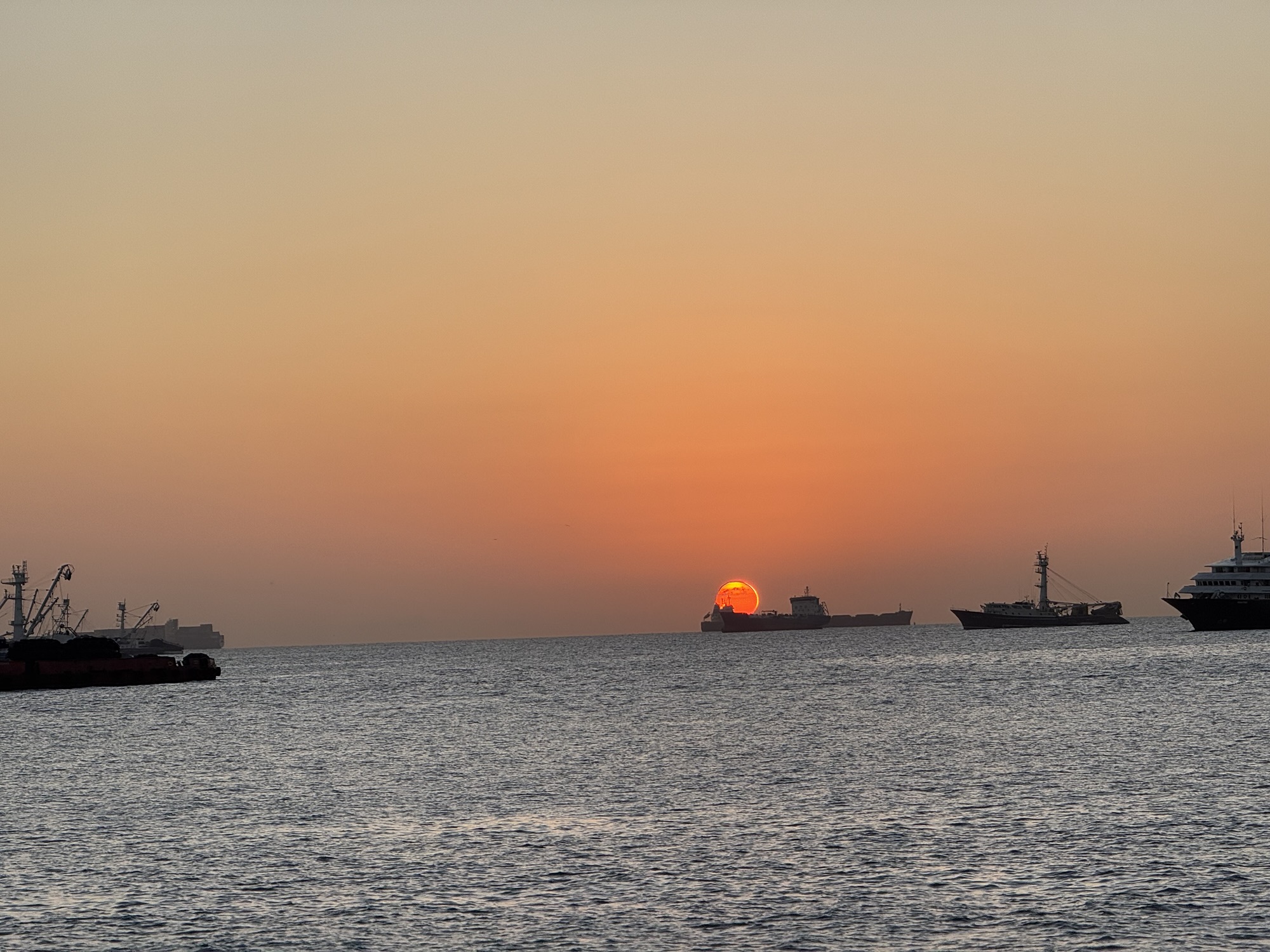
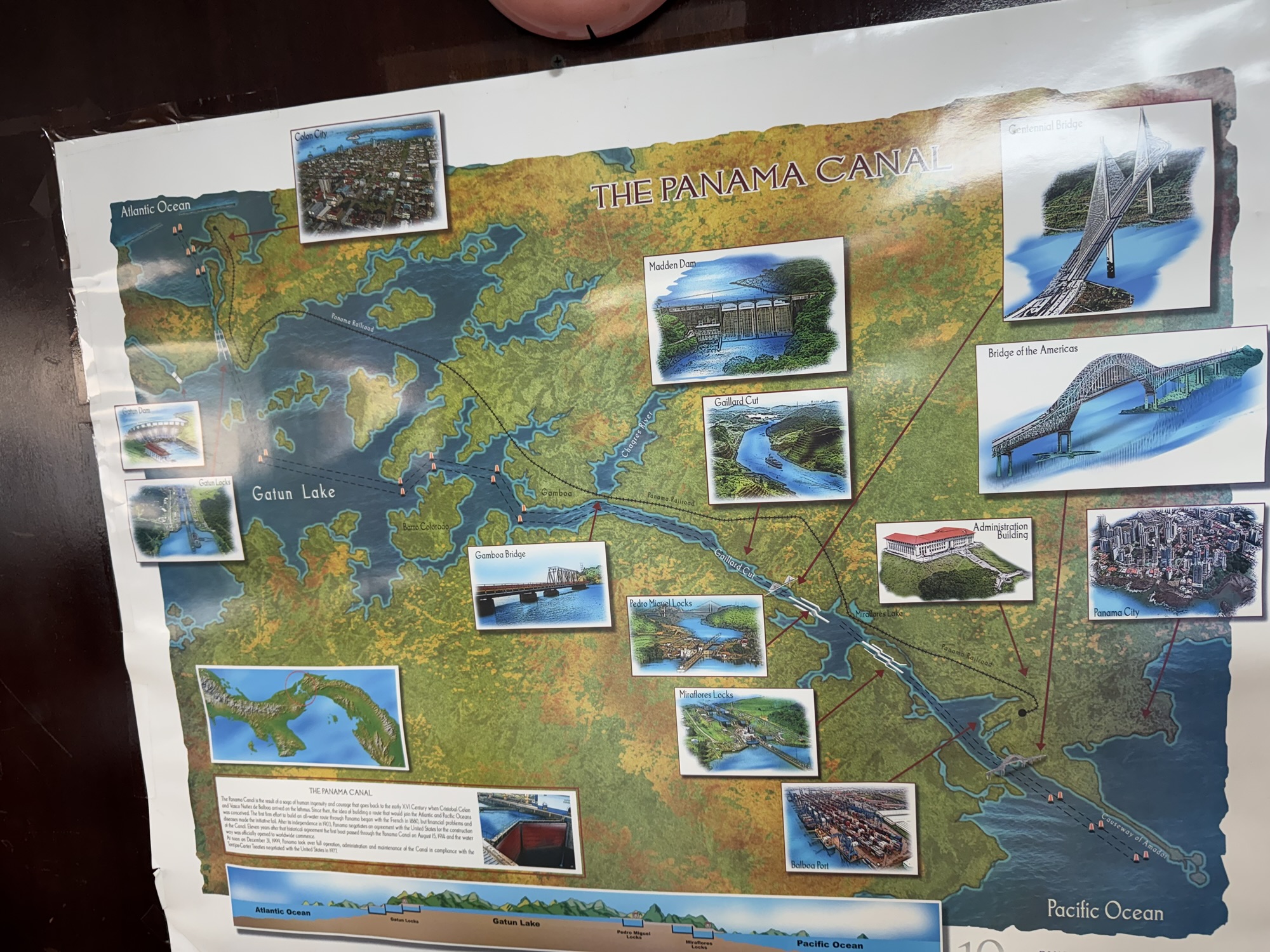
Our shipSunrise over the harborCanal map – the topographical map at the bottom is particularly informative about the elevation changes from Pacific Ocean through the locks to the Atlantic Ocean
I learned a TON on this trip about the canal construction and operation. It was super interesting!
Ships are charged by weight, length, or the number of berths. Our ship was 121 feet long and was charged about $2,000 for a one-way canal transit. The crew will have to pay that again to return to the marina (there’s no demand for south-bound tours). Ships over 125 feet of length require stabilizing cables (run by little vehicles on tracks called mules) which incur more charges, as do ships with dangerous cargo. The largest fees top $1.1 million for the mega container ships with over 17,000 containers on board.
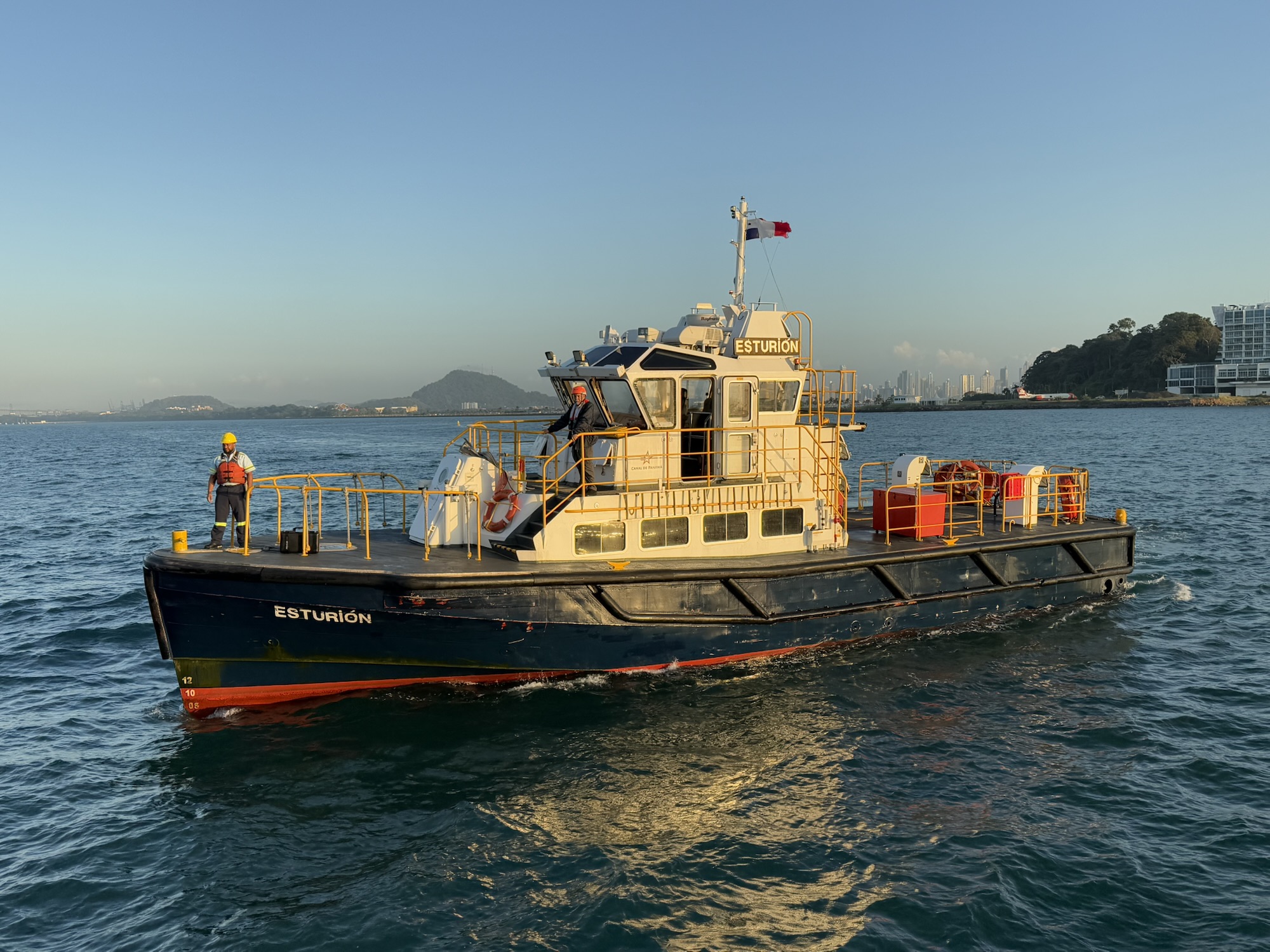
Our first step was to pick up our pilot – a canal authority employee who assists the ship captain with navigating the canal. I had assumed that the canal was basically a concrete trough which would be pretty straight-forward to navigate, but those images are from the lock runways. The canal itself is actually a sometimes serpentine waterway that’s barely deeper than the boats.
Our pilot getting dropped off
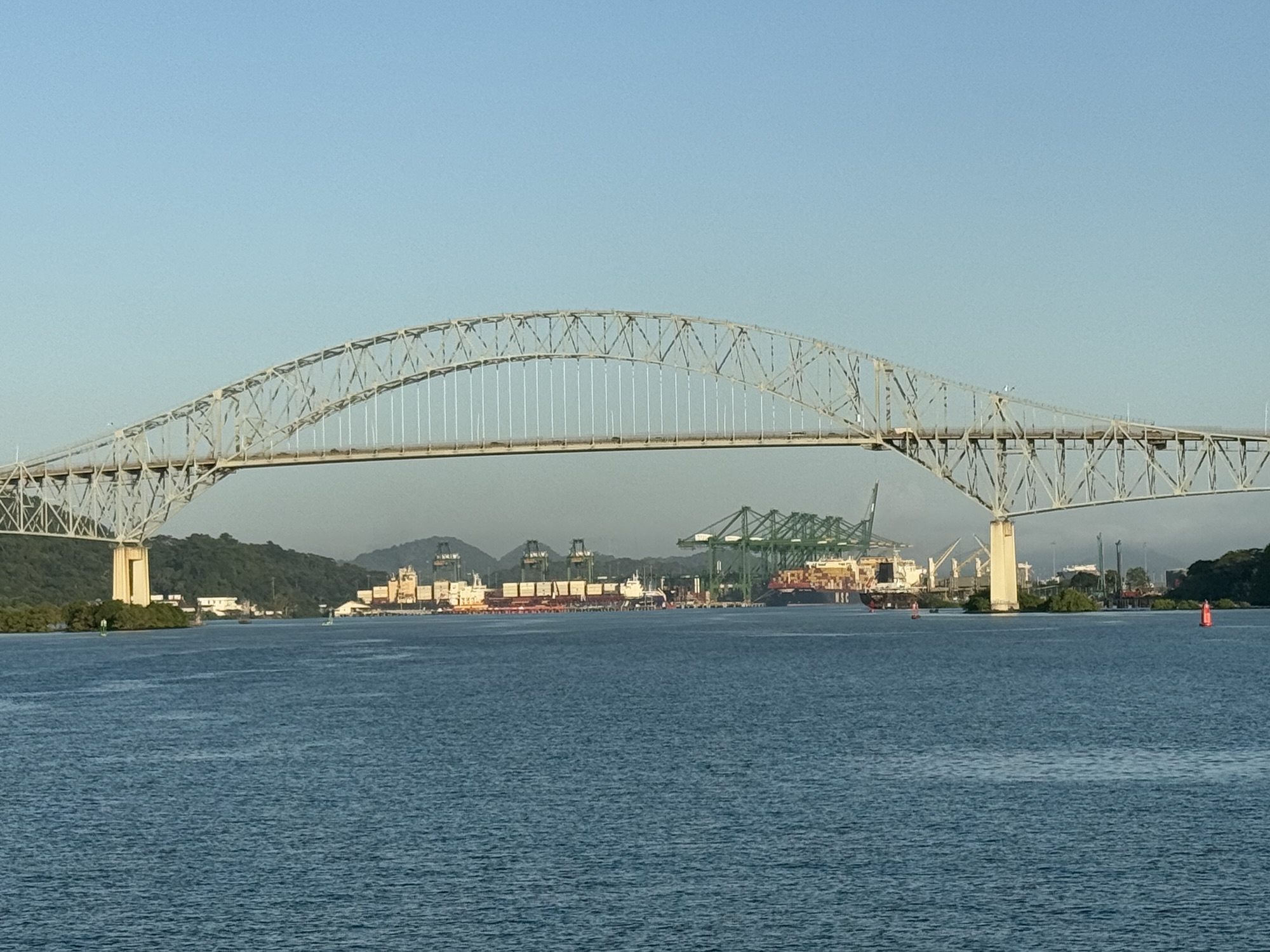
After collecting our pilot, we passed under the Bridge of the Americas. It has a generous 201 foot clearance, yet the canal sees boats that are so massive that they can only clear it during low tide because the Pacific Ocean has tide variances of 15-18 feet in Panama City (the Caribbean tides are only ~1-2 feet).
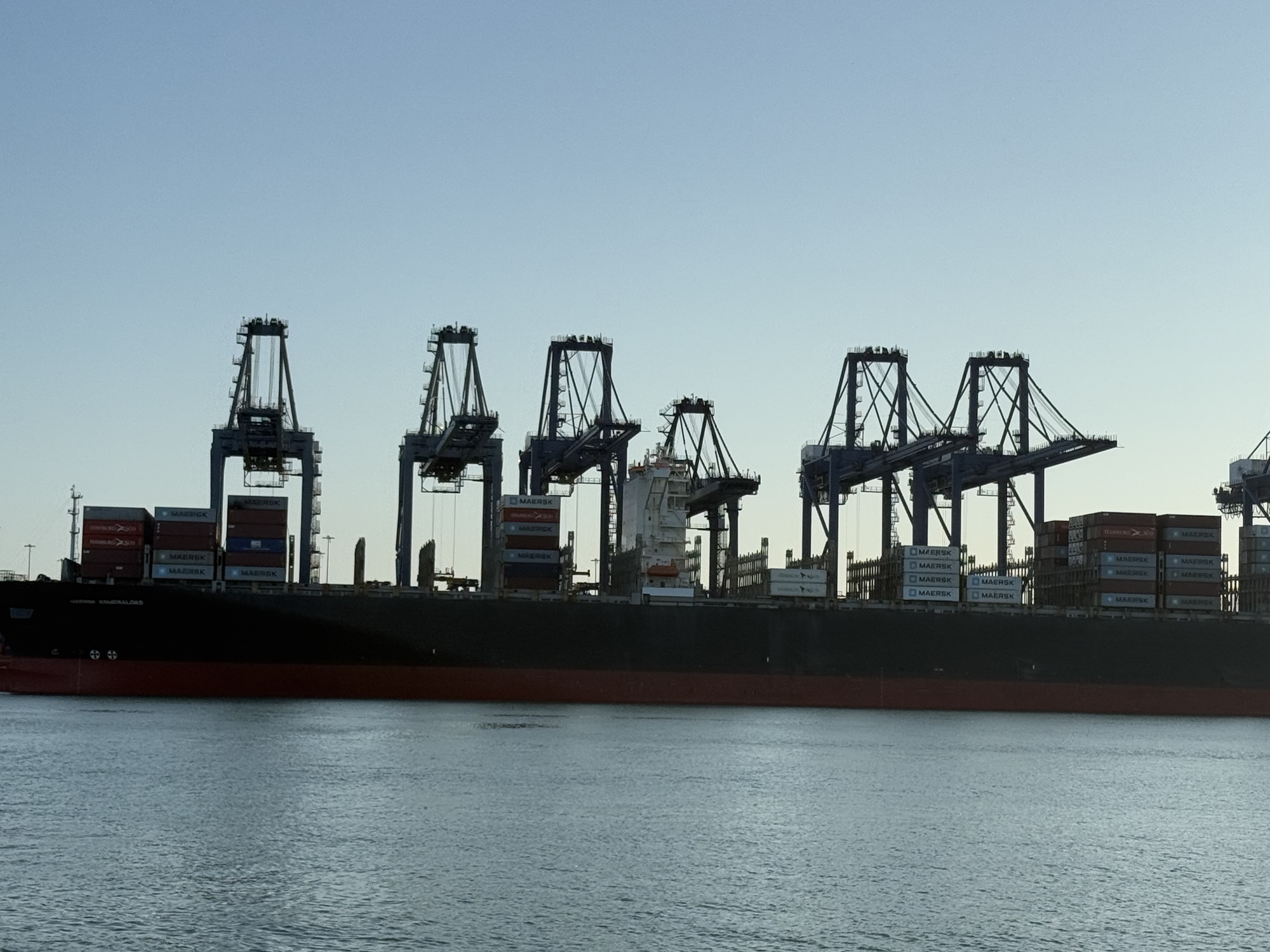
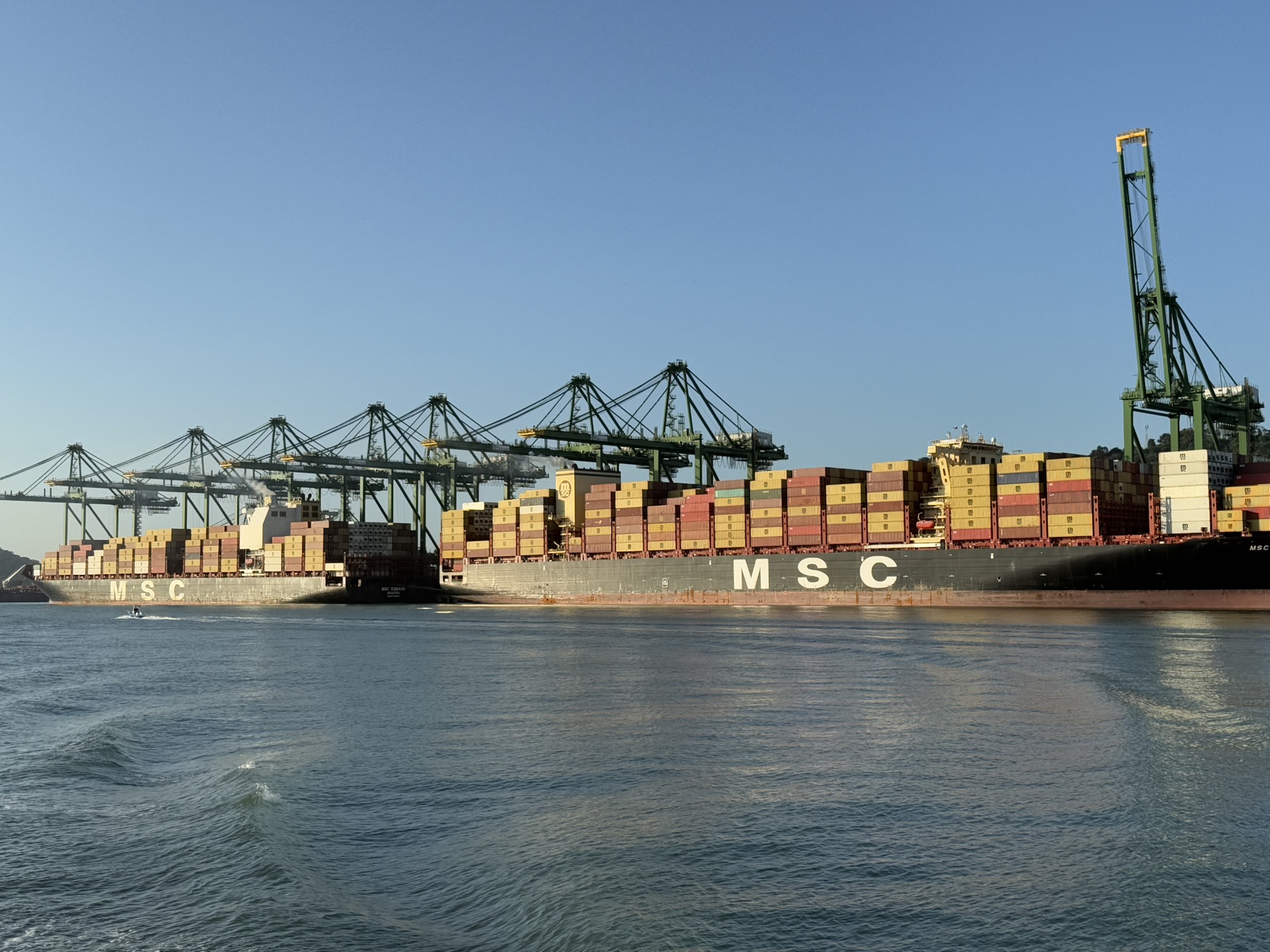
Right after the bridge was the Balboa port (which was actively unloading a cargo ship!). I can’t fathom how much of the world’s merchandise moves through this port and canal every day.
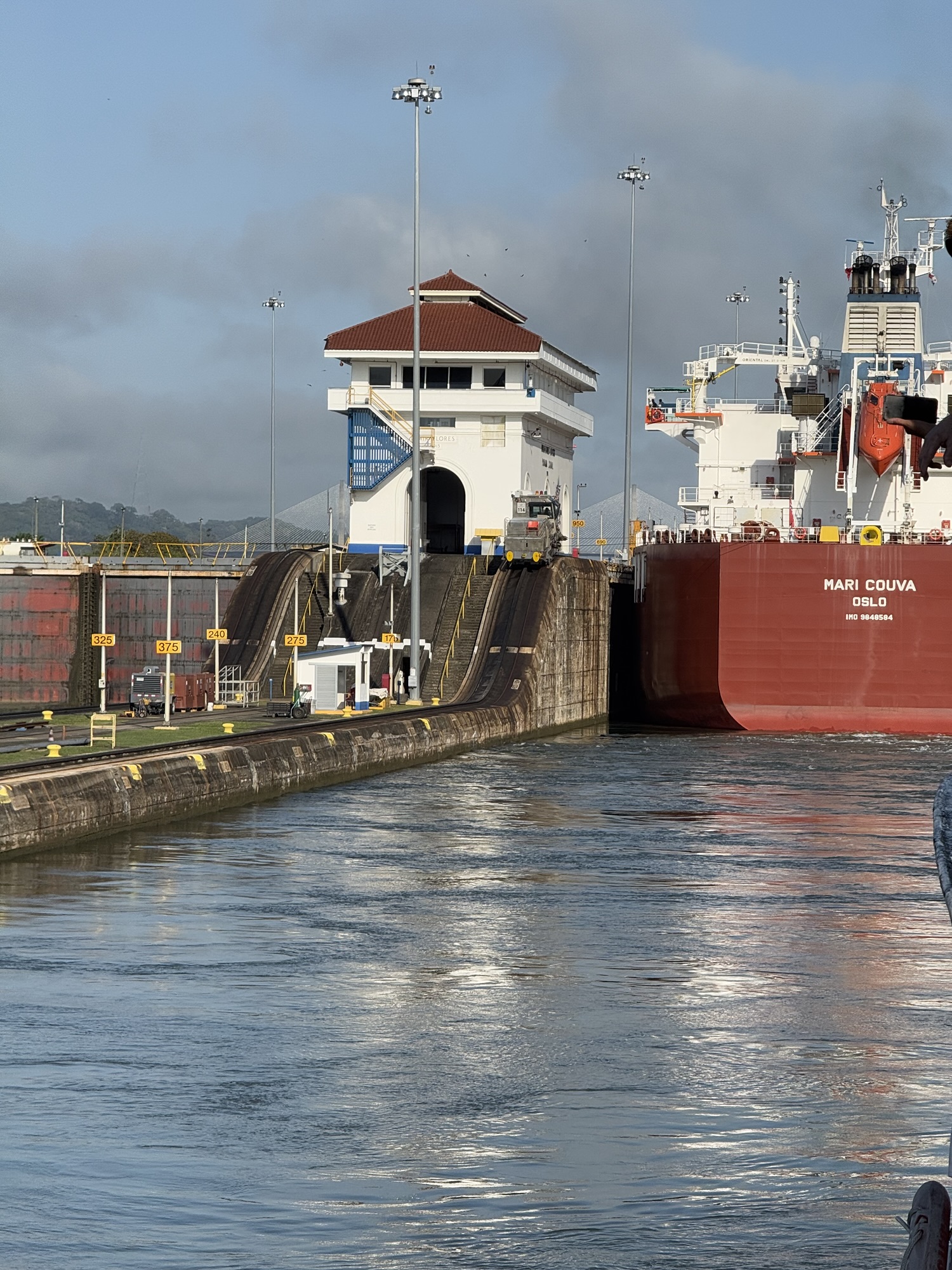
Our first exciting event was the Miraflores Locks. This is a double-set of locks which raise boats nearly 60 feet using only gravity. There are no pumps to move the water. Because the water flows from higher elevation (the lake) to lower (the ocean), the canal authorities are mindful about how often they open the locks. Small boats like ours have to be paired with a bigger boat or many small ones and go through together, ensuring that each lock opening is as efficient as possible to prevent draining the lake.
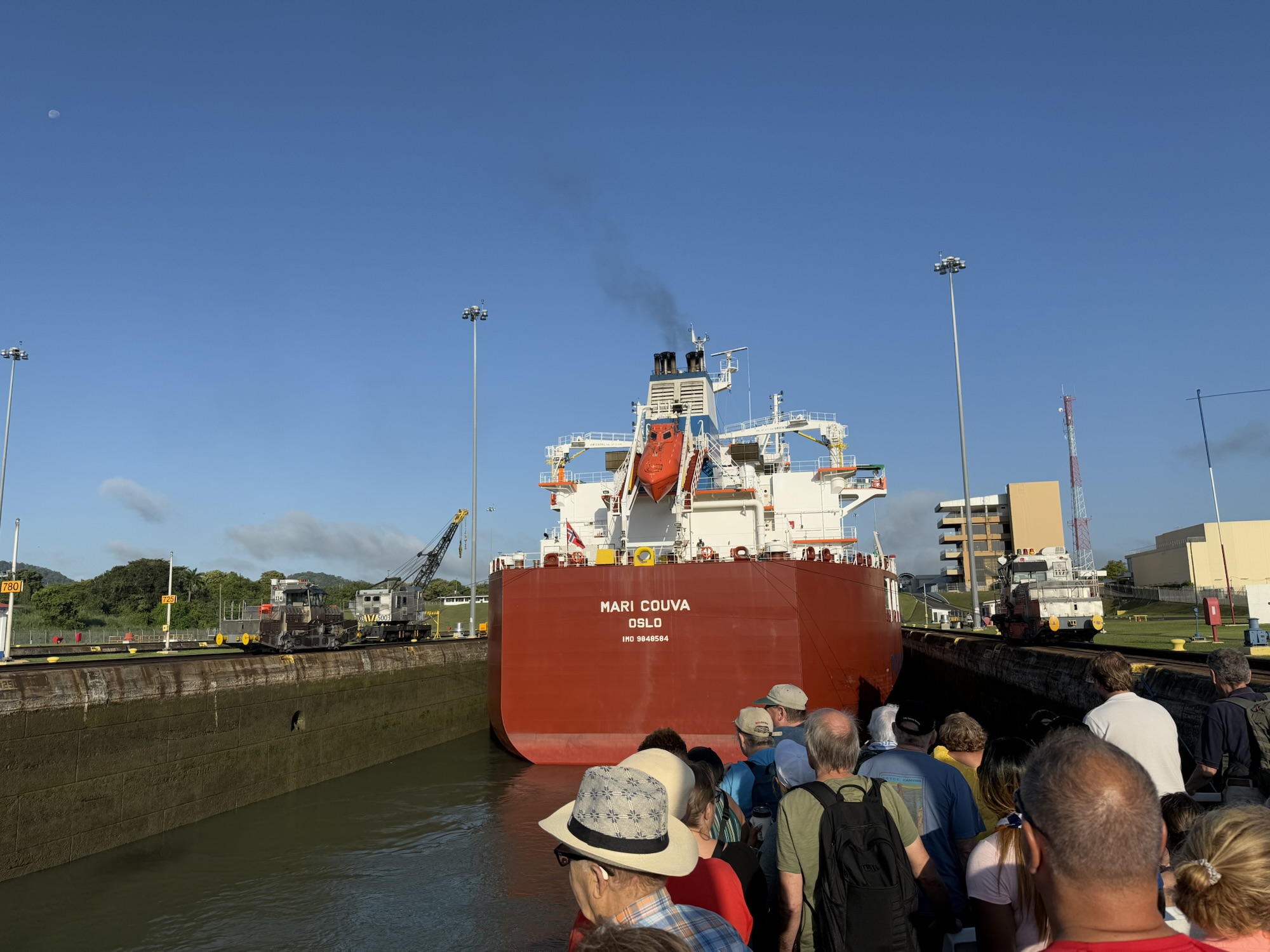
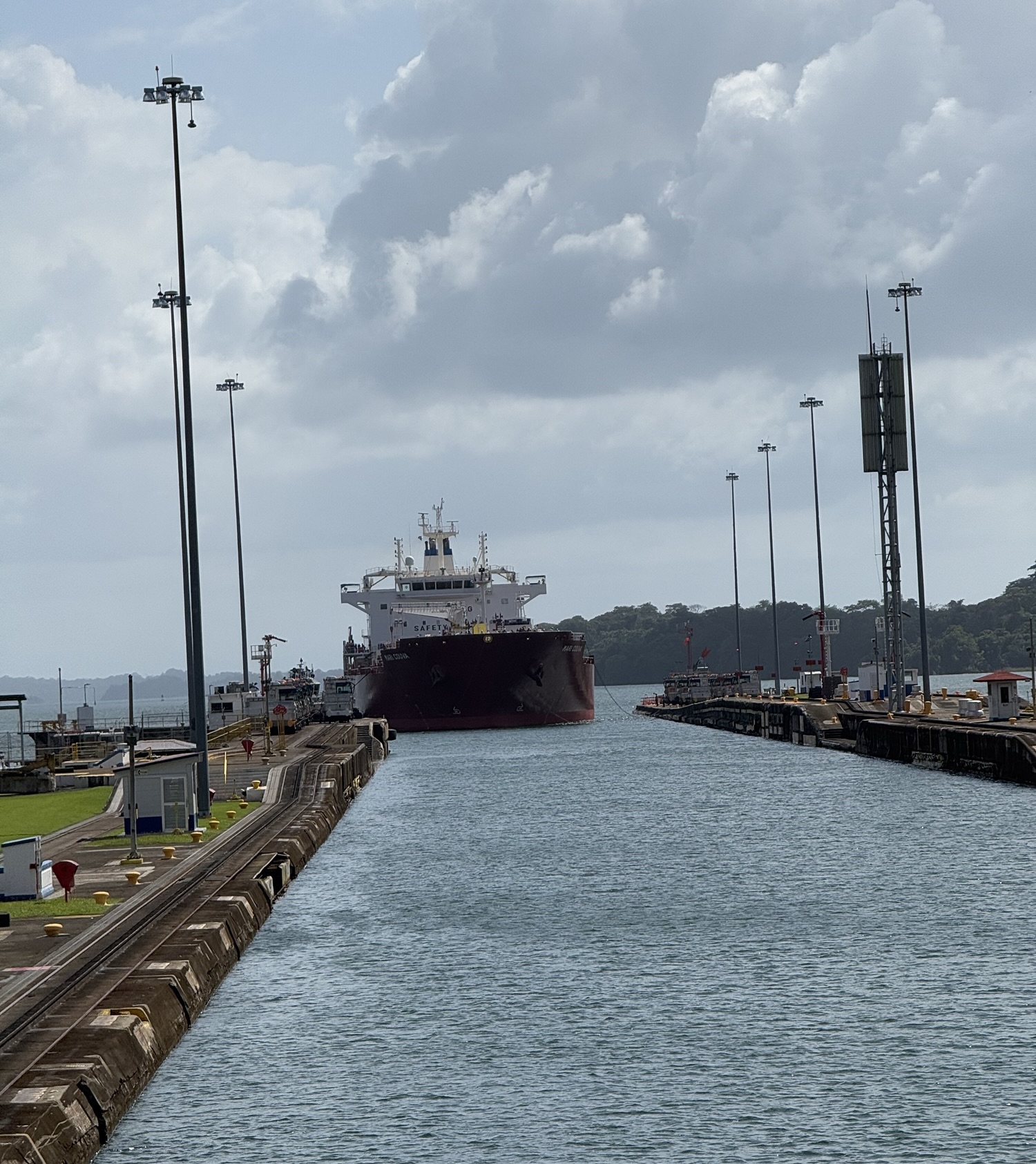
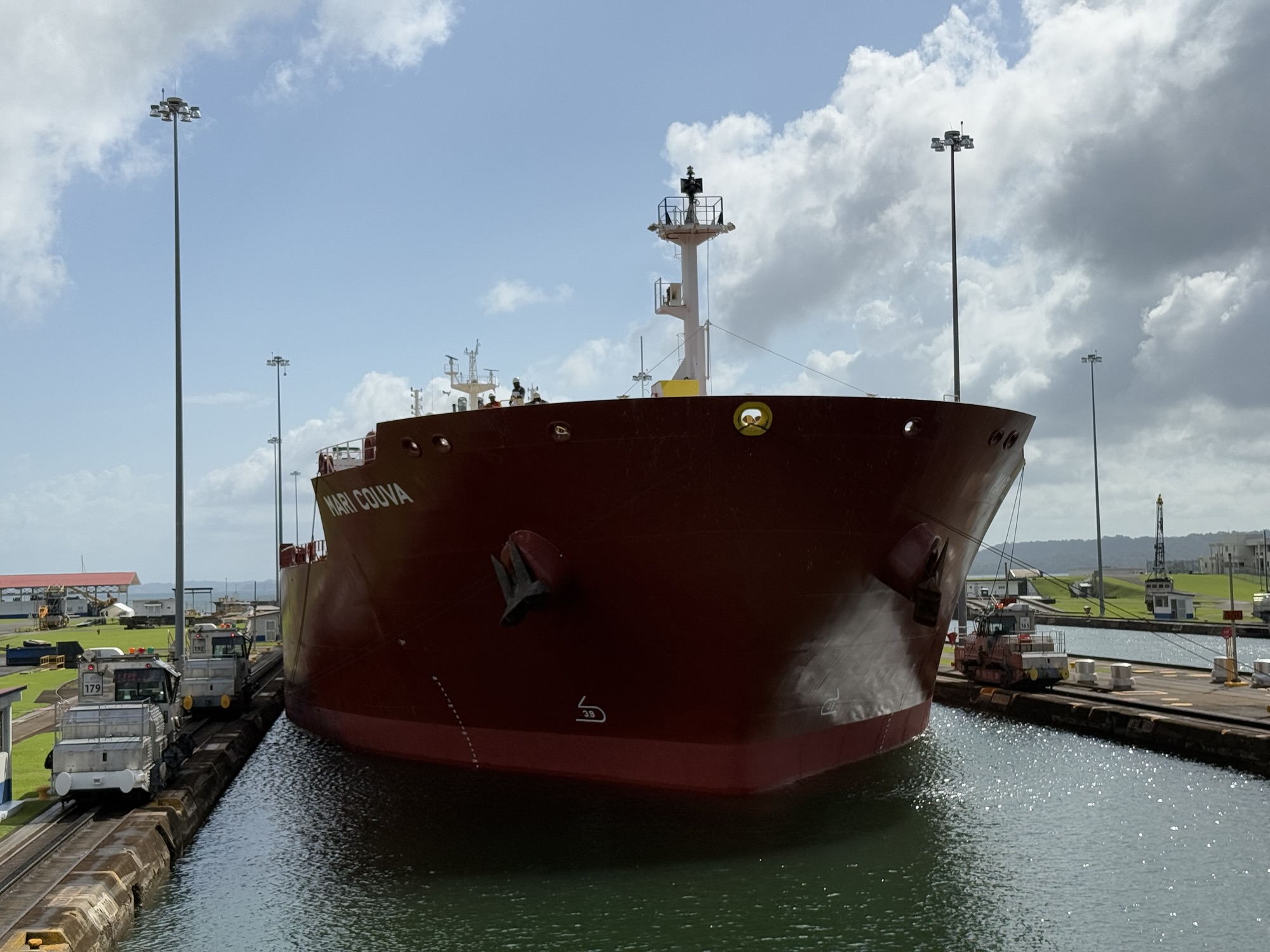
We are with the Mari Couva, a tanker ship from Norway that’s the maximum width allowed in the original canal (the new larger lock channel can handle the mega-ships). Mari Couva paid about $125,000 to use the canal, but it saved them 25-30 days of sailing around the horn, and that makes the canal transit worthwhile for the shipping company.
Actual time to fill the 1,000 foot-long chamber 60’ deep = 8 minutesStep 1: nearly 30’ riseAnother 30’ higher after the second part of the Miraflores Locks
Shipbuilders quickly maximized the size of their ships to fit the canal locks (60’ deep and 1000’ long). The Mari Couva is only a few feet narrower than the locks. She has to be connected via steel cables to mules on shore to keep her steady and prevent her hull from damaging the locks. All boats in the locks have to use their own engines to advance; tugboats are only sent in to help steer the bigger boats – more on that later.
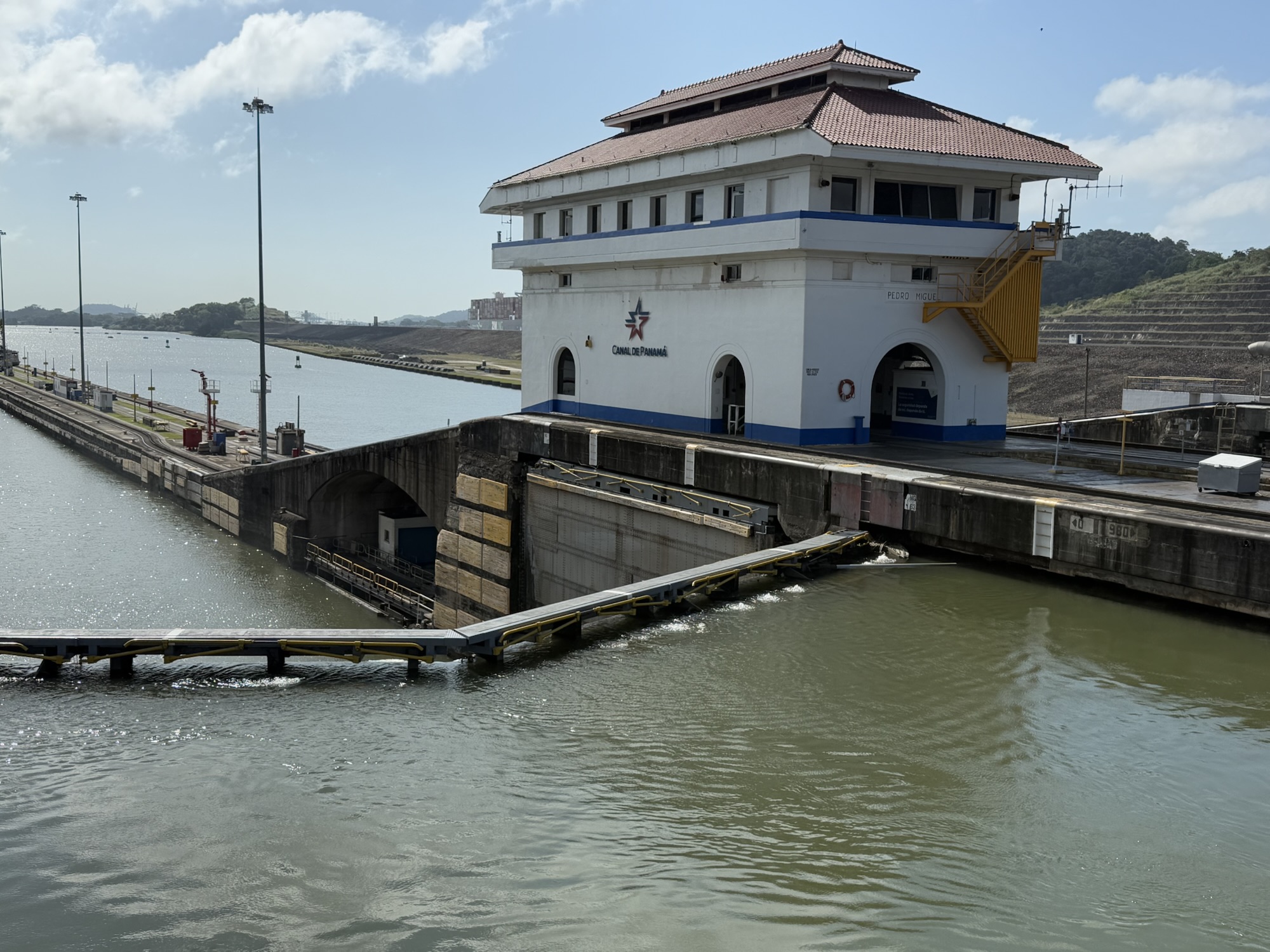
After clearing the Miraflores locks, we navigated a short while and then entered the single-chamber Pedro Miguel Lock. This single lock yields another 31’ rise, brining us to the elevation of Gatún Lake.
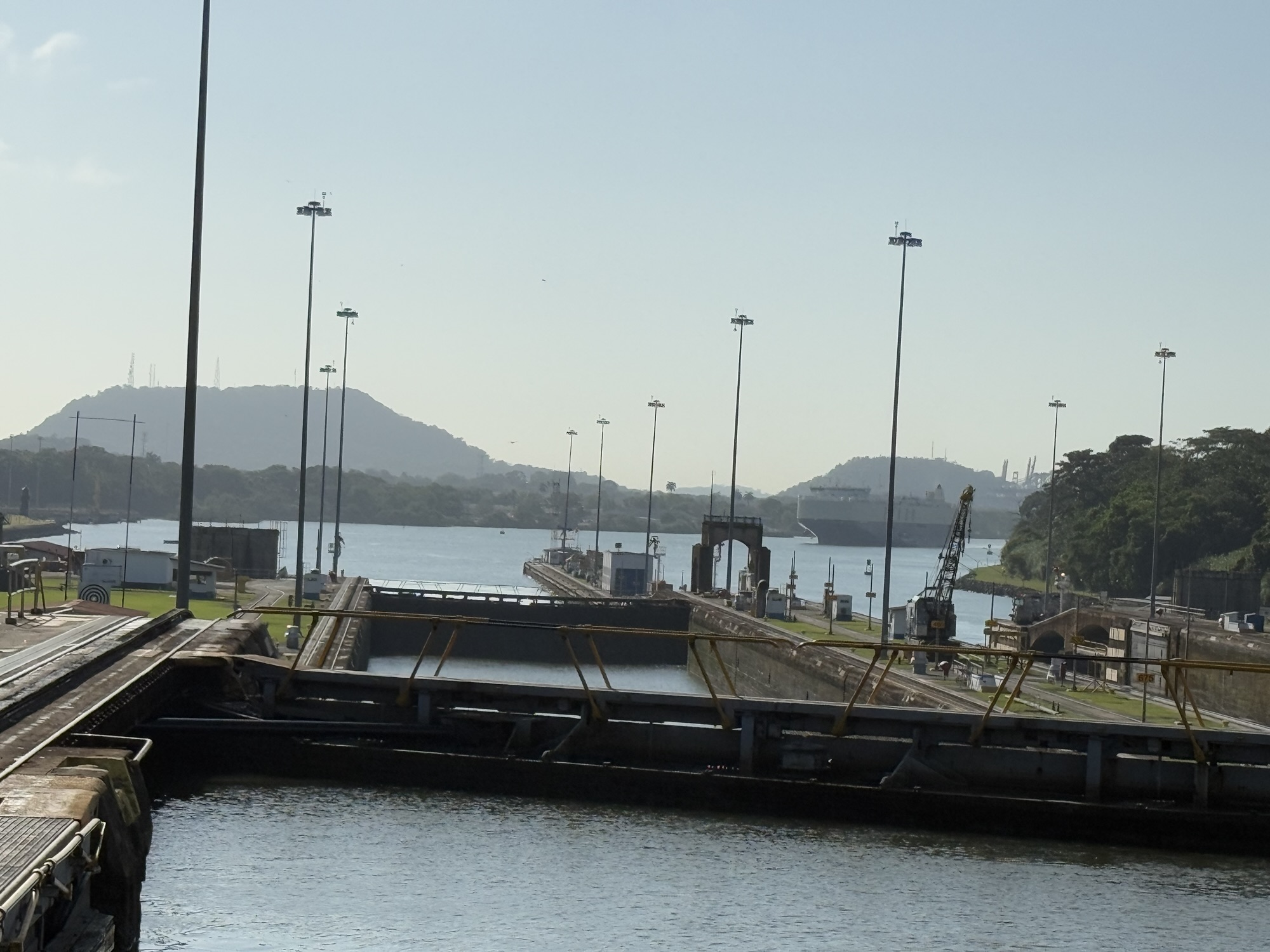
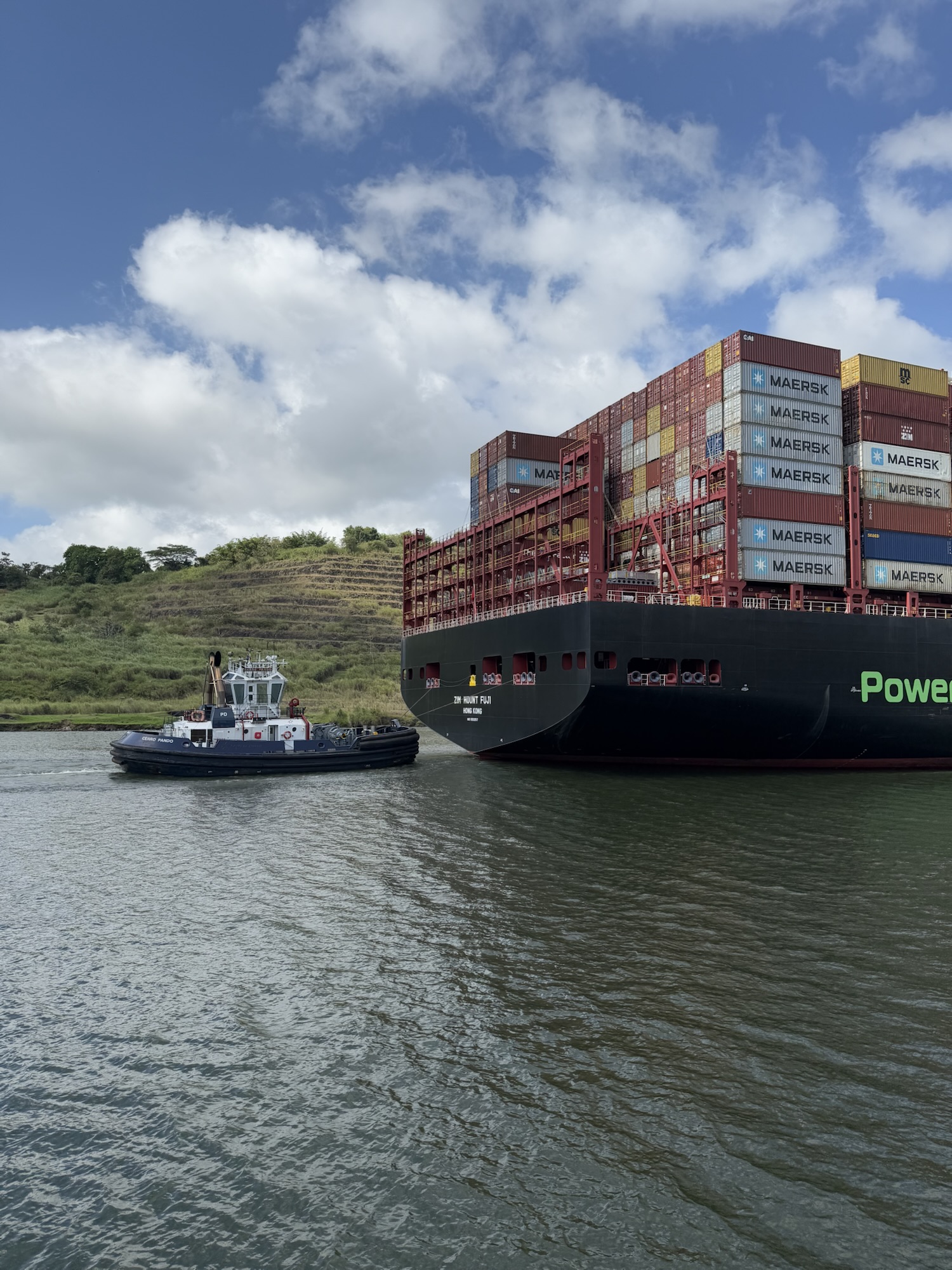
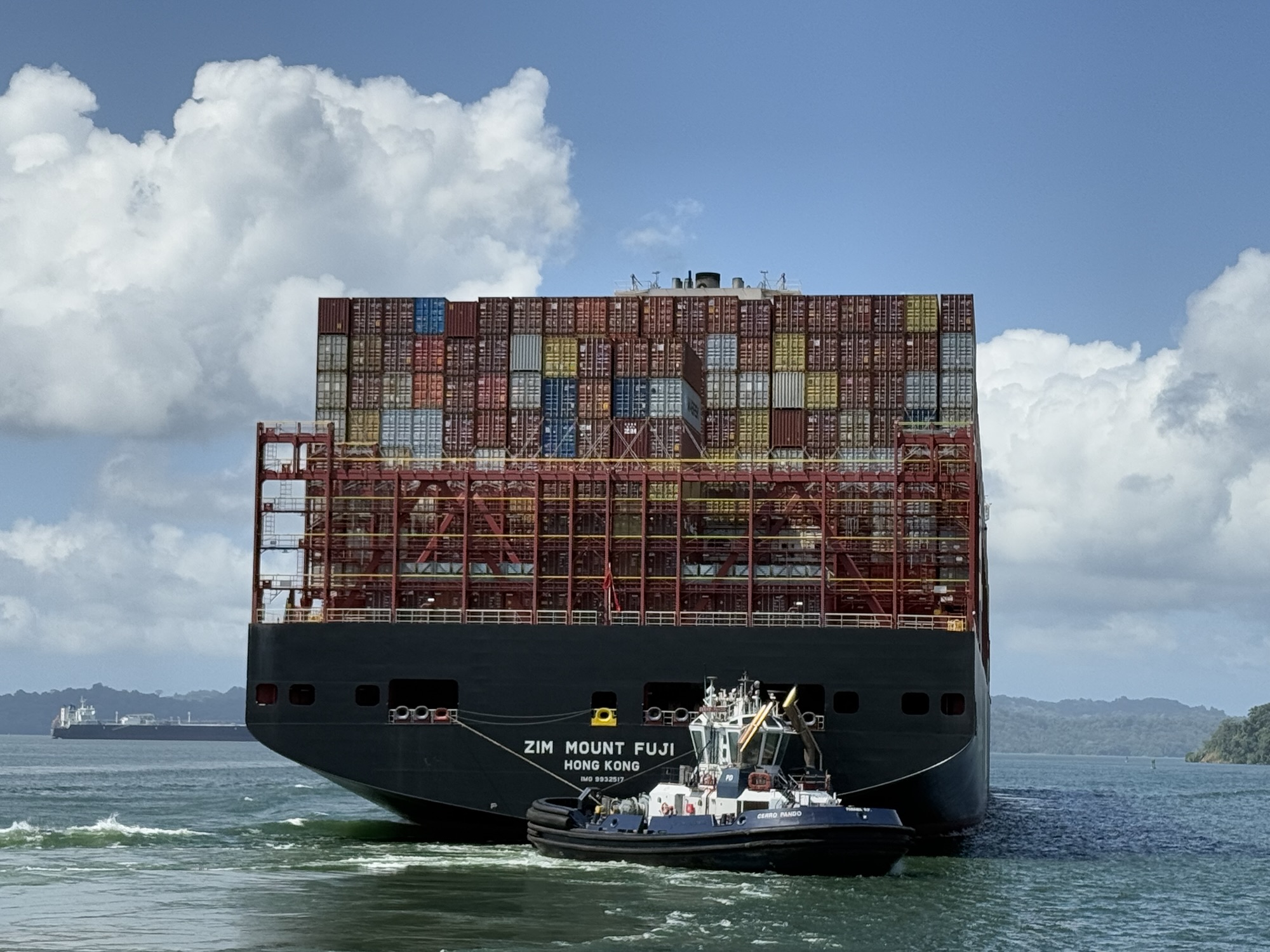
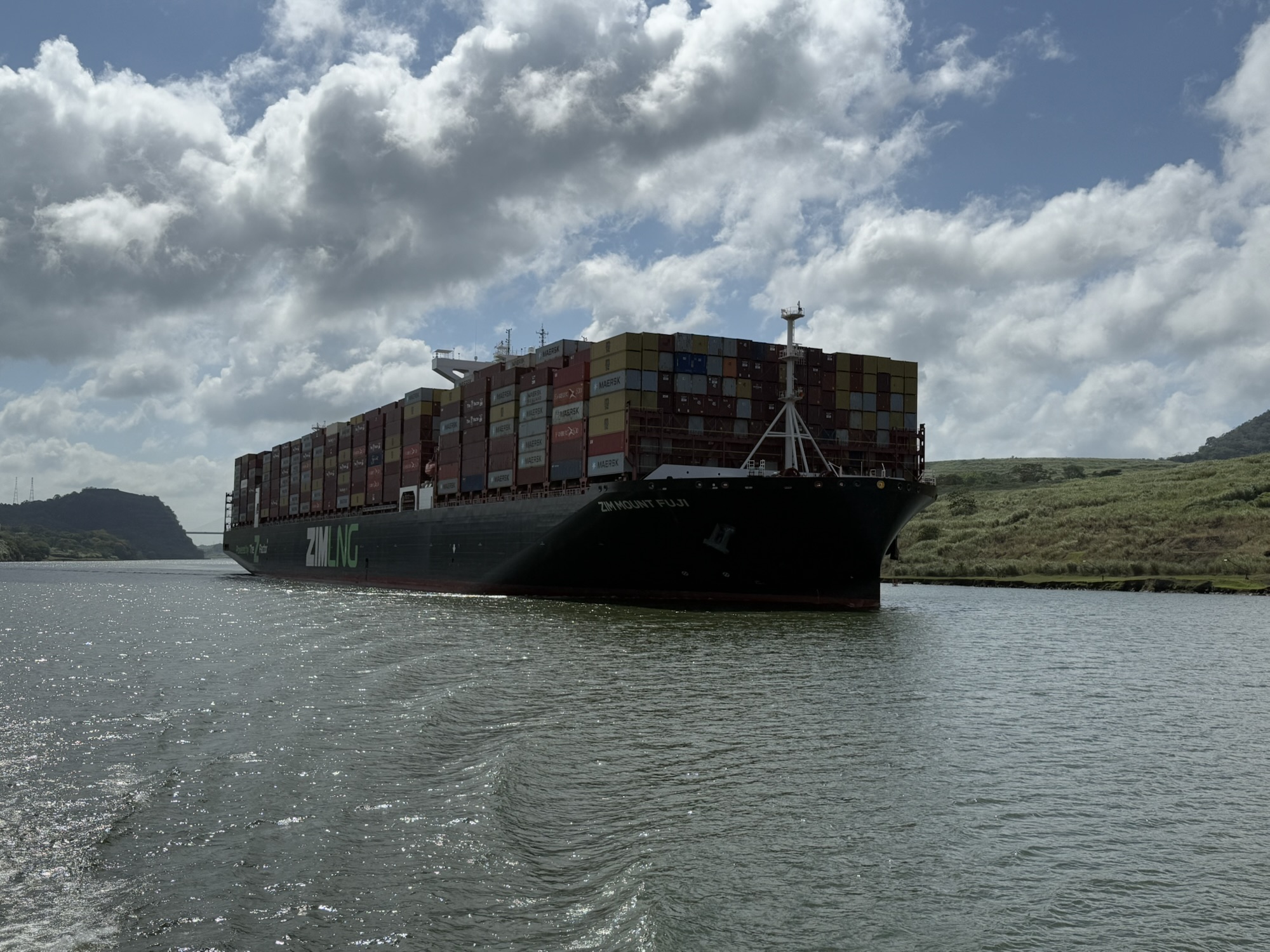
As we navigated the Pedro Miguel locks, a mega ship was in the new channel next to us. The Zoom Mount Fuji was beyond large. She was carrying around 13,000 containers (a bit less than half of them are visible, with the rest being under the deck level).
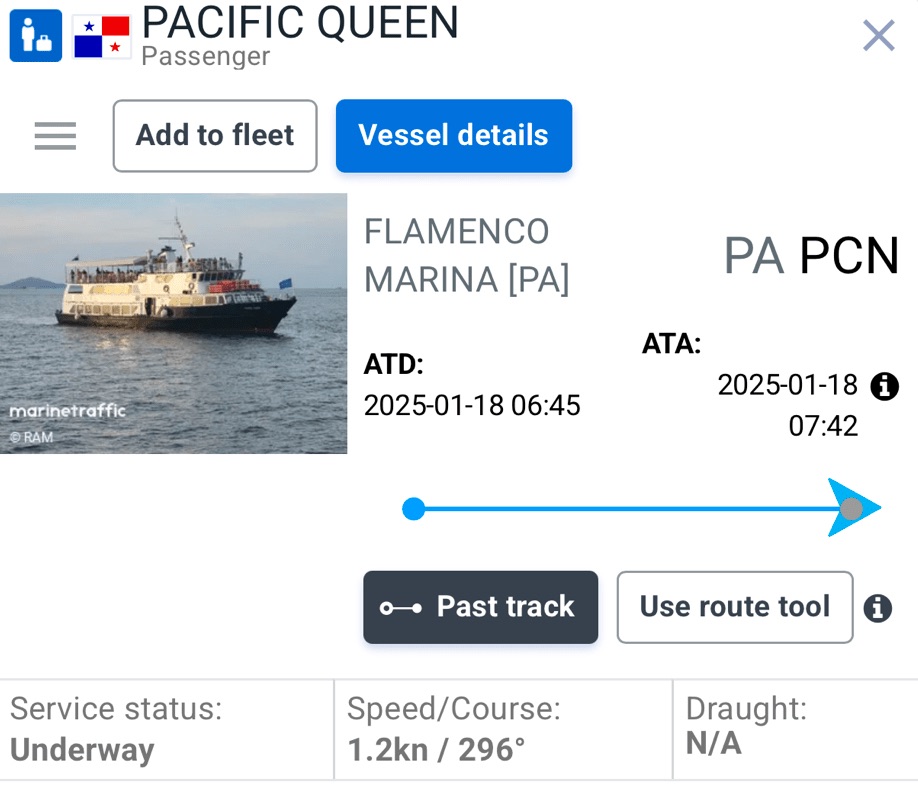
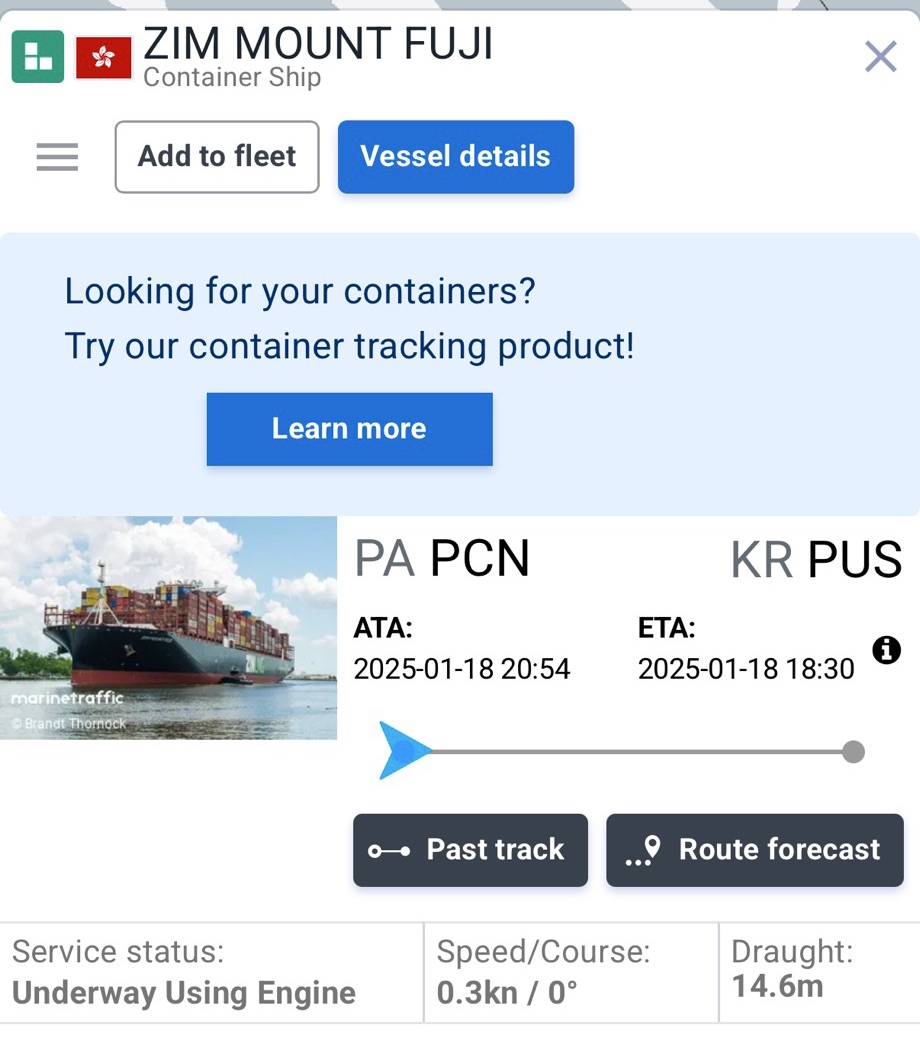
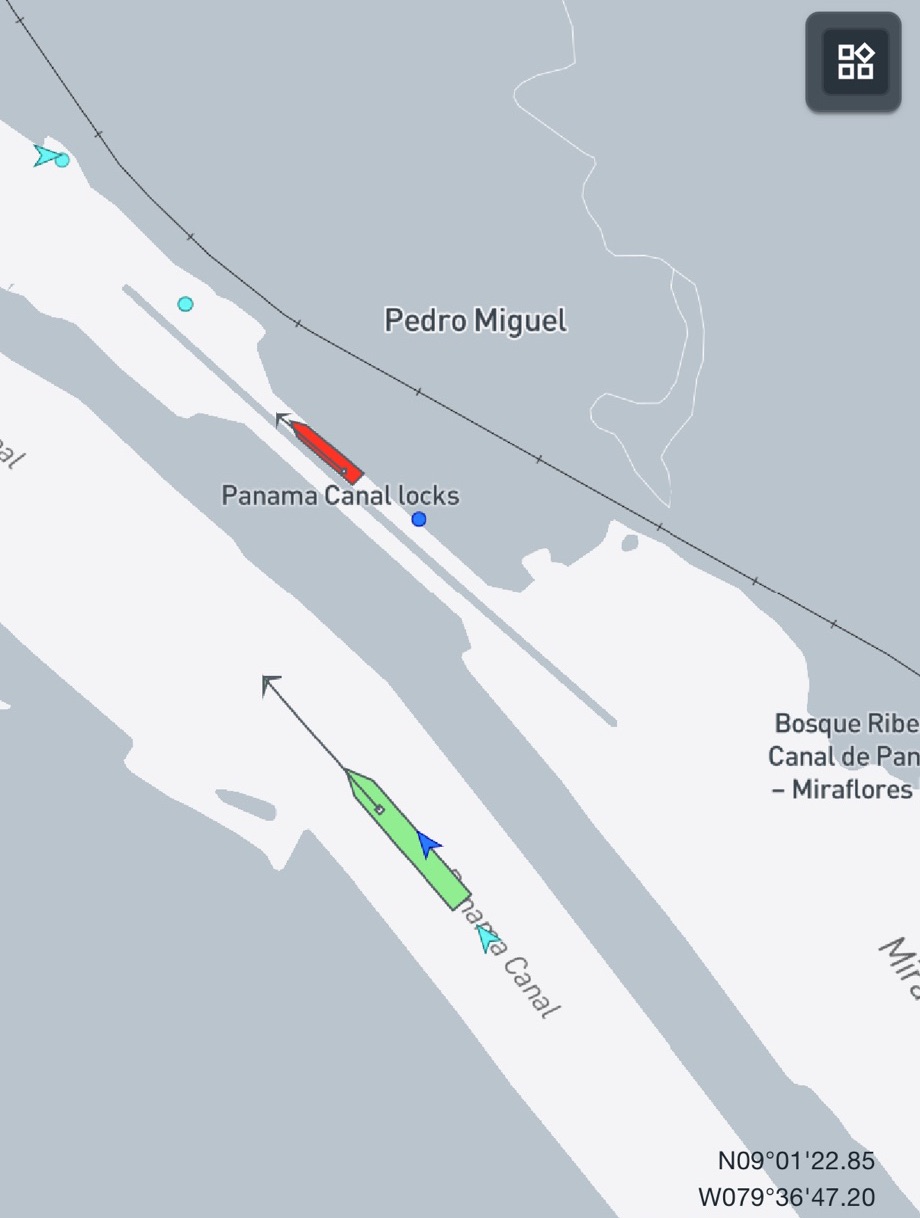
For comparison, here are the marinetraffic.com entries for our ship, our canal partner ship, and the mega container ship:
PACIFIC QUEEN (MMSI: 352001289) is a Passenger ship and is sailing under the flag of Panama. Her length overall (LOA) is 33 meters and her width is 8 meters.
MARI COUVA (IMO: 9848584) is a Oil/Chemical Tanker and is sailing under the flag of Norway. Her length overall (LOA) is 183.07 meters and her width is 32.24 meters.
ZIM MOUNT FUJI (IMO: 9932517) is a Container Ship and is sailing under the flag of Hong Kong. Her length overall (LOA) is 366 meters and her width is 51.03 meters.
For size comparison, the large green icon is the Zim Mount Fuji, the red one is the Mari Couva, and the tiny blue dot next to her is our boat
The new channel is only for exit and entry – all vessels share the lake and main navigational pathways once inside the canal. The canal operates 24 hours a day, with roughly 12 hours northbound and then 12 hours southbound (they to wait for biggest vessels to clear the narrowest parts before they can begin allowing traffic through in the opposite direction). It handles roughly 35-40 vessels per day. 8,000 people are employed by the Canal Authority (it’s the largest employer in Panama).
Gatún lake was the largest man-made lake in the world for ages. It took 10 years after the dam was built for the water level in the lake to stabilize, and has since remained remarkably stable thanks to Panama’s generous rainy season. The land all around is protected to maintain the foliage and humidity needed to maintain that water level, although climate change is starting to impact the area. La Niña weather years now bring longer dry spells to Panama, which is not good for the canal. Too little water and the locks will not work, and there is no plan B for global commerce.
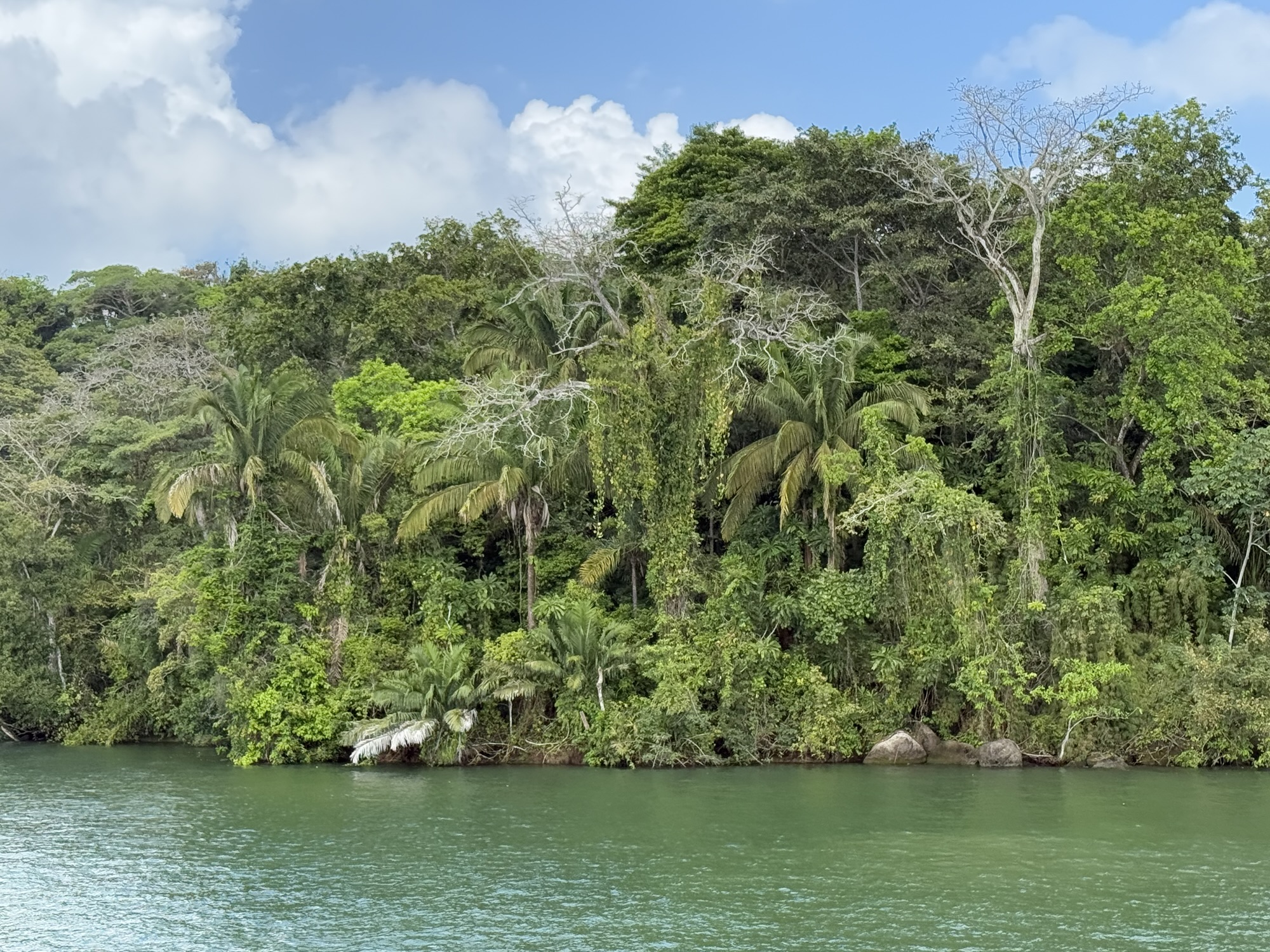
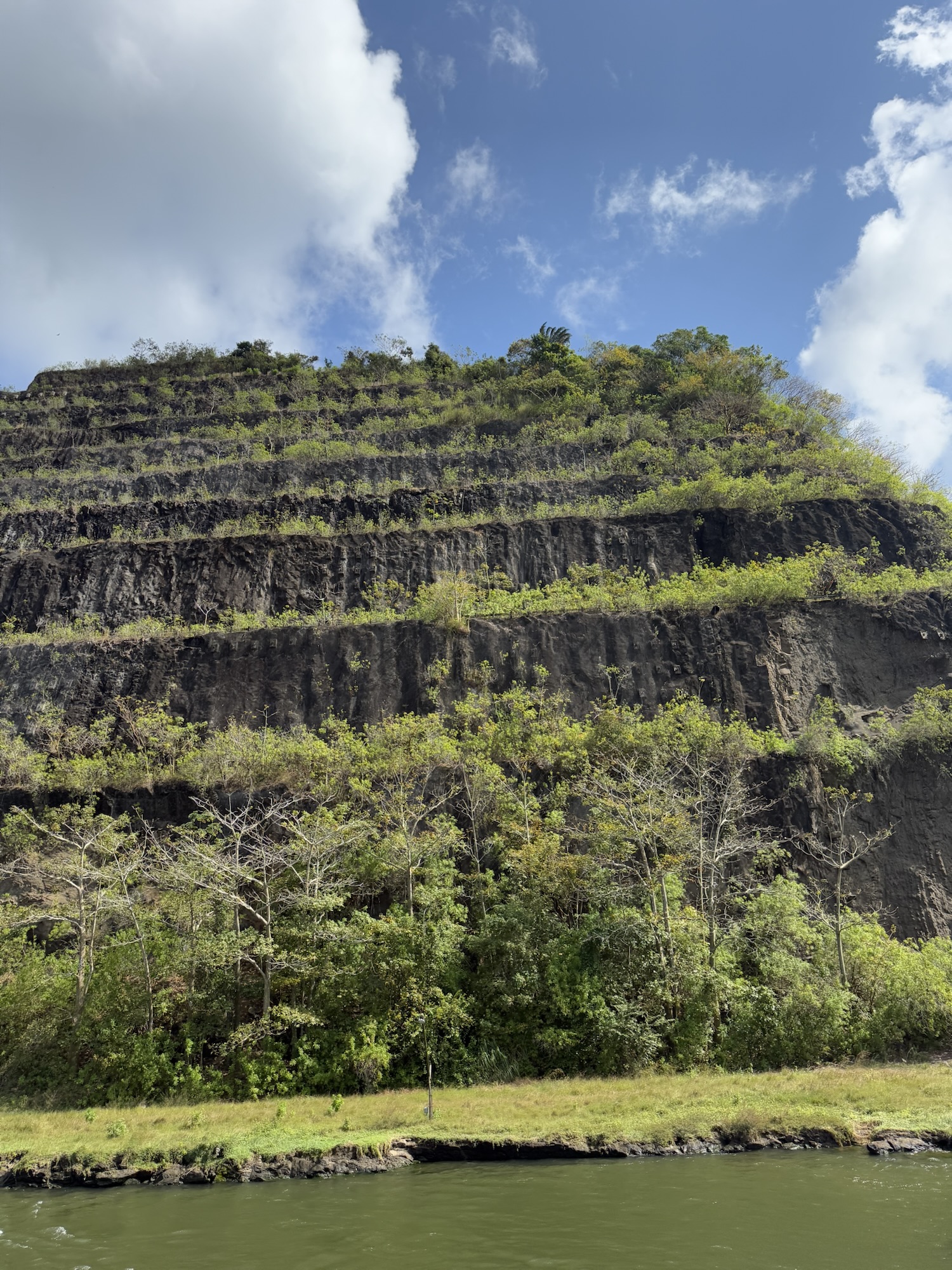
Untouched jungle along the cutTerraced banks to prevent landslides
I was fascinated at how the massive Zim Mount Fuji traversed the narrow cut and how it navigated the specific channel in the lake that could accommodate its depth. Tugboats are tethered via massive steel cables to the back of the boat. It uses its own engines for forward movement, and the tug boat pulls one way or the other to adjust the direction, like a lever.
One tiny but mighty tugboat directs the massive container shipTug boat turns right to nudge the behemoth leftAnother big boat!
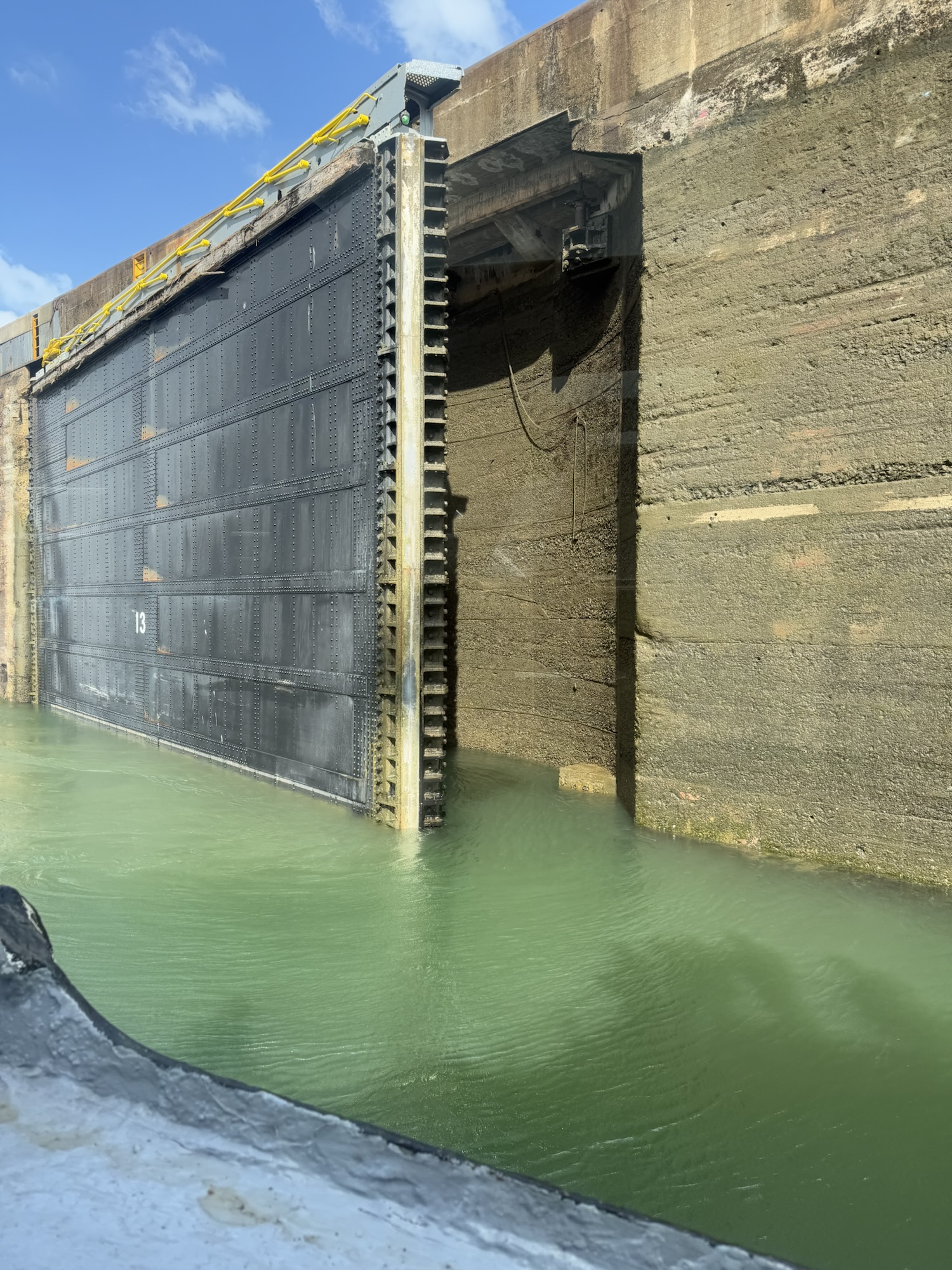
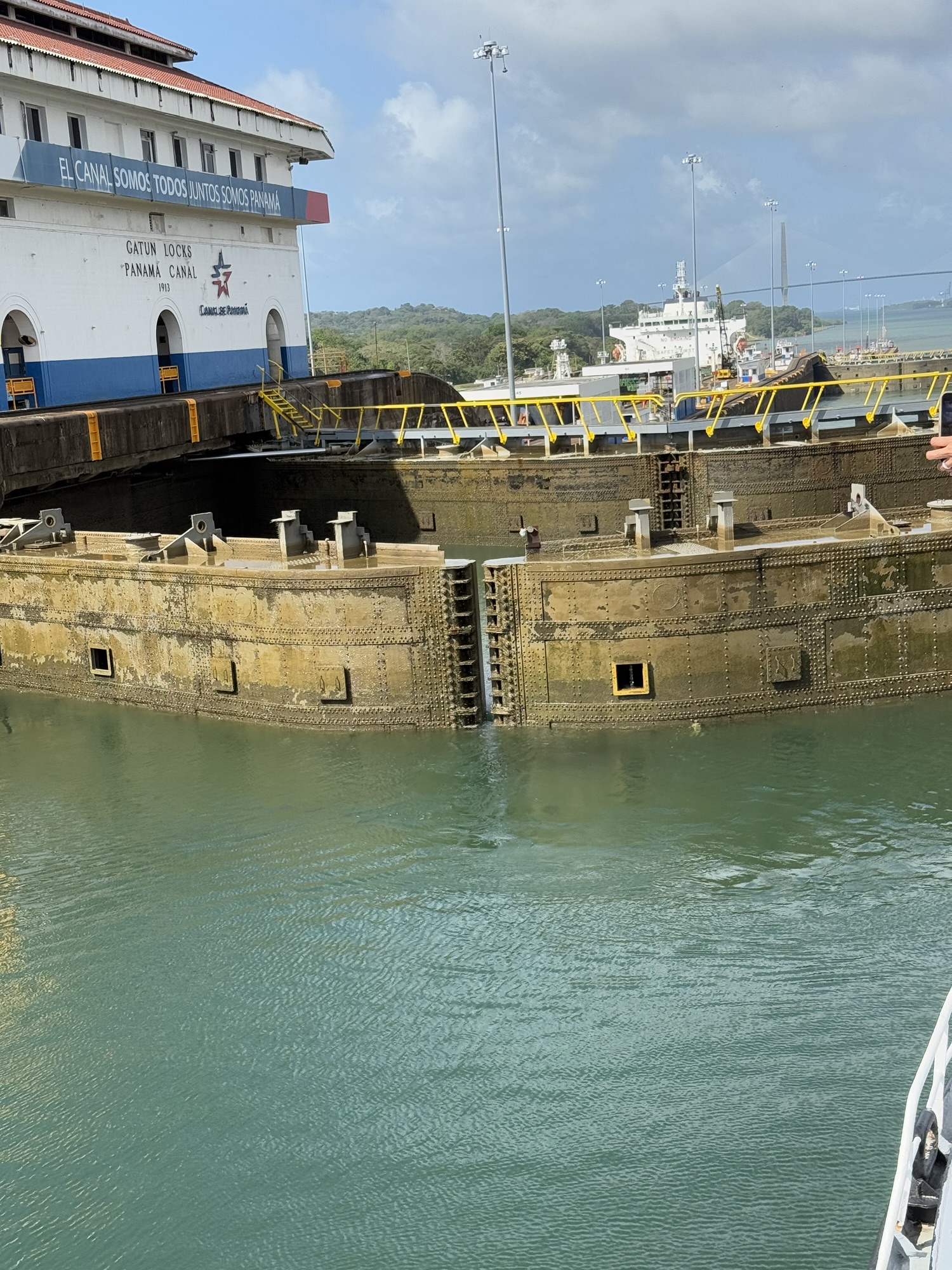
Gatún locks (northbound) lower boats over 85’ to the Caribbean Sea level via 3 chambers. We arrived first this time, and we had to wait almost an hour for the Mari Couva to join us. From our front-row seat, we had a clear view of the two gates holding us in at the upper chamber. Past the 2nd gate (with the yellow railings on top), the 2nd chamber awaits, nearly 30’ lower than where we were to start.
Mari Couva entering the lock chamberShe snuggles up pretty closeMassive lock gate doorsTransiting from the middle chamber to the lower one
Transiting the canal is not necessarily a thrilling journey. Instead, it’s more like seeing the pyramids at Giza or being at Manchu Picchu where the grand scale of achievement is on display. That a group of people could get together and then plan and build something like the Panama Canal is inspiring (especially since they were doing this at the start of the 20th century without computers or heavy power equipment). So much of global trade is possible because of this canal.
Panama is a moderate income country, but it isn’t wealthy by any stretch. The canal is a major operation with massive costs for operation and maintenance, and it requires a trained workforce to keep it humming along safely. While the canal transit prices sound high at first, when you see the canal functioning and all that goes into it, it suddenly seems like a pretty good bargain.
All in all, Panama was great. While I didn’t dislike it, per se, I would probably not go back to Bocas del Toro (somebody described it later as Panamanian Margaritaville, and that seems spot on to me). Panama City is much more cosmopolitan than most other Central or South American cities, and that’s both a positive (safe water, tons of great food, more access to English speakers) and a negative (more things that cater to tourists, more expensive, less authenticity in places). I’m more of a Colombia fan, personally, but I would happily return to Panama and explore other regions – especially those less frequently visited by tourists.
It poured in a biblical fashion all night long. Our lodging remained completely dry, and our mosquito nets kept us bite-free. Only Luke had a hard time with the sound of the rain on the metal roof – it put me and kiddo to sleep immediately.
We had hopes of exploring Isla Bastimentos and the surrounding area today if the weather was good. While the morning looked ominous, our host assured us it would be an OK day, weather-wise, so after a delicious breakfast of fresh fruit, a frittata, homemade bread, and crepe-style pancakes, we boarded our boat and head off for the day.
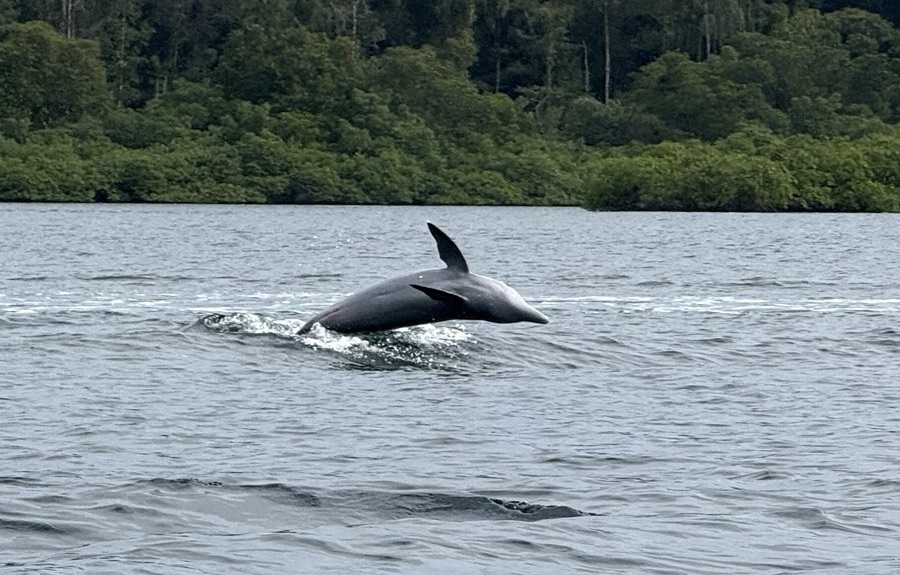
First up, we went looking for the dolphins who live in the area. Found ‘em!
We headed off to Isla Zapatilla, part of the Bastimentos National Marine Park. These islands are key nesting sites for several species of sea turtles, and was Panama’s first marine reserve, created in 1988. While the island had some nice jungle paths, I got positively eaten alive by bugs, so we didn’t stay too long. (My family like traveling with me because bugs chew me up and leave them alone; I probably got 20-25 bites from our hour on the island, while Luke and Anna-Sophia would be hard pressed to find 8 bites between the two of them).
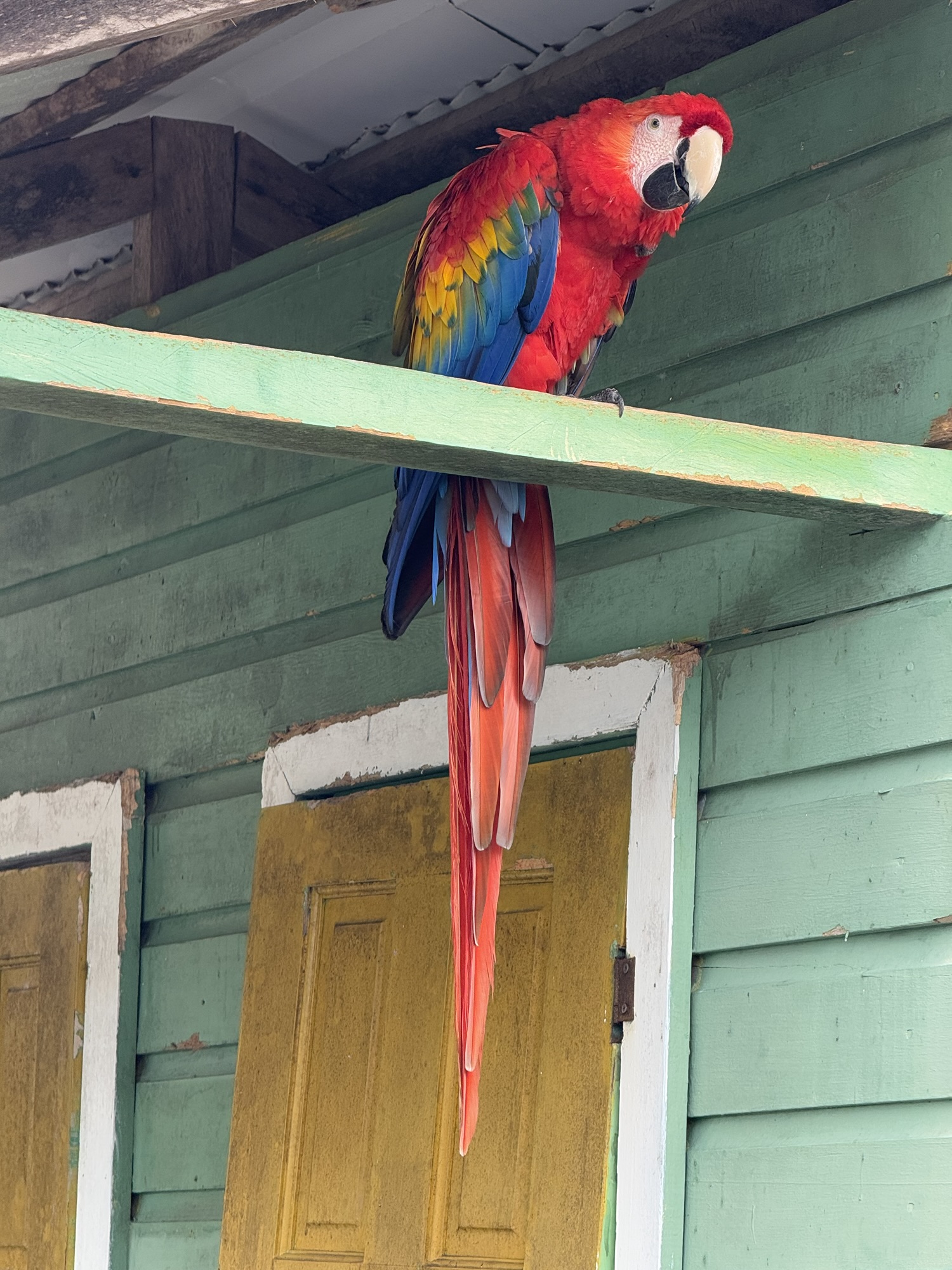
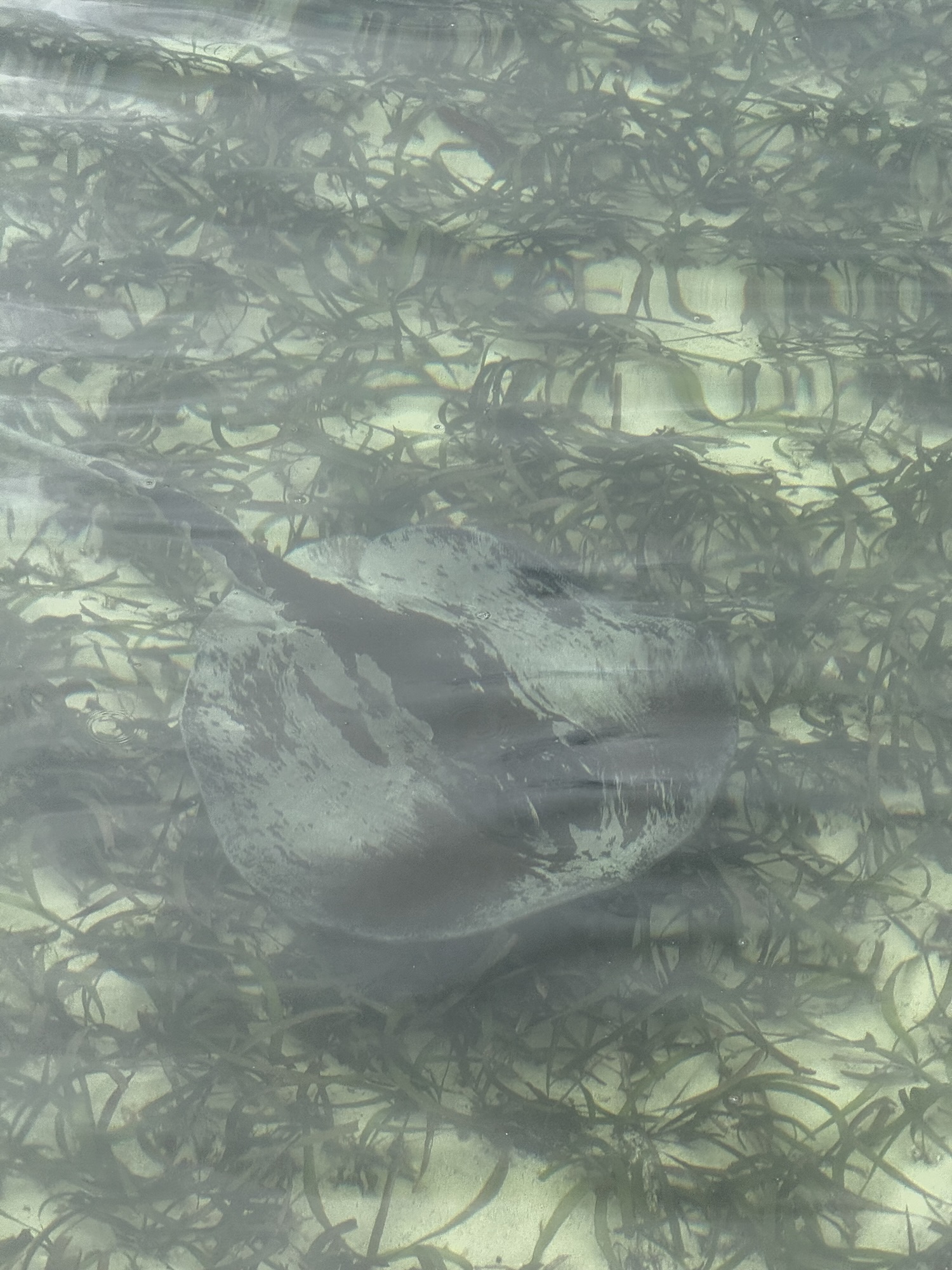
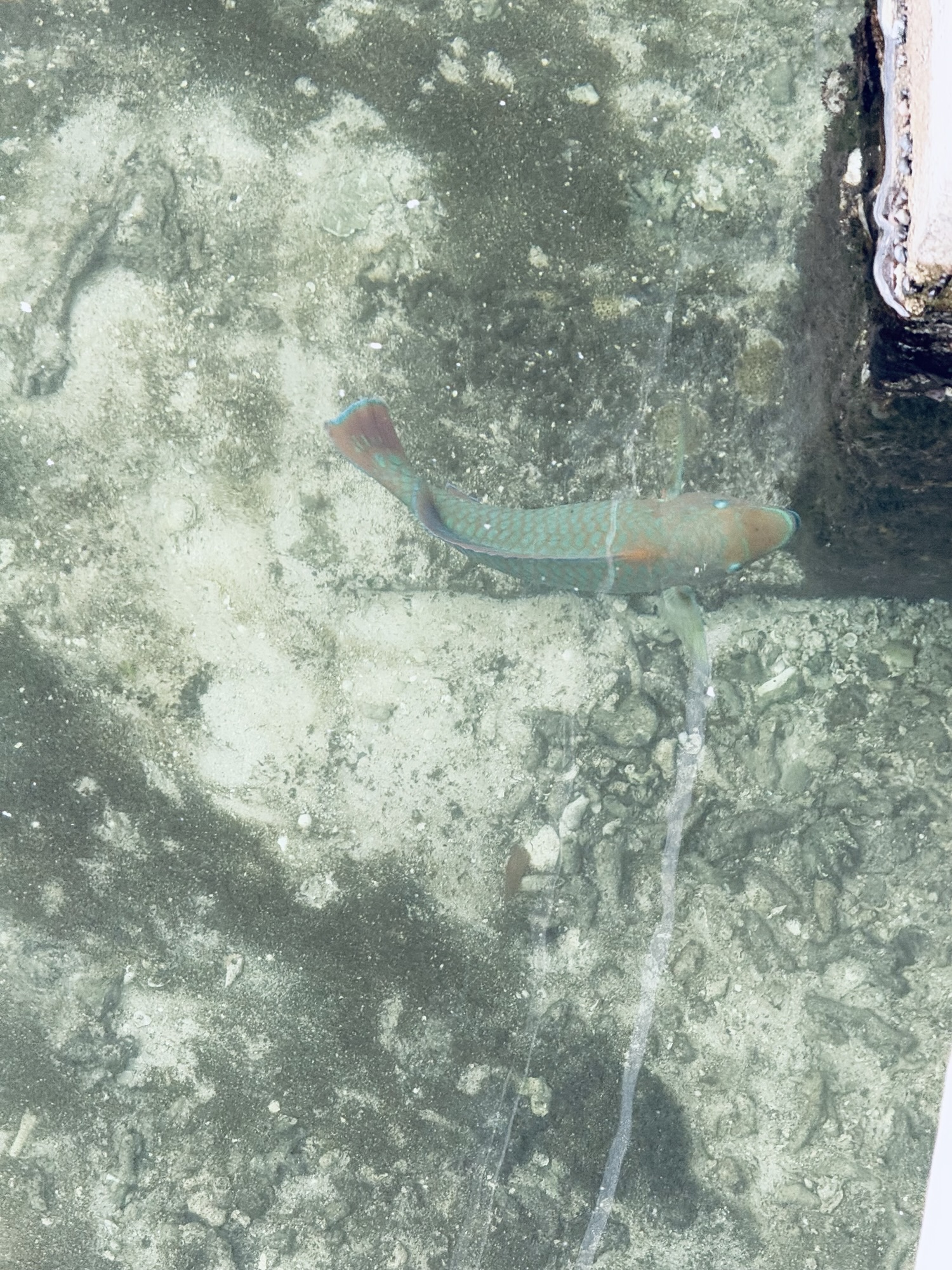
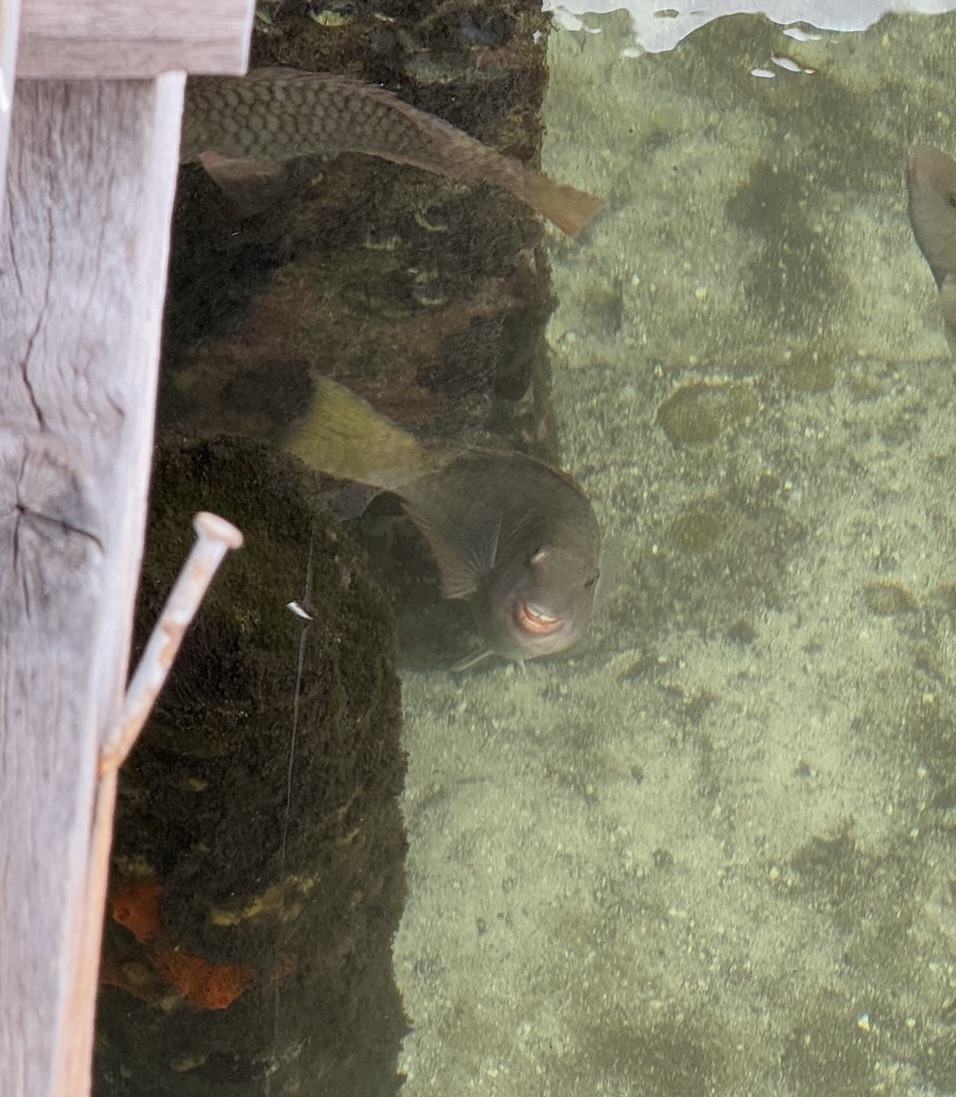
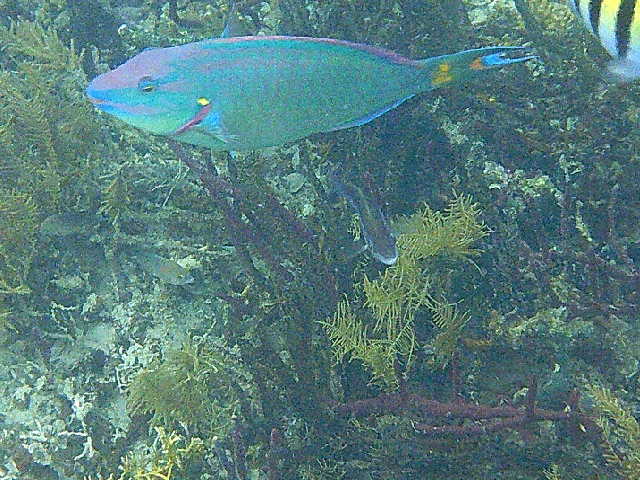
We stopped at an over-water restaurant for lunch. The food was fresh, but what we most enjoyed was the parrot above and the fish below. Luke and Anna-Sophia claimed to have seen a 4-foot long nurse shark, too, but there are no photos, so…
I LOVE sting rays! ParrotfishI swear, I didn’t doctor this photo – that fish is smiling!
Next up was some snorkeling in Coral Cay. I am not a strong swimmer by any stretch of the imagination, so snorkeling in open water always generates some amount of fear for me. I got into the water, got my snorkel gear working properly, pushed off from the boat, and within the first 30 seconds, kiddo taps me to point out the jellyfish nearby. I do not do jellyfish. Not at all. It’s not even so much about the sting (although I don’t want to experience that), but about panicking while in the water. I’d be that tourist who gets stung and then dies from drowning. Needless to say, I was basically attached to Luke or Anna-Sophia the rest of the time we were snorkeling because there were quite a fair number of jellyfish around and being near them helped to keep me calm.
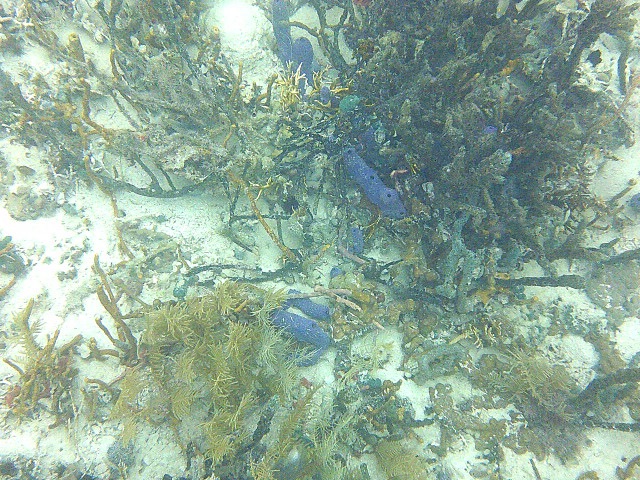
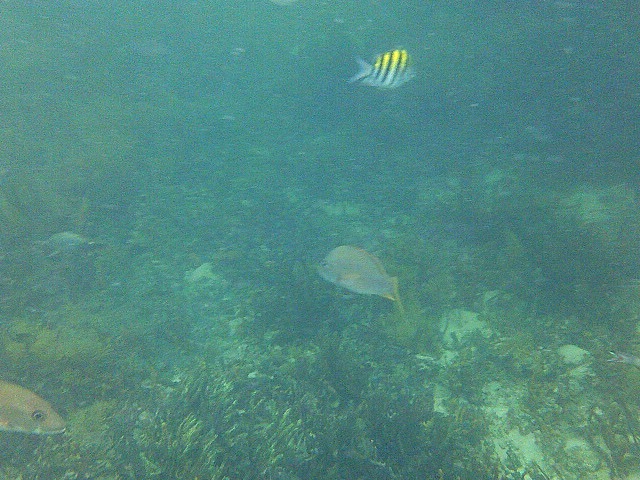
When I wasn’t obsessing over the jellyfish, I was able to admire the stunningly vivid coral all around us. Fish were pretty, as well, but I was rather spoiled by Tahiti in that regard so I’ve seen these guys before.
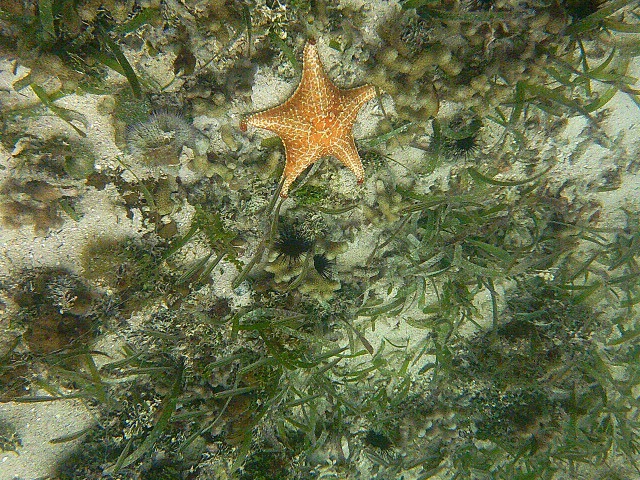
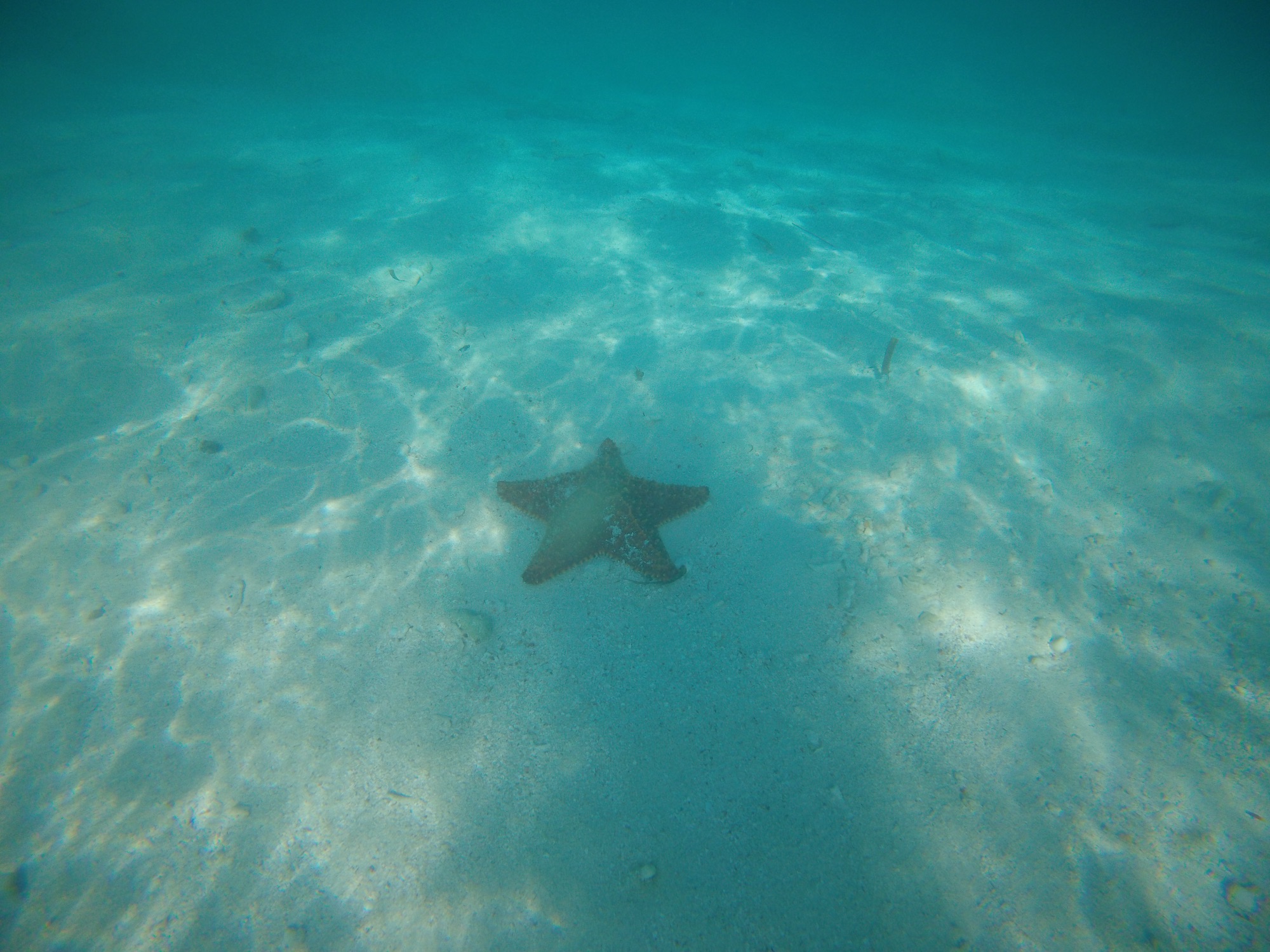
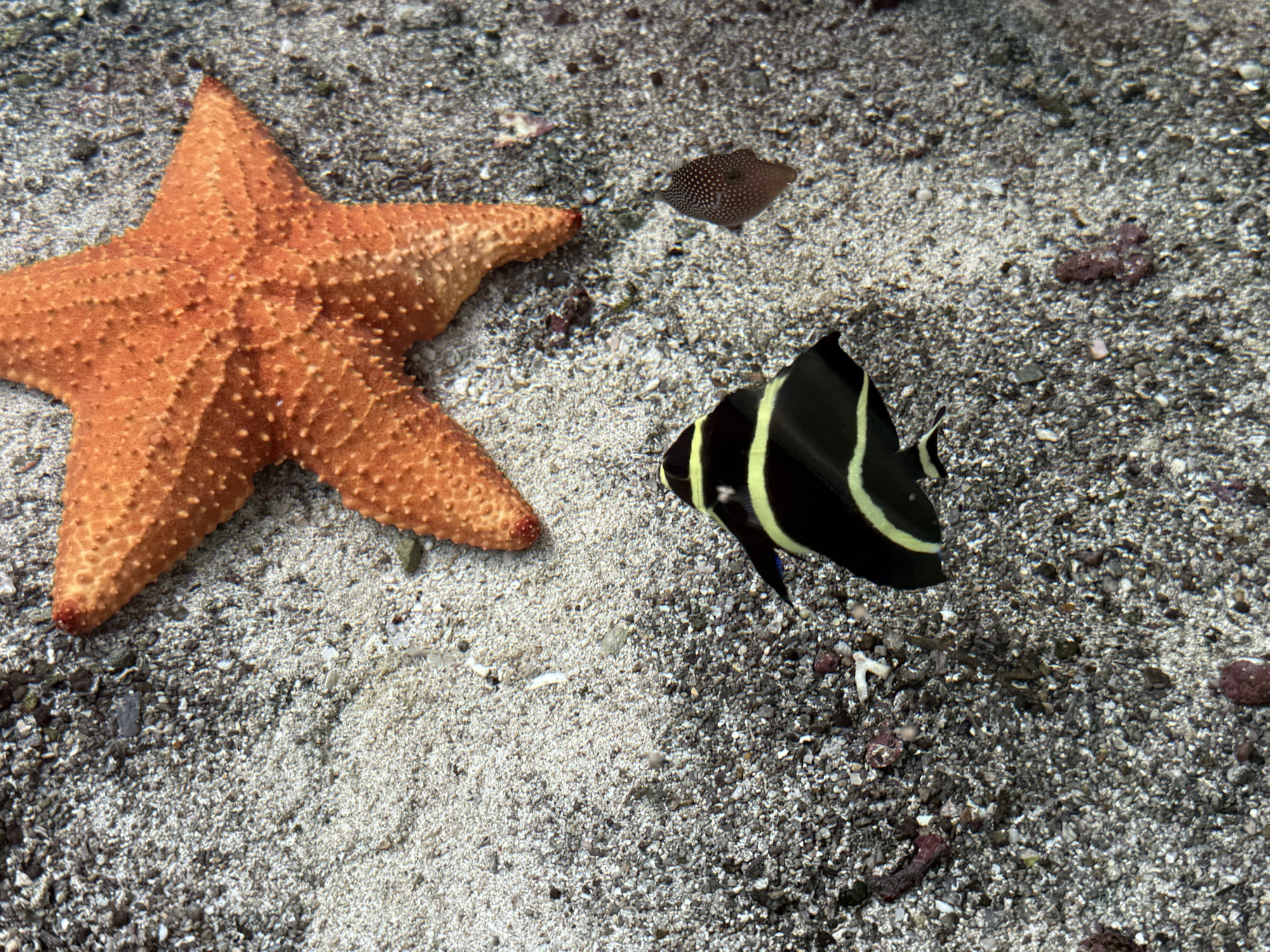
Along the way back toward town, be stopped at a spot called Hollywood because of all of the starfish on the sea floor. I don’t think I’ve ever seen wild starfish before coming here, and I am now a fan. They are a vibrant array of orange, and these starfish are big. Probably 8-10” in diameter, and at least 2-3” tall in their middles (centers? bodies? what do you call the non-arm parts of a starfish?). The second such place we stopped also had a lot of jellyfish, which helped to remind me that despite starfish being benign, the ocean is full of things that are ouchy.
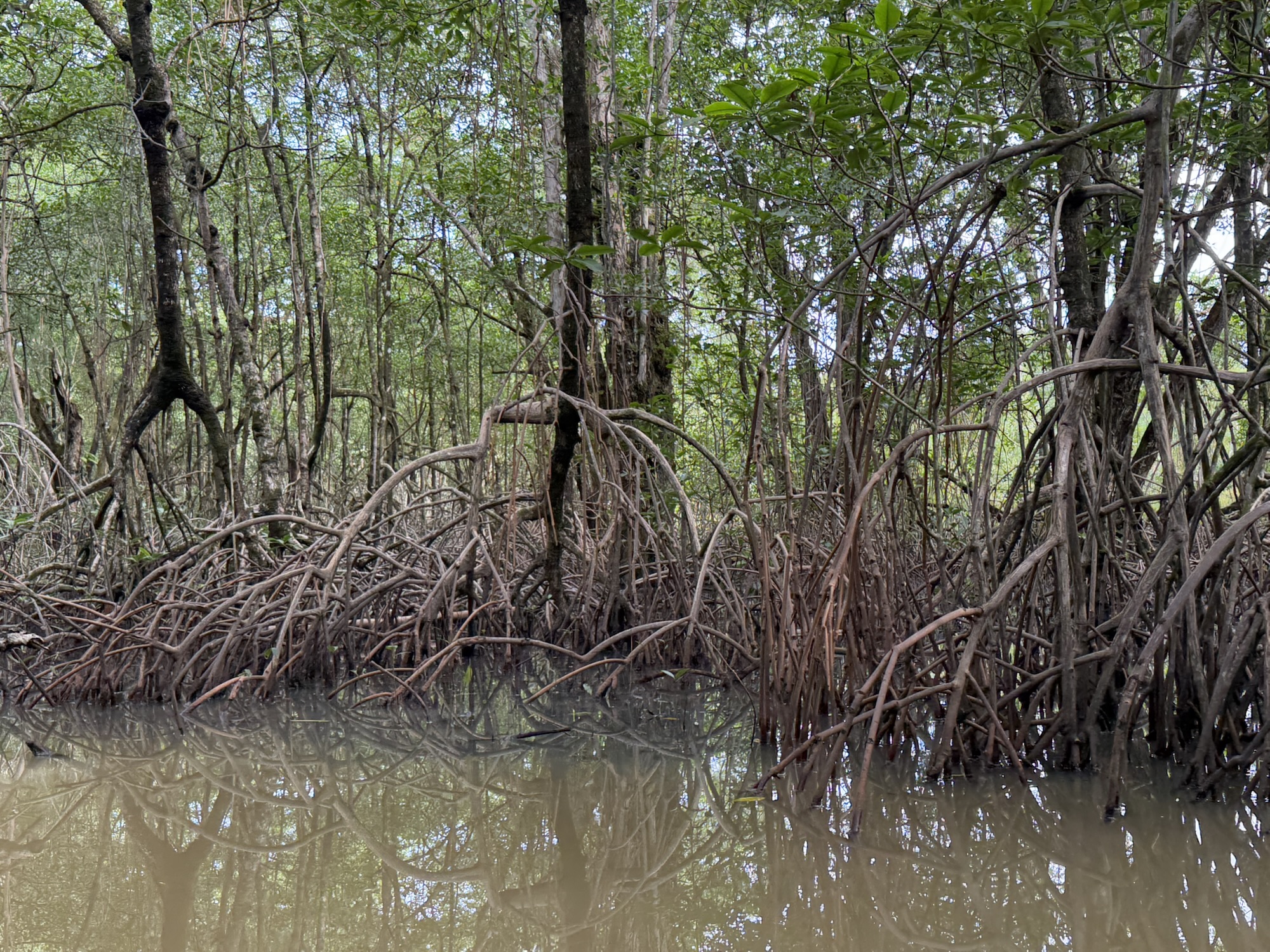
We looked for white-faced monkeys in a stunning mangrove. No monkeys, but the mangroves were truly amazing. They do so much good for the ecosystem, yet are imperiled all over the world. This one looked quite healthy and vibrant, and I hope the marine park protections keep it that way.
Mangroves
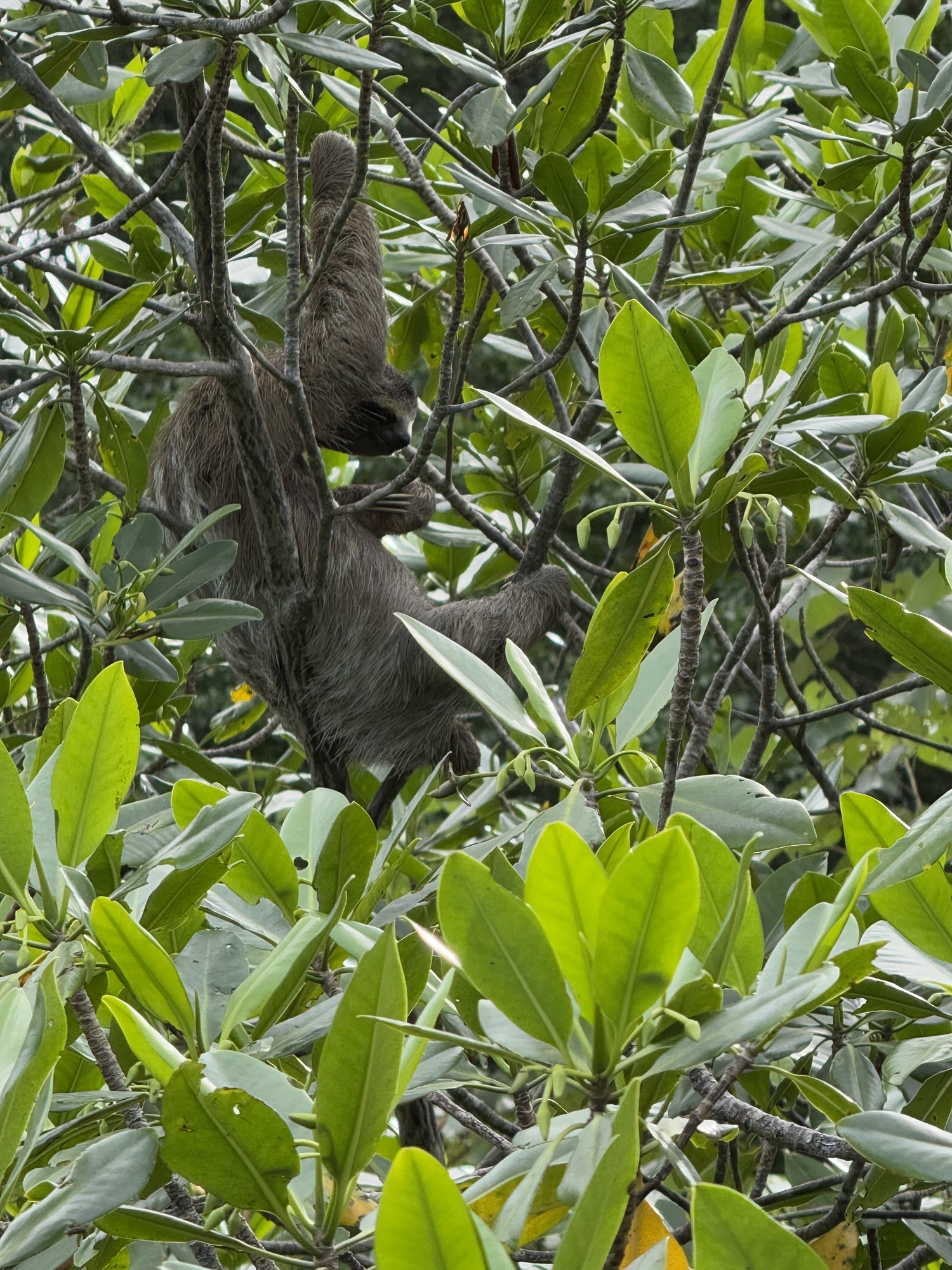
There were a few 3-toed sloths along the way back. Surprise, surprise, they were sleeping. 😁
Our biggest treat was when we got back to our lodging, where one of the local sloths (2-toed) was up and active. We watched this sloth for probably half an hour – it’s fascinating to see them move so deliberately and s-l-o-w-l-y.
I’m incredibly grateful that today’s weather turned out to be decent. It wasn’t a sunny beach day, but it was mostly dry and an excellent day for being on the water, exploring the natural beauty of this area. We are in for another delicious dinner tonight, and then we get to pack up, yet again. At this point in the trip, there’s precious little clothing that is even remotely clean, so we at least don’t have to worry about preventing wrinkles!
We arrived in Bocas del Toro yesterday evening, had dinner, then after a cerveza on the balcony, we were off to bed. Traveling is tiring!
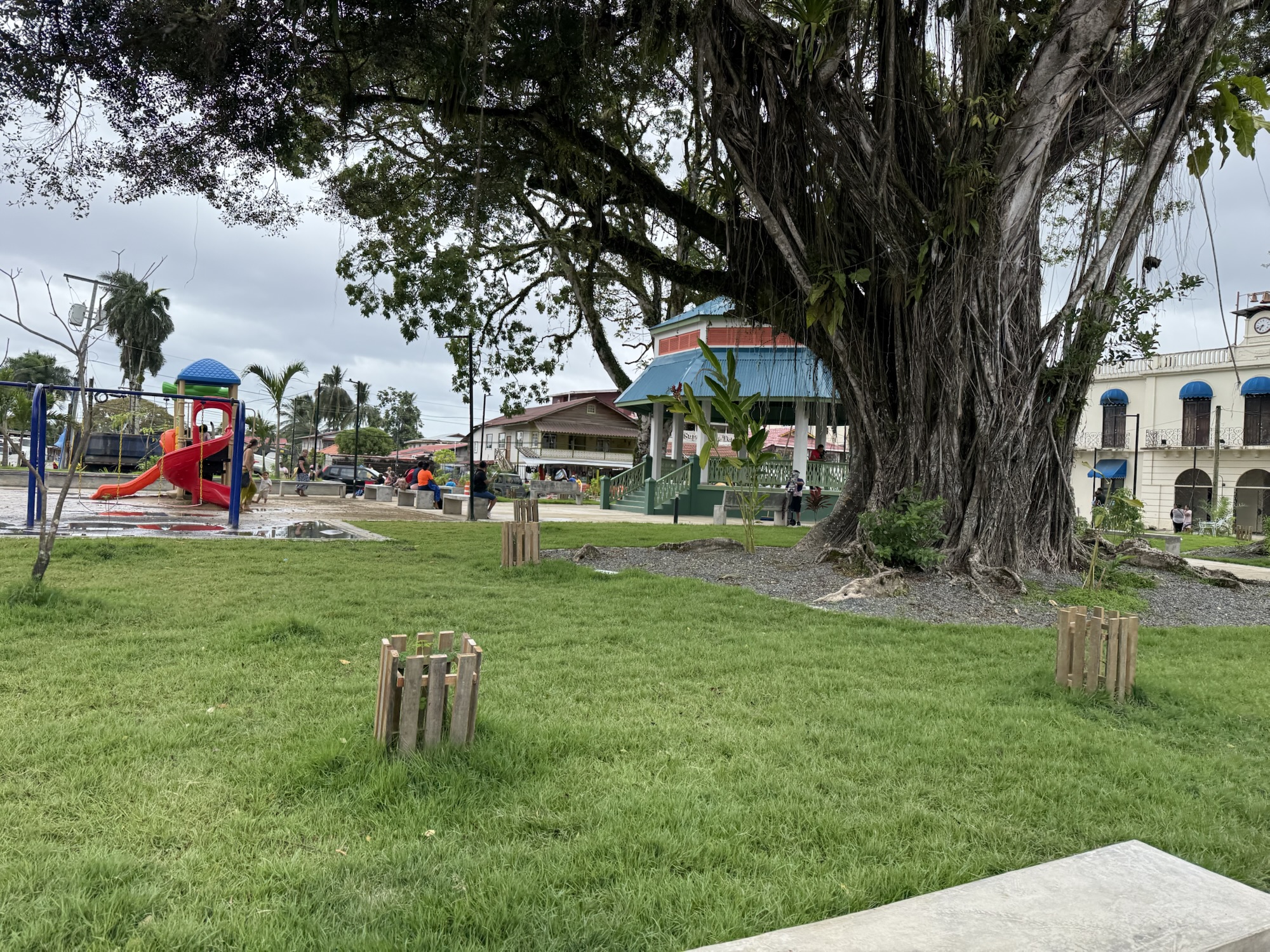
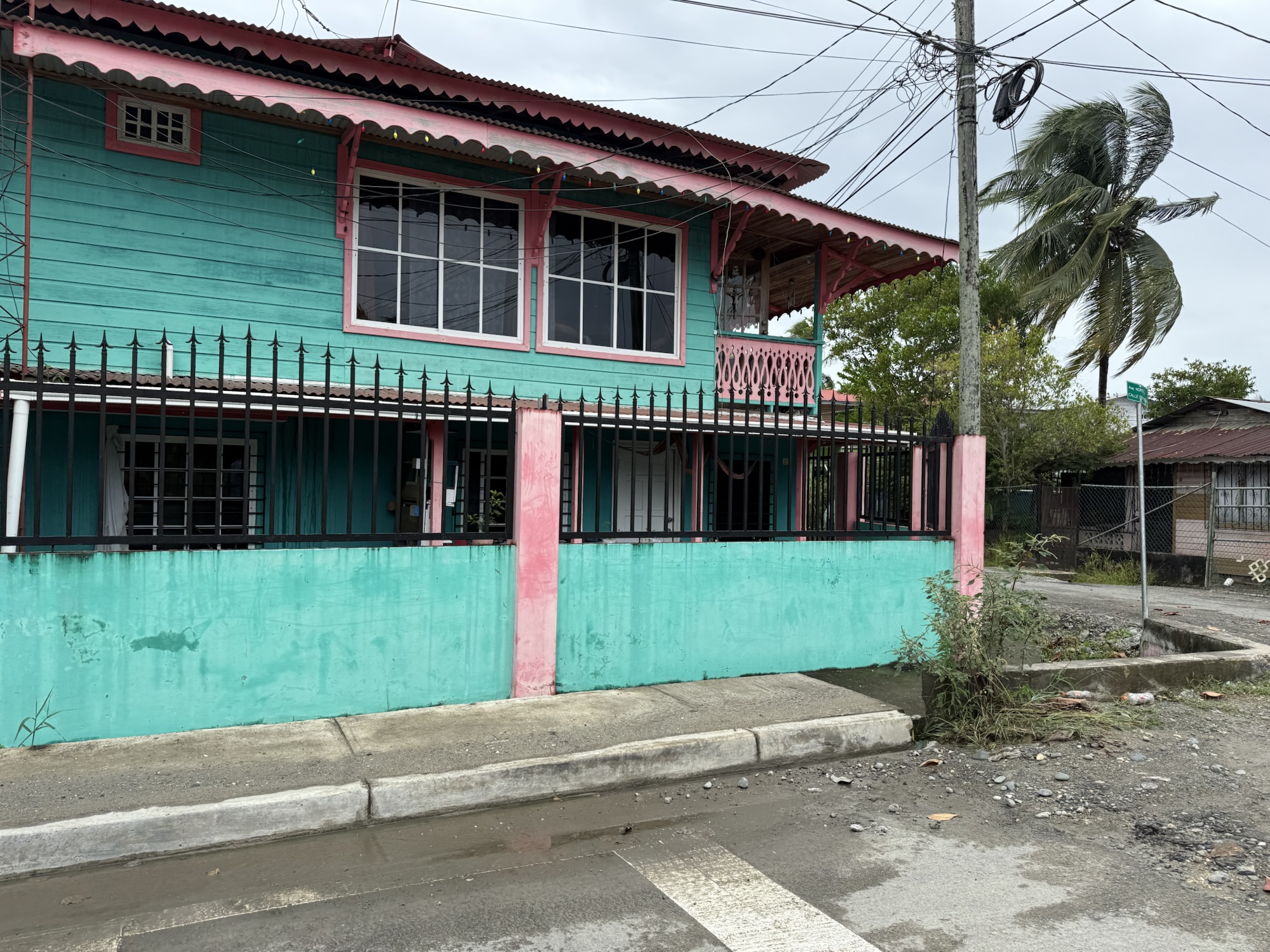
The morning was pretty dry out, so after breakfast, we headed out to explore the town. I’m not sure Bocas is quite our speed – it’s apparently got nightlife, and there were quite a few restaurants, but it has a weird mix of touristy vibes and a run-down feeling. I suspect people who like Cancun enjoy coming here to “rough it.”
Town squareBocas Town
We walked the half-dozen blocks of the main town, got some coffee, I made a call, and then we had lunch. It poured on and off all day, and so we killed time at the lunch restaurant for a bit. Around 2:00, we arranged a water taxi to pick us up to take us to Isla Bastimentos, the next island over.
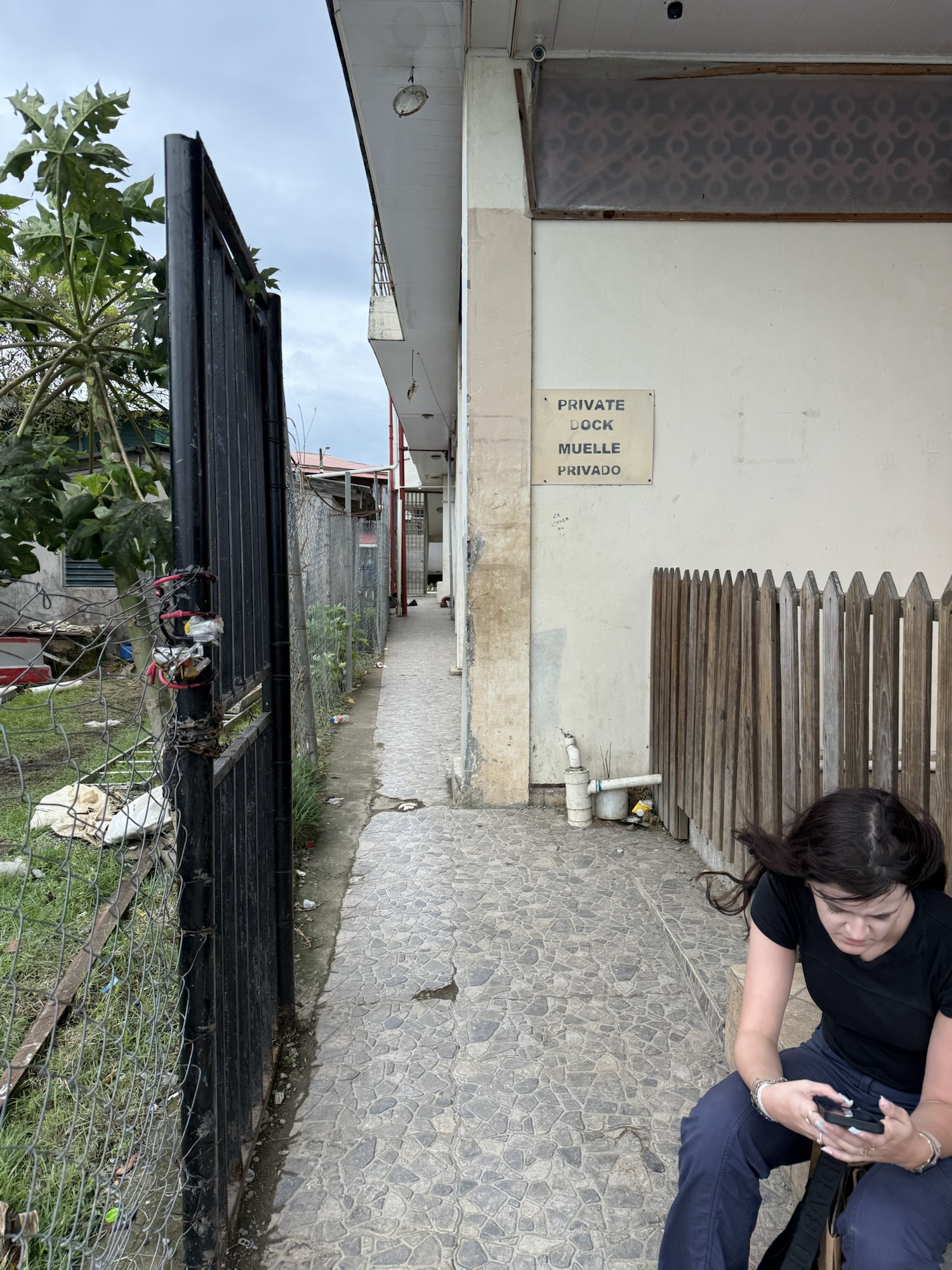
Carmen, the proprietor of the place we were going to, told us to have the proprietor of the place we were leaving explain how we could get to “Richard’s dock.” “Go down the street toward the tall building and turn at the grocery store” is what we were told. Literally none of those words aligned with what I think they mean. The tall building was 3 stories tall, the grocery store was labeled “mall” on the outside (and I couldn’t see any goods resembling groceries being sold from the store windows), and then there was the unsaid part about walking down the skinny alleyway next to 100 electrical meters to go behind the store to locate the actual dock. Thankfully, we ran into the BnB proprietor in town and she redirected us because I would *never* have found this otherwise.
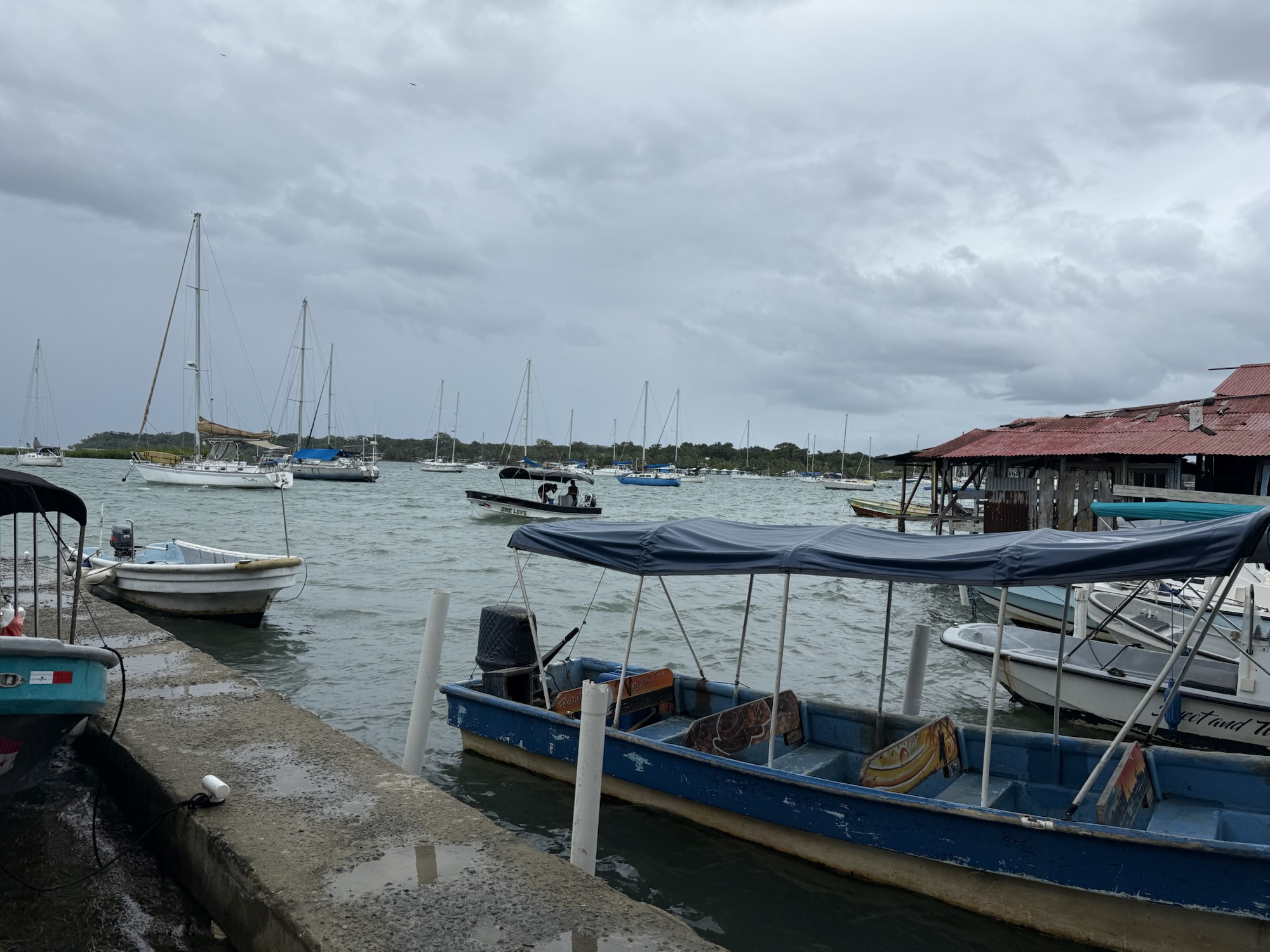
Once we shimmied through the alley, we managed to eventually find the dockA tiny dock, but very busy!
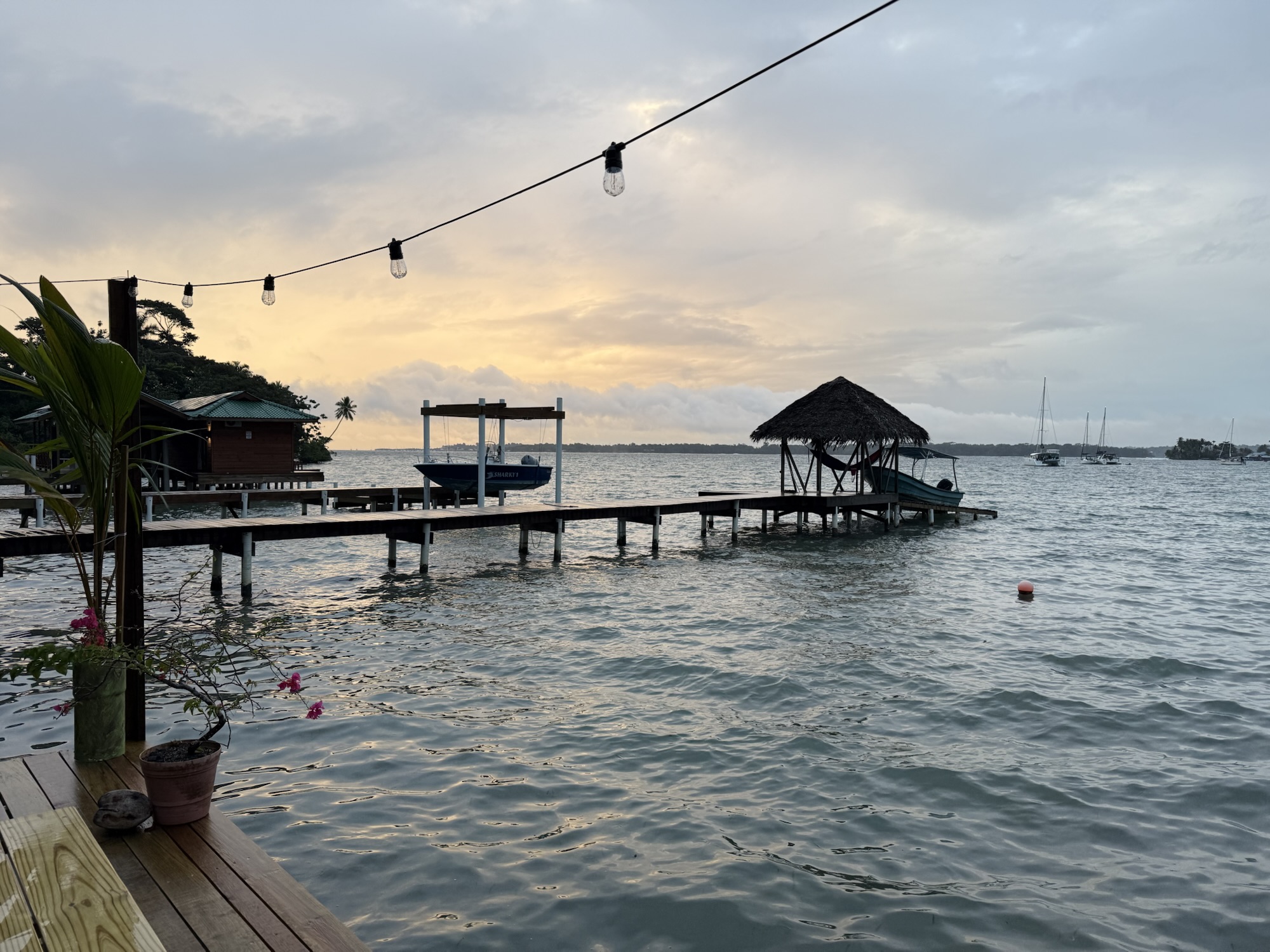
Since it’s been raining hard all day, the seas were choppy and thus the boat ride was choppy. The driver did as good a job as one can do getting around the biggest waves, but we still arrived soaked through (but we didn’t capsize, so I’ll take the win!). We couldn’t appreciate the place we were staying at right away given the downpours, but once the rain calmed and we had a chance to look around, we could see just how gorgeous this space is!
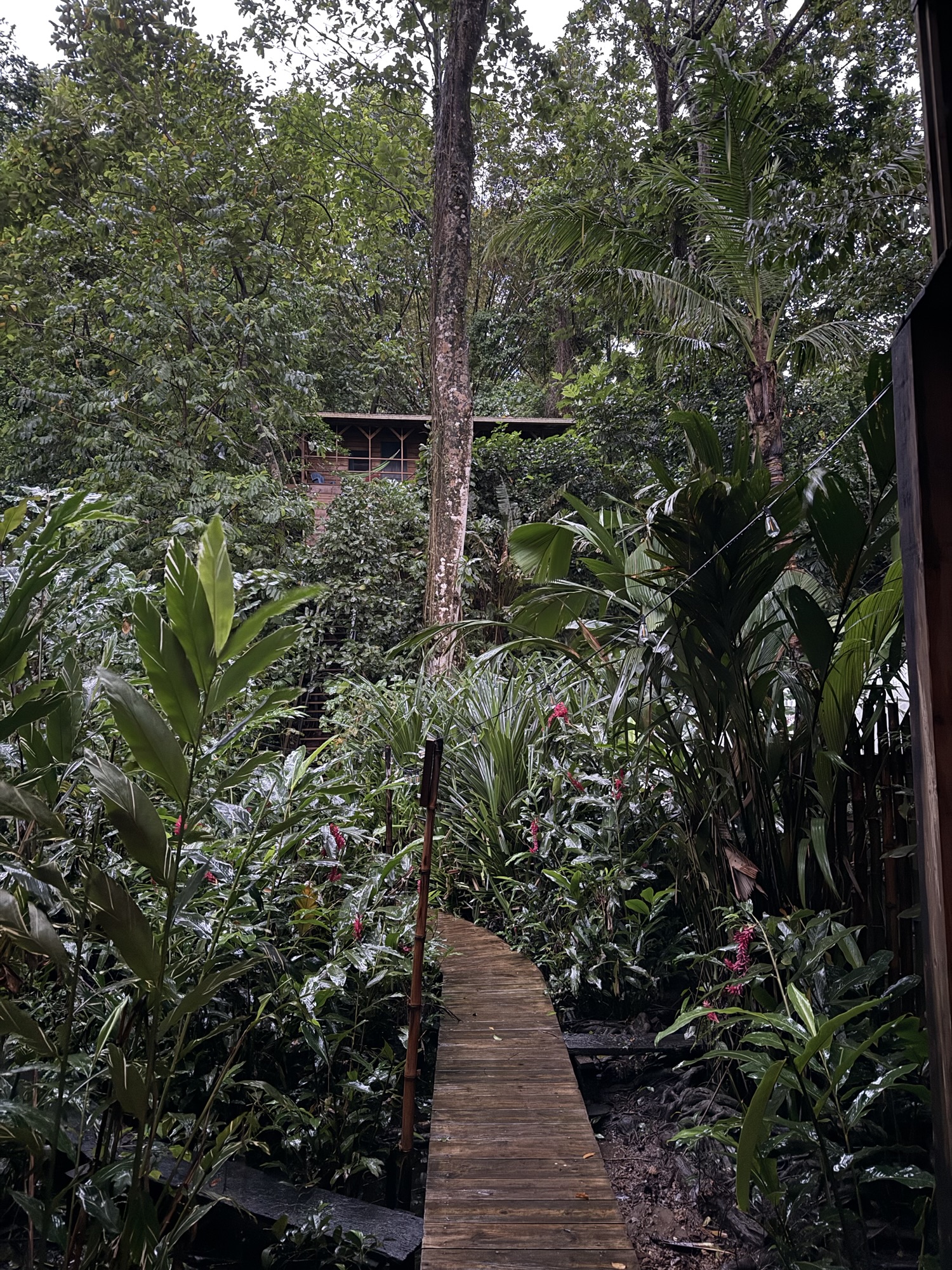
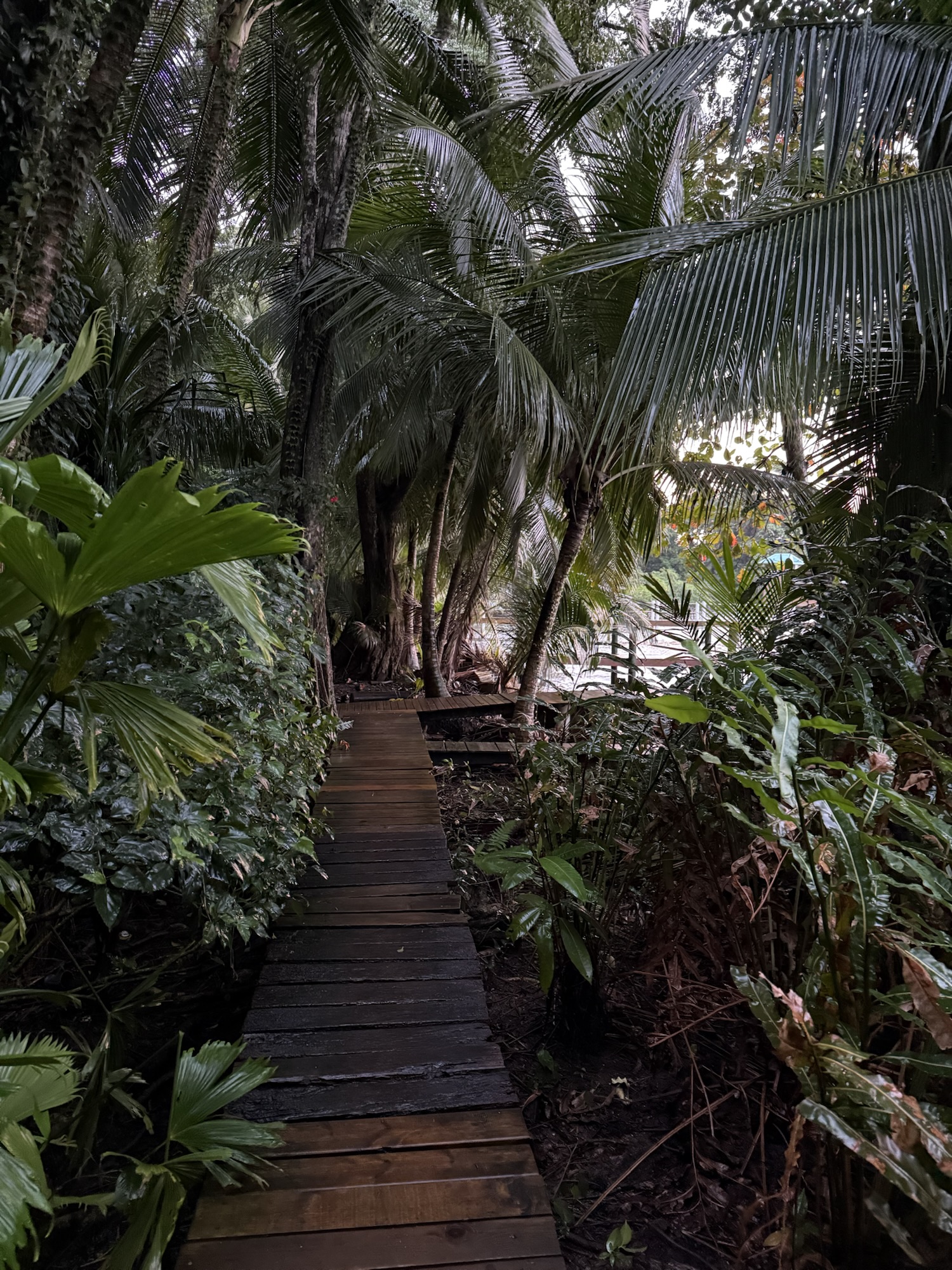
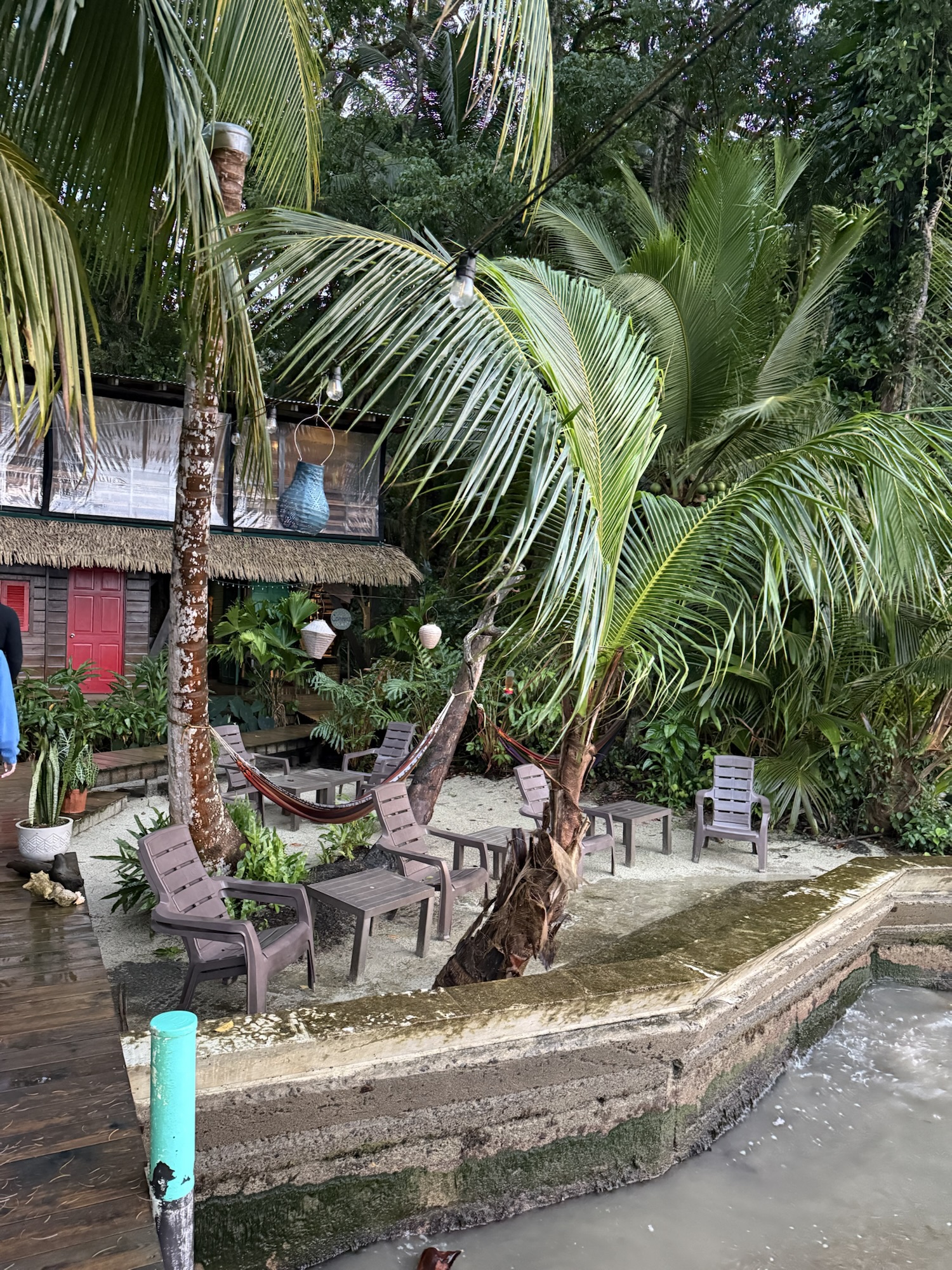
We are basically staying in a hillside treehouse/cabin in the jungle, right above the ocean.
Our cabin, at the top of those 45 stairsThe property is surrounded by jungle
The proprietor here was a professional chef, and her cooking is seriously amazing. We had homemade tomato soup and focaccia bread for a starter, some fish that they caught yesterday, salad, potatoes, chicken with pineapple, and broccoli and bok choy egg muffins. It was simply phenomenal! While we ate, they told us about how they picked this location to immigrate to (they are both Dutch). It was a lovely change of pace from restaurant dining.
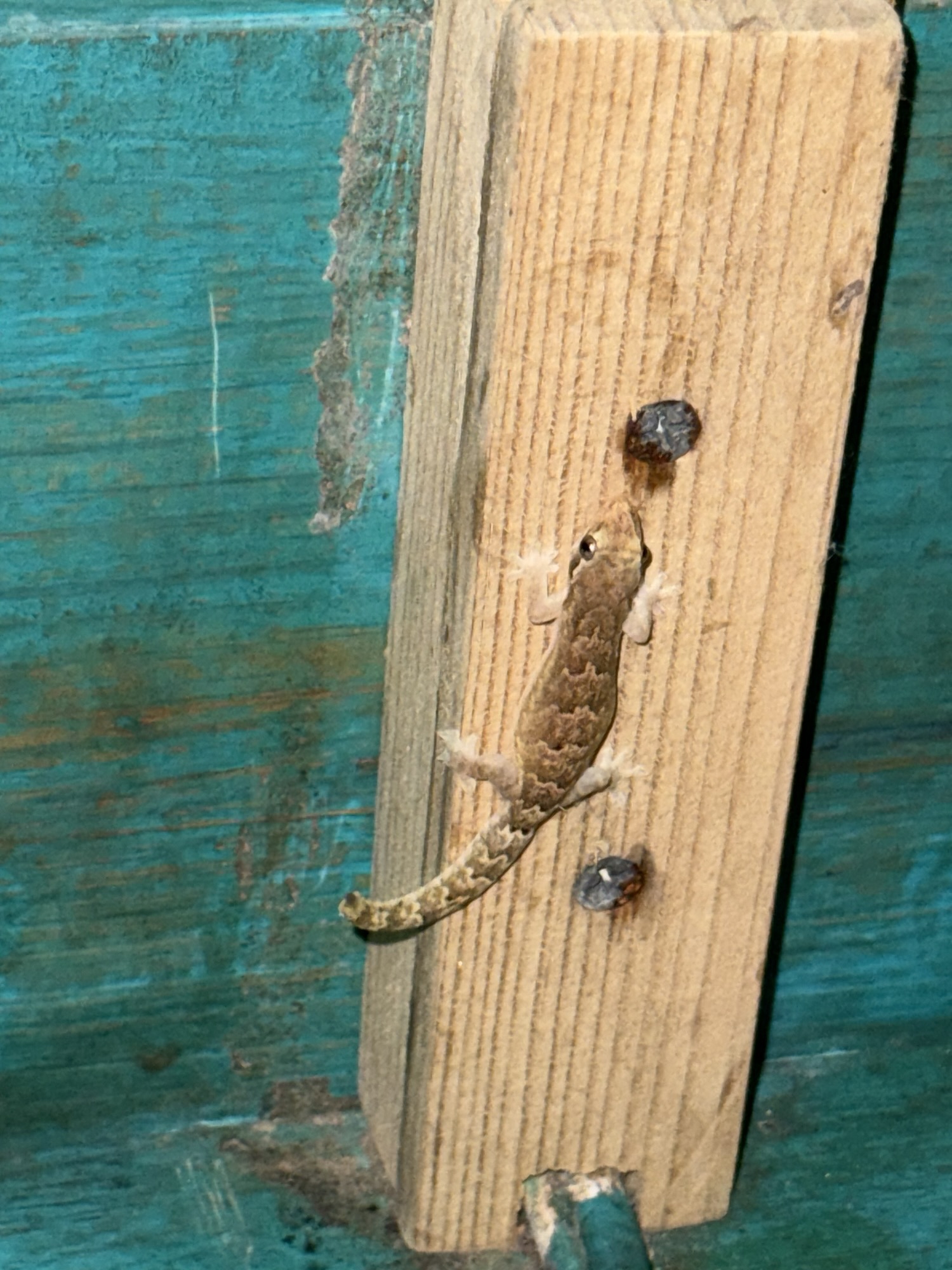
There’s a lot of benign wildlife on this island. Apparently there are things called night monkeys (I can only describe them as owl-raccoon-lemurs…go ahead, Google them), opossums, armadillos, geckos, boa constrictors, and bats. OK, boas aren’t truly benign, but as compared to a Black Mamba (which we’ve been warned about repeatedly when traveling in Southern Africa), they are definitely not scary.
Gecko in our room3 tiny bats hanging under a palm leaf during the rain
If it doesn’t pour all day tomorrow, we hope to get out for some snorkeling. Dolphins, rays, starfish, parrotfish, a broad array of other tropical fish, and nurse sharks all frequent the area. Until then, we are ready to fall asleep to the sound of the rain on our metal roof. And maybe the sound of the weird owl-raccoon-lemur monkeys, too, since they apparently also like to play on the roof.
Today is a travel day (and the first day with cell or wifi service since Panamá City). Boat, car, plane…we are covering all the bases.
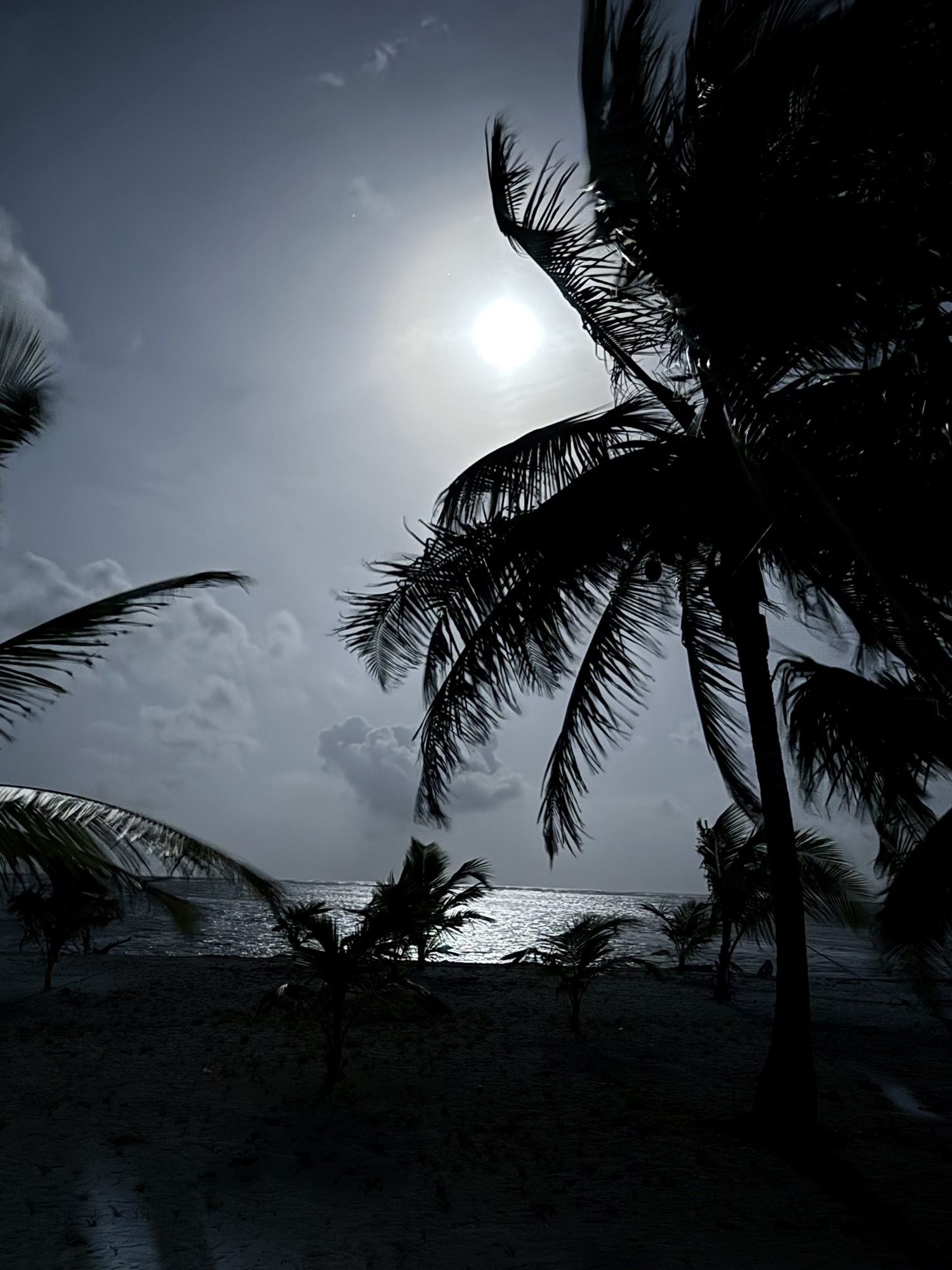
Last night was breezier than the night before, but it wasn’t necessarily any cooler. It’s around 87 during the day and 83-84 at night, with constant humidity. I’ve never been great at sleeping when it’s hot, so I had a fitful night and was up well before my 6:30am alarm. At one point during the night, I woke up and stood looking out the window at the island, lit up by the full moon.
After breakfast, we paid the bar bill and then boarded the 7:30 boat to start the journey back. I was not at all excited to see the guys working on one of the boat engines. I know we only need one, but as a non-swimmer and non-boat person, I think even 2 engines is insufficient. Nevertheless, there’s nothing to be done about it so I got on board and tried not to think about it. (The entire boat ride I did reflect on the fact that I can’t really swim and hate boats, but I do a LOT of vacations that involve boats and swimming. I have no idea why I continue to do this to myself.)
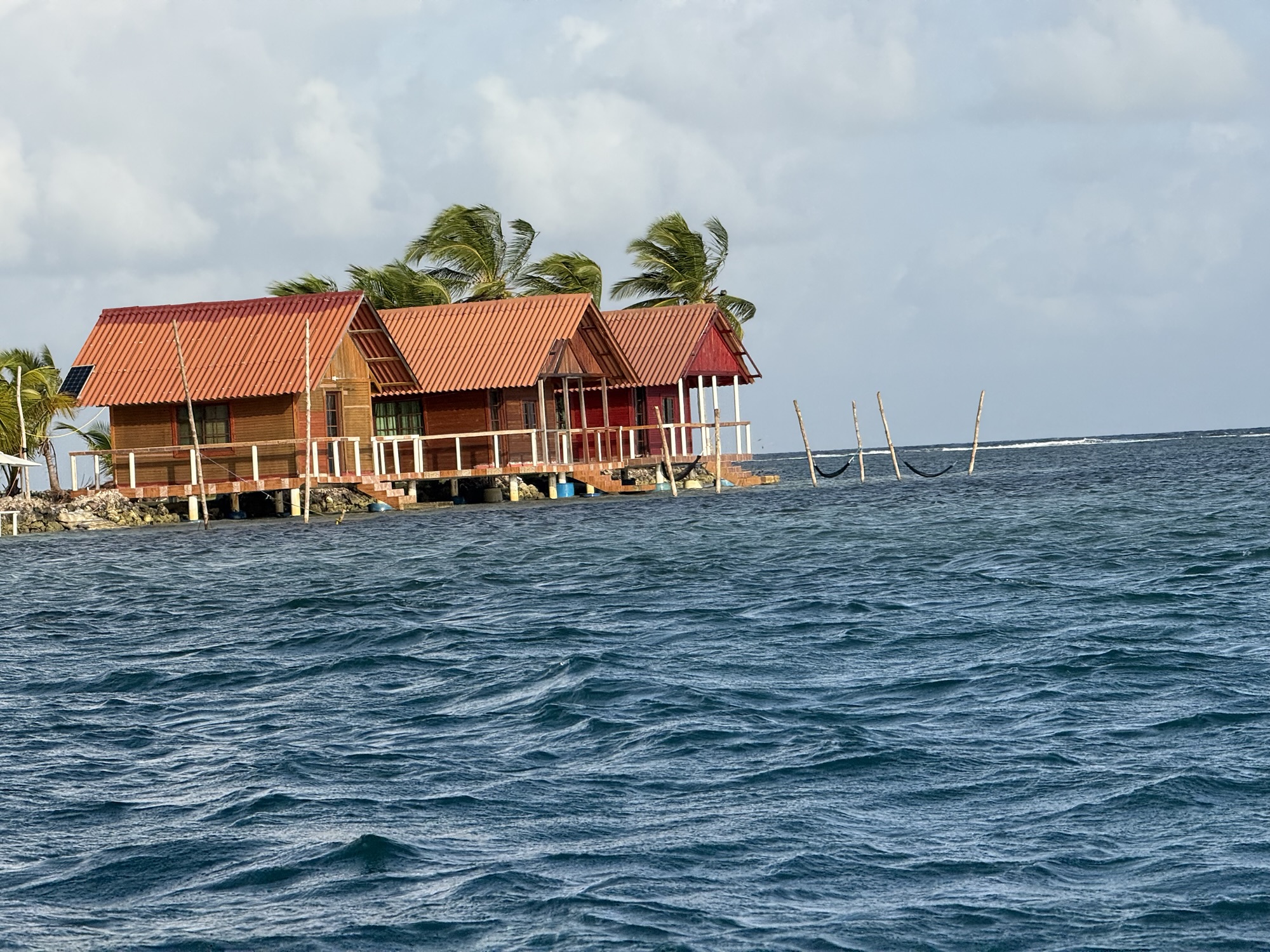
Those cabins have stairs leading into the water and have a swim-up hammock outside each one
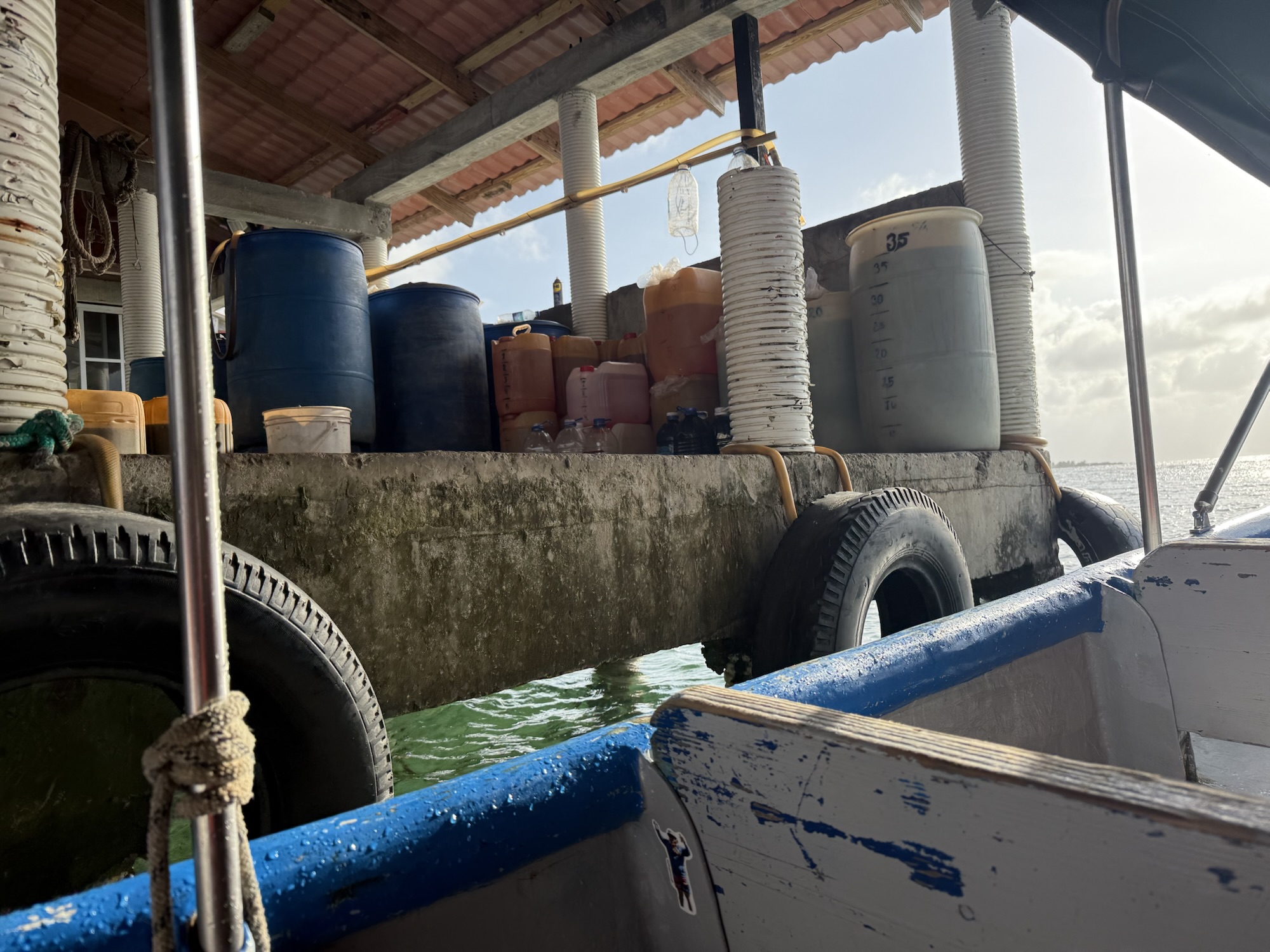
At one point during the boat ride, we started to run low on gas so we pulled into the strangest boat gas station I’ve ever seen. It looked a bit like a toll booth, and once we got inside, there were just barrels and cans of gas everywhere. The Guna Yala people clearly do not have an OSHA equivalent because this place was one spark away from a Hollywood-style explosion.
Those barrels and cans are full of gasoline
After surviving that, we got to the dock and found our driver. Props to the organization here – it looks chaotic but it’s actually incredibly well-organized. Each car driver knows who they are picking up and which boat they’ll be on, and they collect the passengers without anybody getting stranded. It was impressive given that there were probably 250 tourists going to/coming from islands this morning.
While we were not as gross as we were after being on Isla Fuerte in Colombia (we did have access to a rudimentary shower this time), we were still sticky and sandy and absolutely desperate for showers and clean clothes, so we headed back to the Toscana Inn to collect our bags and inquire about getting a hotel room for a few hours. Best $50 we’ve ever spent. We showered, repacked, walked over to a Colombia spot for lunch (I had an arepa with maduros, avocado, cheese, and some kind of creamy mustard-esque sauce), then we went back to the hotel and took naps. I might have a hard time breaking this mid-day nap habit!
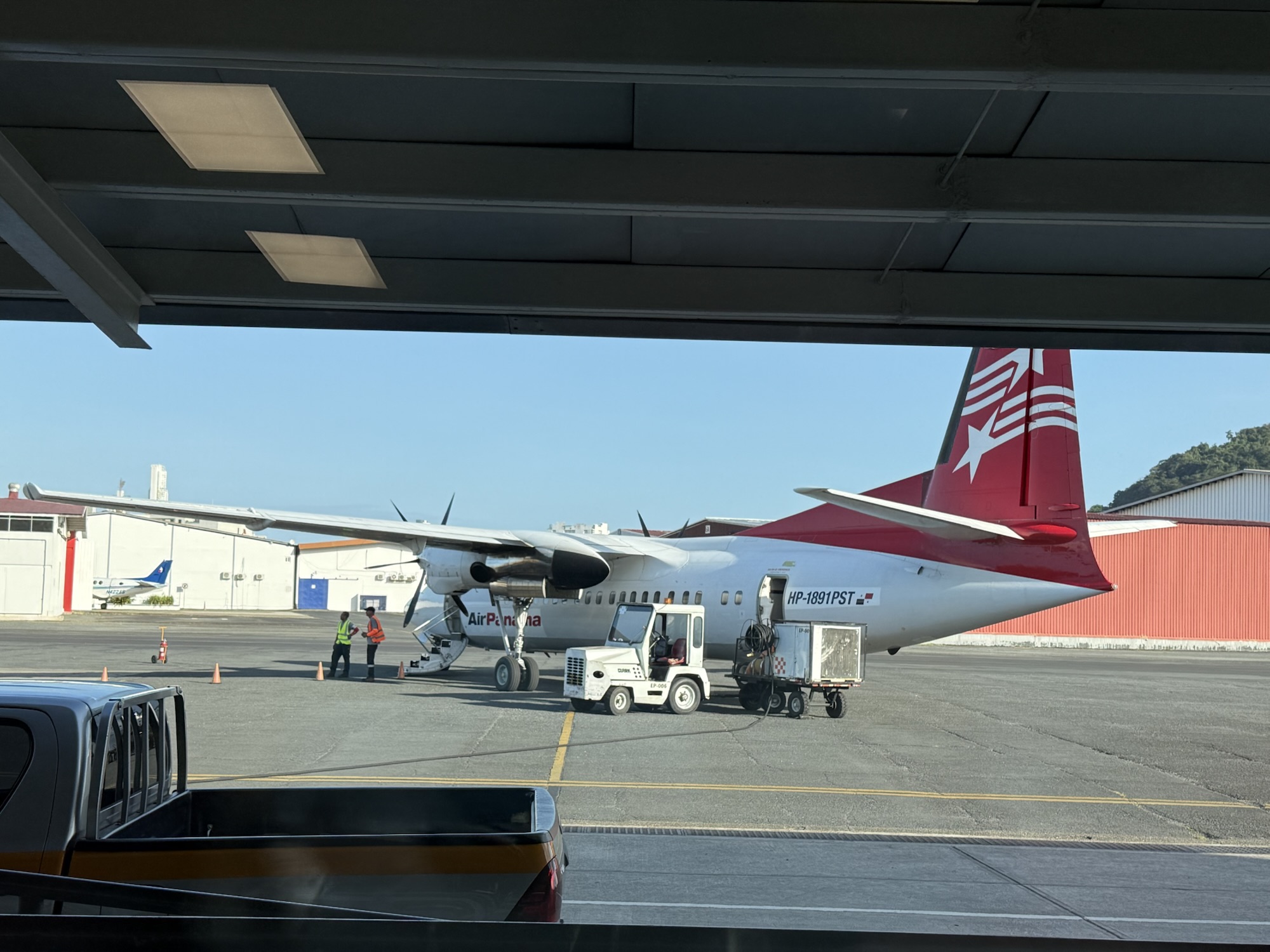
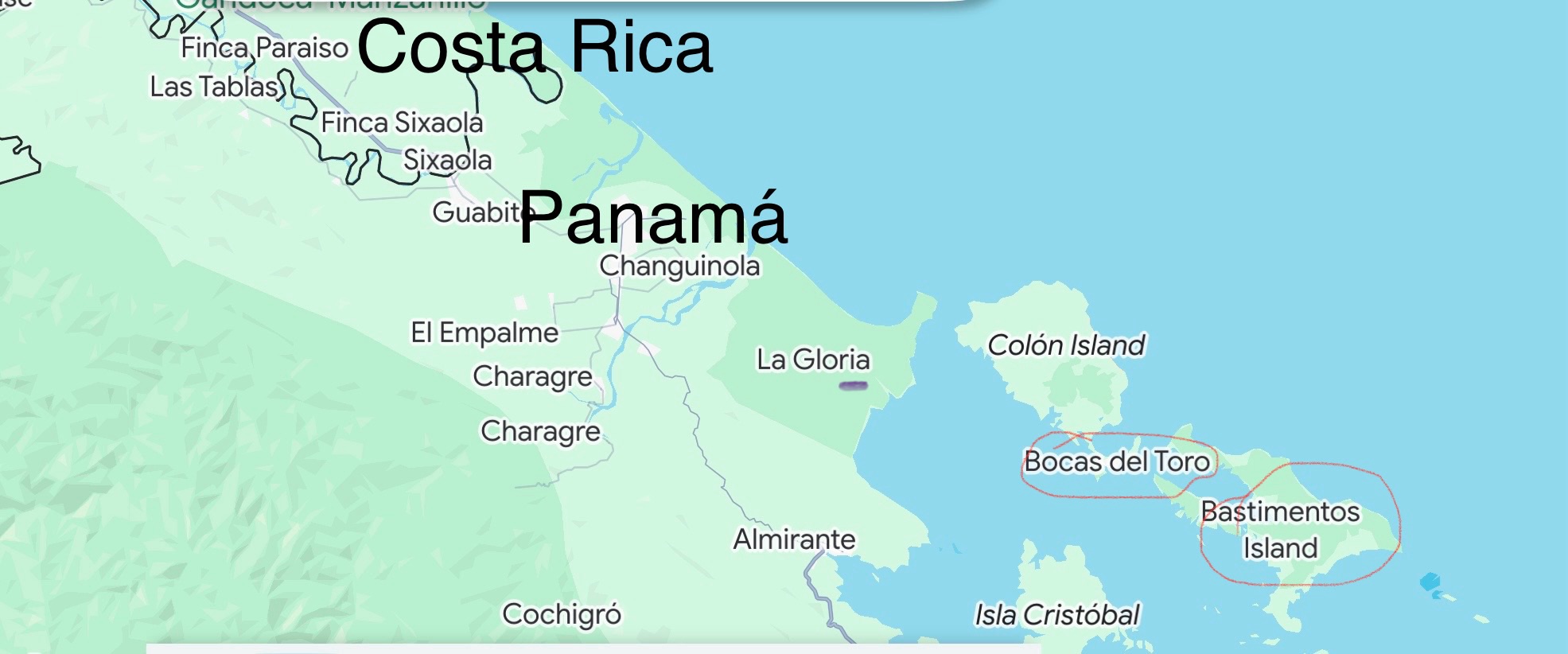
We have a 5:00 flight to Bocas del Toro, another island chain on the Caribbean/Atlantic side of the country. The domestic airport is an adorable single-gate affair, which I loved. I know small planes are not as safe as big ones, but they have so much more personality and you can often see more of the country from them than in the big jets. This is a propeller plane, but it is sadly a 20-row plane so it’s on the big side and will fly above the clouds. Best plane ride I ever took was in Vieques, Puerto Rico, when it was just me and the pilot (the plane could take 5 passengers, with one riding in the cockpit).
After this 50-minute flight, we will be in Bocas del Toro (specifically in Bocas Town). We spend the night here and then move on to Isla Bastimentos, which is just a very short water taxi ride across the channel.
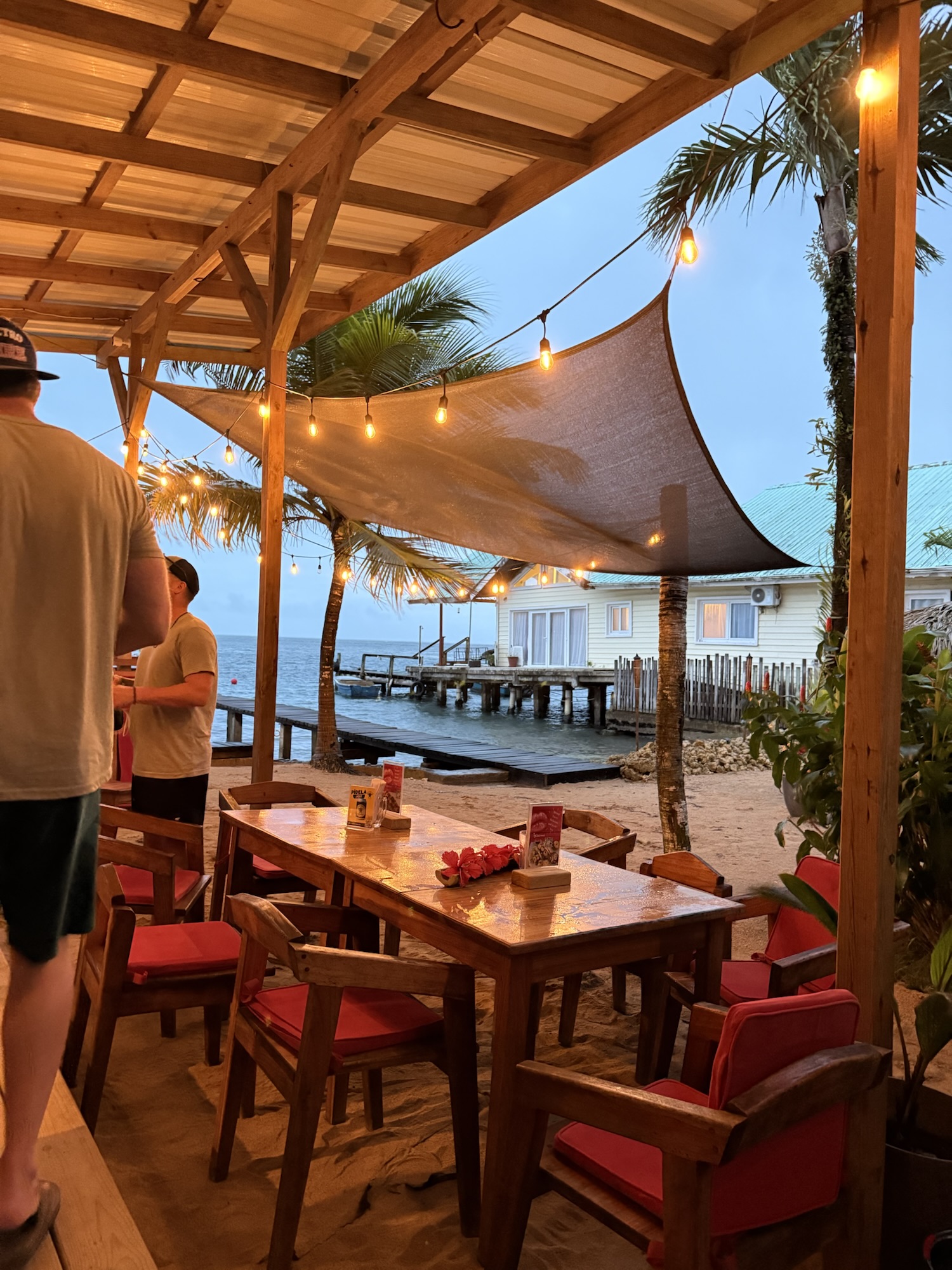
Our BnB, Lula’s, is in an old Victorian home just across the street from the ocean. We had a fabulous fish dinner (tuna for Luke, shrimp for kiddo, and mahi mahi fish and chips for me), and are enjoying the veranda for the evening.
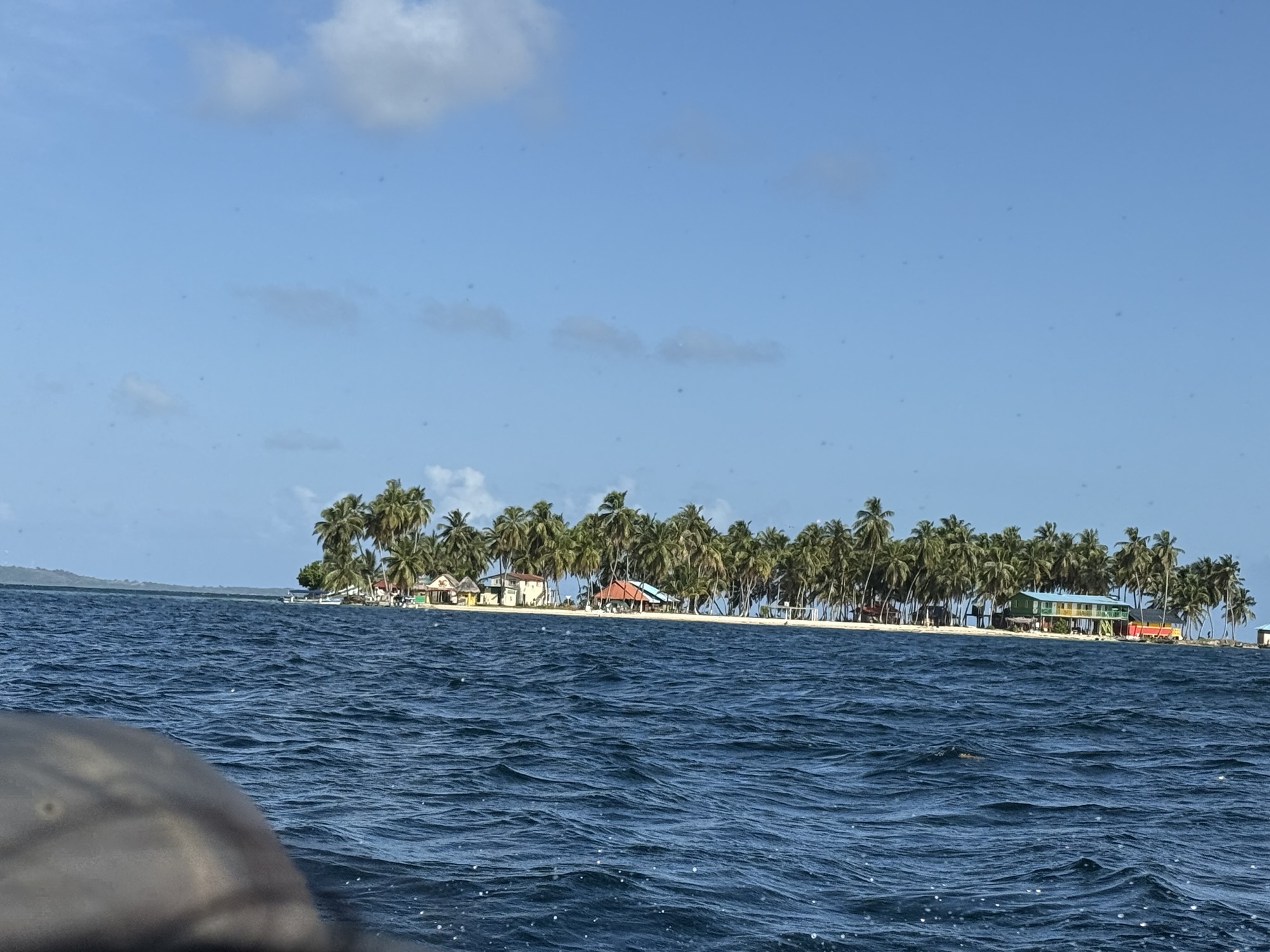
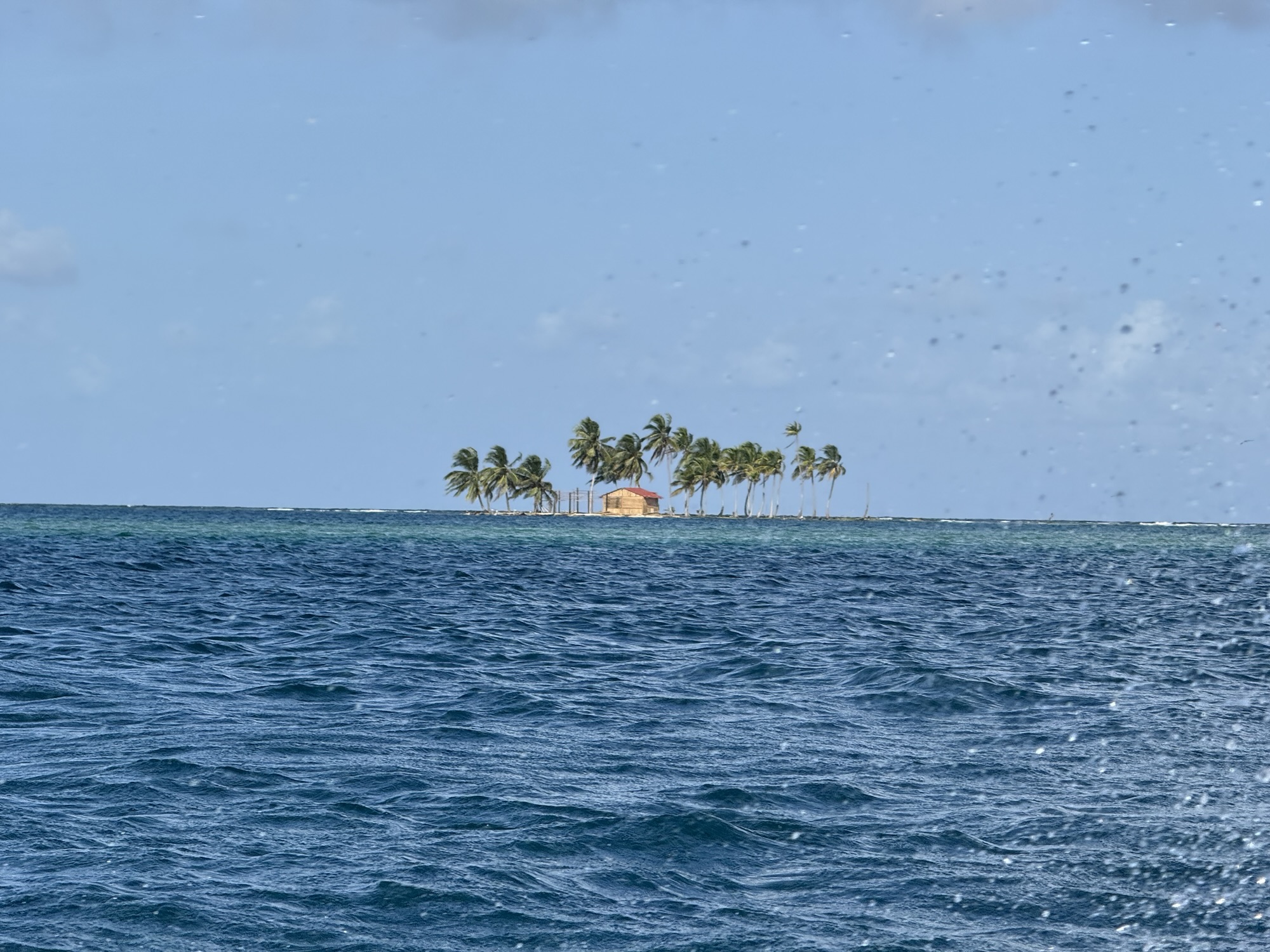
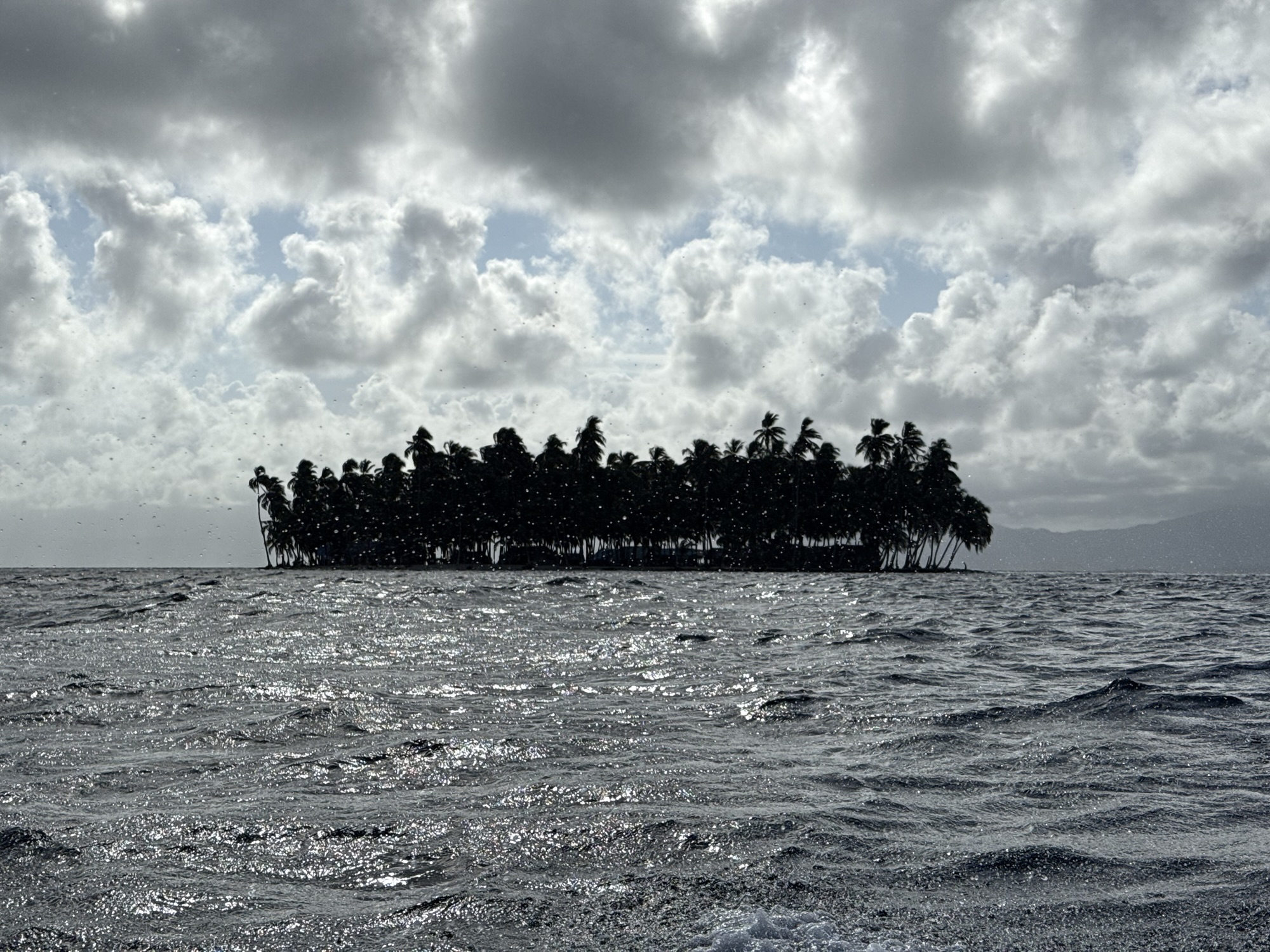
San Blas Islands are part of the Guna Yala territory. The Guna Yala are an indigenous people who have autonomous governance over themselves and their land, including these islands. While it is part of Panama, it is also certainly separate.
Getting here required a 5:30am pick up in an SUV, a 2.5 hour drive (half of which was on the steepest and windiest road I’ve ever been on), and then a half-hour motorboat ride.
One of the countless San Blas IslandsNot our islandAlso not our island
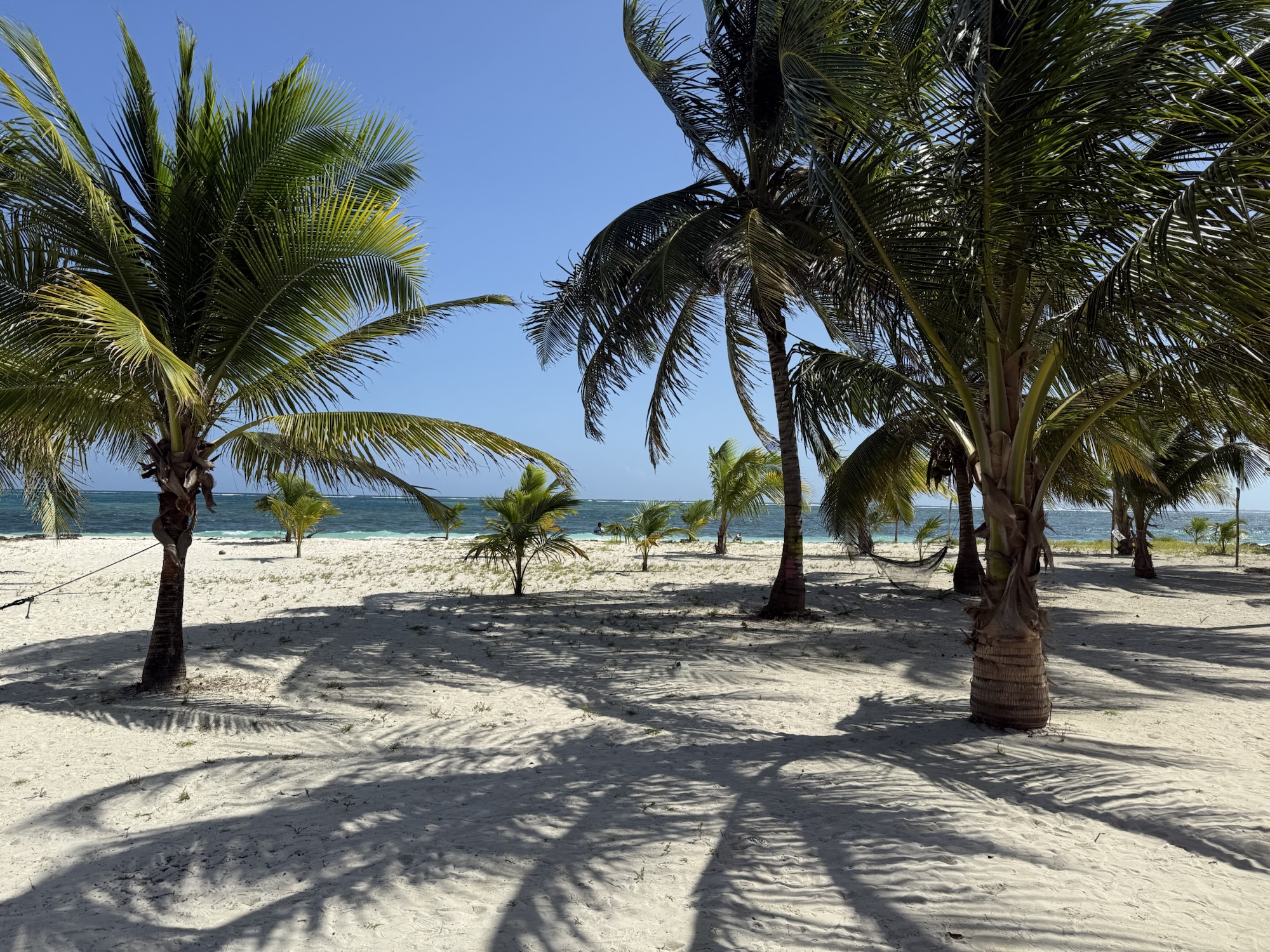
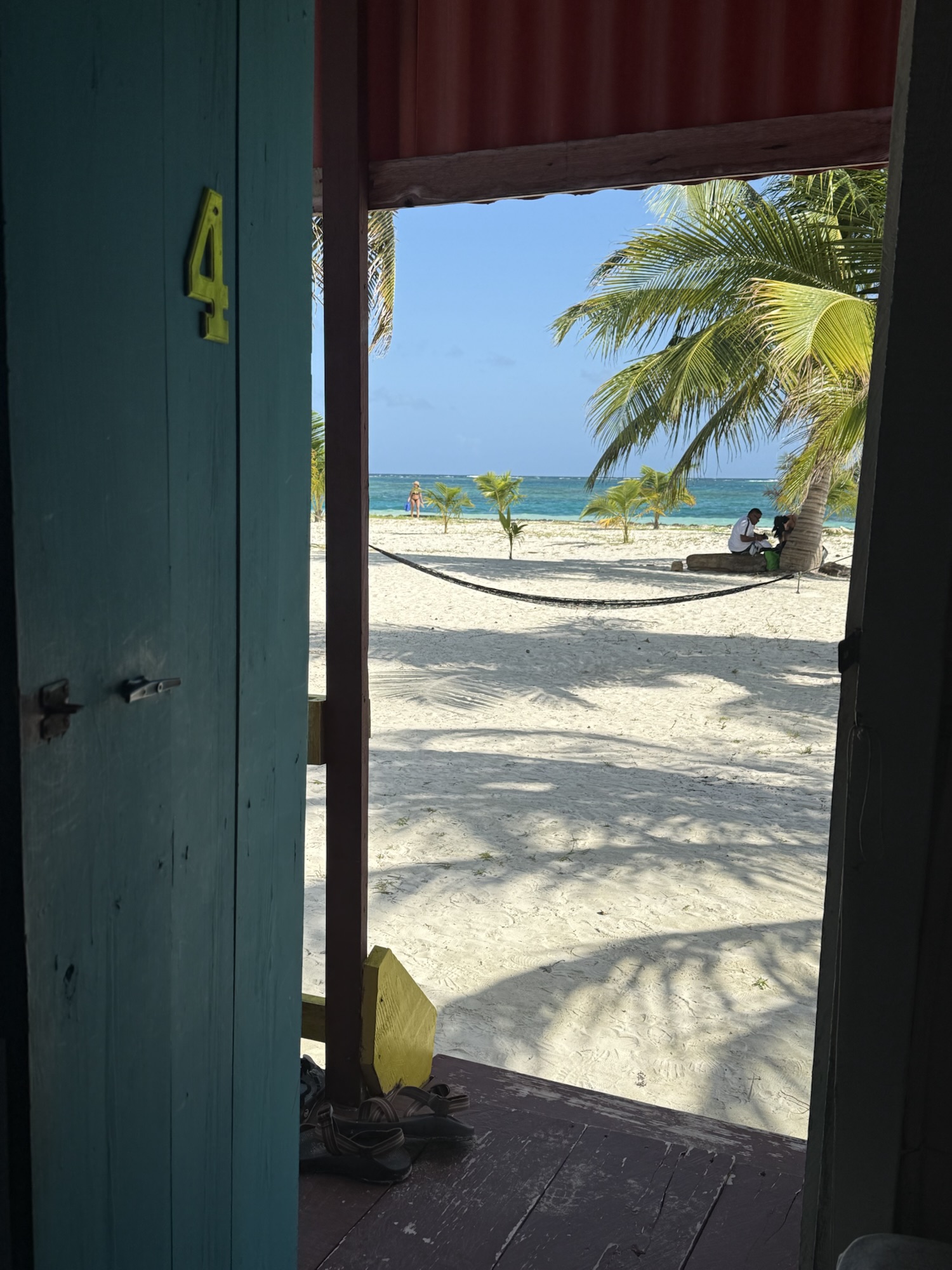
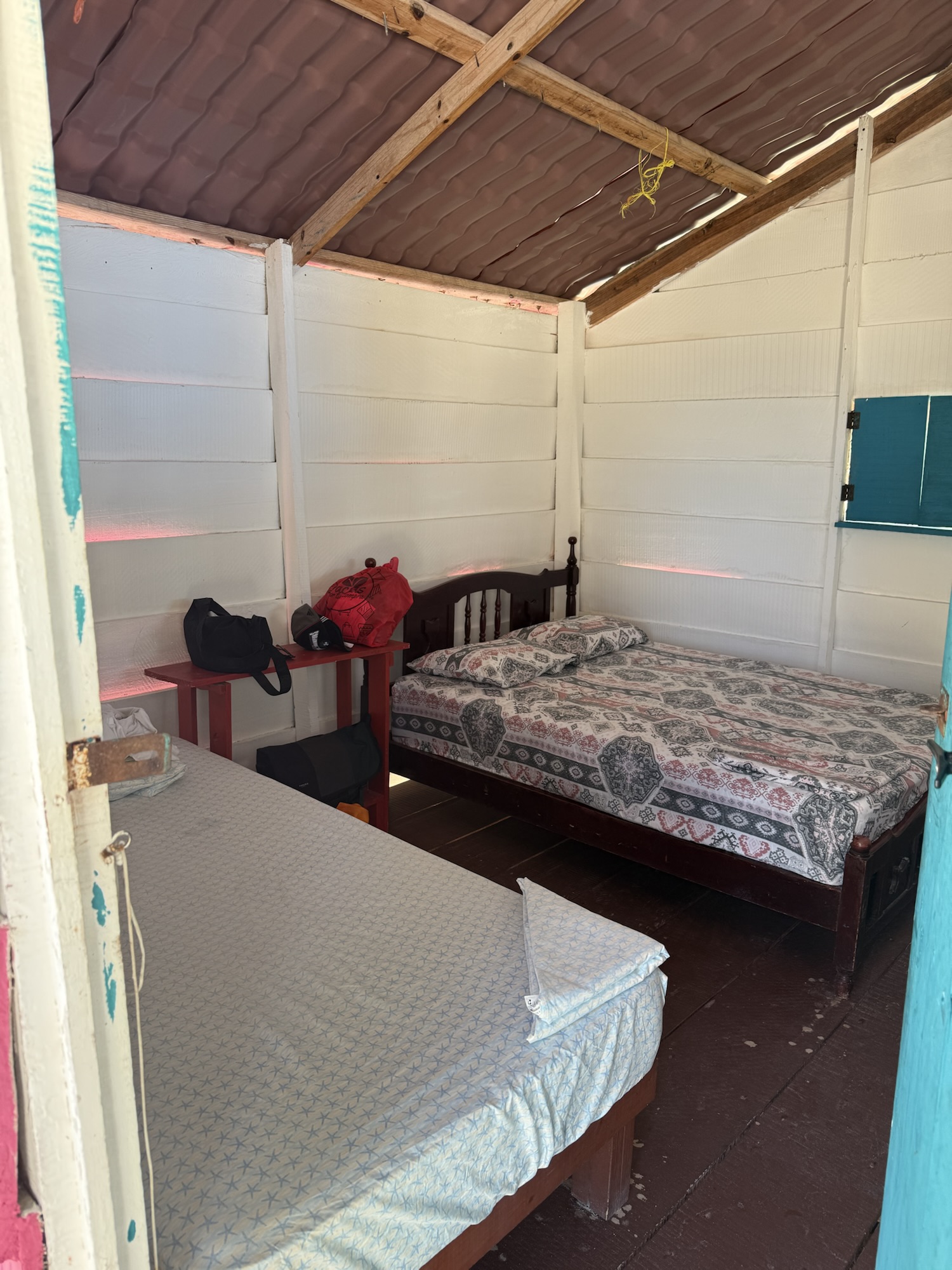
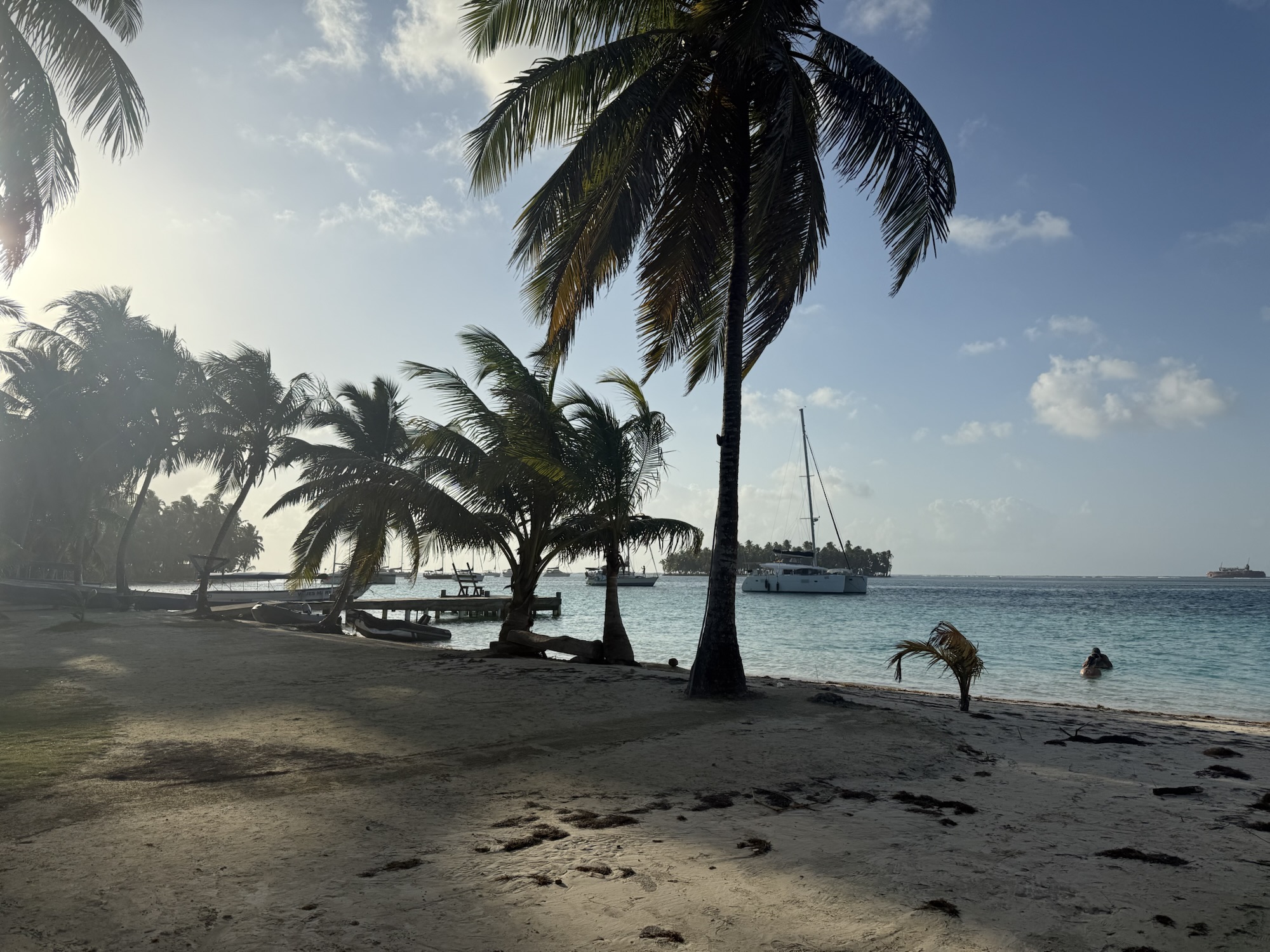
We are staying on Chichime, also called Wissudub. I paid extra for the room with a private bathroom, and I paid even more for a room with a floor. Most rooms have neither, and are basically just beds in the sand with basic walls and a roof. The entire facility has electricity only for a few hours each night. While none of that sounds amazing, the minute we got here and saw the island, we know it was worth it. If you asked a child to draw a picture of a deserted island, this is exactly what they would draw…white sand, palm trees, and maybe a rudimentary hut with a hammock.
View from our cabinOur cabin (notice the floor, which most cabins don’t have!)
We spent the day reading, swimming, snorkeling, and napping. It’s hard not to nap when it’s warm and breezy out and the sound of the water beckons. Luke and I walked the entire island perimeter in under half an hour.
The water is absolutely crystal clear. Within the first few minutes here, we saw a large starfish in the water close to shore.
Where the water goes from pale aqua to vibrant turquoise, the shoreline takes a sudden drop. And by drop, I mean from 2 feet to 20 feet within a 5 foot span – like an underwater cliff. It’s a bit unsettling if you try to walk out, but it created an amazing snorkeling opportunity. A massive school of small fish was hanging out right at the face of this underwater cliff, and we watched bigger fish pick off the small fish at the edge of the school. It’s mesmerizing to watch the school move as a single unit, despite being made up of millions of small individual fish.
Lots of people do this as a day trip, arriving around 10:30 and leaving at 3:00. It’s honestly too beautiful here for that to be sufficient. I think 2 nights will be plenty (there’s only so much super-chill beach time I can handle), but I’m glad we didn’t book for less time.
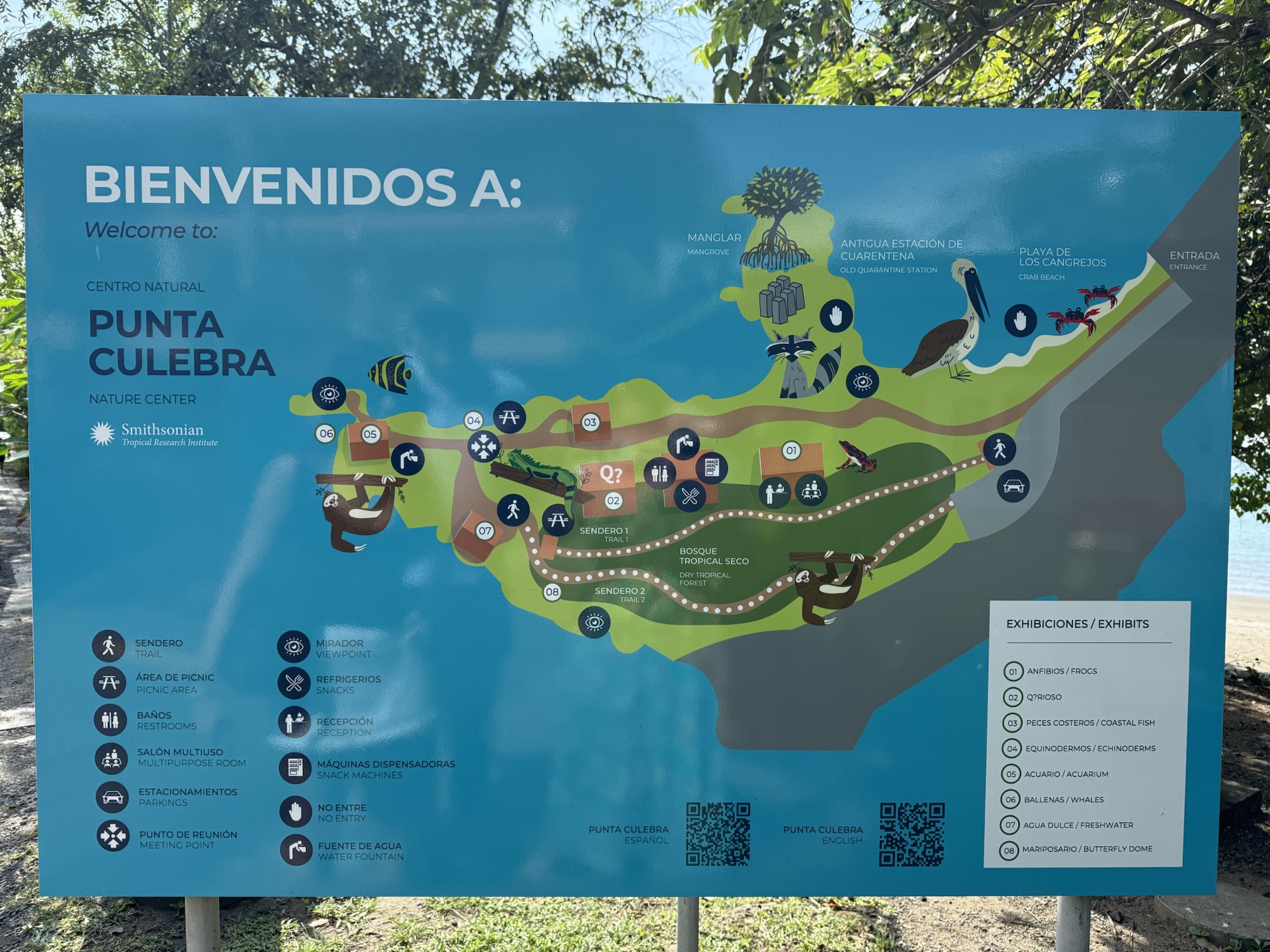
Punta Culebra was again on our docket, and we were very glad to see it open this time!
In addition to several small buildings housing various exhibits about the local flora and fauna, there are also some animals that just live in the area that you can see here. It is notably not a zoo, so nothing is guaranteed or caged, but the space is safe from predators and thus very attractive to sloths.
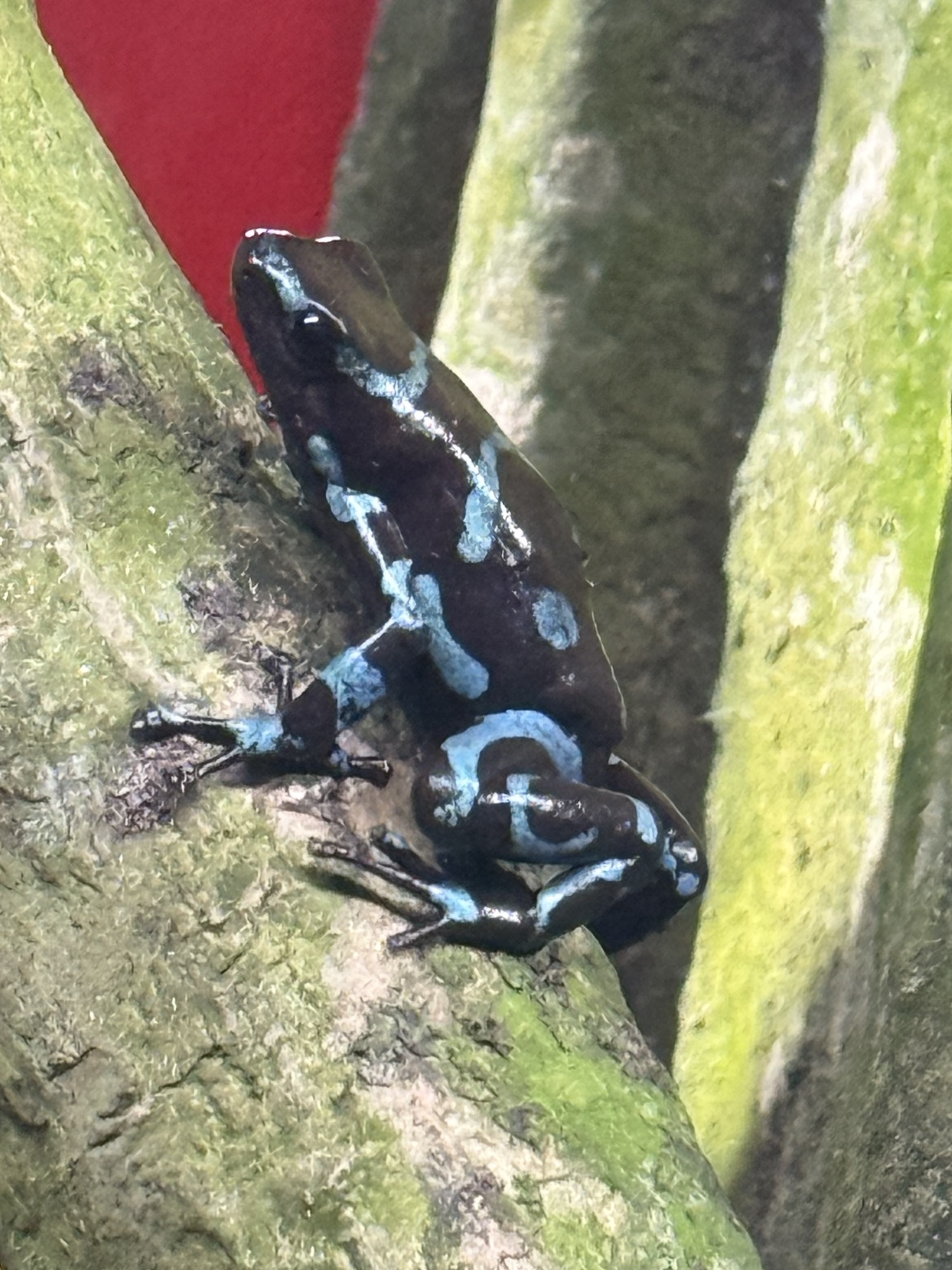
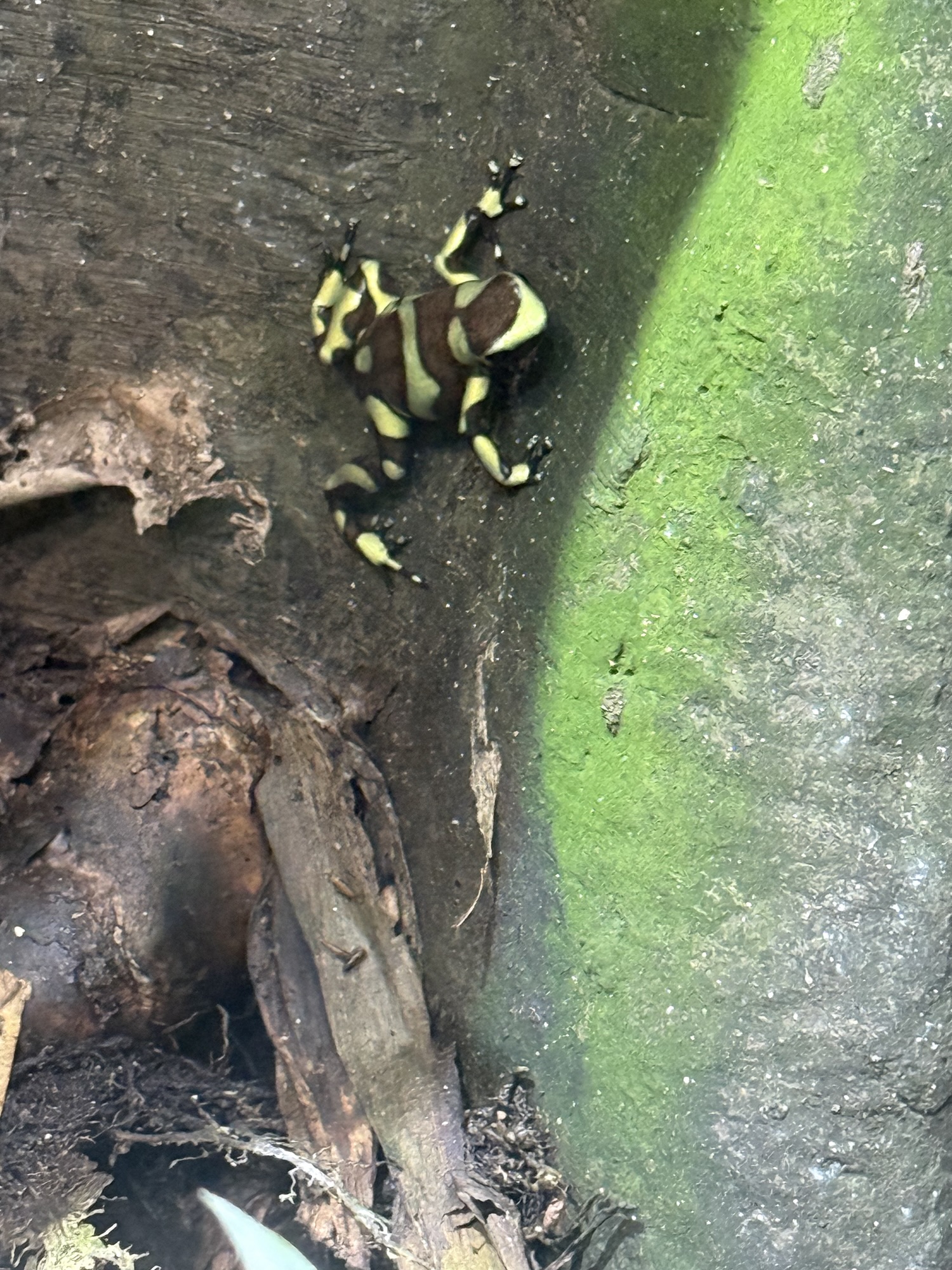
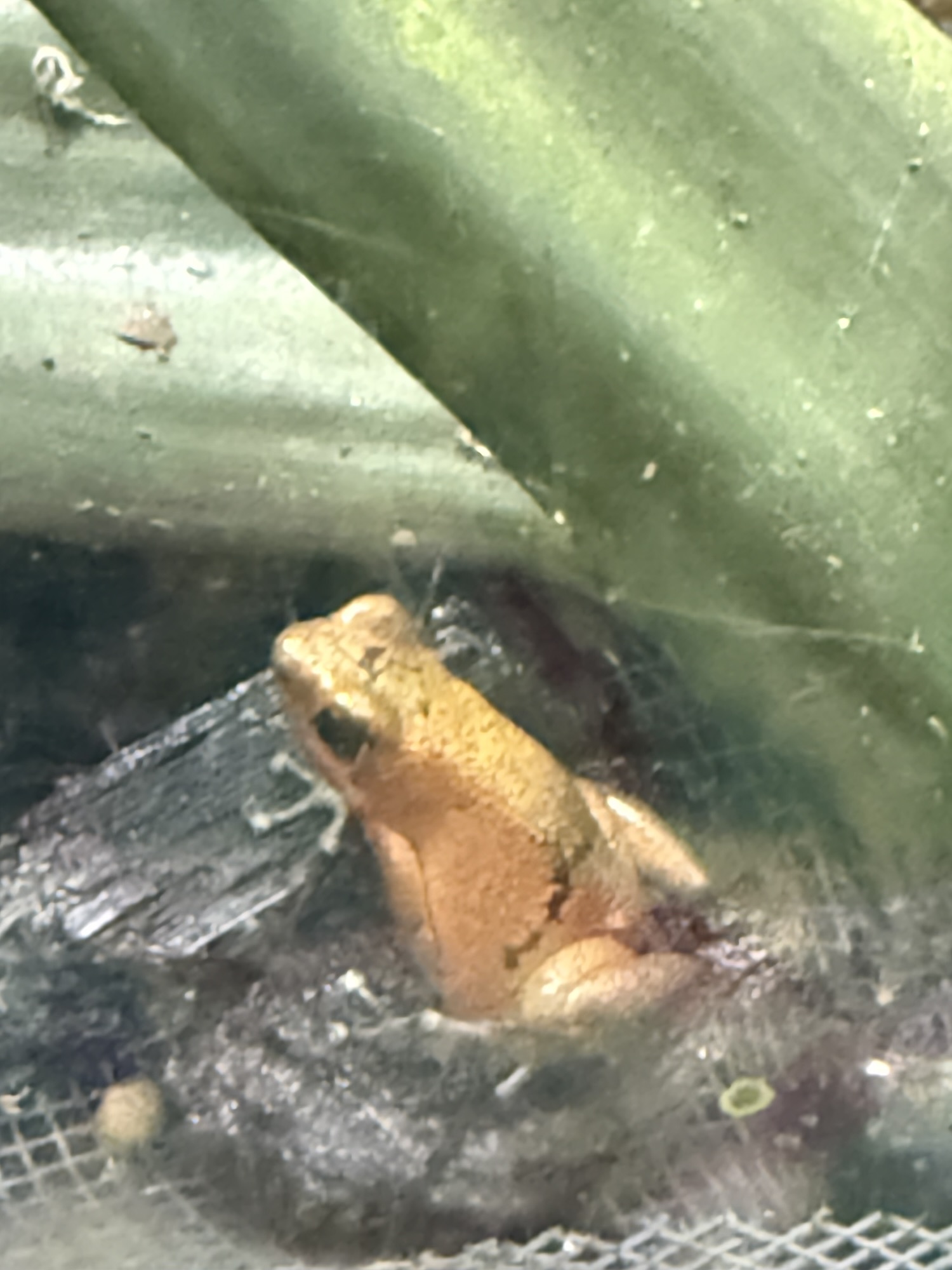
We spent a while in the frog exhibit. Panama has some amazing frog species, many of which are venomous, but they are also so small that the likelihood of finding them on the wild is exceptionally low. These little guys come in gorgeous colors (as well as camouflaged green and brown), and some are as small as a fingernail.
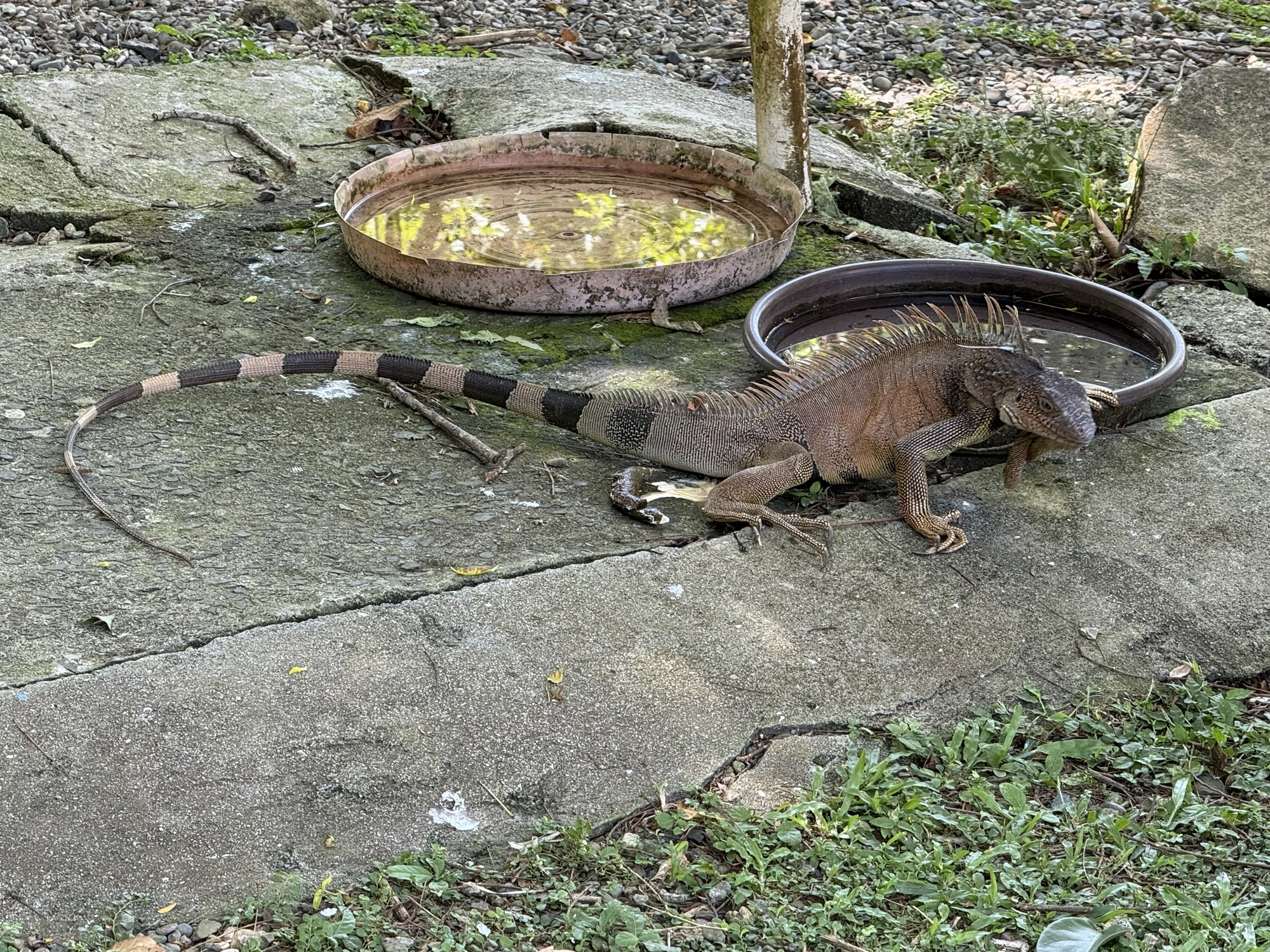
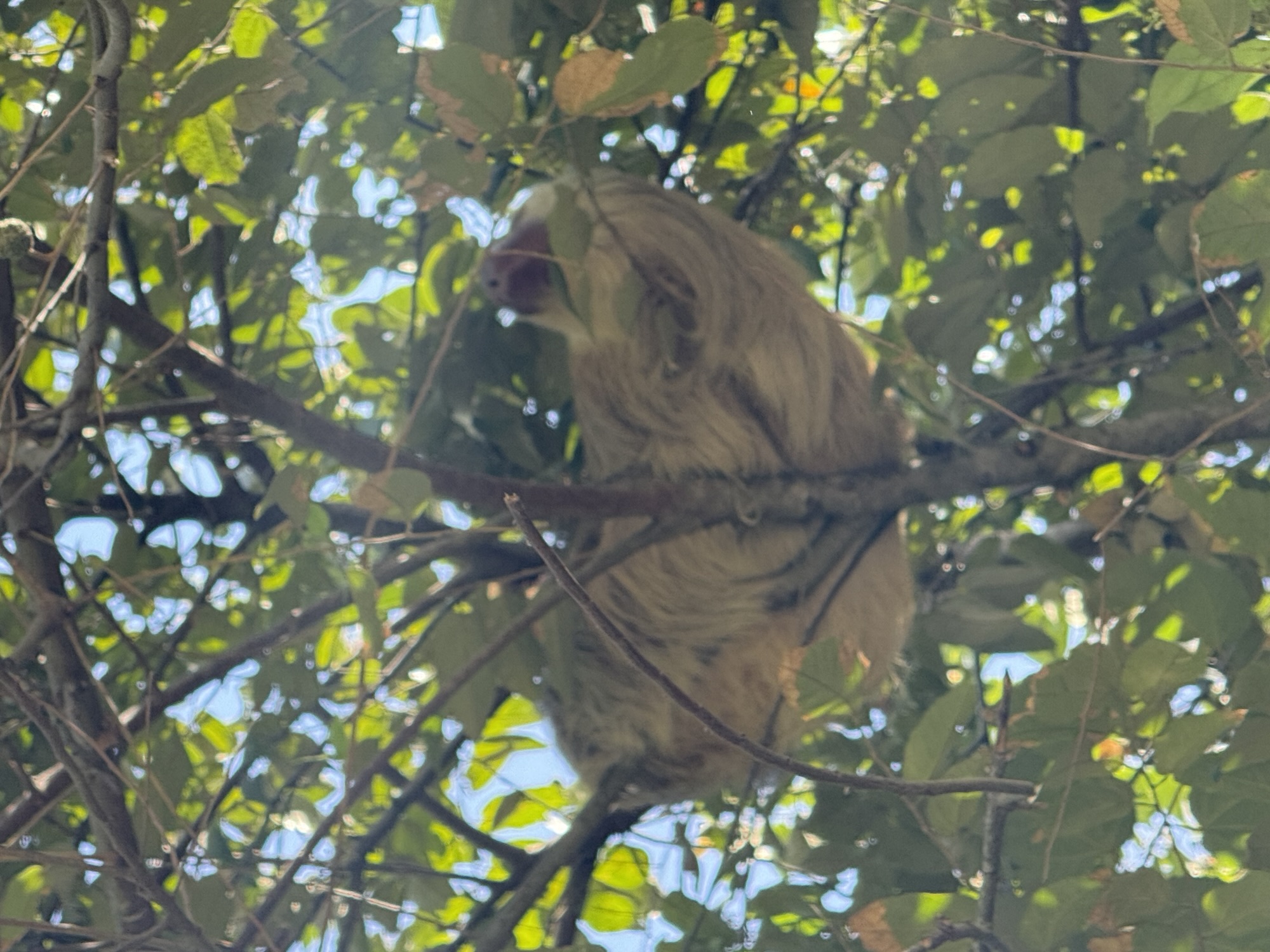
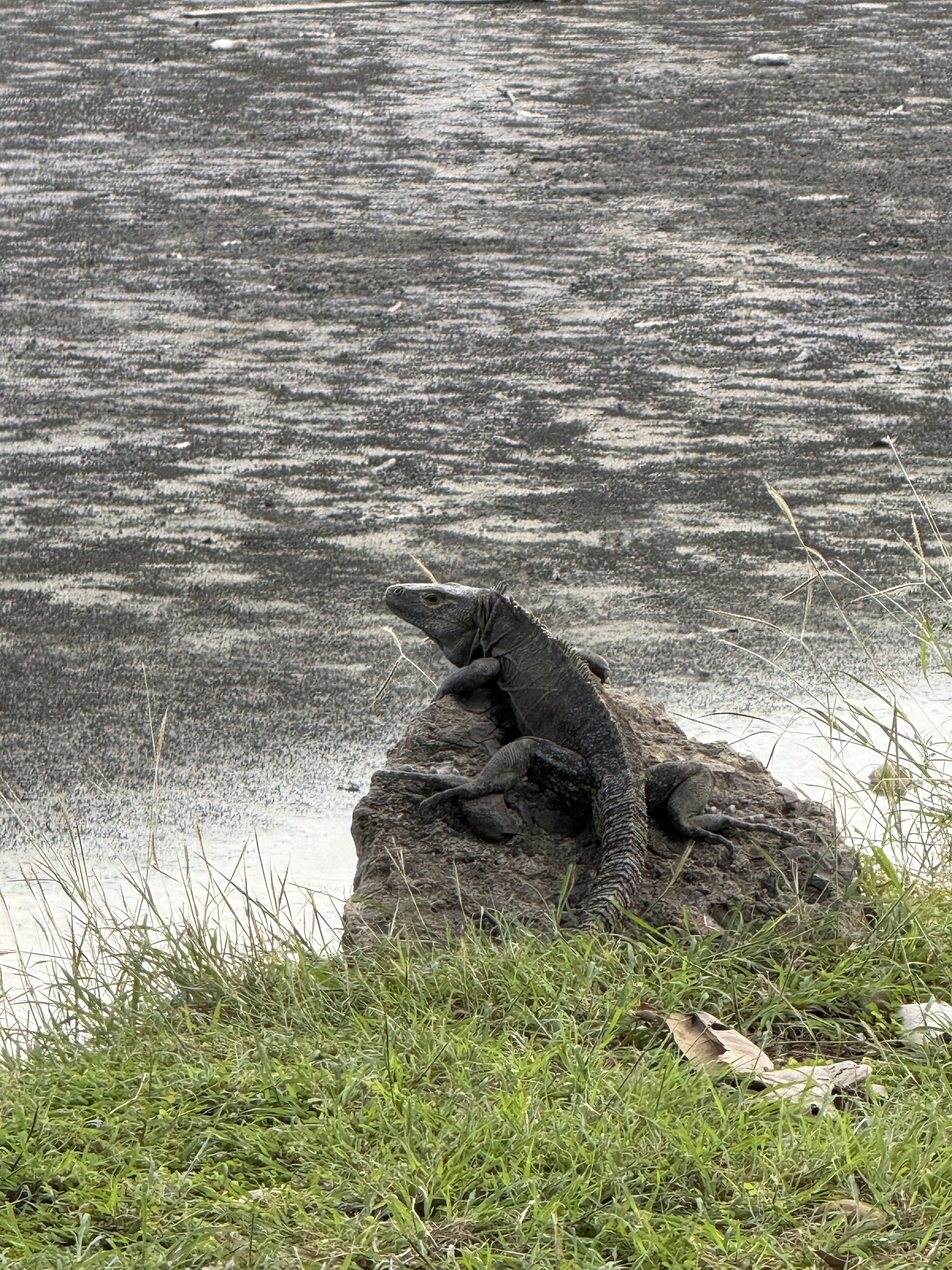
Outside, we found iguanas of varying sizes and two sloths. Two! I will never tire of seeing sloths, even if most of the time they never move. They are so adorable!
Sloth!
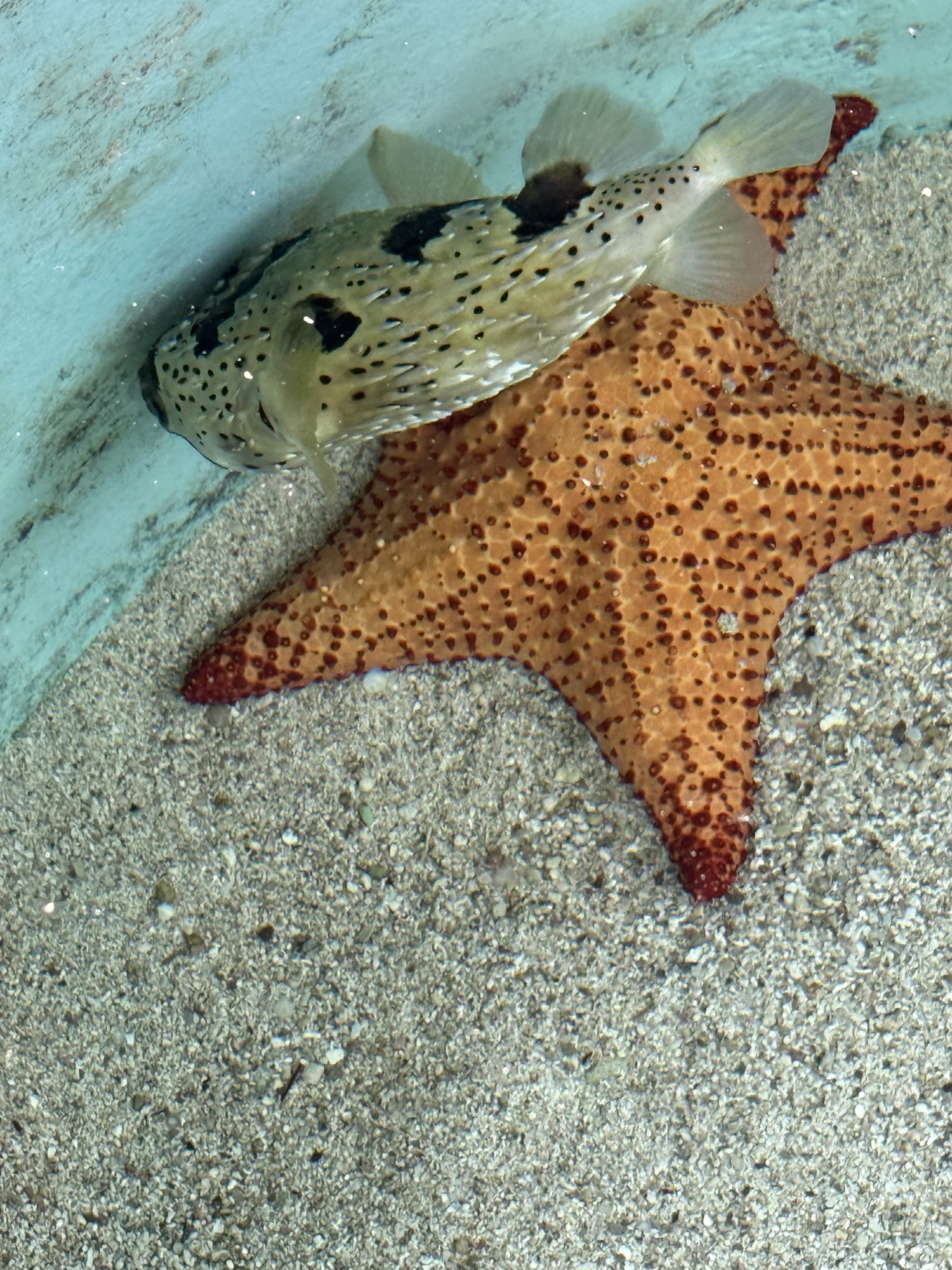
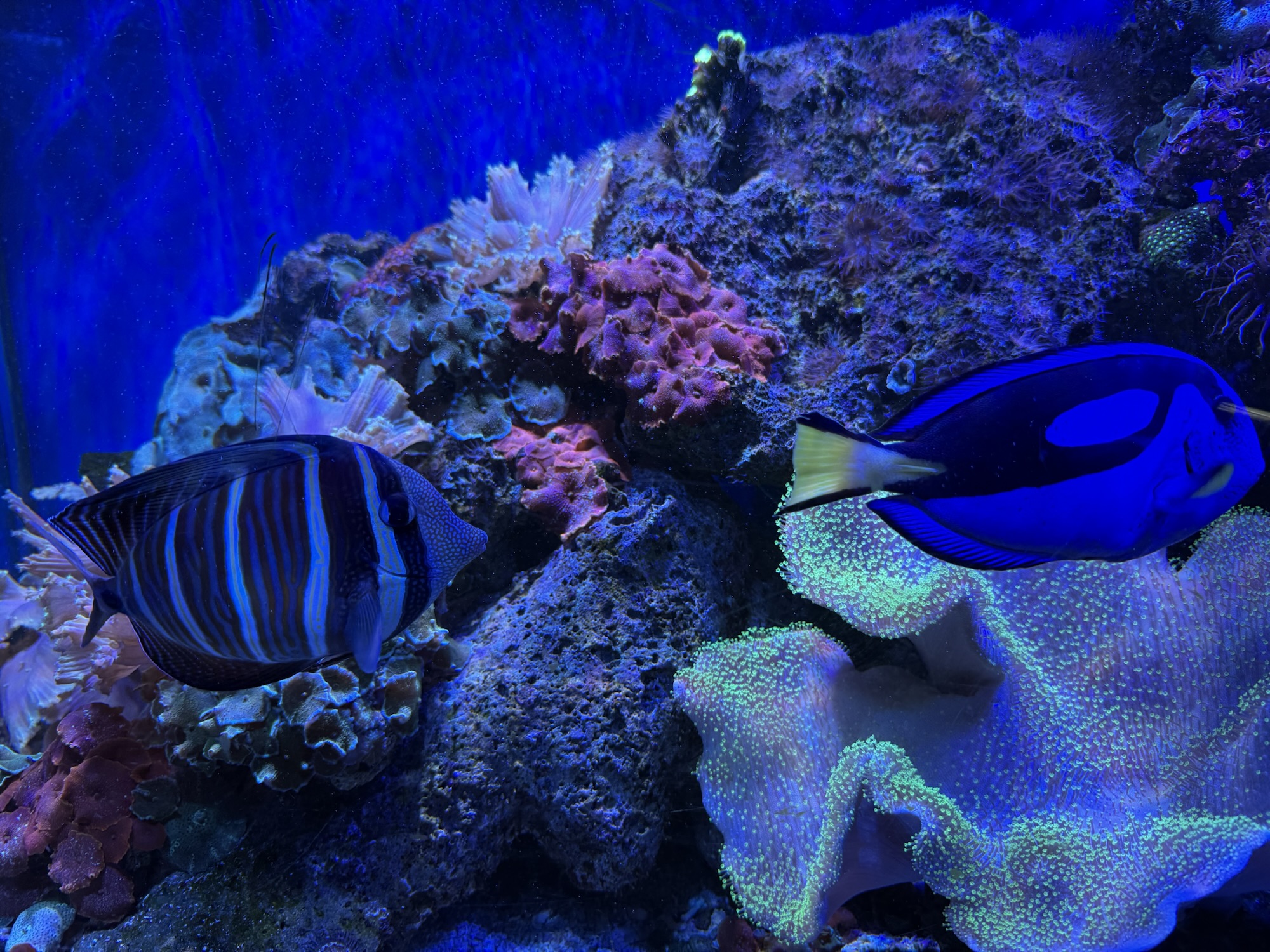
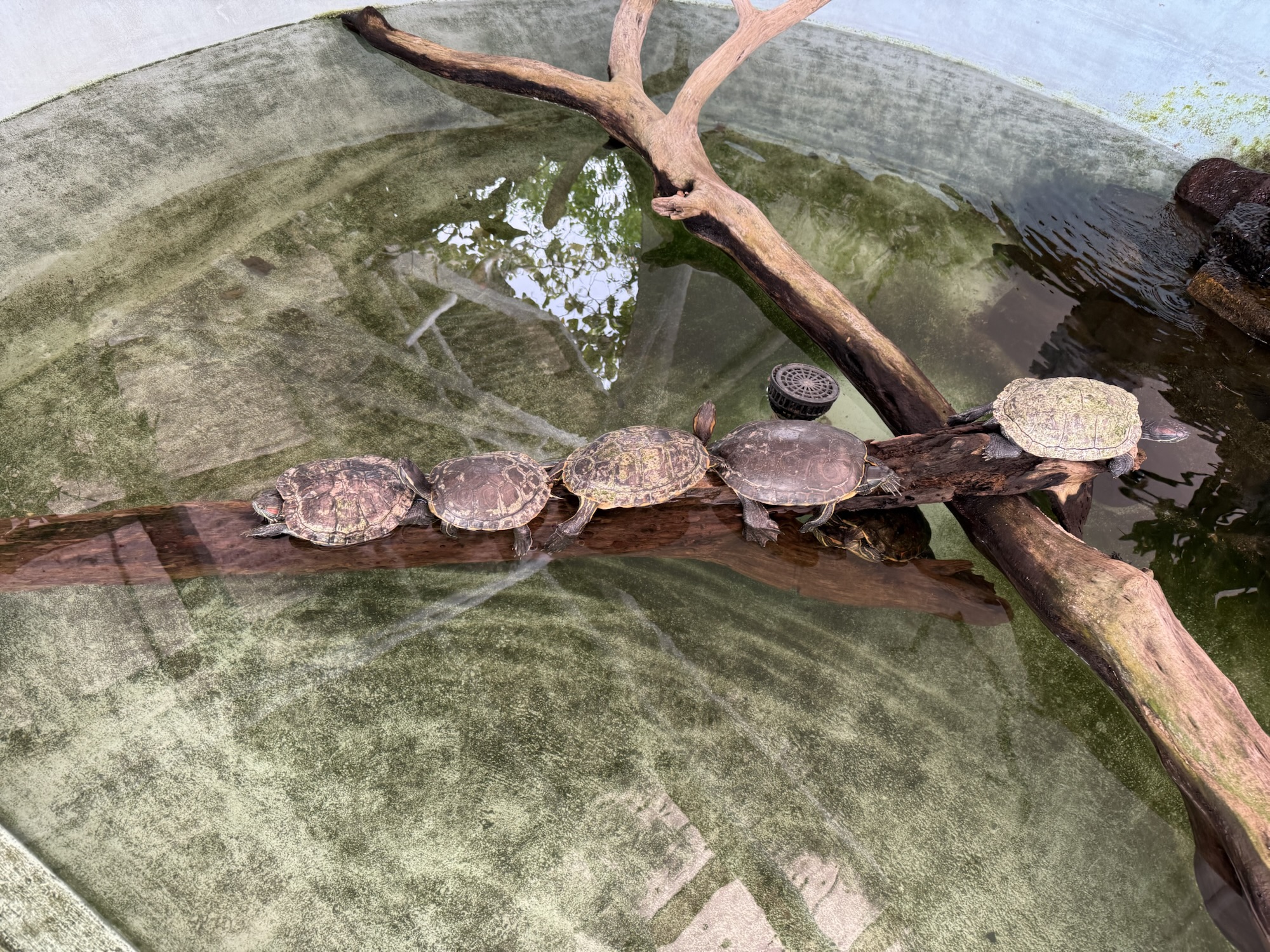
Each exhibit had workers who could tell you about the animals. We learned about starfish (and watched one walking!), nurse sharks, turtles, and the various fish and coral species in the area.
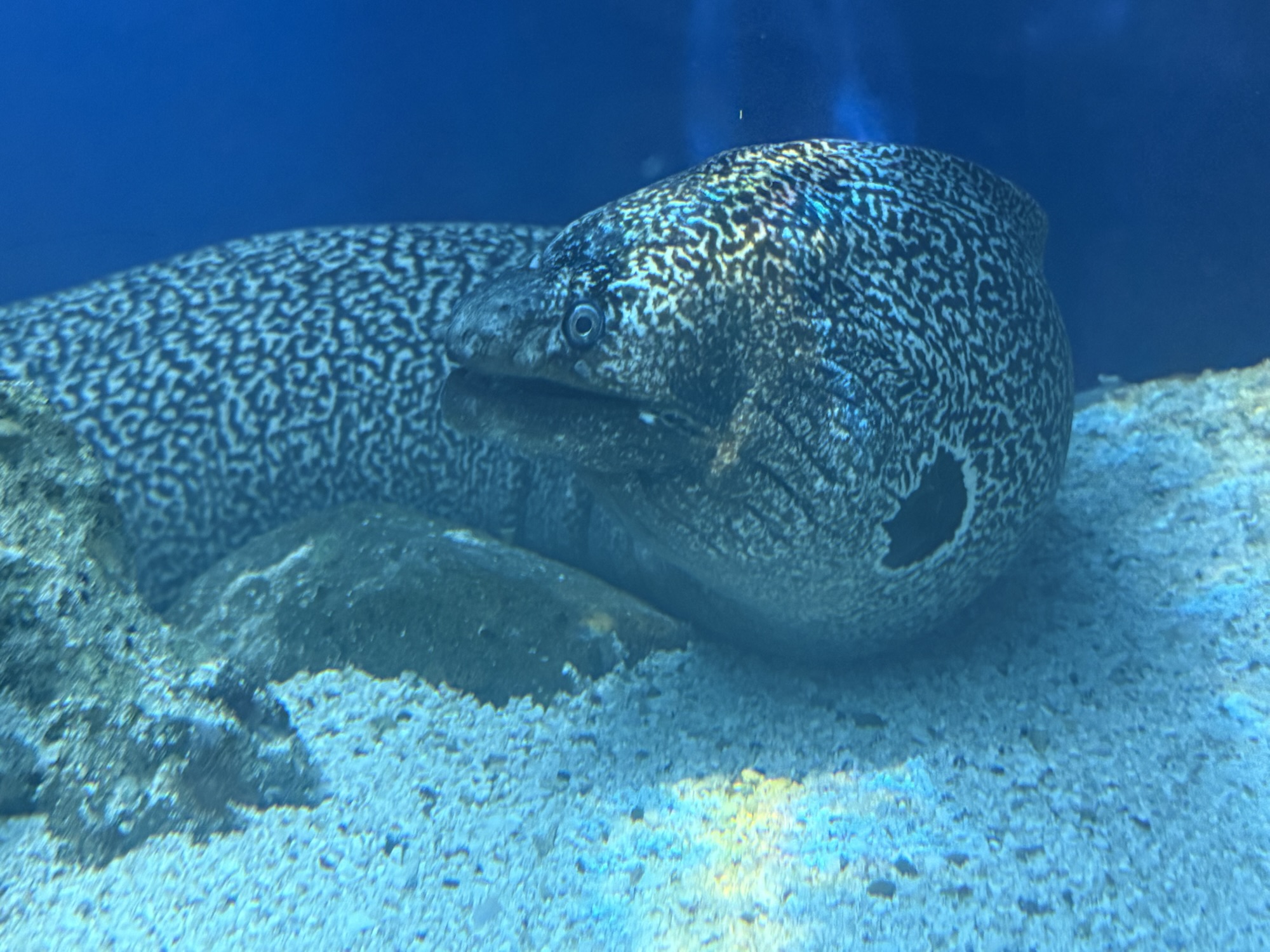
Moray eel (snakes don’t bother me, but eels creep me out)
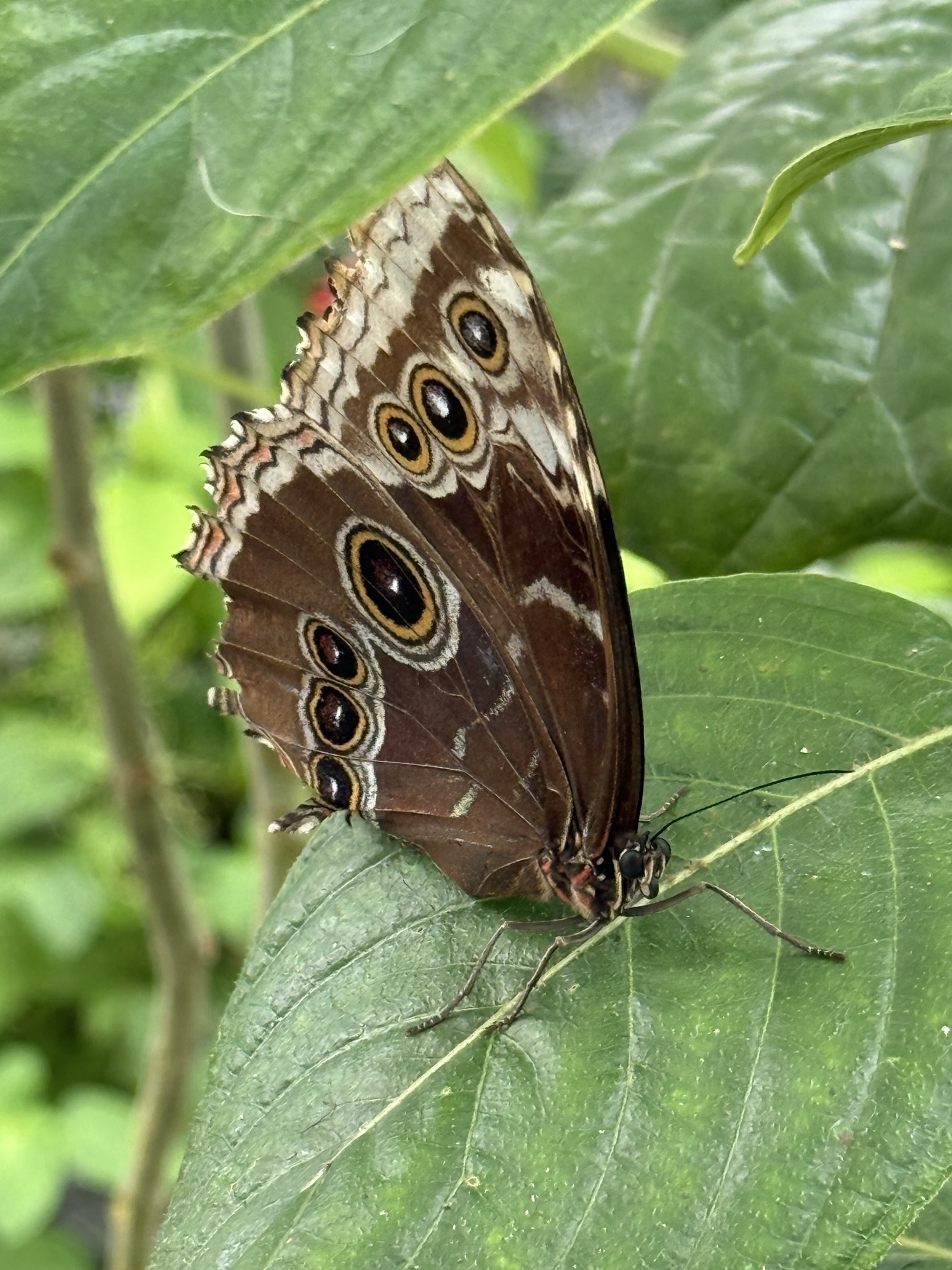
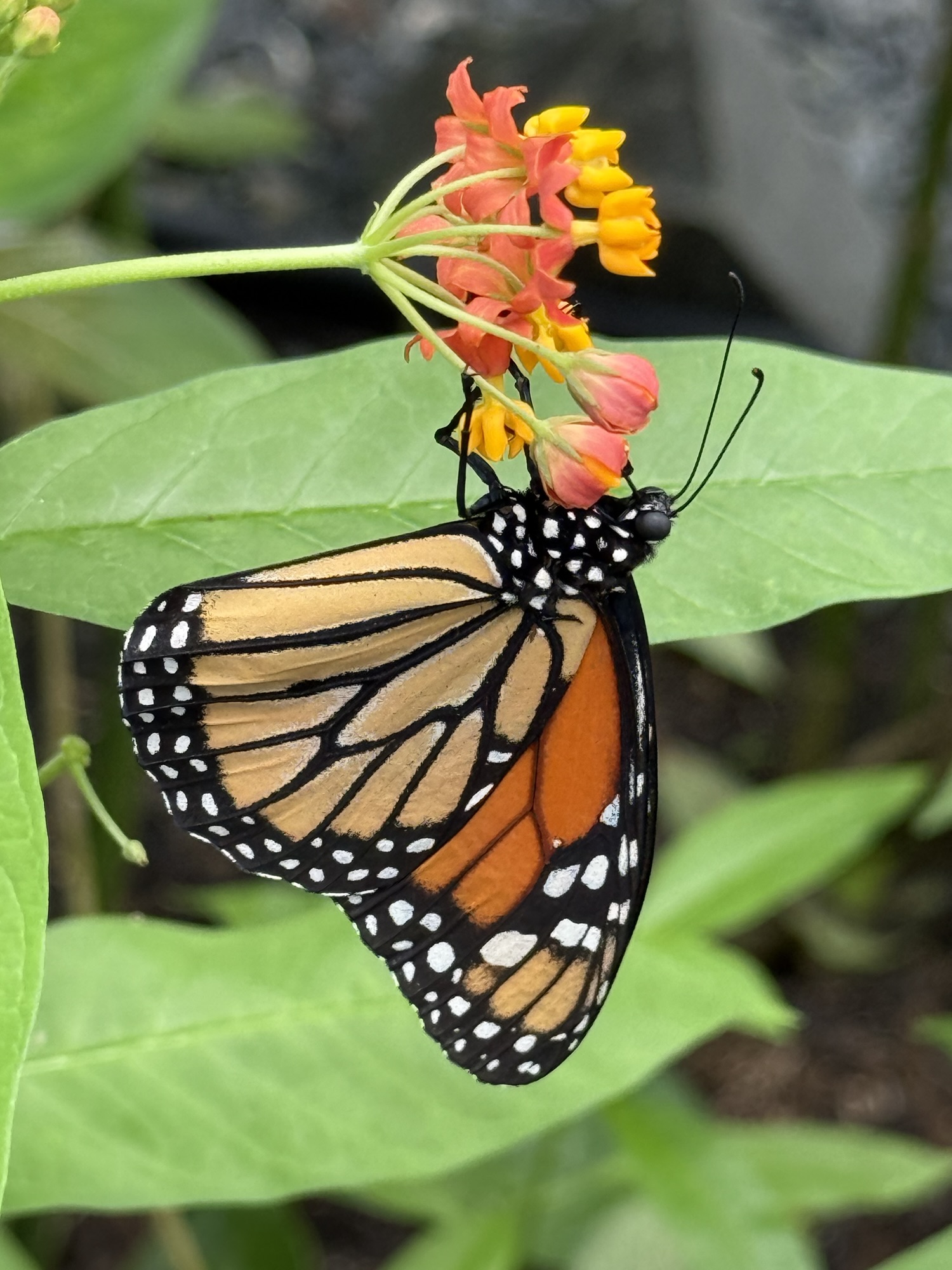
We ended our time at the center with a walk through the butterfly garden.
Outside camouflage
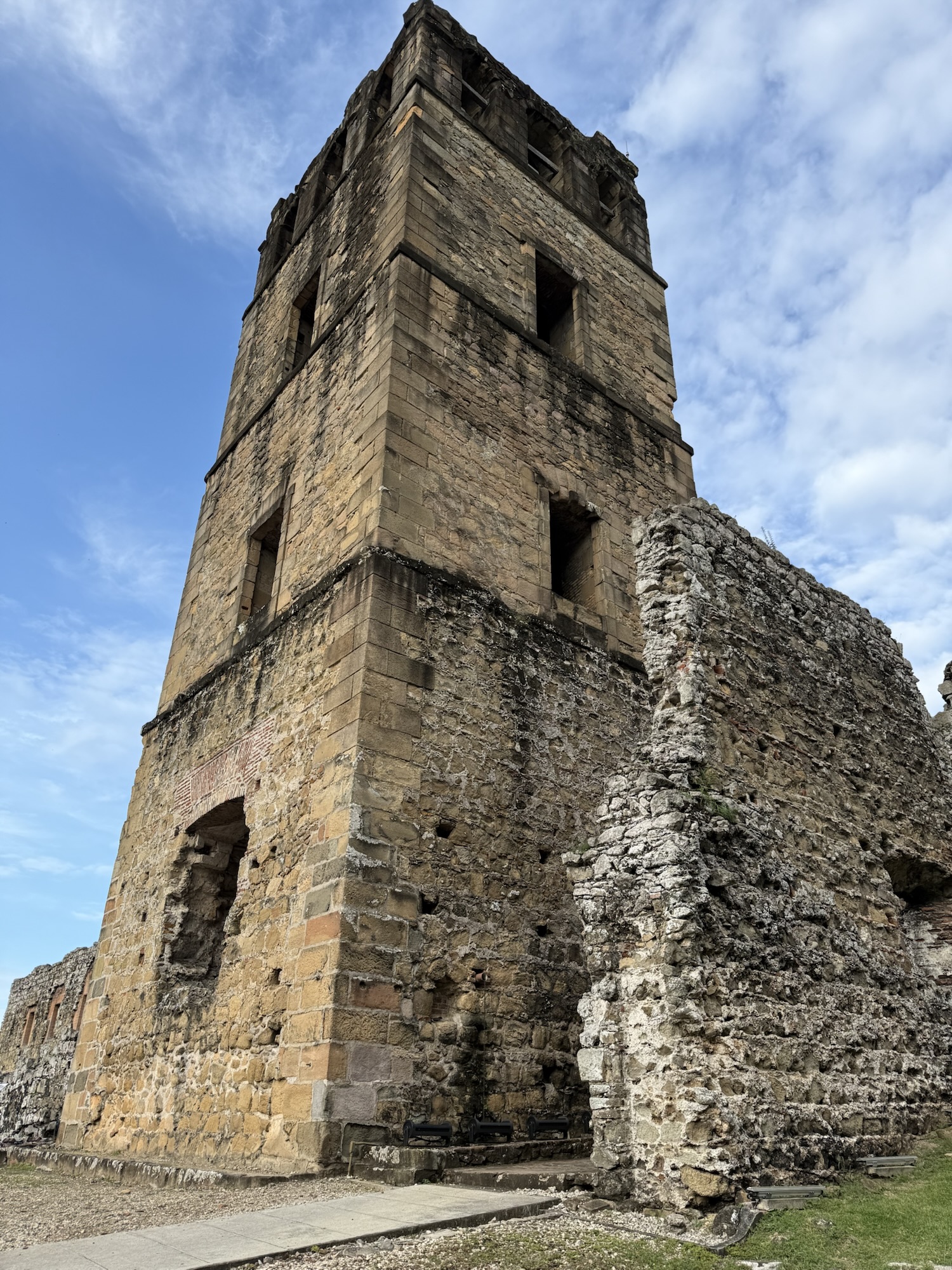
After lunch, we went to do a bit of shopping at a small craft center, then we went over to Panama Vieja (Old Panama). This was the original site of the city, which was ultimately ransacked and burned by pirates. Spanish conquistadors really didn’t fare well in much of Central America, between the heat, the bugs, the diseases, and the pirates. You’d think they would’ve learned a lesson and given up, but the appeal of wealth and controlling trade routes was apparently too much to override any sense of self-preservation.
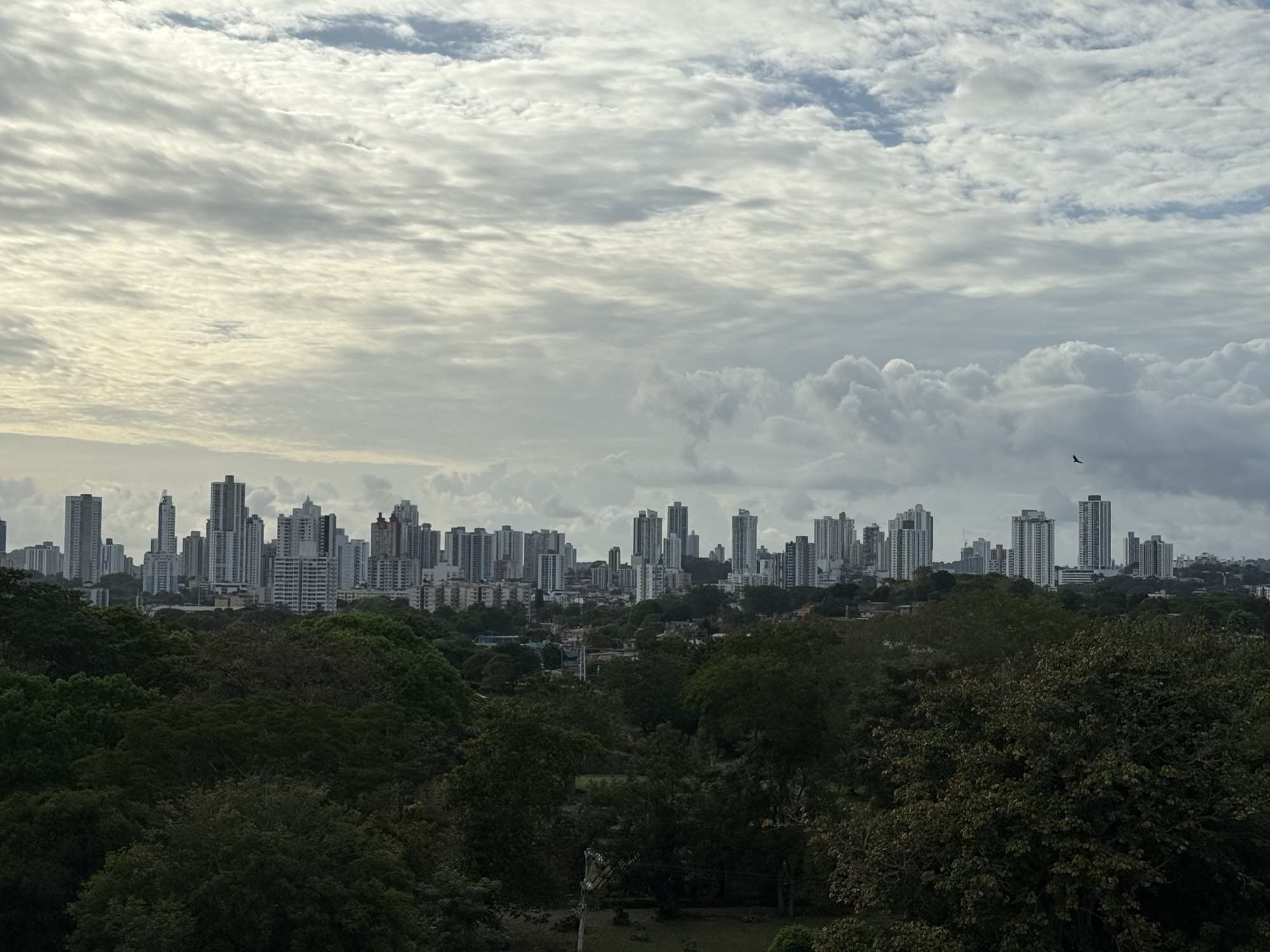
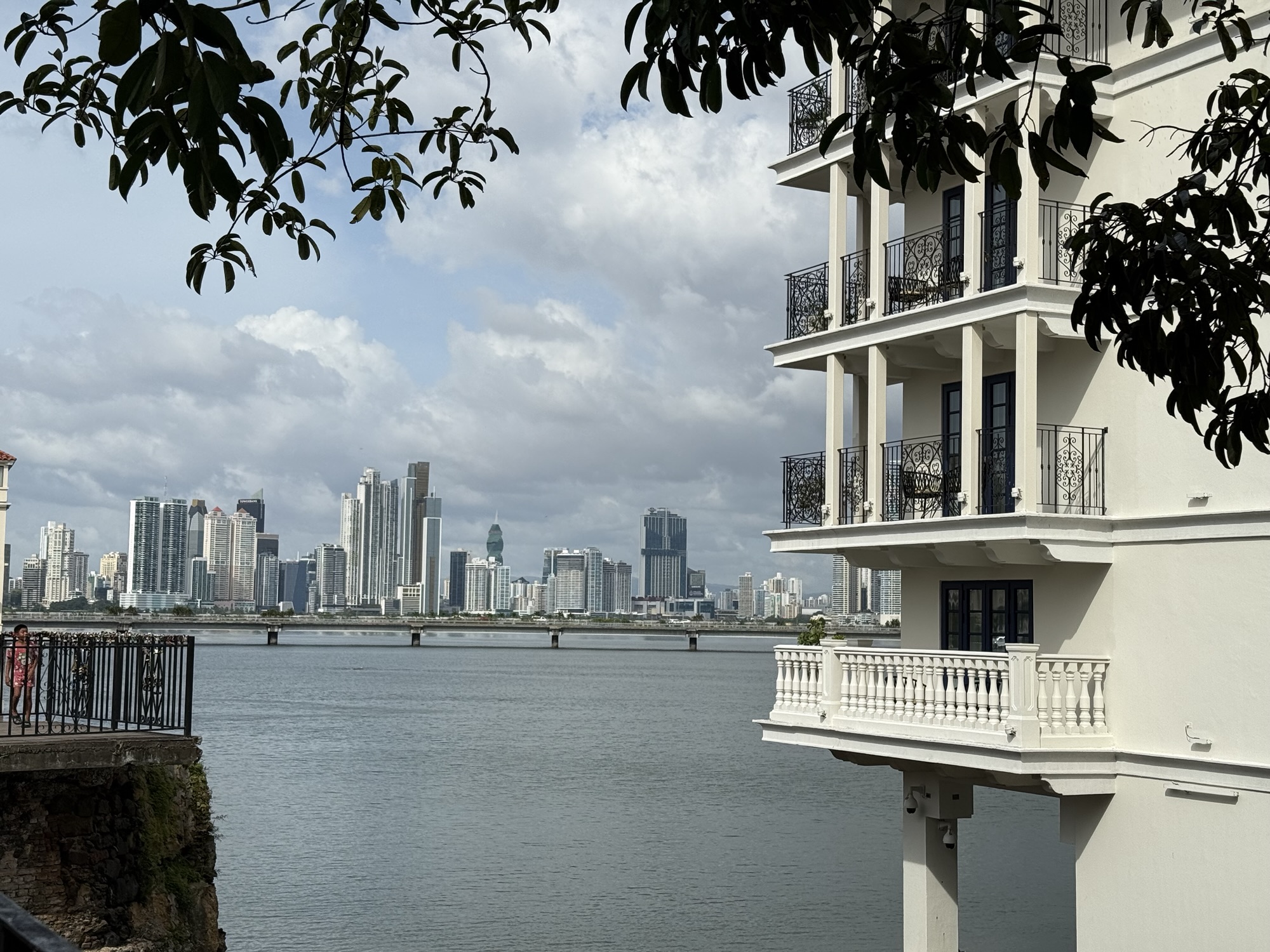
Stunning view of contemporary Panama City from the old city tower
Panama City is much more cosmopolitan than San Jose (Costa Rica) or Bogotá (Colombia). You can feel the influence of global trade in the architecture, restaurant options, and shops. A traveler here can have a Panamanian breakfast, enjoy a sausage and beer in a German beer hall for lunch, and have sushi or Chinese for dinner, all in a single mile radius. One mall will be full of Gucci and Louis Vuitton, and another will have very low-priced basics (we went to a store called Cheaper to buy kiddo some shorts, which is basically a TJ Maxx filled with American brands for super cheap prices, but the assortment of goods was weird – safety vests with Delta’s logo, swimsuits from Target, and a cami from Juicy Couture). It’s a very eclectic mix.
We meandered deeper into El Cangrejo, the neighborhood we are staying in, to get dinner. La Rana Dorada (the Golden Frog) serves their own beer and comfort food, so we ate there. Their idea of comfort food was a bit atypical (I had a trio platter of green olives, feta cheese, and tortilla chips), but it was good enough and close.
We have a 5:30am pick up on Sunday, so it’s an early night for this crew.
I had plans for one day in Panama City, but we found ourselves with 2 after changing our flights. While my initial inclination was to pack more things in, we all pretty quickly recognized that the hot, humid weather would take a bit of time to adjust to, so we decided to take the day slowly.
We got an Uber (super cheap and absolutely everywhere!) out to Punta Culebra, a Smithsonian-run nature center on Amador Causeway, a causeway built from material removed from the canal construction that goes out to 2 small islands. For some reason, the center is closed, so we walk over to a lookout point to admire the view and reconfigure the plan.
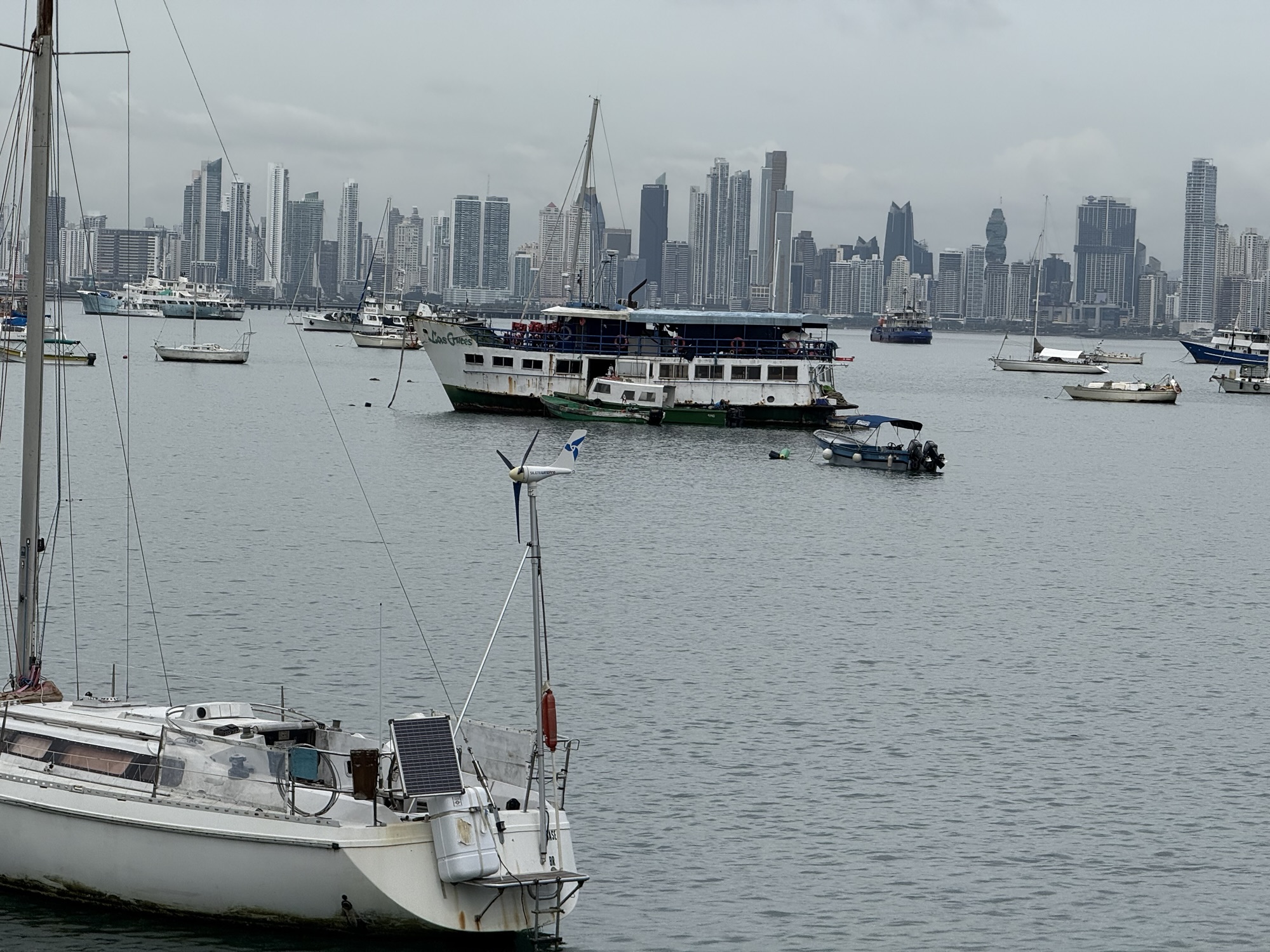
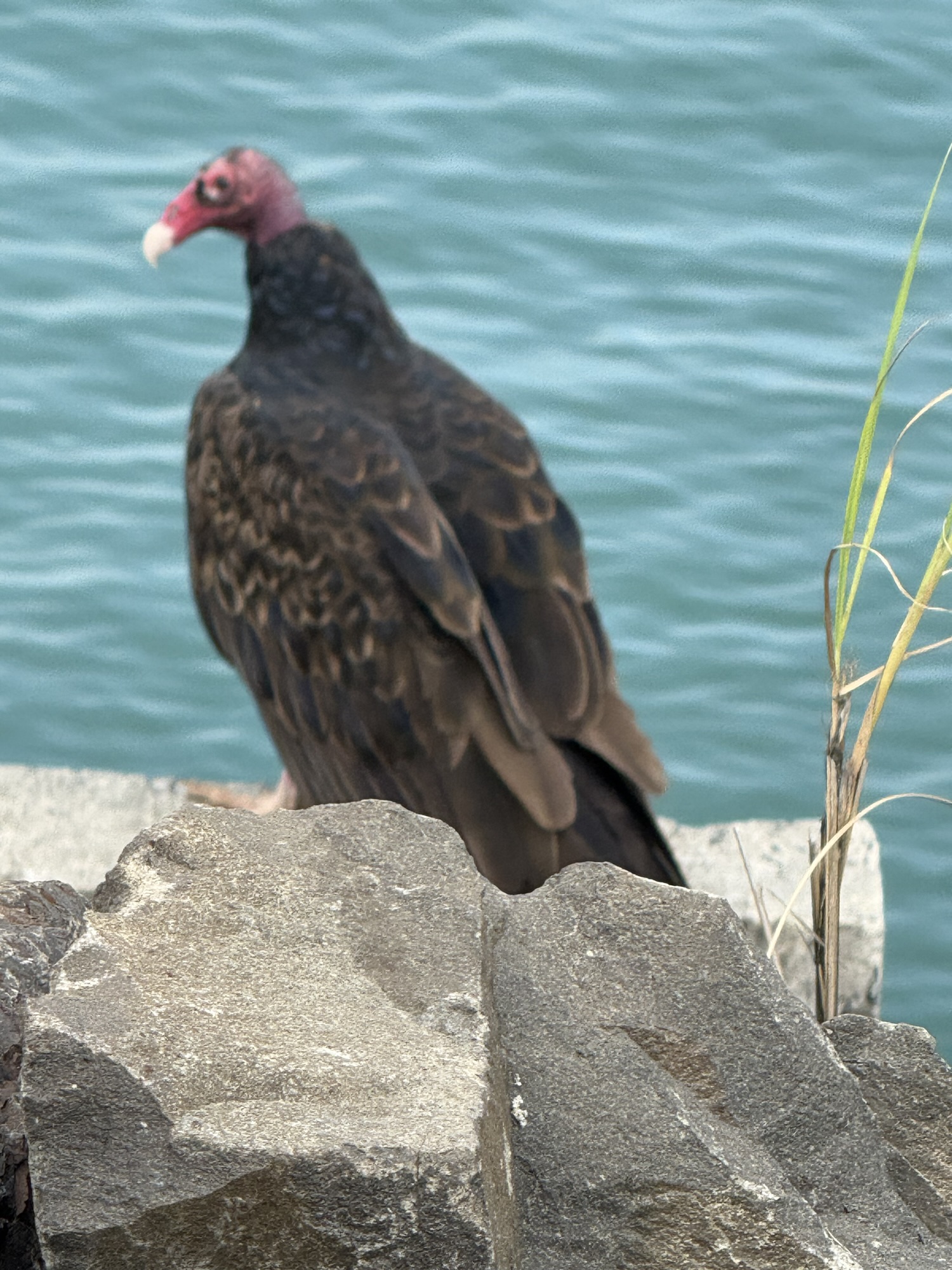
View of Panama City from the Amador CausewayPufferfish!Vulture
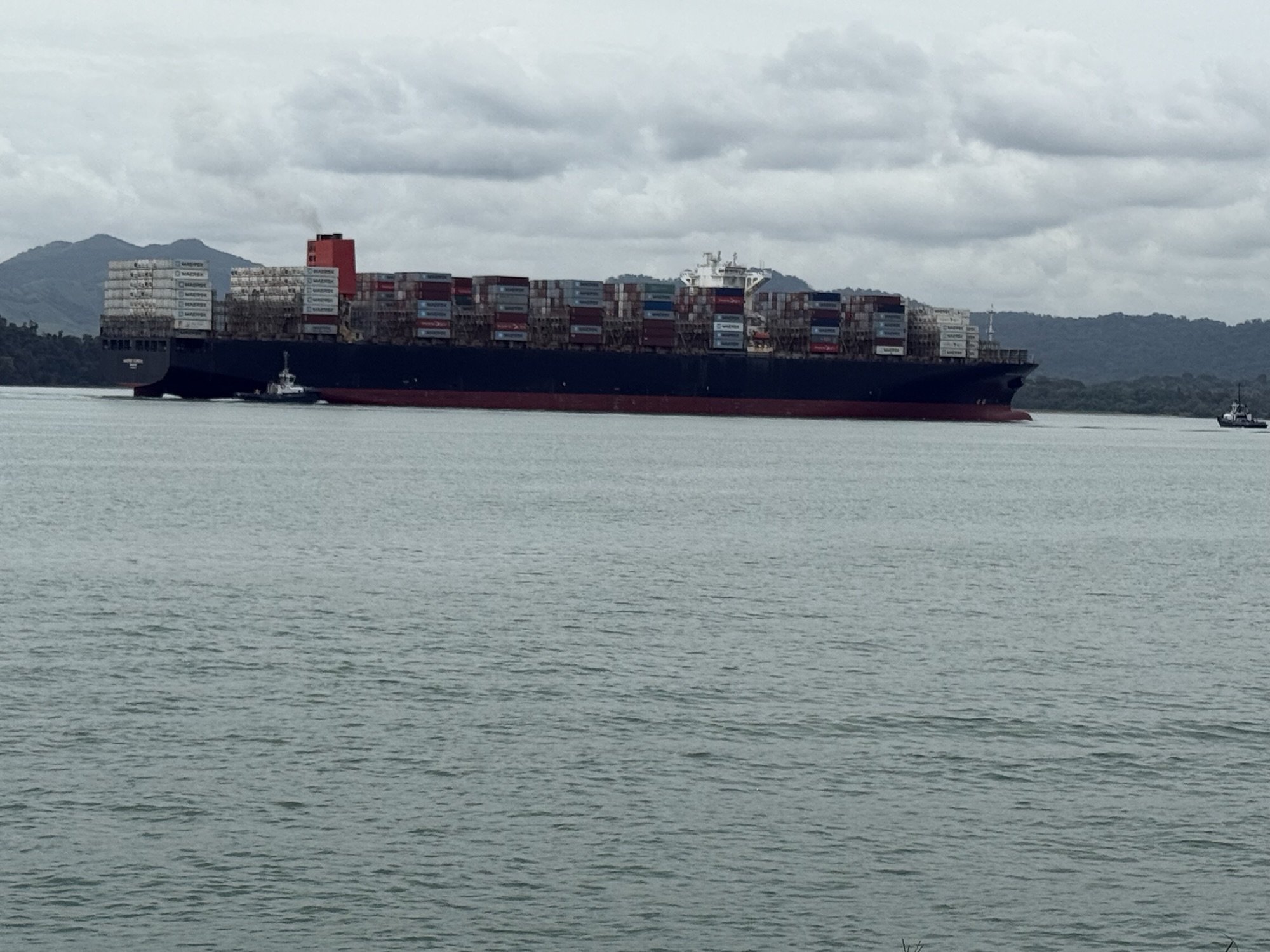
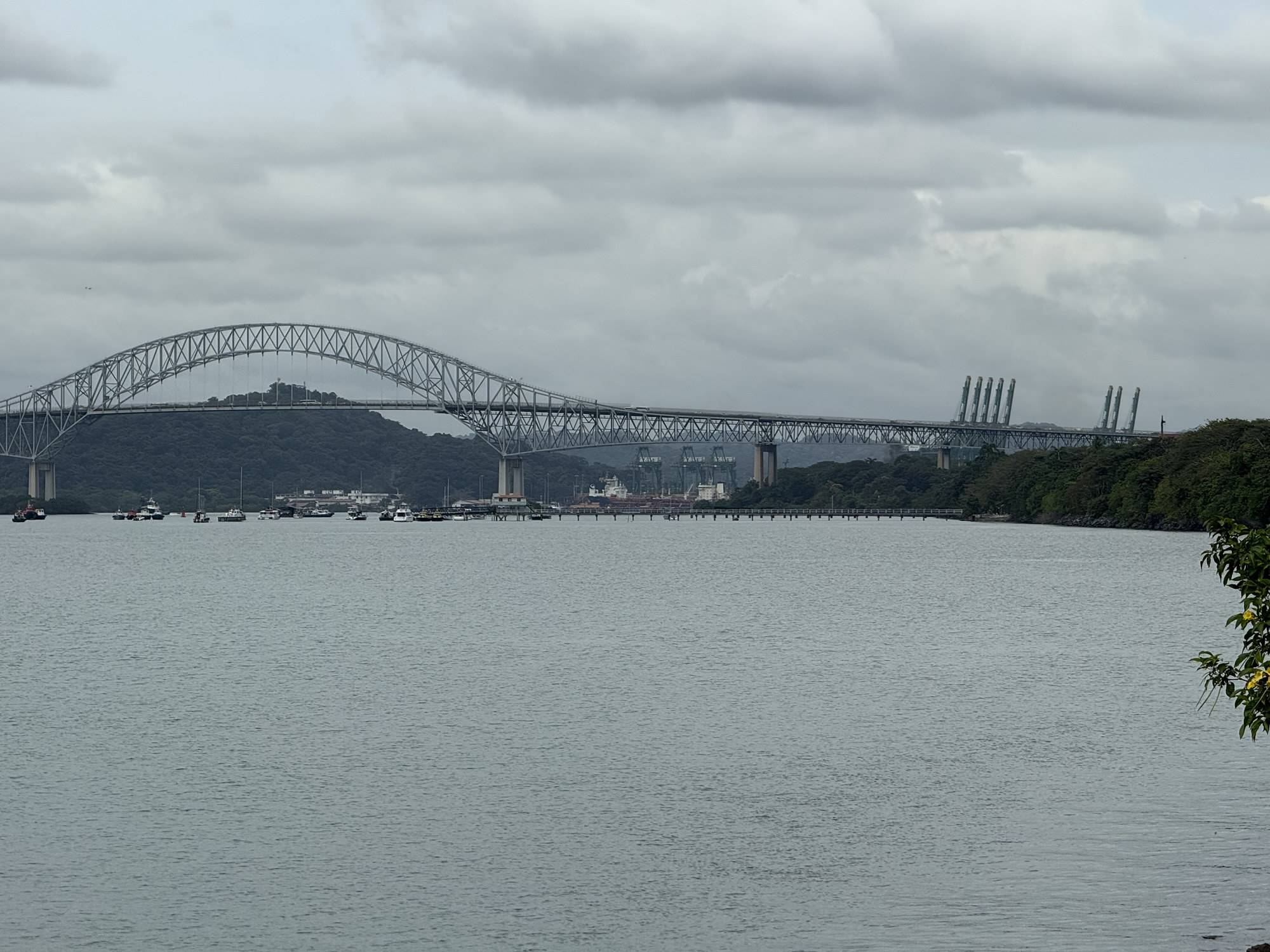
We decided to walk the causeway for a bit, admiring the views of the city on one side and the queue of massive ships waiting to enter the canal on the other. I LOVE big ships, and so I spent a fair amount of time looking at them and looking them up. I can’t explain why I find it so interesting, but I do enjoy looking up the boats and learning their names, the flag they fly under, where they are coming from and going to, etc.
Big boat!Bridge of the Americas
We found ourselves suddenly with an overheated kid, so we made a stop for lunch, then we got a taxi over to Casco Viejo, the city’s old colonial neighborhood. This looks so much like Old San Juan or Cartagena de Indias, and for good reason since they all were Spanish government seats at some point in history. I did make the rookie mistake of not setting the taxi fare in advance and I was overcharged. I know I should have argued since yielding only encourages that type of dishonest behavior, but I just couldn’t be bothered to argue over $3.
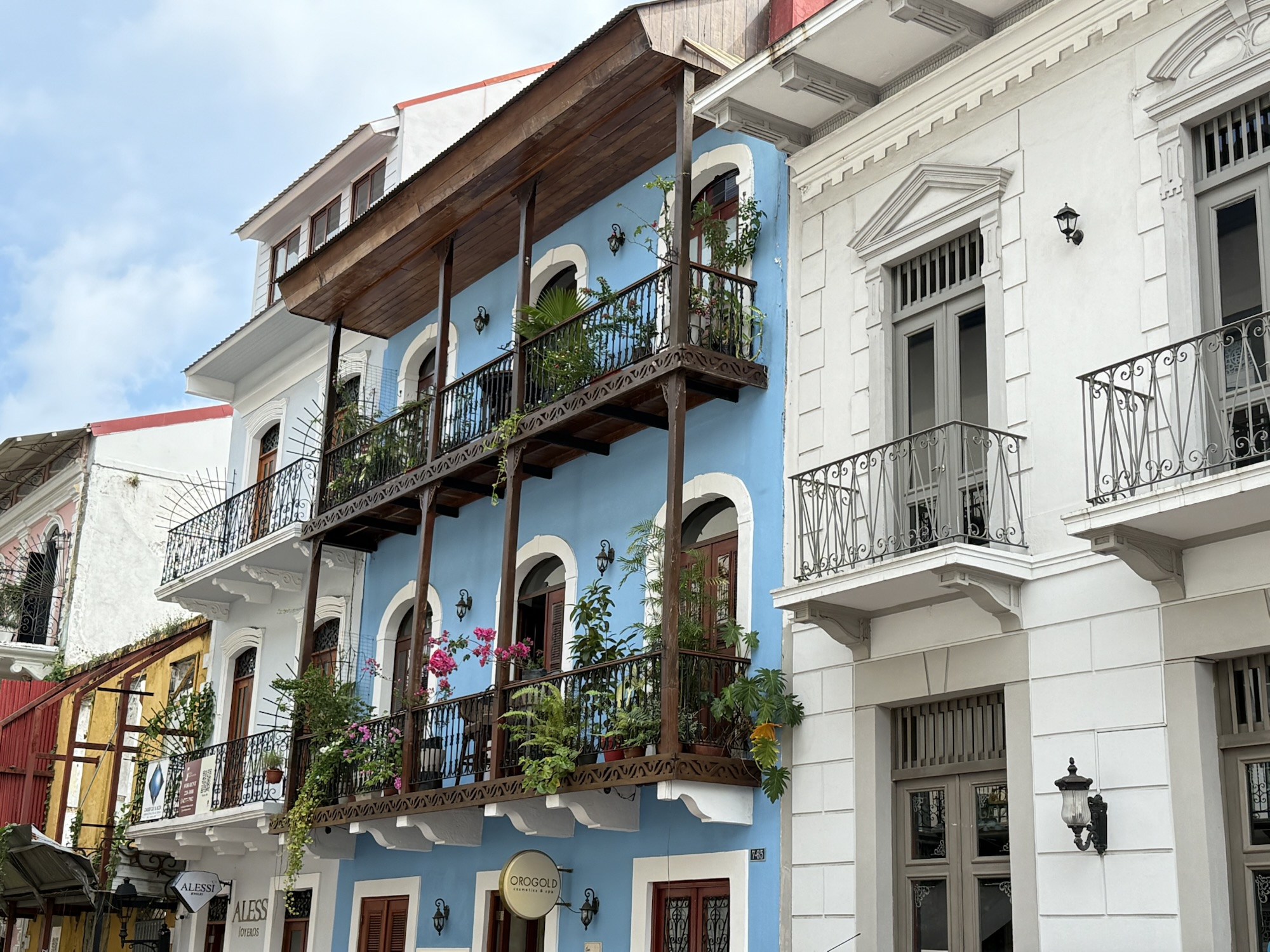
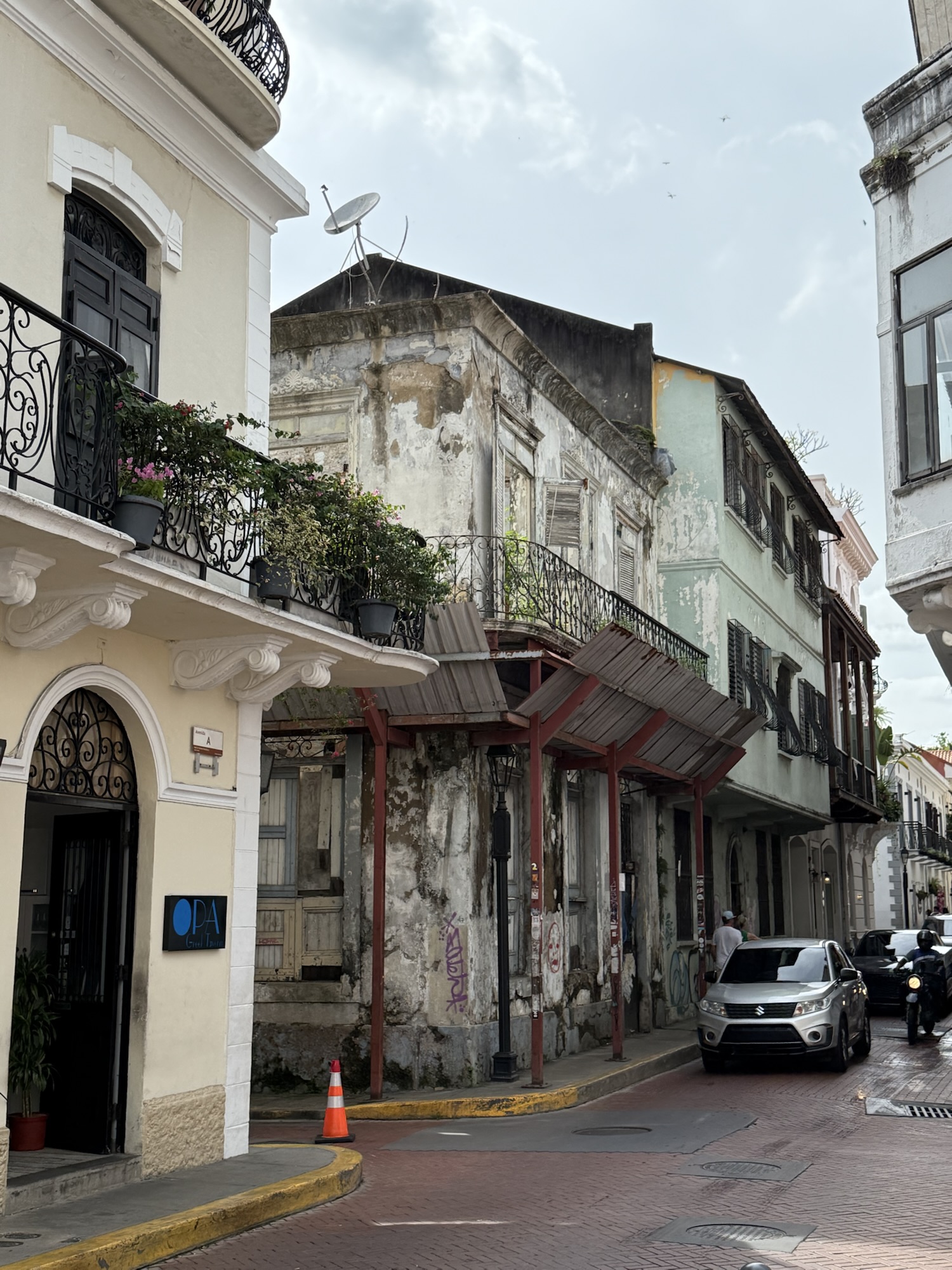
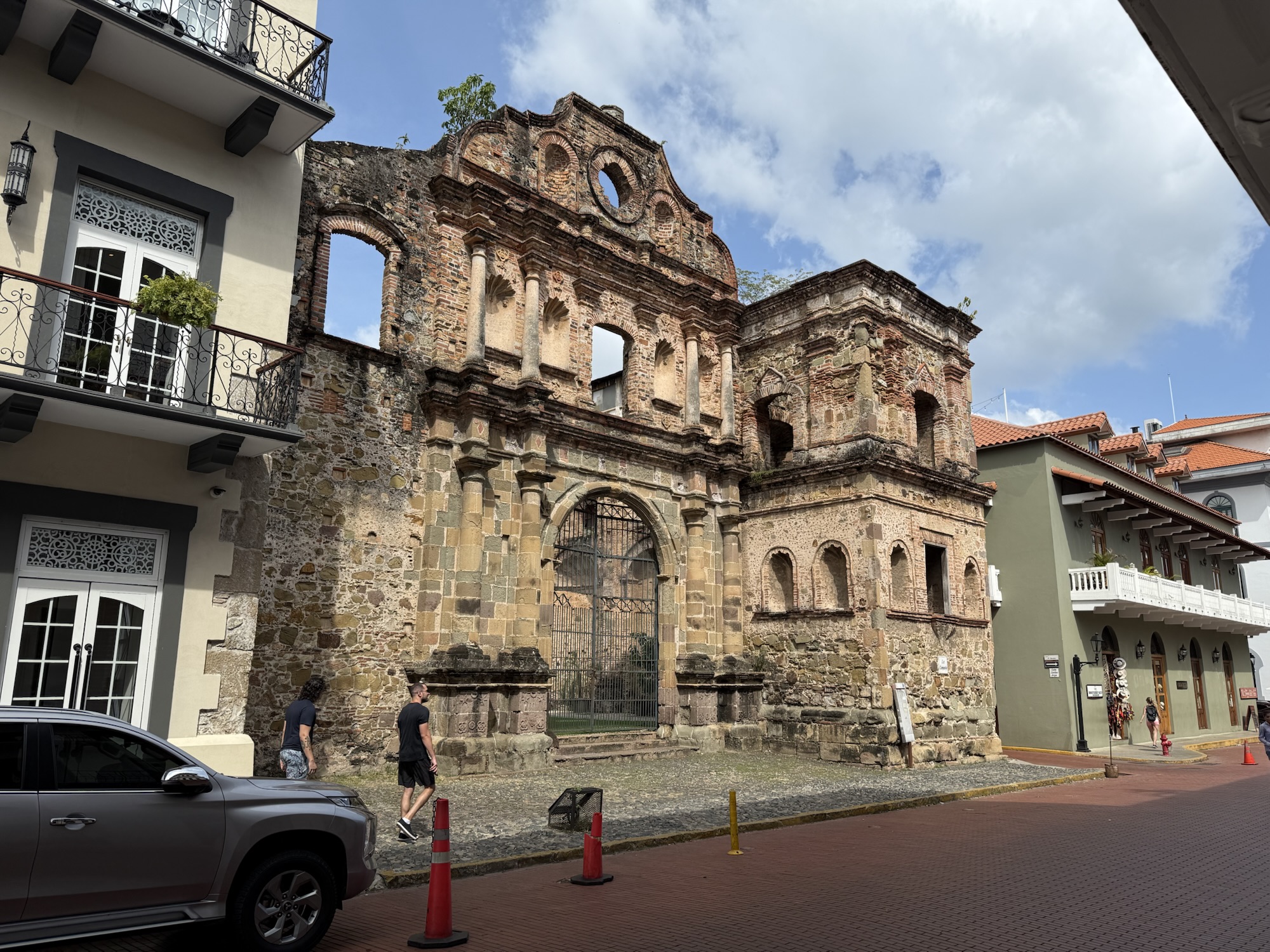
Casco Viejo is cute, with lots of colonial buildings, balconies, and bright colors. It is cleaner and in better shape than Cartagena, although I think Cartagena is much prettier.
We did some shopping, and that also was not as nice as Cartagena, but also not as overpriced (it’s certainly overpriced for Panama City, but the delta in pricing between Casco Viejo and the rest of Panama City is much smaller than between Cartagena de Indias and the rest of Colombia).
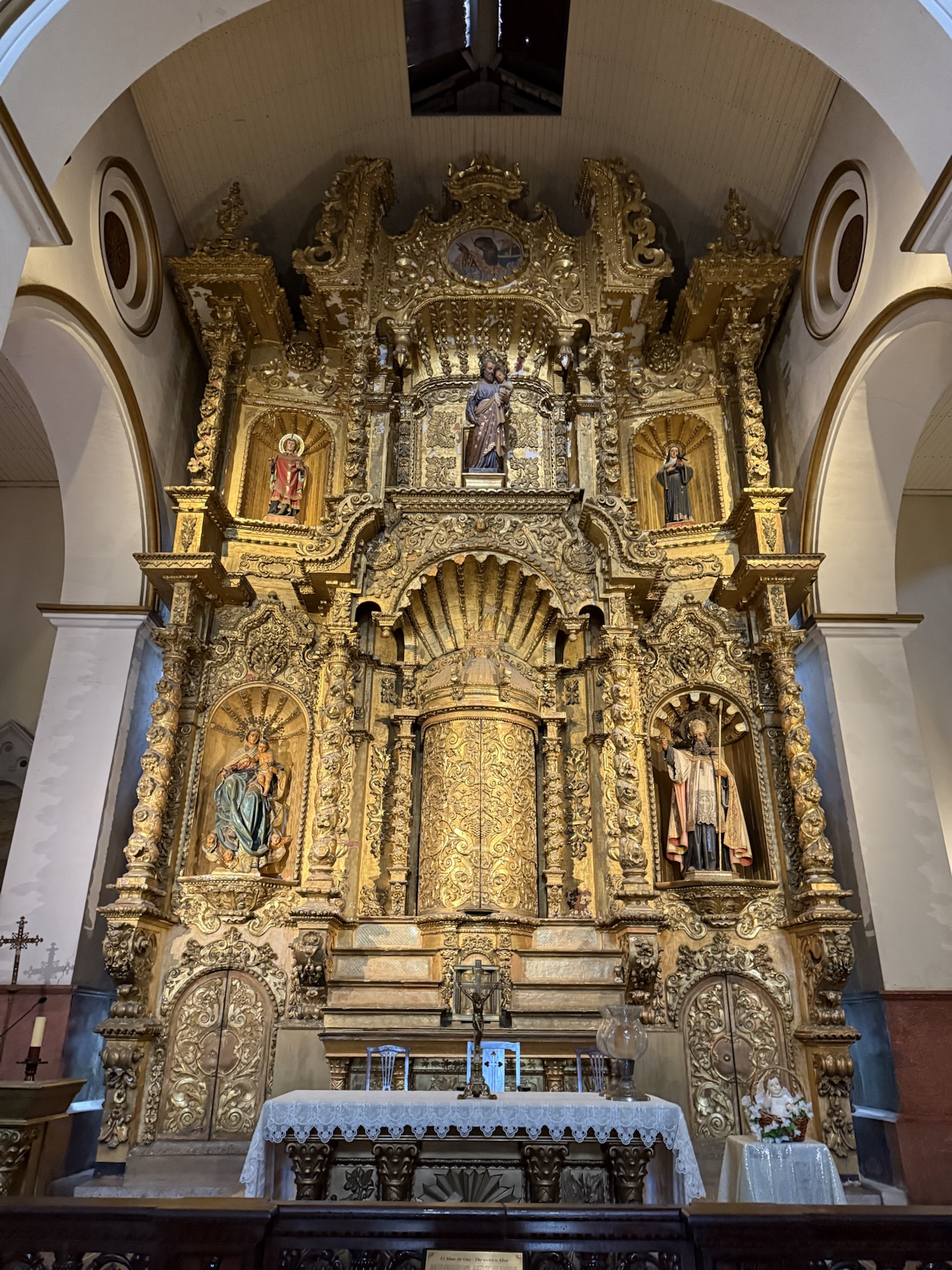
The Church of Saint Joseph was our last stop before dinner. This church is famous for its gold altar, which was supposedly kept safe from the pirates who frequented the city by being covered in black mud or paint by the priests. Whether or not that’s true, the altar is quite resplendent.
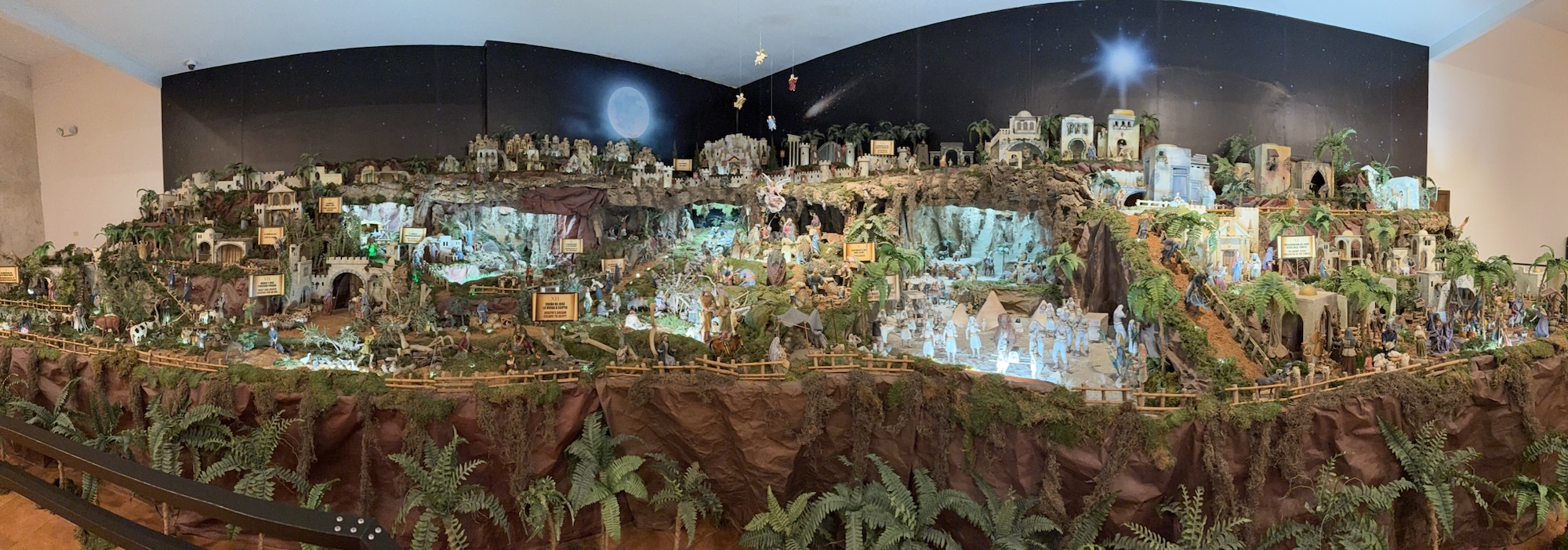
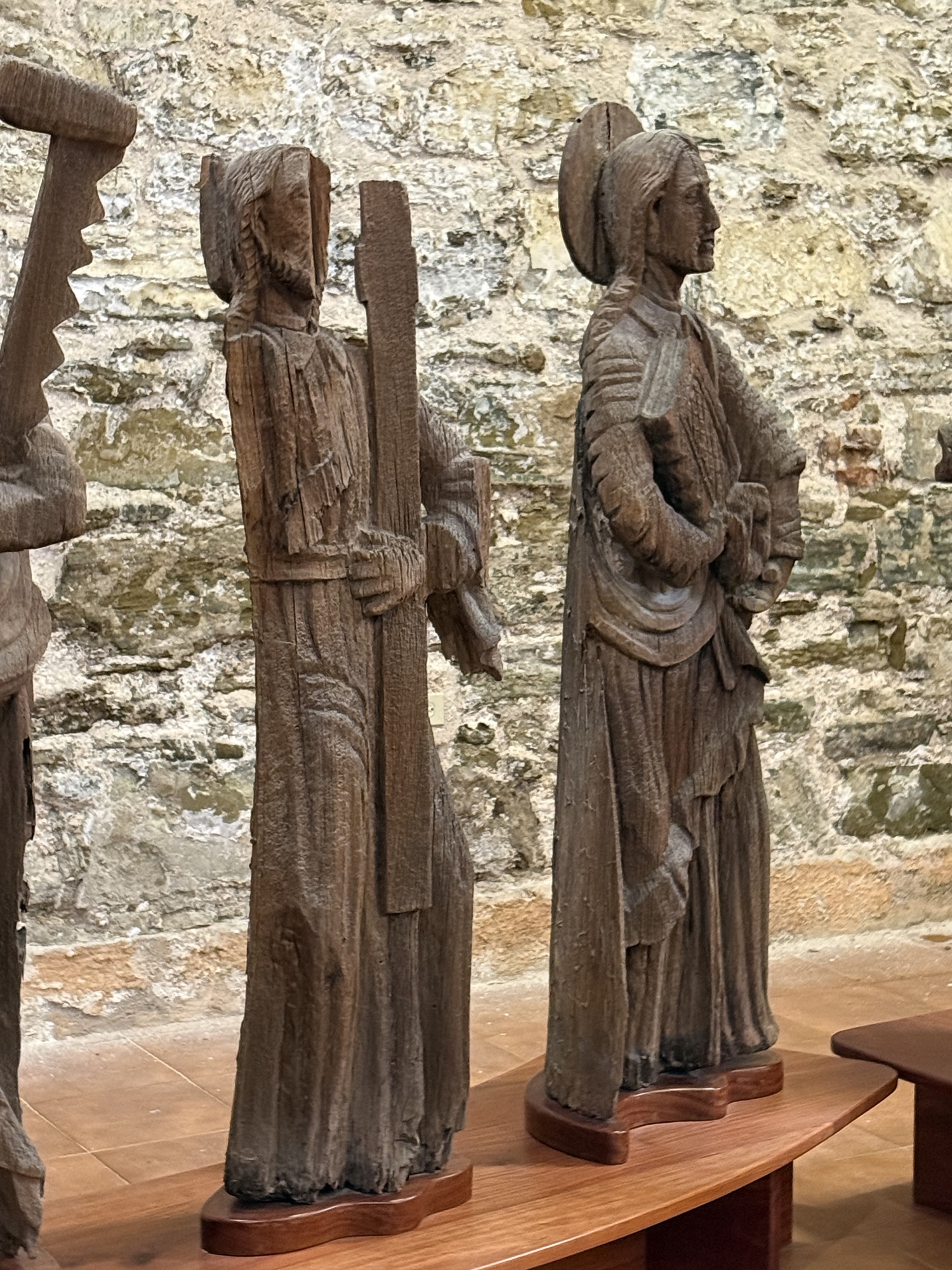
The church also has wooden statues of the 12 apostles which were outside the church for over 350 years until the Judas statue got struck by lightening (how ironic) and they were then moved inside, next to a massive diorama of the full nativity story. That was a bit strange, reminding me of the little dioramas I would build inside a shoebox for school to accompany a book report.
Massive dioramaJudas on the left, missing half a face
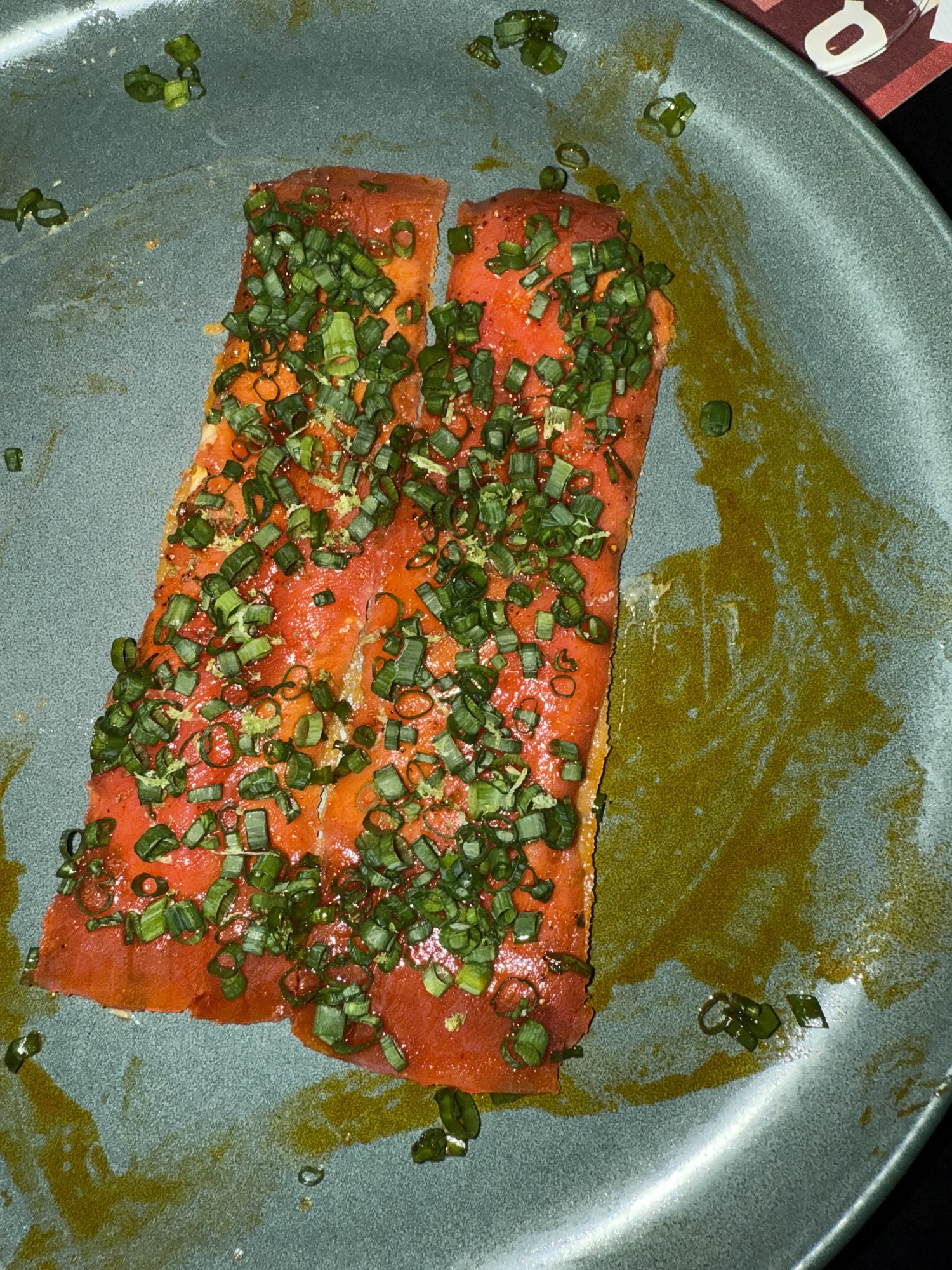
We had a 5:00 reservation at Fonda Lo Que Hay. This restaurant was recommended by a colleague of mine as well as the New York Times, and they did not steer us wrong! I had a dish with tuna carpaccio over a cream cheese spread on yuca chips with green onions. Basically, a Panamanian bagel with lox. It was absolutely phenomenal! Kiddo got langoustines, which I wasn’t sure she would like, but clearly my worries were misplaced as she devoured them.
Well, it’s certainly a good thing that we rebooked because no Boston-Atlanta flight left until 10pm Friday and neither Atlanta-Panamá flight left that day. We wouldn’t have arrived until probably Sunday. Instead, we had an extra day for which I had absolutely no plan.
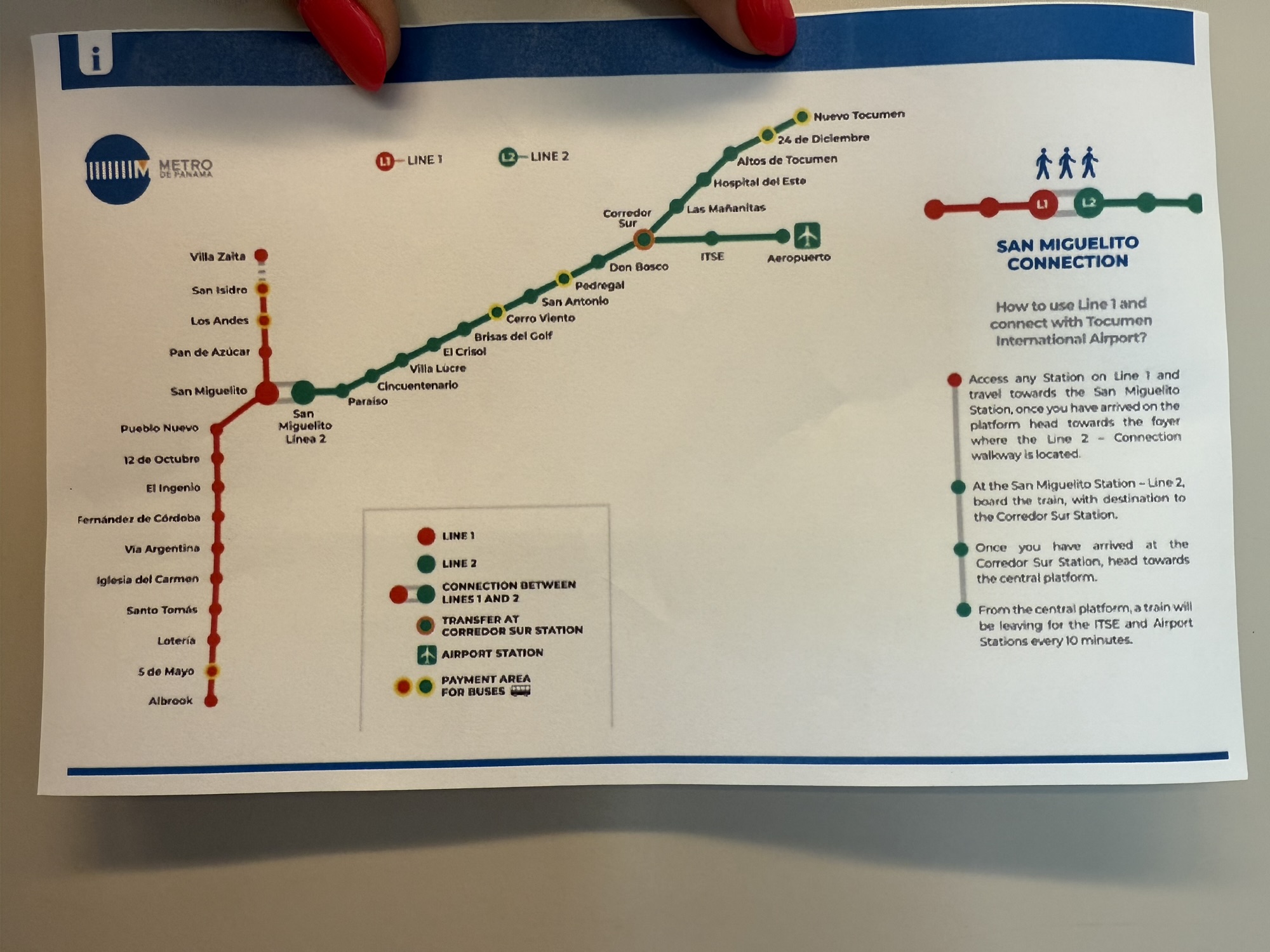
We arrived and navigated Panama City’s relatively new metro system. It wasn’t immediately obvious how to get to our destination, but somebody offered us directions and, more importantly, I fully understood them! Less than an hour later, we were at our hotel.
Metro, on a tiny printed map that the agent gave me
Panama uses the US dollar. They have dollar coins that they mint, but otherwise, the money from home is the same as here. Convenient, for sure, but I did miss the ritual of inspecting the currency.
Dinner was at a beer garden adjacent to the hotel around the corner (tired, desperate travelers are not picky), and I enjoyed my first of many ceviche de pescado meals. Panama and Peru dispute who first came up with ceviche; all I can say is that the fact that the water is safe to consume in Panama makes me enjoy the ceviche much more here. There’s much more of a rush eating it in Peru since you don’t know if that will be the cause of your GI demise or not.
Of course, we also went to the grocery store. El Rey is not as fabulous as El Exito in Colombia, but it’s still a large and impressive grocery store. We bought the strangest assortment of items – beer (legal drinking age is 18, so Anna-Sophia also picked out something, which is weird to me), gummy candy, wafer cookies, toothpaste, and granola bars.
Our hotel, Toscana Inn, is fine. It’s a pretty generic mid-range hotel. It’s clean and safe and in a good neighborhood so it checks all the boxes, but it isn’t memorable by any means. Nevertheless, it has a rooftop patio which is a delightful way to spend the evenings. We took a few beers and some treats up there and sat, talked, and admired the skyline as night settled in.
December: someplace with hot springs for Luke’s birthday
I was in Florida earlier this week and while our flight wasn’t impacted, more than half of flights that day were because of a major snowstorm that moved through the mid-Atlantic and SE. That was Monday, and tomorrow, Friday, the same thing is happening. (Two major winter events in one week in places that typically get no snow is truly exceptional; I thought Boston could have bad weather when I booked this trip, but I never expected Atlanta to be the bad weather city).
Of course, tomorrow was our planned departure date. Delta emailed and texted me repeatedly yesterday afternoon suggesting I proactively reschedule or cancel my flight, and that is how we ended up on the 5:40am Thursday flight. An extra day in 83-degree Panamá won’t be awful, but the 3:00am wake-up was not fun and the extra day off work (done via a mad last-minute scramble) was also far from ideal.
Regardless, we managed to drag our exhausted husks through immigration, navigated the (relatively new) metro, found our hotel, had some food, and went to the grocery store. By 8:00, we were done and off to bed. We have a busy next day filled with sloths, poisonous frogs, historical neighborhoods with food and shopping, and a canal to view, so rest is a must!




 Vacation Days