Incan wonders

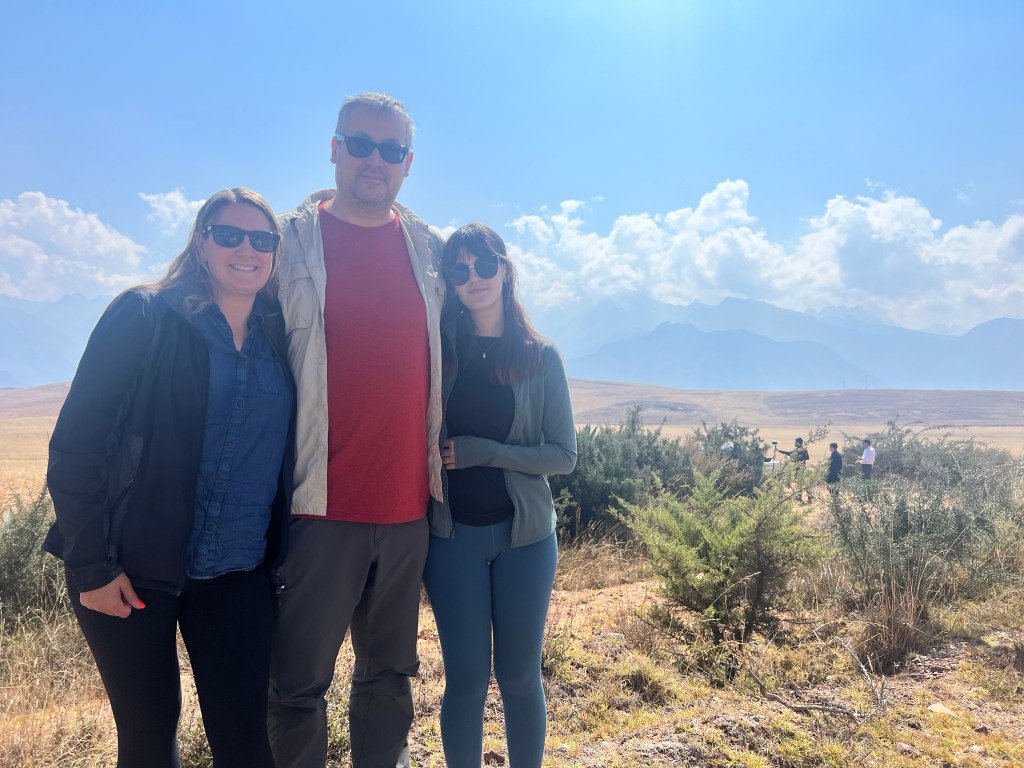
After a delicious breakfast, we met our driver at 9am and headed out to see some local ruins. I am finding that the more time I spend here, the more comfortable I get with Spanish. Thanks, West Hartford public schools, for starting kids in language in 4th grade. Taking Spanish for 8 years paid off, because while my verbal skills are not great, I can understand enough to get by and can ask for the necessities. I’m definitely signing up for Spanish classes when I get home! I don’t really need (or want) to learn the myriad verb forms, but the basic past, present, and future tenses are things I used to (vaguely) know, and are all I really need to get by in the Spanish-speaking world.

We set off from Ollantaytambo, passing the absurd Sky Lodge. This “hotel” consists of 4 pods on the side of the mountain. Each pod has 4 beds and a “bathroom” and is accessible by climbing. Nope, not for us!
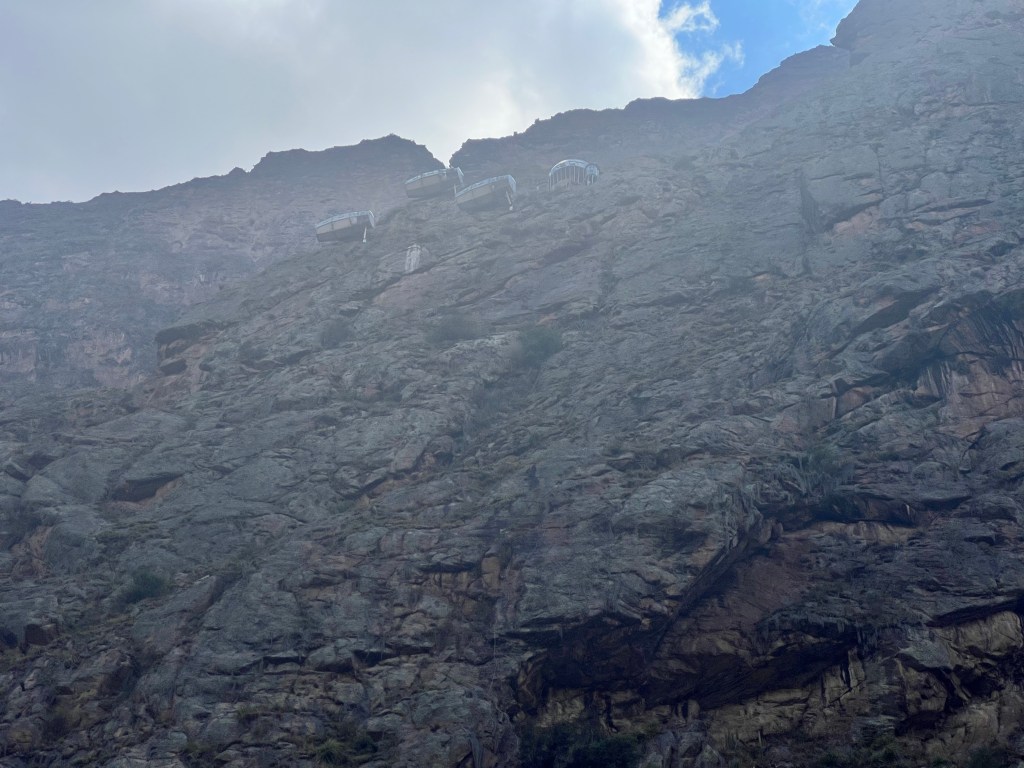
Sky Lodge consists of 4 pods waaaaay up on the side of the mountain

First up: Salineras de Maras.

This is an Incan-era site built around a natural salt spring.
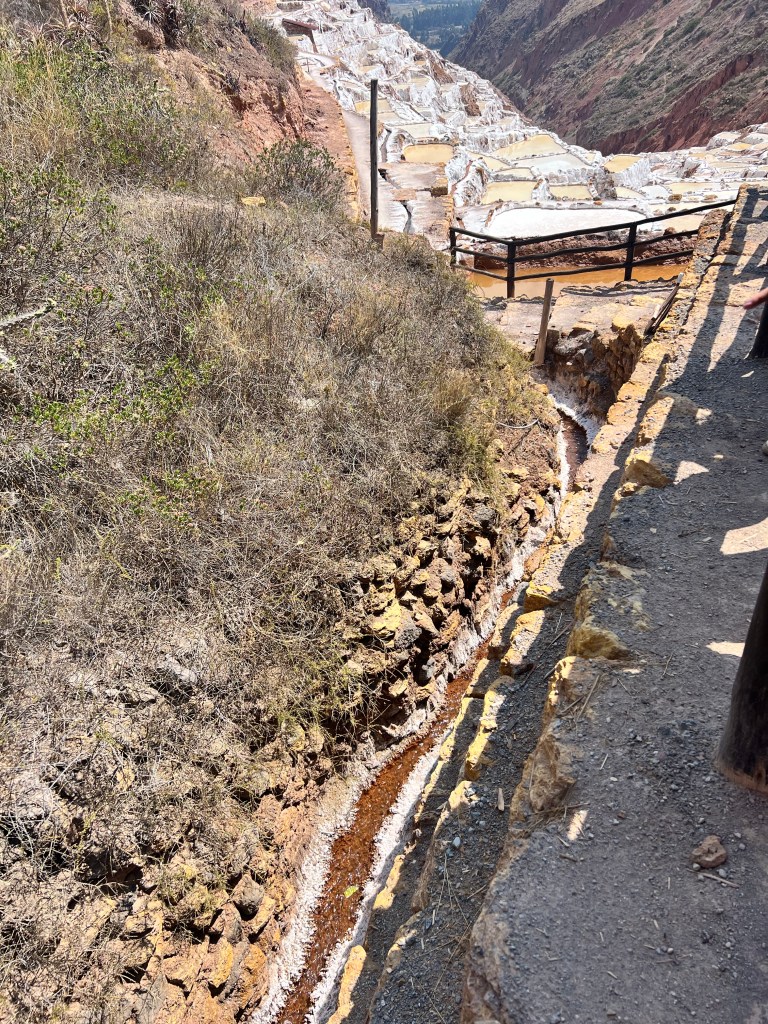
Salt spring – it’s really small!

The land around it is terraced and divided into hundreds of pools into which the natural salt water flows. 3 days of exposure to the sun is all it takes for the water to evaporate and the natural salt to be left behind.
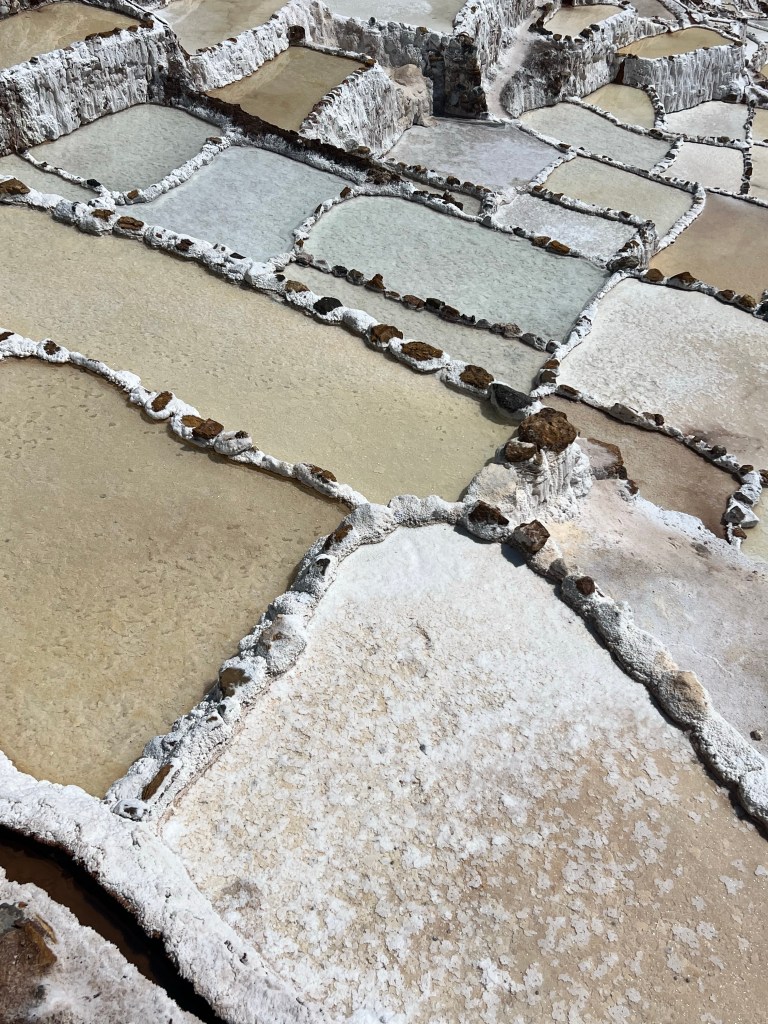
When I say this site is massive, that is an understatement. It’s incomprehensibly large. And then it goes on further!
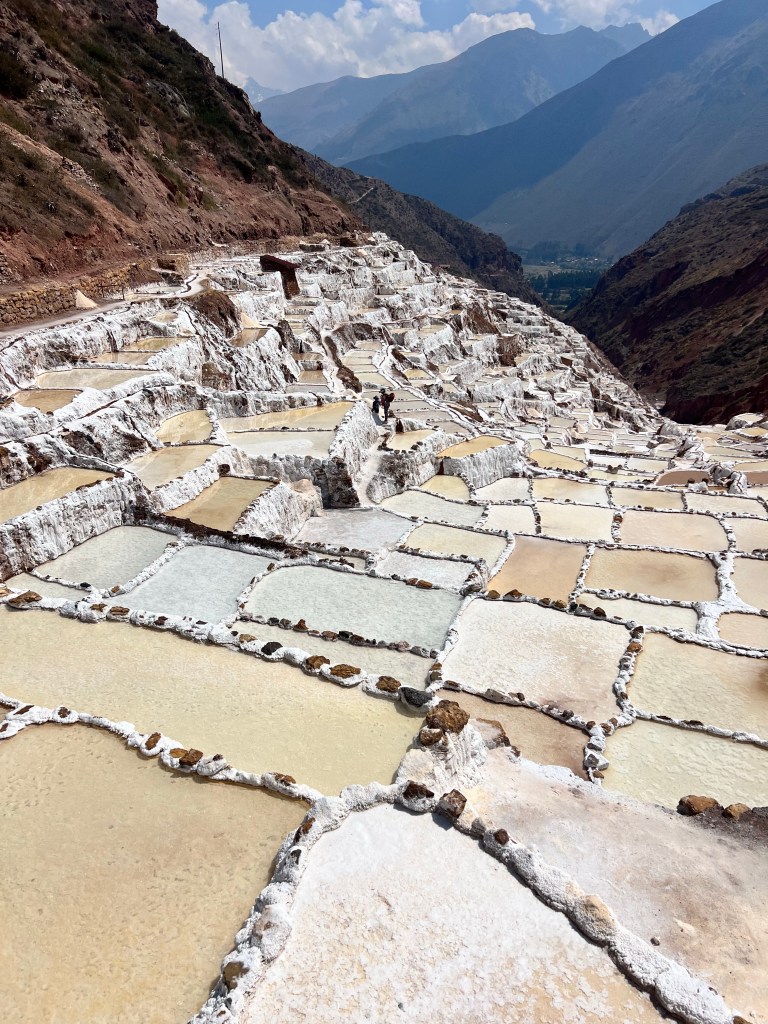
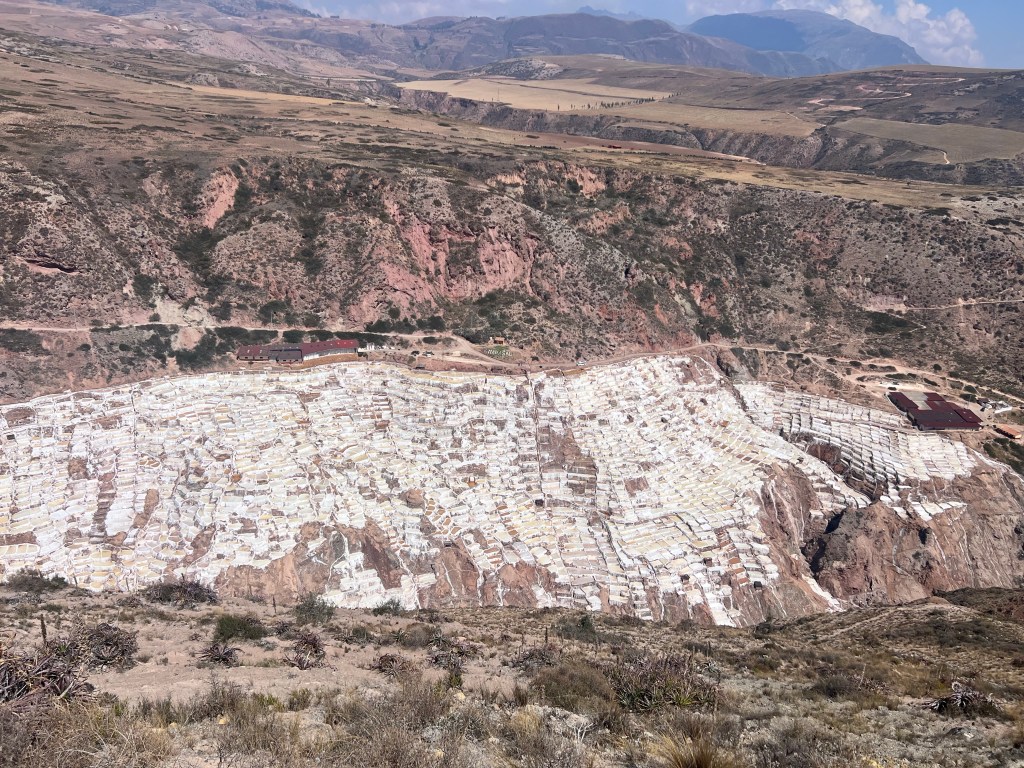
Salineras de Maras
View of the Salineras from the hillside above

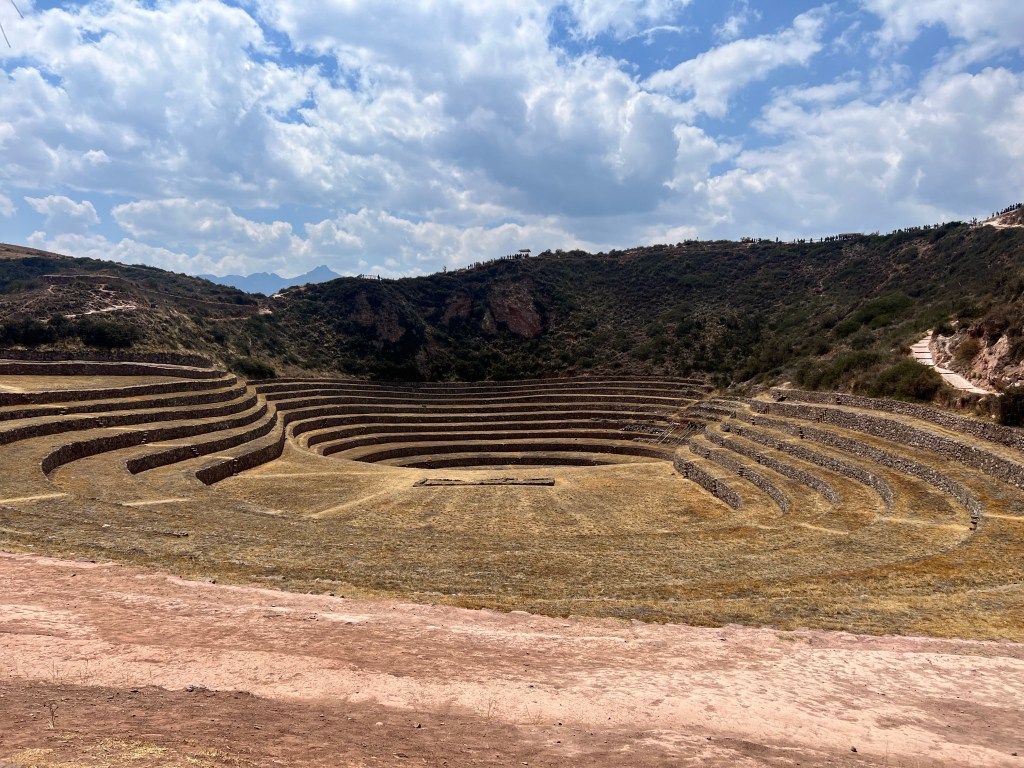
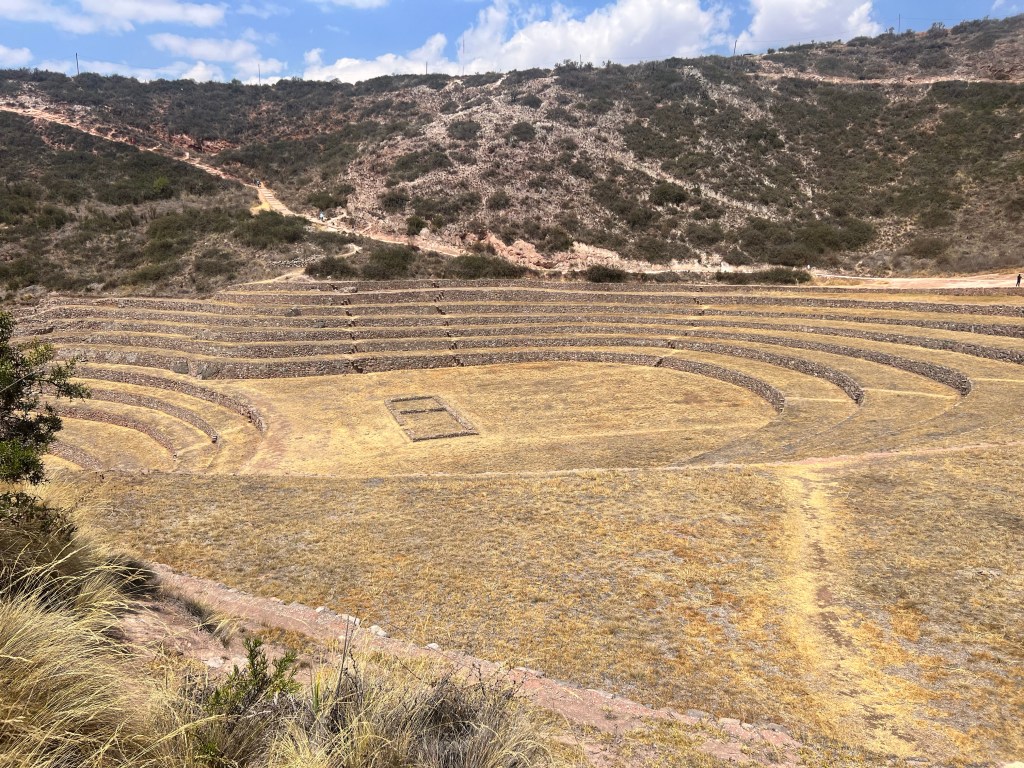
Our next stop was Maras, an Incan ruin consisting of concentric terraced circles. There are no signs, so there’s little context for the what and the why of the place, but it’s almost unnecessary – the scale and precision of the site are awe-inspiring enough.
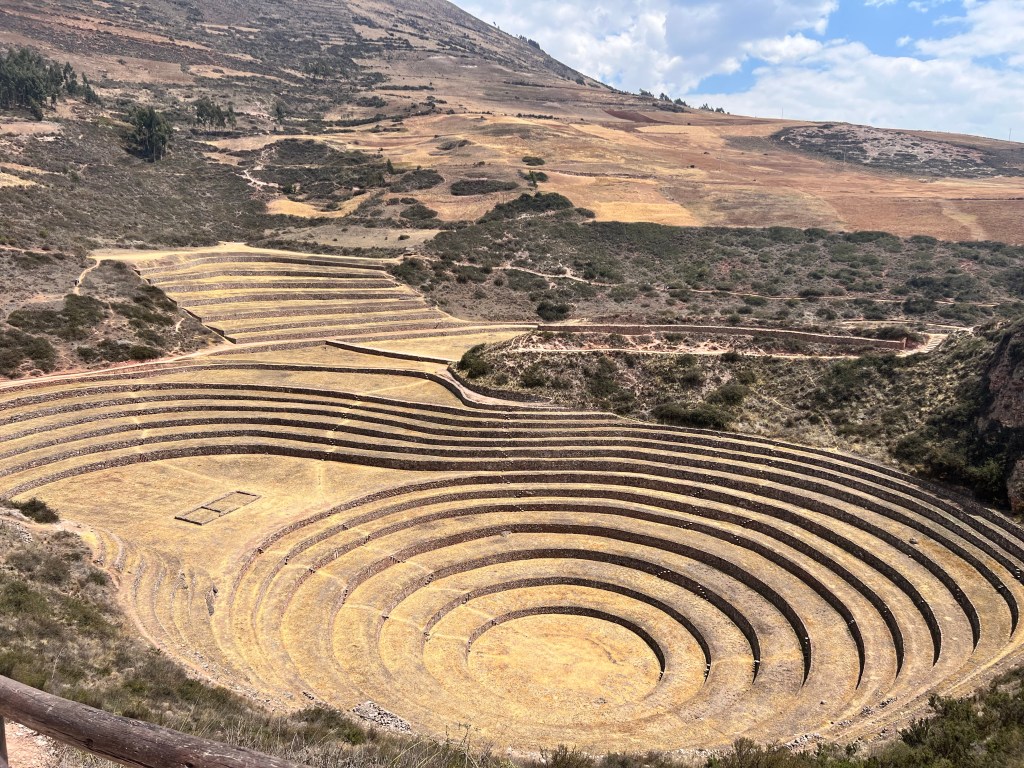
There are several of these circular formations on the same large plot of land. Each terrace looks small from above, but at ground level, they appear to be 4-6’ tall, requiring stairs to be built in to each level to provide access to the level above.
On our way back to town, we stopped at a nice viewpoint where the whole valley was laid out. This is really a beautiful part of the world, and while I’m sure Machu Picchu will be amazing, it sort of steals the thunder from the rest of the Sacred Valley.
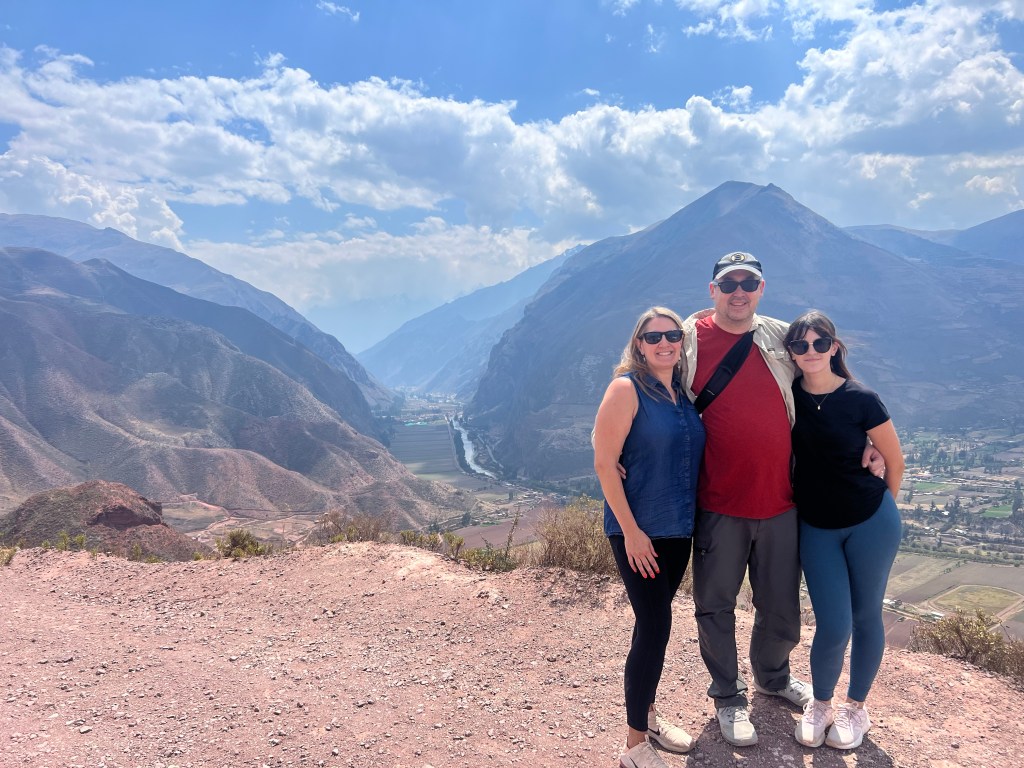
One of the valleys in Peru’s Sacred Valley

After lunch, we went to the town’s namesake ruins, which are basically a block off the main town square.
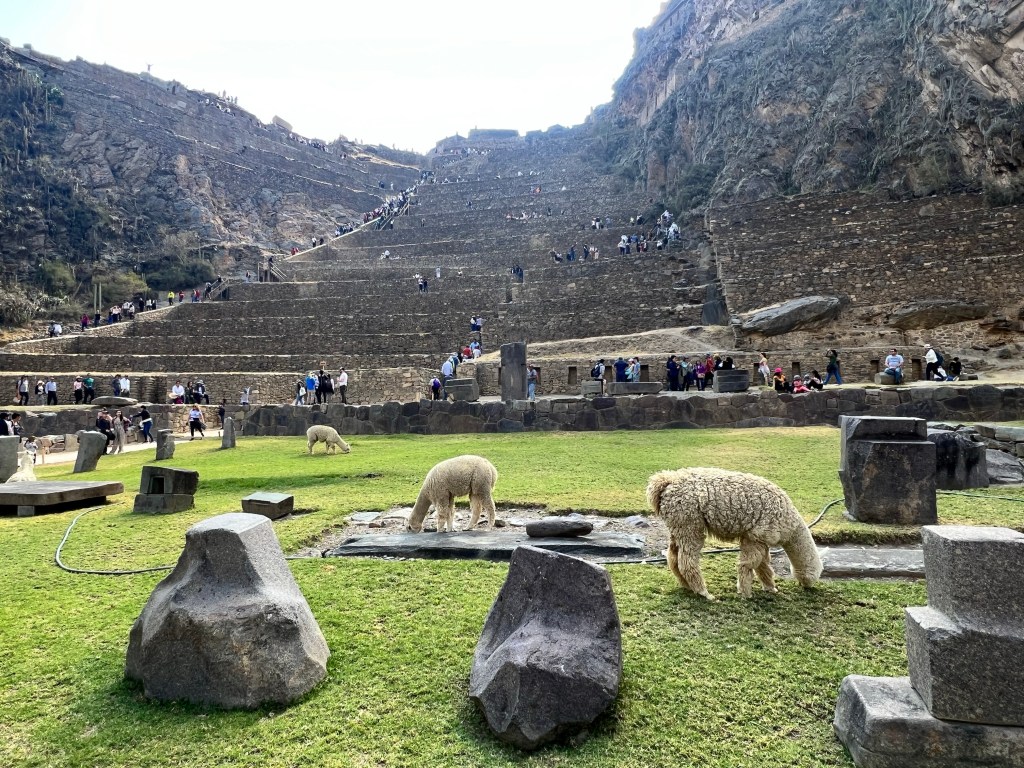
Ollantaytambo ruins, with alpacas!

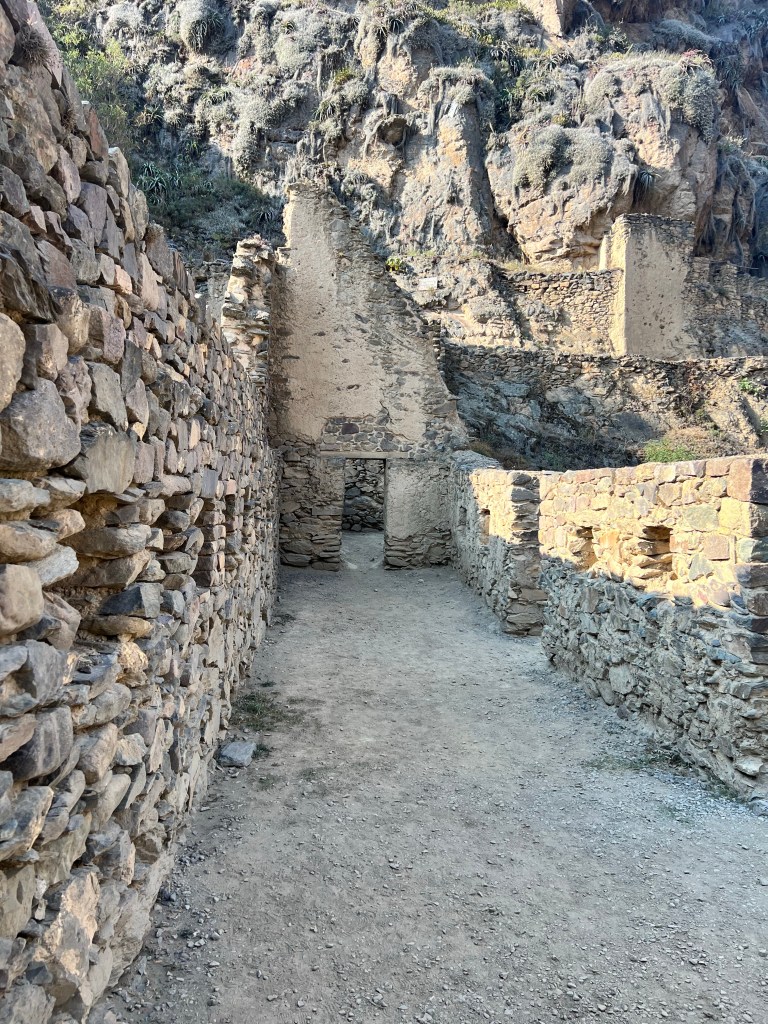
Ollantaytambo was the site of the only defeat of the Spanish forces by the Incan people. This was a military stronghold, and given the location, I can’t imagine how the Spanish could’ve managed a successful attack here. It is built into and on the cliff side and is exceptionally steep!
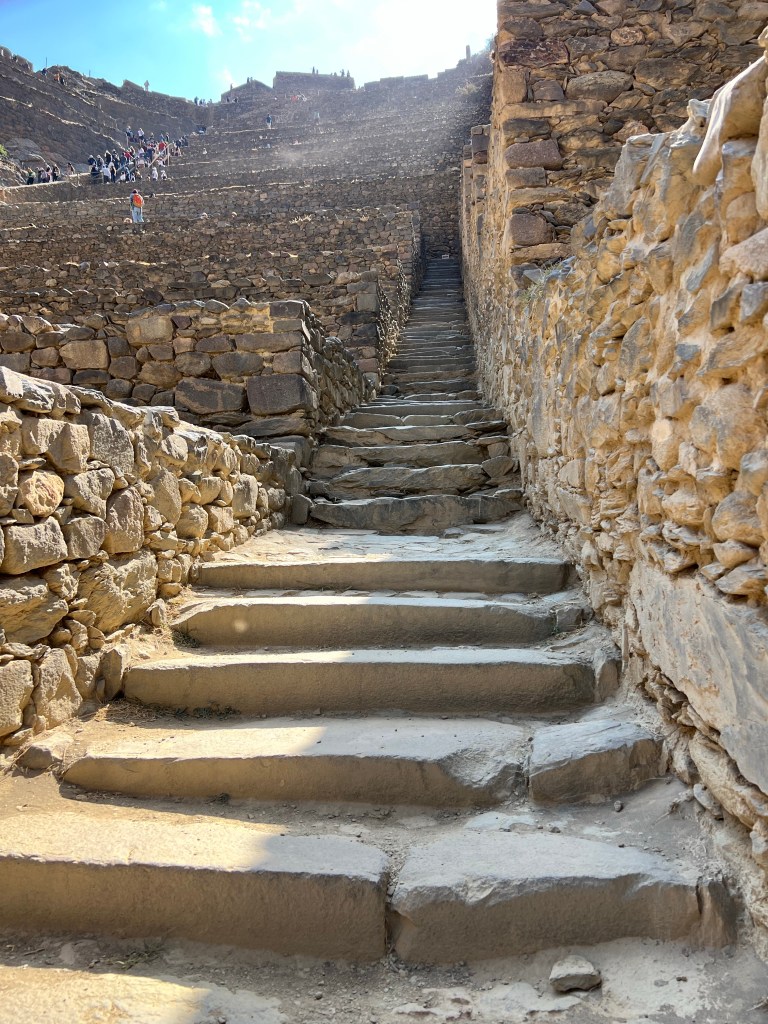
So – many – stairs!

At the top, there is a Temple of the Moon, the famous Temple of the Sun, military fortresses, and housing for royalty. How the Incan people managed to lay these stones in this terrain to build such magnificent structures is amazing!
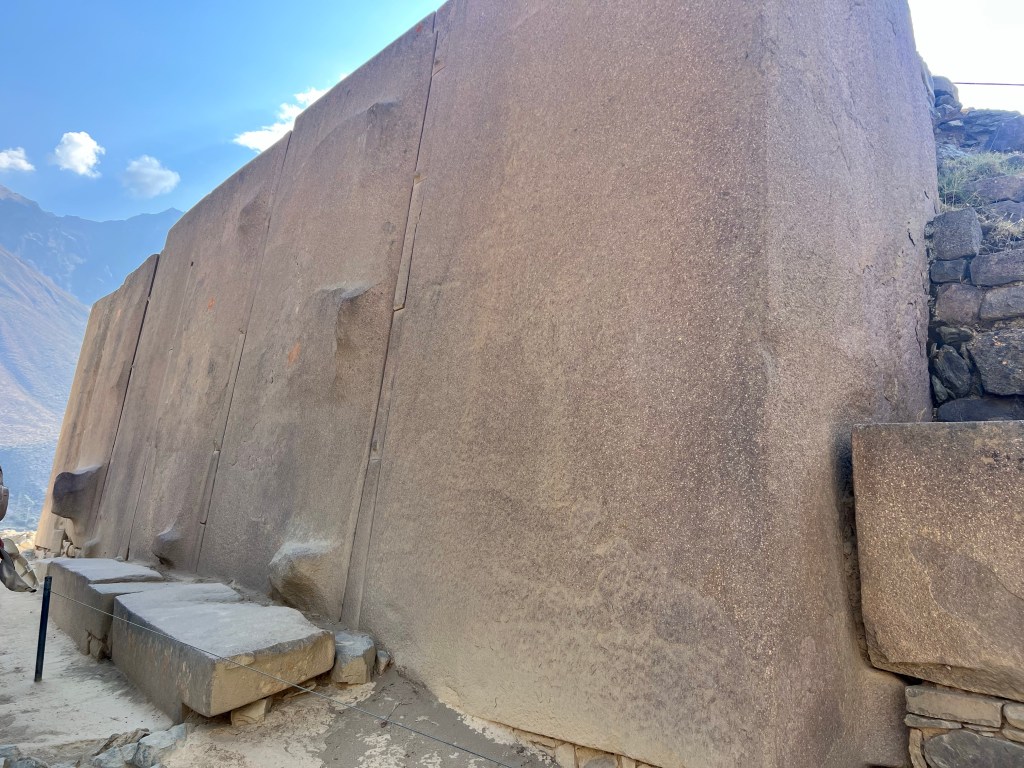
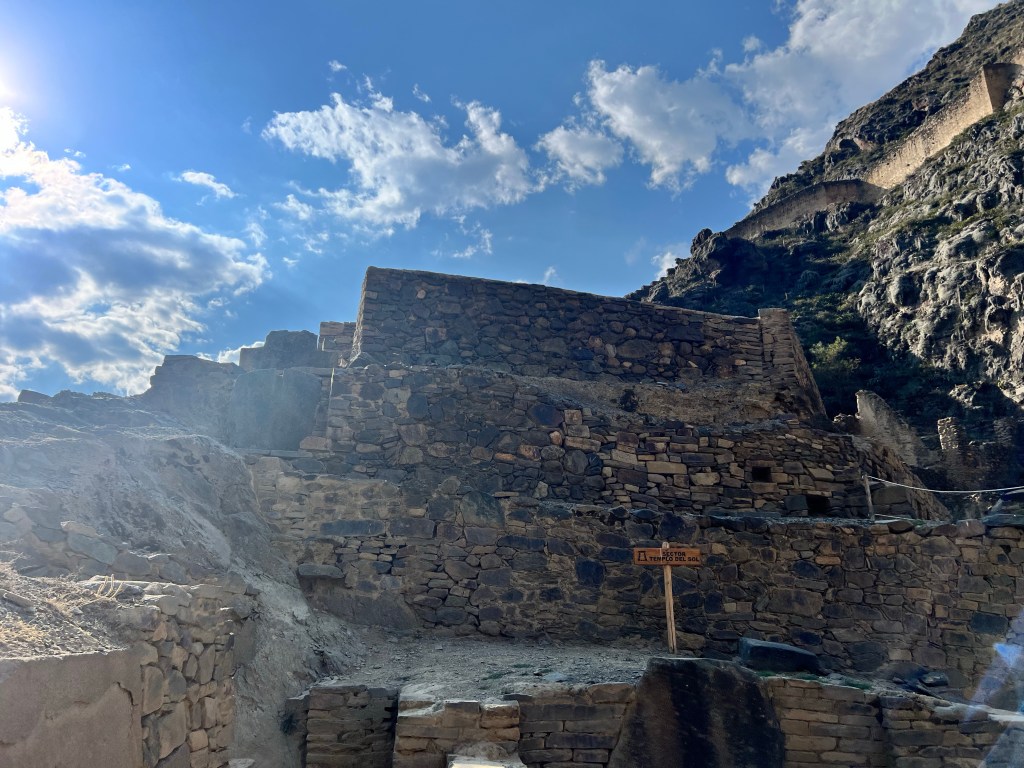
Temple of the Sun
Military zone
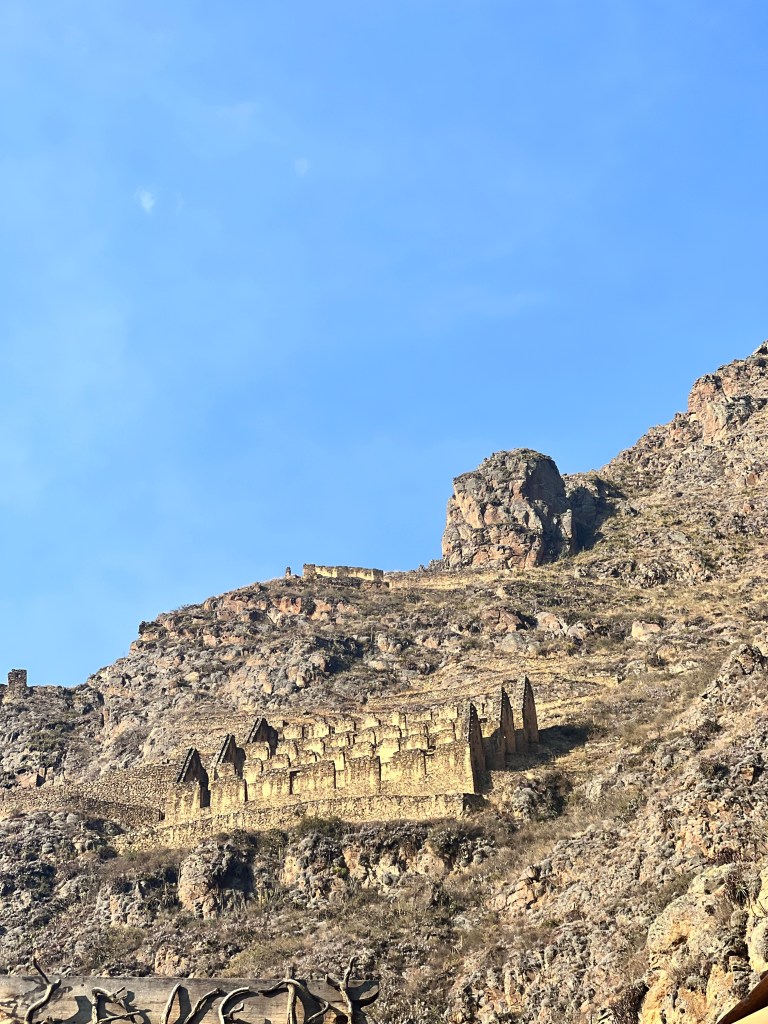
Pinkullyuna, another Incan side on the opposing mountainside

The stairs were steep and punishing to some barely-acclimatized sea level folks like us, so we headed back down to explore the vendors set up outside the ruins. Of course, we made a few small purchases before heading back toward our hotel.
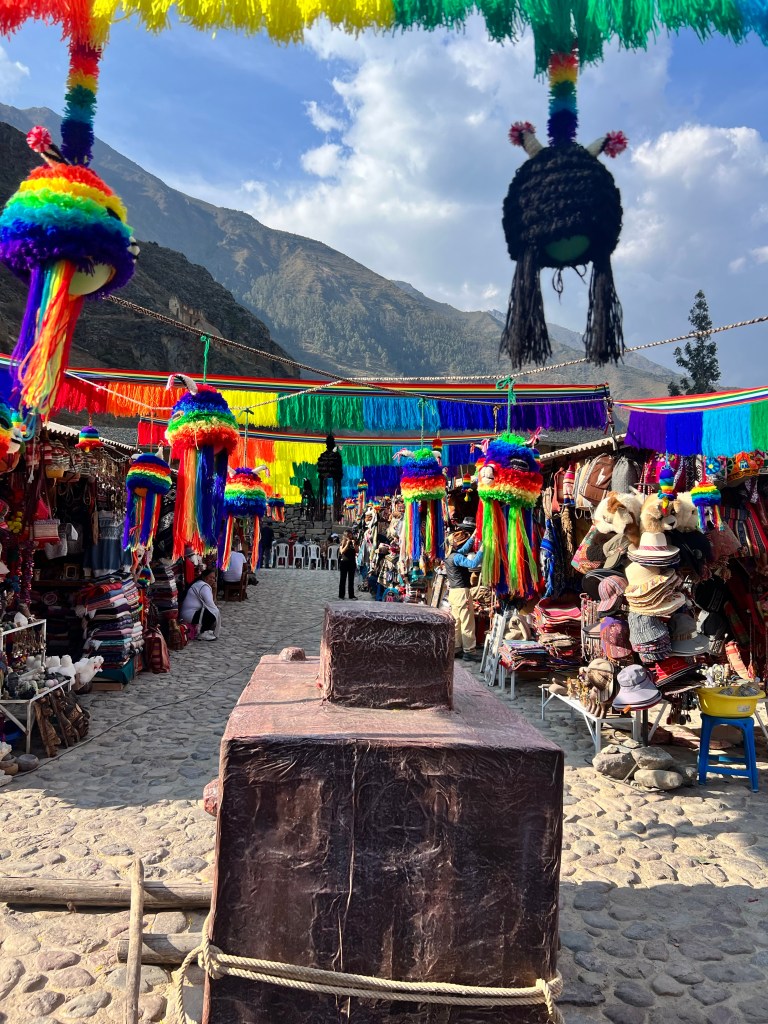
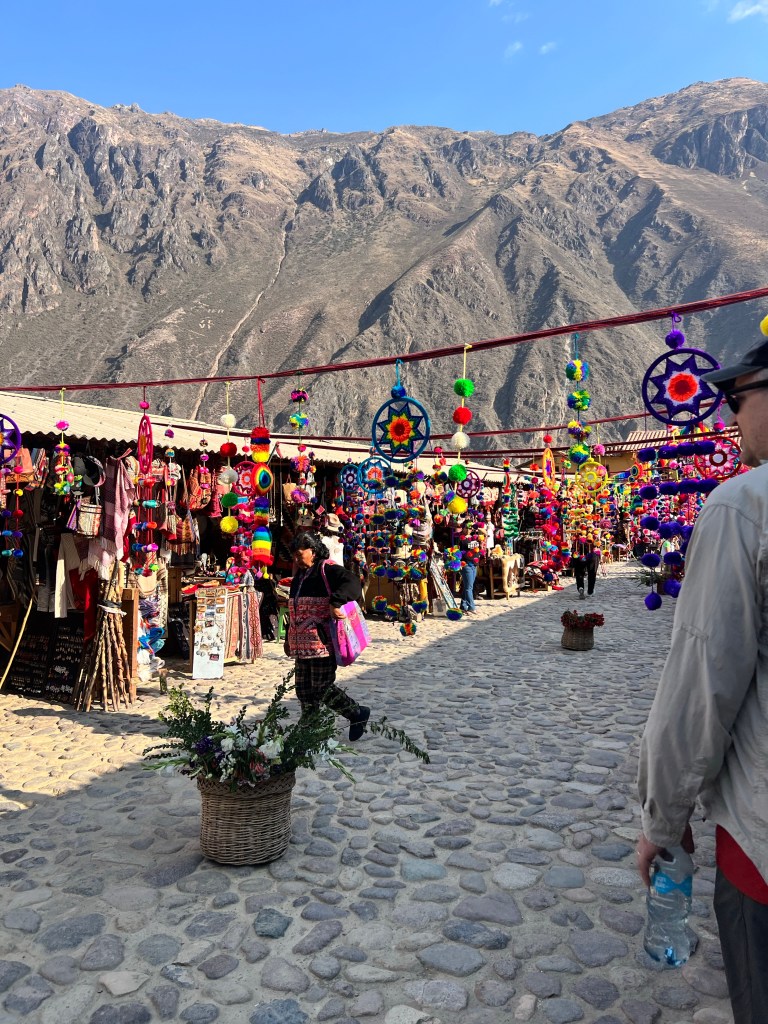
Colorful marketplace

Right by our hotel is an intriguing place called Casa de Cuye – House of Guinea Pig. This place raises Guinea pigs for food, but they had the brilliant idea to set the restaurant in the back and allow tourists in the front to see all the critters. I’ve never seen so many Guinea pigs!!
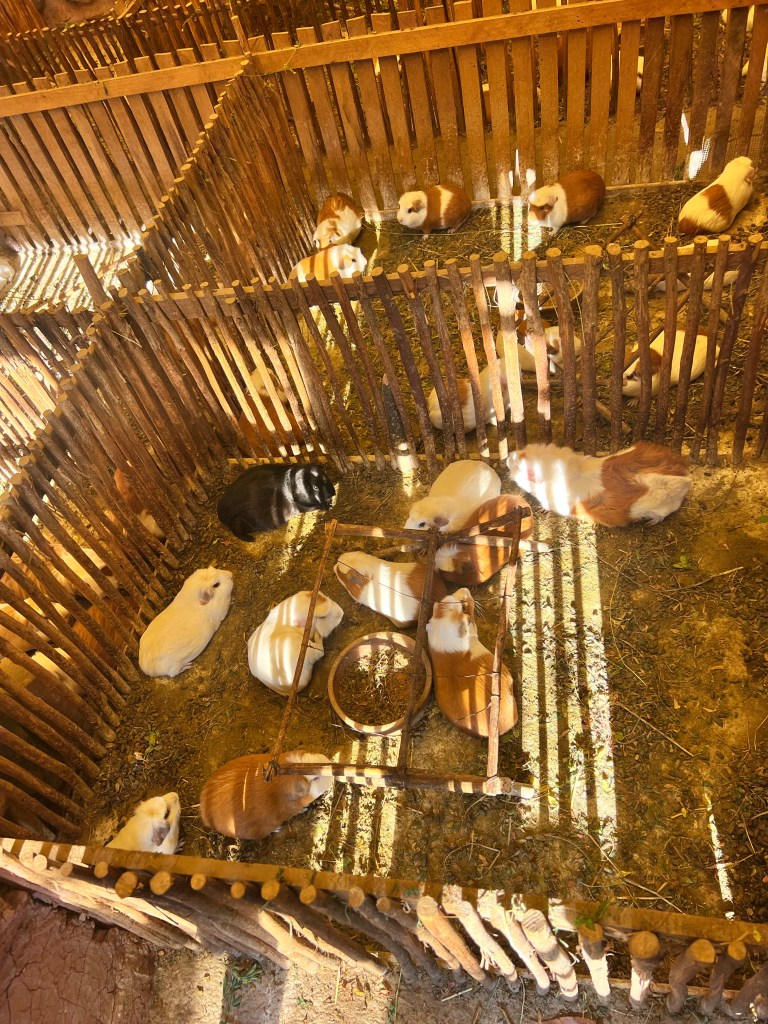
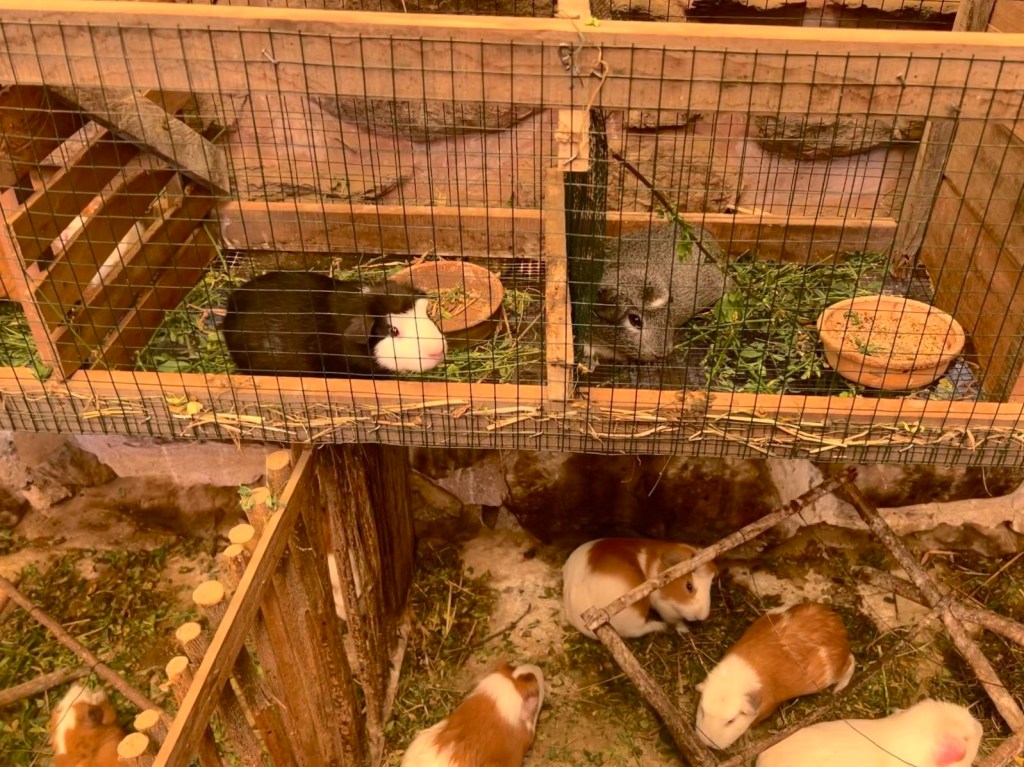
The whole place had a constant, gentle squeaking sound emanating from the large room where all the fuzzy little critters were kept. They were adorable, and I had no idea they came in an extra fluffy grey variety!
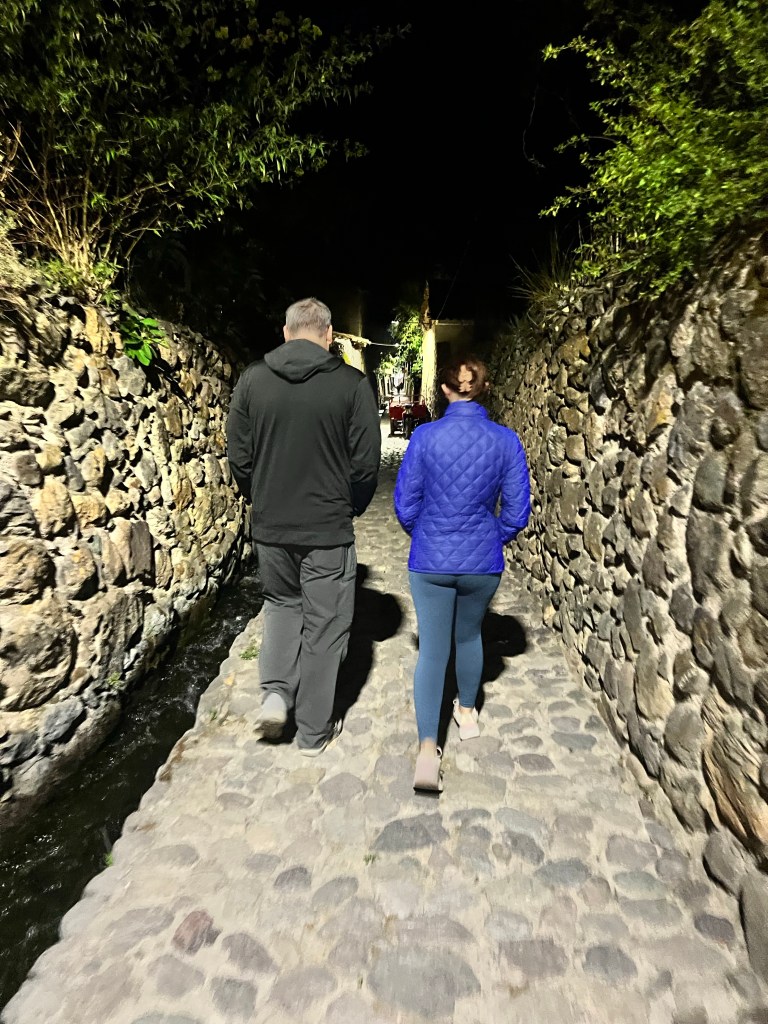
Early to bed tonight because tomorrow is Machu Picchu and a whole lot of traveling. I really enjoyed Ollantaytambo and the Sacred Valley, and I think it gets overlooked because of its proximity to Machu Picchu. I suppose that’s good for us because it meant to town wasn’t totally overrun with massive tour busses, but I do wish more people would experience the beauty and majesty of this place.
From one extreme to another

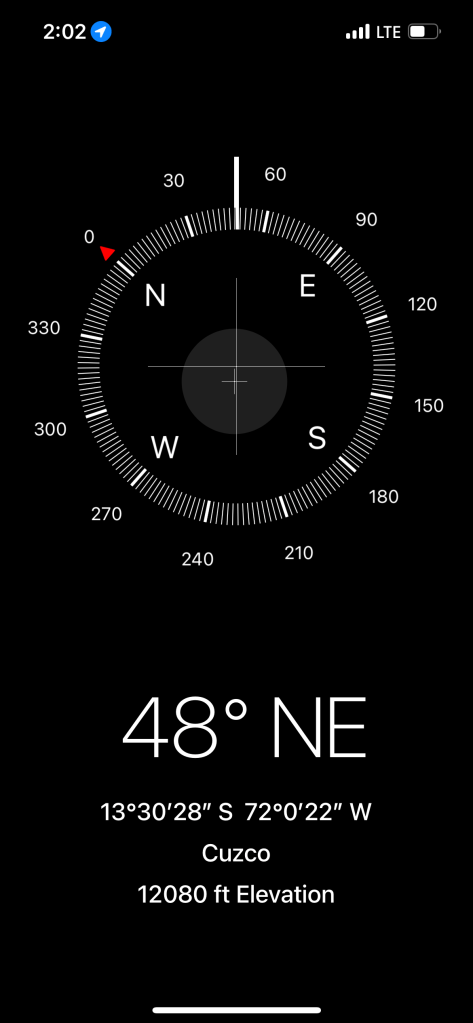
While elevation might not have venomous barbs or a stinger, it’s a danger to take seriously nonetheless. So our plan for the next few days is to fly into Cusco (elevation: 12,000+ feet) and then immediately get into a car and drive down to Ollantaytambo (elevation: 10,000 feet) as we acclimate to the elevation before going to Machu Picchu on Sunday.

Cusco elevation is about 12,060 feet above what we are used to at home

We met our driver and set off. He made a remark about the heat, but when I told him we’d come from Puerto Maldonado, he acknowledged that Cusco heat is nothing in comparison. Still, the sun is stronger at this elevation, and temps in the low 70s are really quite hot.

As we drove along, I seemed to stroll down memory lane a bit. Thinking about the strength of the sun at such elevations made me think of the time we hiked Lomas Blancas in Argentina with the Kells and how Amanda and I got horribly sunburned on our exposed forearms and faces. The twisty, steep streets in Cusco also reminded me of the streets in Medellin, although in Cusco they were certainly wider.

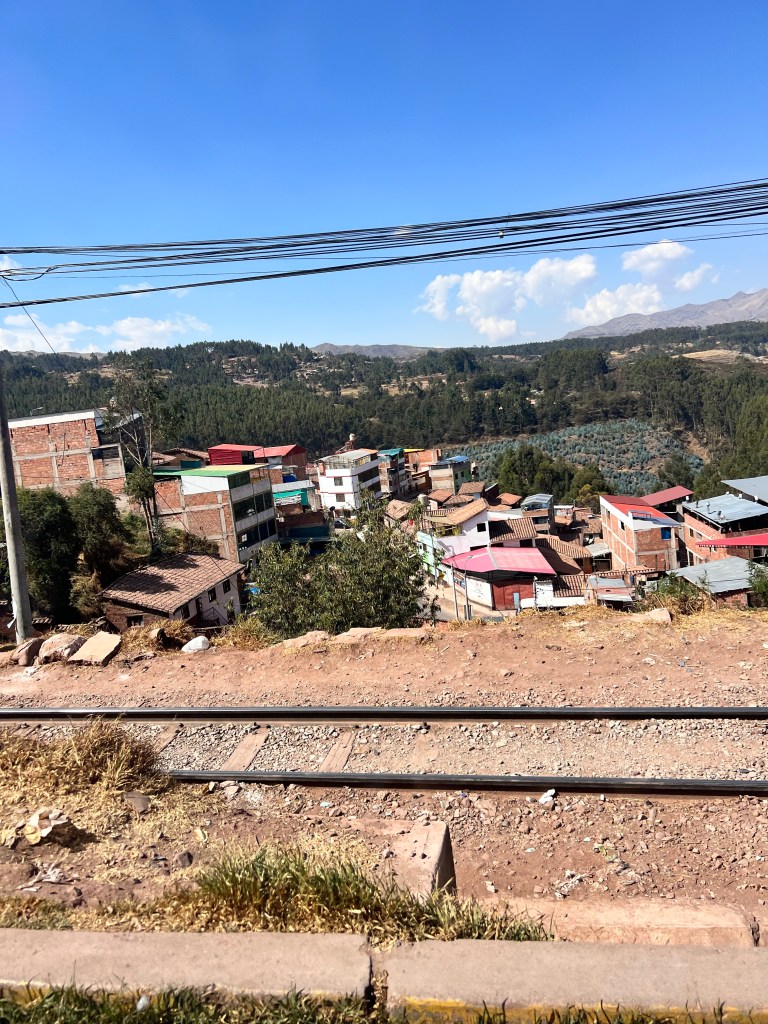
Cusco is a vertical city

On the planes here, I was digging deeper and deeper into New York Times articles about the region. Colombia is (and always has been) one of the centers of cocaine production. They have had more than their fair share of troubles, including violent gangs and rampant corruption. I didn’t know (but probably should have) that Peru is the second largest exporter of cocaine after Colombia. Comforting. But Peru’s troubles of late have been mostly political and much less gang violence. What was sad to read about is Ecuador (where we almost went instead of Peru).
Sandwiched between Colombia and Peru, Ecuador had a long history of being relatively stable and safe. After a series of politically-motivated events, a former president closed the US military base in 2009, leaving Ecuador with little anti-narco power. That president instituted austerity measures and cut back on domestic police and military to try to pay down the nation’s debt. Taken together, these actions provided a perfect opportunity for drug trafficking gangs to emerge. These gangs use Ecuador’s increasing prison population to recruit and train members, strengthening their power, and they now exert tremendous power across the country. The current president was going to be impeached, so there are new elections coming, and an outspoken candidate was just assassinated. I’ve read nothing that suggests it was anything other than gang retribution. All of this saddens me so much. I’ve really learned to love South America, and particularly Colombia. The people are lovely, the country is beautiful, and the narcos ruin it all for so many. While I have little reason to hope that Ecuador will find a way out of this morass anytime soon, I have to hope.
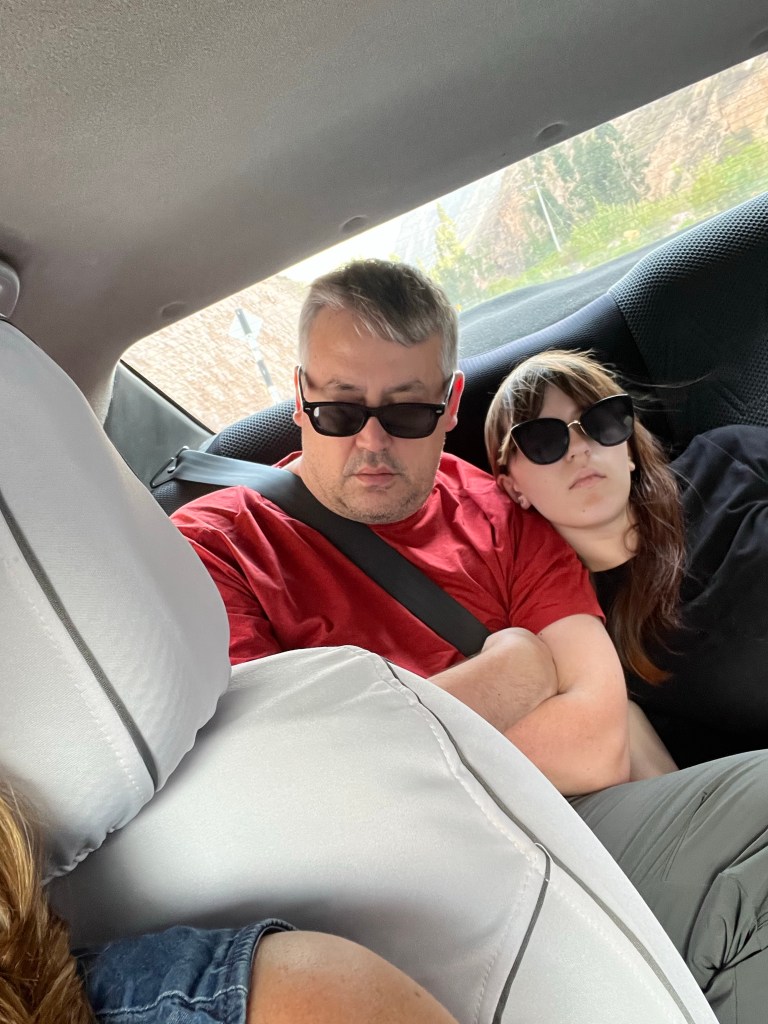
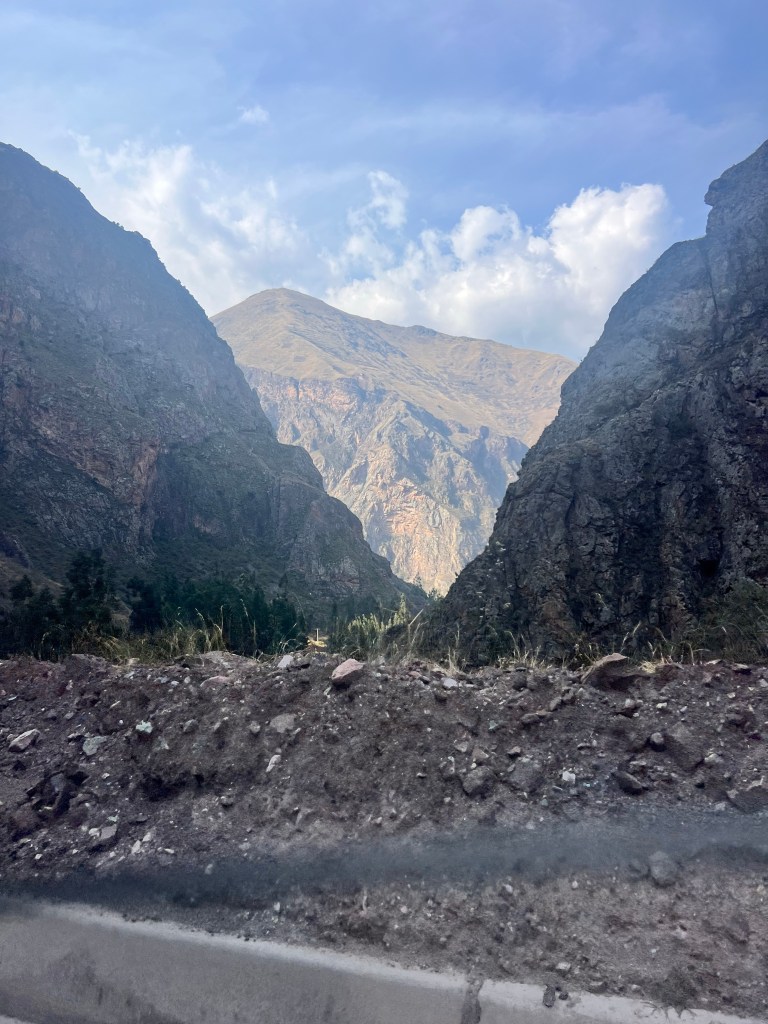
Ok, enough depressing political news. As we drove along from Cusco to Ollantaytambo, the kids slept. That’s too bad, because the drive was beautiful in parts (the cities were cities, full of noisy trucks, crazy motorcycles, and traffic). These towns and cities are nestled into every nook and cranny these mountains have to offer.

Sleepy kids

We finally arrived in Ollantaytambo, walking the last 3 blocks to our lodge because the roads are not fit for cars. The area we are staying in is built on the original Inca village, with their stone foundations and aqueducts in plain view.

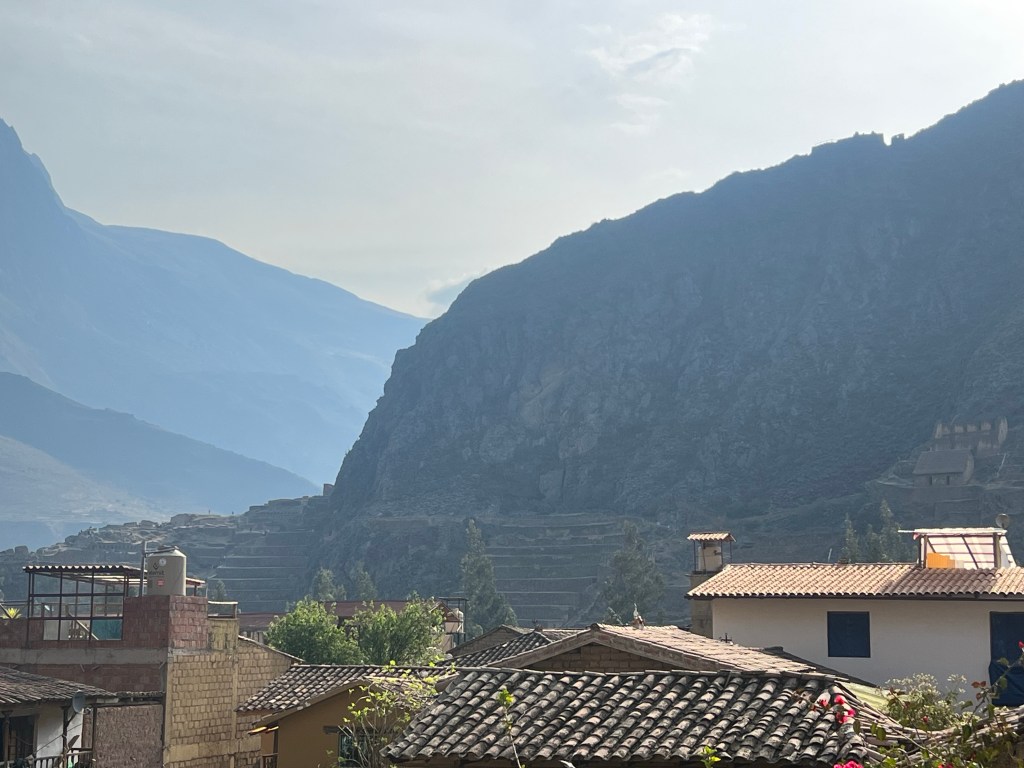
Apu Lodge is adorable. It’s built on top of the old Inca stonework and has an aqueduct right outside that I can hear from the room. From our balcony, we look straight over the town to the ruins built into the hillside.

Ollantaytambo ruins in the hills
Hotel property, filled with beautiful-smelling flowers

I did some (desperately needed) laundry while Luke and Anna-Sophia rested. Altitude seems to have hit them harder than it hit me, which surprised us all since I’m the one with vertigo and motion sickness issues. Very strange!

We decided to walk into town for an early dinner since we knew we would all be off to bed early. A blog I read strongly recommended a restaurant on the Plaza de Armas and we decided to give that a try. We are at the far end of town from the plaza, but it would not possibly have taken us more than 7 minutes to walk there. And we are all moving slowly today!

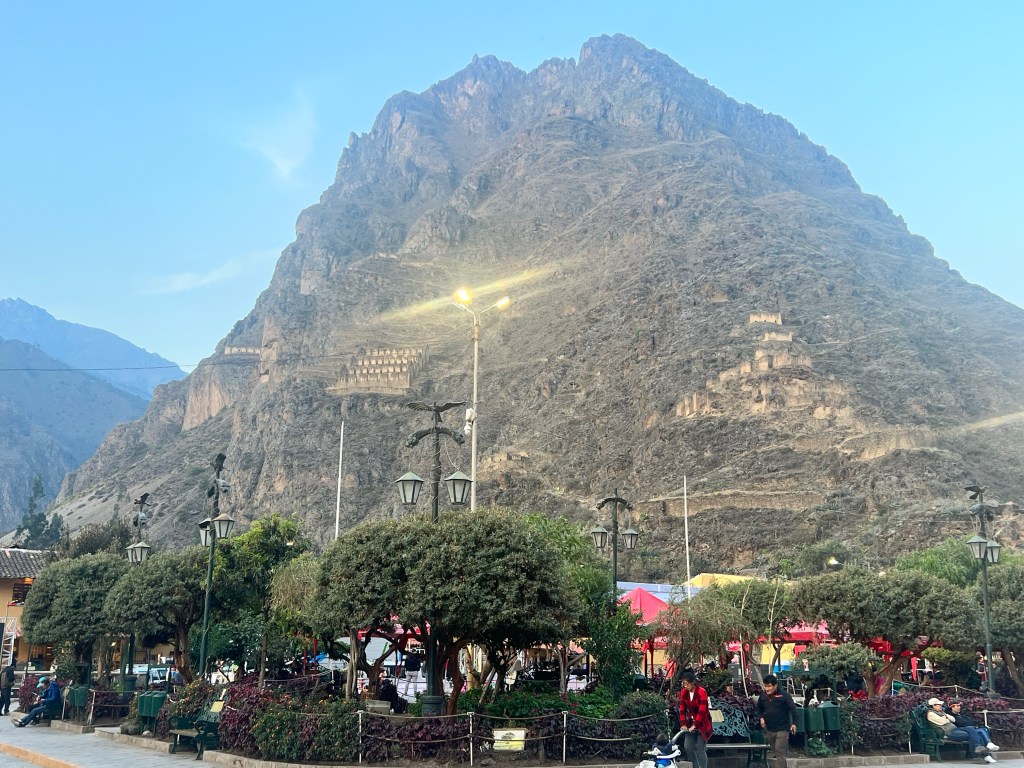
Plaza de Armas, with ruins in the hillside beyond

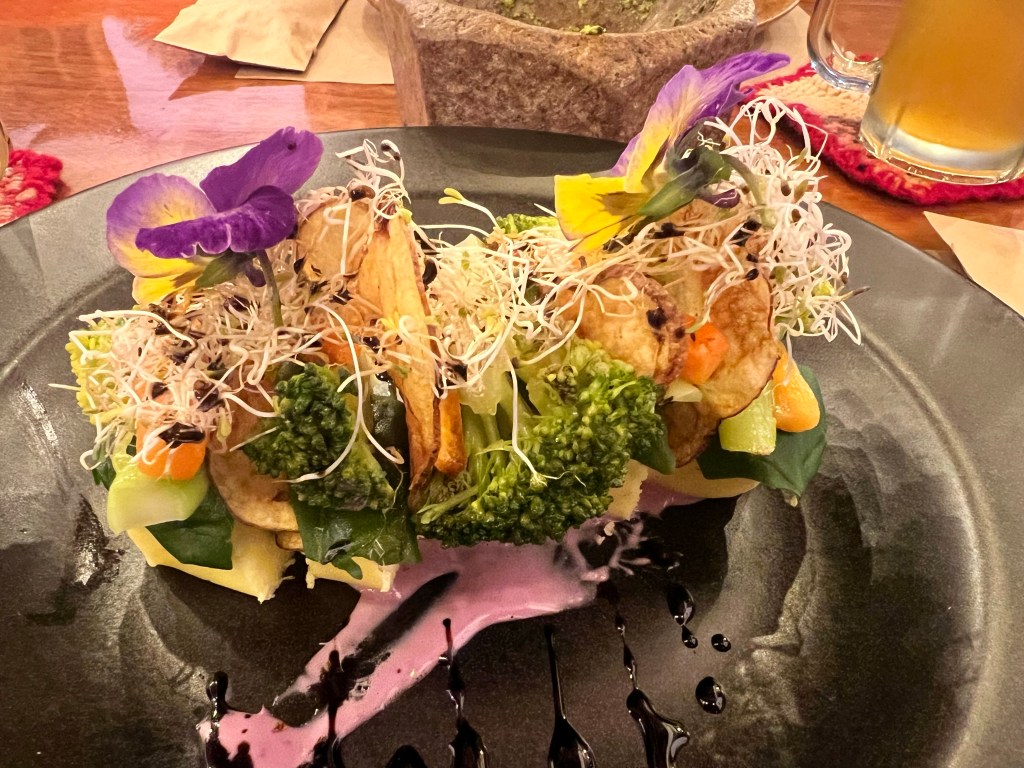
Dinner was AMAZING!! Anna-Sophia had quinoa-breaded chicken fingers (we had a very good time with the Spanish “deditos de pollo” and debated where chickens keep their fingers). Luke had a ceviche-type dish, and I had some kind of potato-wrapped avocado with veggies. It was all really delicious!

My dinner’s presentation was stunning

Tomorrow we have a very civilized 9am start to the day to go to 2 local sites – a ruin and a terraced salt pan. Then we will be back in town for lunch and some local sights. But now, it’s 8:21pm and that’s bedtime!!

The Amazon delivered

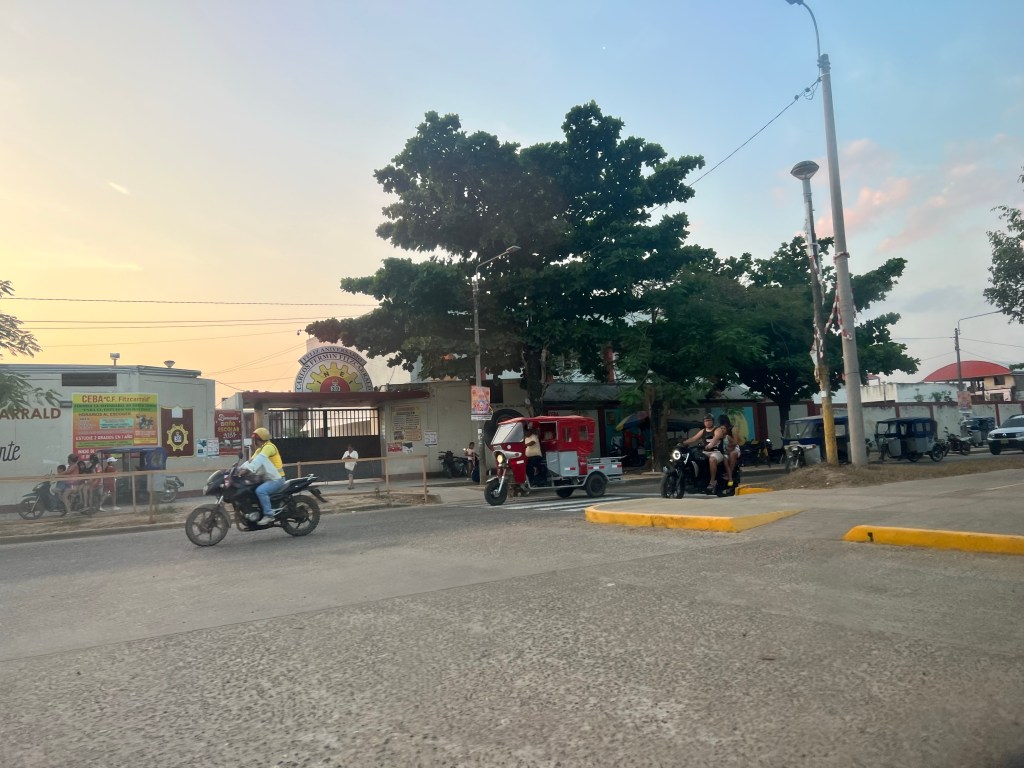
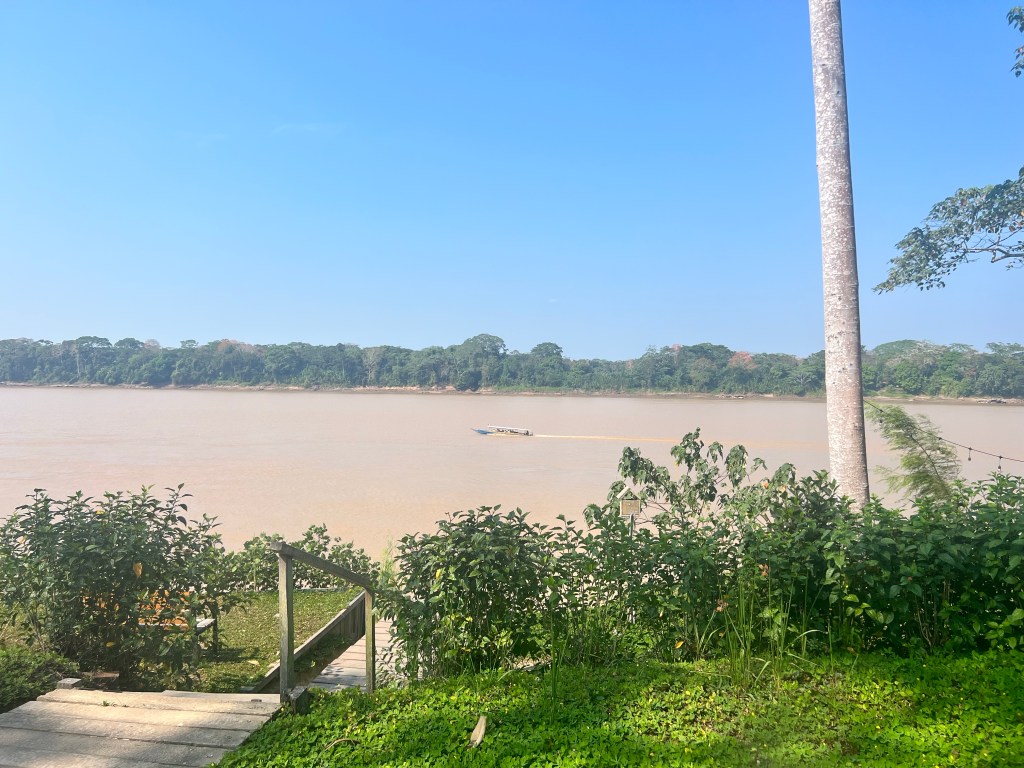
After our airline saga, we finally arrived at Hotel Enai, only 8 hours late. We are staying along Rio Madre de Dios, which runs through the Peruvian Amazon toward Bolivia. This region is just outside of Puerto Maldonado, a town which has grown from a modest 20,000 people a few decades ago to a city of over 100,000 people, thanks in large part to gold mining in the area. Driving in, one certainly got the impression of a town that was not flush with cash.

Puerto Maldonado

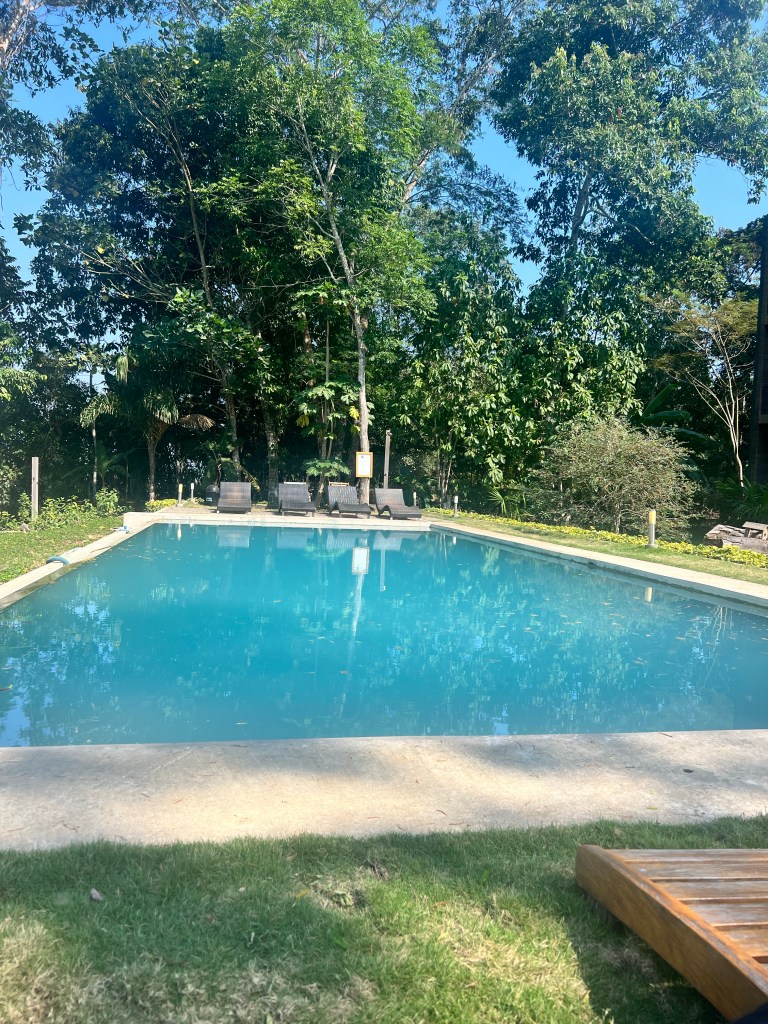
Our hotel is delightful. There’s a pool, Wi-Fi and, more importantly, air conditioning. we tried out all 3 within the first hour of arrival and were quite pleased.

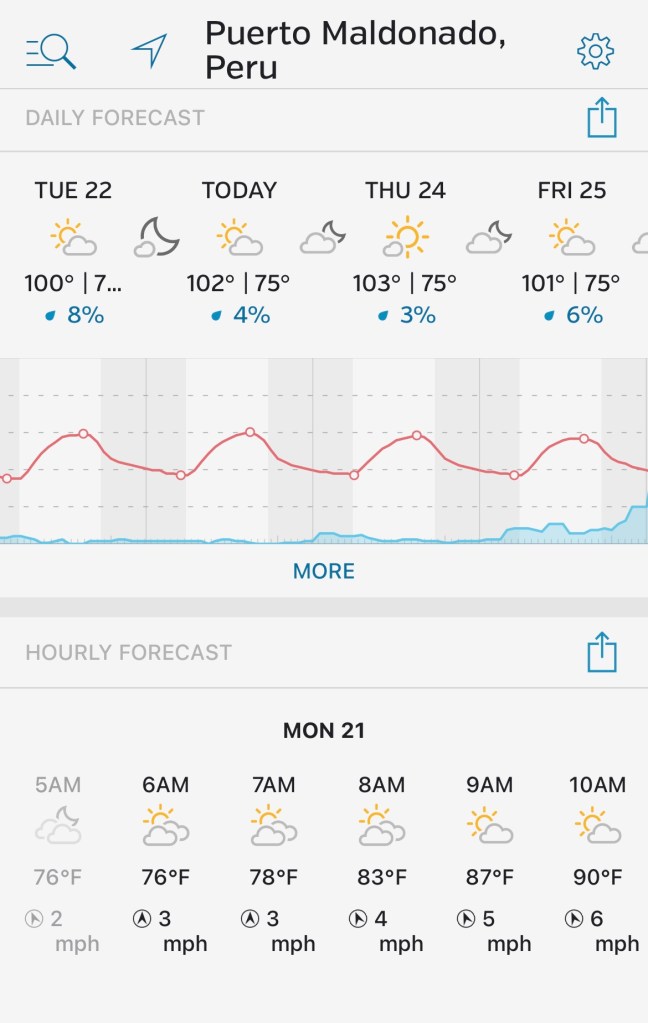
Weather here is not for the weak

While we knew the weather would be hot (Amazon jungle in August seems to have that vibe), I can’t really explain how incredibly hot it is here. It never gets below 75, and the humidity similarly is in the 70%-80% range at all times. That means that a breeze, which should feel delightful, instead feels a bit more like the rush of hot air you get when you open the over door and stick your head right into the heat to check your muffins. When it got up to 100, we were all wilting. How people in the Gulf states do this is beyond me.

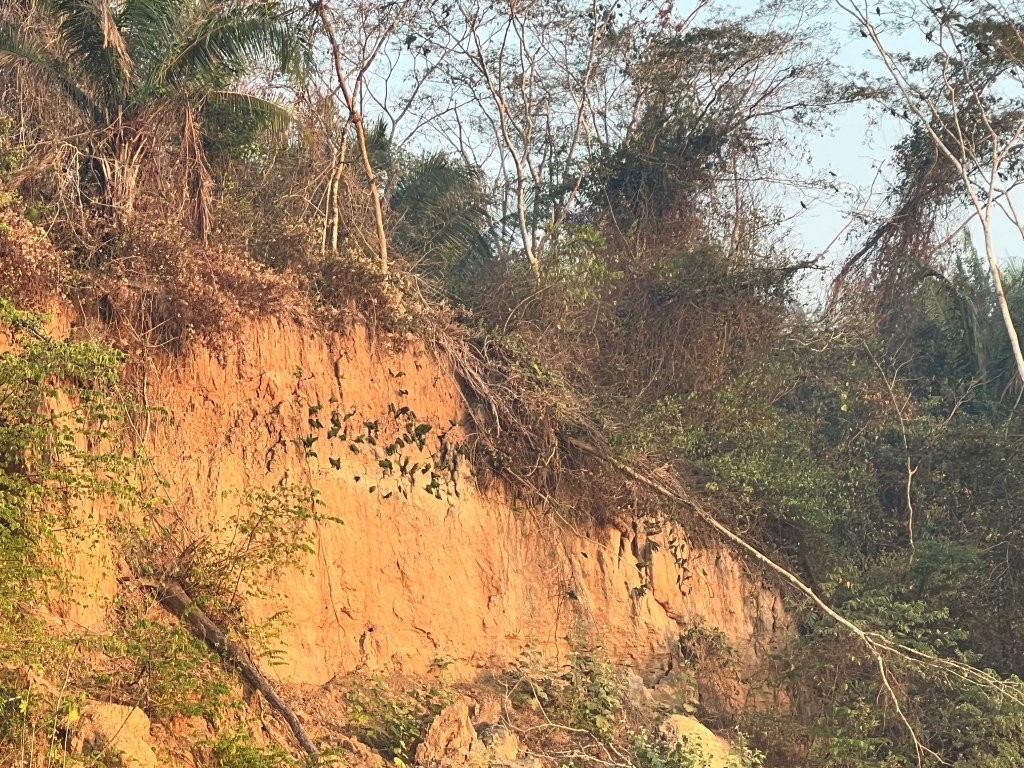
We started the day with a trip out to the parrot clay lick. This involved a pre-dawn boat ride down the river to where the birds gather. At some point, they start to fly down and cling to the side of the cliff side to eat the clay for its critical sodium and calcium nutrients.

There are so many kinds of parakeets, parrots, and macaws! I can’t recall them all now, but I do remember that some have stunning blue and green feathers on their backsides with scarlet feathers underneath. My photos don’t do this setting justice at all.

Parrot clay lick

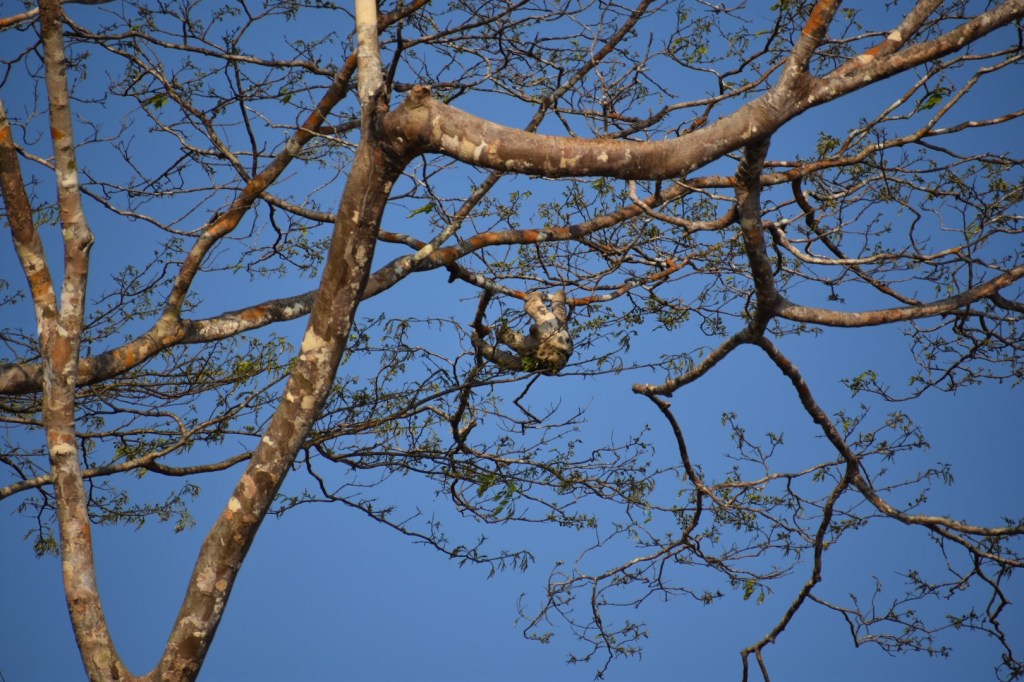
Along the way back, our guide somehow managed to spot a sloth, so we pulled over to watch it. They won’t win any races, but they are cute!

After a hearty breakfast, Luke and Anna-Sophia went to take a nap (what else is there to do as the weather heats up into the triple digits?) and I went to sit by the pool and read. I made it about an hour outside and then gave up and joined in siesta hour.

Rio Madre de Dios

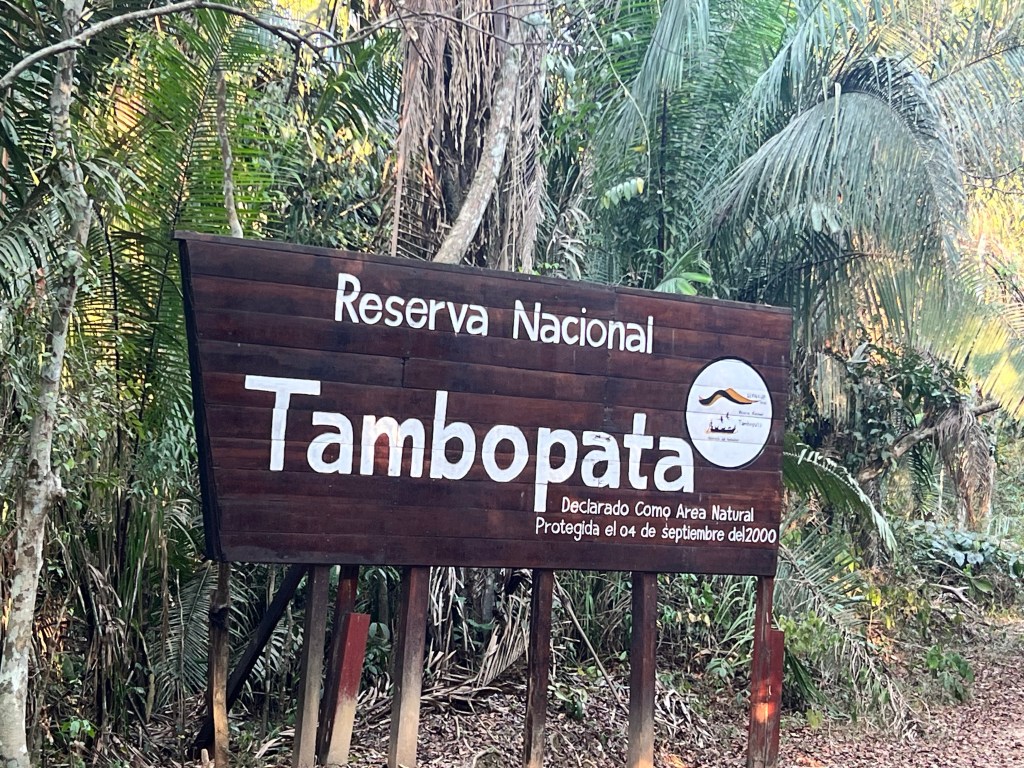
Luke and I indulged in a post-nap/pre-lunch swim, then we all went for a quick lunch before we launched on our second activity of the day: Lake Sandoval. This lake is well-known for having abundant wildlife and being generally unspoiled by humans because it is fully contained inside Tambopata National Reserve.

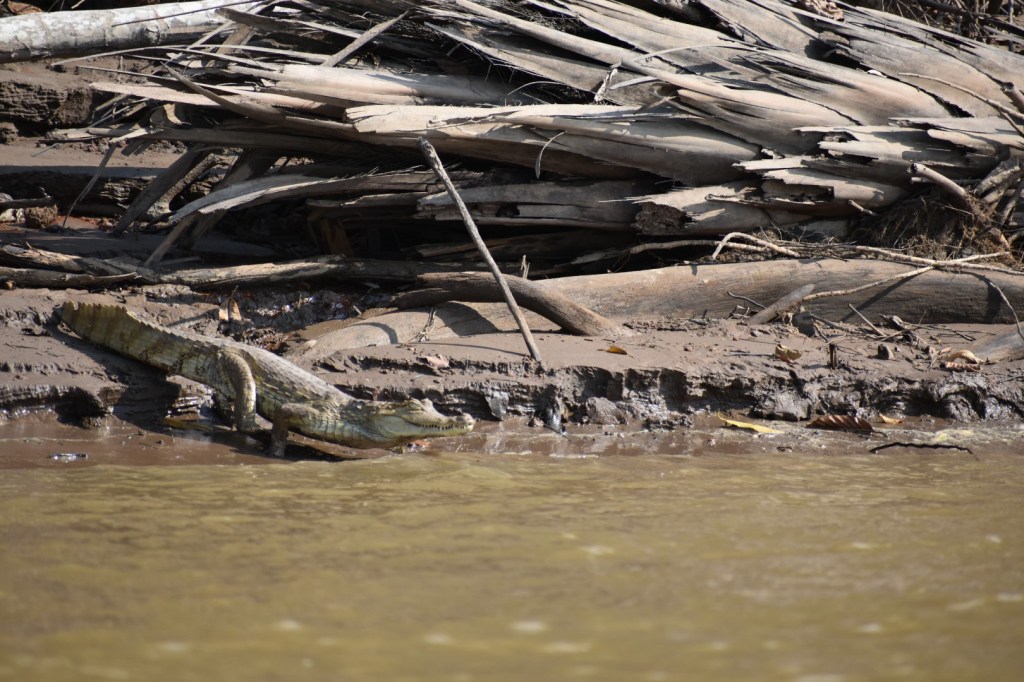
Along the river ride to the park, our guide spots a caiman on the river bank.

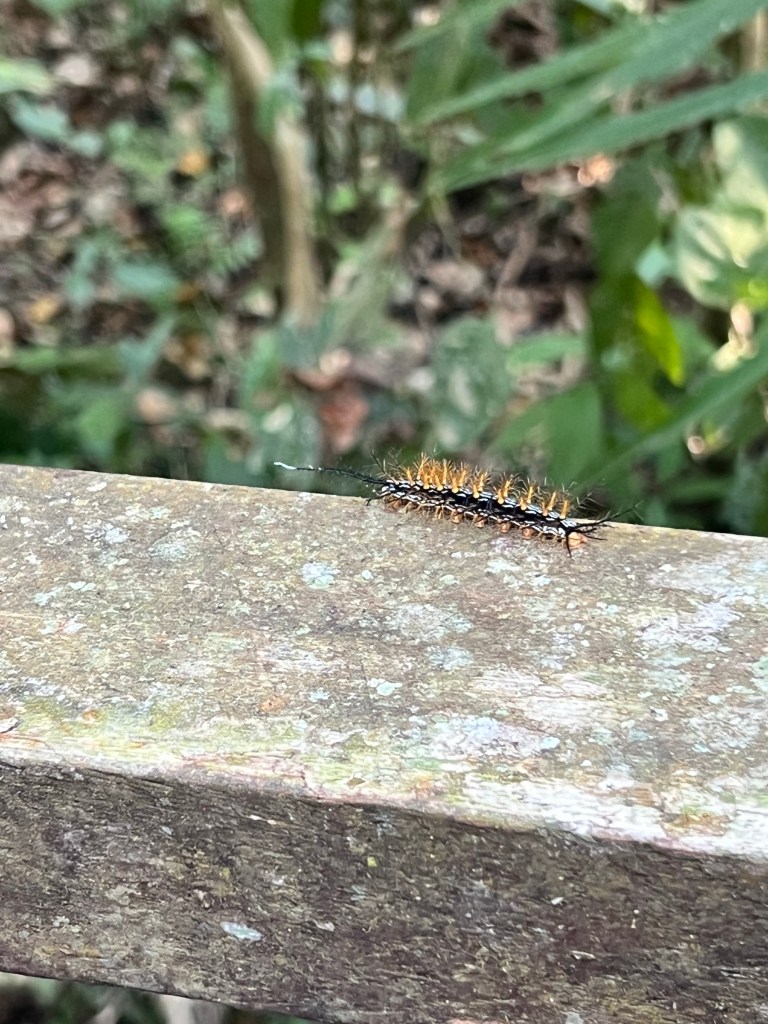
Not 10 minutes after we set out into the park did one member of our party try to kill himself. We stopped to talk about a giant ficus tree when Luke put his hand on a railing, discovering the hard way that a caterpillar was sitting there. Now this was no fluffy, benign caterpillar, but a caterpillar who packed a painful punch via its venemous spines. Ouch!

What we believe is a Saturniinae caterpillar

Once we were all convinced Luke would survive, we started the 3km walk to the lake. To ensure we get full props for making that walk, remember that it’s about 100 degrees out with 80% humidity. Sweat pours off of you, but does absolutely nothing to cool you off since the air is already so saturated.

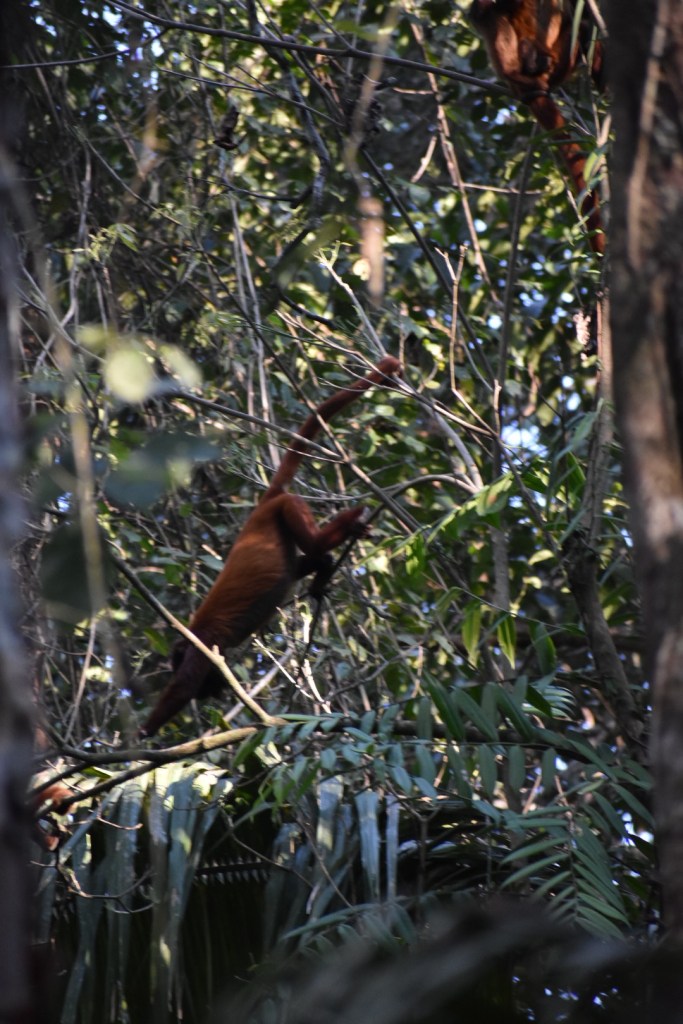
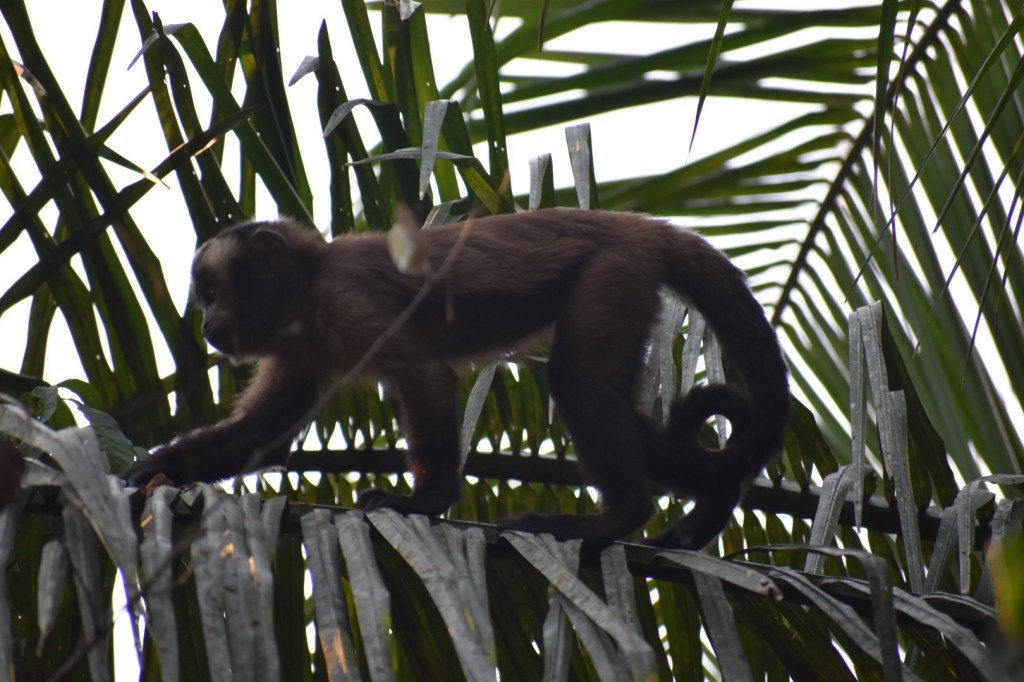
Along our walk, we encountered Brown Capuchin monkeys and Howler monkeys. Anna-Sophia felt they were benign enough to not get caught up in her dislike for old world monkeys.

Howler monkey
Brown capuchin monkey

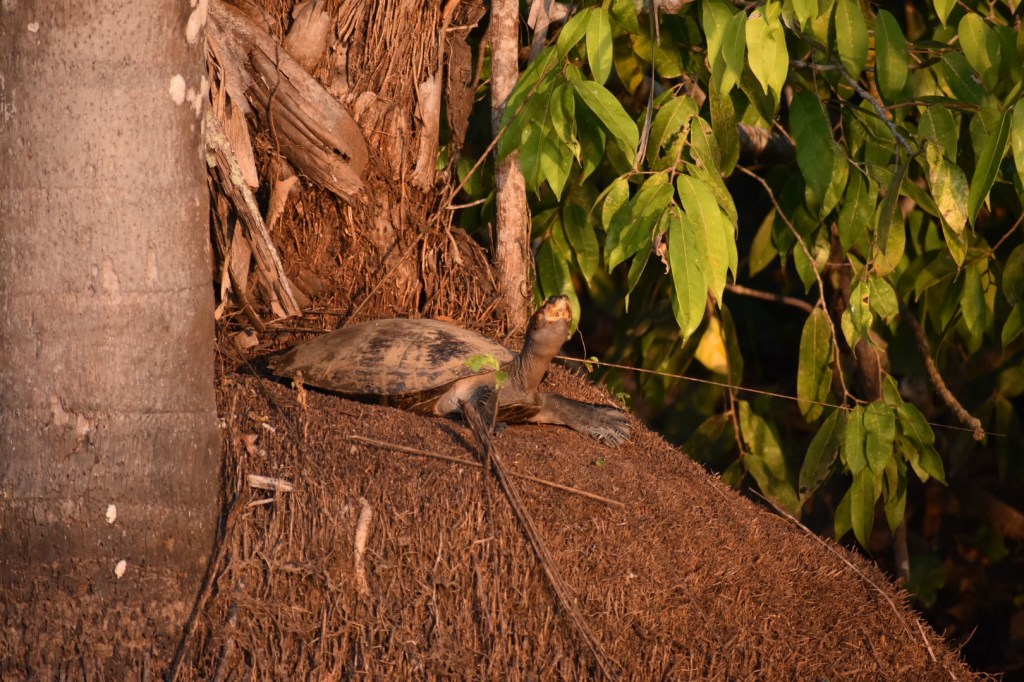
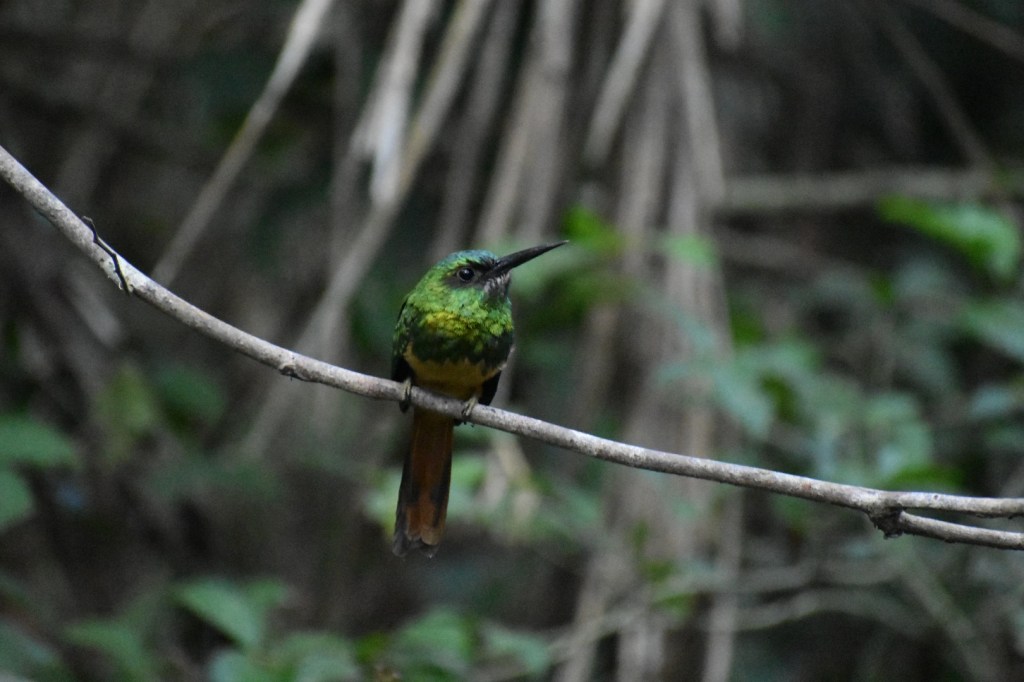
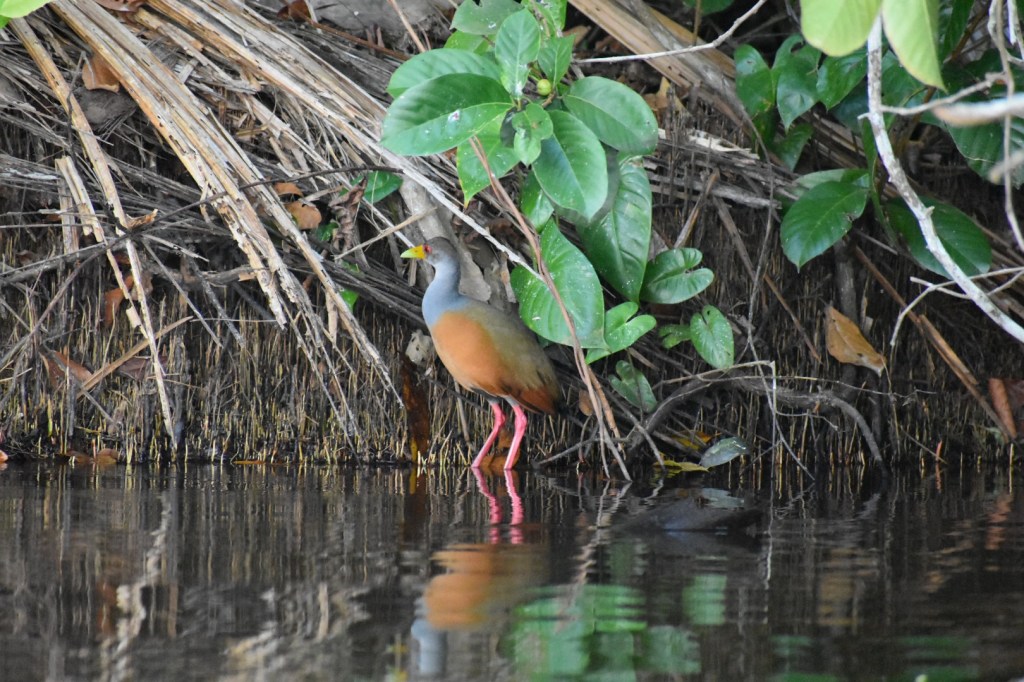
There were birds, monkeys, turtles, and more caimans. We had hoped to see the giant otters, but they were nowhere to be seen; hopefully they were someplace a little less suffocatingly hot! We still saw tons of cool animals, and the lake is gorgeous, so no complaints here!

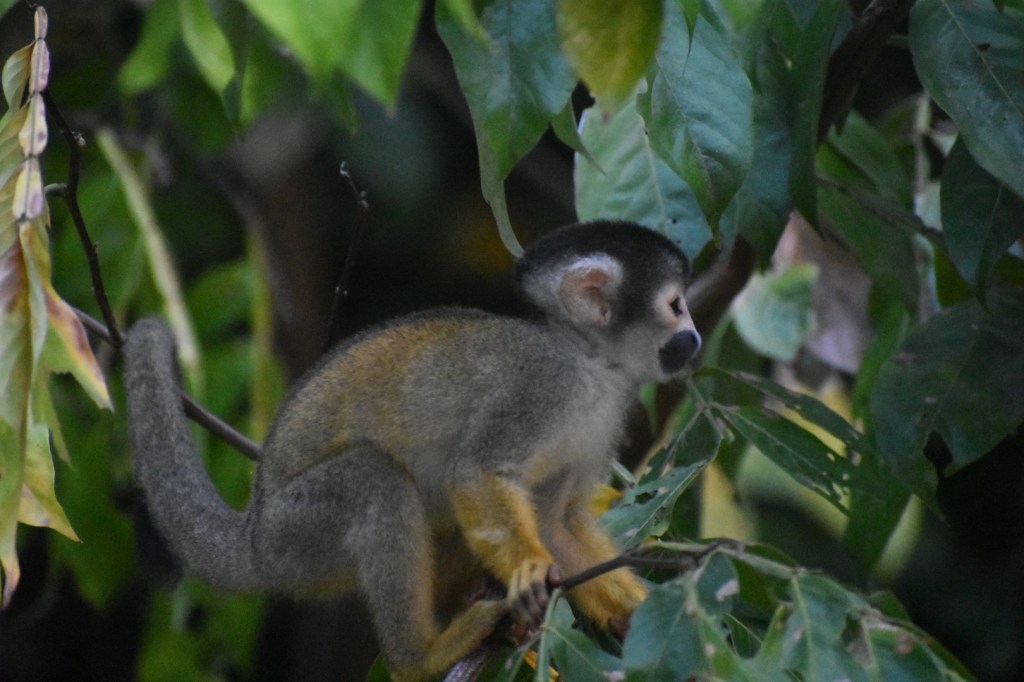
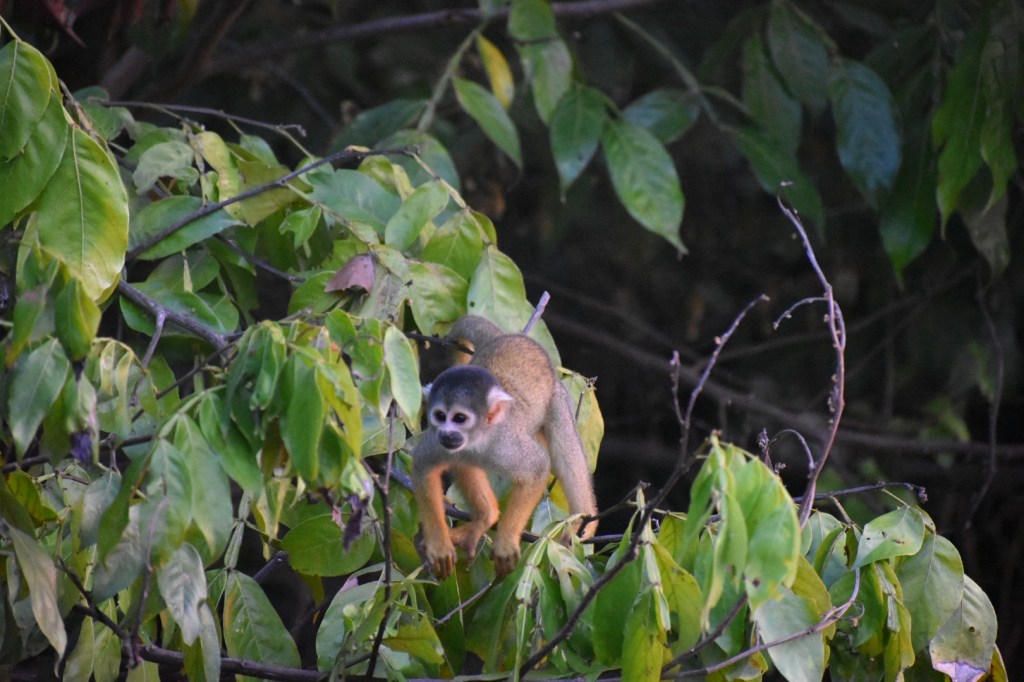
Adorably tiny squirrel monkey!!

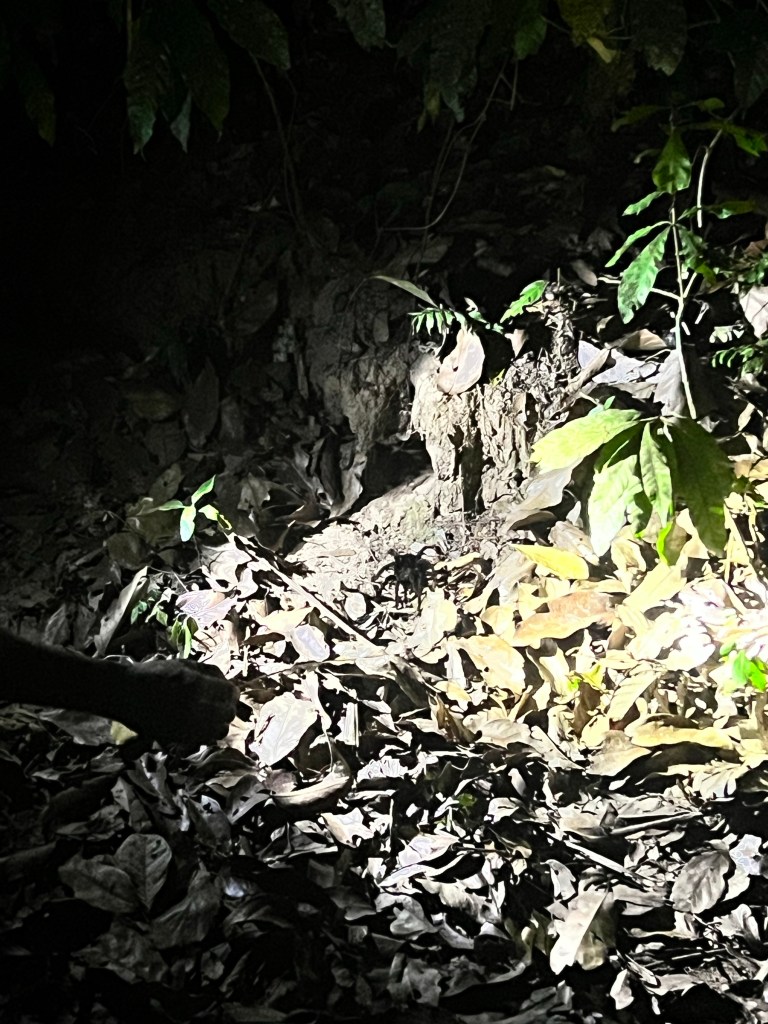
After watching a troop of squirrel monkeys (so cute!), we paddled across the lake and back toward the boat dock. At this point, the sun had set and so we walked back to the boat by flashlight. For the record, I don’t like the jungle at night. Creepy-crawly critters are everywhere!!

That’s a giant spider!
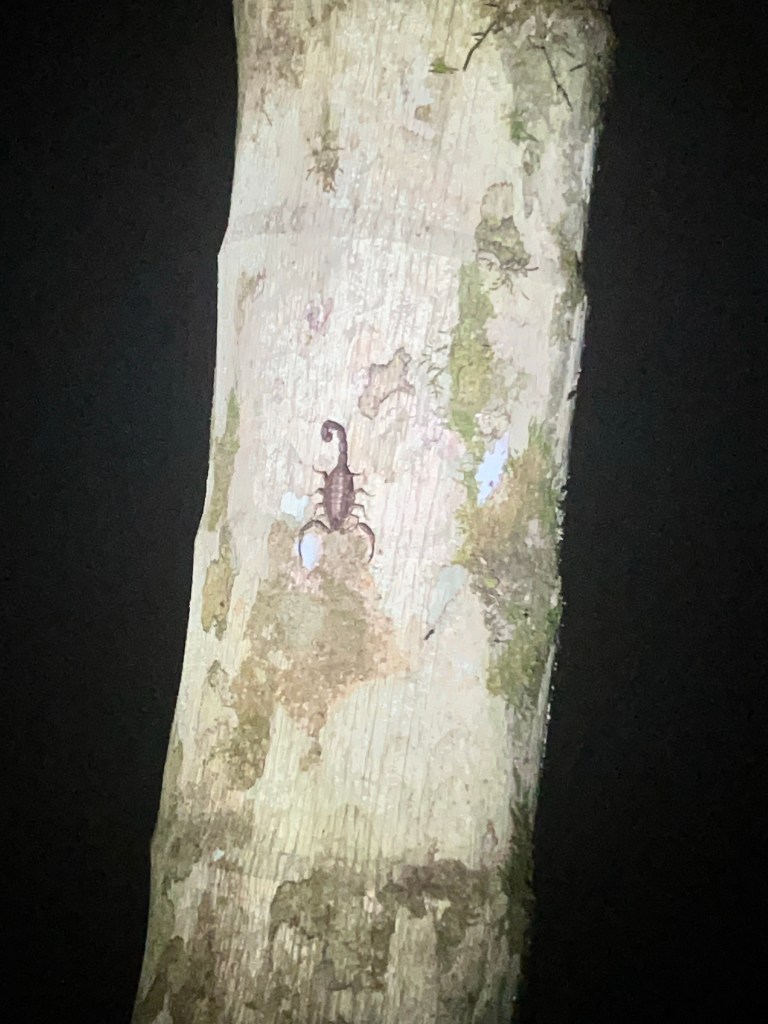
Small scorpion (but does it matter if it is big or small?!)

We got back to the hotel, had dinner, packed, and are now exhausted. I really wish we had ended up with 2 days here as planned instead of just 1, but it was worthwhile all the same. Just like the Arctic, I don’t truthfully know how long rainforest jungle will exist, and I want to see it while I can.

Flying is the worst

Our trip to Peru has nowhere to go but up. After boarding our flight, we sat. And sat. And sat. Turns out, one of the brakes on the plane wasn’t working. We sat there in increasing anxiety as our long layover dwindled, and our anxiety was fully realized when the pilot told us we would have to deplane. For the record, this is the 2nd time this month that I’ve had to deplane. No me gusta.

Ultimately, Delta’s only flight option involved an overnight layover in Atlanta, an extra layover in Miami, and an arrival in Lima that was over 16 hours later than planned. That wouldn’t work given our plans, so we ended up booking a new flight on Avianca and we will deal with Delta later (my status there has – and will continue to – come in handy).

So we are about to depart on our midnight flight to Bogotá, then we will connect on to Lima. I do hope scientists are working on teleportation because flying is just not a good experience. I’ll take my chances being accidentally disintegrated (or whatever goes wrong in teleportation) over subjecting myself to airlines over and over again.

But now, our plane is pushing back and so we are off!

Another unforgettable adventure comes to a close

Last night, we found ourselves having dinner at our hotel bar because we didn’t make reservations at any of the 6 restaurants in town (I rarely make reservations in Boston with a population of half a million, so it never crossed my mind that the Svalbard population of 2500 could outpace restaurant seating). No problem, the bar is great. I realized that I carry the spirit of my father and father-in-law because I asked all the bartenders their stories and found it so engaging to meet them.

Daniel (Danny) is from London, and after falling in love with the place on vacation, he went back to London and said if he still loved the place a year later, he would move there, and voila! Baz is the Jordanian who is leaving next month to head to Turkey to pursue his passion – disaster response and refugee support – in the aftermath of the devastating earthquakes earlier this year. Misha is Russian-Ukrainian, and he came to Svalbard after his Norwegian visa expired (since there are no visa requirements to enter Svalbard, that’s a pretty common story). He is looking to head to the US next, including Columbus where a friend lives (we tried to encourage him to think bigger than Columbus). We talked about all the ways the US and Russia are similar, despite what the current political environment might lead people to think.

We also spent a while talking to a Norwegian who had been on the boat and ice cave tour with us. Man, my book wasn’t lying when it said Norwegians don’t drink often, but when they do, they go all in. I have no idea how this guy was managing to sit on a stool, and definitely don’t know how he managed to function today (but he did, because we saw him around town).

After checking out, we walked to the Husky Cafe for another espresso (Scandinavian coffee is pretty much undrinkable, so the one espresso shop was a true gift), then to the Svalbard Museum. The museum was really pretty informative, walking visitors through history, from the discovery of the islands, through exploration, whaling, mining, and the contemporary phase of the archipelago’s life. I know much more about Arctic life than I did before!

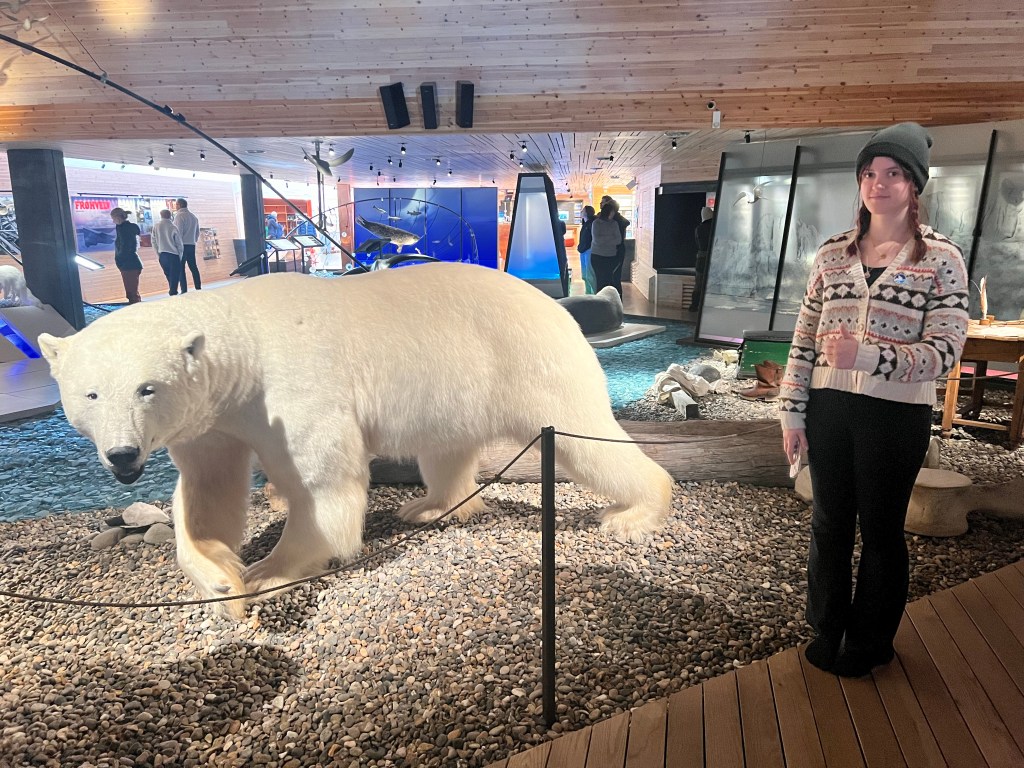
Polar bear which charged a research station and was shot in self-defense in 2005. It is incomprehensible in size.

We walked around town some, had lunch, and just generally relaxed. I typically earn a F- in relaxing, even on vacation, but there was something about this place that truly let me feel at ease. Maybe the other-worldliness of the place distracted me, or maybe it was so stunningly beautiful in its austerity that my mind was occupied, or perhaps the truly global nature of the place enchanted me. Whatever it was, my mind was occupied and free from thought at the same time.

After a bit of poking around in the local stores (I got fabulous mittens), we headed back to our hotel for a beer, a game, and to take off a layer or two before catching the bus to the airport.

Svalbard captured my imagination when I first started planning this trip. I tried to convince myself we could do other things given the time and financial cost of getting here, but I just kept coming back to the Svalbard idea. I finally gave in and just booked it, and the only regret I have is that we went to Bergen first rather than just coming to Svalbard for the whole week. Everybody who is here has chosen to put themselves into a terribly hostile environment for one reason or another, and I think that intentionality leads people to be generally happy and friendly. Nobody was cranky, nobody was rude, and everybody was just plain nice. There’s a shared love of the austere beauty, adventure, the wildlife, and of the extremes of the natural world, and that leads people to be cooperative in ways that I just don’t see in everyday city life.

At this point, I am ready to go home, but I have to say that coming here is one of the best travel decisions I’ve ever made – despite the average temperature of about 5 degrees! I have a new perspective on the value of the natural world for the human psyche, of the kindness possible among fellow humans, and of the beauty and fragility of our planet and the Arctic.

Under the glacier

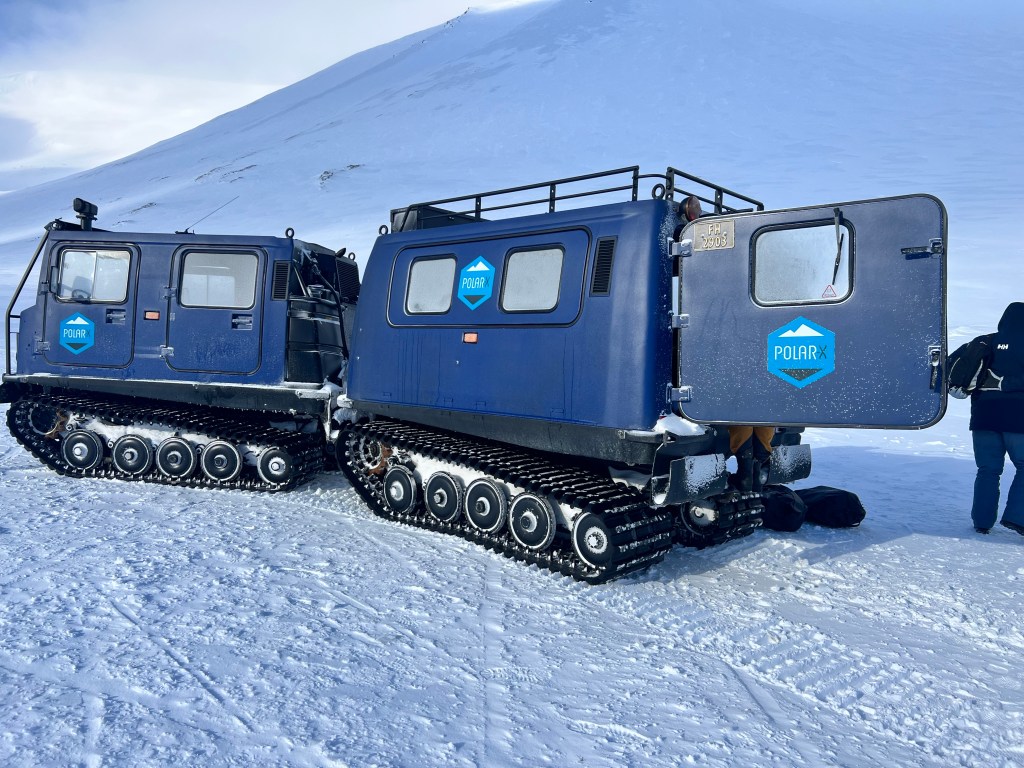
Today I booked a “snowcat to ice cave” tour. I’m not entirely sure why I went this route vs pretty much anything else, but it was booked and paid for so at 9am we found ourselves climbing into the strangest vehicle I’ve ever ridden in.

Snowcat

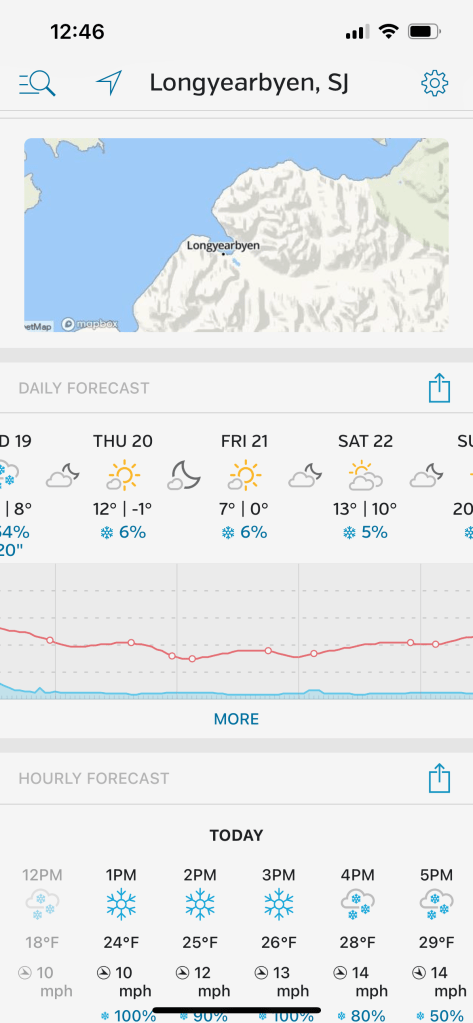
I recall initially I wanted to book a snowmobile tour, but they are not many under 8 hours in duration and I wasn’t so sure I’d enjoy a full day on a snowmobile. I definitely wouldn’t enjoy a full day on a snowmobile in this particularly cold weather (today’s low is -1 and the high is 5…let me tell you, -1 and 5 are indistinguishable from each other since they are both frigid).

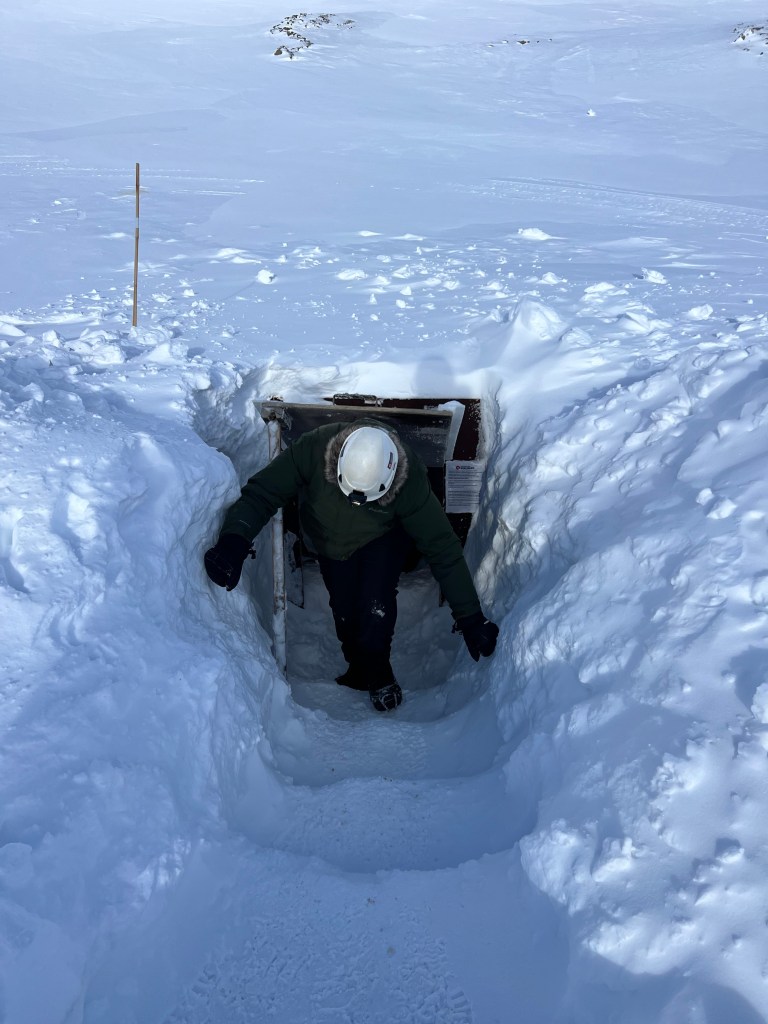
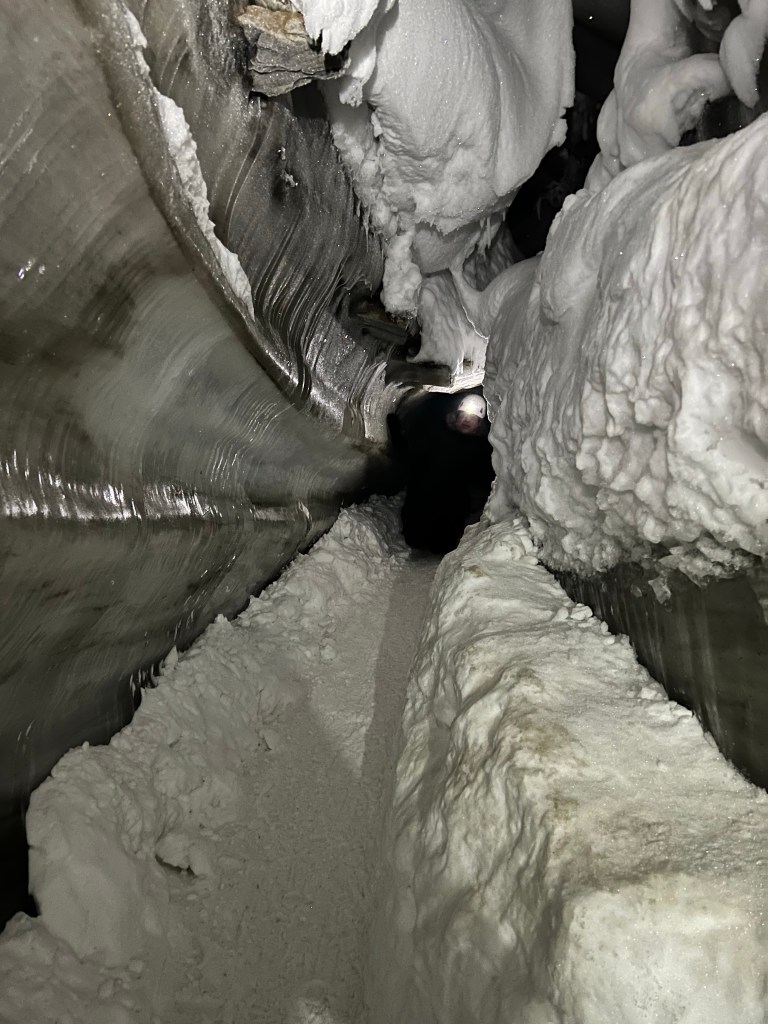
We learned in Colombia that none of us care for confined spaces or tunnels, so I was truly nervous when we got to the ice cave opening. It looked awful – like everything I hate. Then we were handed helmets and spikes and I nearly gave up.

Luke at the cave mouth
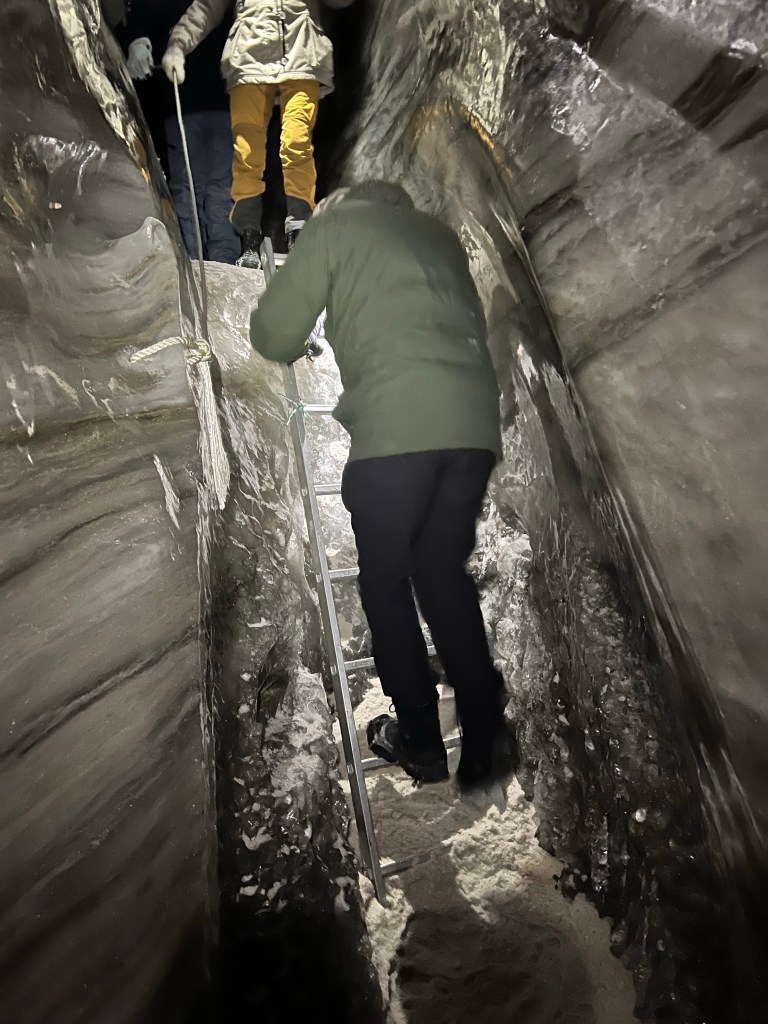
Climbing down into the cave

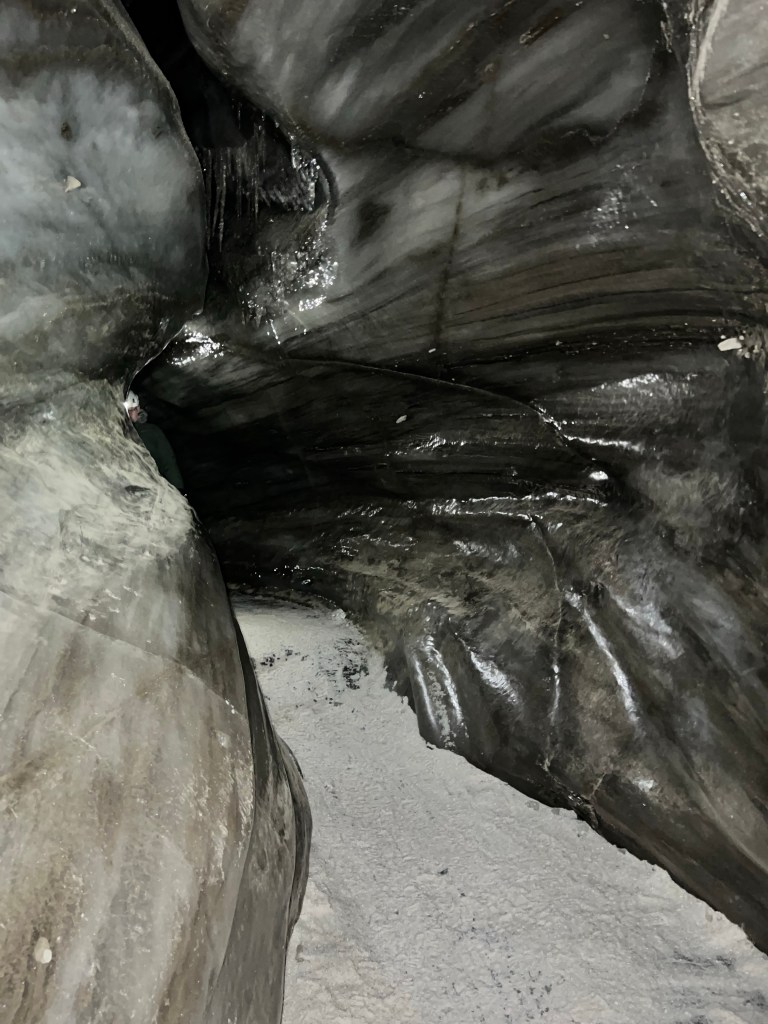
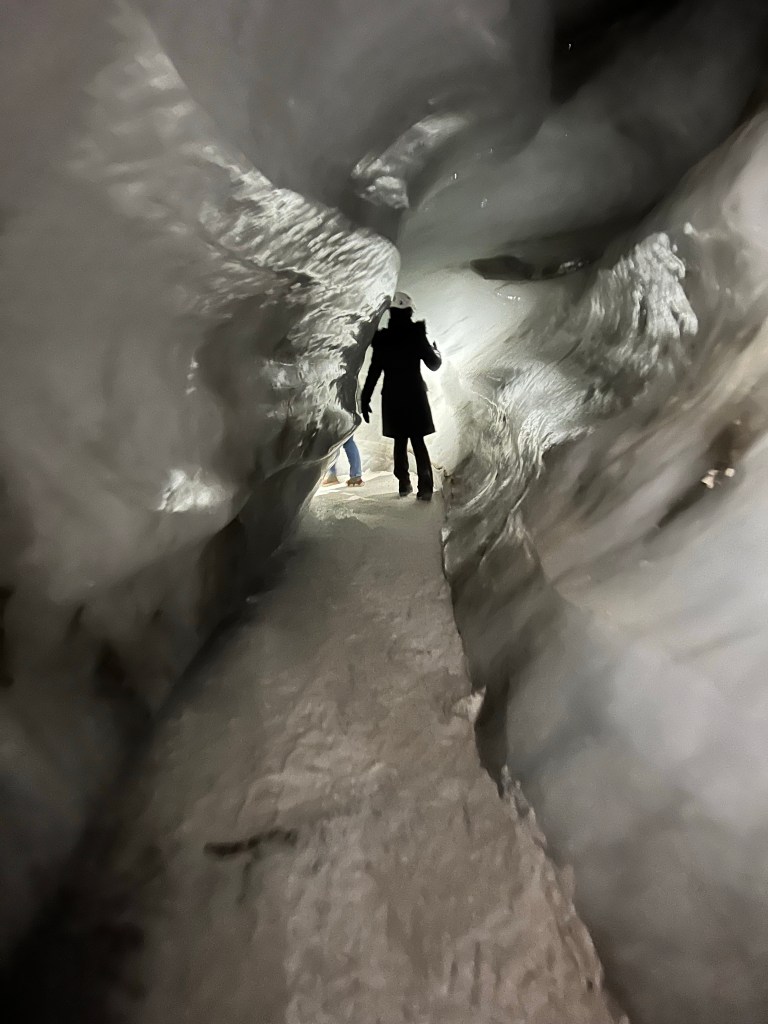
We somehow all managed to muster the courage to enter the ice cave. Once we got past the first 40 feet of downward tunnels, the cave leveled out. My heart was racing from the adrenaline of the climb in, but the stunning beauty inside the cave allowed me to quickly recover. It was unlike anything I’ve ever seen before.

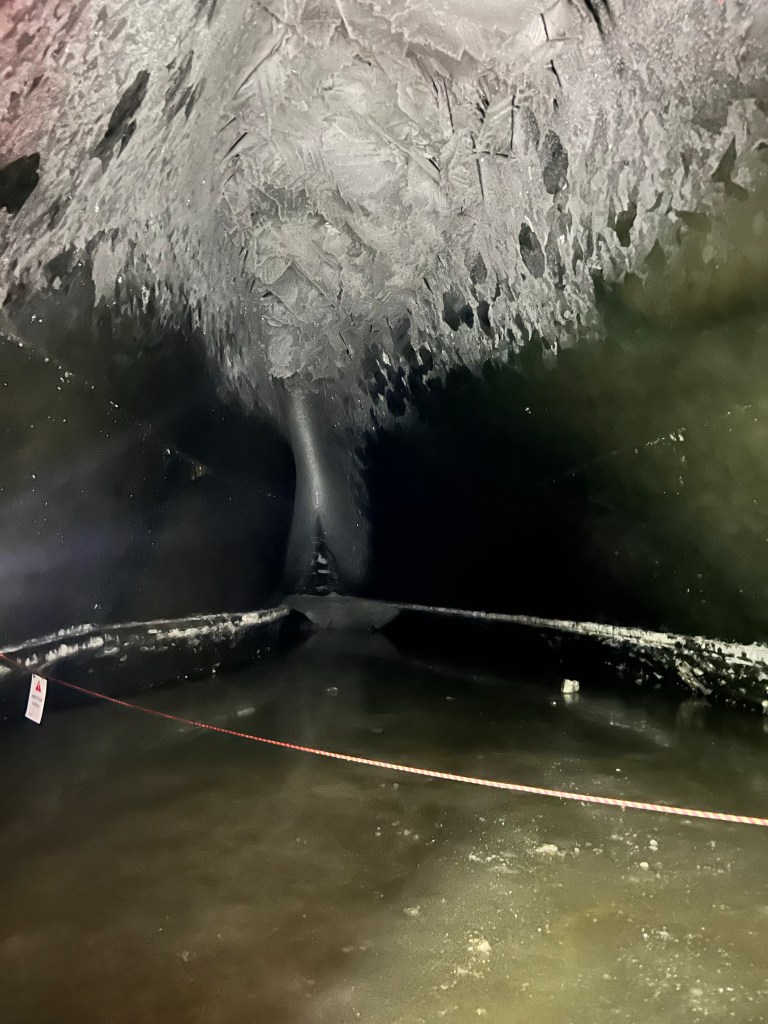
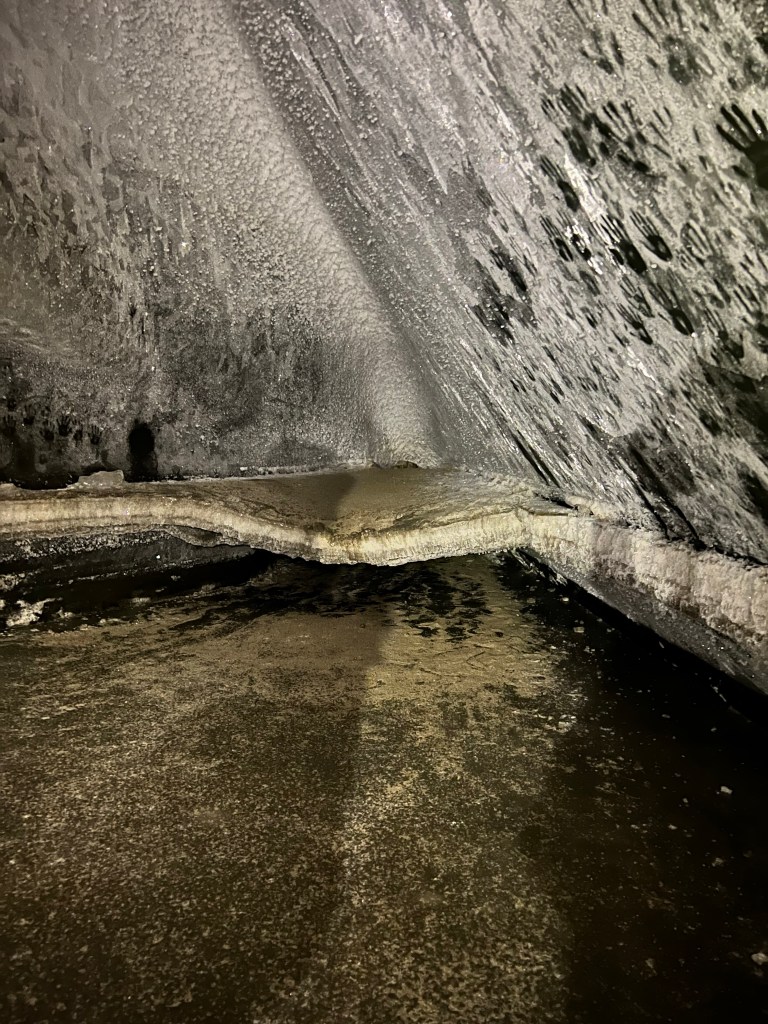
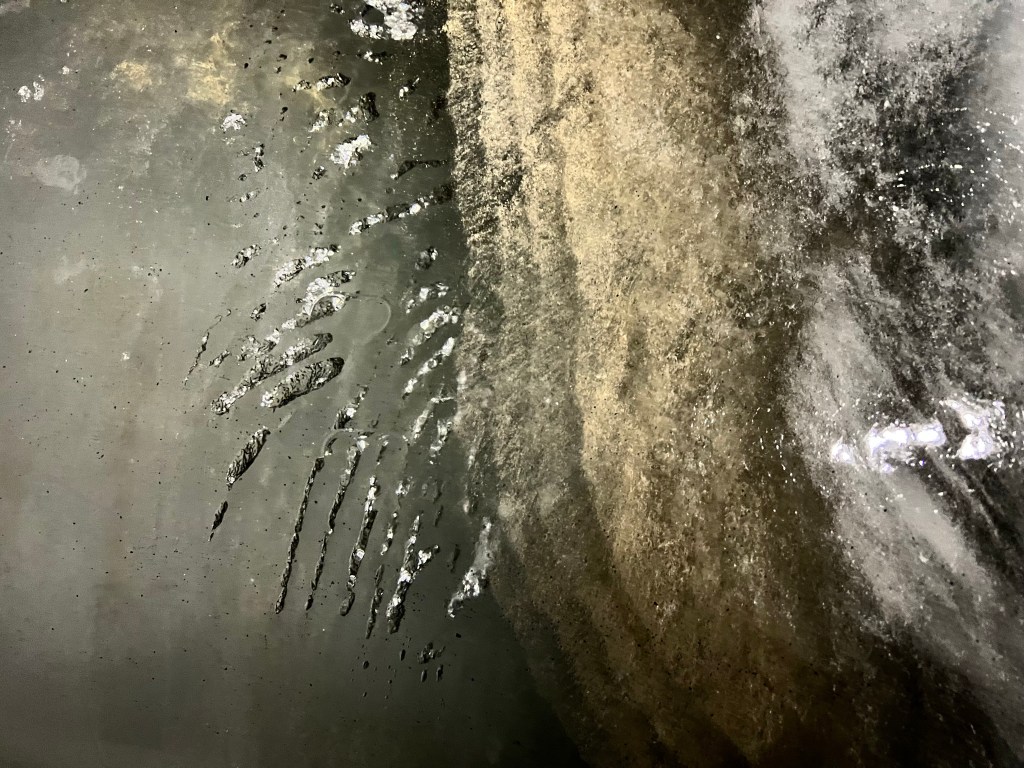
At the end of the tunnels, we had to squeeze through a really small opening in order to enter the “cathedral” – a massive cavern that the guides just discovered this year. The room was oddly humid, with a bit of liquid water on the floor, and it certainly was a sight to see. To think that a space this size could exist under the millions of tons of solid ice above it is wild (and a thought I’m glad I had after going in rather than during).

The cathedral
The tiny entrance to the cathedral is at the end of the shelf of ice…it’s nearly invisible in the photo (wasn’t much bigger in real life)

We slowly made our way back, still awe-struck at the power of ice and beauty of nature. Thankfully, exiting was much easier than entering, and I was pretty glad for the wide open space that greeted me once I emerged from the cave.

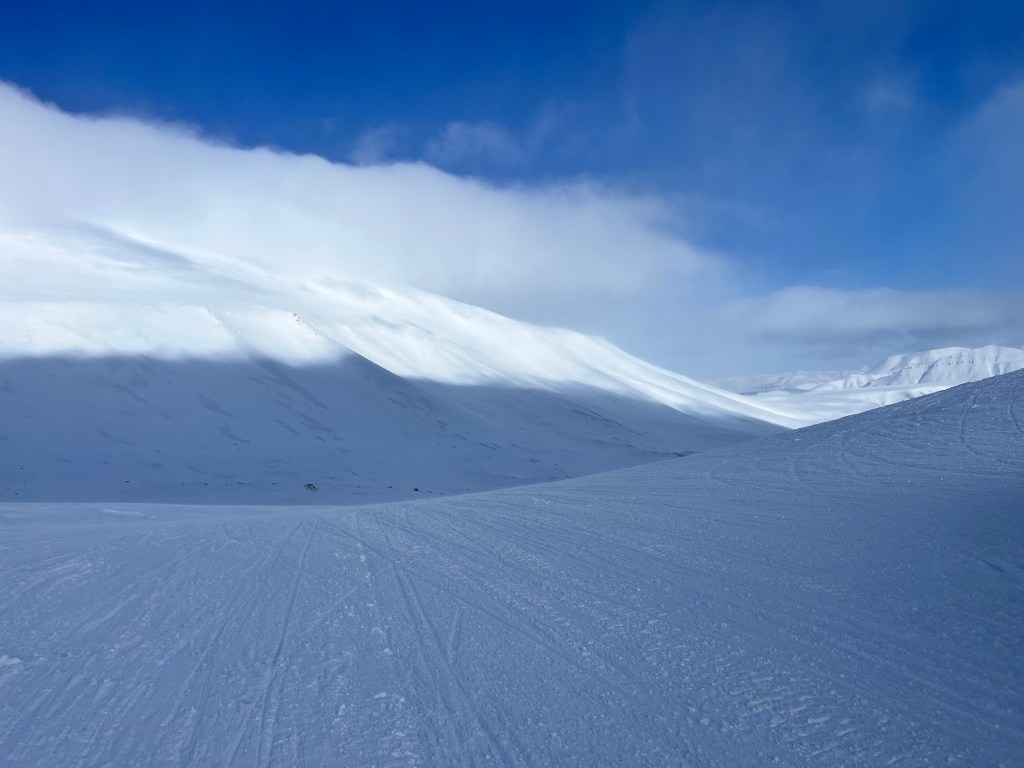
Our guide took us near the top of the glacier and we stopped for some hot elderberry juice (not bad!!). Then we piled into the snowcat and made our way back.

Top of the glacier

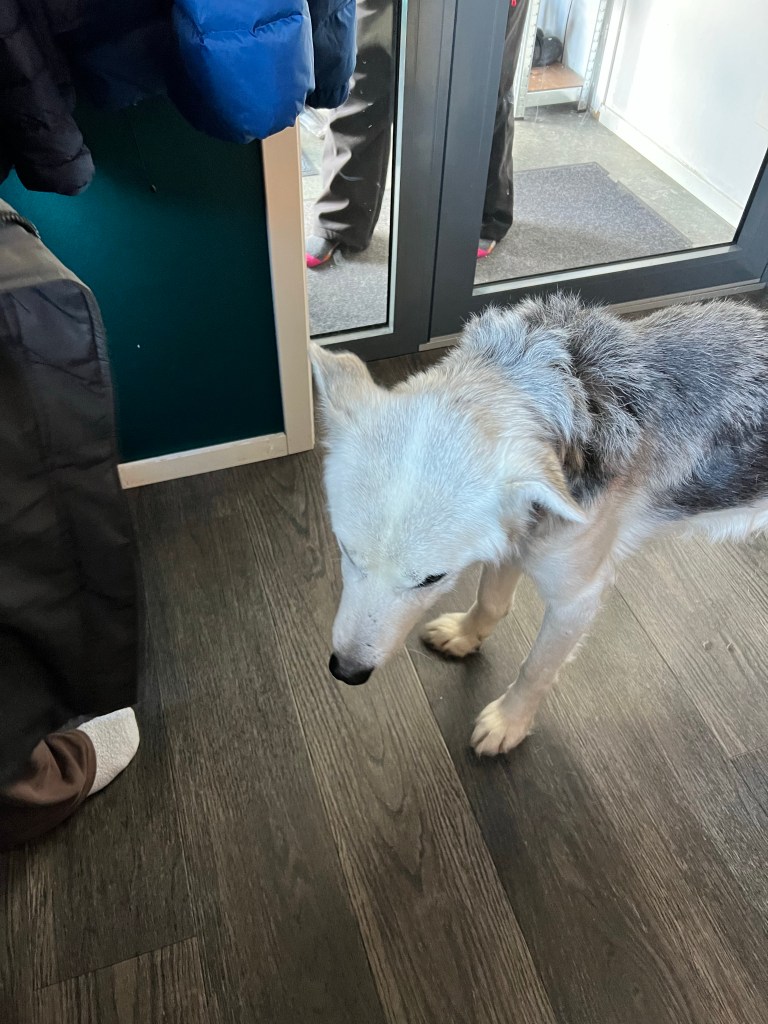
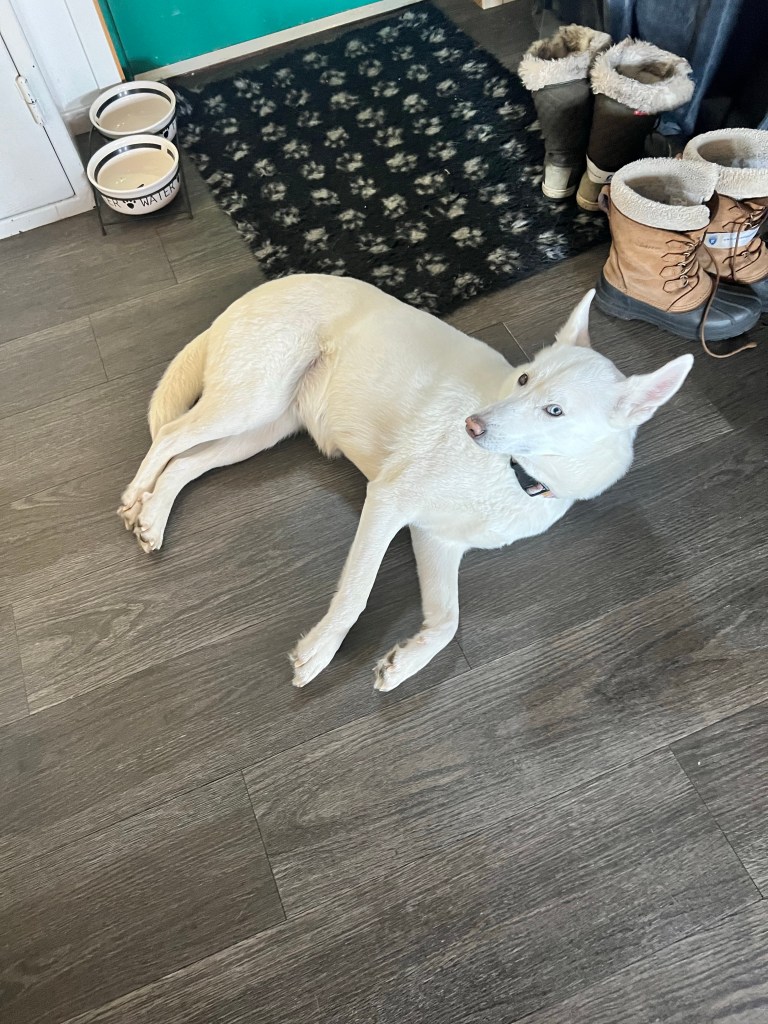
After a warm-up and lunch, we headed to Svalbard’s Husky Cafe. Like a cat cafe, but with dogs/huskies. Best idea ever!!

We are off to the Svalbard Brewery next. Tomorrow we have no real agenda beyond the Svalbard Museum (which is supposed to be great) and some shopping. Since Svalbard isn’t governed the same way Norway is, it lies outside tax zones – everything is fully tax free. Like a much colder and more awesome New Hampshire.

Sailing the seas

Yesterday we headed out on an all-day boat tour. As we boarded the bus, the tour operator says “It’s such a nice day, so we will be outside.” These are hearty folks!

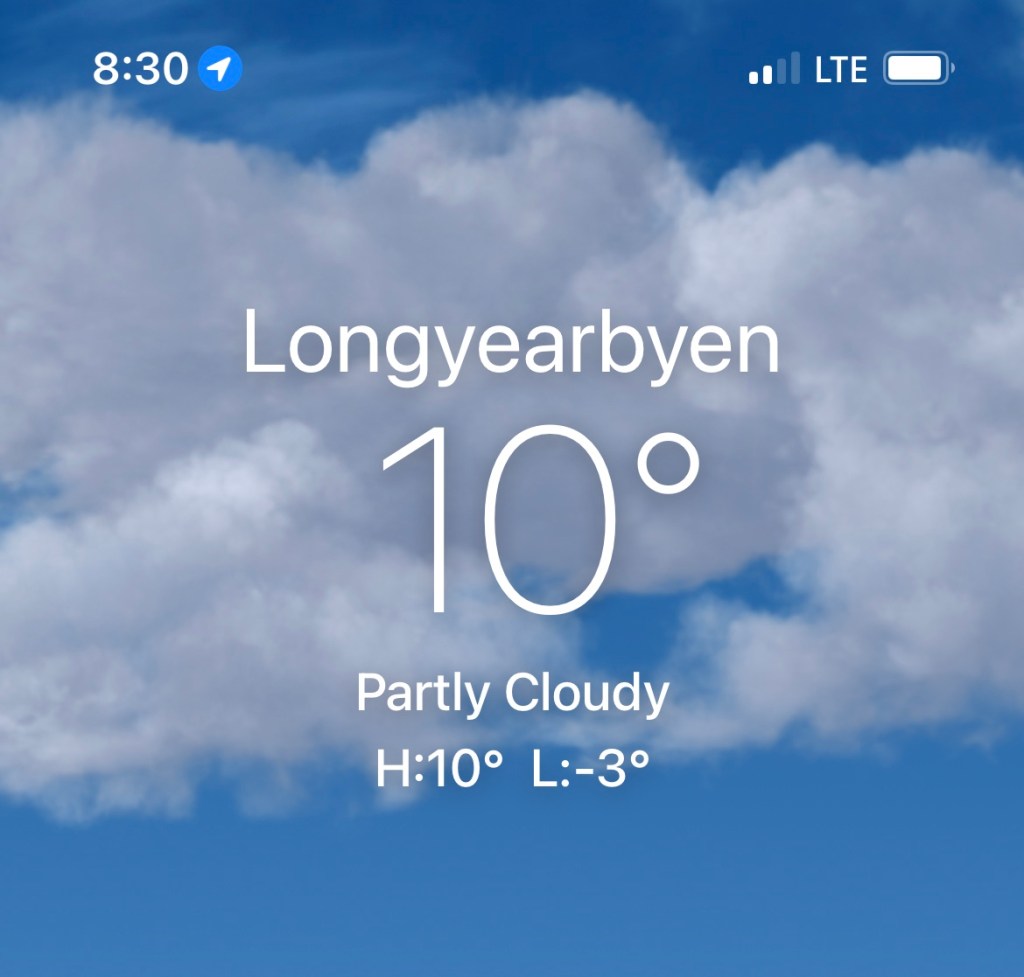
10 degrees is the high for the day

I hate boats, but I know this was the best way to see Svalbard’s highlights. The boat normally goes to Pyramiden, an abandoned Russian mining outpost. Photos online look really cool (the town was basically abandoned overnight, so it looks like everybody just stepped out for lunch, leaving everything in place), but because of Russia’s invasion of Ukraine, Svalbard has decided not to allow local businesses to patronize the Russian outposts and I can respect that.

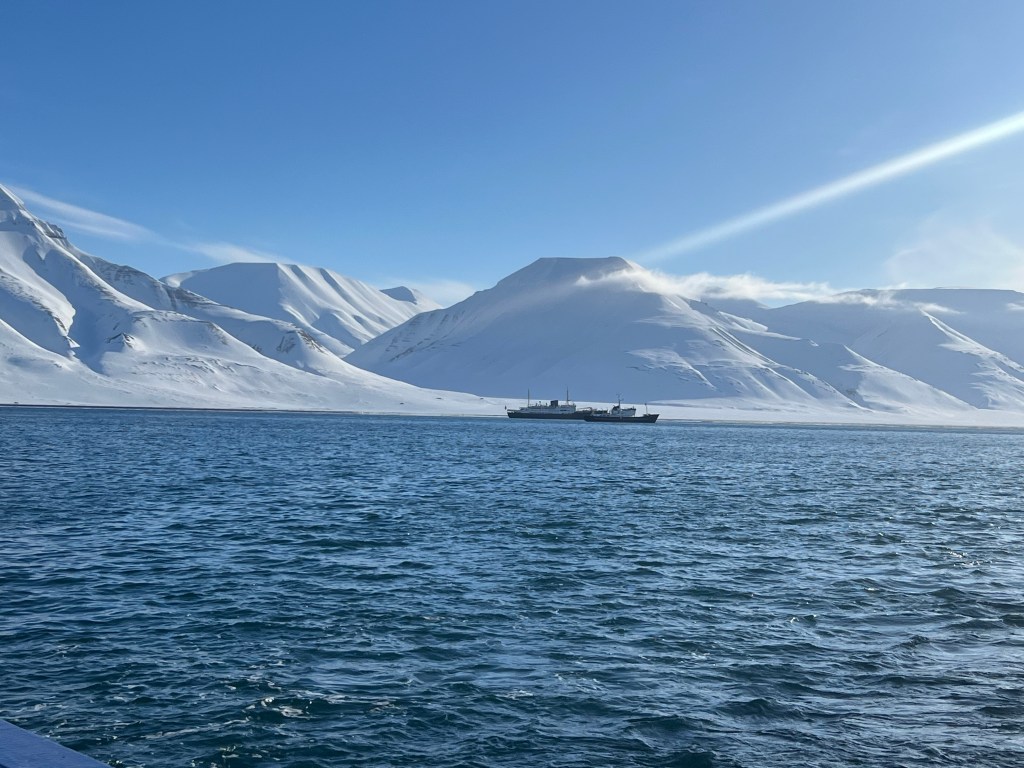
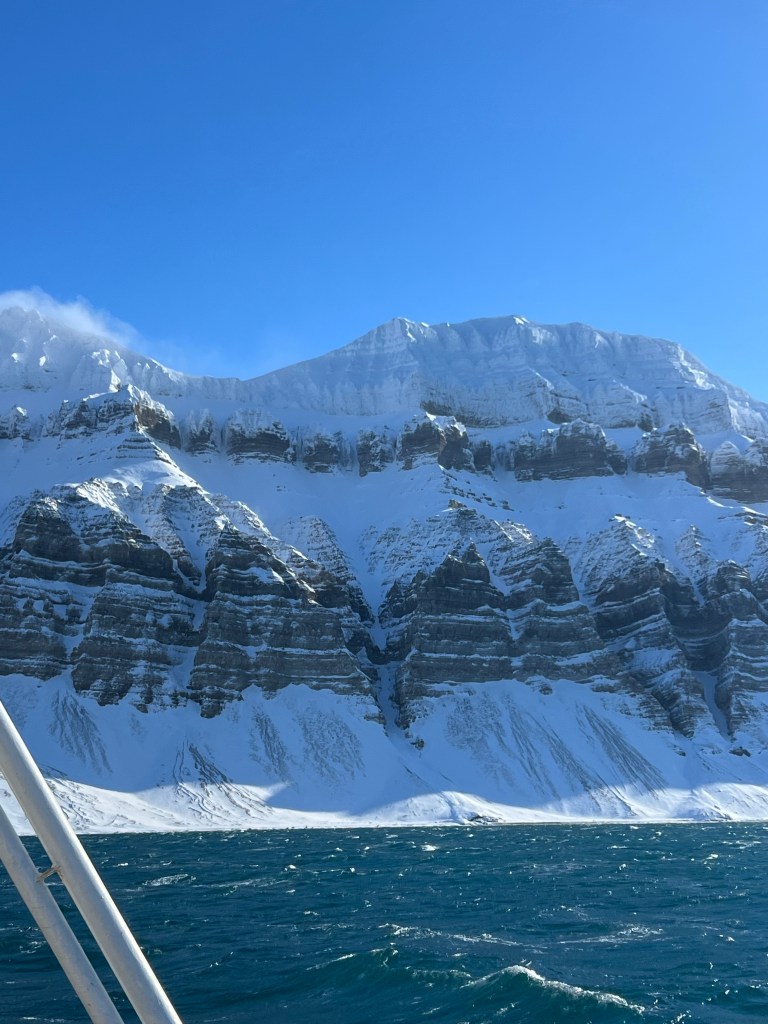
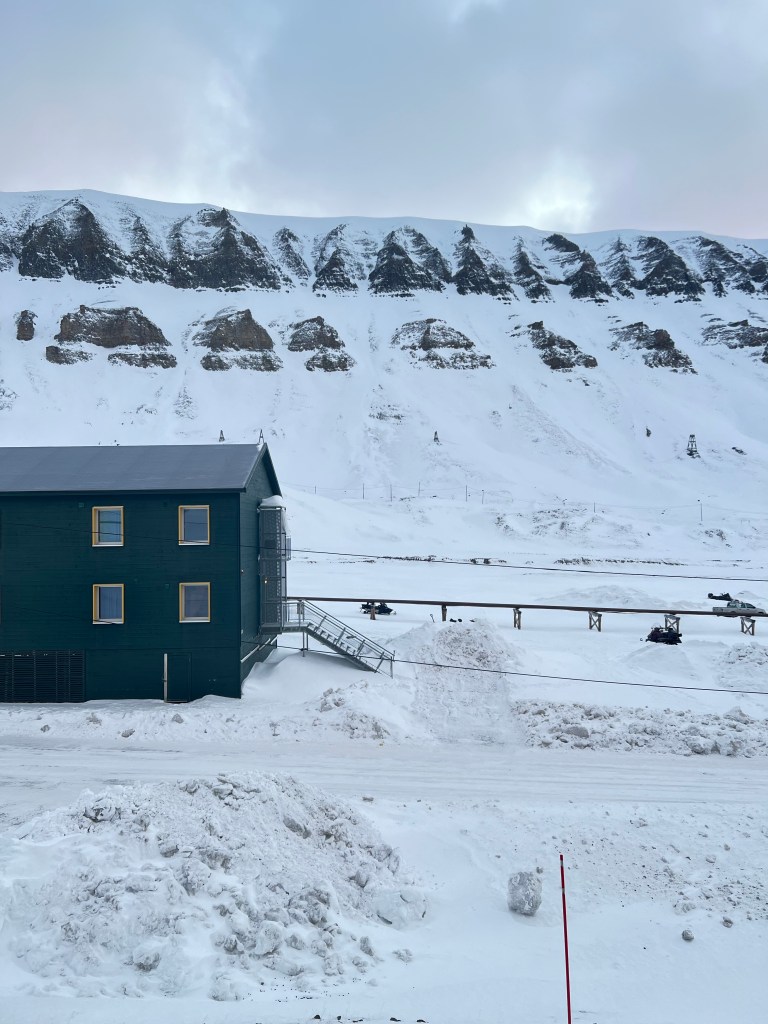
We set off out of Longyearbyen toward Tempelfjorden, admiring the stunning views all around us. Svalbard does minimalism in a manner unlike anywhere else. Looking around at the cliffs beside the fjord, it was truly novel to see nothing but snow and ice.

While we crossed Sassenfjorden, our guide told stories about the history of hunting and trapping in Svalbard. I can see living here during midnight sun, but during the 5 month-long polar night, this would not be for me. To do that before hot water, indoor plumbing, and electricity is truly beyond comprehension.

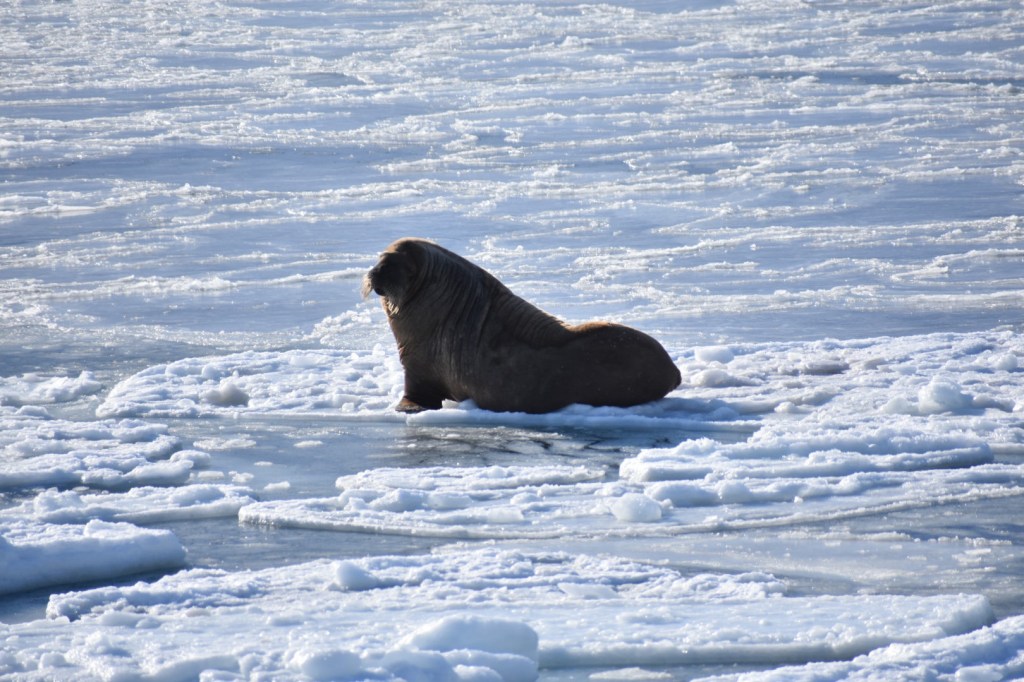
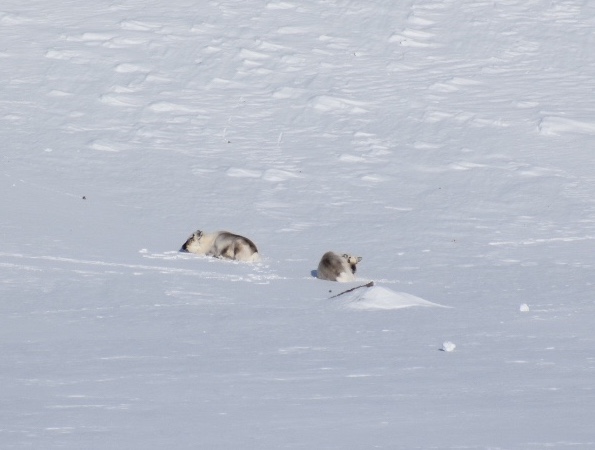
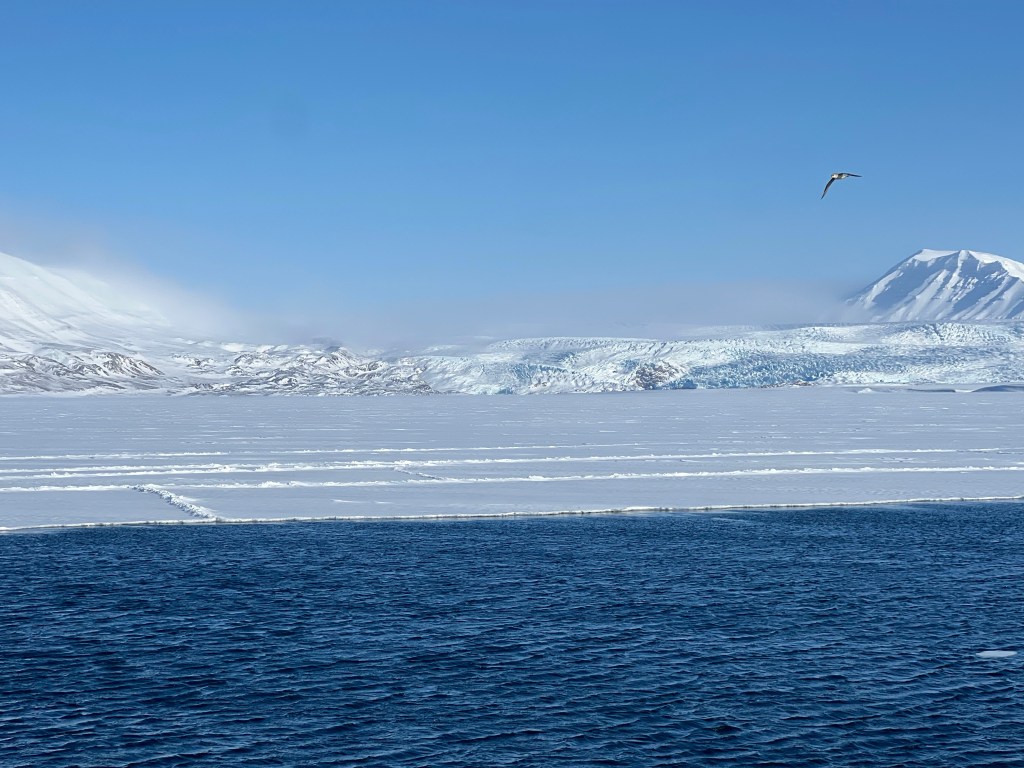
We had lunch (pretty good food!) and then headed in to Billefjorden. At the end of this fjord lies the tongue of the Nordenskiöld glacier. Over 60% of Svalbard’s land is covered in glaciers, but most are snow-covered and hard to see. Nordenskiöld has the classic blue color and the intricate folds that characterize glaciers in my mind. A walrus parked on some floating ice in the fjord and some reindeer on the snowy hill helped to round out the Arctic experience.

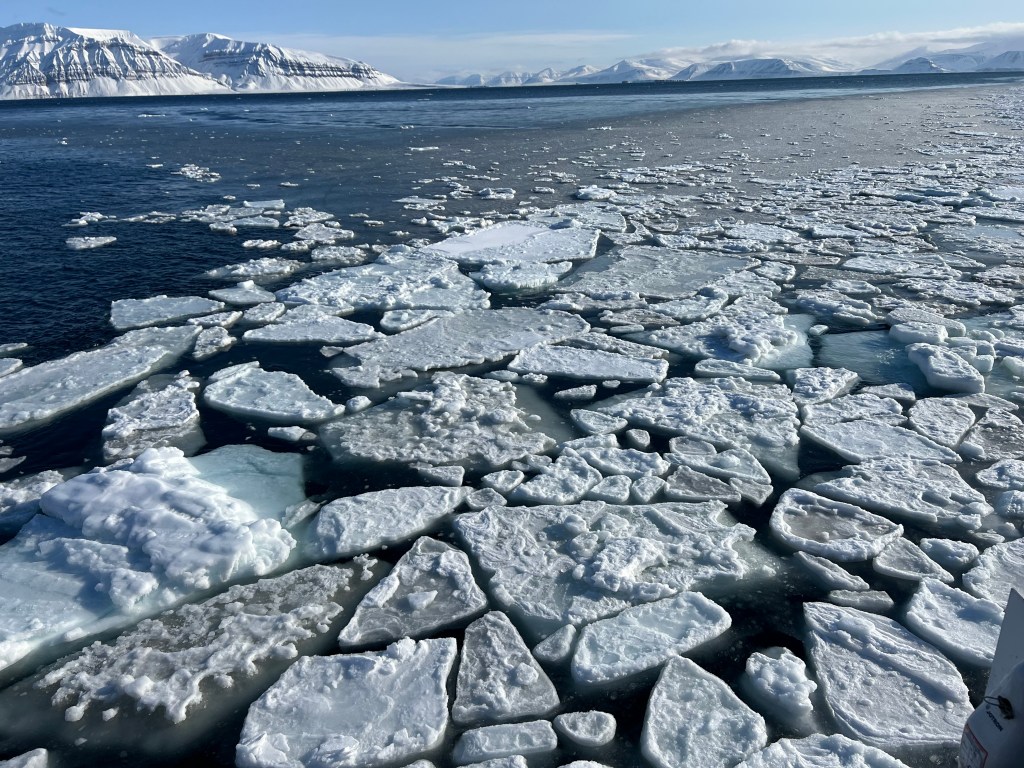
We maneuvered to the edge of the sea ice outside Pyramiden to wait for the Polish researchers we were picking up. Again, I’m confident I will never be a self-contained Arctic researcher who coordinates pick-ups by large tourist vessels…I don’t know how one ends up in that position. Our guides were going to take us out onto the ice so we could experience walking on Arctic ice, but then they noticed a fissure in the ice and they called an end to the excursion. If the ice broke off, we would spend all day rescuing passengers who were floating out to sea!

Ice, much more broken up than what we were thinking about walking on

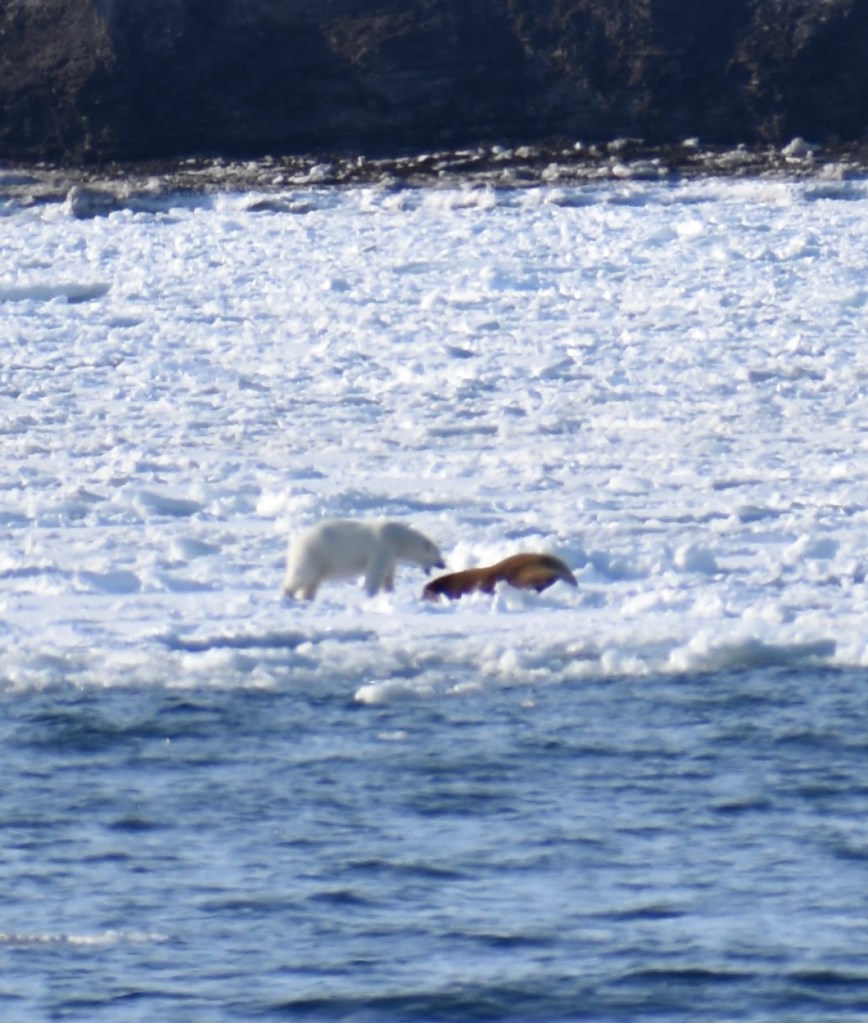
After collecting our new passengers, we headed out of the fjord to make our way home. Luke and I were outside (despite the frigid single-digit temperatures and wind chills much below that), so we noticed a buzz rising from the other passengers. As the boat stopped moving forward, we began to scan the horizon. That’s when we saw it…a polar bear!

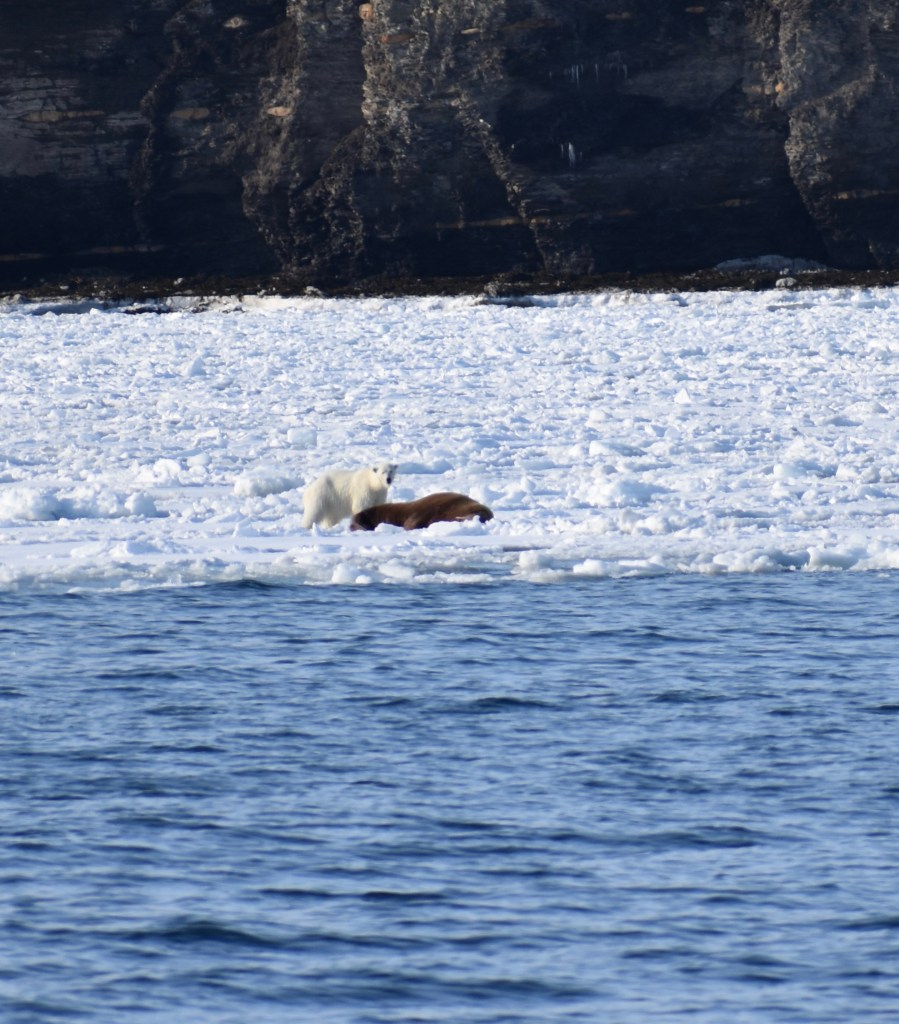
This bear was harassing a large walrus (is it necessary to qualify a walrus’ size with “large” – do they come in any other size?). At first we thought it was eating the walrus, but we later learned that polar bears won’t generally hunt walruses since they are so large and hard to kill. This bear was just harassing the walrus, and the walrus seemed entirely unfazed.

When the SECOND polar bear came by and harassed the walrus, the walrus made the (wise) decision that he should take his leave, so he stepped/rolled off the ice edge into the water.

We watched the bears for half an hour, watching them walk along the ice edge, roll in the snow, and sniff the ground. Since polar bears are completely solitary creatures, the guides were speculating that this was a mother and either a very large yearling or a 2-yearling who hadn’t gotten the message that it’s time to leave mom.

Of course, I had a wish that we would see a polar bear, but I knew deep down the chances were small. The see TWO, even from far away, was truly amazing. And to see them in their natural Arctic environment may be something future generations won’t have the opportunity to see. Everybody in Svalbard talks about the profound environmental changes they are seeing, and research clearly shows that Arctic ice will be one of the first things to go. No ice, no polar bear habitat. It breaks my heart, and makes me pretty mad. Humans have the power to fix things – just not the will.

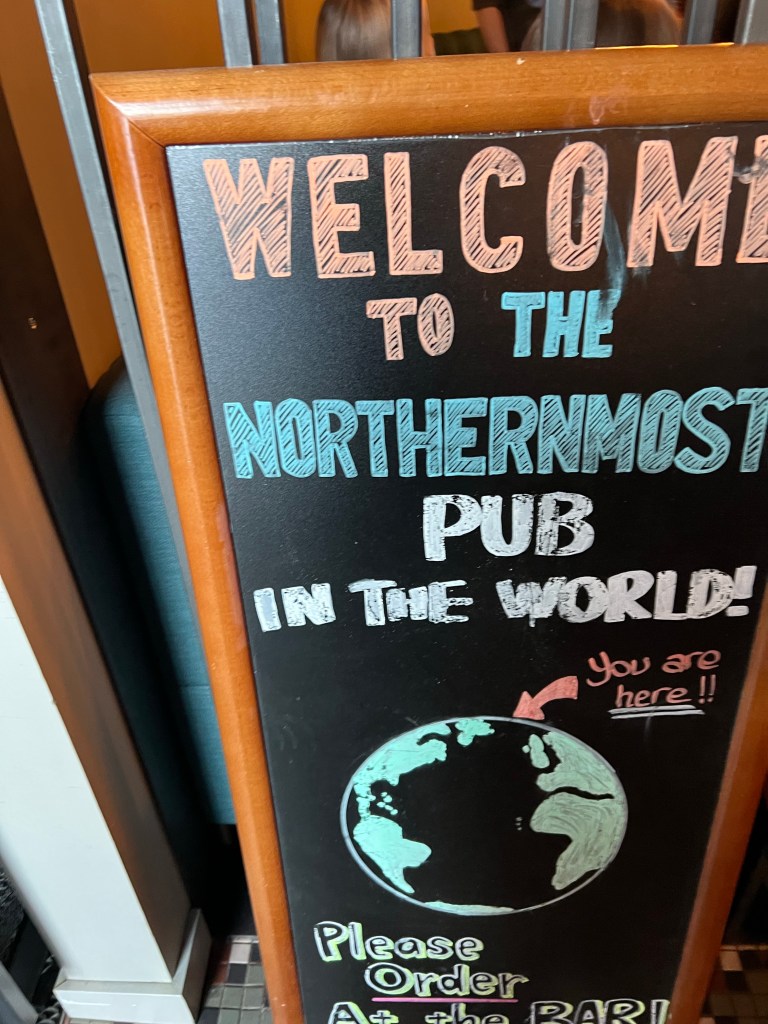
After disembarking from the boat, we walked to town to have dinner at the northernmost pub in the world. Pretty good pizza!

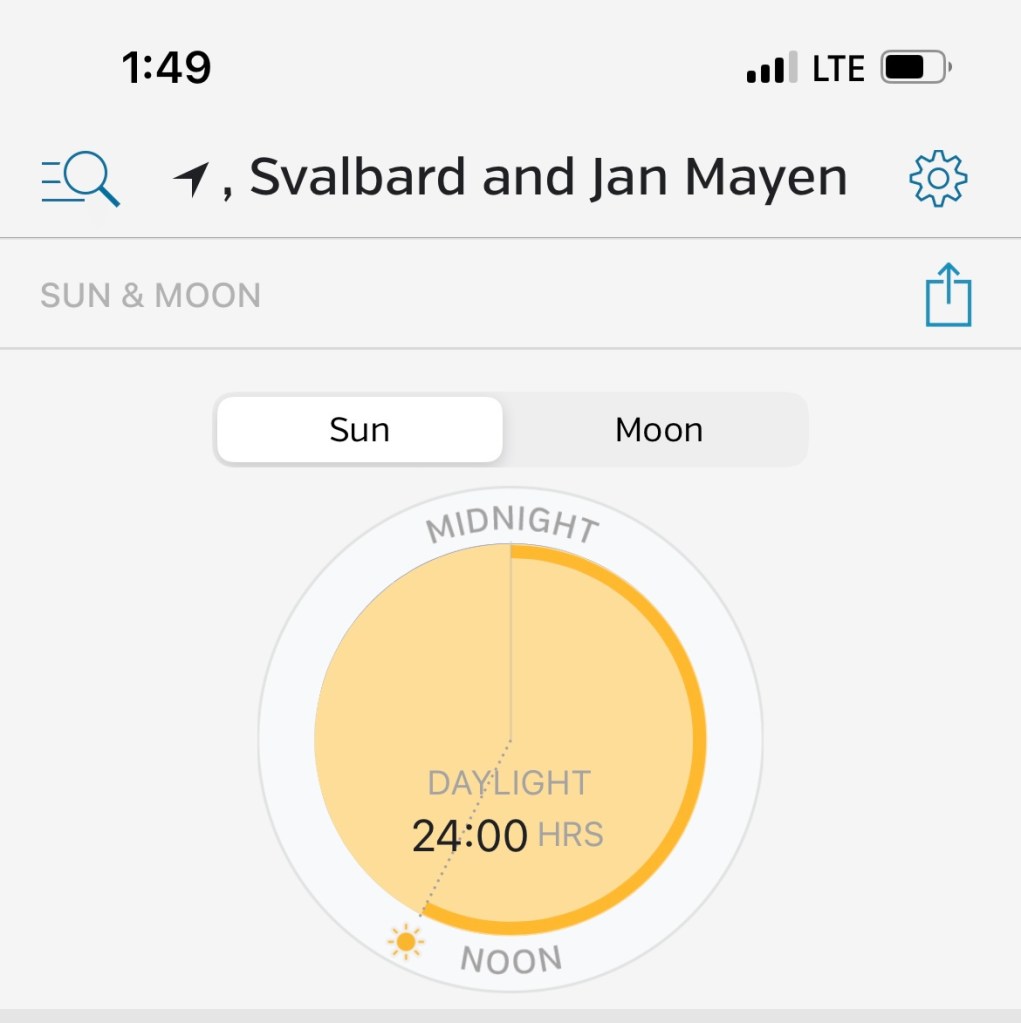
Falling asleep during midnight sun takes discipline. When the sky looks the same from 8pm to 8am, it’s hard to recognize bedtime. but to bed we must, because we have more activities planned and we need to be rested!

View outside our hotel room at 11:32pm

Derailment

We boarded our train and nestled in for the night around 11:30 last night. It took some time to get used to the train, but we did all manage to fall asleep.

Imagine, then, the disorientation when we woke up to the announcer telling us the train was being cancelled and that we would be put on a shuttle bus to another train station. This was at 4:00 in the morning – not my best hour!

Bleary-eyed and very confused, we boarded the shuttle shortly before 5:00am and then the next train at 5:40am. Suddenly, that 8:20 flight went from comfortable to impossible, but there was nothing to be done at that hour so we just got on board and kept heading toward Oslo.

The train we boarded had clearly already been used – the bedding was disheveled (and one pillow had a mysterious blood stain on it). Amazing how when you’re tired enough, you’ll sleep anywhere. We woke up to the announcer informing us that we were in Oslo (advance warning would’ve been nice). After a hearty hustle, we got to the airport train. I called the airline to see if we could change to the 9:20 flight since it was 8:20 and we clearly were missing our original flight. They gave me the song and dance about changing flights at least 30 minutes in advance, and the agent said we wouldn’t make the 9:20 anyway. We decided to try.

At the airport, the very sympathetic agent managed to book us on the 9:20 flight in the 4 minutes before the check-in window closed. We ran to check-in, tried to run through security (every one of our bags had to go through twice), and then Anna-Sophia went ahead to let the gate agents know that we were coming. I stayed back with the most stubborn of the bags and ended up running through the Oslo airport with 50 pounds of luggage and 2 giant winter coats. Of course, we were in the very furthest gate – I am pretty sure I walked 2/3 of the way here! Airport personnel were nice – they checked me in based on Luke’s word and held the plane door for an extra minute when they could see me coming. In the end, I’m really glad we made it – this was the part of the trip I was most excited about, and trying to come another day wasn’t going to work given limited flight schedules and booked activities.

After the first flight to Tromsø, we had to go through passport control to get to our gate. I now have a departure stamp from Tromsø, but I have no entry stamp. We are internationally nowhere – not in Europe, not technically in Norway, not in Russia. It’s like being in international waters, but on land.

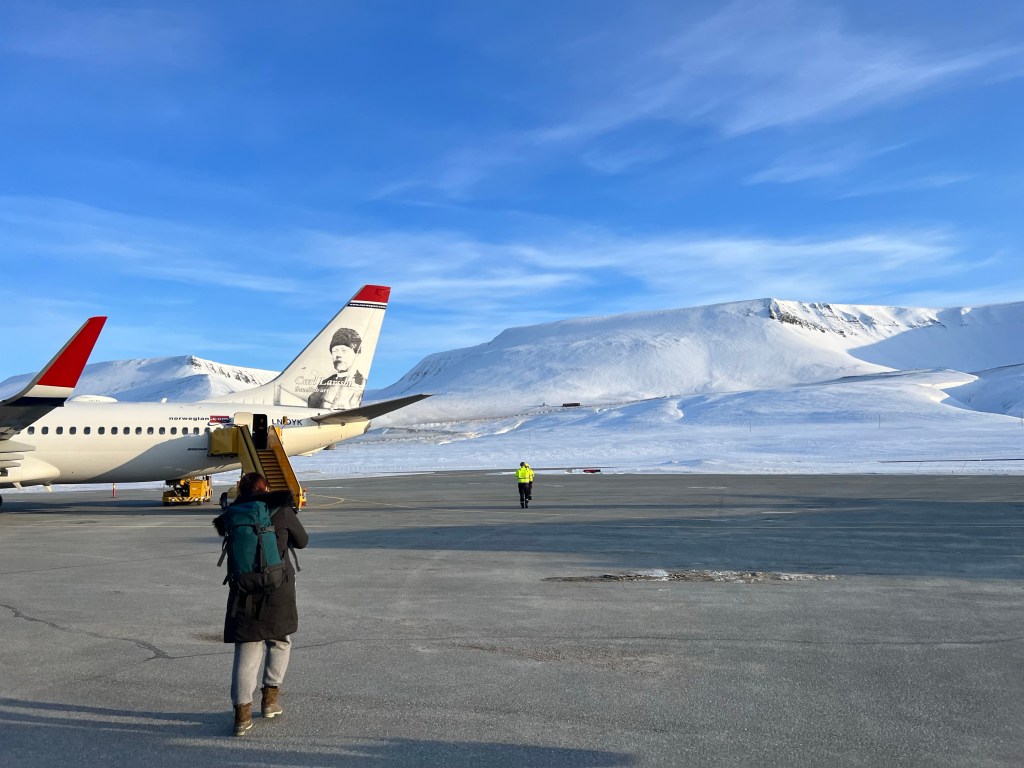
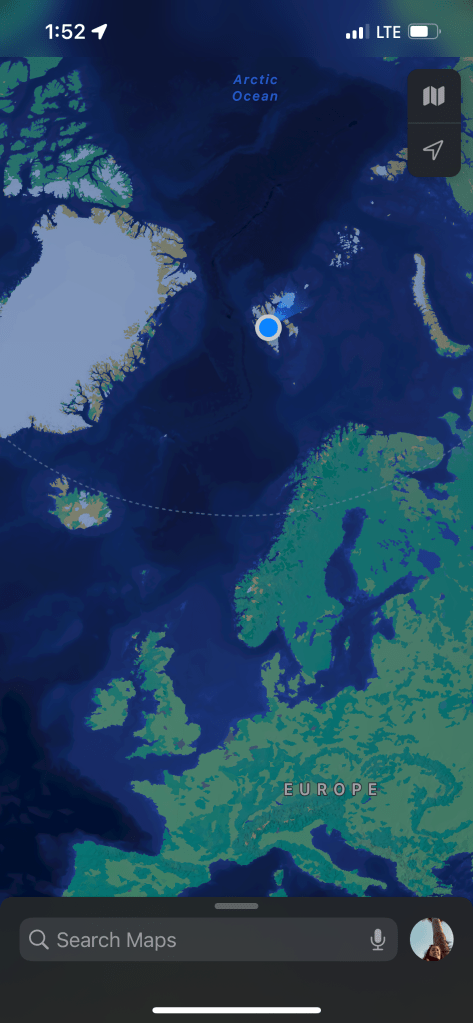
There’s no land further north than where we are right now

Now that we are finally here, we are taking the shuttle bus to our hotel (single bus runs to all 6 hotels in town after each scheduled flight arrival). We all need some rest and showers, and then we will walk around town. I figure, since the sun doesn’t set, we don’t need to worry too much about bedtimes.

Today is the first full day of midnight sun
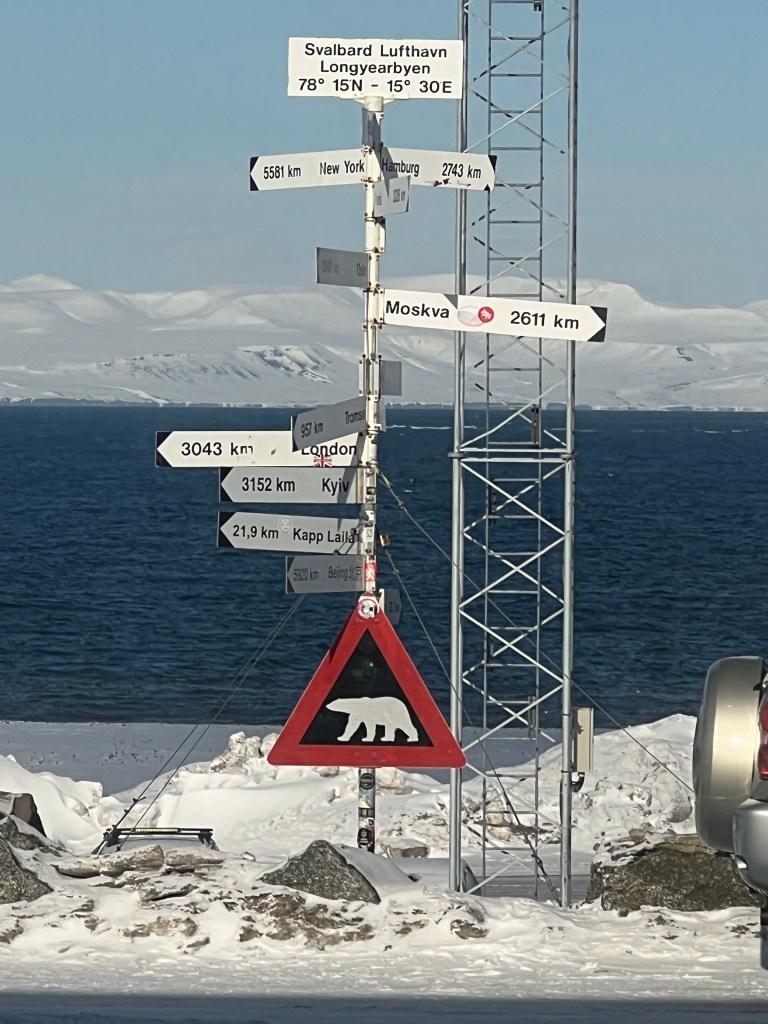
Sign greeting visitors, reminding them of the danger of polar bears

Sailing the fjords

I debated booking the popular Norway in a Nutshell tour because the idea of spending hundreds of dollars to take 5-8 modes of transportation in one day seemed absurd. My persistence paid off, because for the same absurd sum of money I managed to find us a tour that had only 3 transportation modes – the Sognefjord in a nutshell tour.

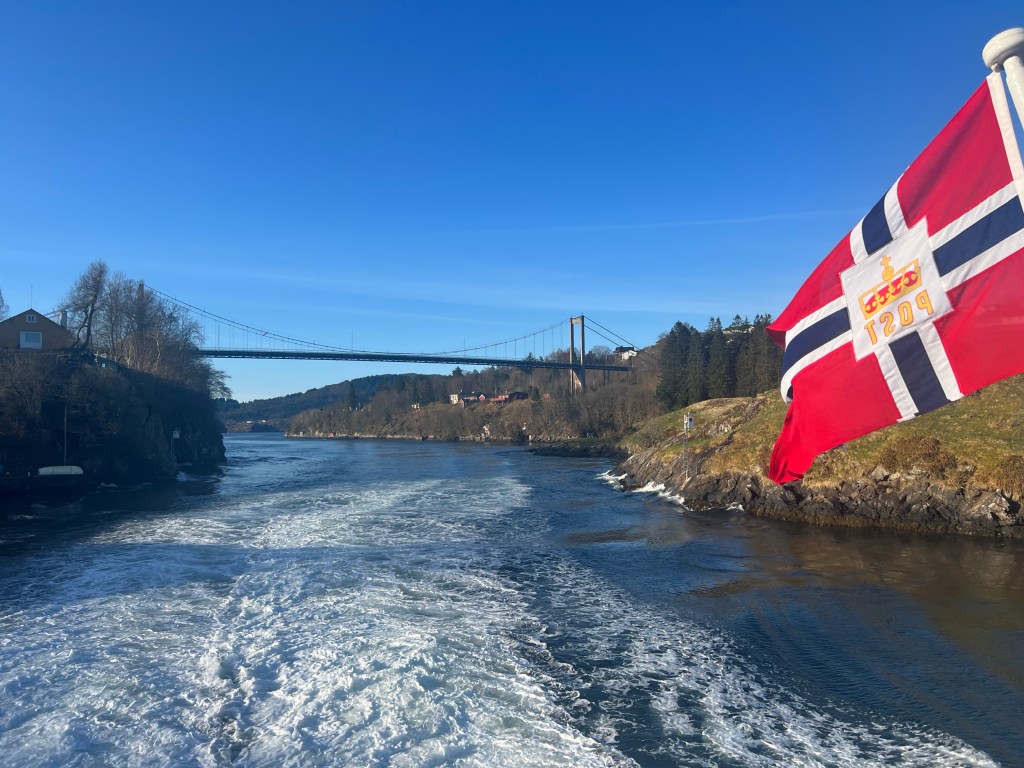
After a 6:30 breakfast, we packed up our bags and checked out of our hotel to head to the boat dock where we boarded our boat to navigate down the Sognefjord.

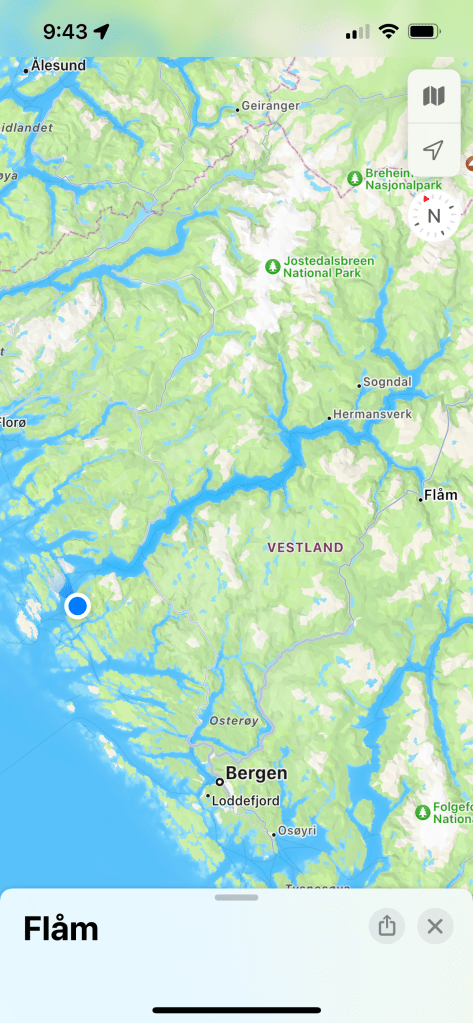
This fjord is among the longest (traversing 50% of Norway’s width from the Atlantic to the Swedish border) and deepest fjord in the world. We were going to travel much of it, from Bergen to the tiny village of Flåm.

Entering the Sognefjord

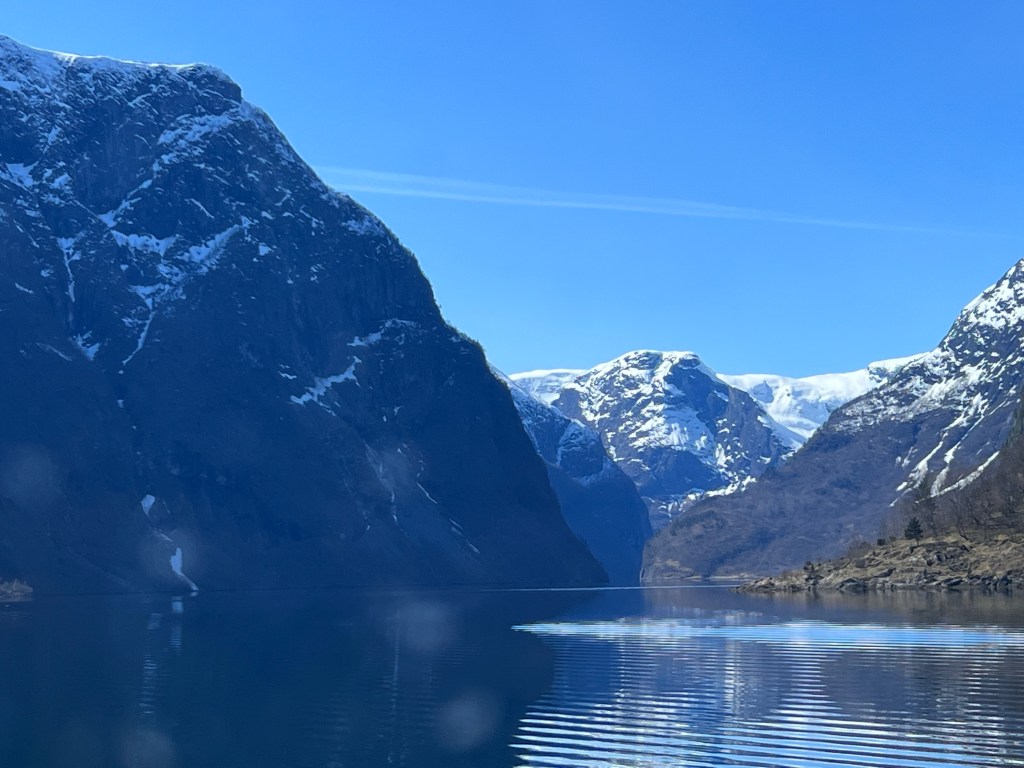
As we traveled, we noted that winter has certainly not released its hold on most of the area given the snow-peaked mountains lining the fjord.

Along the way, we passed impossibly picturesque villages, apparently comprised of a dozen buildings clinging to the side of the mountain just above the water line. I can’t imagine what people do for a living in these areas (other than apparently make brown cheese which, as far as I can tell, isn’t food…it’s like the texture of velveeta and goat cheese mixed together, and it tastes like burnt sugar, a hint of dairy, and maybe something else that I can’t quite place, but not good).

We disembarked in Flåm at 1:30 and had until 4:00 when the train would depart. We thought we’d walk around the 350-resident village for a bit, and then realized at 1:50 when we finished walking the whole village that we needed a more ambitious plan to kill time, so we headed out for the Flåm church, 1.9 miles away.

The walk was peaceful, albeit eerily devoid of people. Such tiny villages are a foreign concept to me, and I can’t say I understand rural life any more now than I did before.

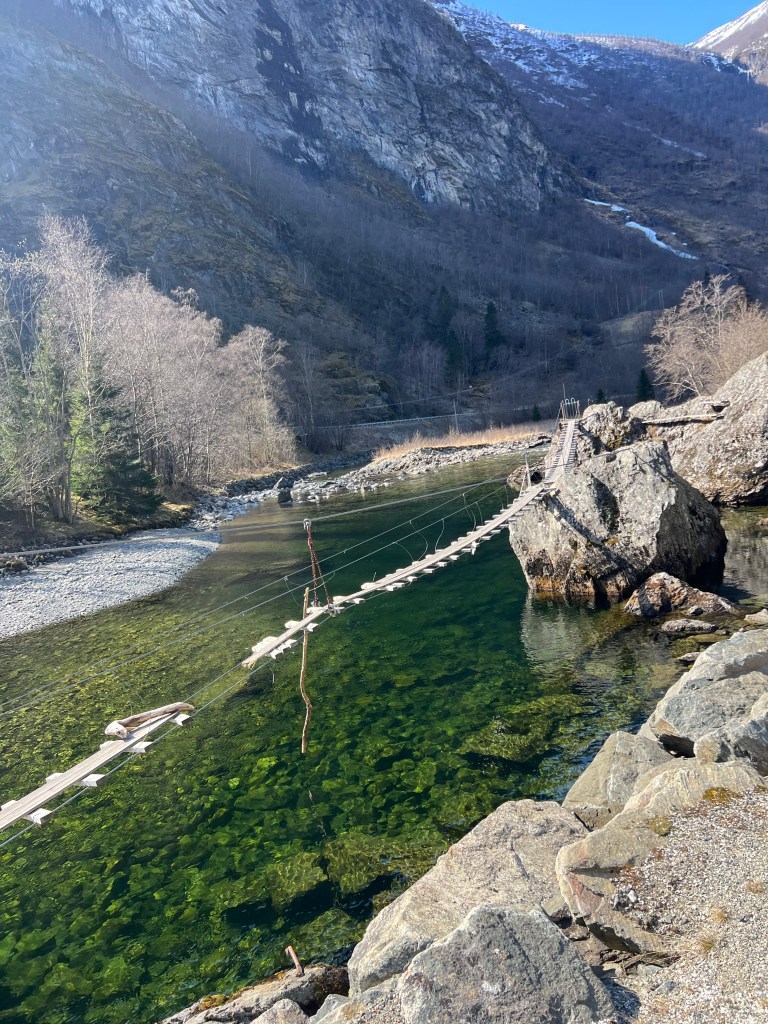
Fishing bridges along the route
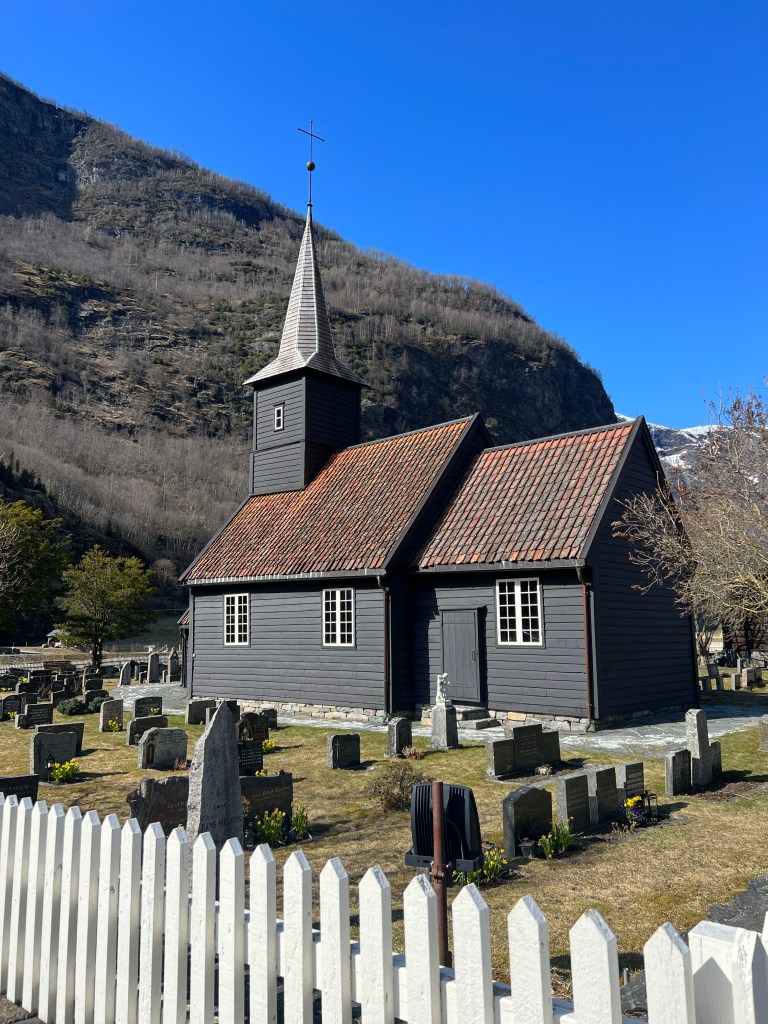
46-seat Flåm Church
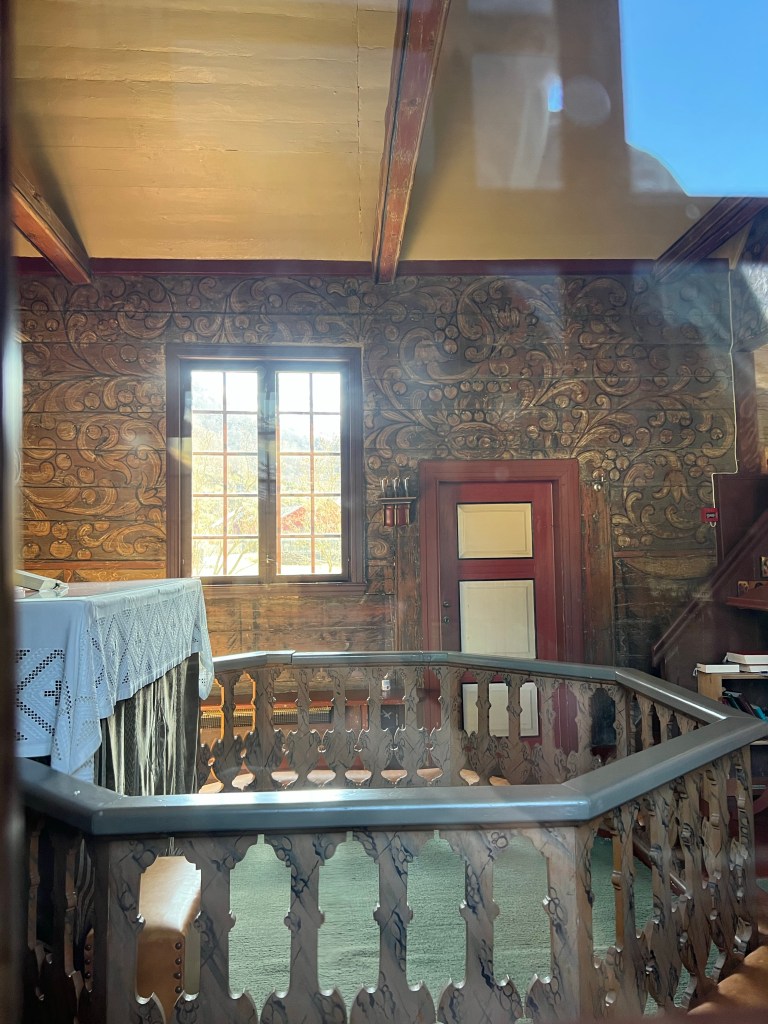
Ornately decorated walls of the church
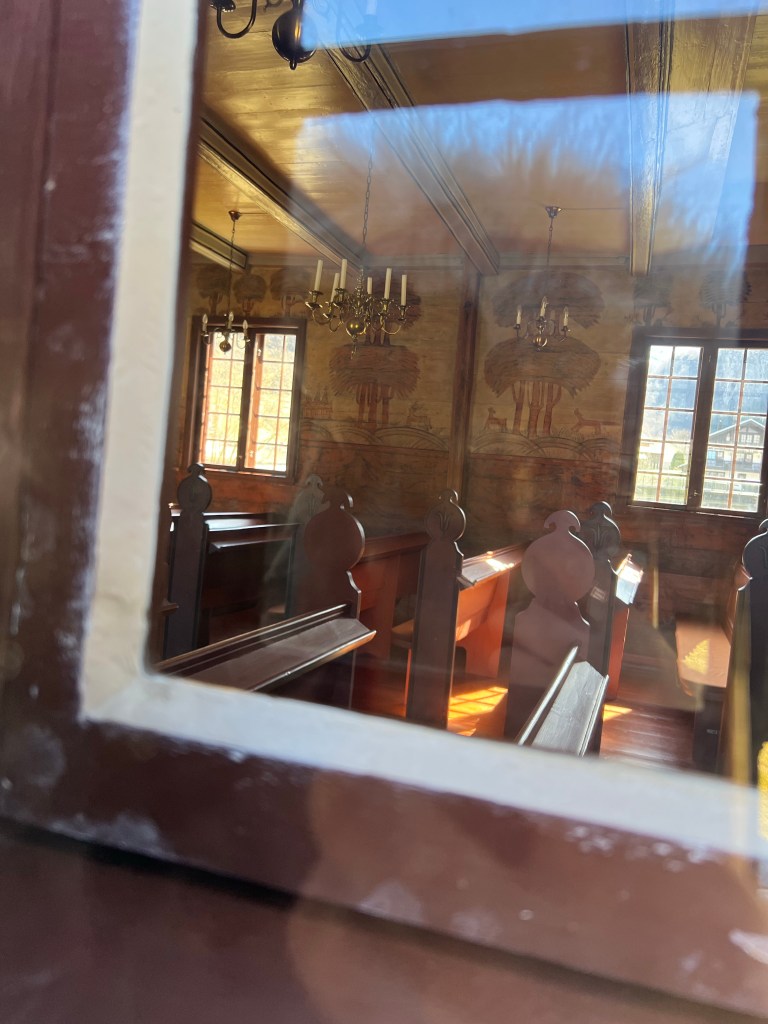
Trying to capture photos through double-windows and sun glare wasn’t easy!

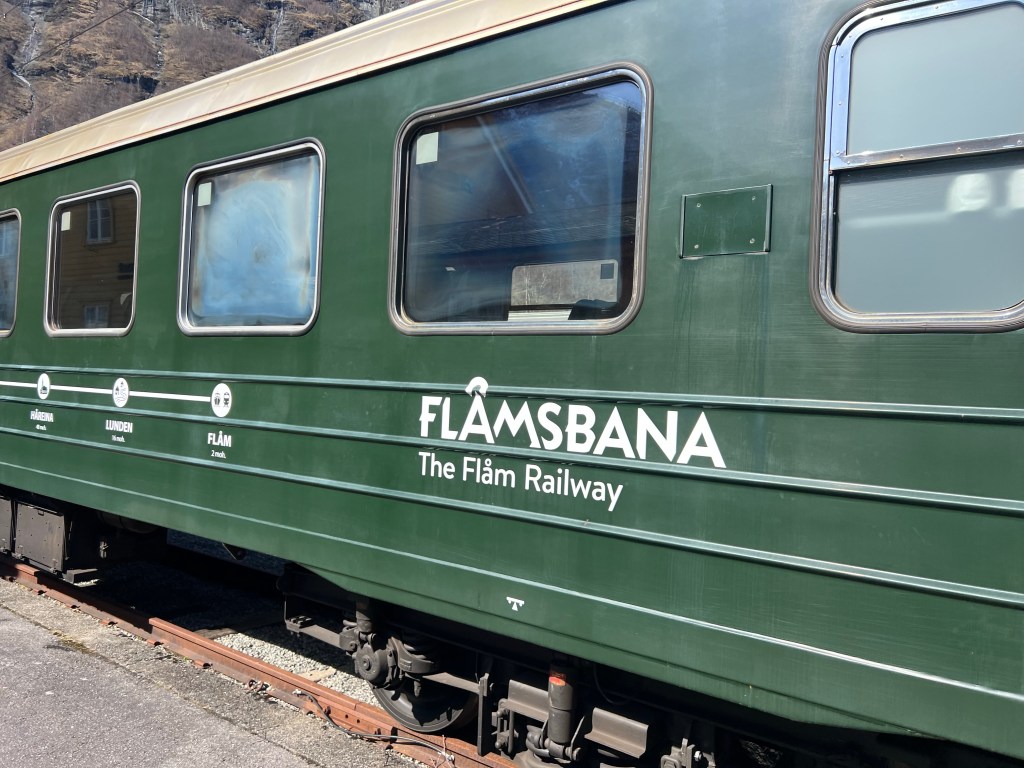
After walking back, we boarded the Flåmsbana train. This train traverses incredibly steep terrain, and the track includes a spiral through a mountain to get from the valley to the top. It’s really insane to see the mountainside fall away behind the train and to watch the snow get deeper and deeper with elevation gains.

After an hour of this unique (and so screechy) train, we disembarked at Myrdsal, a town that used to have a population of 100 but after the railroad come, lost all 100 of those residents. The town also has no roads – it is only accessible by train or, in the winter, by snowmobile. Sounds thrilling!

We boarded the Bergen line train back to town, then went for a nice dinner. I have come to learn that I really like fish stew (when it doesn’t have shellfish, of course). This wasn’t as good as the curried fish stew we had in Iceland, but it was awfully tasty.

We are back at the hotel, getting ready to board the overnight train to Oslo. While I’ll never understand why, traveling is exhausting, so despite sitting for most of the day, I’m really ready to get some sleep. Not so sure that sleep on a train will be the most restful, but it’s the only option we have so we will make the most of it. Tomorrow we have an 8:00am flight to Trømso and then a connection onward to Svalbard, where todays snow will let up and a cold front will move in. 🥶

Bergen

Our hotel is across the street from the train station. I intentionally selected the location to minimize the amount of time we would need to be walking around with our bags, apparently presuming that Bergen was a big city, given that it is the 2nd largest city in Norway. I didn’t need to worry – this city is postage-stamp tiny.

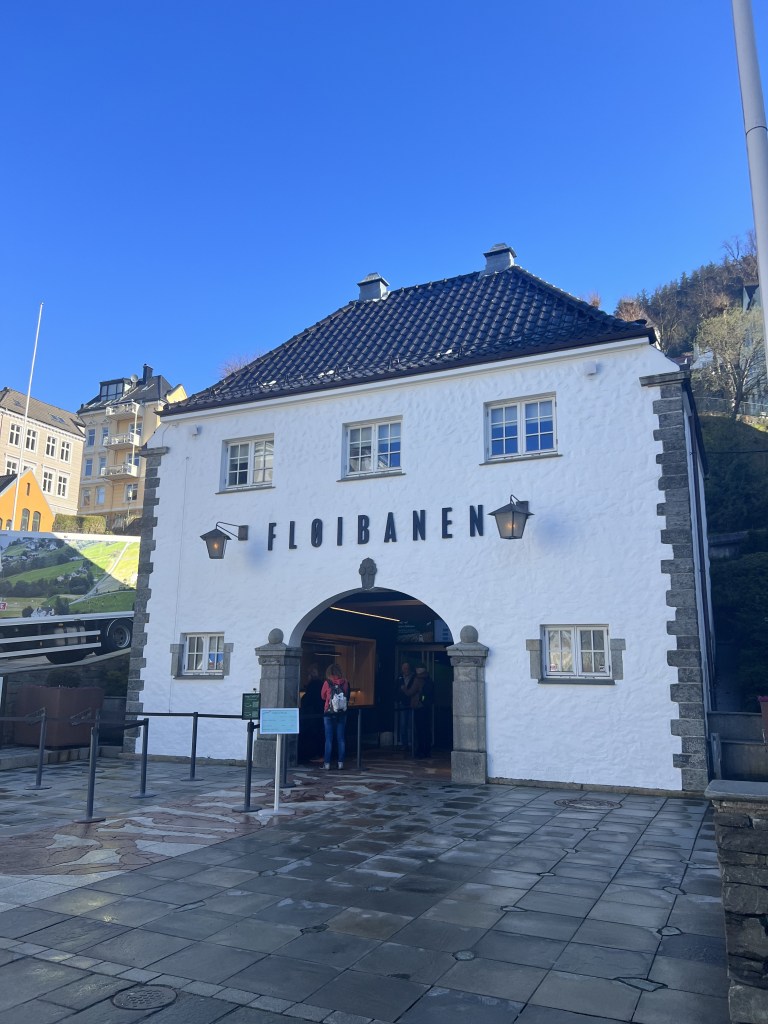
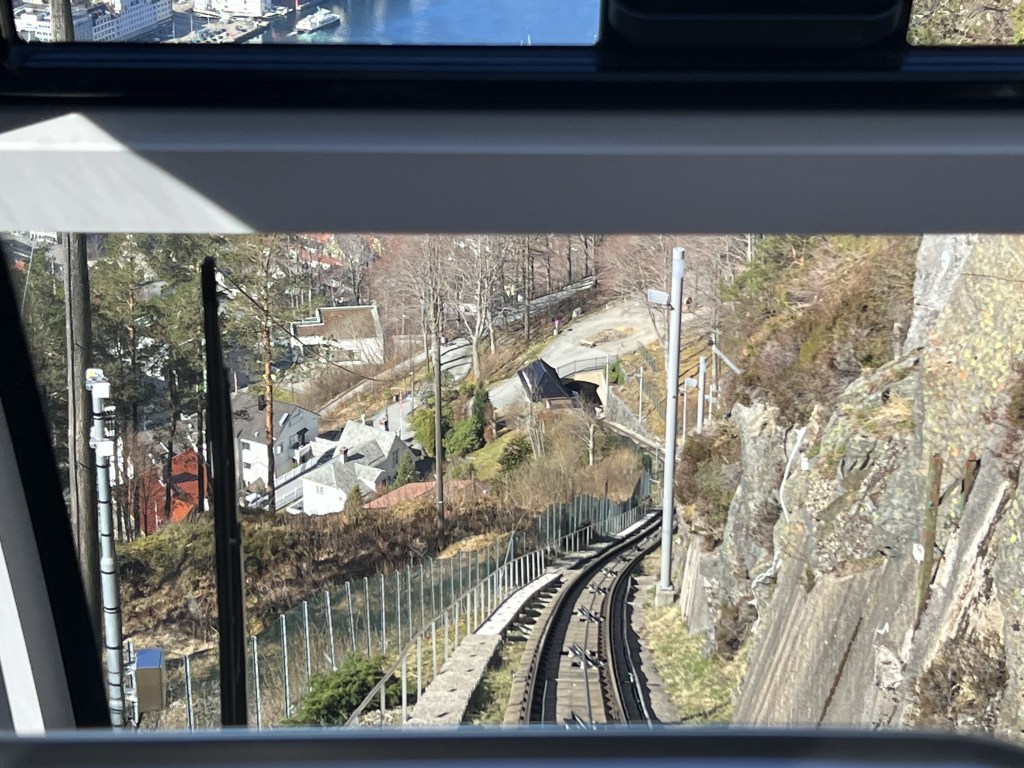
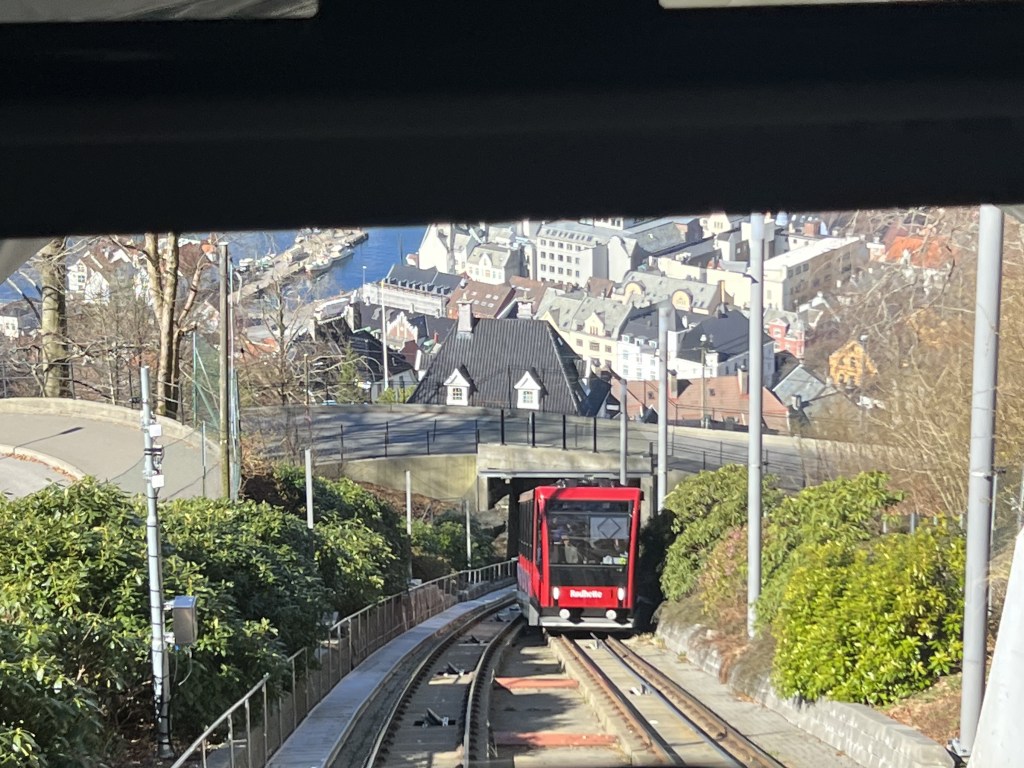
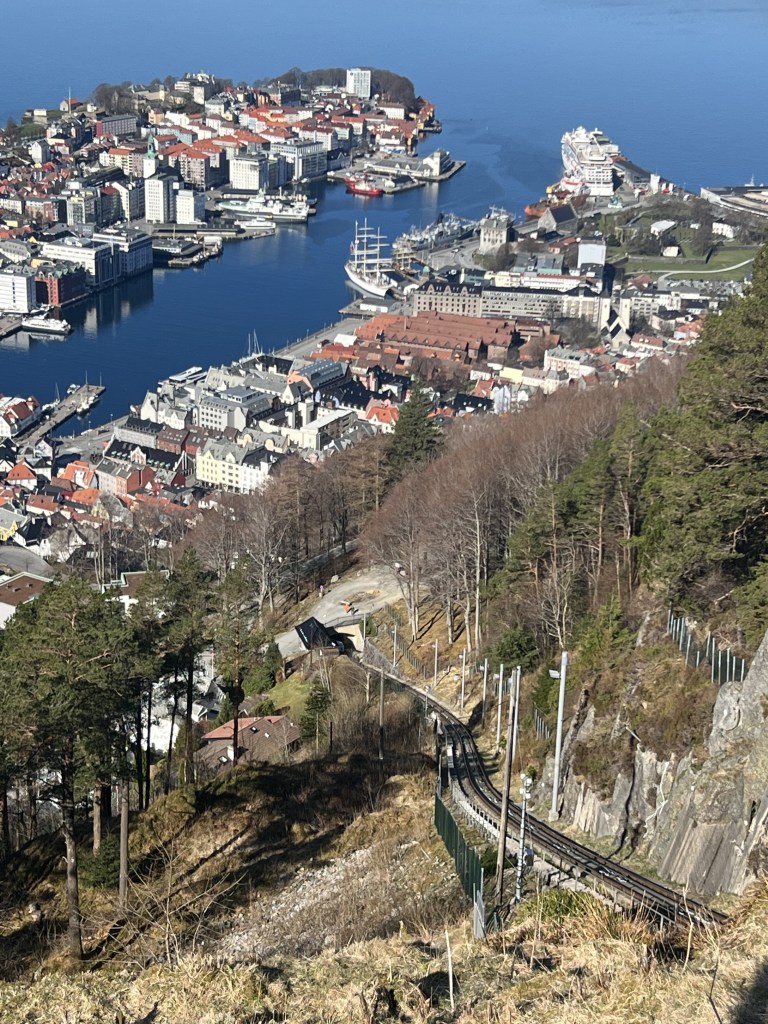
After a very hearty breakfast in the hotel (with some of the best grapefruit I’ve had in a long time!), we headed out toward the Fløibanen Funicular. I have a truly unexplainable love for funiculars, and I drag people on them whenever there is one around. I have no idea why, but they just make me happy. Anyway, this funicular is probably the newest one I’ve ever been on (2022), and that was reassuring because it is also one of the steepest. Fløibanen Funicular traverses 299m of vertical gain to take riders to the top of Fløyen (320 m above sea level).

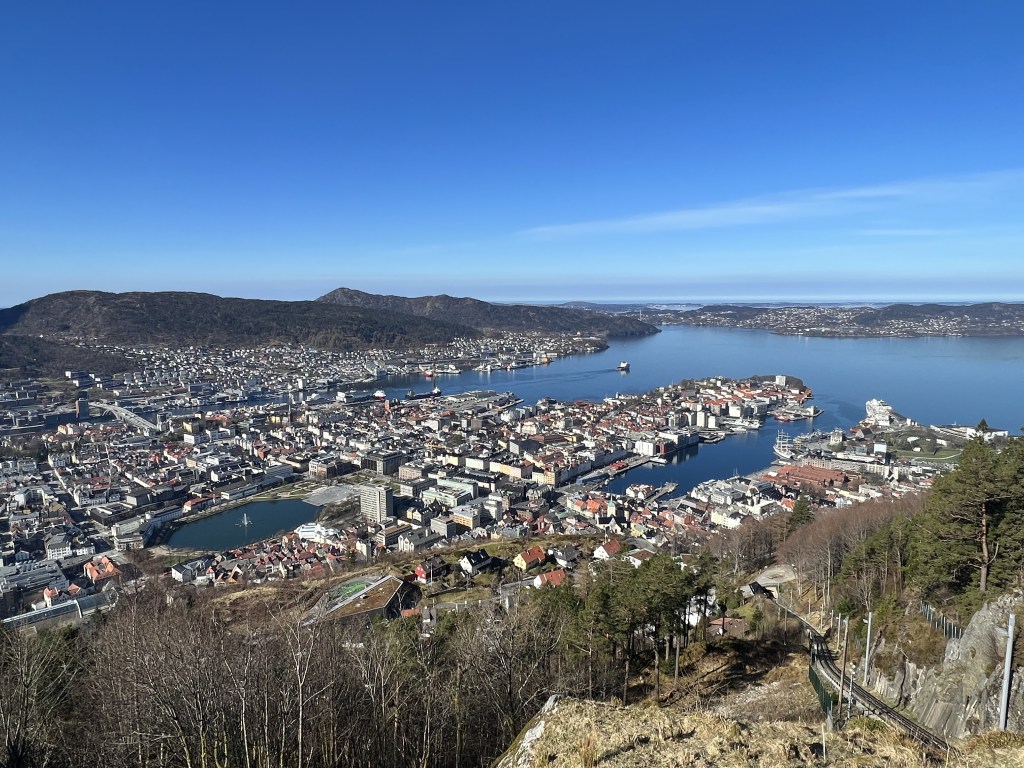
As if the funicular ride alone wasn’t worth the price of admission, the views from the top are also spectacular. What Bergen lacks in size it makes up for in attractiveness.

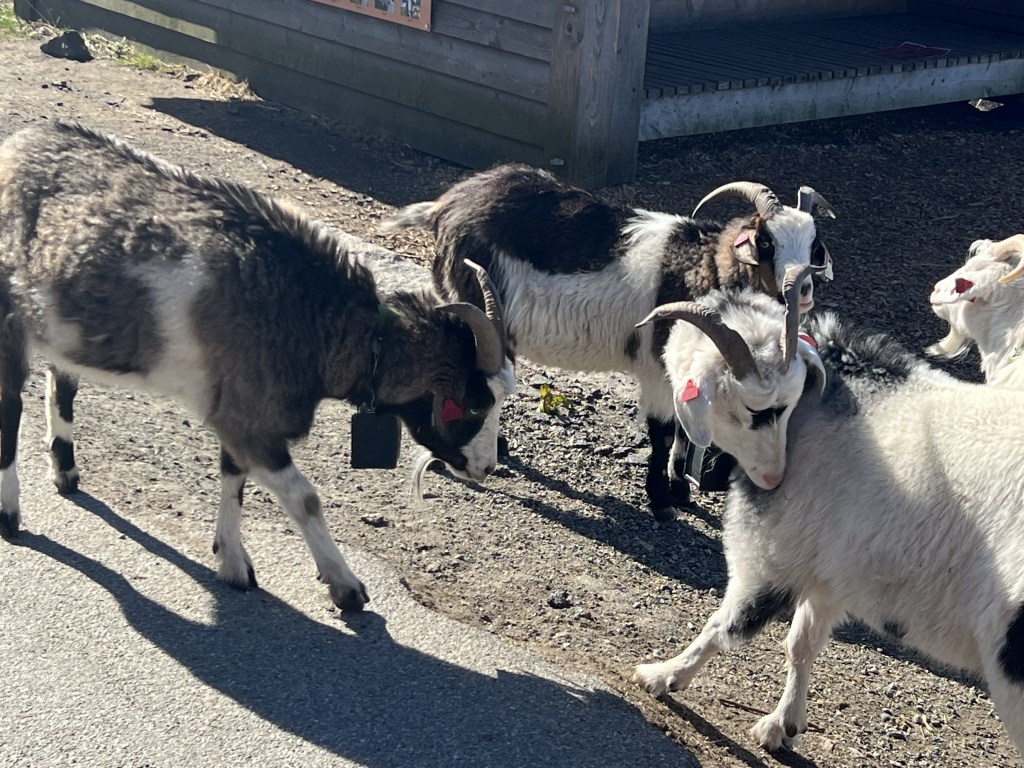
There were also goats at the top. Why…nobody knows, but they were cute so we stopped to see them anyway. Then back down to town to see more sights.

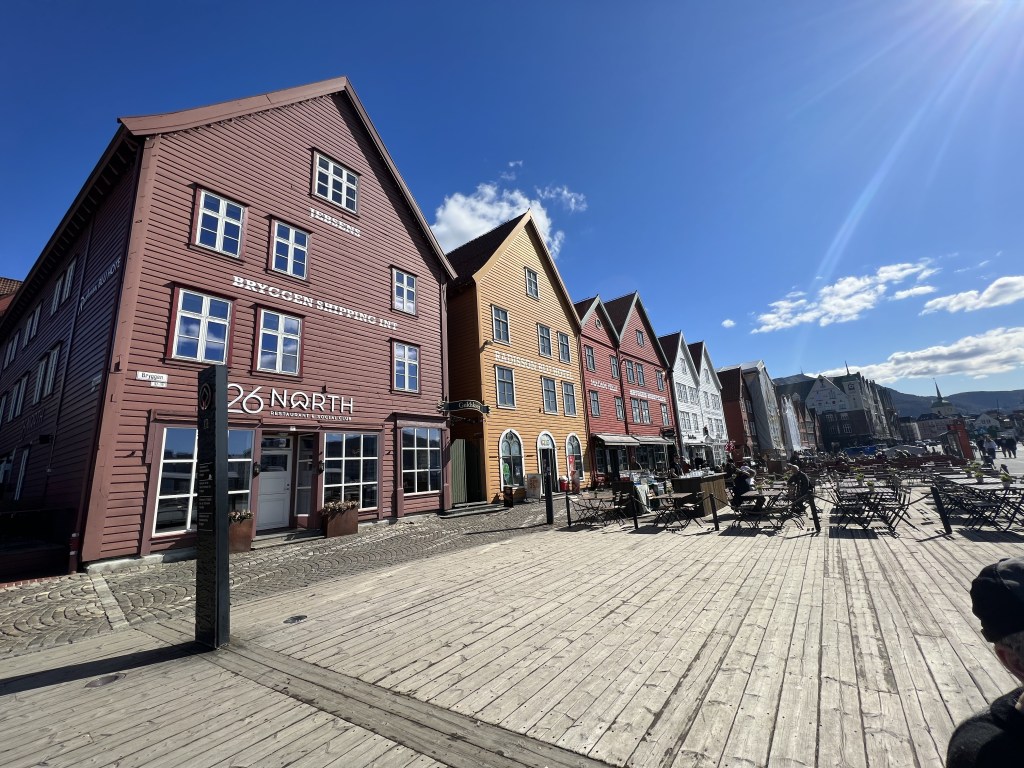
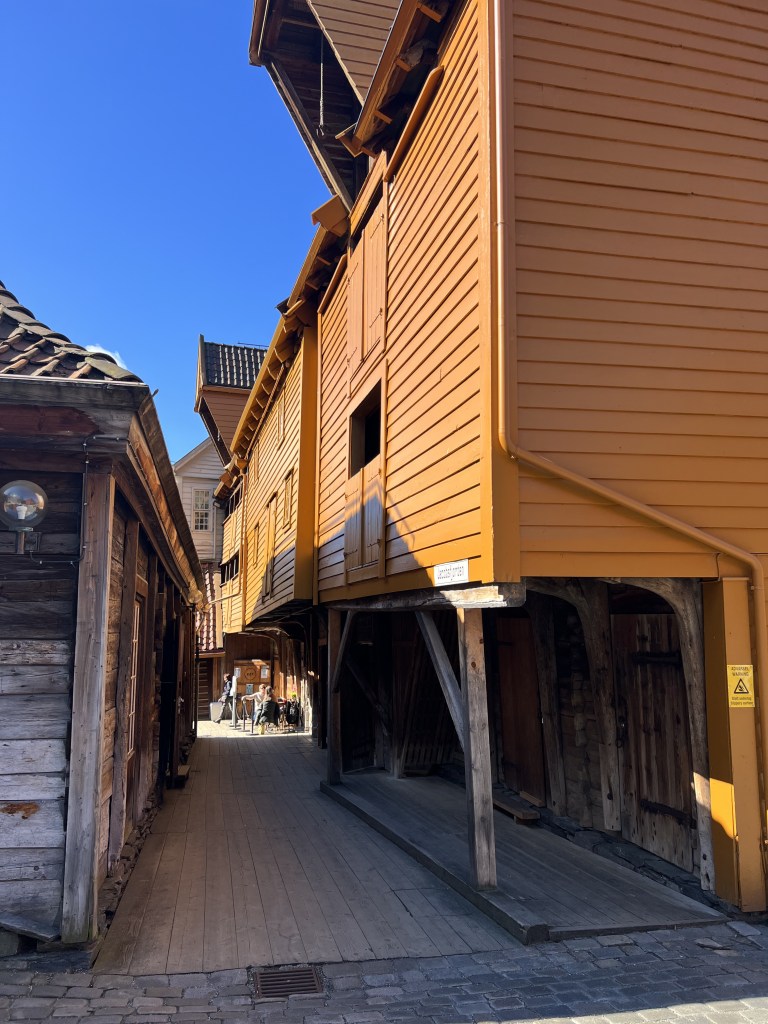
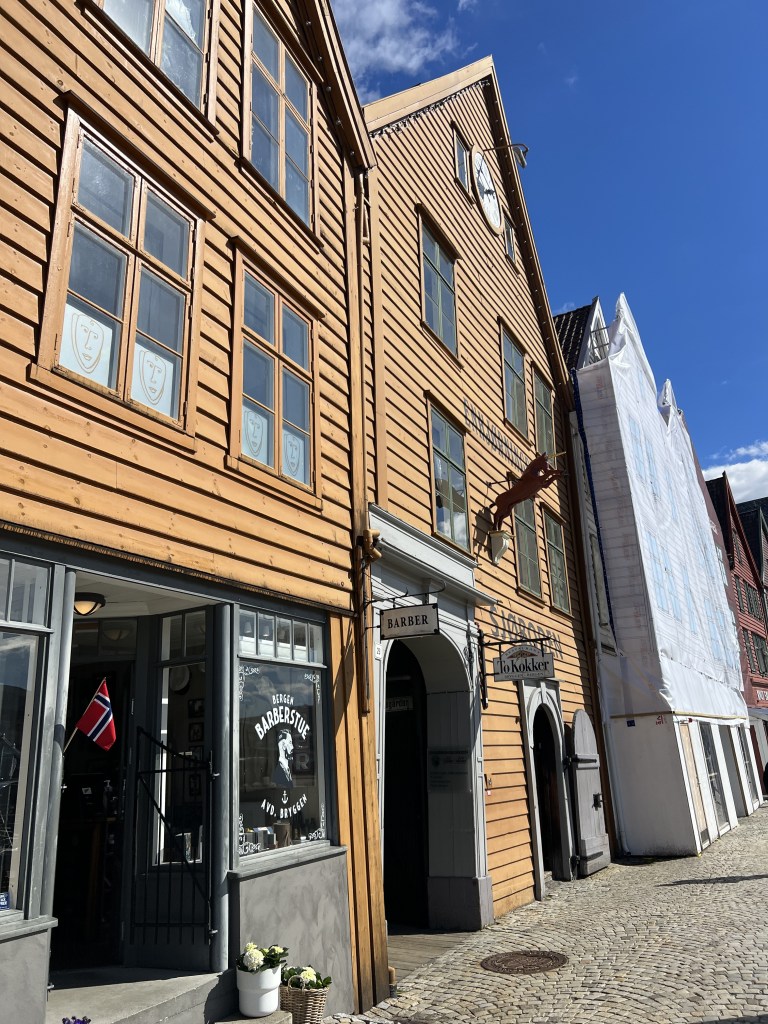
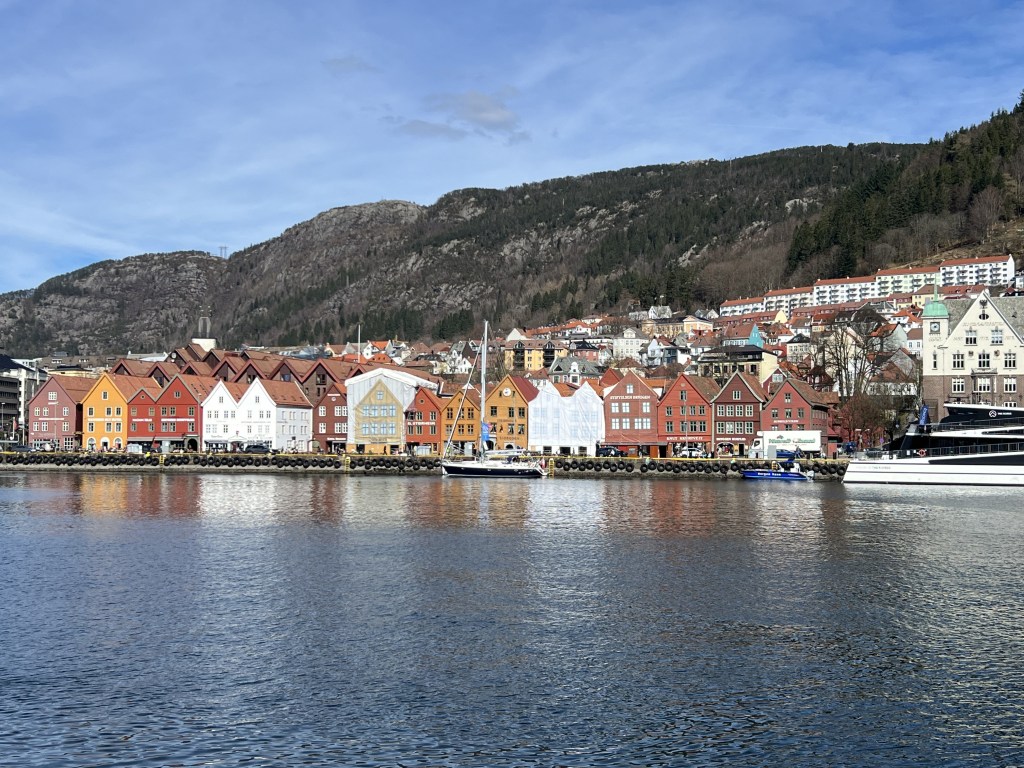
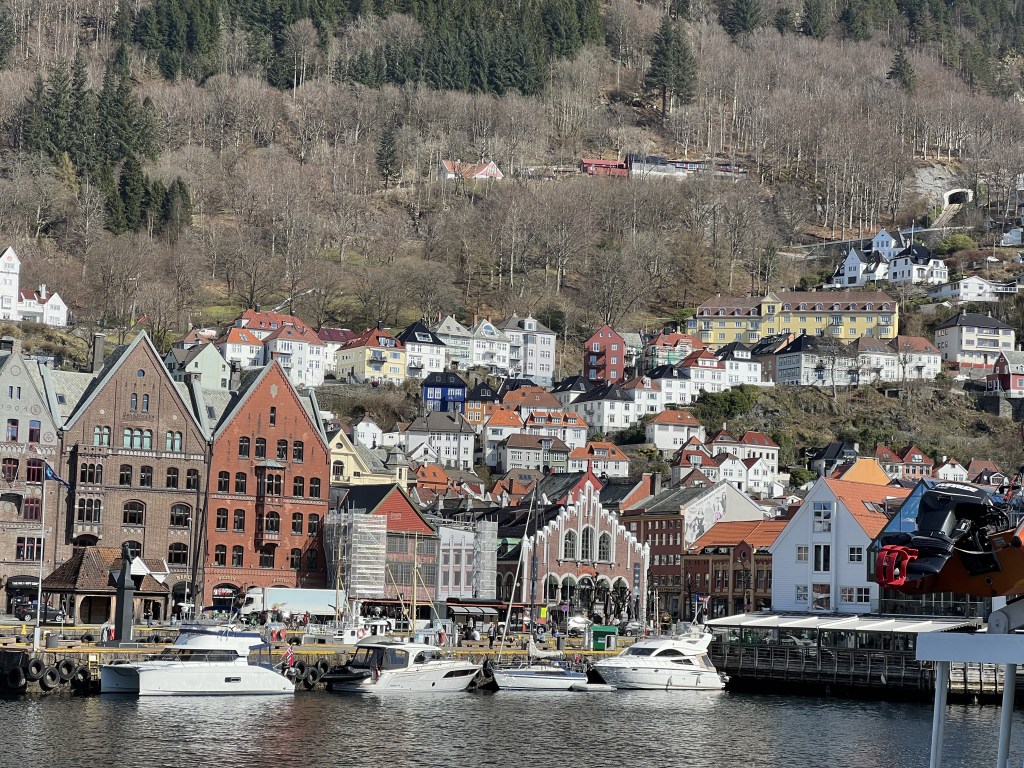
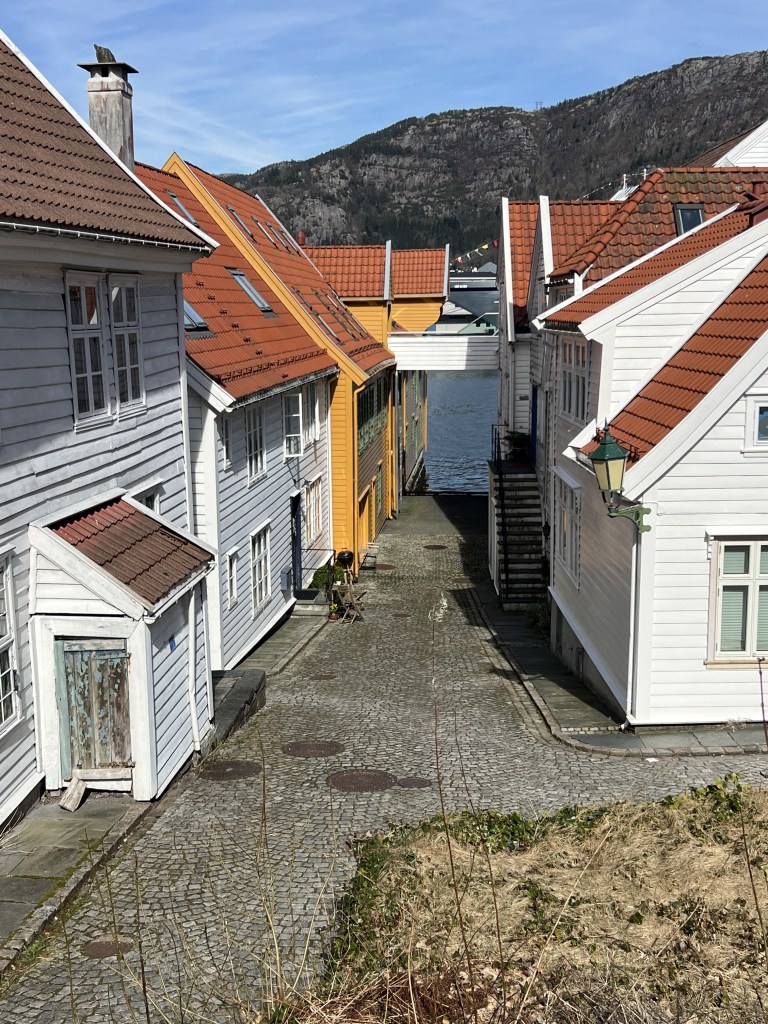
Bryggens is probably the most picturesque part of Bergen. Much like in Copenhagen, this area is filled with adorable old wooden structures that were historically merchant buildings. In Bergen, they are now mostly converted to little boutique shops and restaurants, although what mostly caught my eye was the notable lack of proper right angles in the buildings.

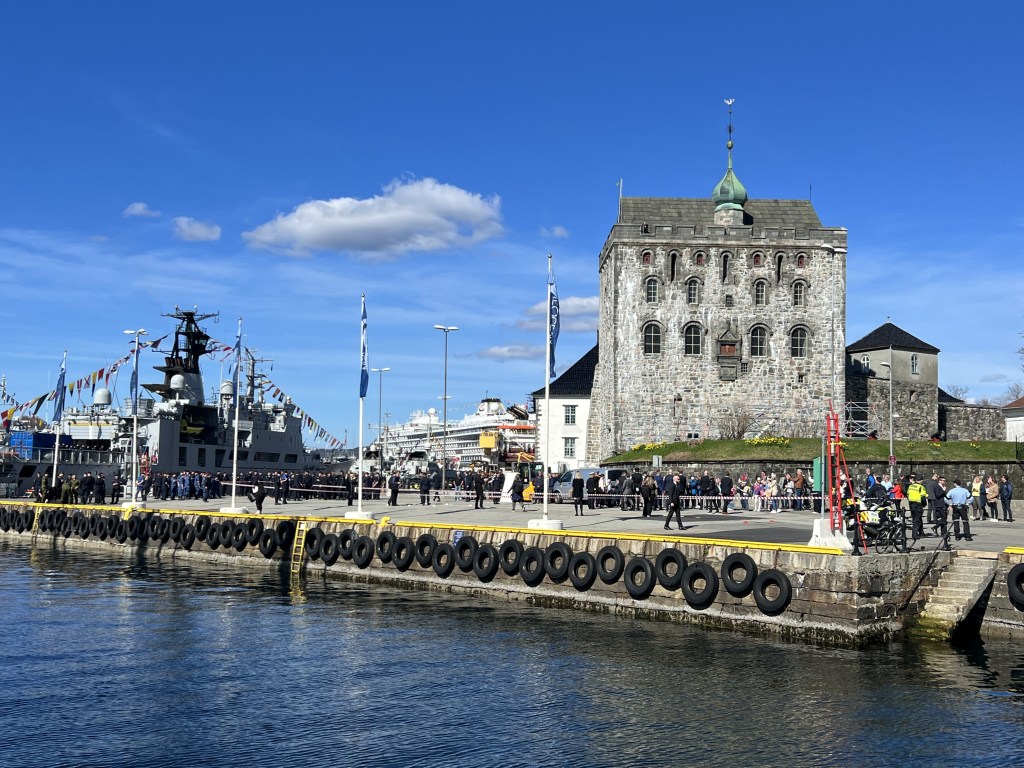
After strolling past Bryggen, we headed long the waterfront toward Bergenhus Fortress. Along the way, we passed some event where various military members were playing tug-of-war. It sounds like the NATO head is in town, although I can’t say I would know who that was if I stumbled into them, so along we ambled up to the fortress. It”s a cute fortress, but this is not at all like what the Spanish or Portuguese built to protect their shores. And it was mostly closed (see NATO head comment).

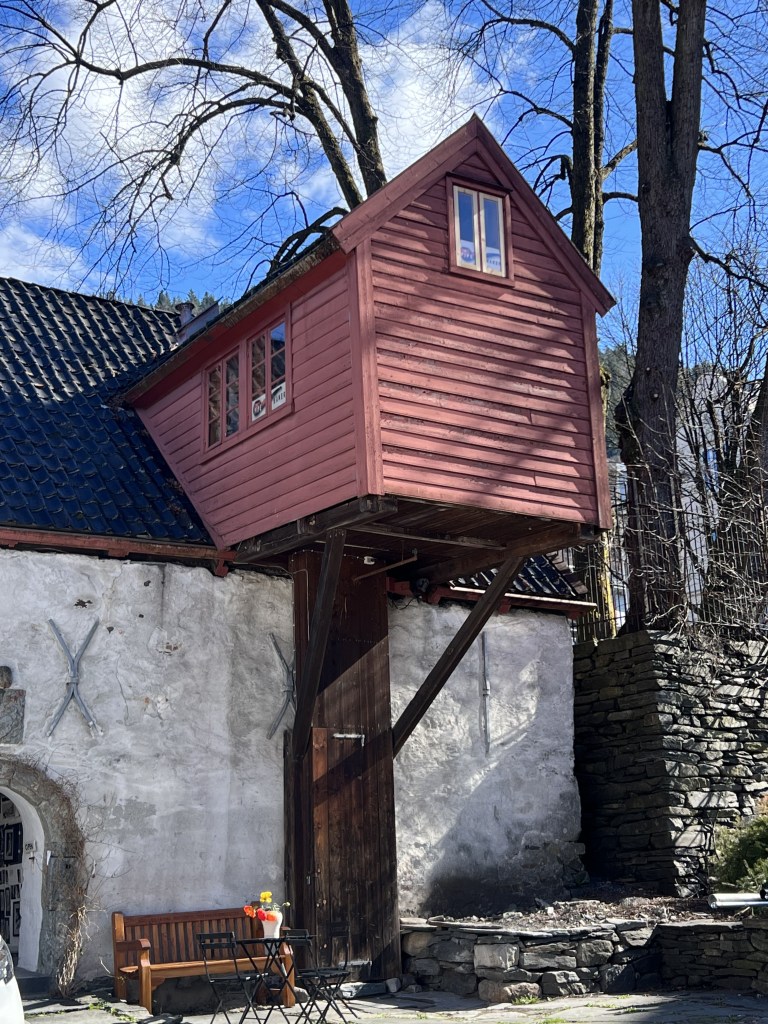
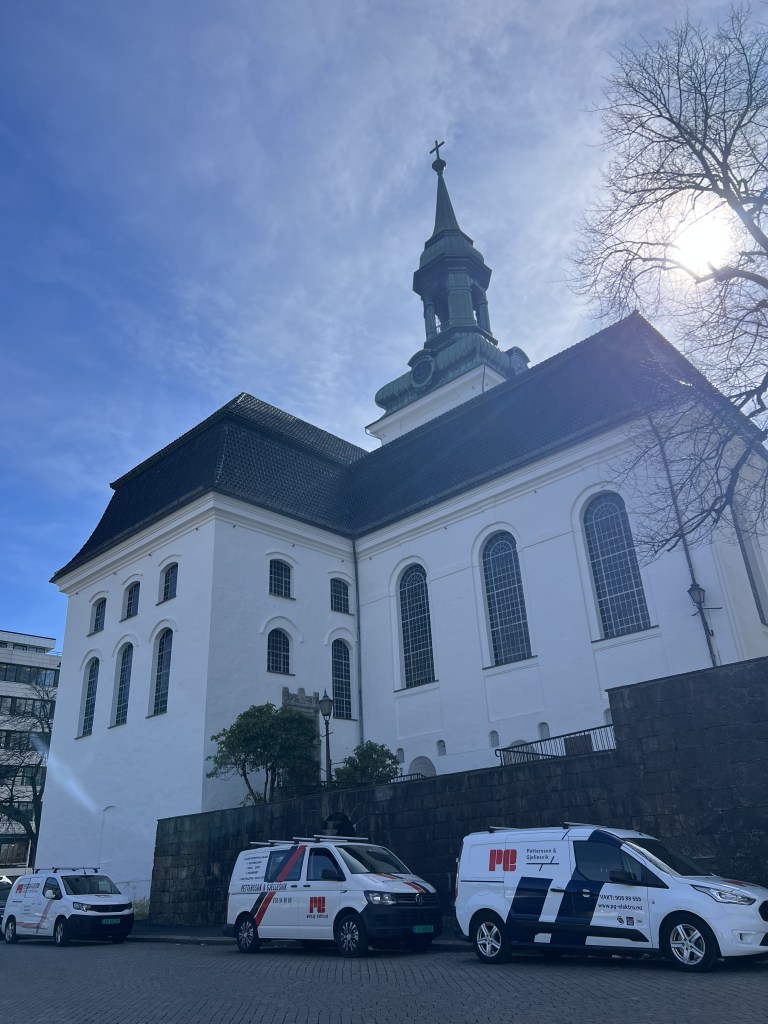
The 55 degree weather was delightful, so we stopped for a drink and snack in Bryggen to enjoy the sunshine before heading over to Nordnes peninsula. No particular destination in mind this time, but it was only 2pm and we had already gone through nearly everything I had flagged in the guide book, so we figured we’d get some walking in. Nordnes does offer nice views of the city, a cute little church, and it has some interesting layouts given how hilly it is.

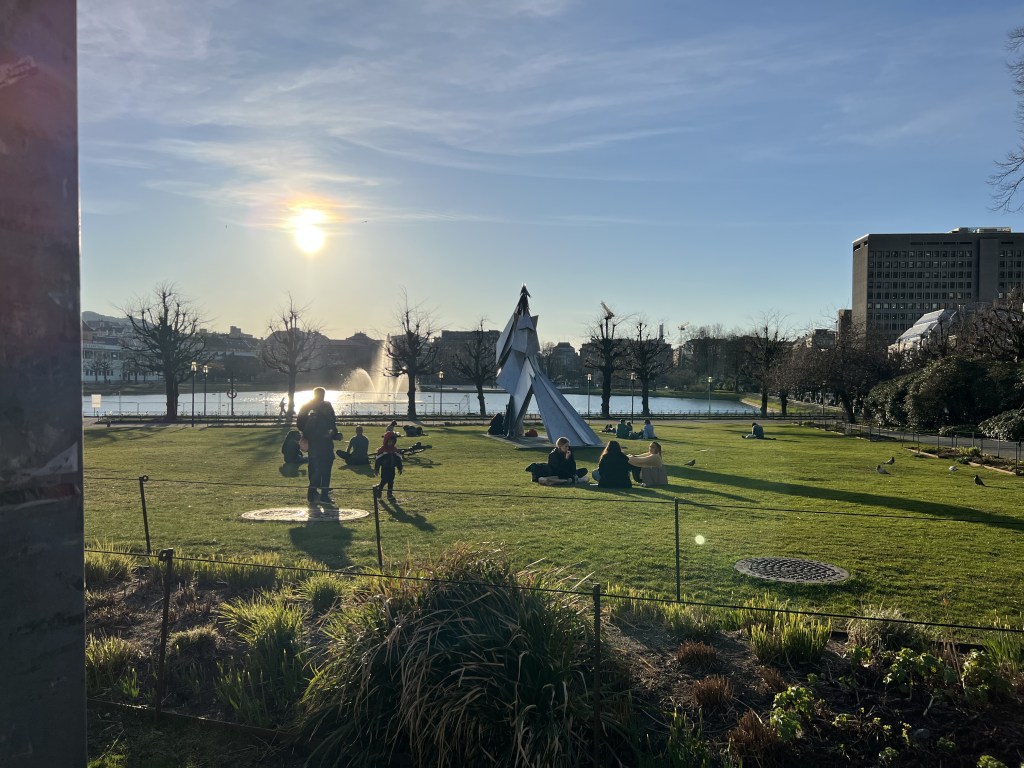
By 5pm, we felt we had pretty much seen all that we wanted to see. There is a cable car that I would’ve marched us all out to if it had been open, but alas, it is closed Mondays. We stopped to grab books from the hotel and then sat by Lille Lungegårdsvann, a small park and lake in the city center. This is clearly a popular place with locals on nice days like today, and I can see why. Very pretty and relaxing.

Bergen is very cute, but I am really not sure how one could fill more than a day here. I suppose there are art museums, but I cannot bring myself to travel halfway around the world to spend all day inside a museum looking at things I can look at online from home. This is just not a huge art fan kind of family.

Tomorrow we have a pretty busy day, with 2 boat rides through a fjord and 2 train rides as part of a Norway in a Nutshell trip. And then we are off to the overnight train back to Oslo for our flights to Svalbard on Wednesday.