Popularity contest

Marrakech is better than Fes says every guide book and blog post I found, and so we planned only 1.5 days in Fes and 2.5 in Marrakech. In hindsight, I wish we had reversed that. I need to remember that I am not generally impressed by the same things as the “average” tourist. I don’t like London (at all), I loved Kenya, and spending time in Colombia trying to navigate hitching rides on local boats doesn’t strike me as a problem.

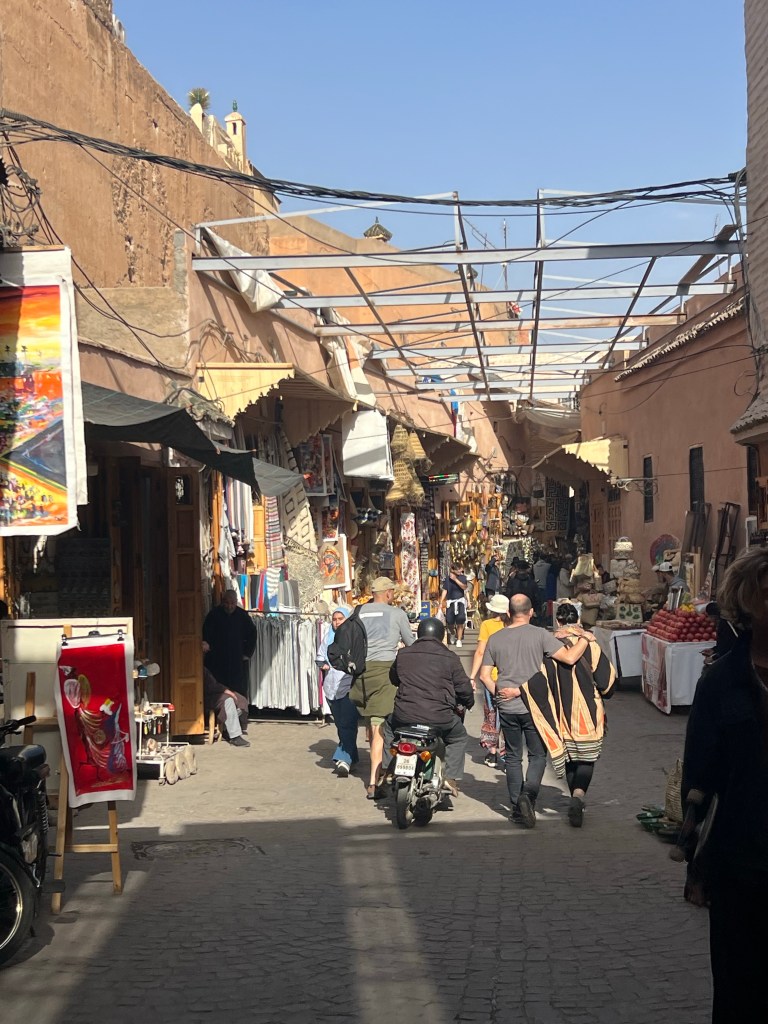
Marrakech is a really interesting city. The medina has souks like Fes, but they very clearly market to tourists. I saw no chicken stalls, only a small number of butchers, and very few produce or other stalls for basics. Instead, there were lots of trinkets and mass-produced products. Scooters and bikes share the narrow spaces with pedestrians, making walking a bit less enjoyable than in Fes.
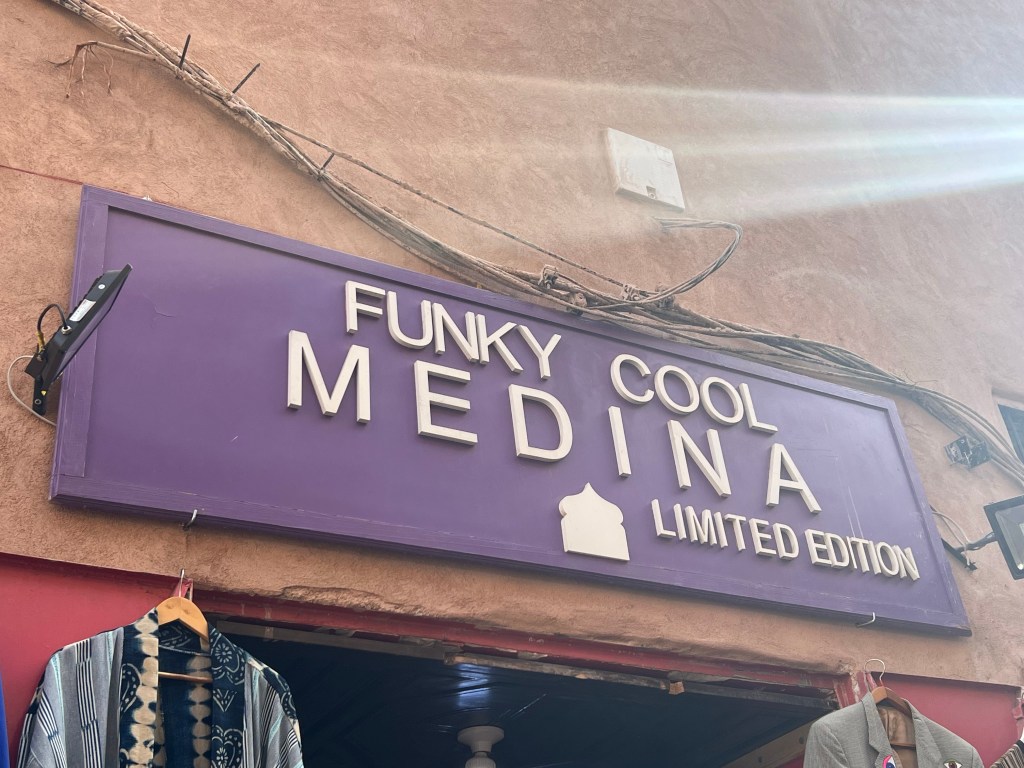
The best store name EVER!
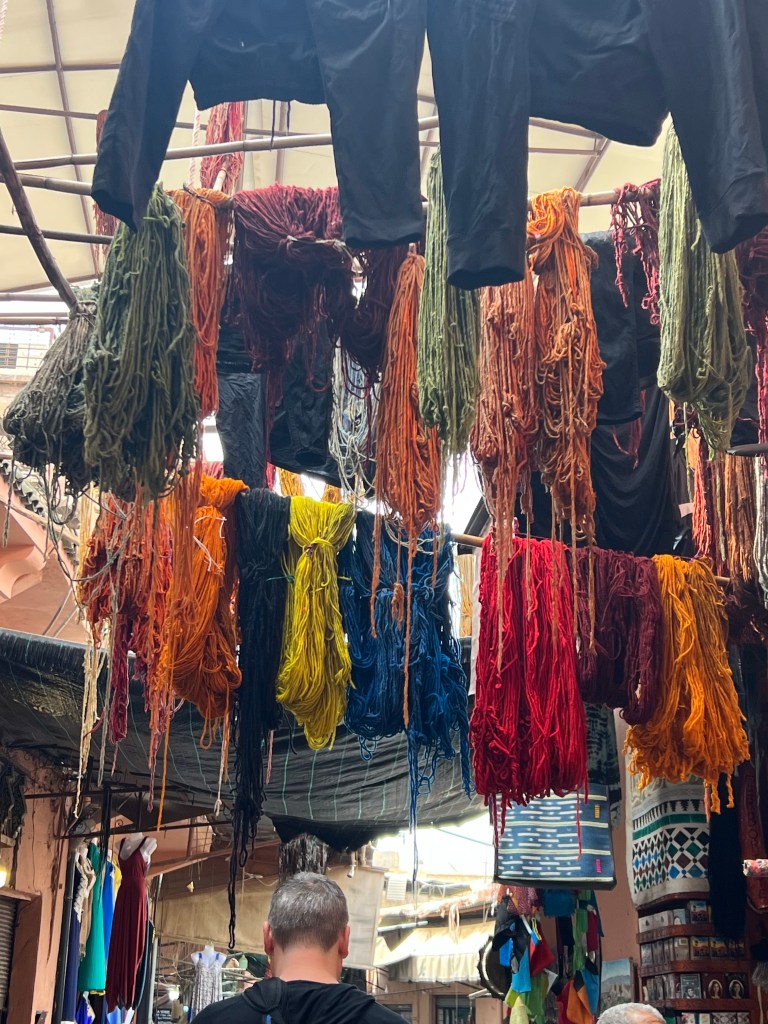
Dyer’s souks

Arrival

We arrived and after finding our riad (which was ok, but definitely a step down from the fabulous place we had in Fes), we decided to walk around and explore, starting at the Secret Garden.
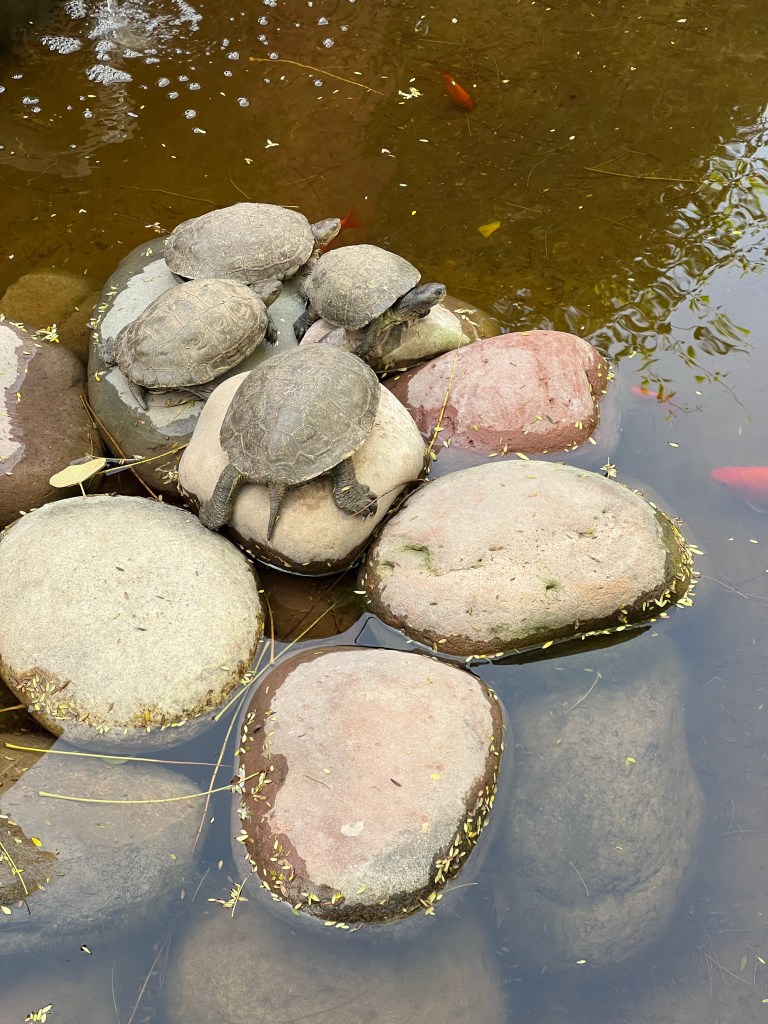
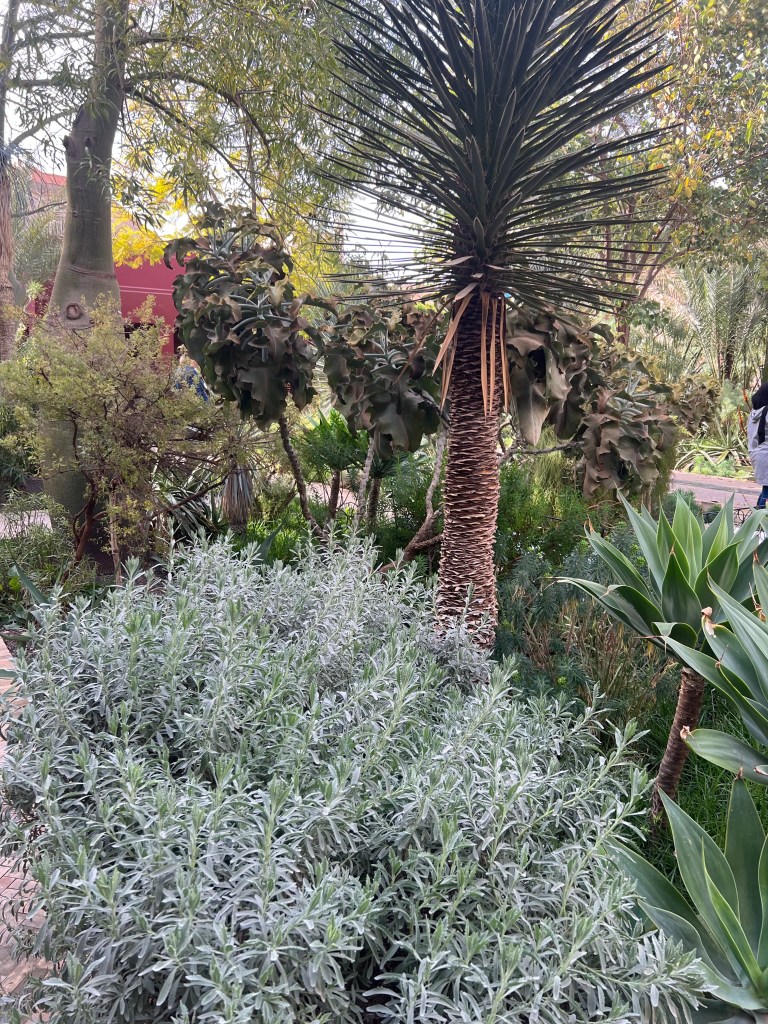
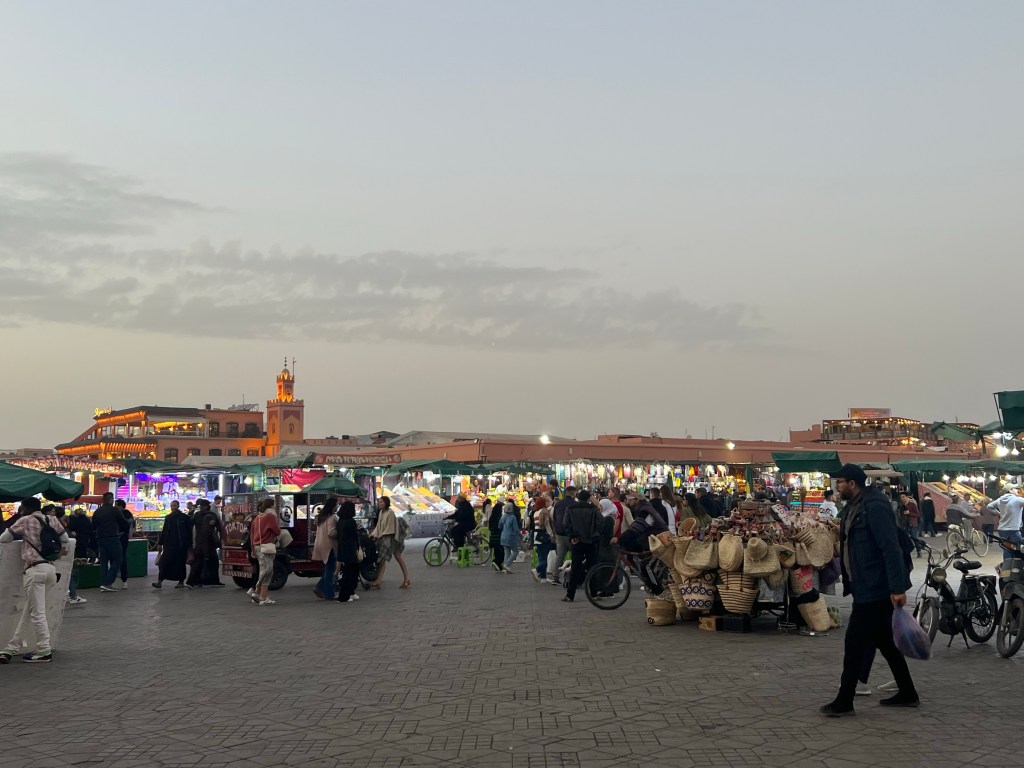
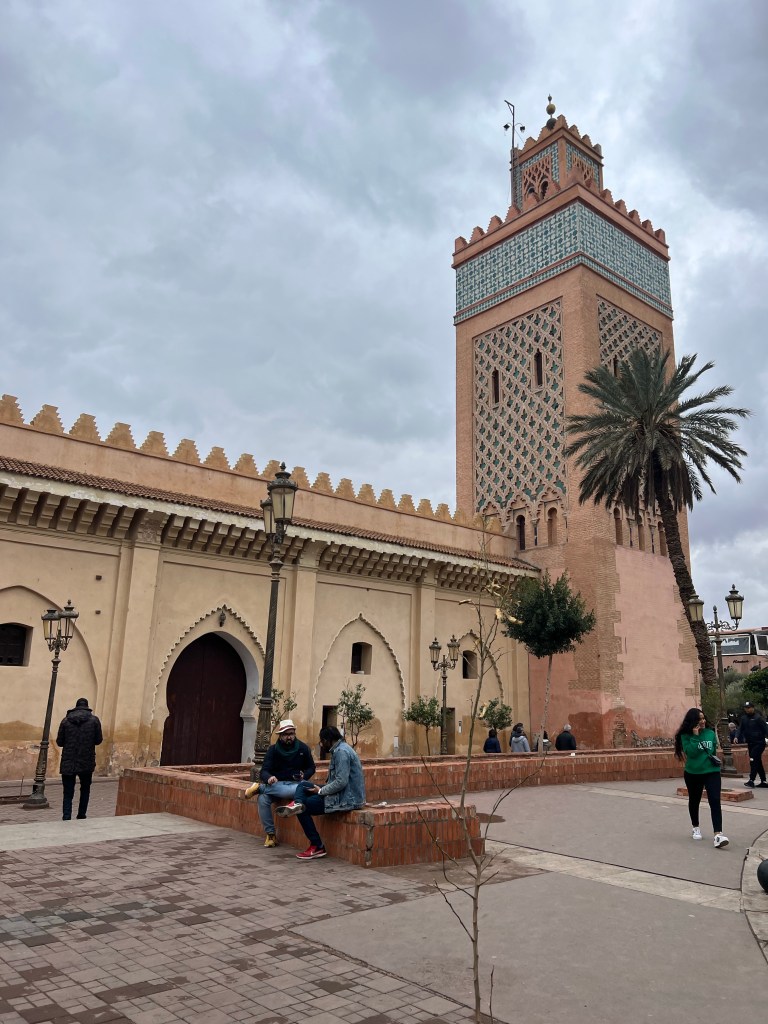
Then we went to Koutoubia Mosque and Jemma El-Fna Square. The mosque was quite picturesque at sunset. The square we didn’t enjoy as much as the books said we would. It had a lot of food vendors, but fears of street food and GI issues had us steer clear. Also in the square are snake charmers, monkey men, and other con/entertainers trying to part tourists with their money. I have no interest in supporting those who abuse or torture animals for fiscal gain, so the square was simply not appealing.
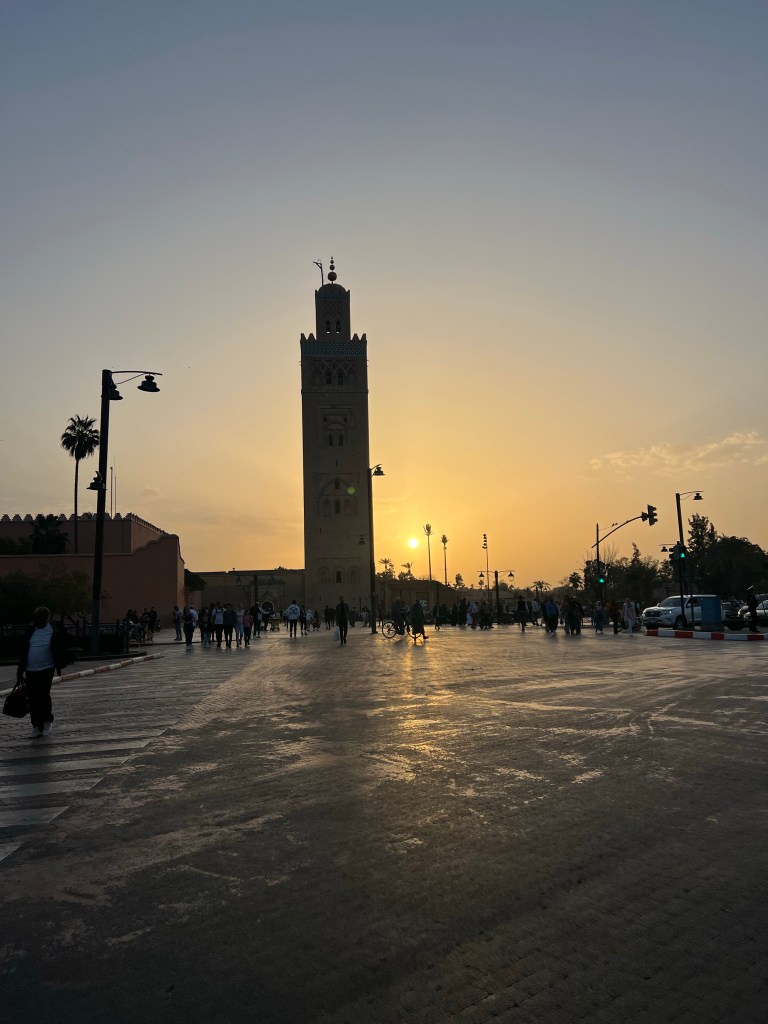
Koutoubia Mosque
Jemma El-Fna square

We rounded out the night at a super fancy rooftop restaurant. Humorously, this was the first place I encountered trouble with my vegetarian diet. The servers looked perplexed when I asked for the sides and no entree. 🙂 Still, the food was all fabulous and the atmosphere was delightful, so we quite enjoyed ourselves.

Starting the day off right

We started our Thursday with an appointment at a hammam. Anna-Sophia and I went to a really nice one in Istanbul so we had some idea of what to expect, but Luke and Melissa were in new territory. I read up as much as I could and chose one which was billed as a mix of authentic and upscale, although it had mixed reviews. After our experience, I can say that the people who gave negative reviews are clearly comparing this to a European or American spa. A hammam in a developing nation is NOT a spa.
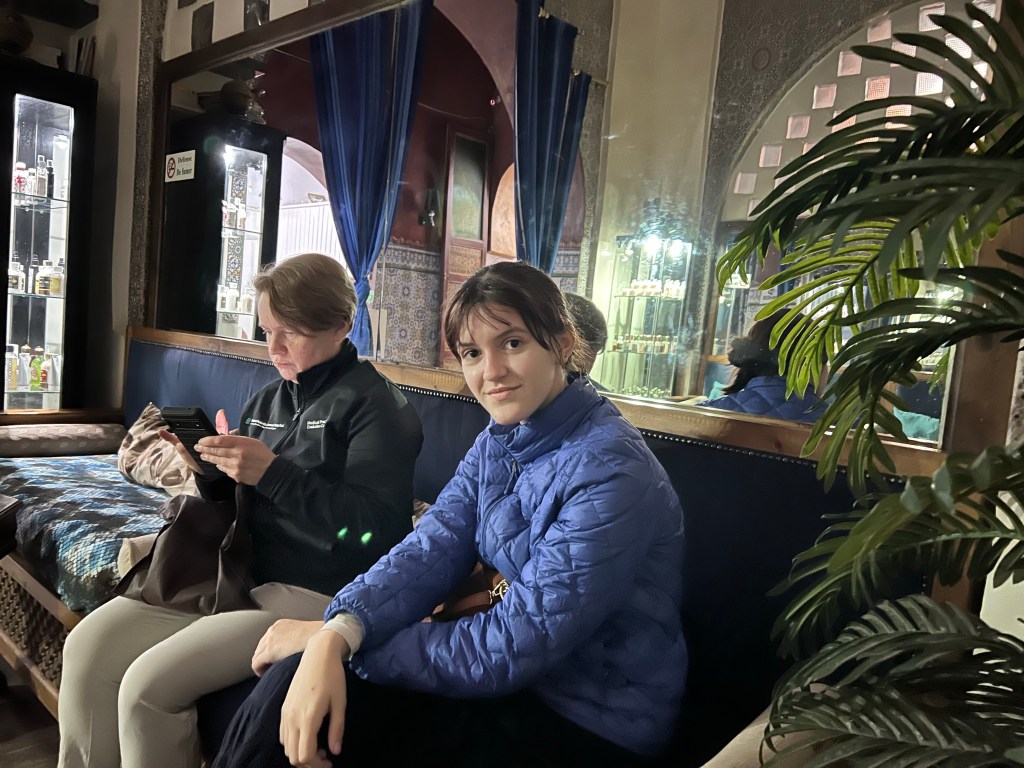
In the hammam waiting room

We stripped down to these hilarious disposable underwear that they gave us*, then went to the steam room. It feels oppressive in the beginning, but as the morning went on, we got used to it. Next up is a scrub with a kessa mitt – this experience hurts, but in a good way, like a firm massage. When you see the rolls of dead skin that came off of your body, you realize how gross it is that you don’t exfoliate like this all of the time! Back to the steam room, then off for a massage. At times, I felt myself sliding across the table because I was so slippery smooth! Then back to the steam room for a full-body mud mask, then back to the scrub room for a rinse and shampoo.

*Apparently, only women get the underwear; men get nothing!

For the rest of the day, I kept marveling at how soft my skin was!! Best $45 spent.

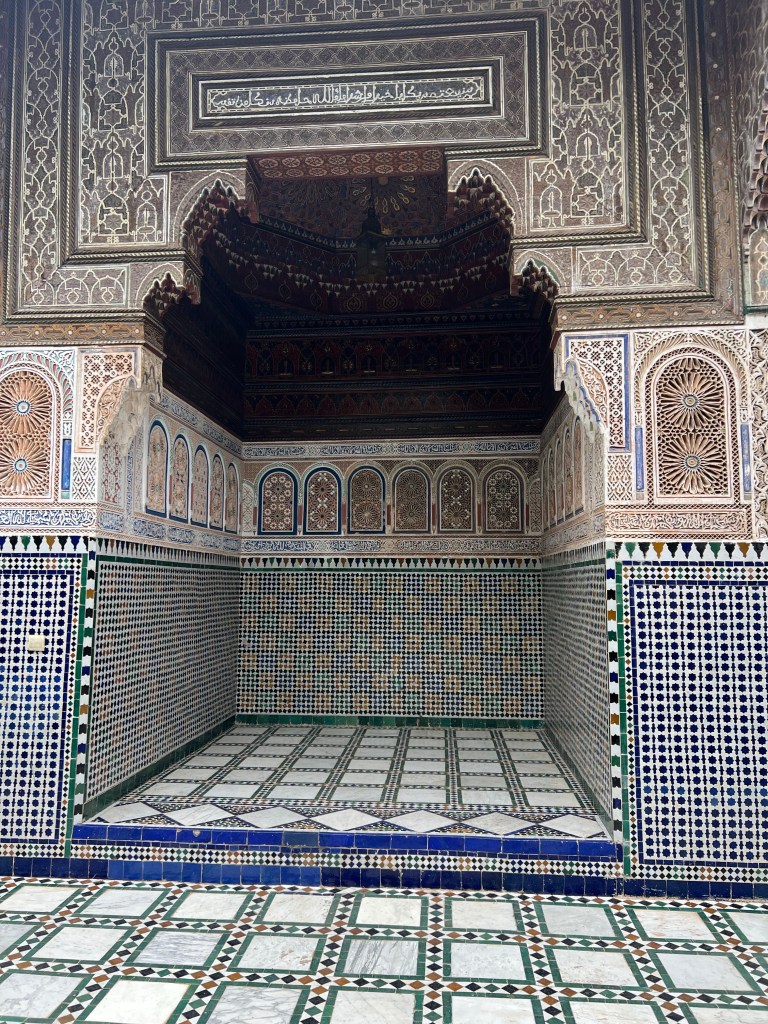
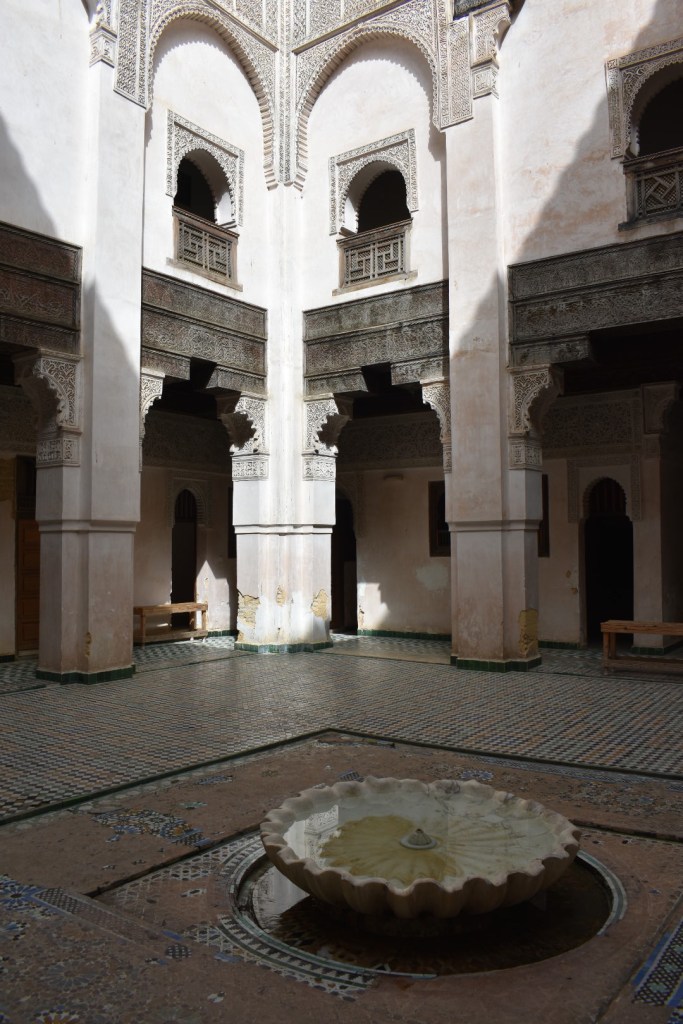
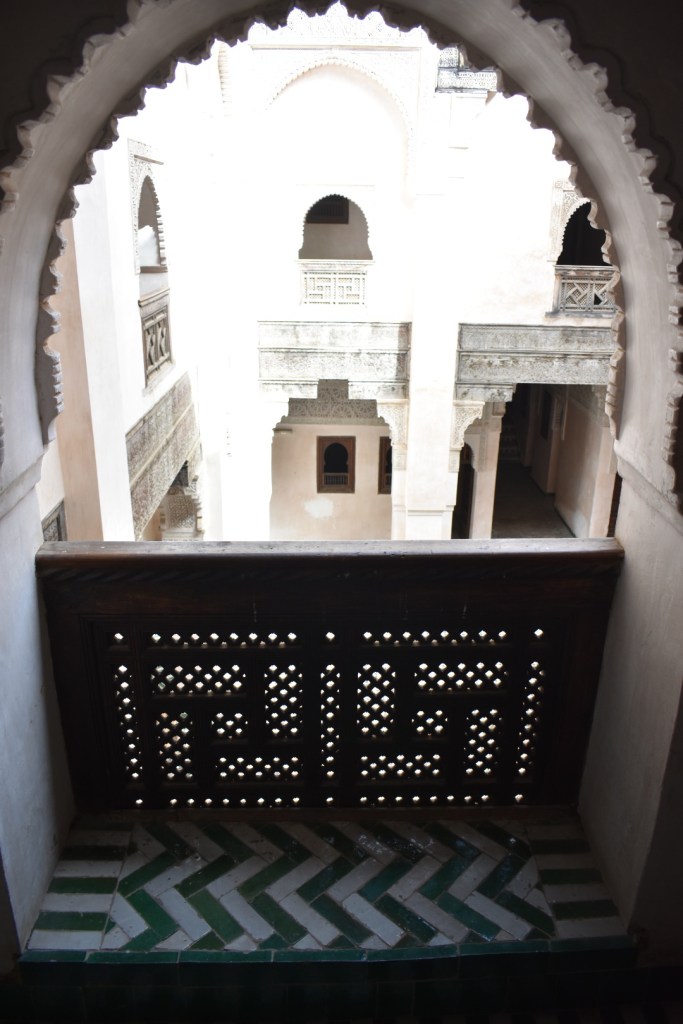
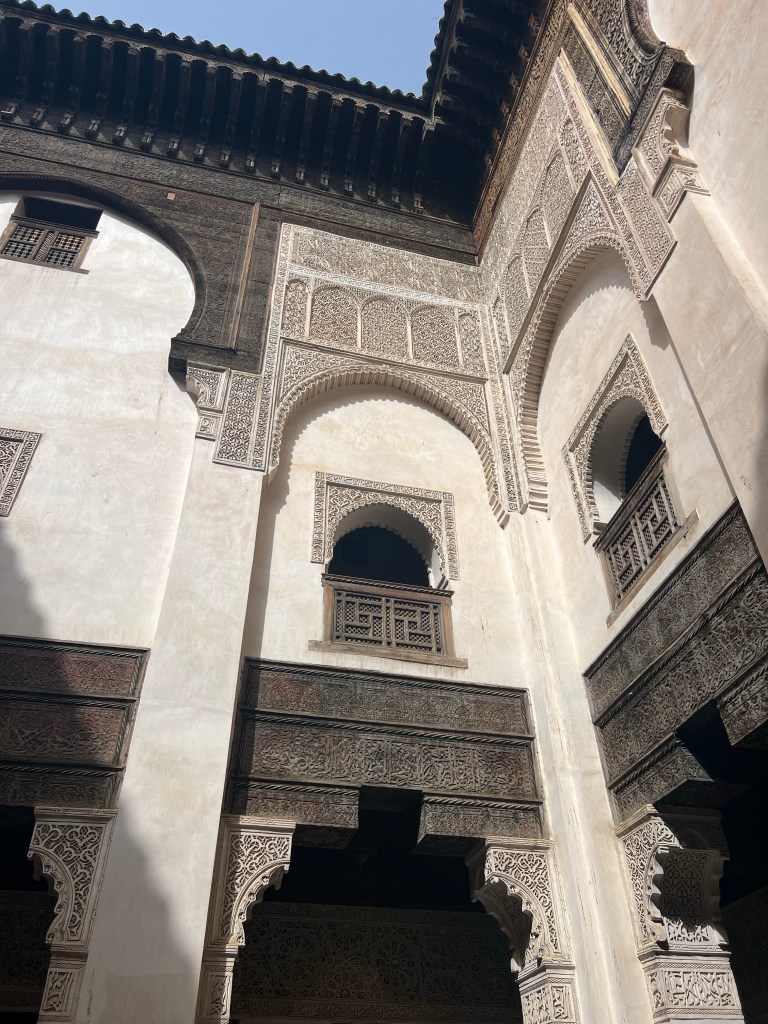
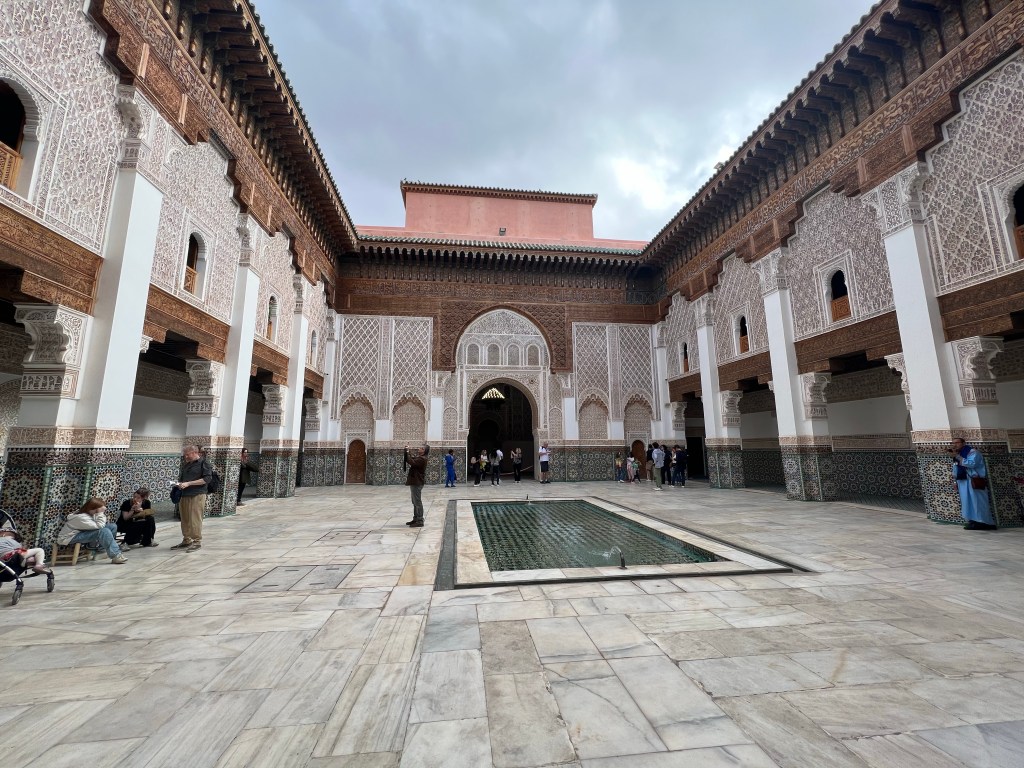
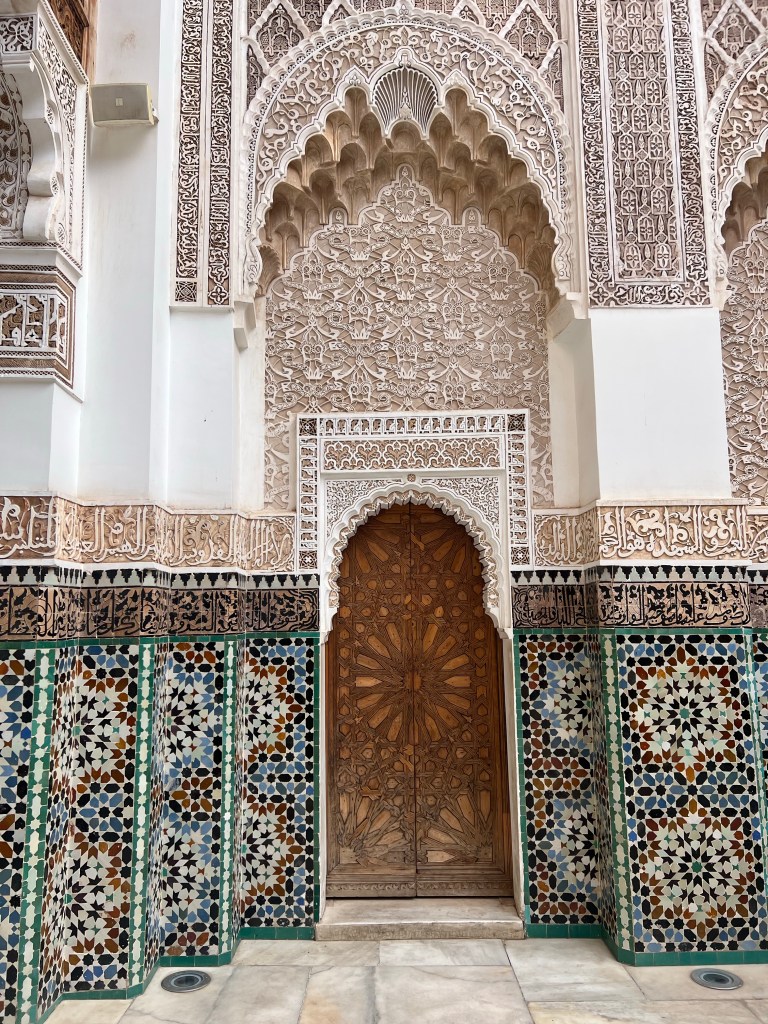
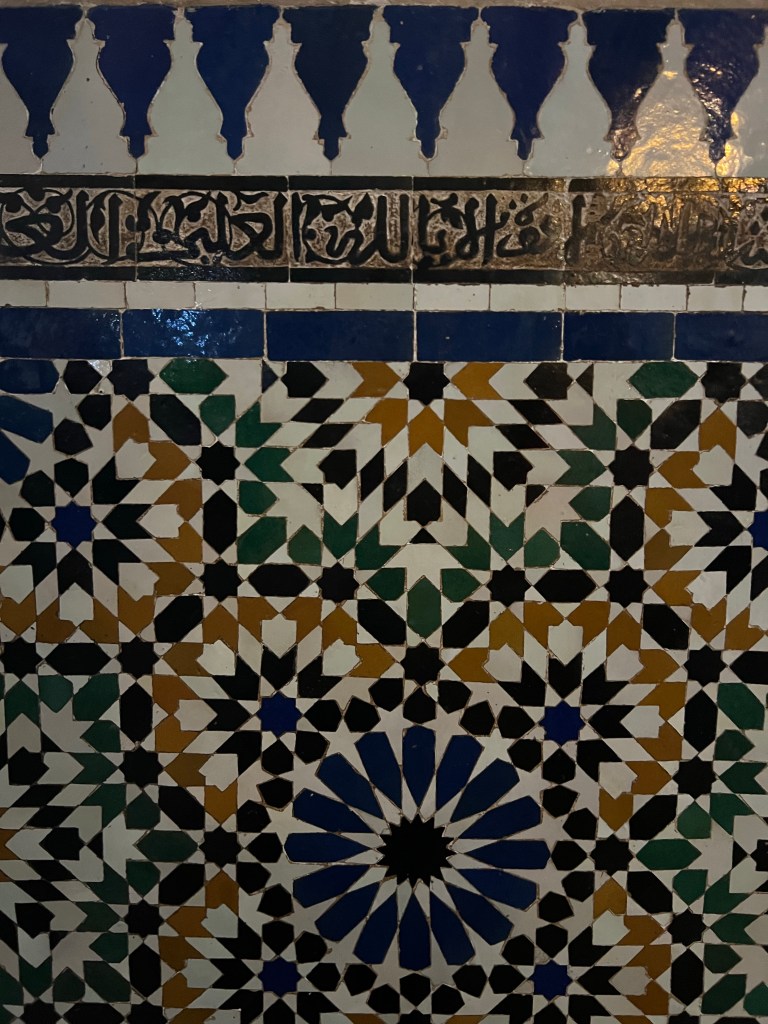
After lunch (at the same place as the day before because they had the best falafel any of us had ever had), we went to the Ben Youseff Madrasa. This school would’ve housed hundreds of students in its day, and now, it is open to the public and showcases the stunningly elaborate tile work, wood carvings, and painted ceilings for Morocco is famous.
Shopping was on the docket for the afternoon. I had seen a painting of repeating camels in an alley that I liked, so we went by that same stall again later, I had to take a look. I ended up getting a smaller version of that camel picture since I loved it, and I liked that I was buying it from the artist. Dads beware: I did not haggle on price!
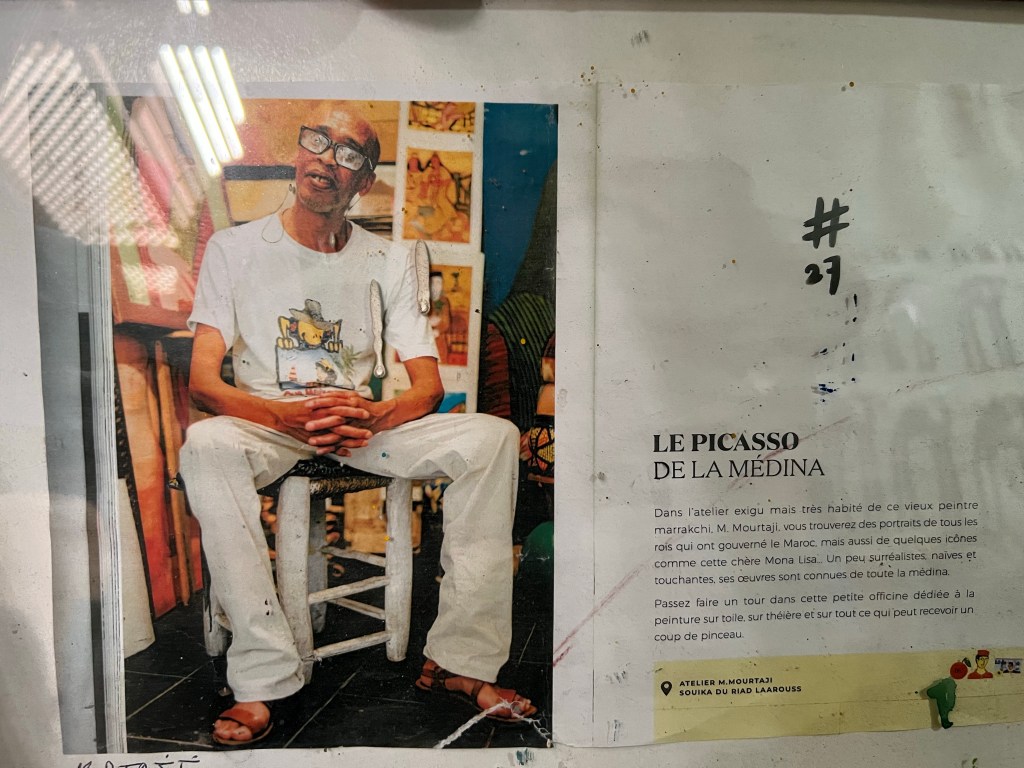
The artist

We stopped for some ice cream in the Jemma El-Fna square (and reminded ourselves why the square was too much for us), and then we grabbed olives from the olive souk. Yes, a whole section of stalls dedicated to olives!! We ended up buying a container from this guy, and when he said they only cost 30 dirham (that’s $3), we bought 2 more. $10 for what would definitely cost over $100 at home – that’s a bargain! (And Luke did such a good job when we got home, saying “no” when asked by CBP if we bought any food in Morocco).
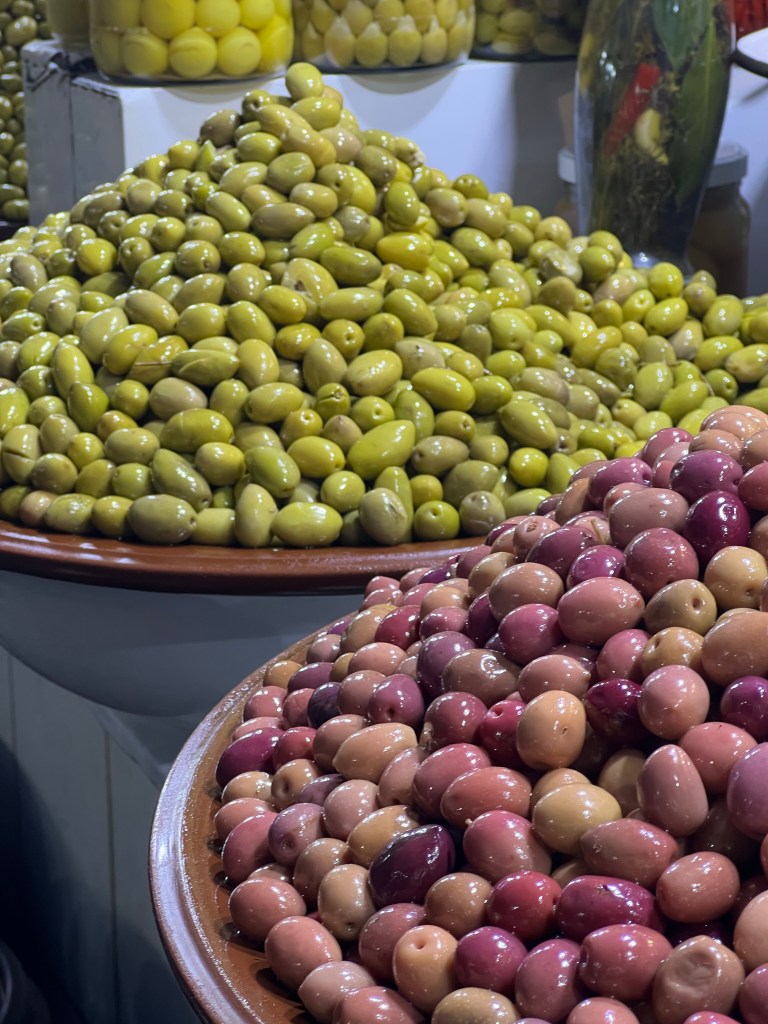
Olive souks!

Dinner was at a rooftop bar and restaurant. It was good, but we were interrupted by rain and had to make a hasty exit.

It poured on and off all night. Each time it rained, I woke up since the building is not exactly soundproof, and the sound of rain on a canvas tarp roof is unfamiliar to me.

Closing time

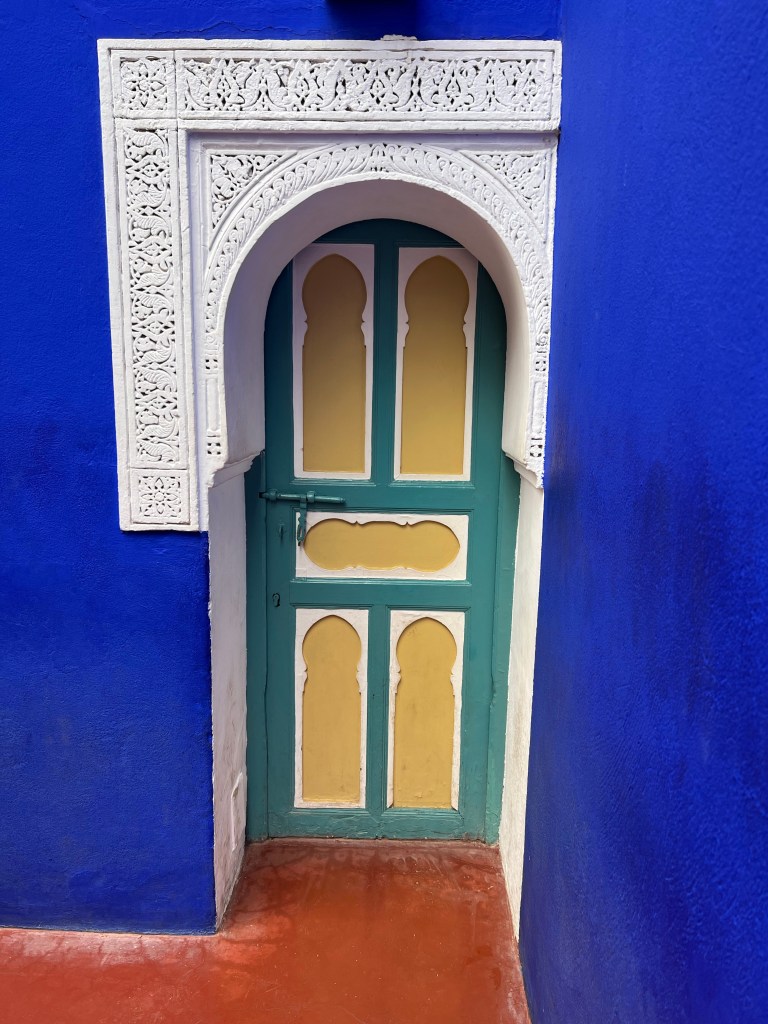
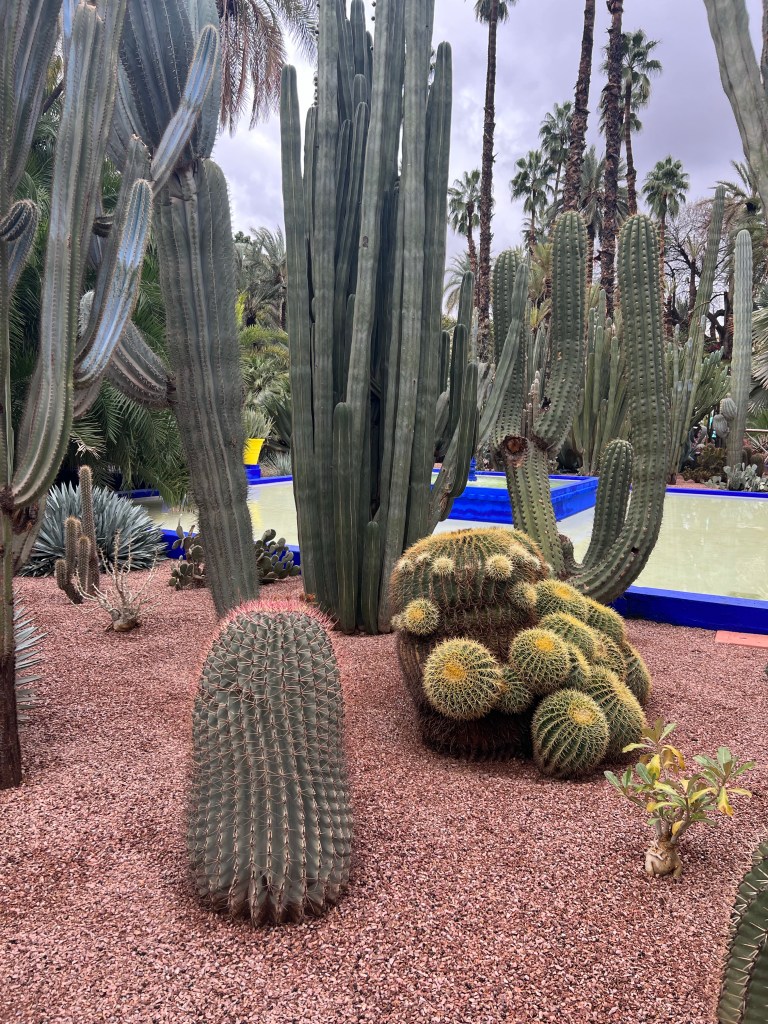
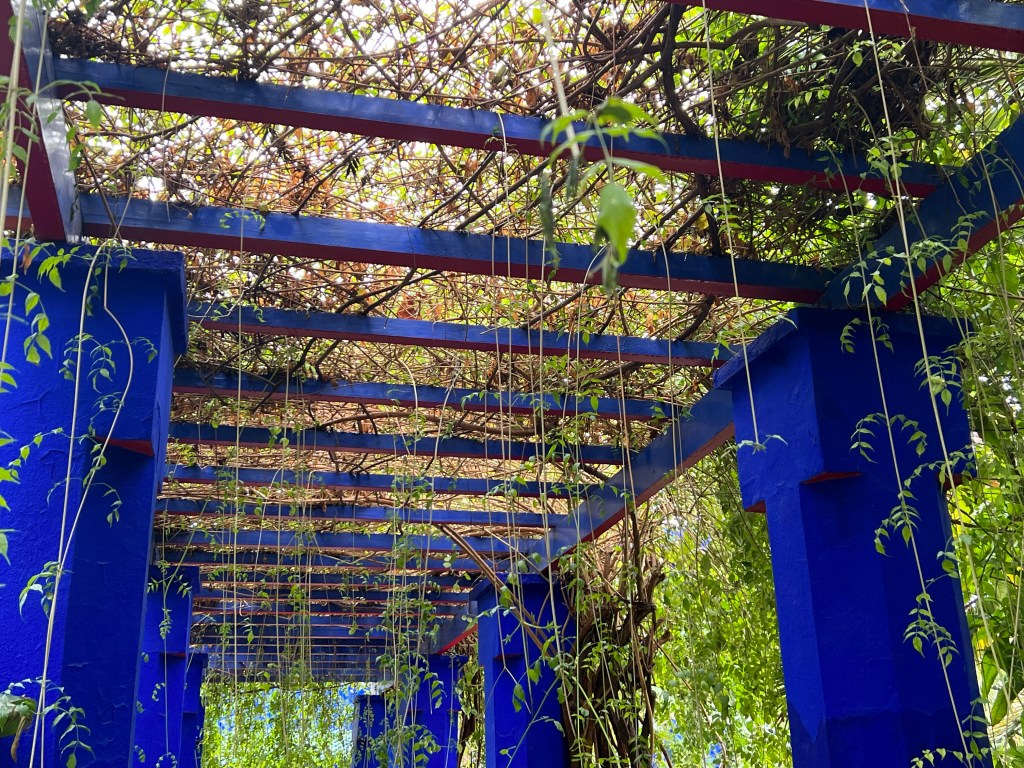
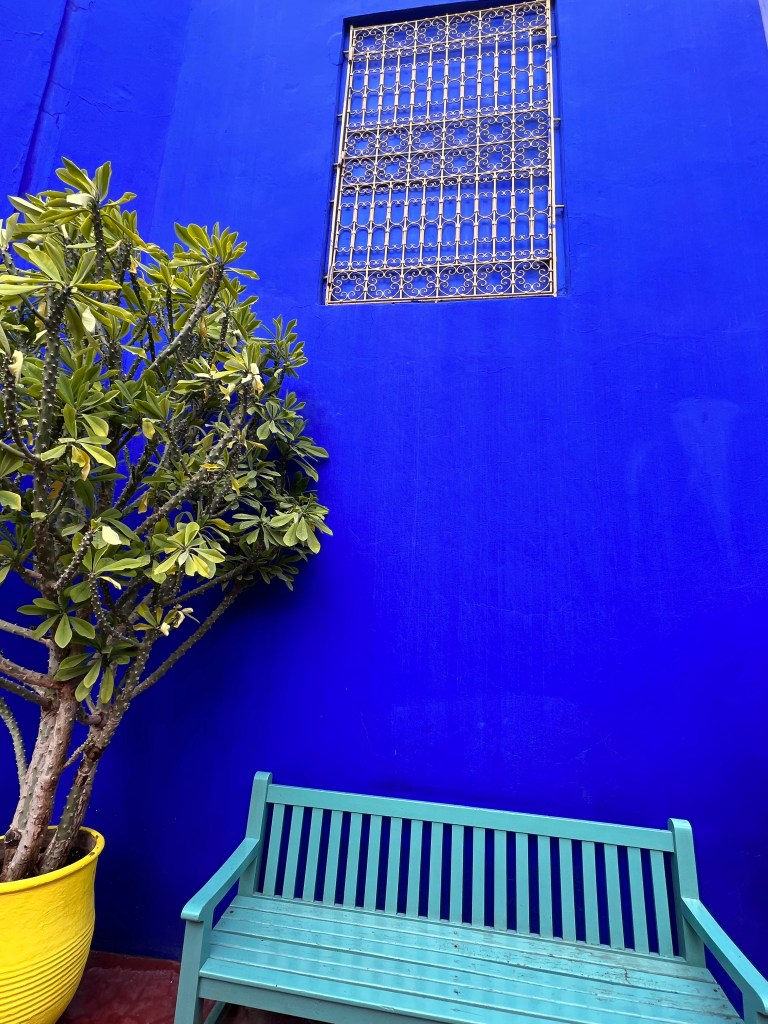
We had a relatively early morning so we could make it out to the Marjorelle Gardens. These were the gardens created by Yves Saint Laurent, who lived in Marrakech and bought the gardens in the 1980s. The gardens are pretty, but they are just gardens so, you know…. What’s unique here are the crazy variety of cacti and the vibrant colors (especially the blue) of the walls and pergolas.
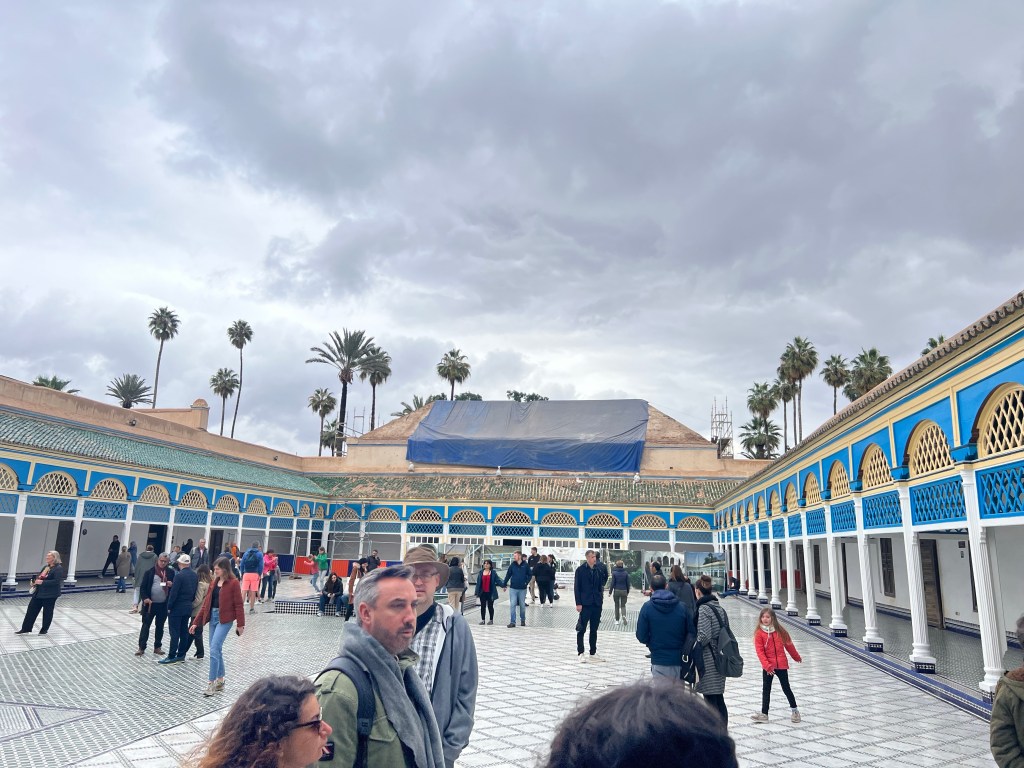
After lunch, we explored the Palais de La Bahia. Another gorgeously decorated building, slightly diminished because of crowds.
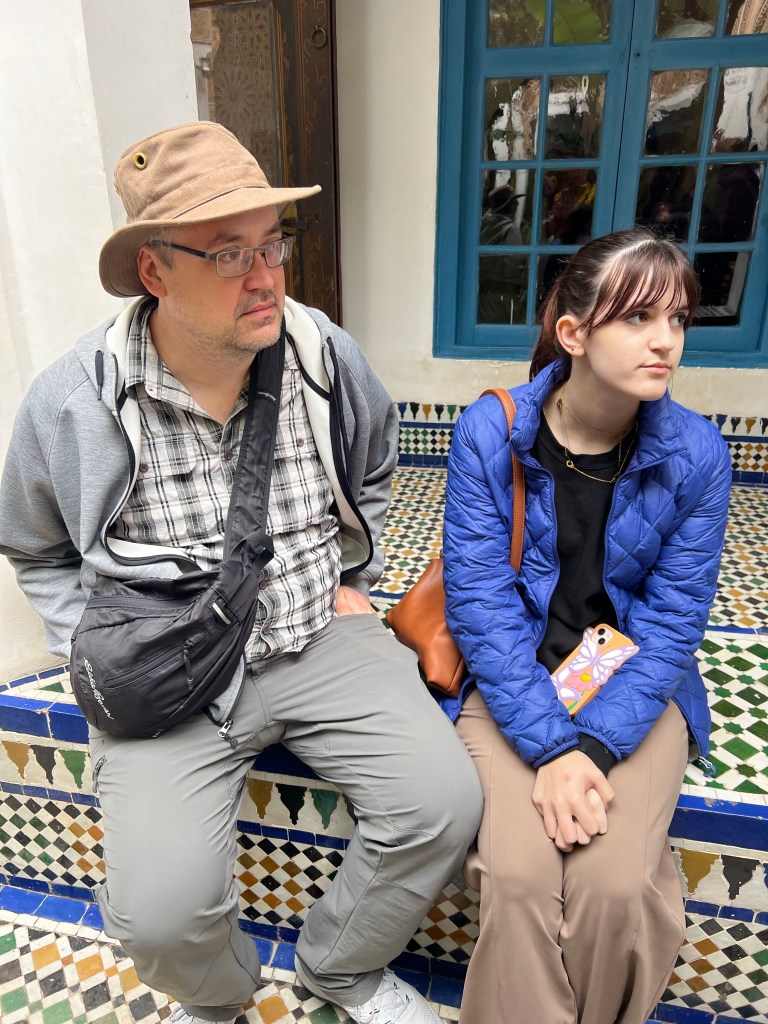
Two yahoos at the palace
Palace courtyard, undergoing some restoration

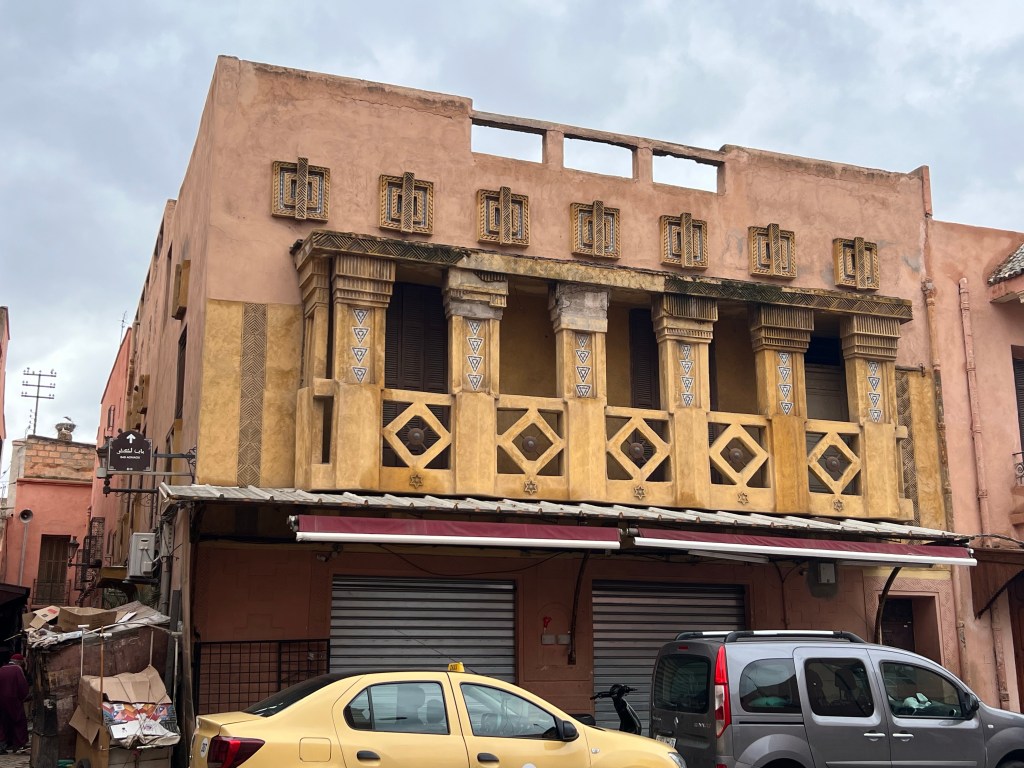
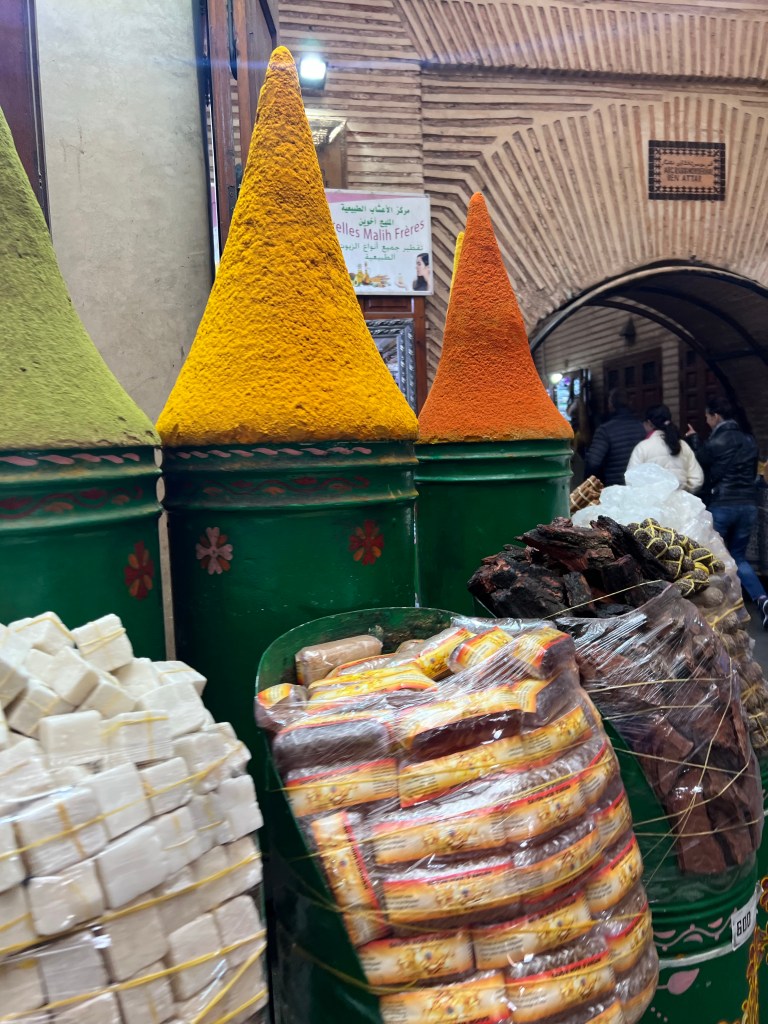
There was another palace and a set of tombs we had planned to go see, but we decided to skip them. Each of these places cost something to go into, and while not a lot, we were starting to feel like each new place offered less and less of a novel experience to justify the crowds and cost. Instead, we walked over to Marrakech’s mellah.
Bitoun Synagogue
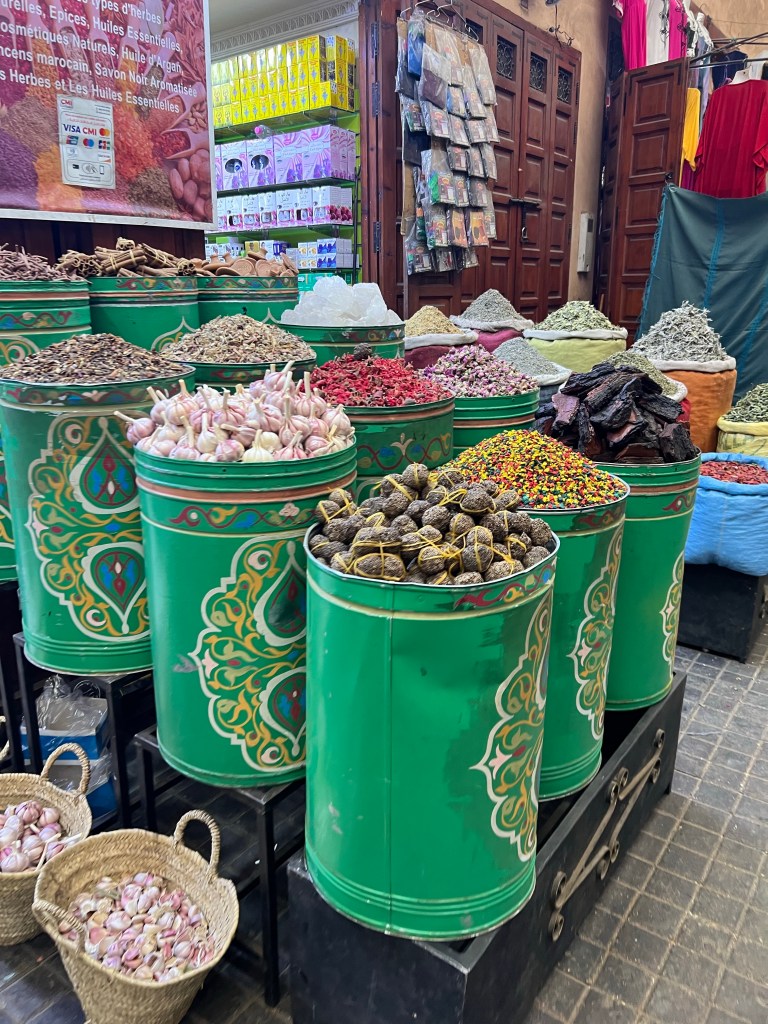
Spice souks in the mellah

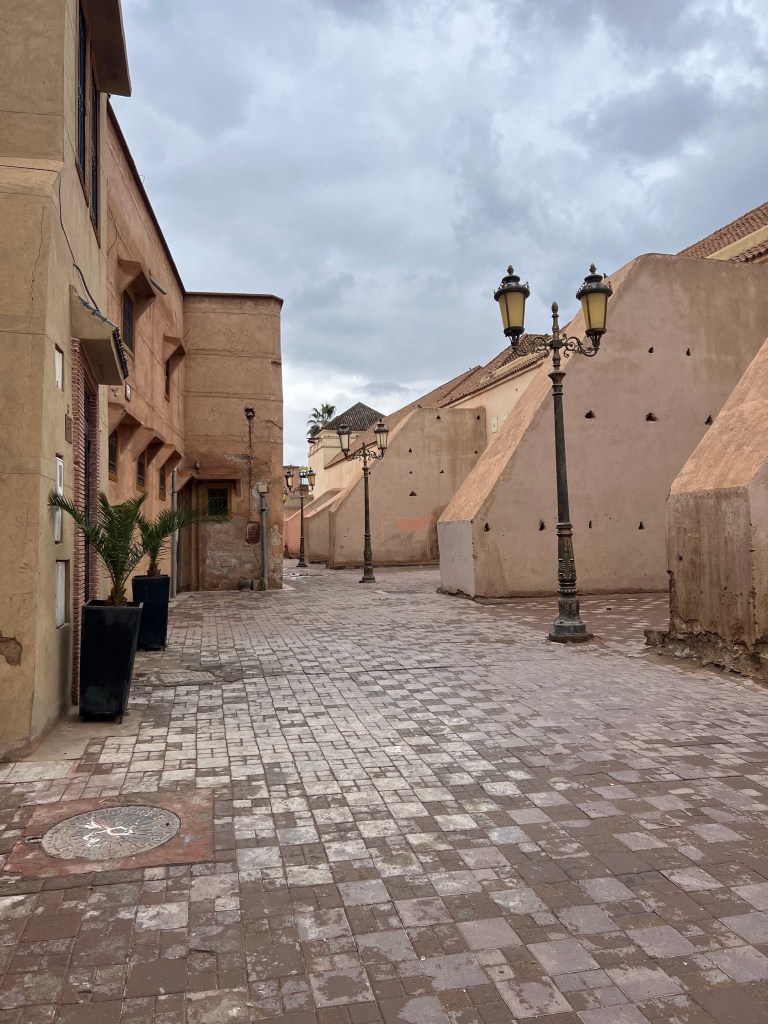
A final coffee overlooking the kasbah (walled district housing the historical royal complex) was accompanied by perhaps one too many Rock the Kasbah jokes. We had to walk the kasbah. Nice to talk at the kasbah. There’s a clock at the kasbah. You get the idea…
Inside the kasbah
Kasbah exterior
Us, rocking the kasbah

A walk to the road to get our stuff, a taxi ride to the train station, a 2.5 hour train to Casablanca, and another taxi to the hotel had us all pretty beat. We had dinner in the hotel and then went off to get a bit of sleep before our early flights back home.
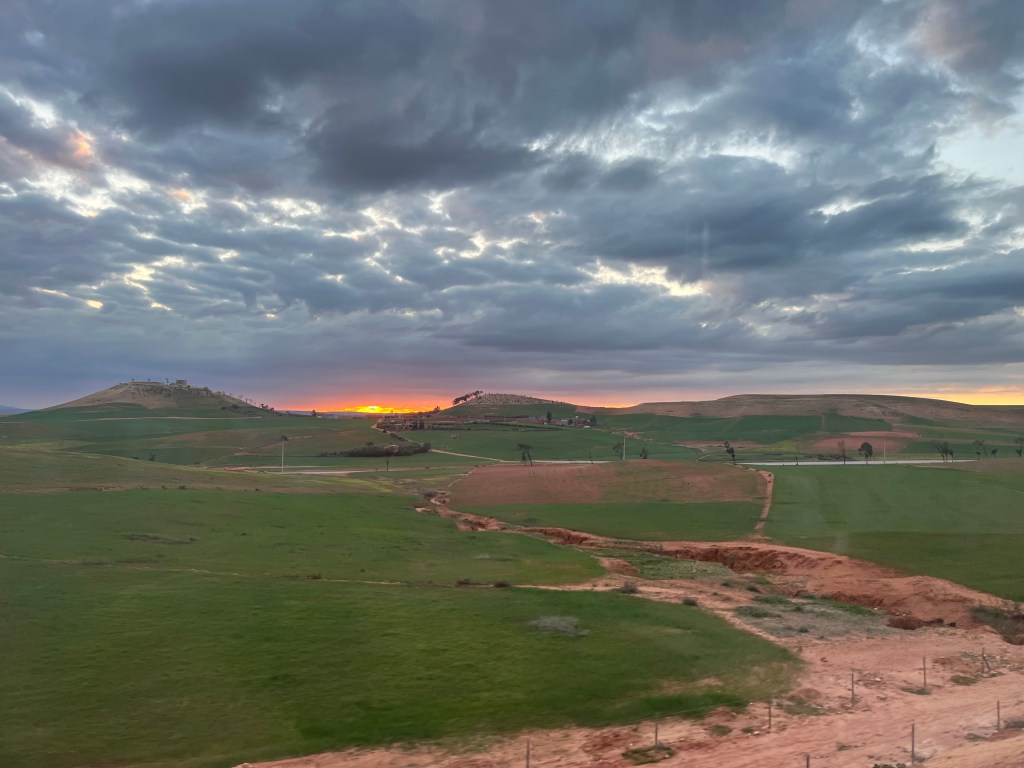
Countryside at sunset

When we got home, Luke summarized things well. He said Morocco is a great entry country for those looking to take that first step into exploring the developing world. It has just enough of the European flavor to not be completely foreign, and one could stay in high end hotels in the “new” parts of most cities and truly feel not that differently than in Europe. It is much easier to navigate than Kenya or Botswana, for example. I think Egypt is similar to Morocco – just enough infrastructure to support tourists in some areas, but little infrastructure elsewhere.

If I were to go back, I’d still do the Sahara camp – that was cool – but I’d spend as little time in Casablanca as possible. I’d also love to spend less time in Marrakech and more time in Fes and exploring the towns and countryside in that region.

I am really glad I made it to Morocco – it has been on my list forever – and being able to go with Melissa made the trip even better. 🙂
Scratching the surface

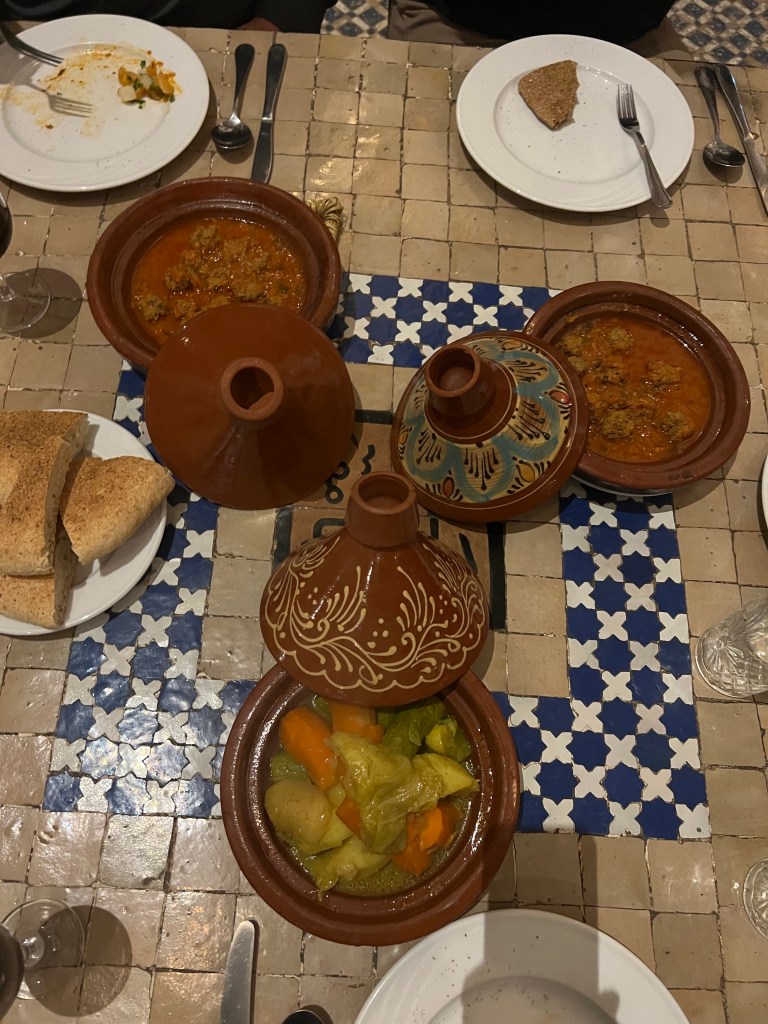
Oh my gosh, the food. Amazing. Every…single…time! Dinner last night included the best eggplant-tomato salad imaginable – and I usually don’t like eggplant at all! I had tagine vegetables, Anna-Sophia had tagine lemon chicken, and Luke and Melissa had tagine meatballs in a deliciously seasoned tomato sauce. (Auto-correct insists that I meant to type raging instead of tagine…raging chicken is a hilarious alternative to tagine chicken!) Breakfast today was a variety of bread and bread-like things, an assortment of spreads (strawberry preserves, apricot preserves, honey, butter, argan oil), fresh orange juice, olives, and coffee. I simply adore the fact that Moroccans believe olives belong at every table, be it breakfast, lunch, snack, or dinner. I agree! We had a very hearty breakfast before meeting up with our guide for the day.

Dinner – tagine variety

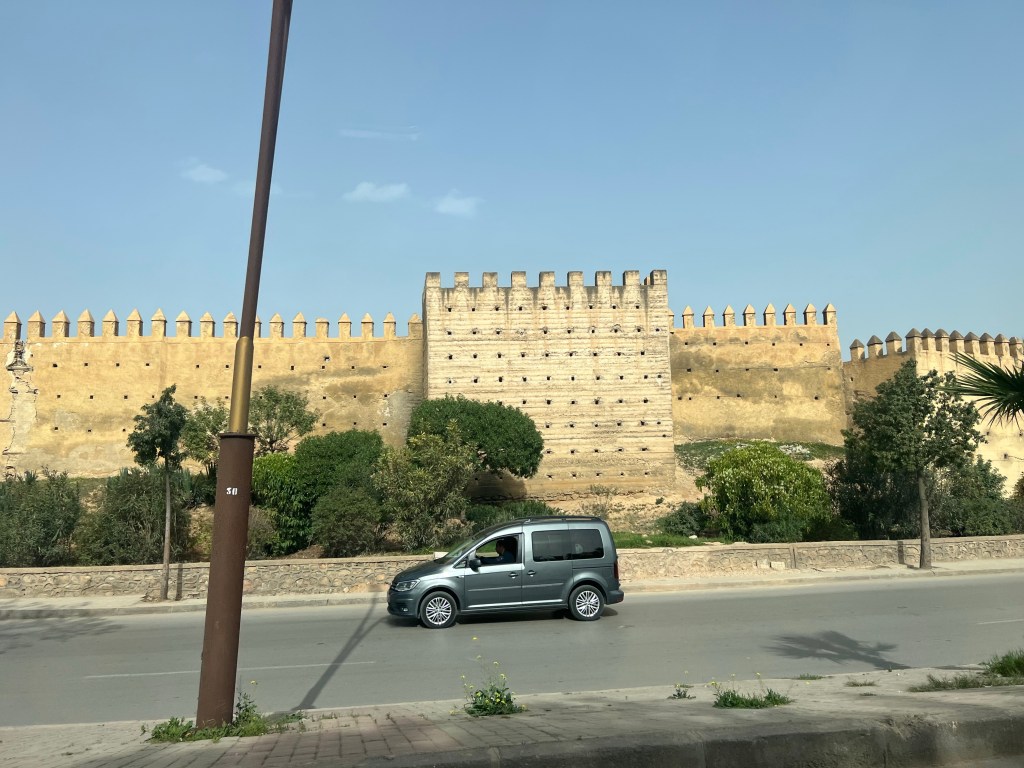
Fes is an old city..9th century is when it got its start. Like all old cities, it is ringed by a wall designed to protect inhabitants from invaders. This city wall, in many locations, also defines the old medina, where we are staying. These city walls remind me of what a 6 year-old would draw when given the prompt “castle walls” for an art project.

City walls
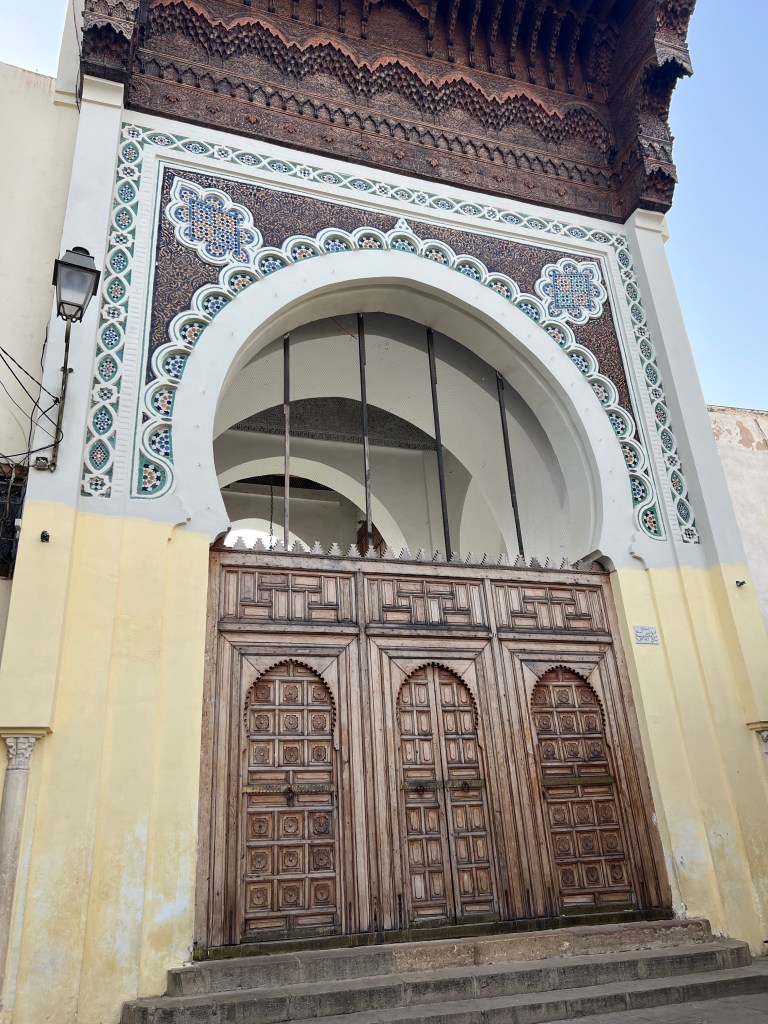
Mosque doors

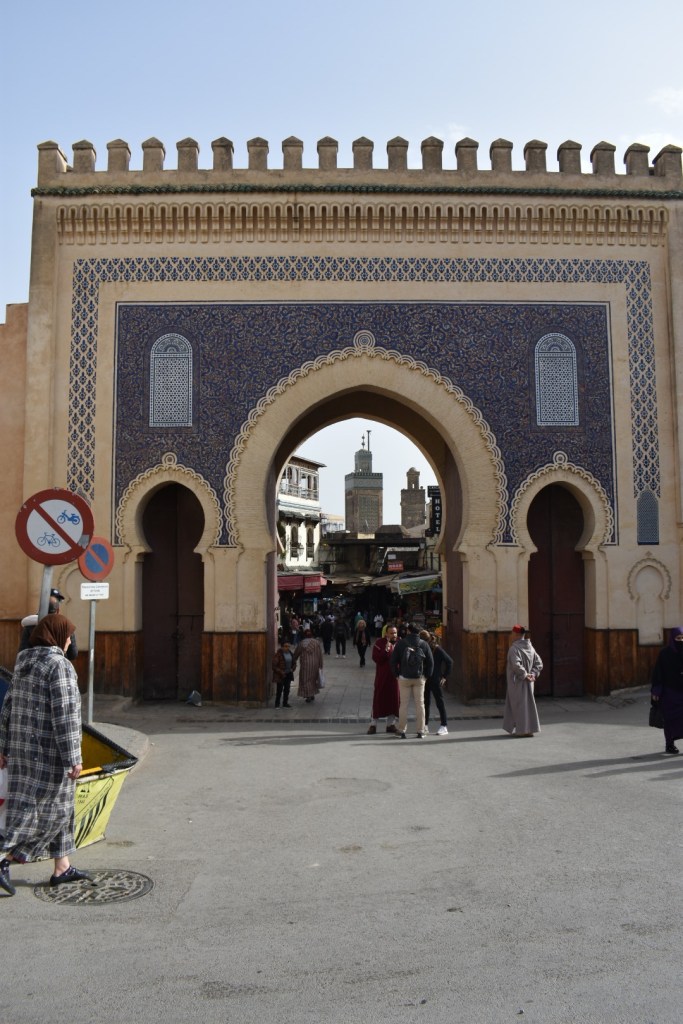
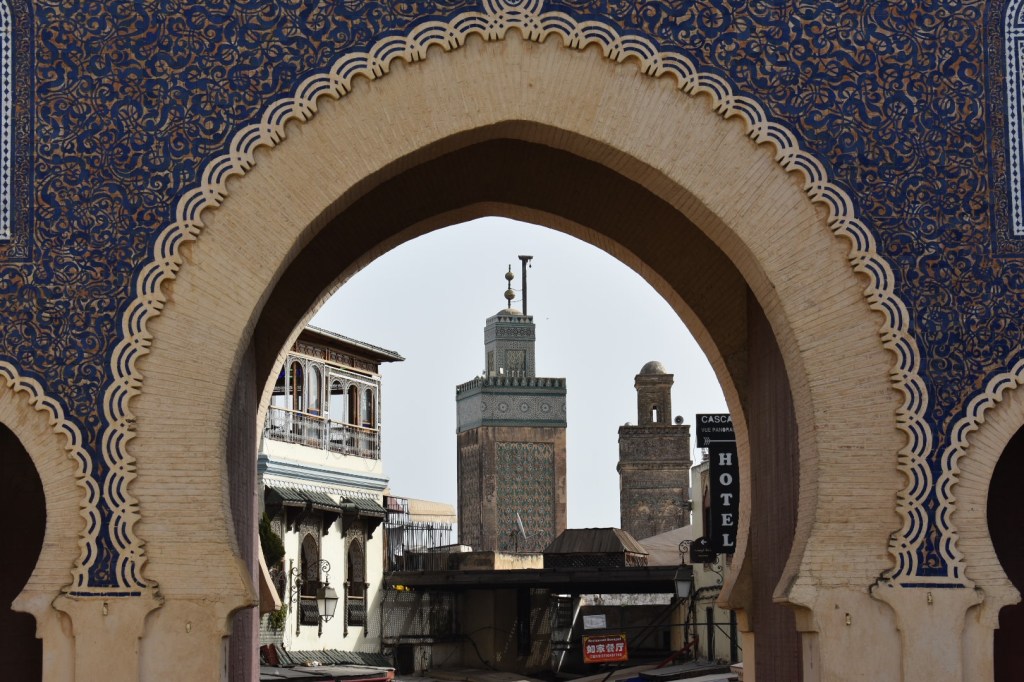
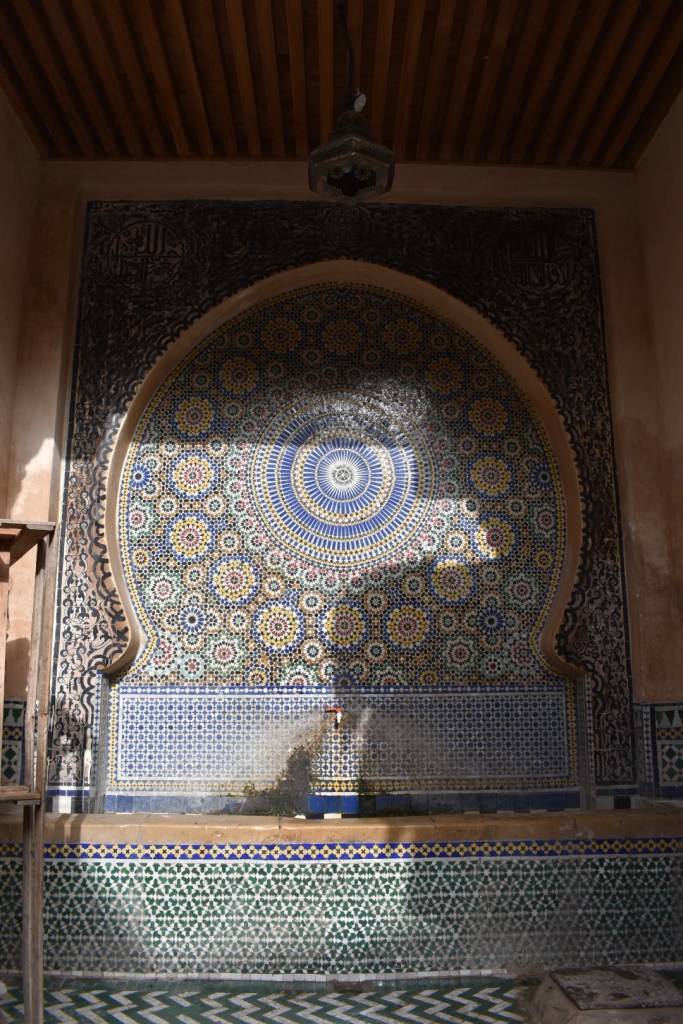
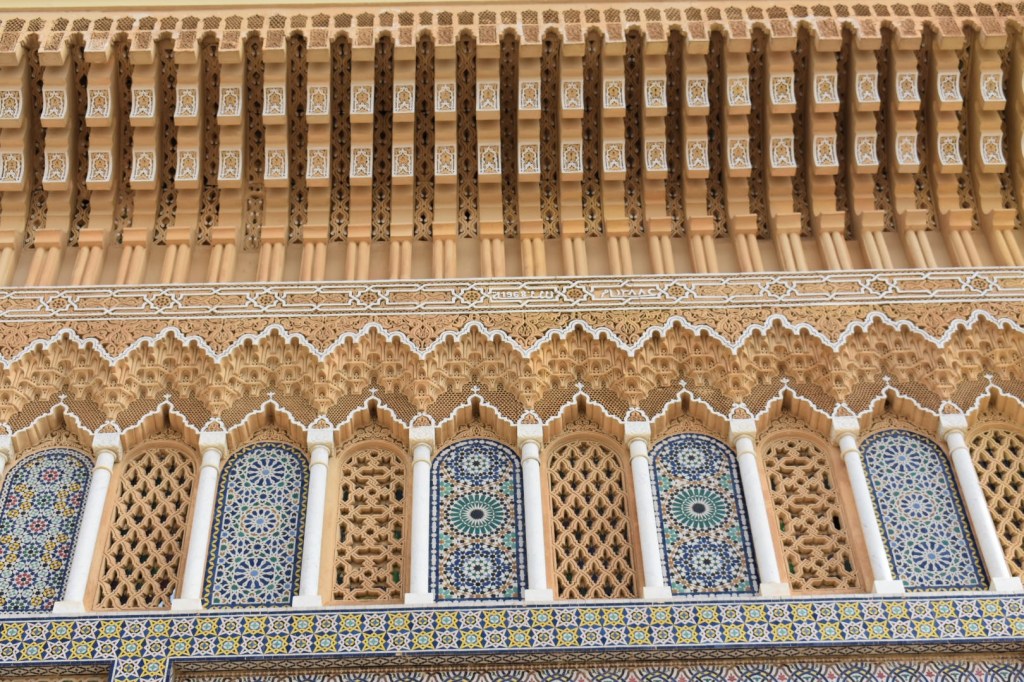
These city walls are breached by 14 gates (Luke and Melissa just reminded me that 7 is a lucky number in Islam, so 2 x 7). As is the hallmark of Fes, these gates are adorned with intricate tile mosaics, mostly in vibrant blues (Fes) and greens (Islam). Similarly gorgeous are the public fountains on every other block.

The “blue gate”
Public fountain

Anna-Sophia and I wanted to see the Jewish area (mellah), so we piled into a taxi and headed out of the medina. The Jewish people in Morocco settled just outside of the royal palace. Morocco has been a relatively welcoming nation for Jews, but it was still wise to live near the palace so if trouble came, they were close to protection. In this neighborhood, balconies were built on the exterior of the home because Jewish tradition does not have the same concerns for modesty and protecting women from the gaze of men. Other than the palace and different architectural styles, there wasn’t much else unique about the neighborhood so we moved along.

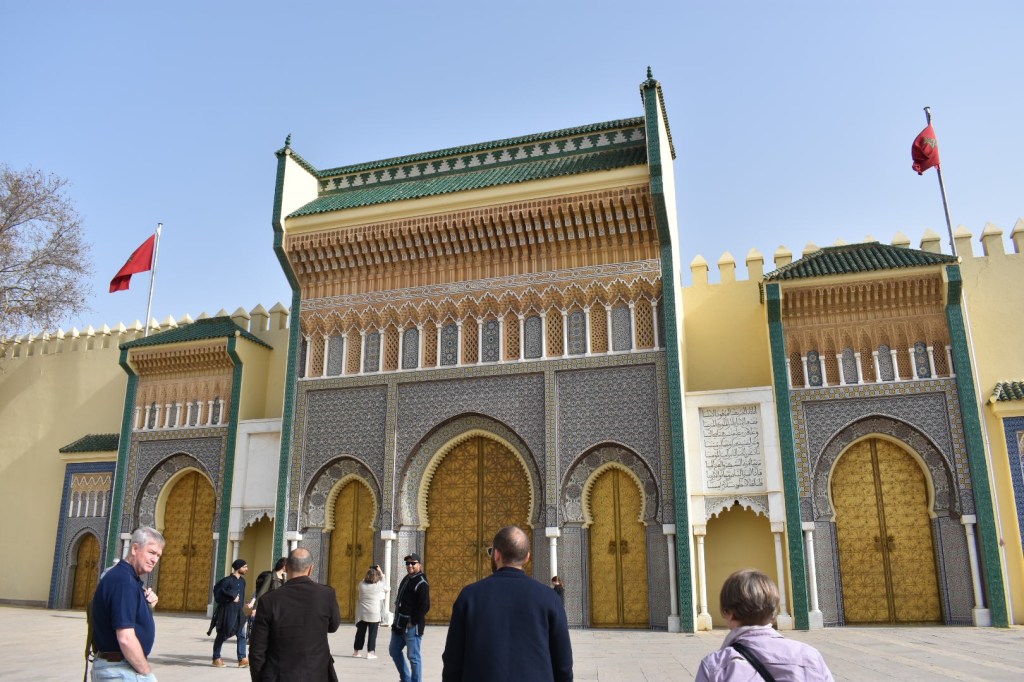
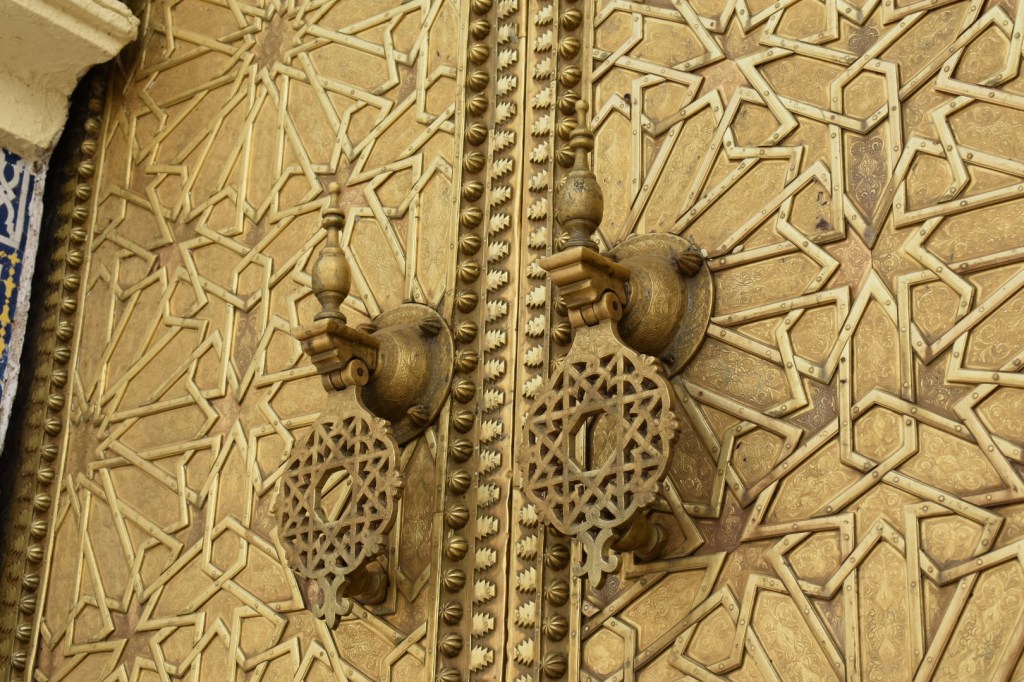
Royal palace
Mellah

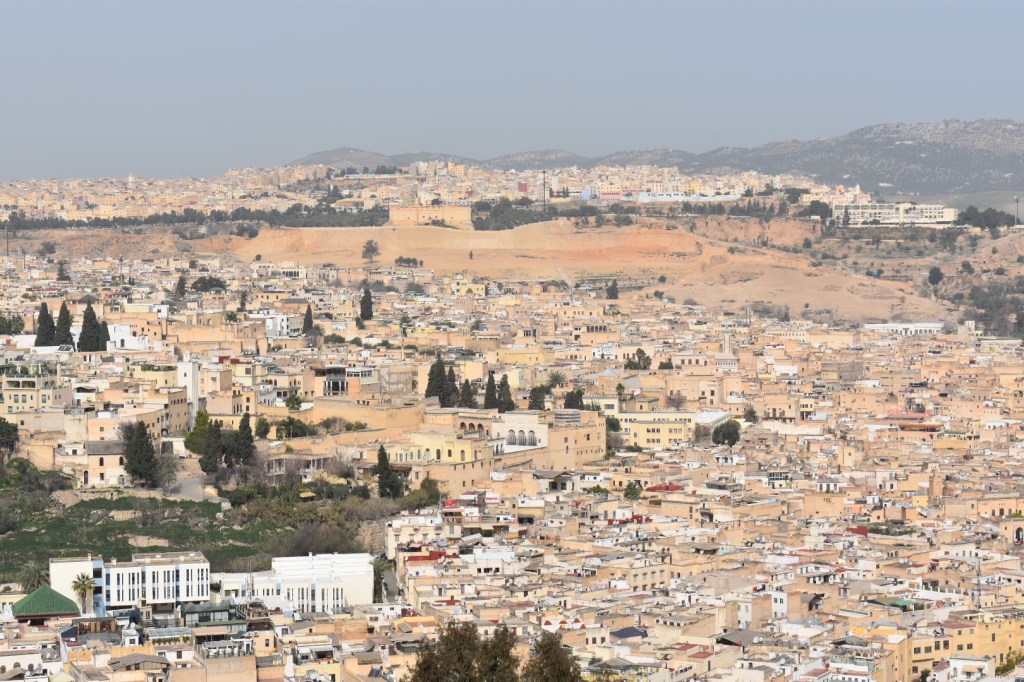
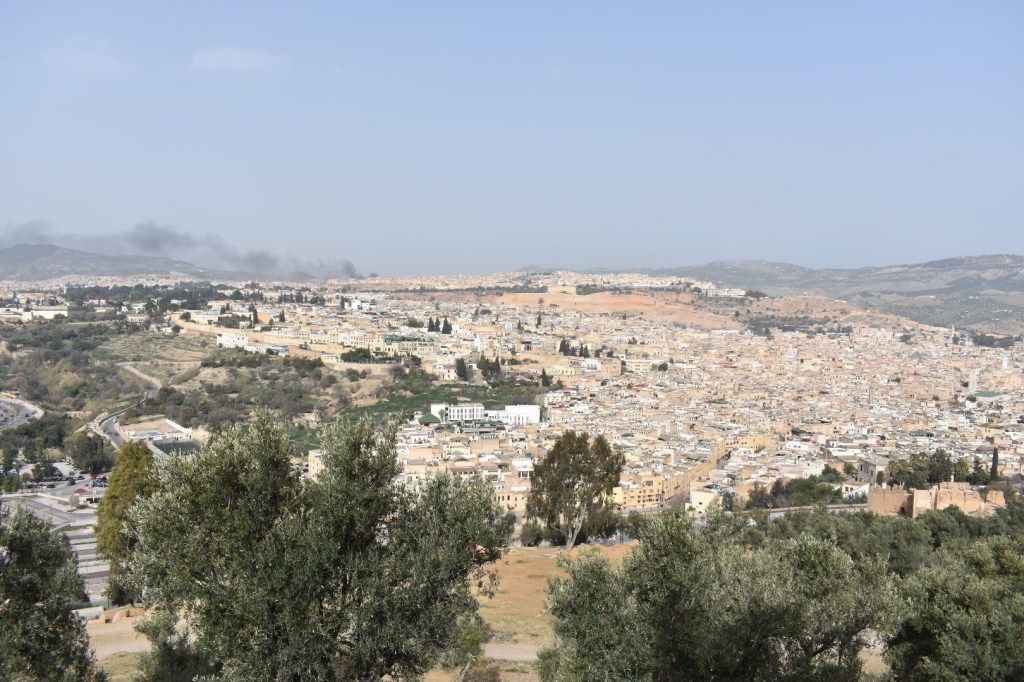
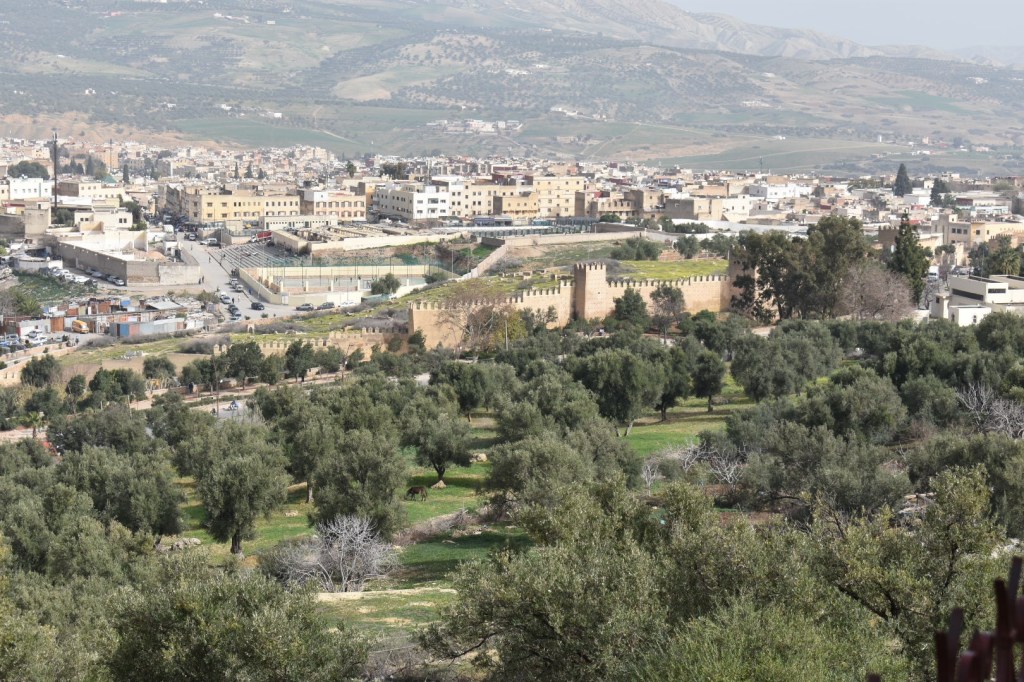
We drove up to an old military building to enjoy panoramic views of the city. The medina in the foreground, new city on the hilltop, and contemporary roads and traffic along the city edge.

New city on the top of the hill, with the city wall in front of it and the medina in the foreground
Olive trees!

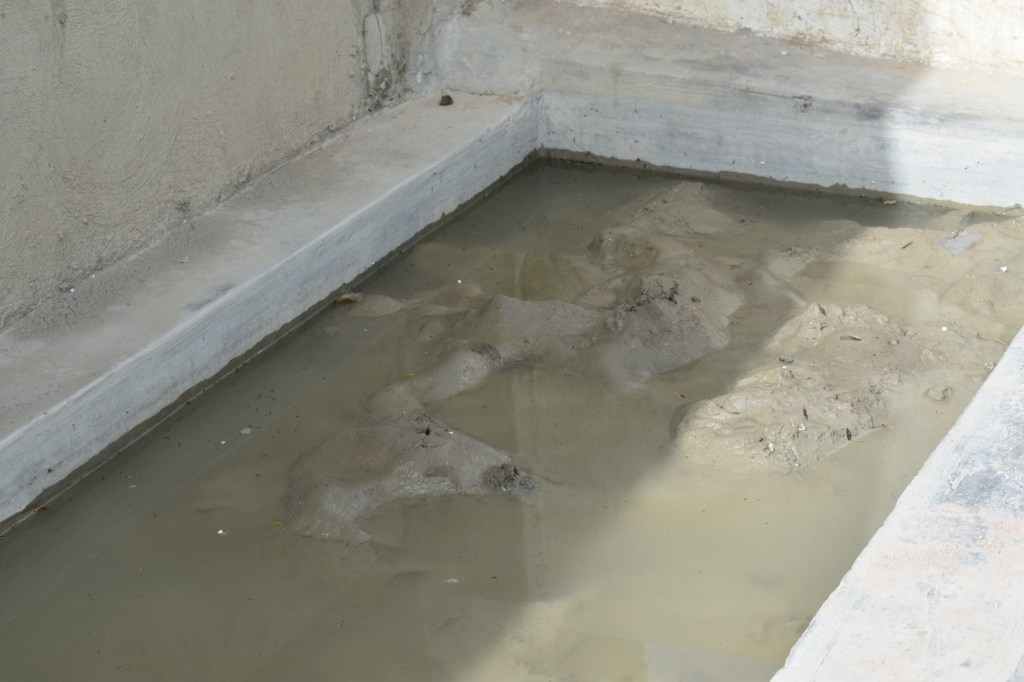
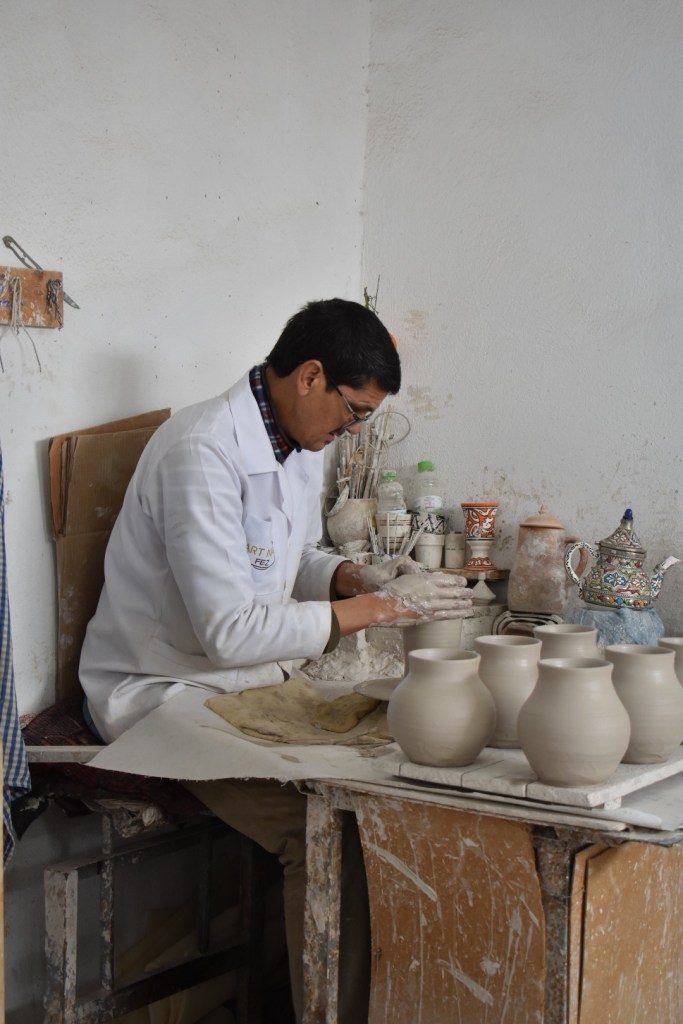
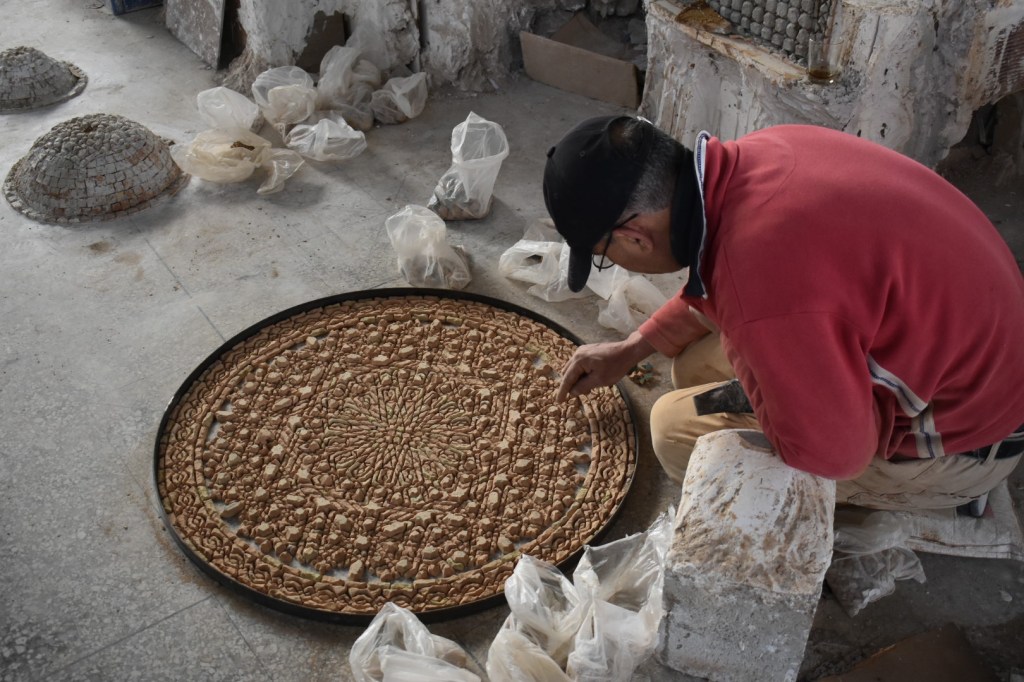
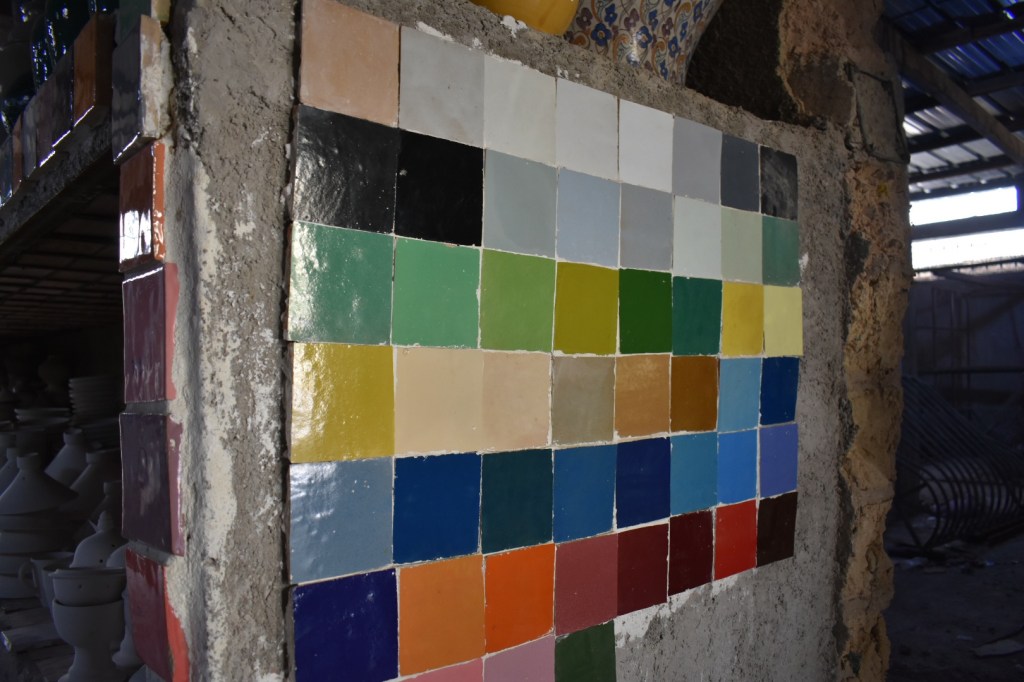
Next up was a ceramic manufacturer. We learned about the grey clay found locally and the soaking process that changes it from rock to (eventually) moldable clay. It then moves to be fired in a kiln. Historically, that was done outside the city in brick kilns using olive pits as fuel (so *that’s* where all of those pits go!), but now many things are fired in Italian-made gas ovens. From there, artisans stencil the clay, paint it, glaze it, and re-fire it. Mosaics are assembled from hand-cut chips of tile, assembled upside-down, and then glued to a board so they can be installed with reasonable efficiency. We made some small purchases, and Melissa ordered a custom table which I will quietly covet. 🙂
Hand-assembling mosaics
Color options, all from 4 naturally-derived sources

Back in the medina, we were able to look inside Madrasa al-Attarine, a Koranic school. 250 boys would’ve lived in this school when it was active. The rooms are incredibly tiny, and I truly can’t imagine living in a room barely big enough to lie down in, but then again, the pious religious life has never been my calling.

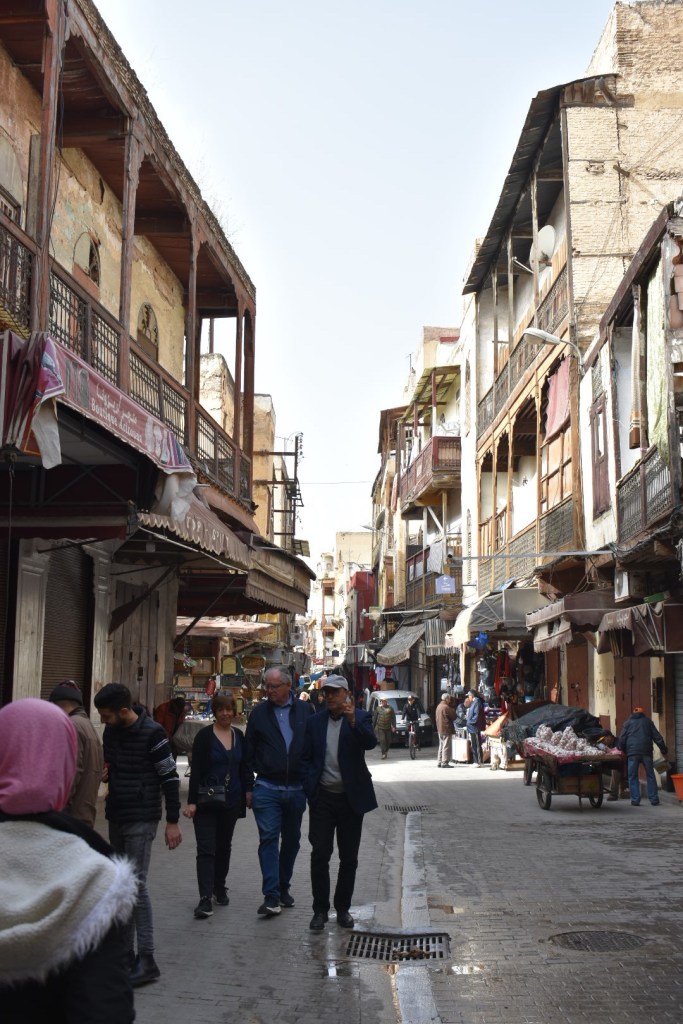
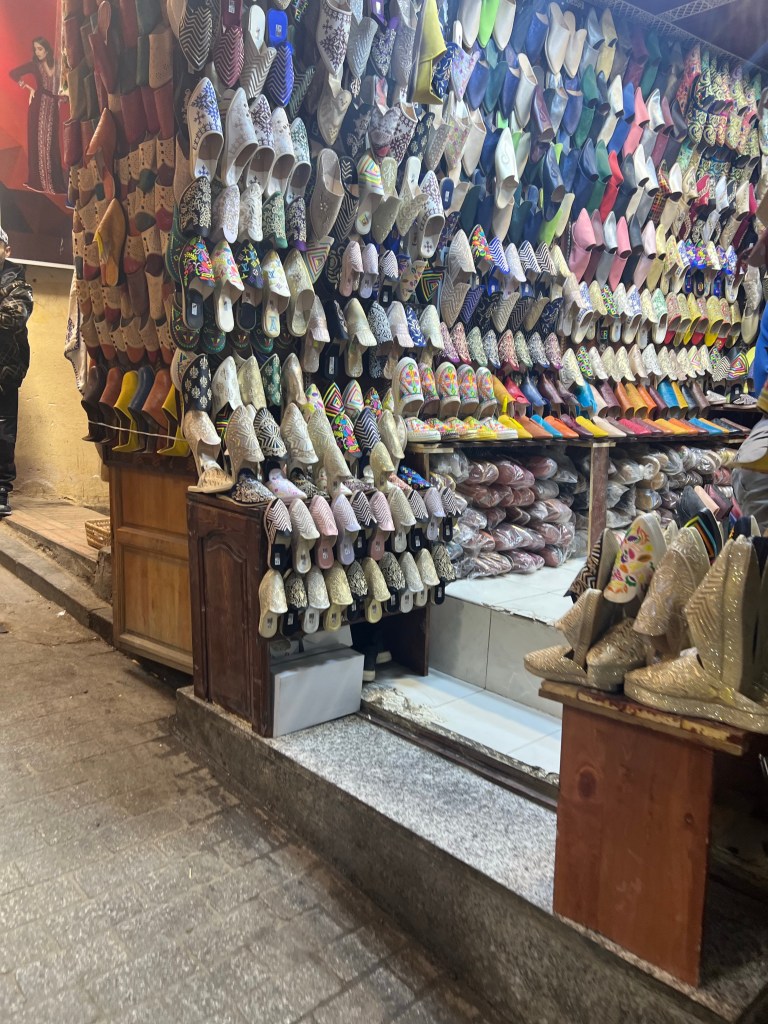
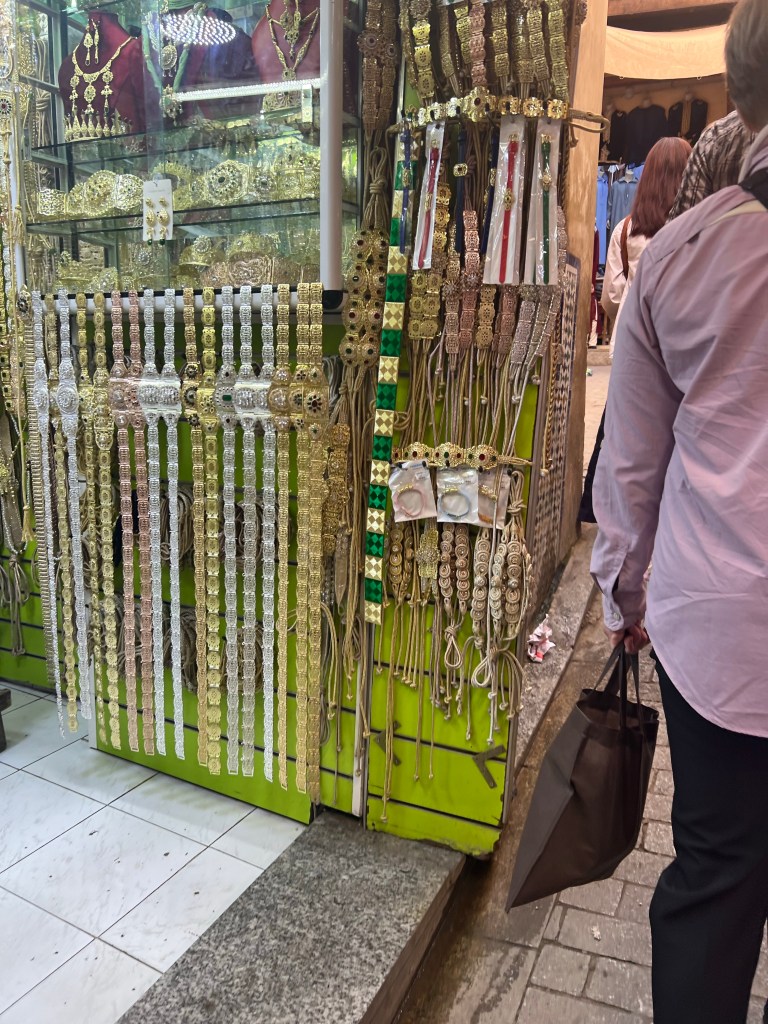
The medina is complete chaos. Apparently there are sections, but sectioned chaos still rounds out to be chaotic. Slippers, fabric, dates, so many things for sale!

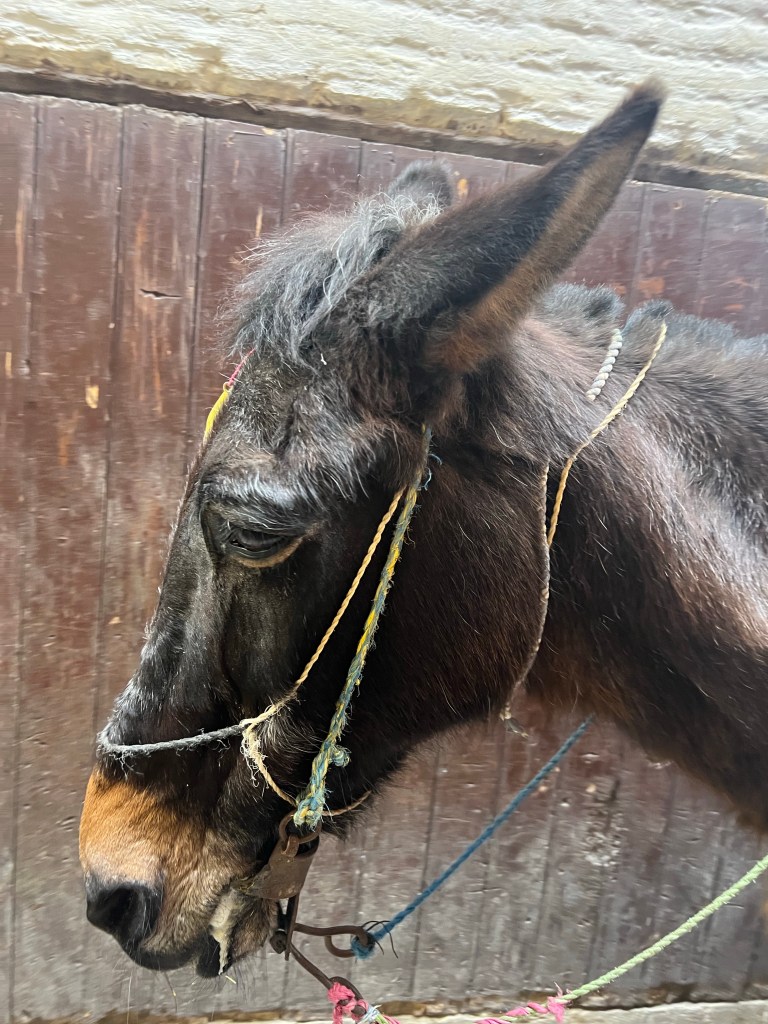
“Medina taxi” (no cars are allowed in the medina)

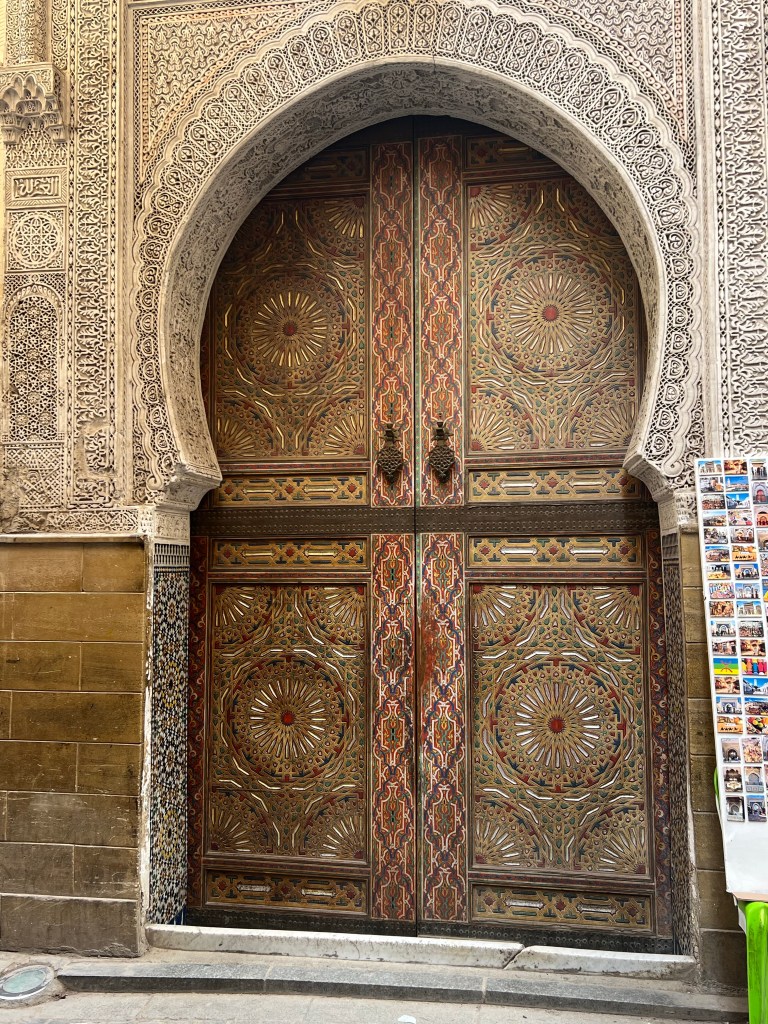
We passed several more mosques, which always seemed to spring out of nowhere. In Istanbul, they are massive and impossible to miss, but in Fes, they are sneaky.

Mosque door

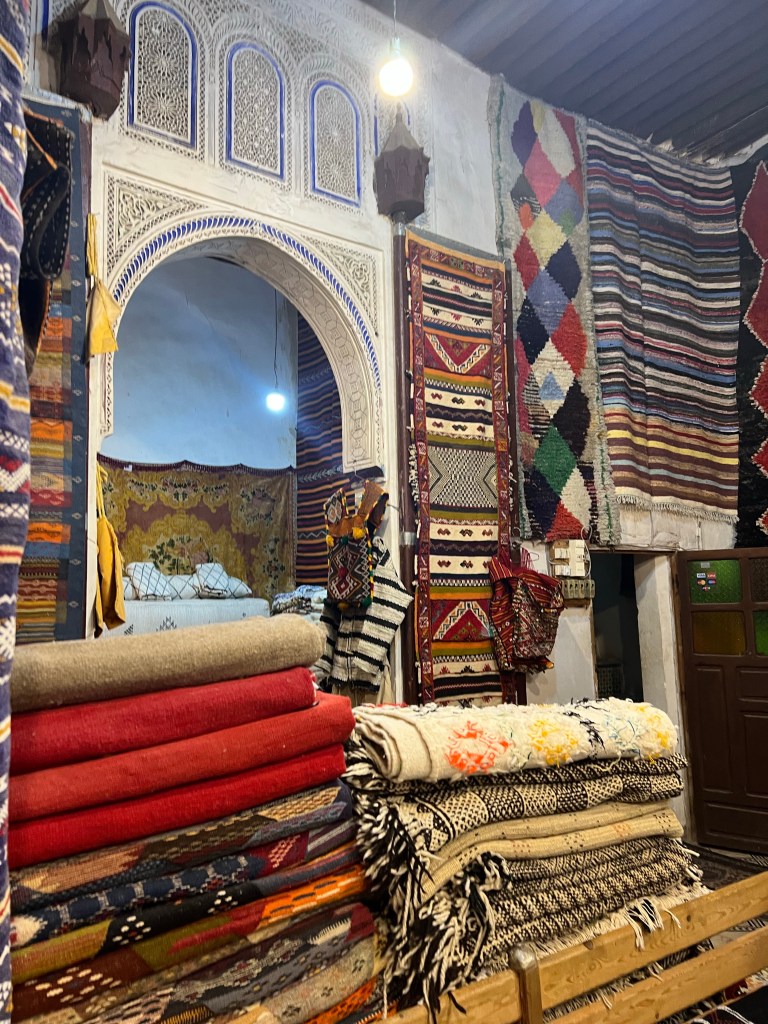
In addition to the ceramics, we also went to a Berber rug manufacturing house. I must admit, I seem to have a soft spot for these kinds of rugs. Thankfully, I went with a smaller rug than what I bought in Turkey (my house isn’t big enough to support two giant rugs!). Men make blankets (horizontal looming) and women make the blankets (vertical weaving). I can’t imagine I’d have the patience for such handiwork. 😉

Berber carpets

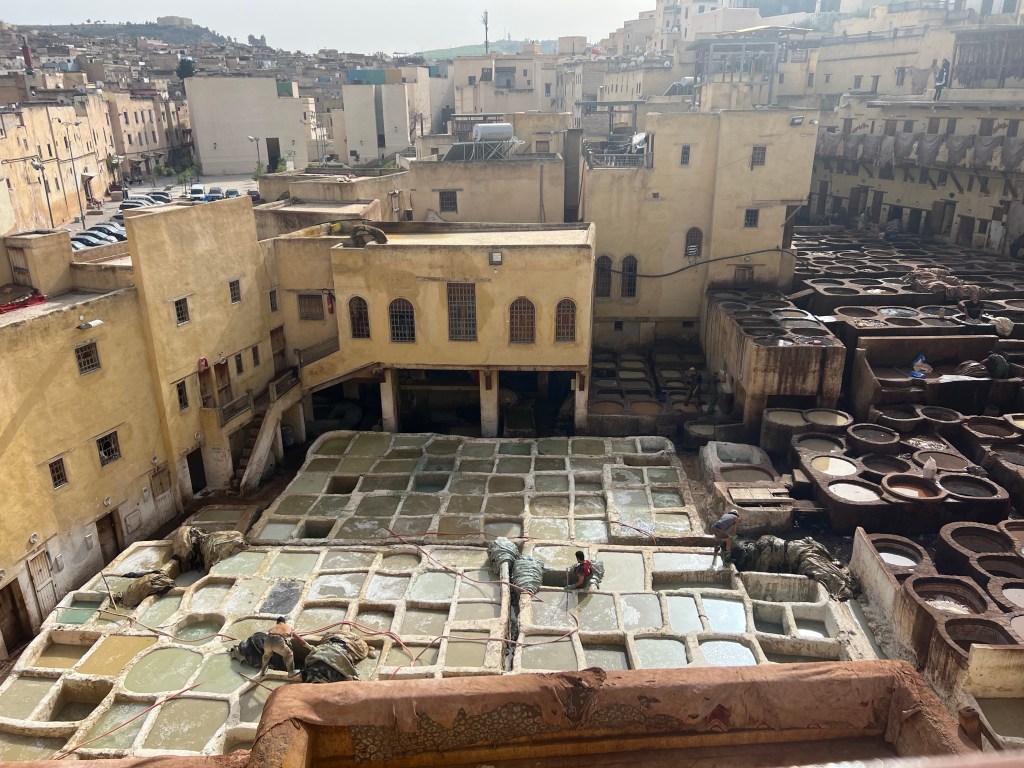
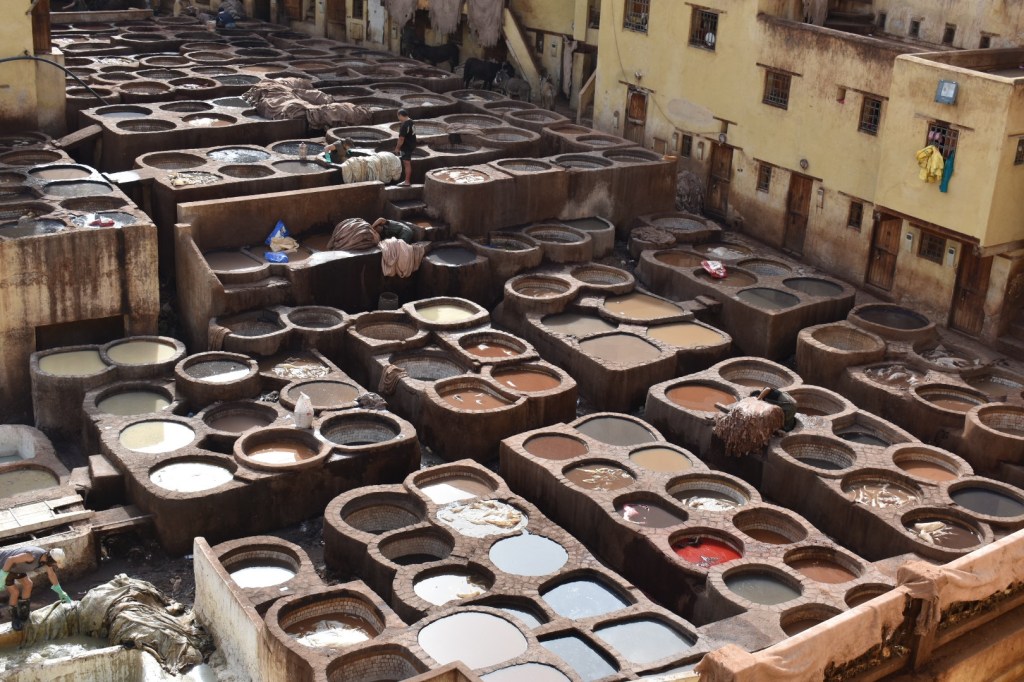
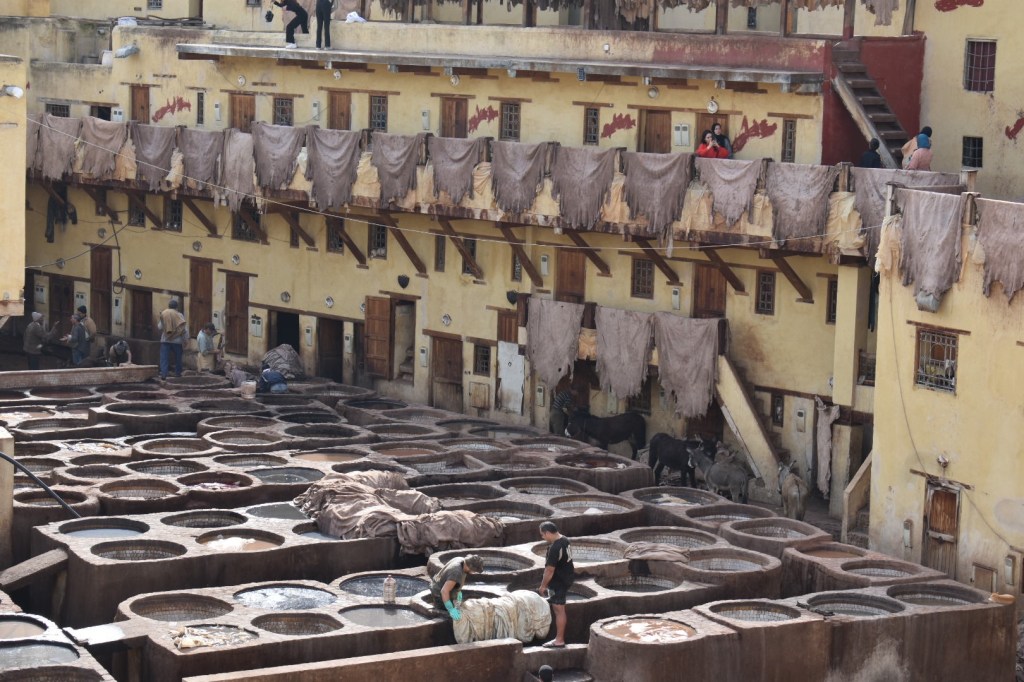
Last main stop of the day: the Chouarra Tannery. I’d heard the stench is very strong, but a gentle breeze helped to keep things quite tolerable. They explained to us how the raw hides come from the slaughterhouse and spend one night in a vat of water, lime, and pigeon droppings. Yes, pigeon droppings! (In other countries, they use horse urine or guano, so the excrement part isn’t that unusual). After 24 hours, they go to coloring vats, where they get soaked and pounded for 6 days to absorb the desired color. As with the tile, there are only a small number of base colors used to create the rainbow of finished leather colors. Here I resisted making any purchases – having no leftover space at home helped to keep me in check!

Phase 1: water, lime, and pigeon droppings
Phase 2: color soaks
Camel hides dry above

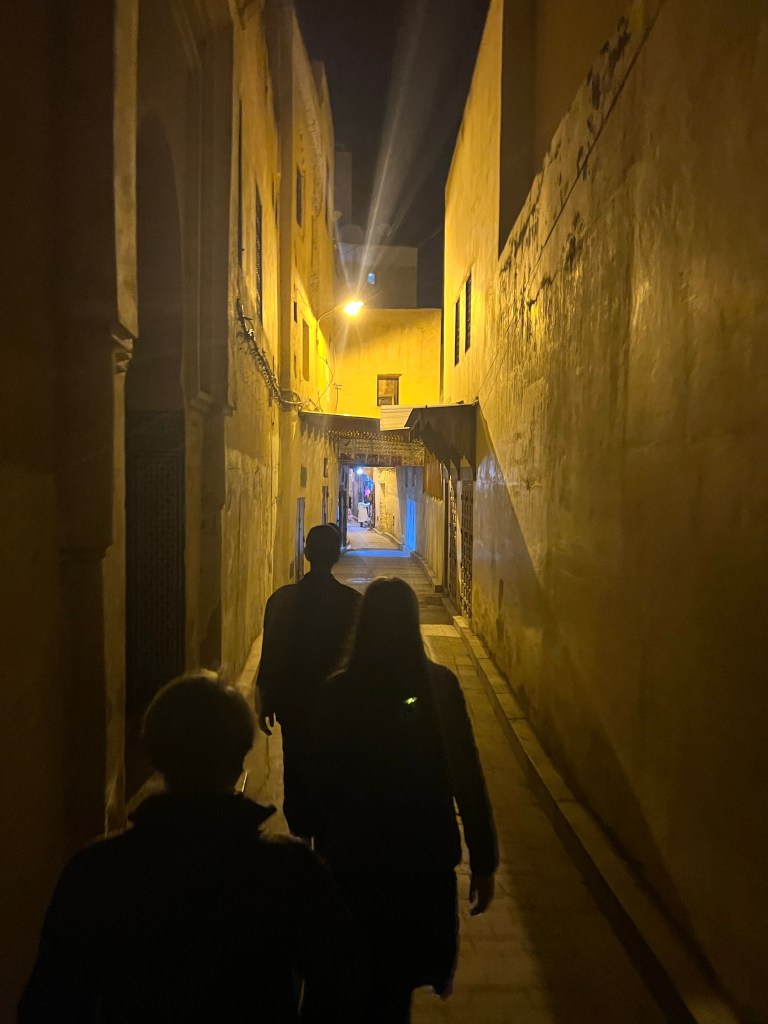
By 4pm, we were back at our riad. We got a bottle of wine and enjoyed the rooftop deck for a bit before heading out to dinner. Thankfully, the restaurant sent a runner to get us and to bring us back or we would never have managed to find the restaurant or our riad. Not only did I feel better knowing we were being guided by somebody who knows the way, but the city is also almost exclusively male territory at night. Most women are at home, and men go to coffee shops to watch soccer games on tv, or they hang out in the street. I never felt unsafe, but I also don’t see any reason for a group of obvious tourists (3 of whom are female) to push it by being out late and unguided.

Streets look much different when emptied out at night

We saw a bunch of things today, yet I know we barely scratched the surface of this crazy city. I don’t really understand why Fes gets such an understated billing in guide books – I though it was a pretty wild and unusual city, and I could see spending more time here to get better acquainted with the rhythm.

The road less traveled…

…is not the one we took today. I cannot explain adequately how Moroccans drive. They speed, until they see the obvious speed cameras or radar set-ups. They tailgate so closely that you can almost join the conversation of the car in front of you. They regard lane markings with a dismissive air and generally meander across all available roadway. They pass with confidence that may, at times, be overly-generous.

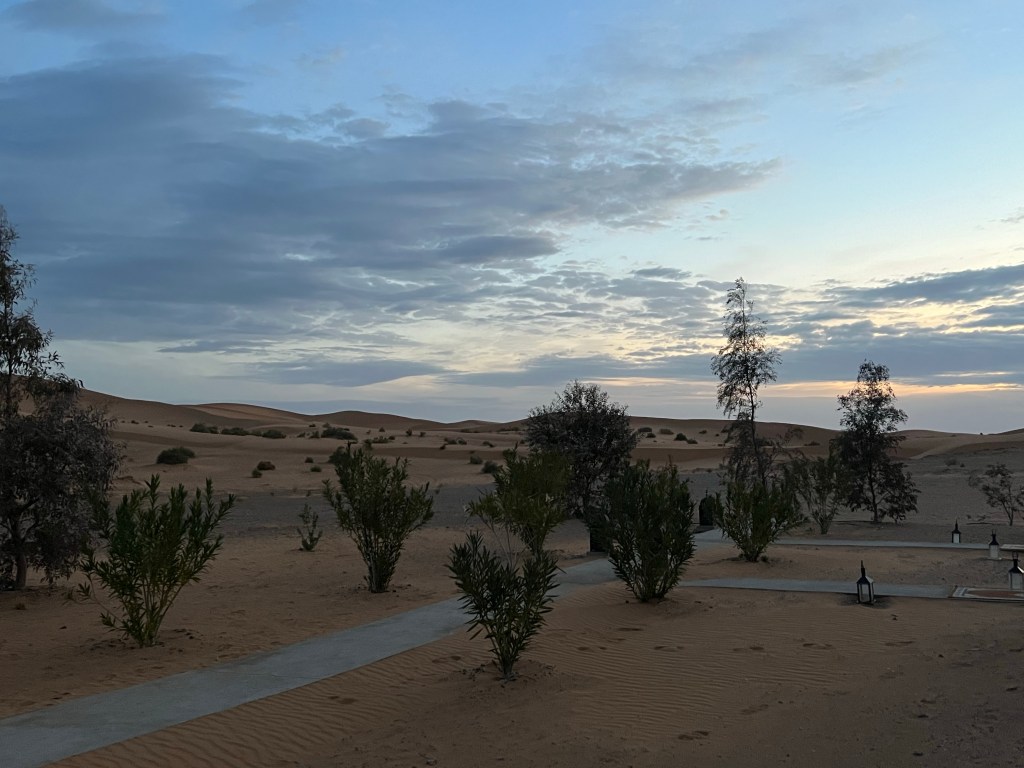
So, of course, we are spending 7 hours in a car today! We woke up (freezing) to see the dawn break over the Saharan dunes. Beautiful!

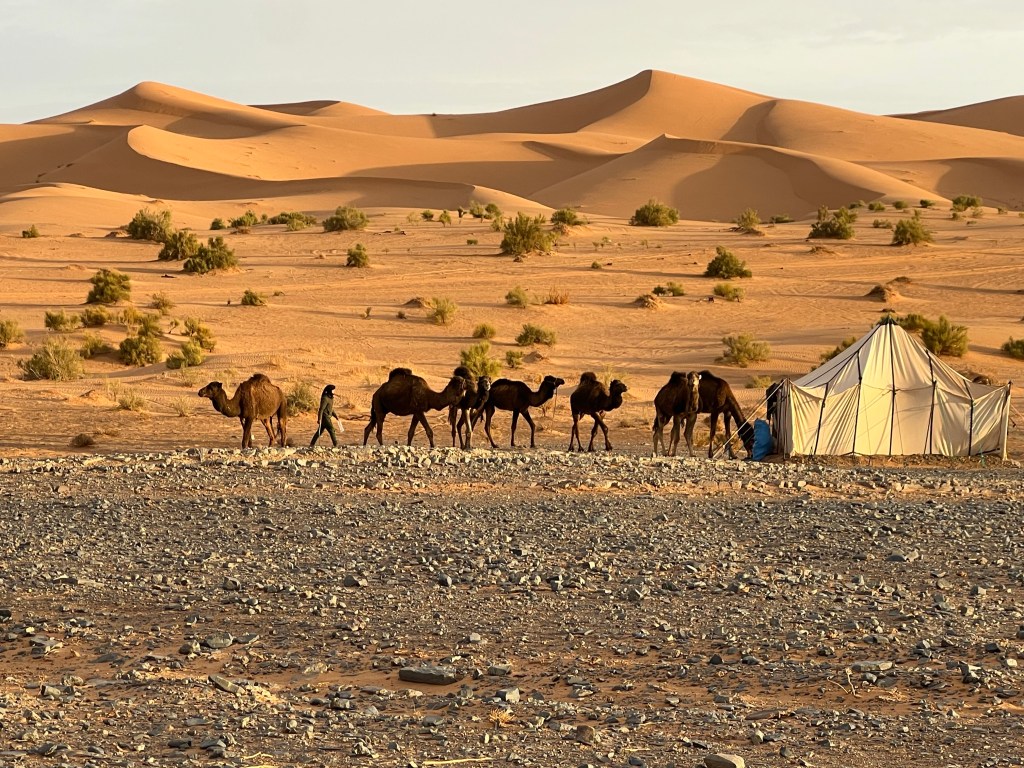
After a wonderful breakfast, we headed out toward Merzouga to meet our driver for the day. Along the way, one of my great questions – where do the camels we rode live – was answered! (Turns out, they live nearby, and they can, in fact, run!)

Camels at home!

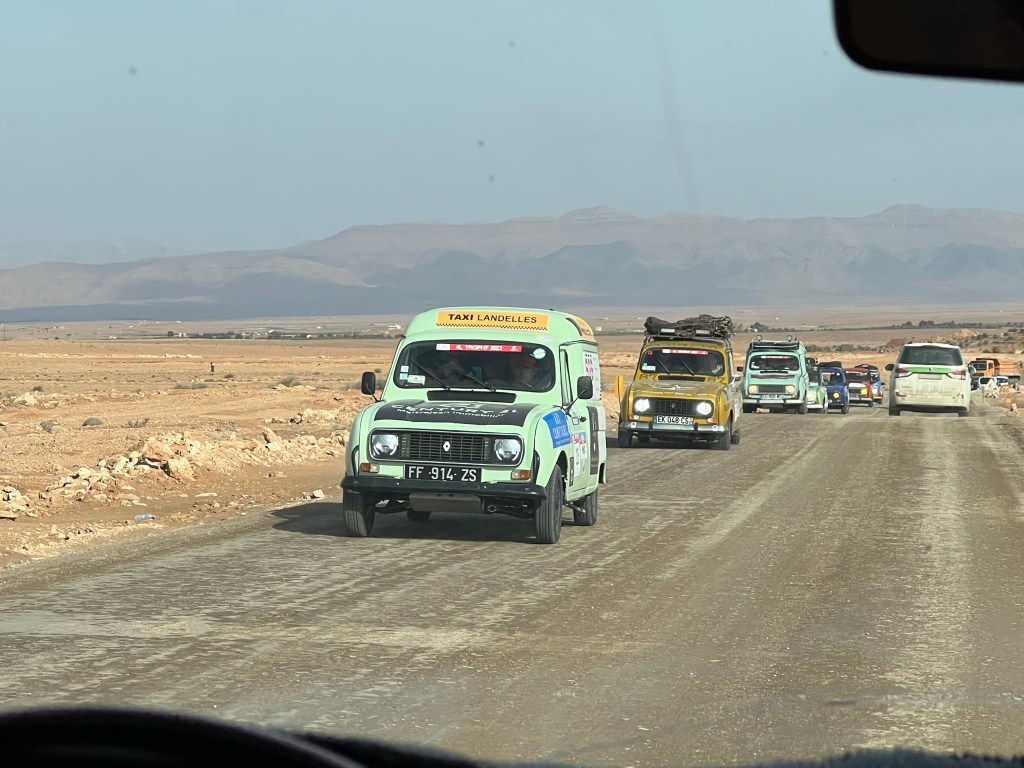
From Merzouga, we headed north back toward Errachidia. Many similar sights, not much new to report here. When we got to Errachidia, we pulled over and got a new driver. Not sure what was going on there, but whatever! There was some kind of rally going on and we passed hundreds of funny little Cintroens heading south. We were all intrigued!

We saw hundreds of these!

We passed every kind of landscape imaginable today. In the south, it’s mostly desert or desert-like, with parched red-brown dirt all over and greenery only in oases. Architecture in those areas almost looks Egyptian, with very square, squat buildings. The area generally doesn’t look prosperous.

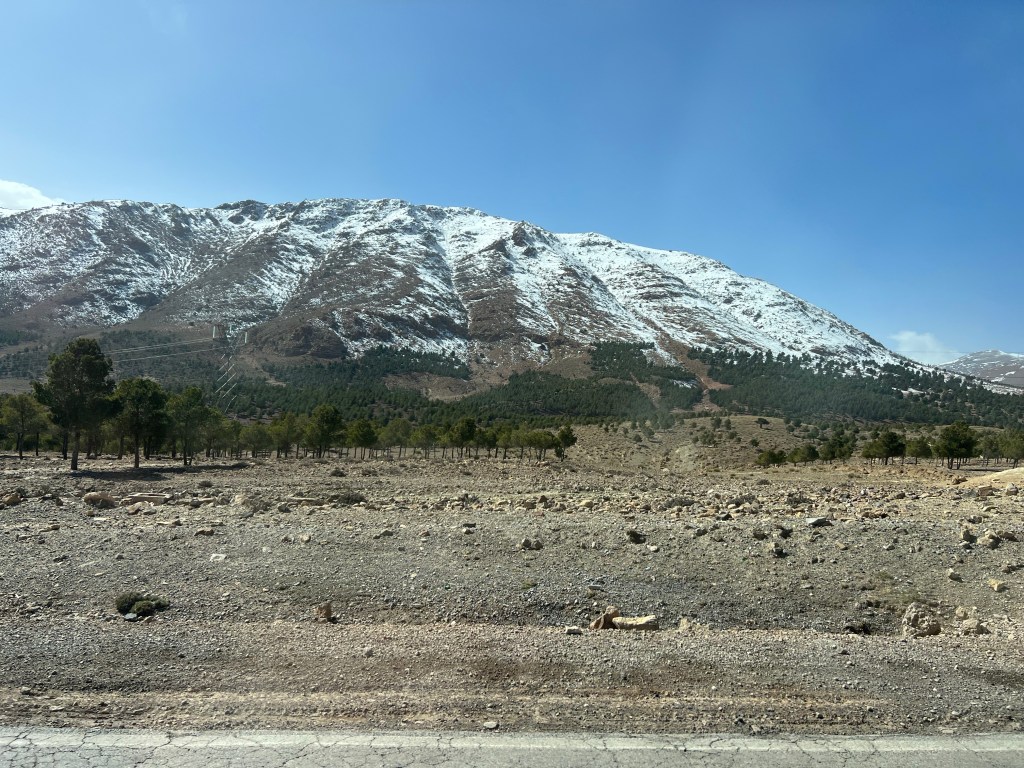
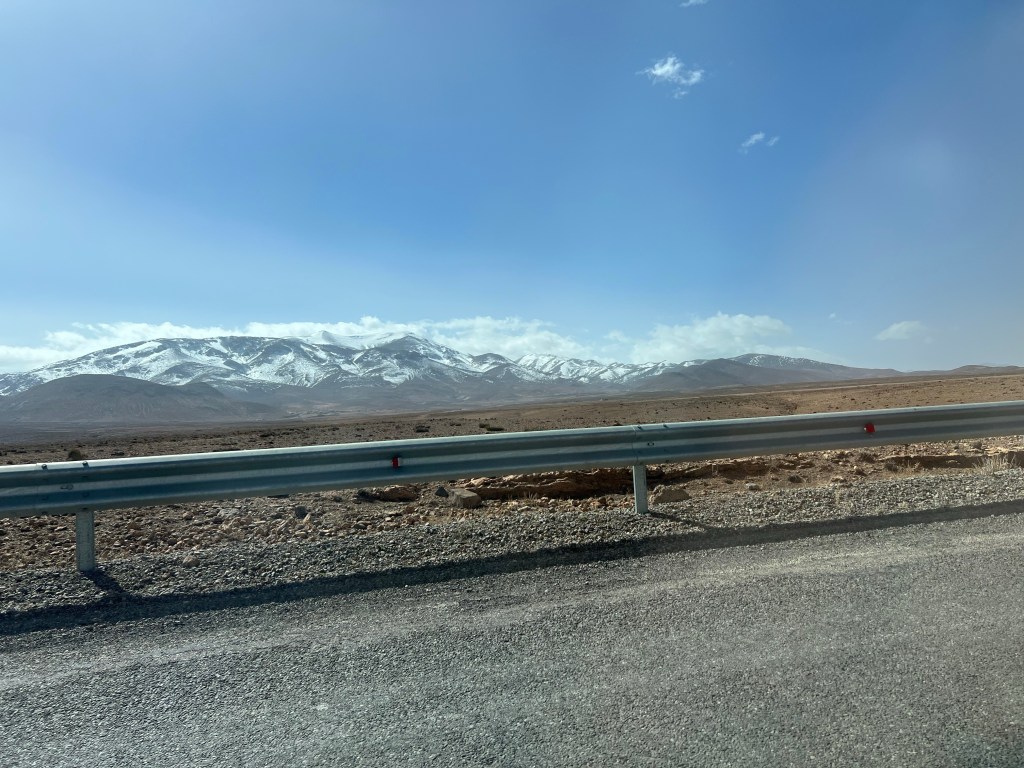
Phase 2 included the Middle Atlas Mountains. Switchback roads snaked along snow-capped mountain peaks. Rocky canyons were all over. These areas were sparsely populated, at best.

Middle Atlas Mountains

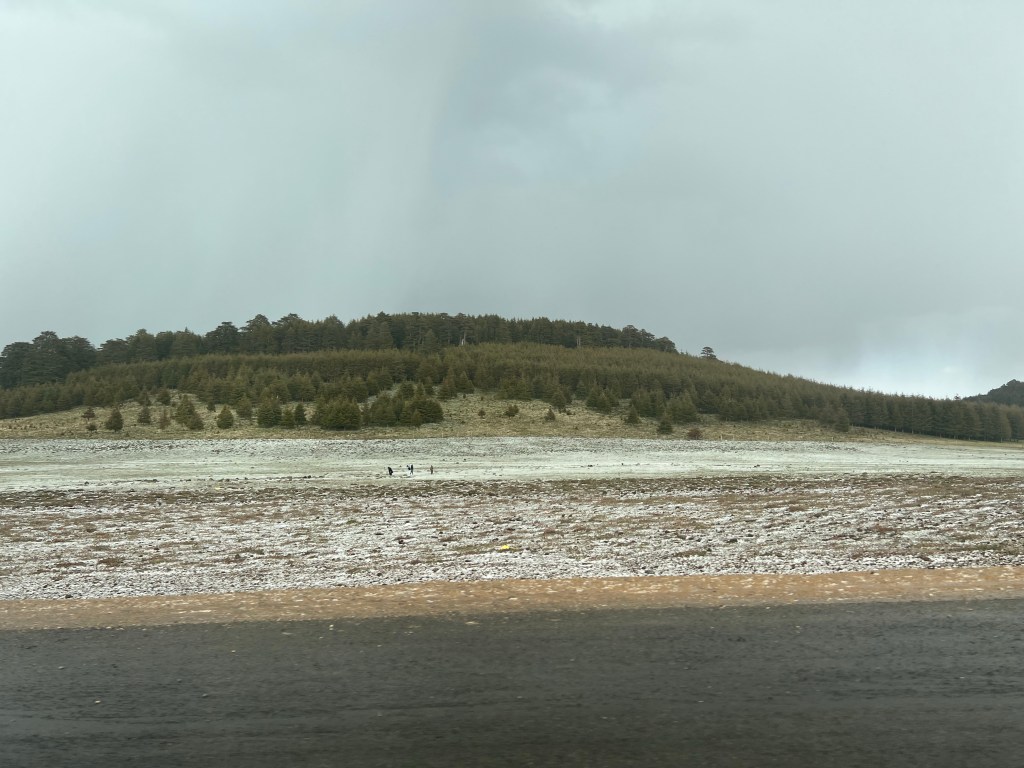
Phase 3: greener valleys lined with farms and apple orchards. Prosperity is more common, and the King of Qatar even has a palace in this region of Morocco. We had a surprise sleet storm while driving through here!

Ground covered in sleet!

We stopped for lunch in some town – no idea where. Moroccans seem to have portion control issues because we again were served way too much food for us to be able to finish. Skewered meat, couscous, salad, bread. All delicious, and all cheap.

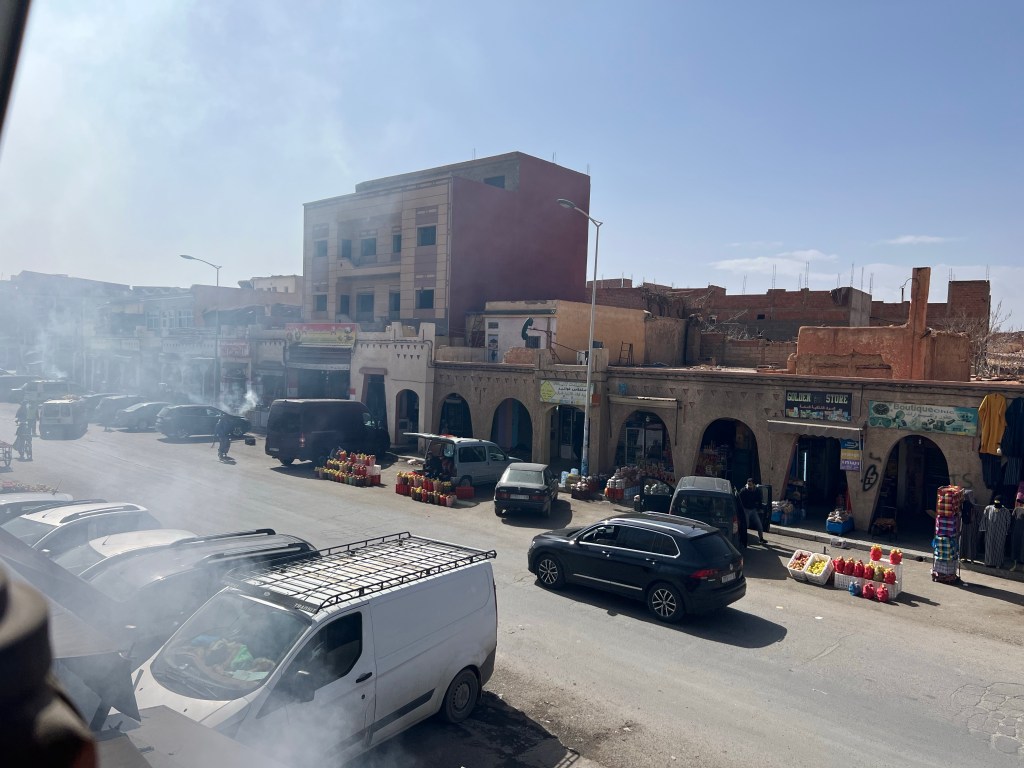
Lunch town, with smoke from our food being cooked

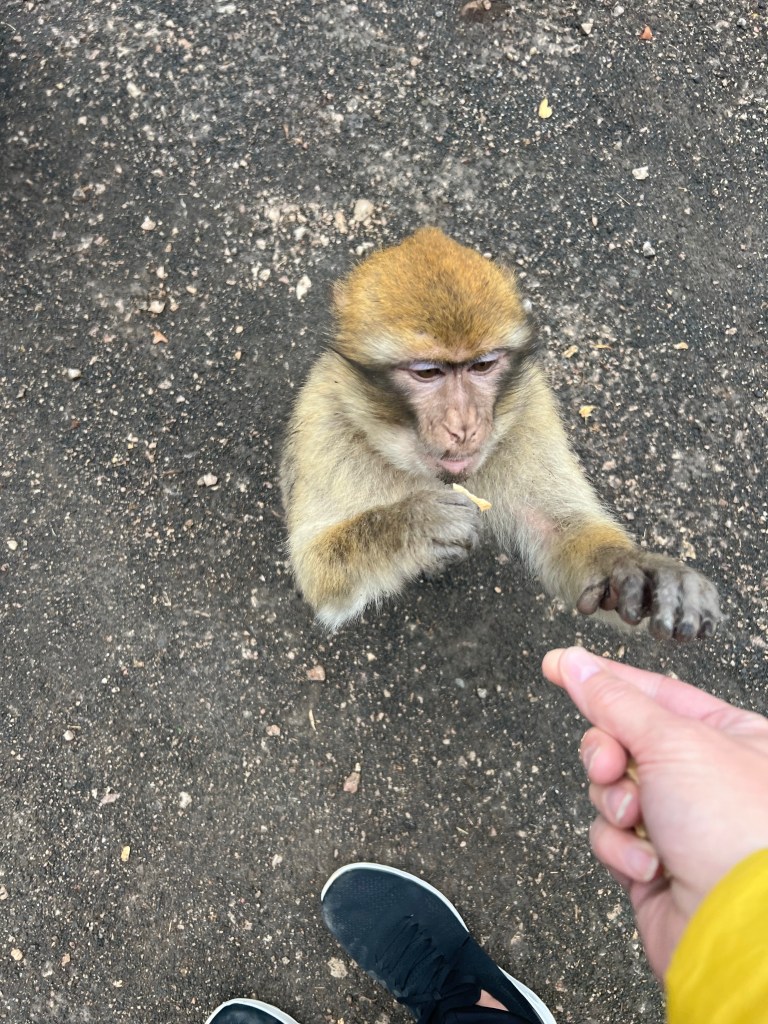
Next up, forest – with monkeys! These monkeys line the road and wait for folks to stop and hand them bits of food. They are kind of cute, but also kind of scary. I know that even little monkeys can hurt me if they want, so I tried to play nicely. 🙂
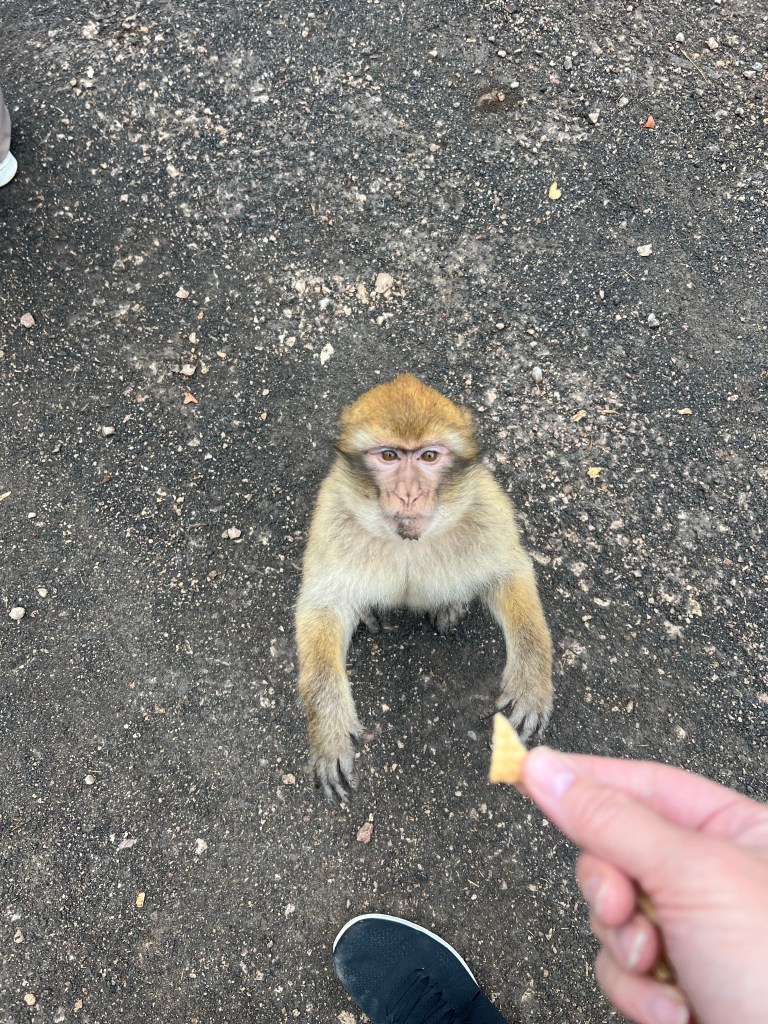
They take food right from your hand!

Last stop: Fes! I thought maybe we would wing it without a guide. The second we got to the edge of the old city and I saw what I was up against, I changed my mind. There are 9600 “streets” inside the pedestrian-only walled medina and I got turned around immediately. It is a city that is alive, with people moving through its alleys whether they want to or not. Yeah, a guide is a great idea!

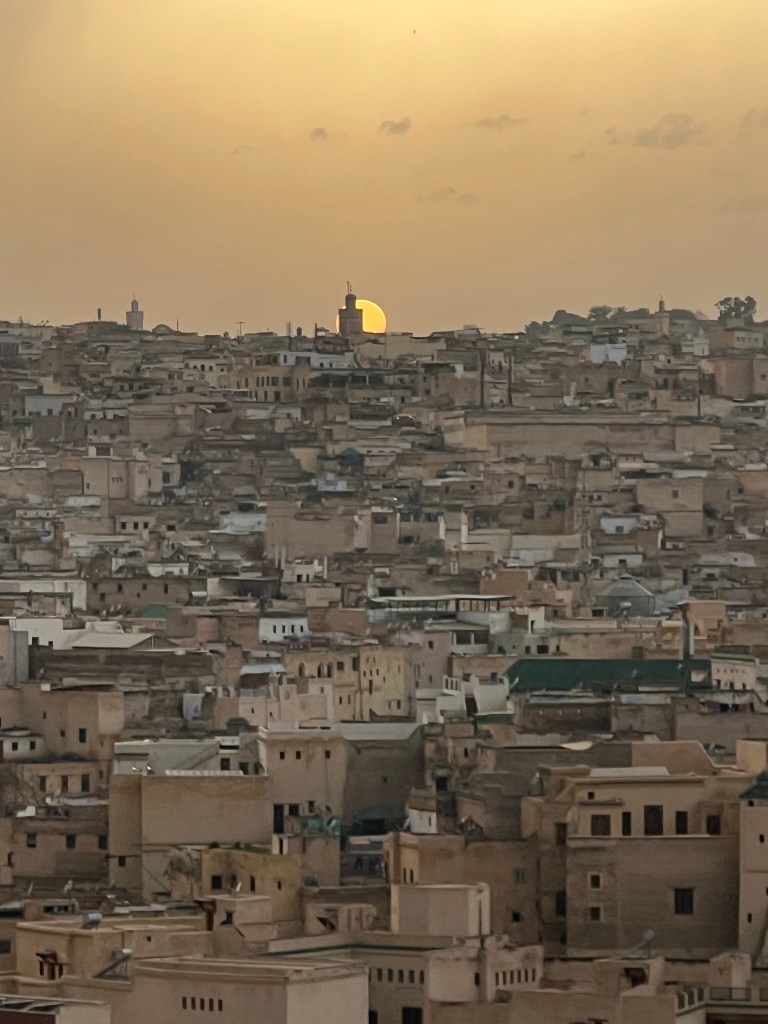
Sun setting over Fes

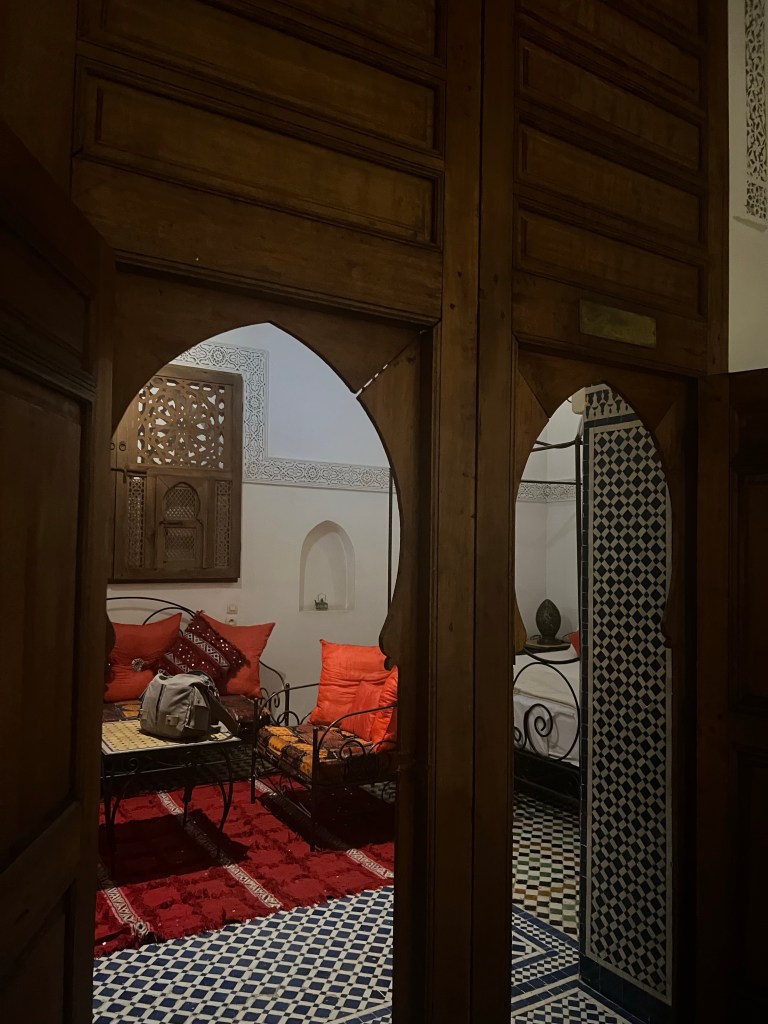
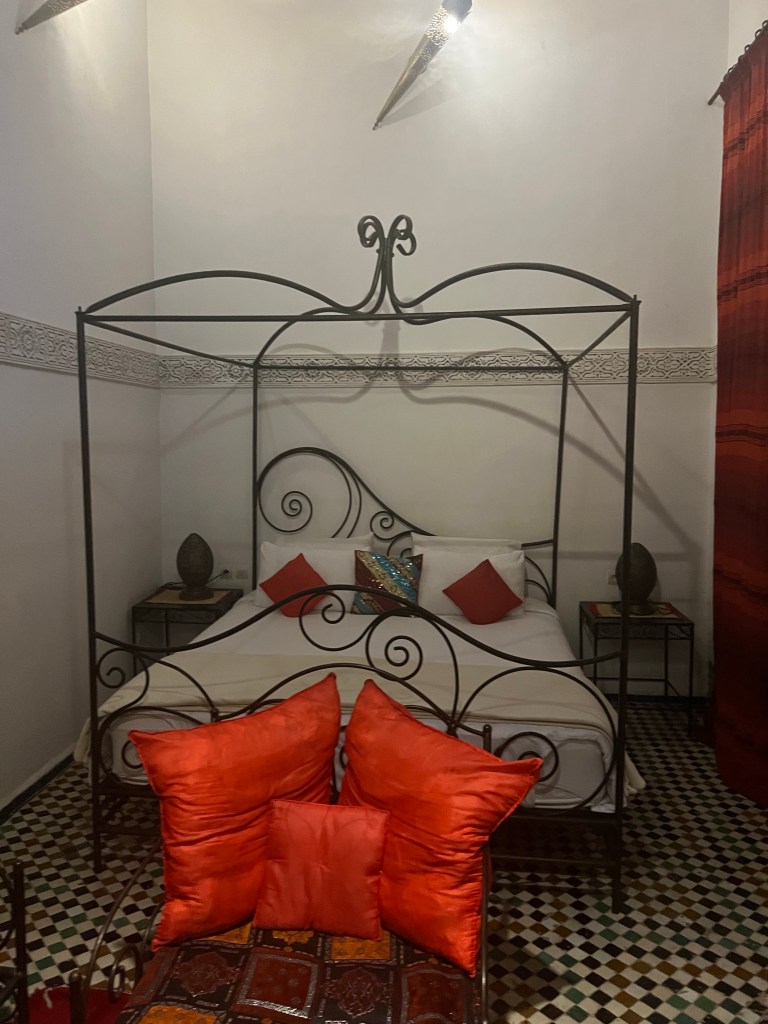
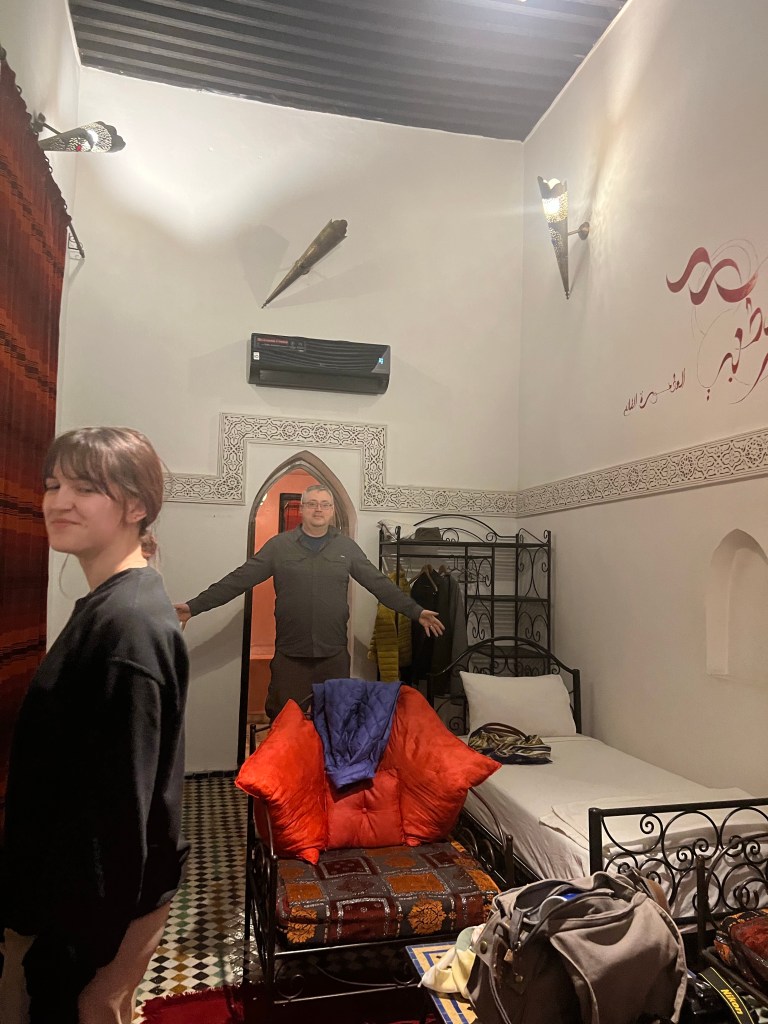
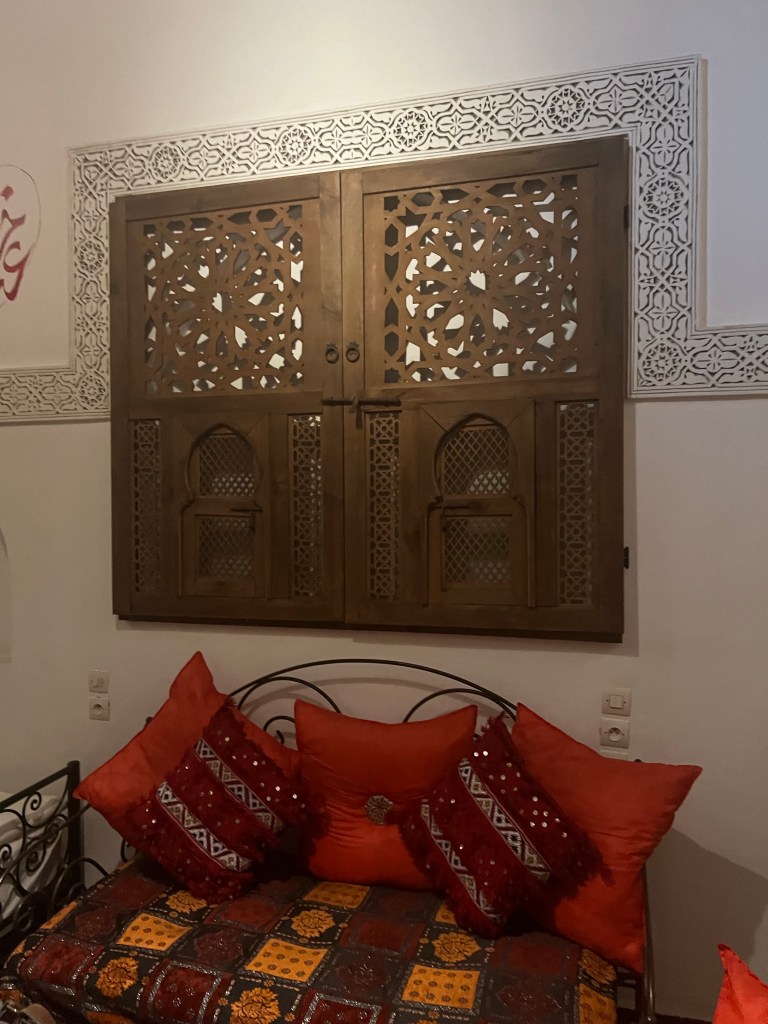
Our lodgings are in a riad – the home of a royally-connected family from the history’s past. Ours is dated from 1361! It’s a stunning building, and our room is amazing.

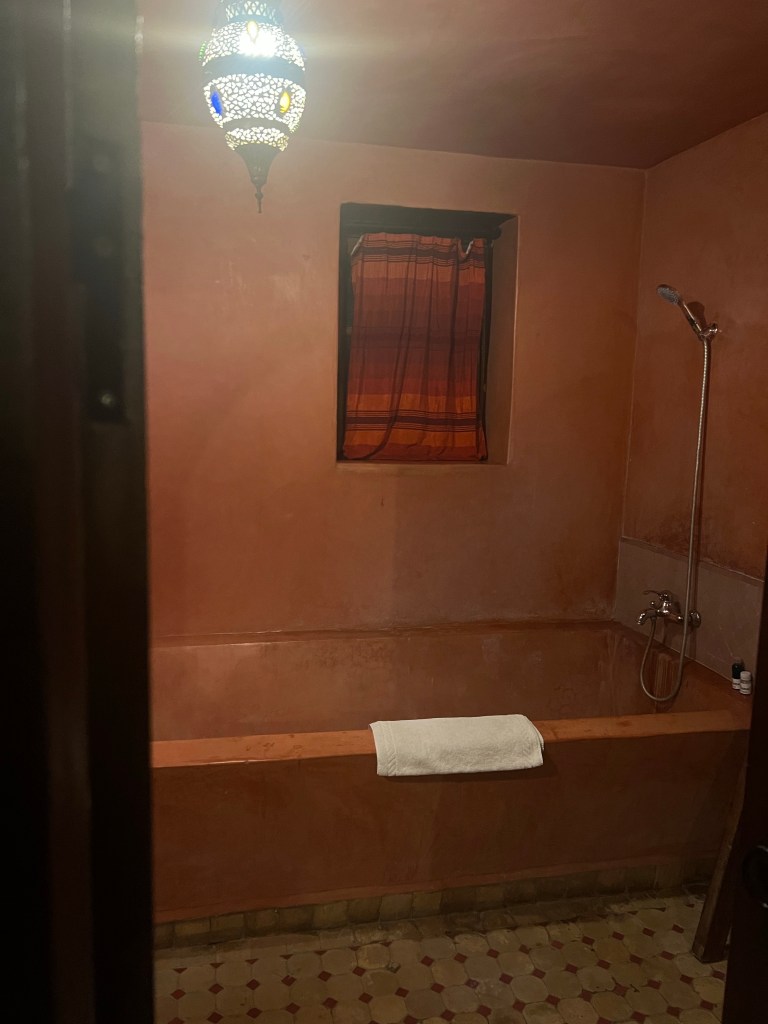
Largest tub ever
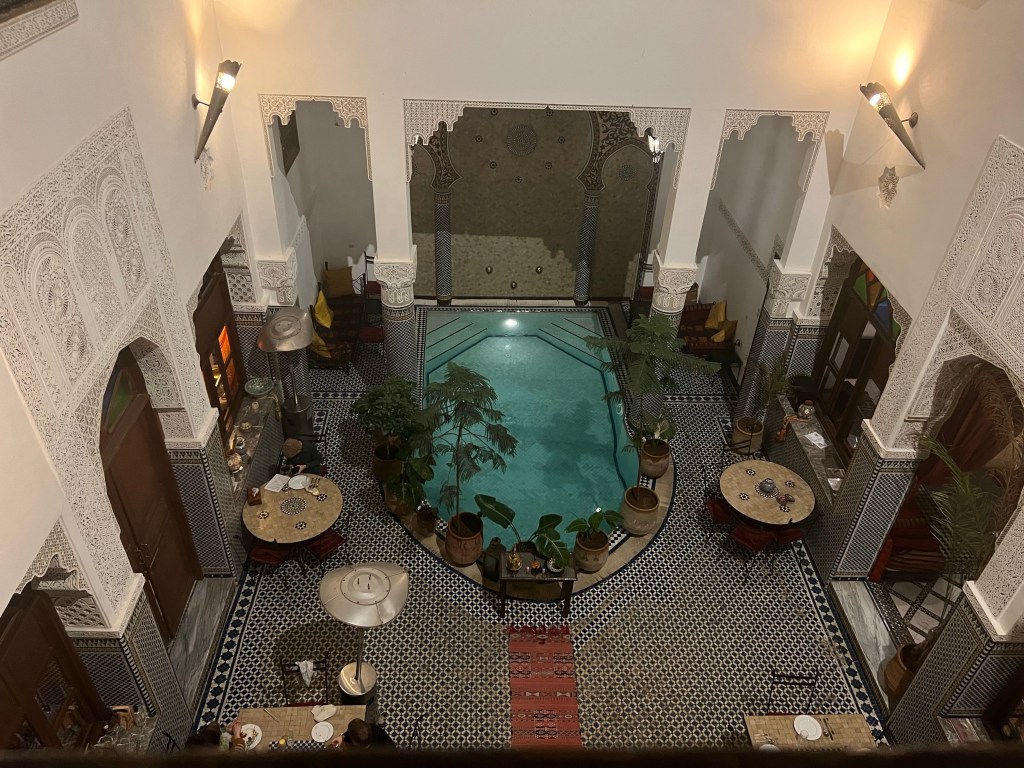
Courtyard, which used to be open to the sky

Nowhere to go but up

When I booked our flight, I thought nothing of a 5:30 pm departure. Flights to Europe always leave in the evening. What I realized as we boarded the plane is that 5:30pm is barely evening. Overnight flights never yield much sleep, but it is especially challenging when it is only 7:45 pm after dinner and you realize that you need to be thinking about sleep since the flight will be landing in 4 hours. We landed in Paris with so little sleep that we were all rather delirious. Within seconds of our 2nd flight leaving, we were all sound asleep.

Melissa had the genius idea to book her hotel in Casablanca for an extra night so we had a place to store our bags and, perhaps more importantly, we were able to shower after the flights. True genius!

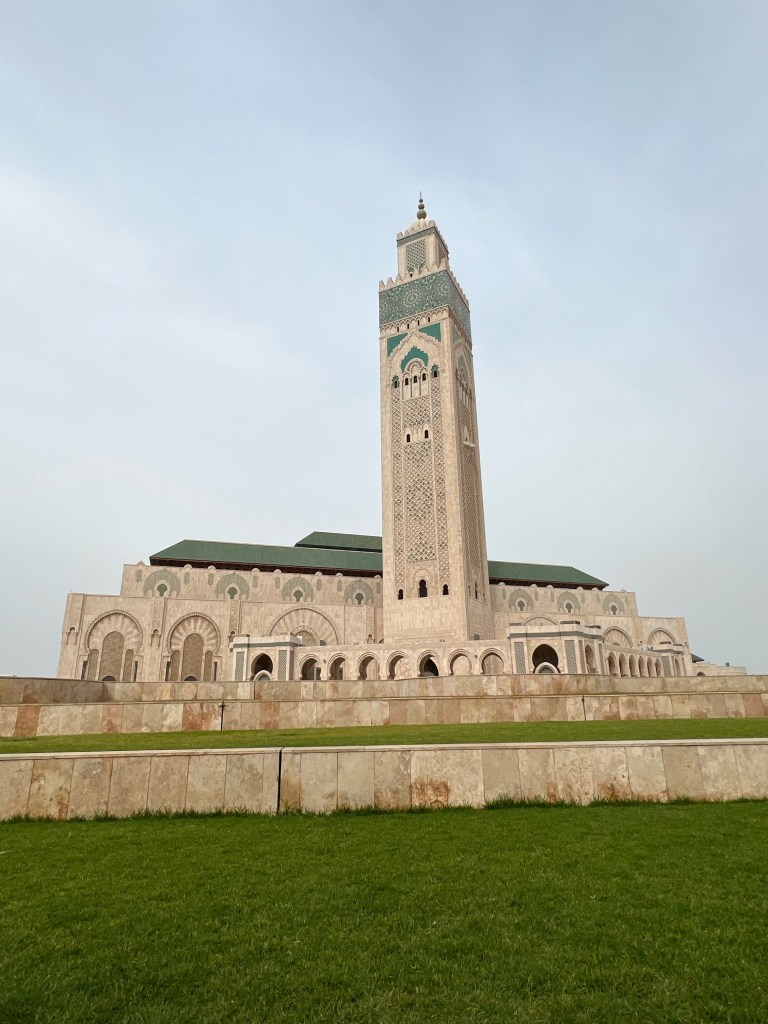
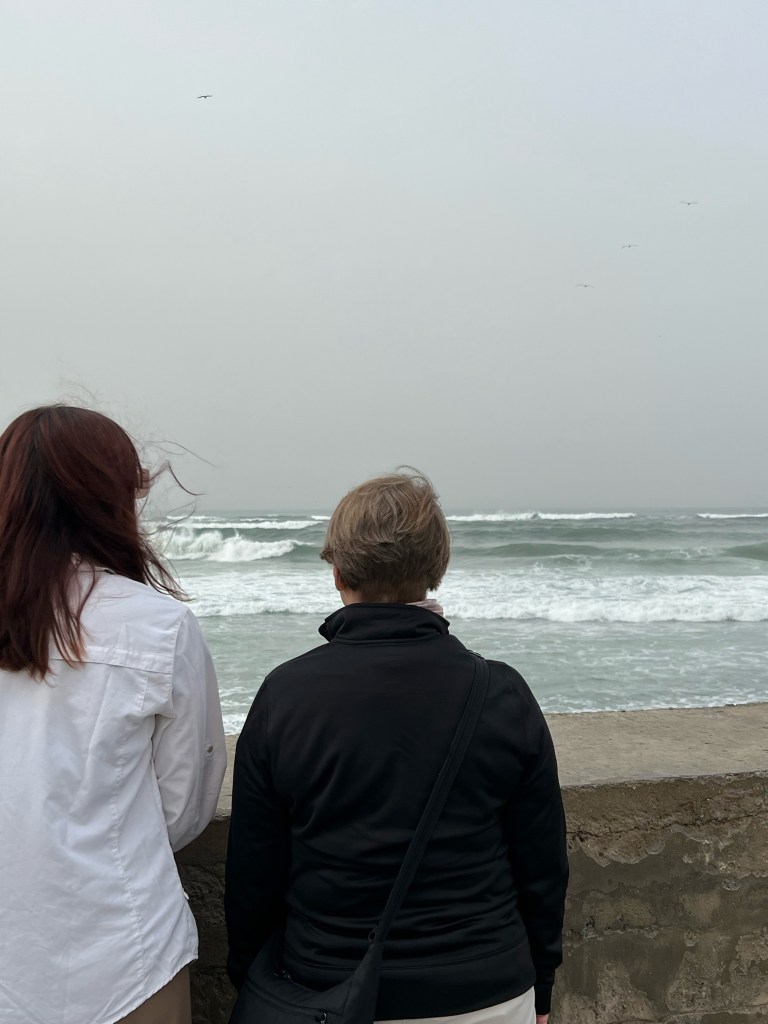
We had a nice lunch at a strange restaurant that served half a dozen dishes from half a dozen global cuisines, then we walked over to the Hassan II Mosque. It’s the largest mosque in Africa and the only one (at least in Morocco) that non-Muslims can enter. Unfortunately, we missed the 2pm tour and it seems that is the end of the visiting hours so we just walked around outside and enjoyed watching the surf for a bit.

Hassan II Mosque

We headed on over to the Marché Central, which the book describes as a bustling market. Well, market it was, but more of a wholesale type with fishy and produce stands – not really what we were looking for. At this point, it is 3:00 and we are done with Casablanca’s major sites. We stopped for a coffee and people-watching while we sorted out our next steps.

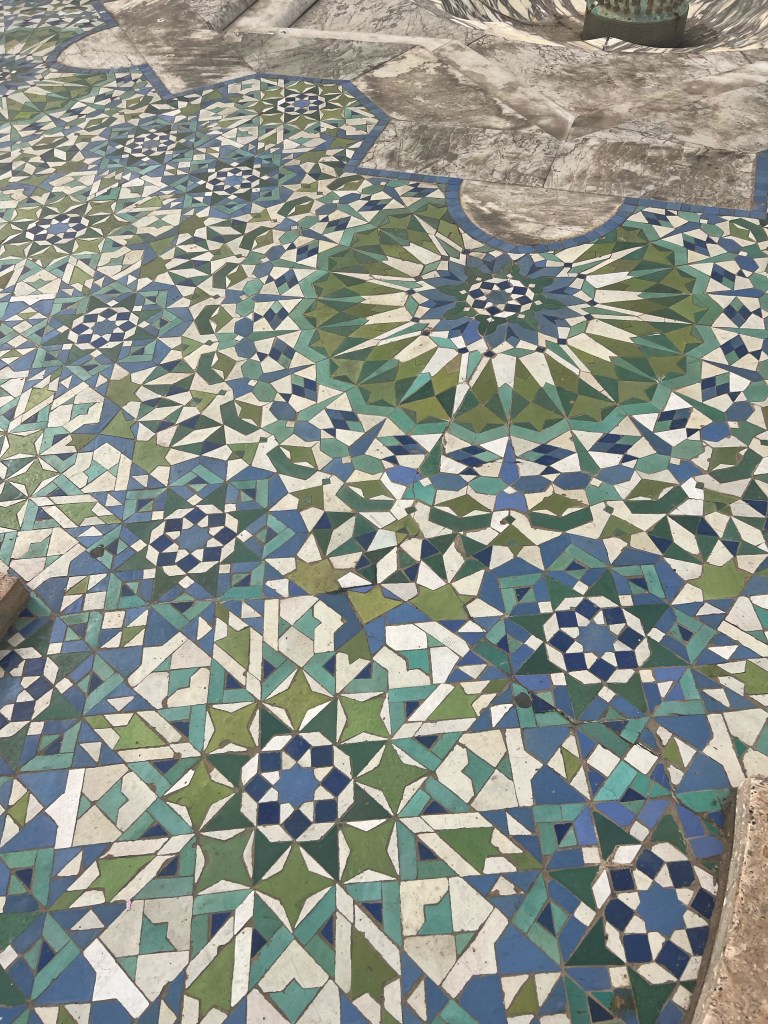
Gorgeous tile work

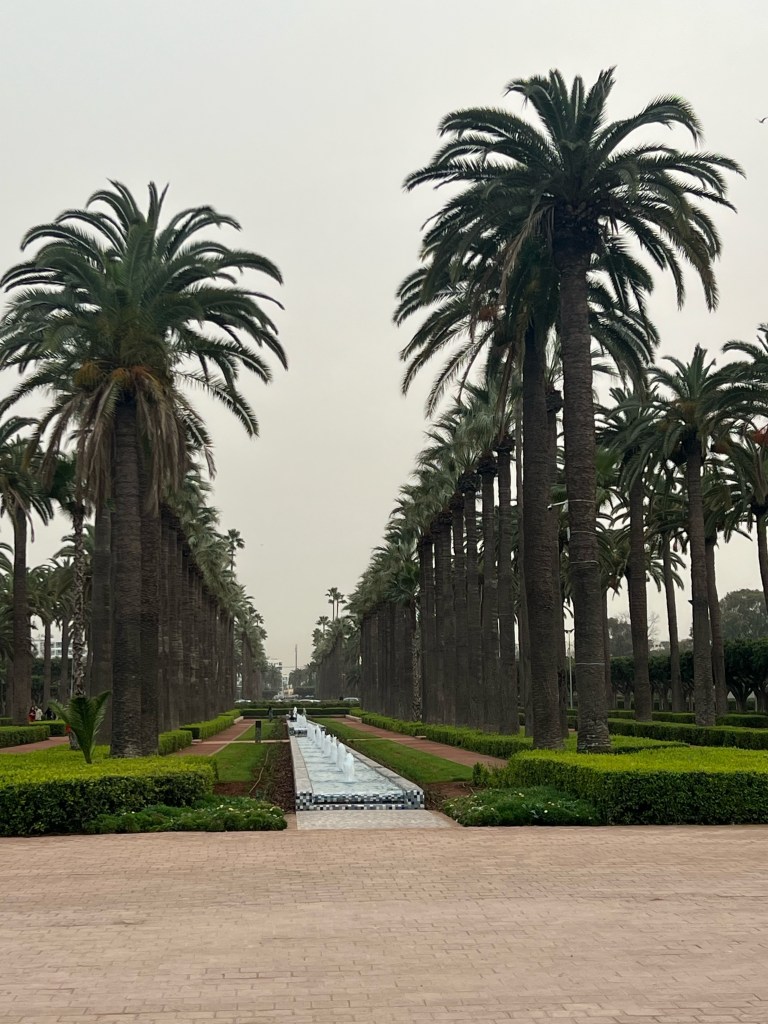
We scrounged up 2 more things to see (United Nations Square and Casablanca Cathedral), and made a plan to kill time before heading to dinner and then the airport.

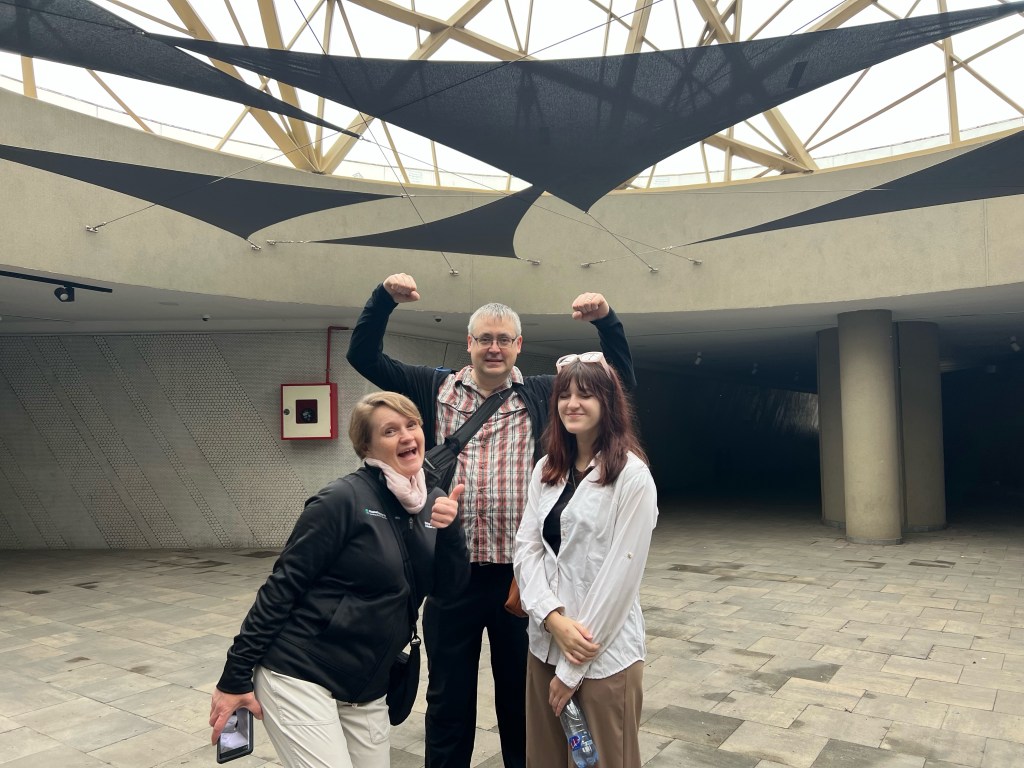
Some weirdos in United Nations Square
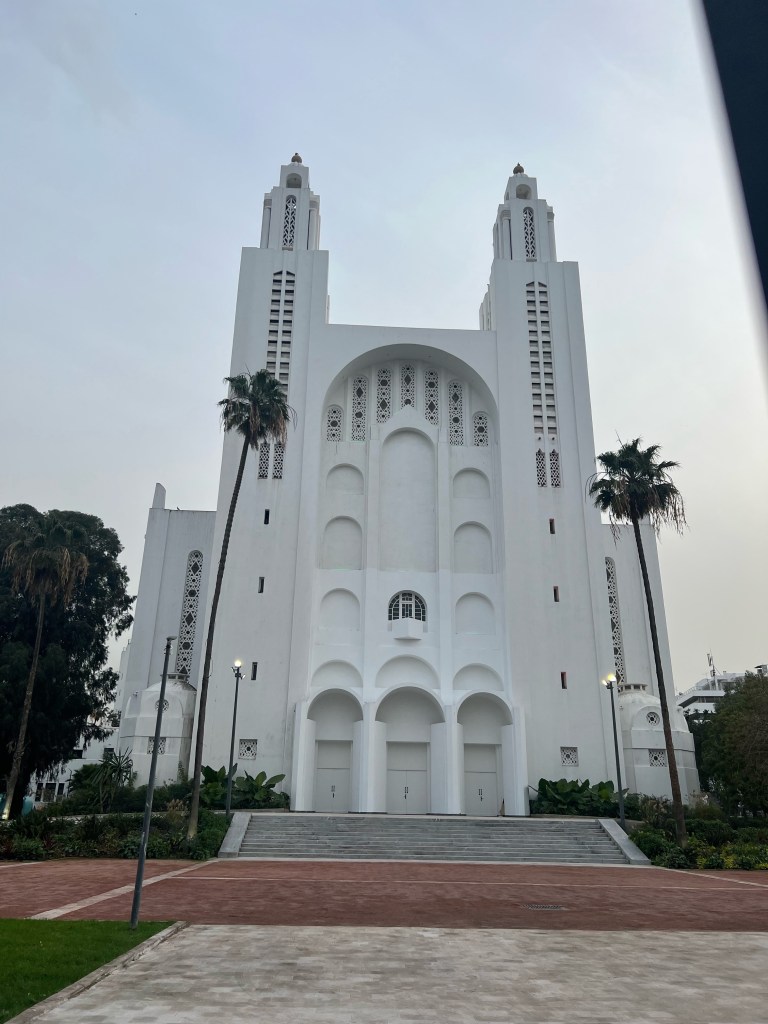
Sacré-Coer, or Casablanca Cathedral

Sacré-Coer was the highlight of Casablanca, and we didn’t even get to go inside. We had a surprisingly delicious dinner at a French bistro, then we left for the airport for an 11pm flight to Errachidia. The Casablanca airport isn’t large, but holy cow is it confusing! Our flight was domestic (terminal 1), but it seems that terminal 1 is bisected by terminal 2 because we walked from 1 toward 2 to get to our terminal 1 gate.

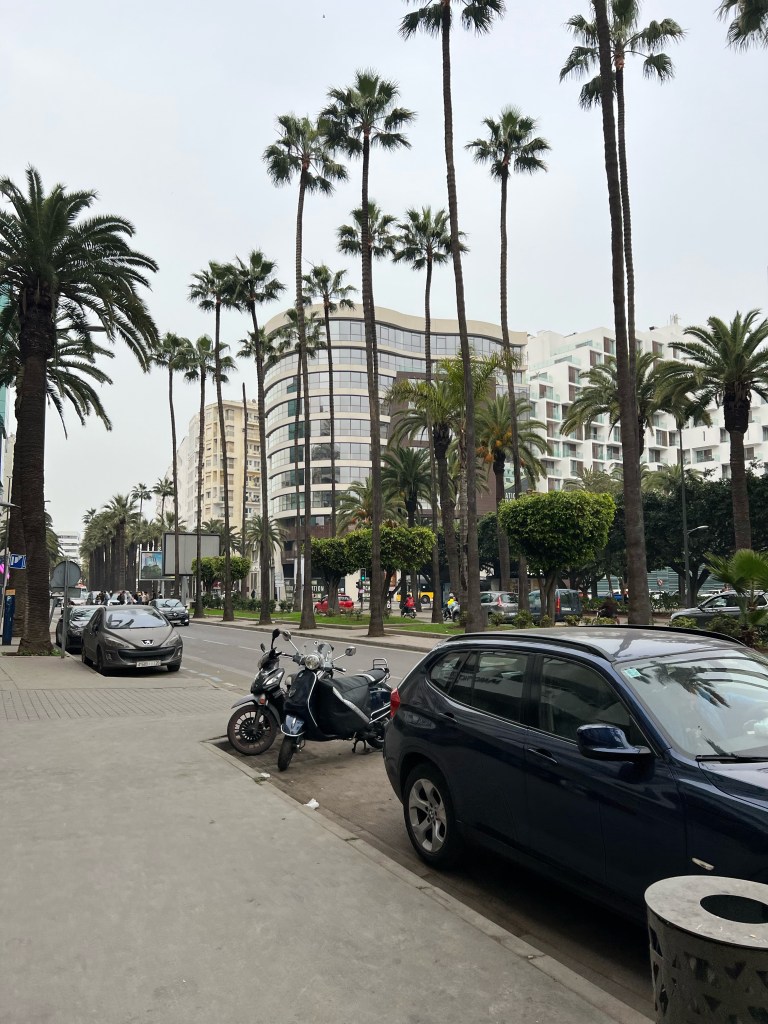
Overall, we found Casablanca to be full of stuff, but none of it was anything we wanted to see. It’s not a pretty city (although it has a few pretty buildings here and there), nor is a particularly historical city. It’s a chaotic, loud, somewhat dirty city, sort of along the lines of Nairobi, and we were perfectly happy to be heading out in short order. It’s a “can’t really recommend” city. I have confidence that the rest of the trip will be much better, so there’s nowhere to go but up from here!

Morocco

Traveling with a friend is such a great experience, so I am thrilled to be heading to Morocco for a week with Melissa. We went to South Africa together, so I know we travel well together (meaning she has a high tolerance for my weird travel plans).

Day 1: Arrive in Casablanca, see the few sights, then take a very late flight to Errichidia

Day 2: Jeep ride out to Tassilli Luxury Desert Camp in the Sahara; maybe try duneboarding; sunset camel ride over the sand dunes

Day 3: Car to Merzouga; drive through the Atlas Mountains to Fez

Day 4: Fez

Day 5: Fez in the morning; afternoon flight to Marrakech

Day 6: Marrakech

Day 7: Marrakech; evening train to Casablanca

Day 8: head home