Our last day was the one I was most excited about: the Panama Canal. I chose to do the full transit so we could experience all 3 locks: Miraflores, Pedro Miguel, and Gatún.
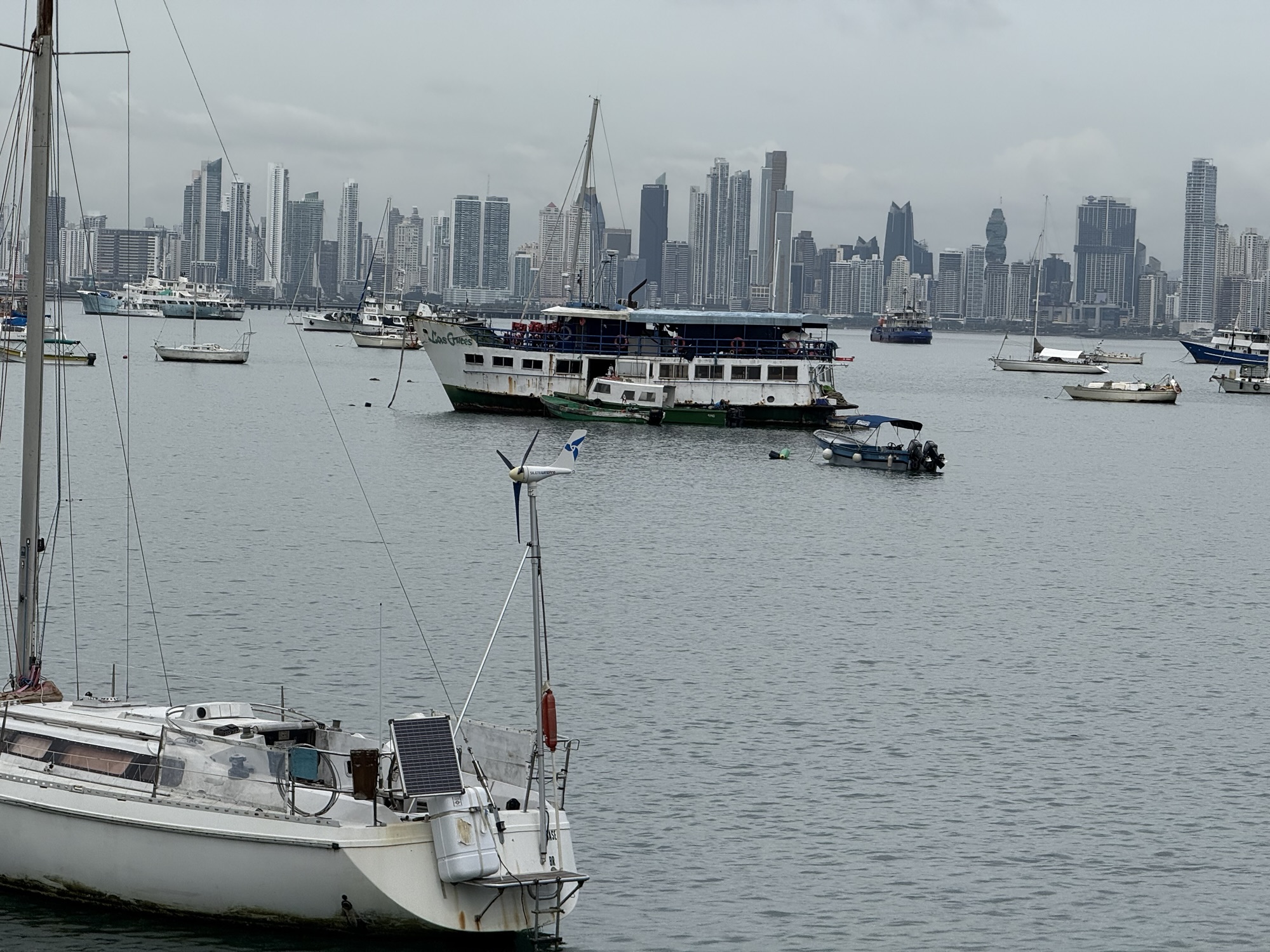
Another 5:30am pickup took us to the marina where we boarded the Pacific Queen.
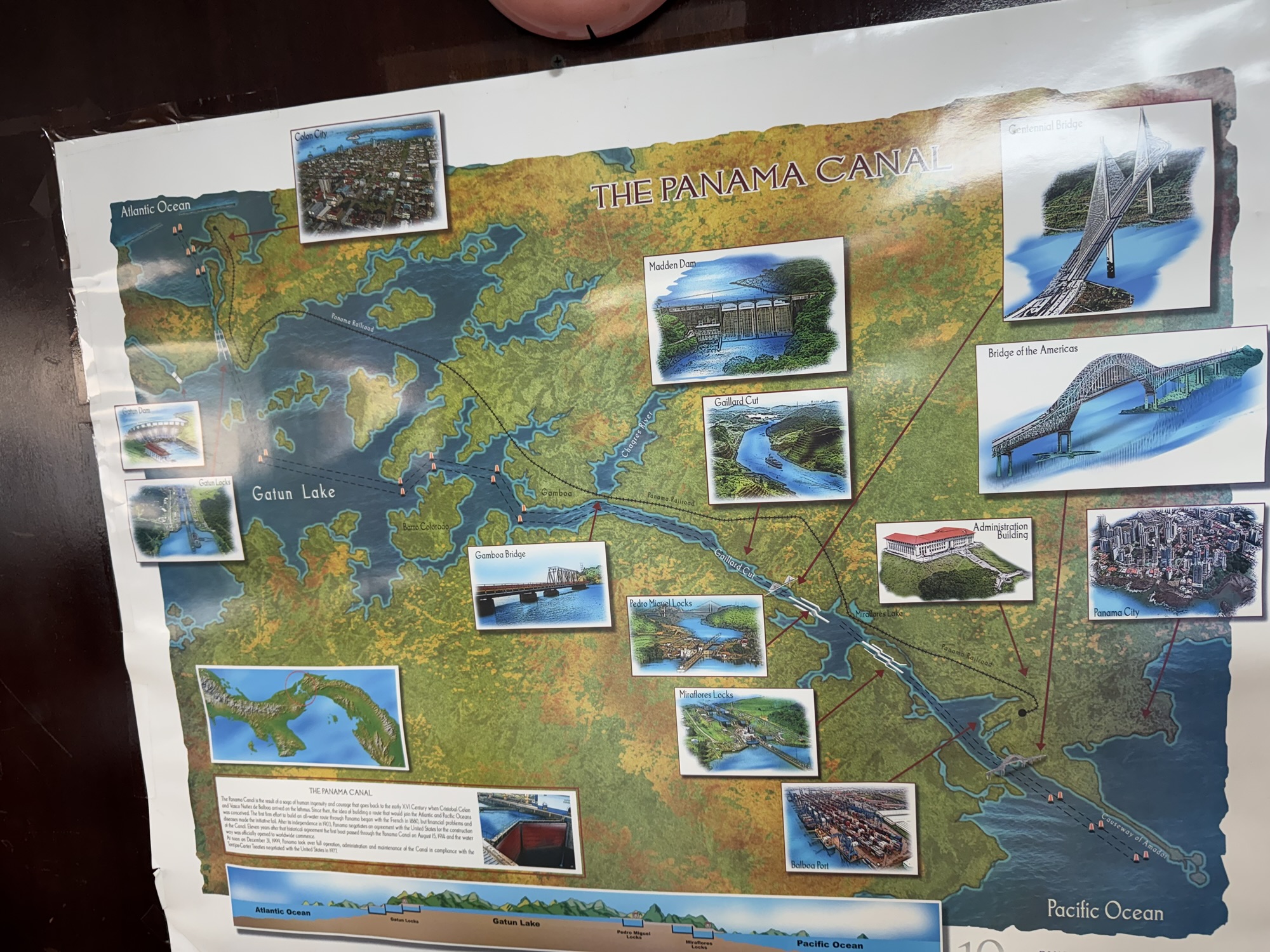
I learned a TON on this trip about the canal construction and operation. It was super interesting!
Ships are charged by weight, length, or the number of berths. Our ship was 121 feet long and was charged about $2,000 for a one-way canal transit. The crew will have to pay that again to return to the marina (there’s no demand for south-bound tours). Ships over 125 feet of length require stabilizing cables (run by little vehicles on tracks called mules) which incur more charges, as do ships with dangerous cargo. The largest fees top $1.1 million for the mega container ships with over 17,000 containers on board.
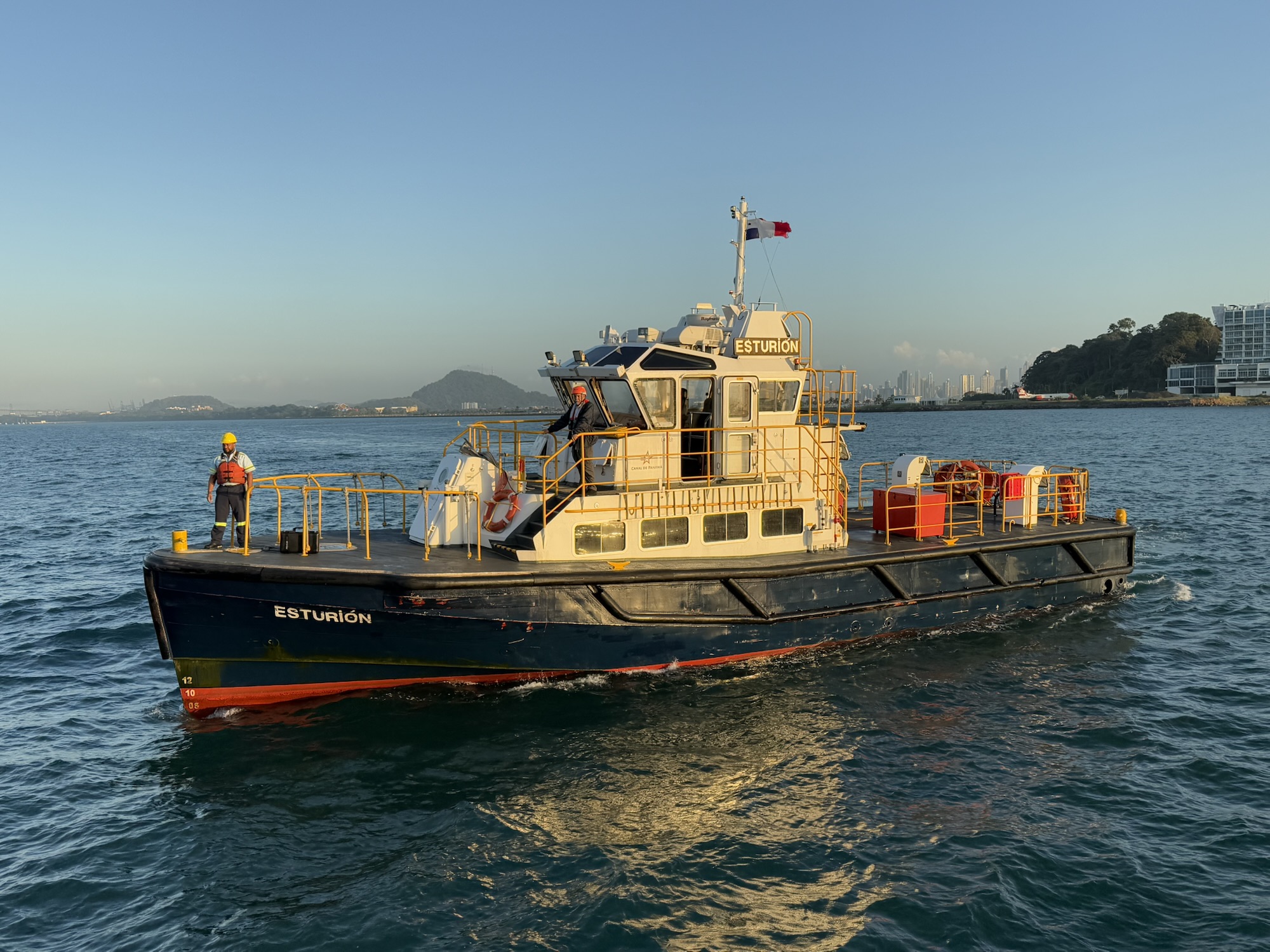
Our first step was to pick up our pilot – a canal authority employee who assists the ship captain with navigating the canal. I had assumed that the canal was basically a concrete trough which would be pretty straight-forward to navigate, but those images are from the lock runways. The canal itself is actually a sometimes serpentine waterway that’s barely deeper than the boats.
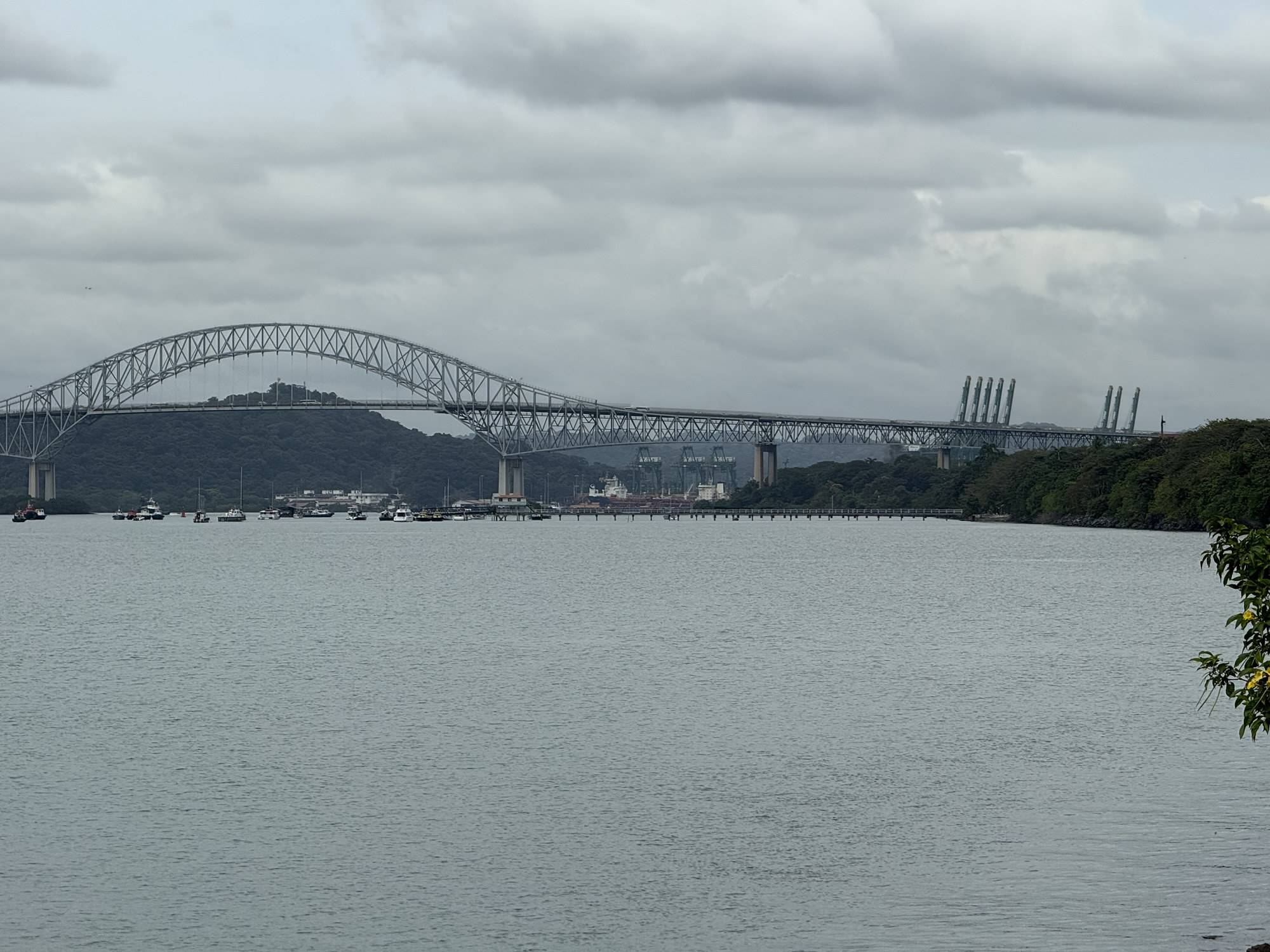
After collecting our pilot, we passed under the Bridge of the Americas. It has a generous 201 foot clearance, yet the canal sees boats that are so massive that they can only clear it during low tide because the Pacific Ocean has tide variances of 15-18 feet in Panama City (the Caribbean tides are only ~1-2 feet).
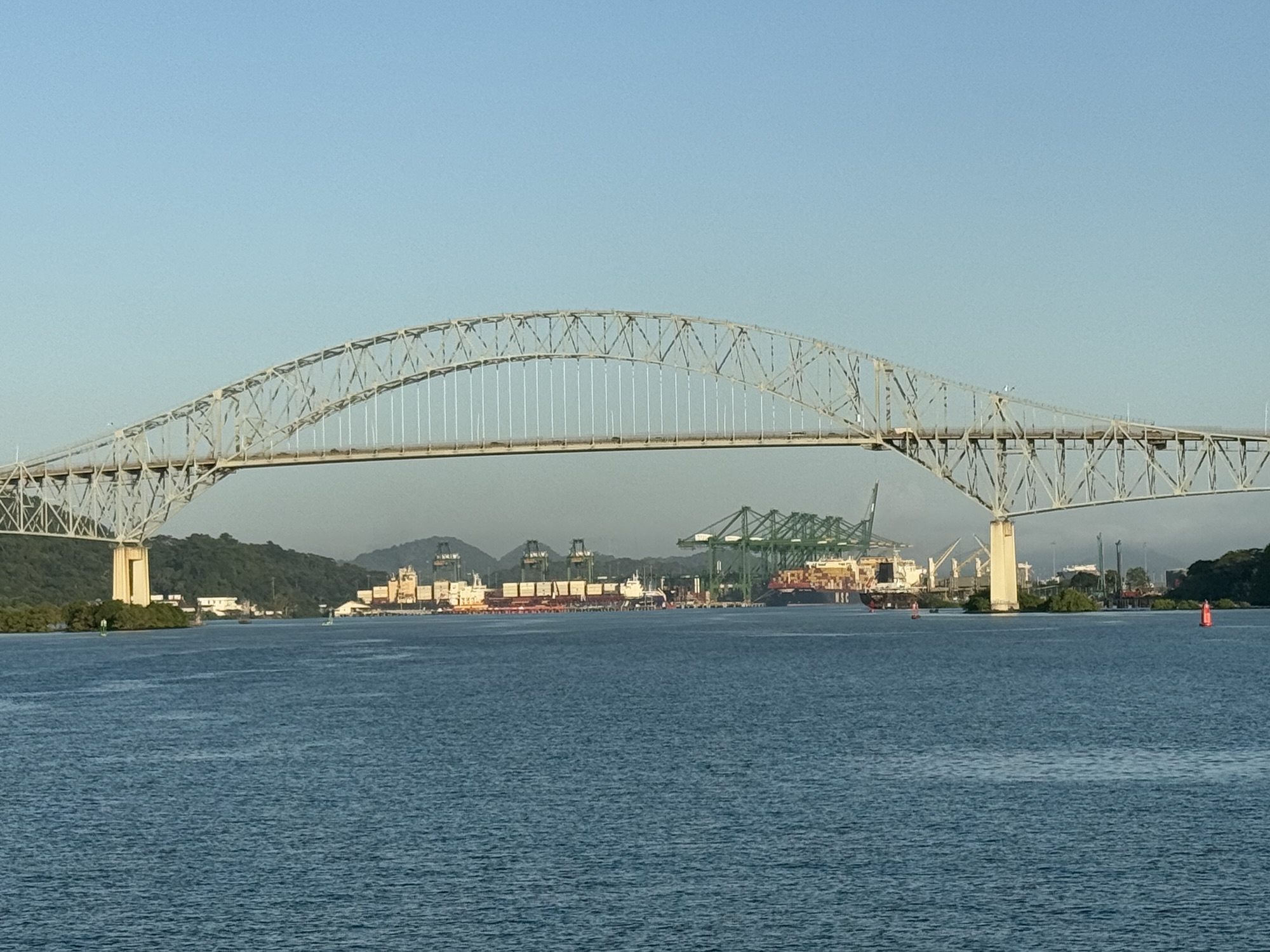
Right after the bridge was the Balboa port (which was actively unloading a cargo ship!). I can’t fathom how much of the world’s merchandise moves through this port and canal every day.
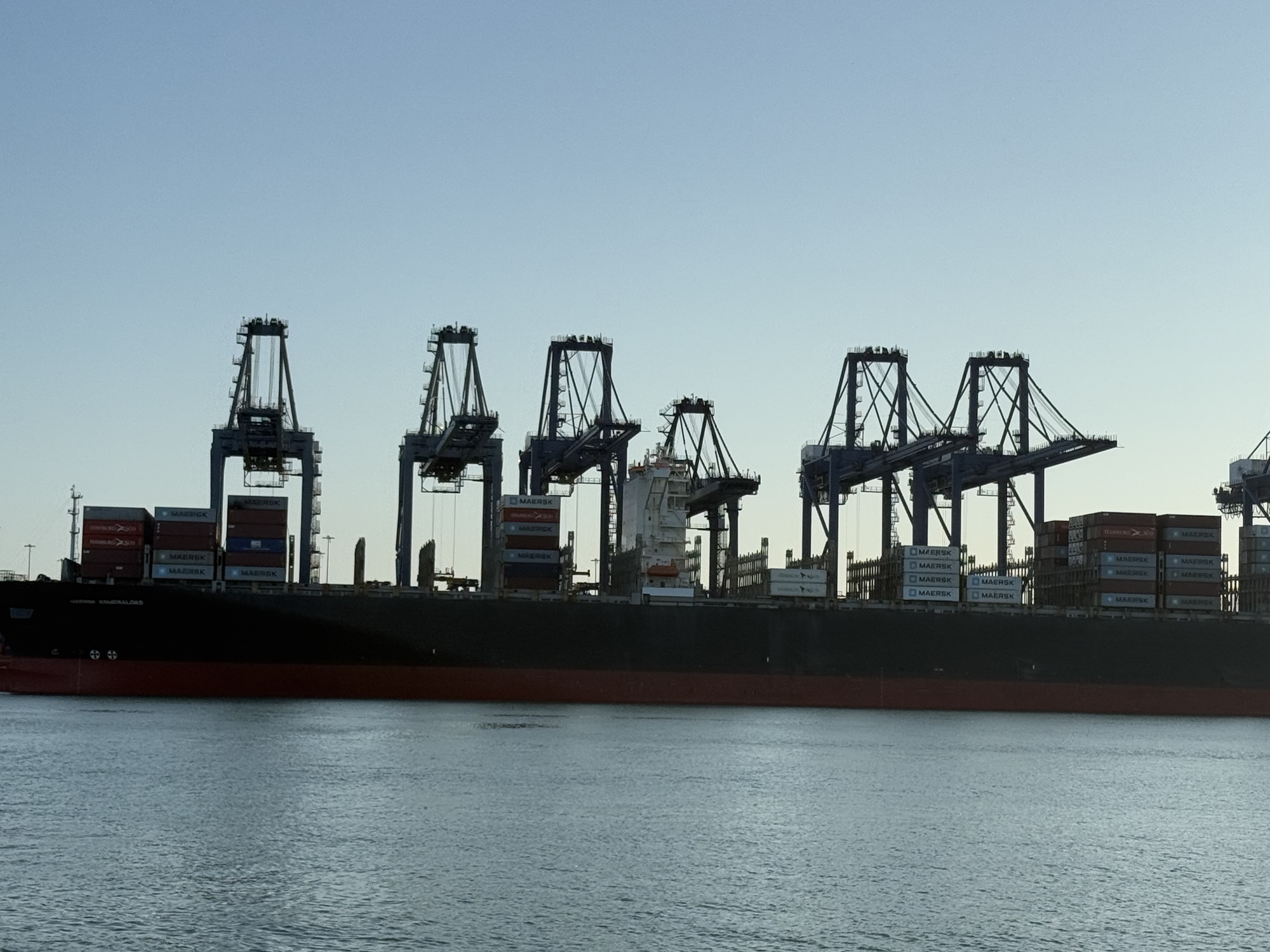
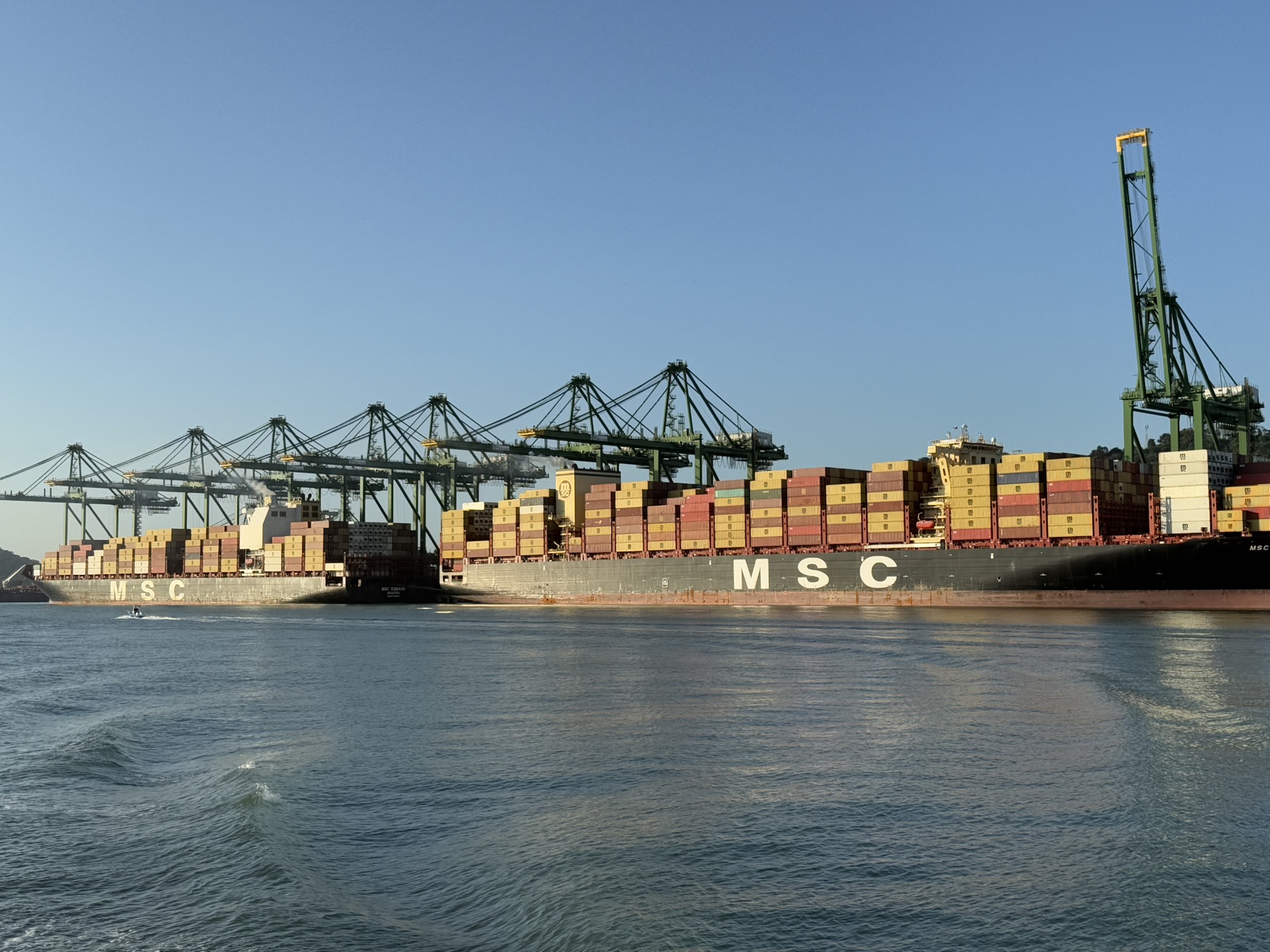
Our first exciting event was the Miraflores Locks. This is a double-set of locks which raise boats nearly 60 feet using only gravity. There are no pumps to move the water. Because the water flows from higher elevation (the lake) to lower (the ocean), the canal authorities are mindful about how often they open the locks. Small boats like ours have to be paired with a bigger boat or many small ones and go through together, ensuring that each lock opening is as efficient as possible to prevent draining the lake.
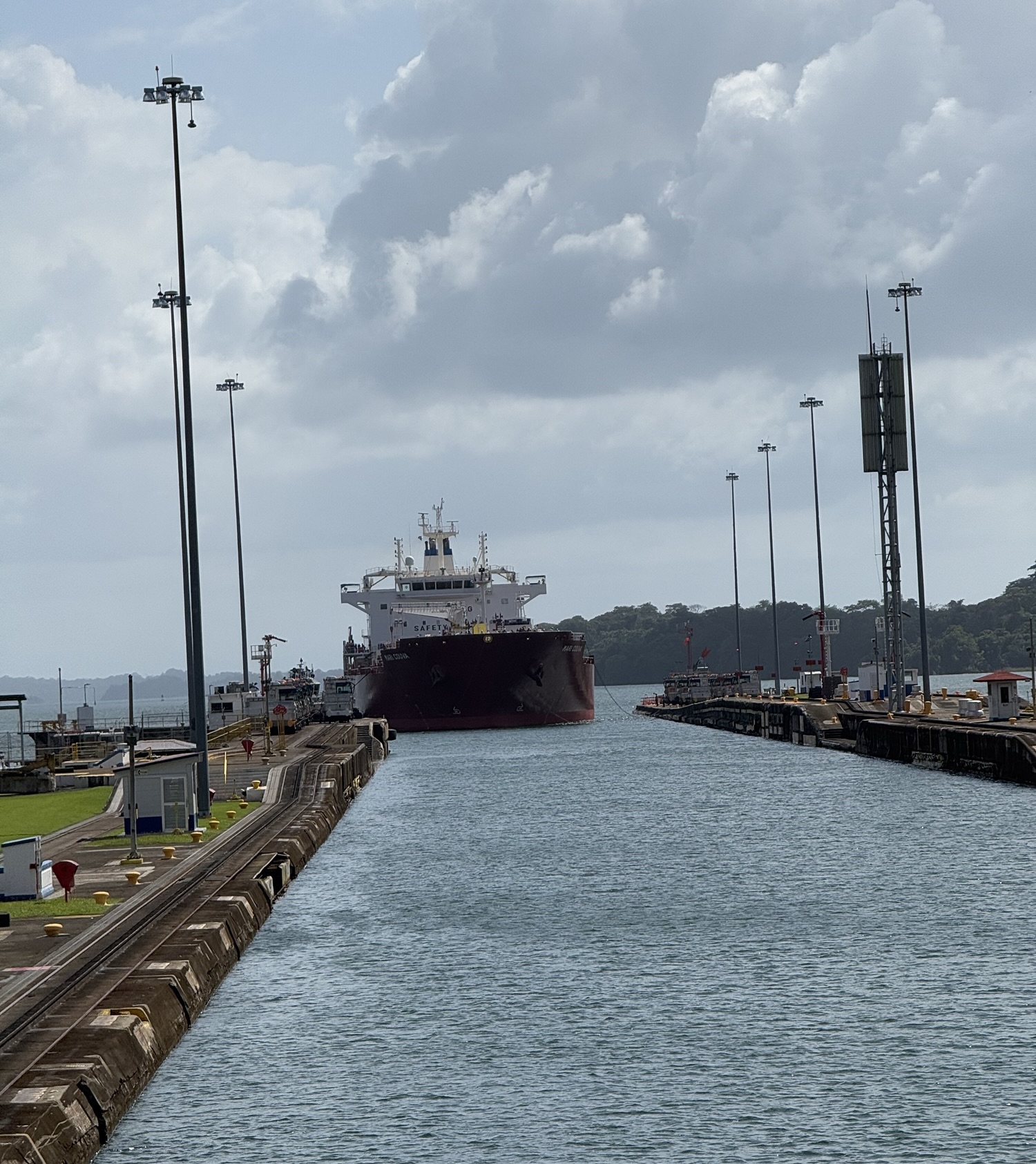
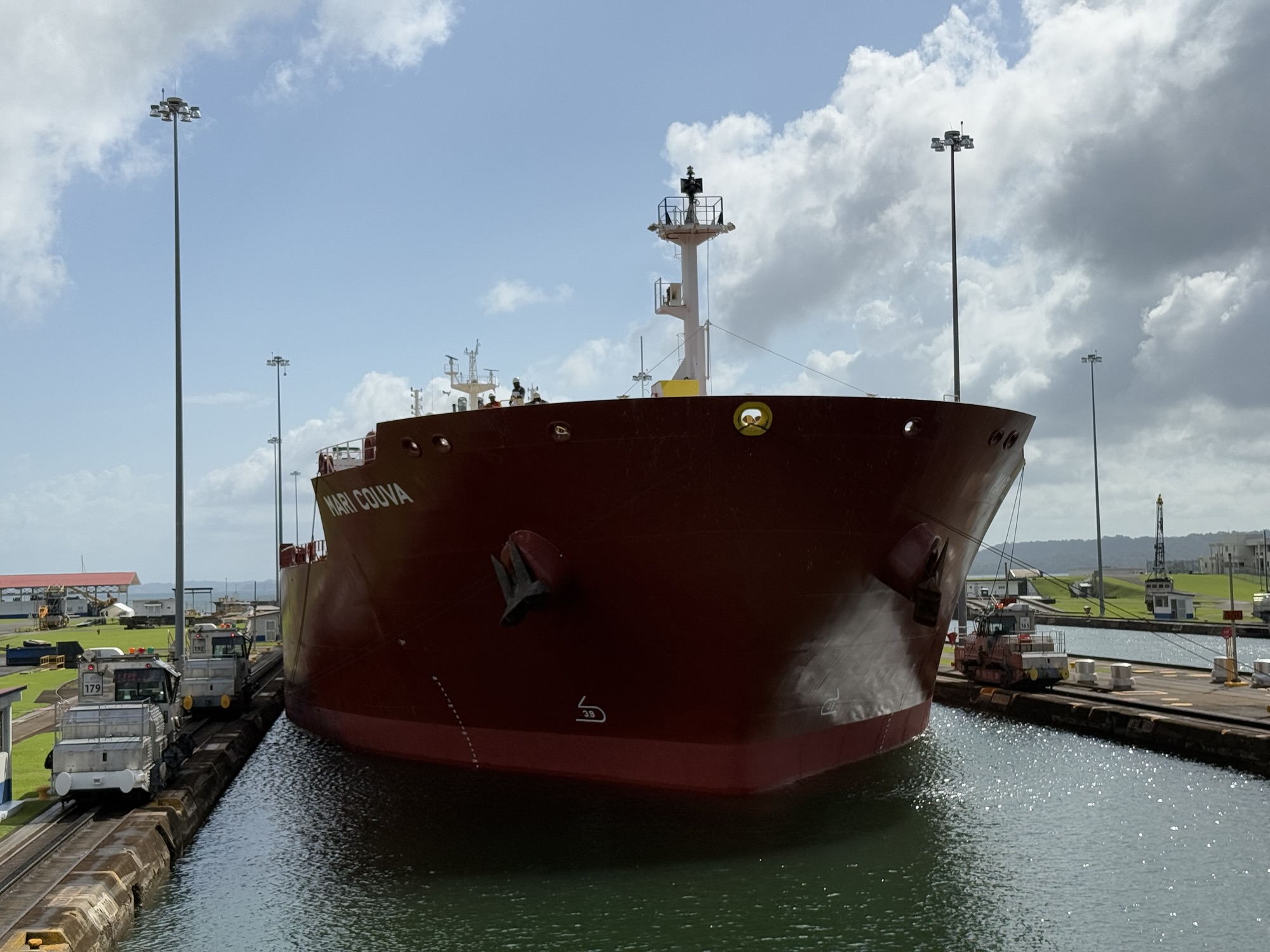
We are with the Mari Couva, a tanker ship from Norway that’s the maximum width allowed in the original canal (the new larger lock channel can handle the mega-ships). Mari Couva paid about $125,000 to use the canal, but it saved them 25-30 days of sailing around the horn, and that makes the canal transit worthwhile for the shipping company.
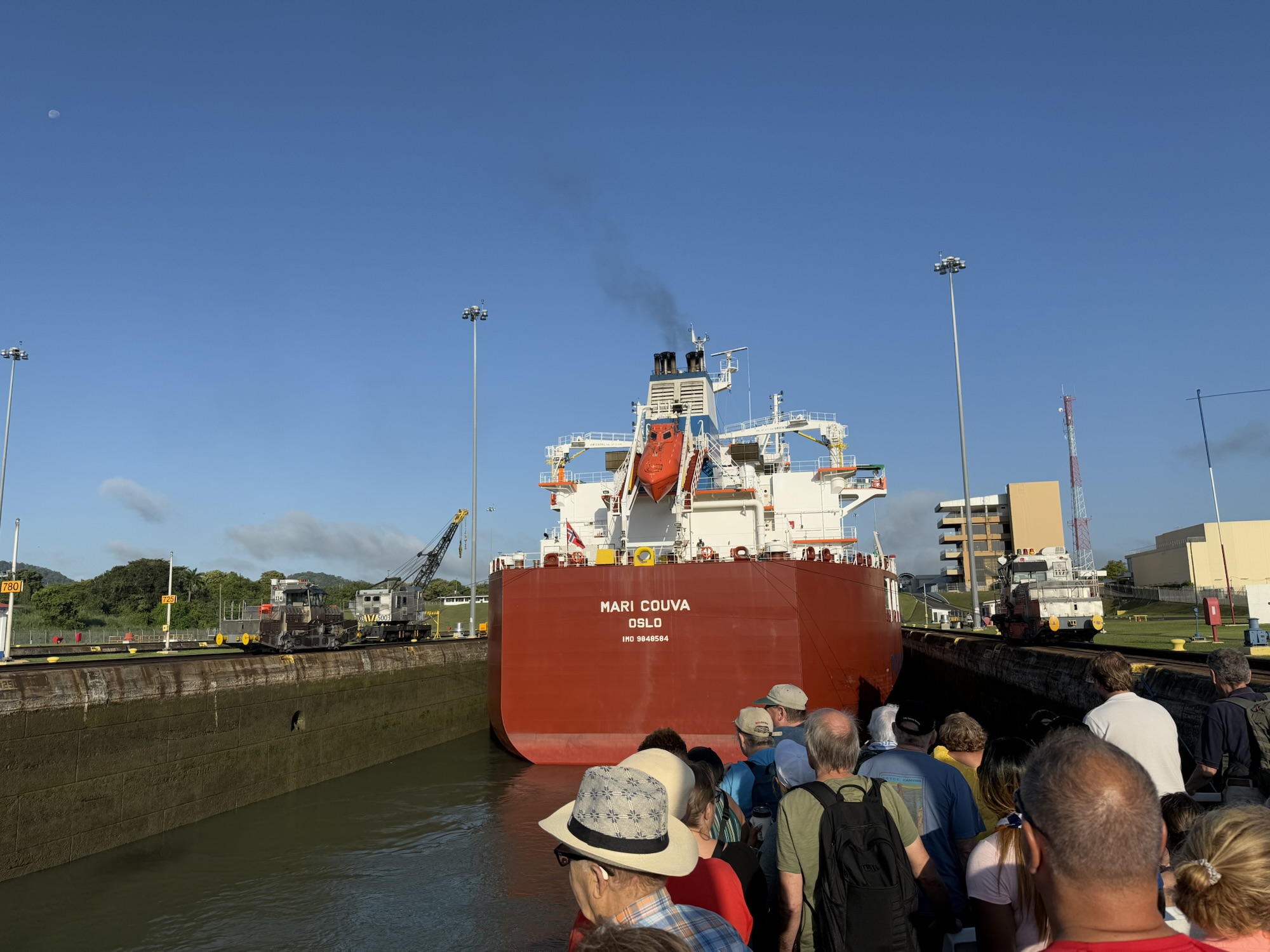
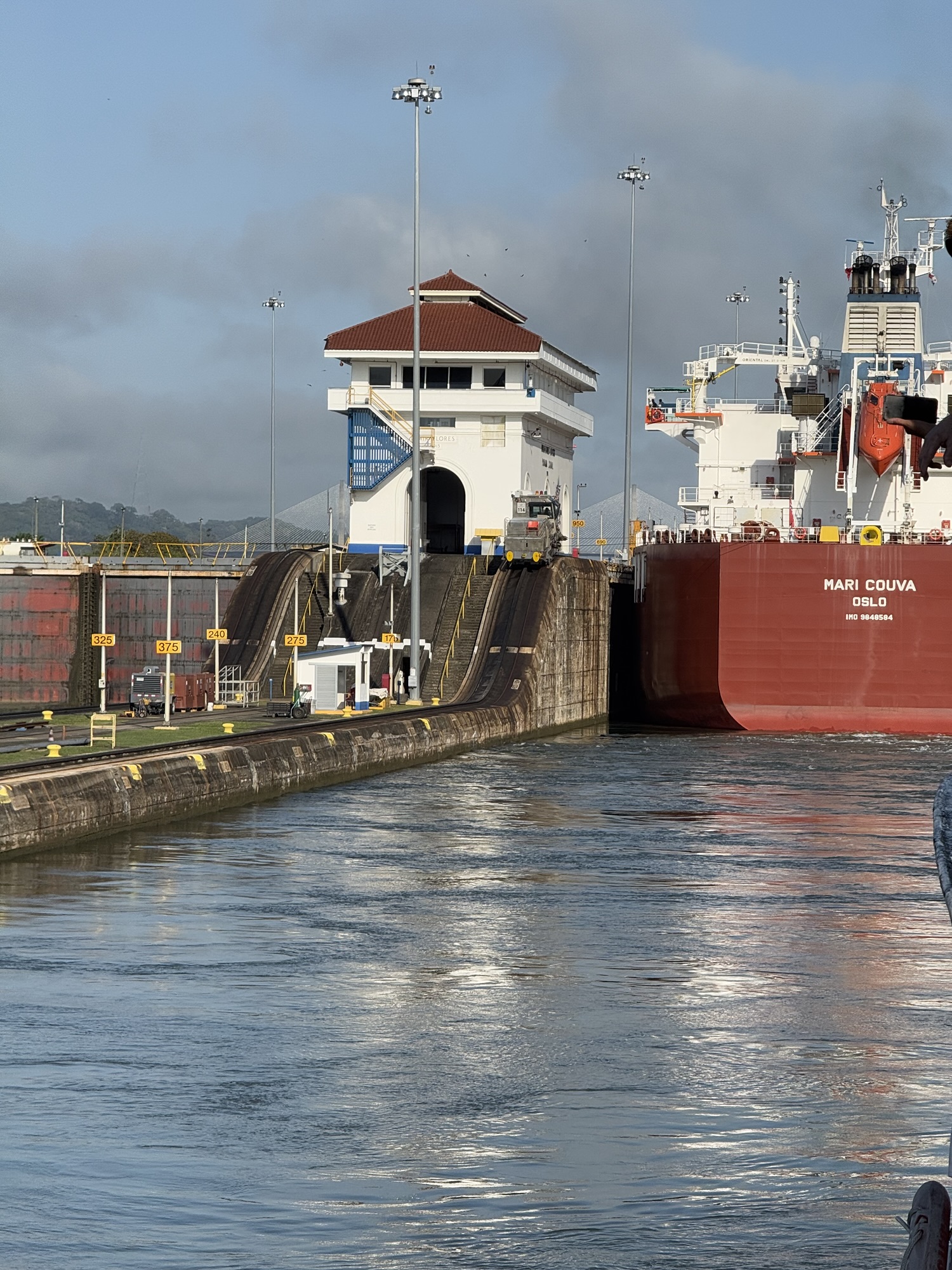
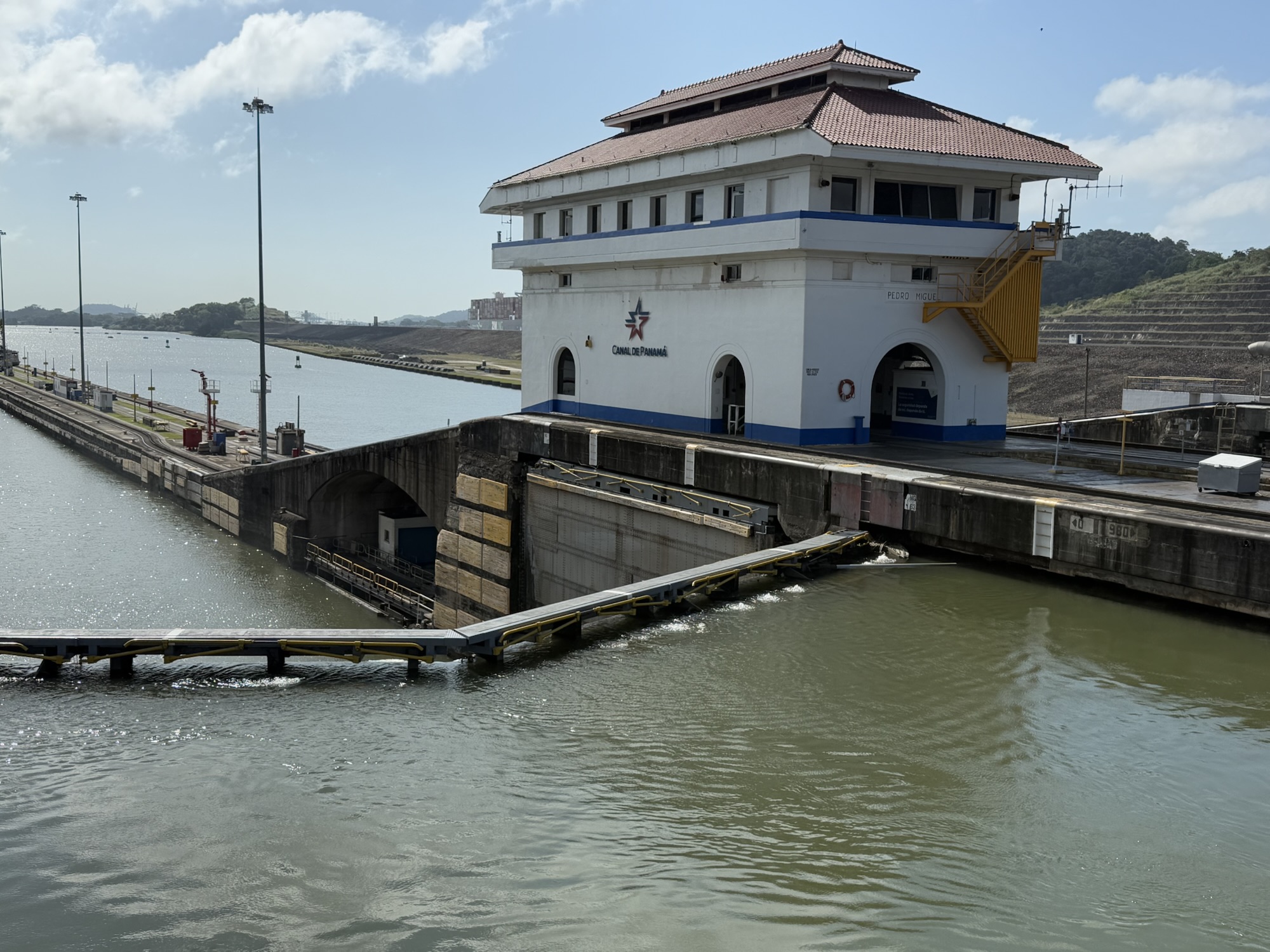
Shipbuilders quickly maximized the size of their ships to fit the canal locks (60’ deep and 1000’ long). The Mari Couva is only a few feet narrower than the locks. She has to be connected via steel cables to mules on shore to keep her steady and prevent her hull from damaging the locks. All boats in the locks have to use their own engines to advance; tugboats are only sent in to help steer the bigger boats – more on that later.
After clearing the Miraflores locks, we navigated a short while and then entered the single-chamber Pedro Miguel Lock. This single lock yields another 31’ rise, brining us to the elevation of Gatún Lake.
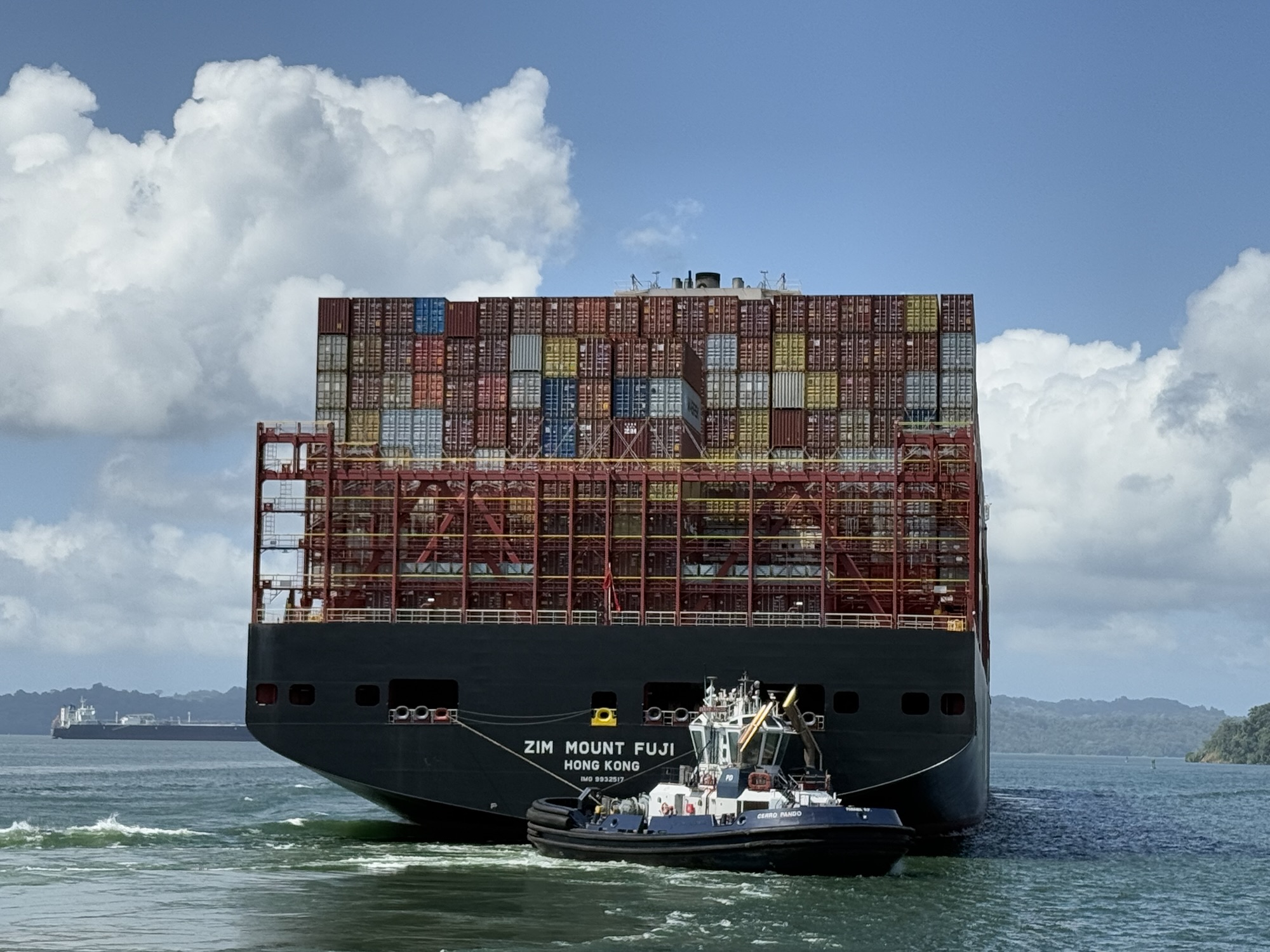
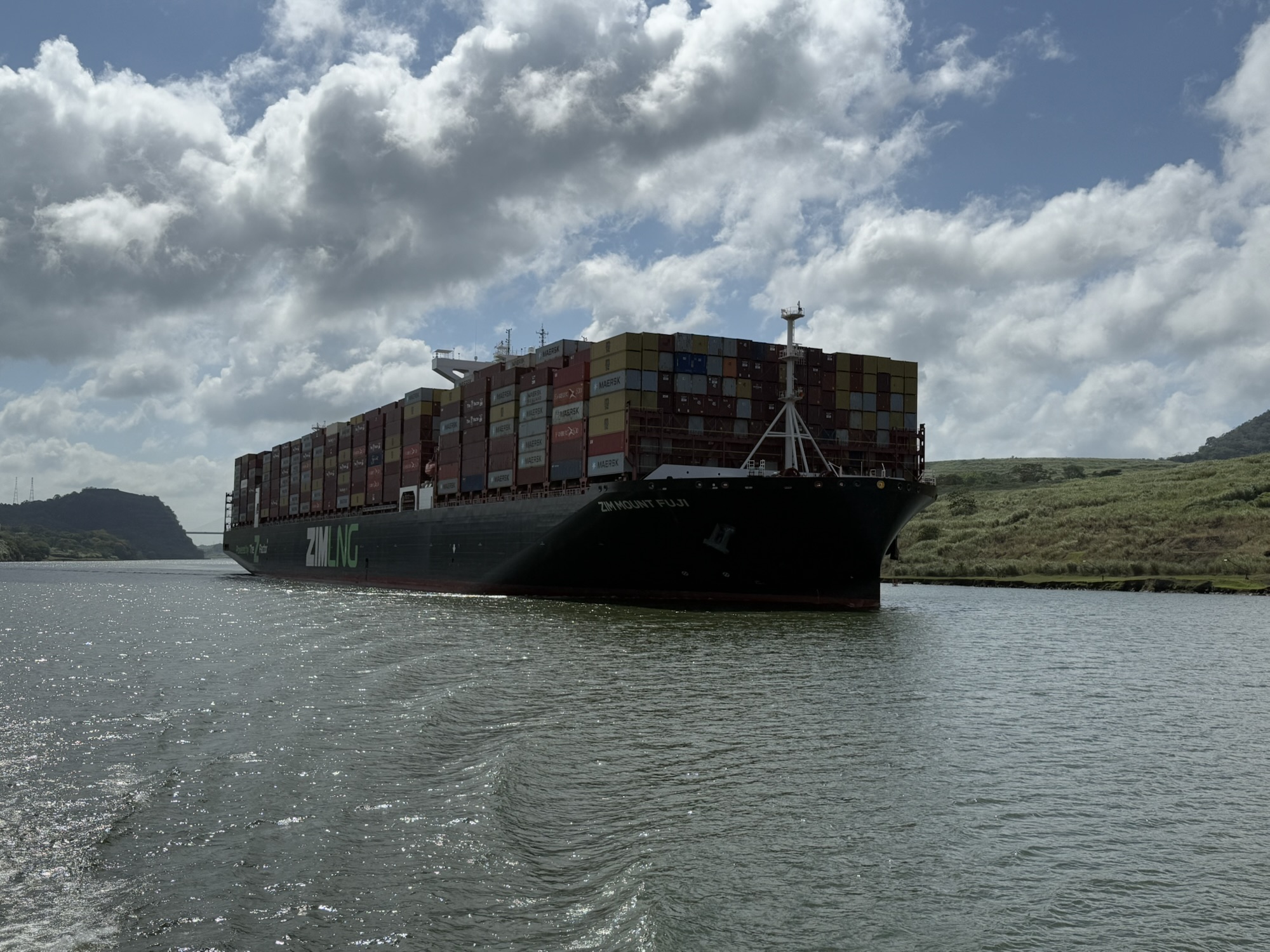
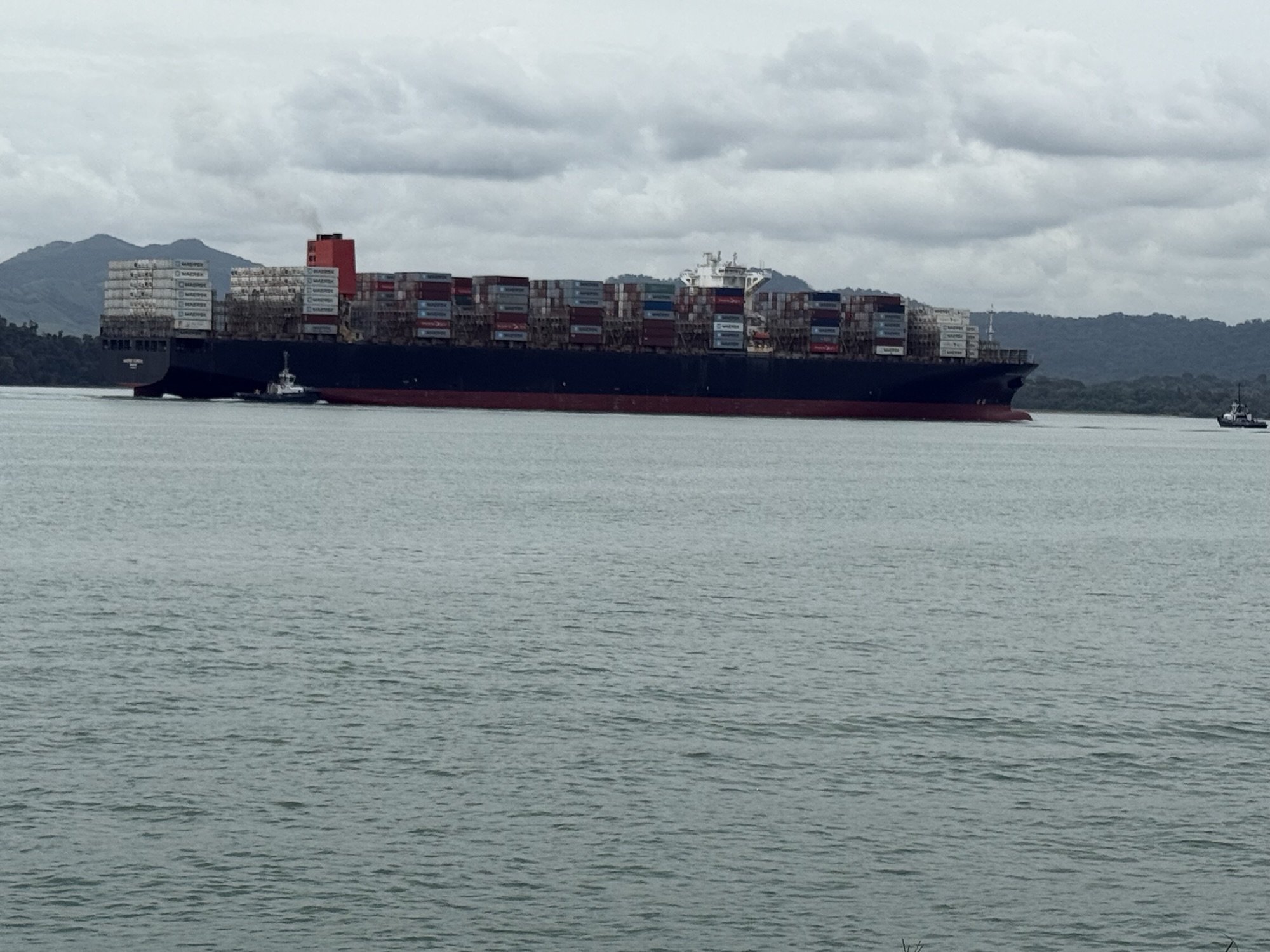
As we navigated the Pedro Miguel locks, a mega ship was in the new channel next to us. The Zoom Mount Fuji was beyond large. She was carrying around 13,000 containers (a bit less than half of them are visible, with the rest being under the deck level).

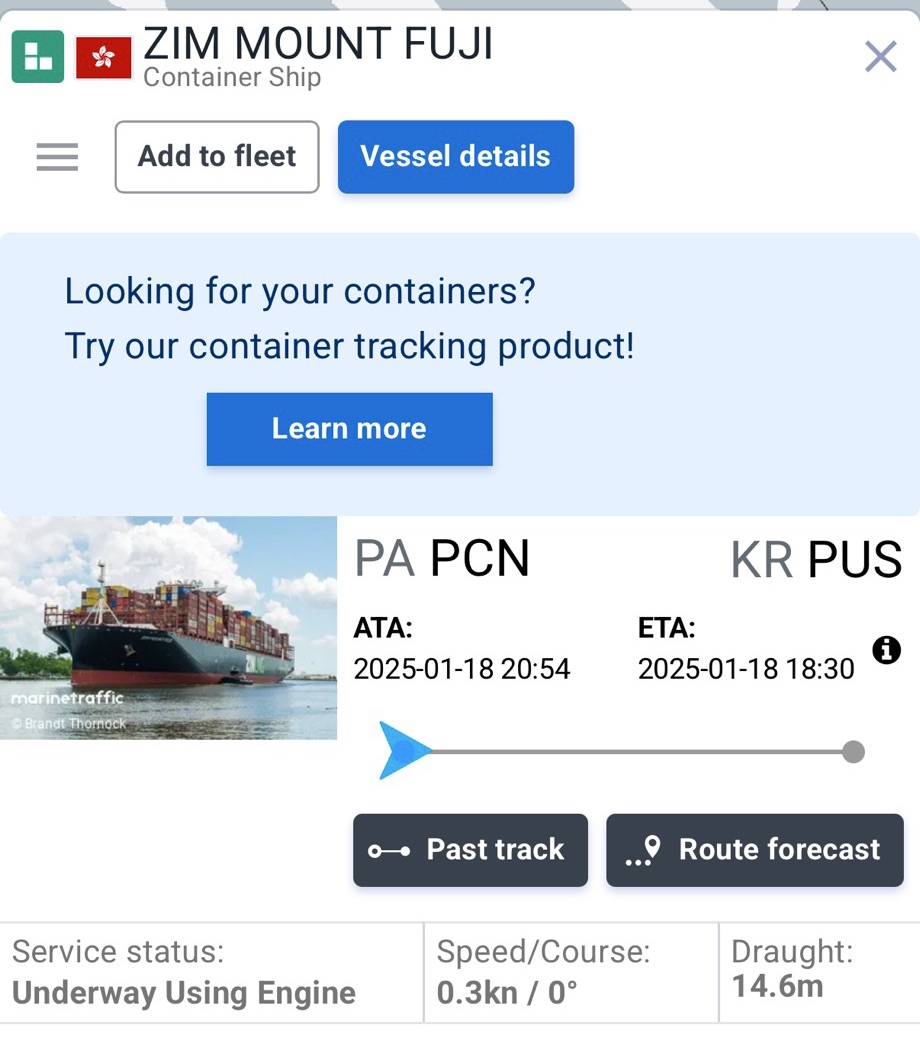
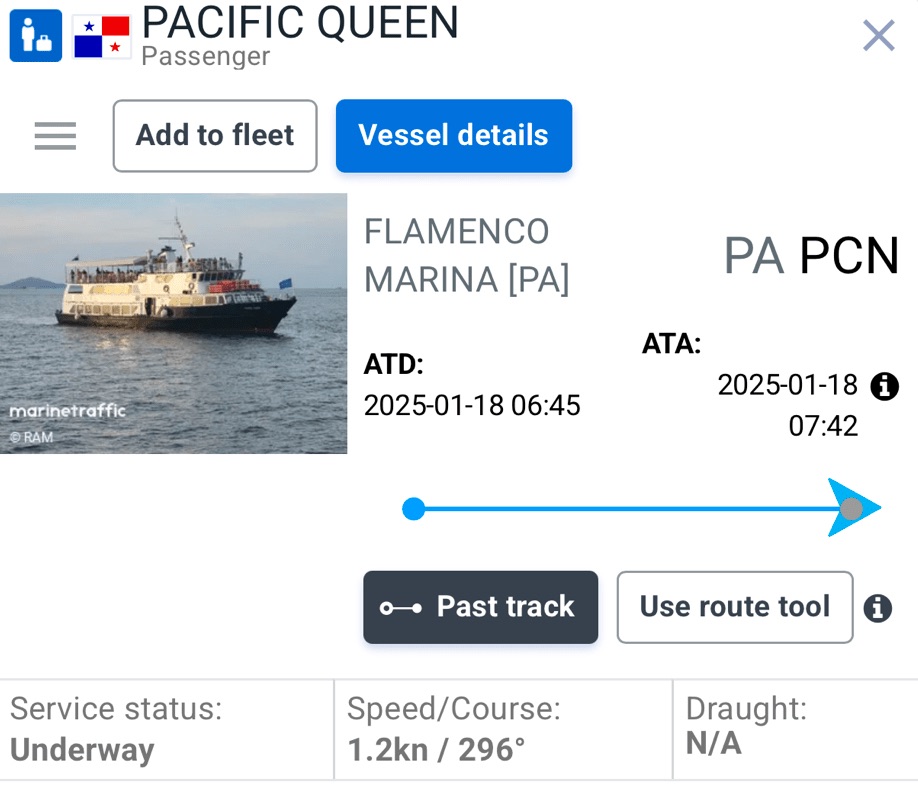
For comparison, here are the marinetraffic.com entries for our ship, our canal partner ship, and the mega container ship:
- PACIFIC QUEEN (MMSI: 352001289) is a Passenger ship and is sailing under the flag of Panama. Her length overall (LOA) is 33 meters and her width is 8 meters.
- MARI COUVA (IMO: 9848584) is a Oil/Chemical Tanker and is sailing under the flag of Norway. Her length overall (LOA) is 183.07 meters and her width is 32.24 meters.
- ZIM MOUNT FUJI (IMO: 9932517) is a Container Ship and is sailing under the flag of Hong Kong. Her length overall (LOA) is 366 meters and her width is 51.03 meters.
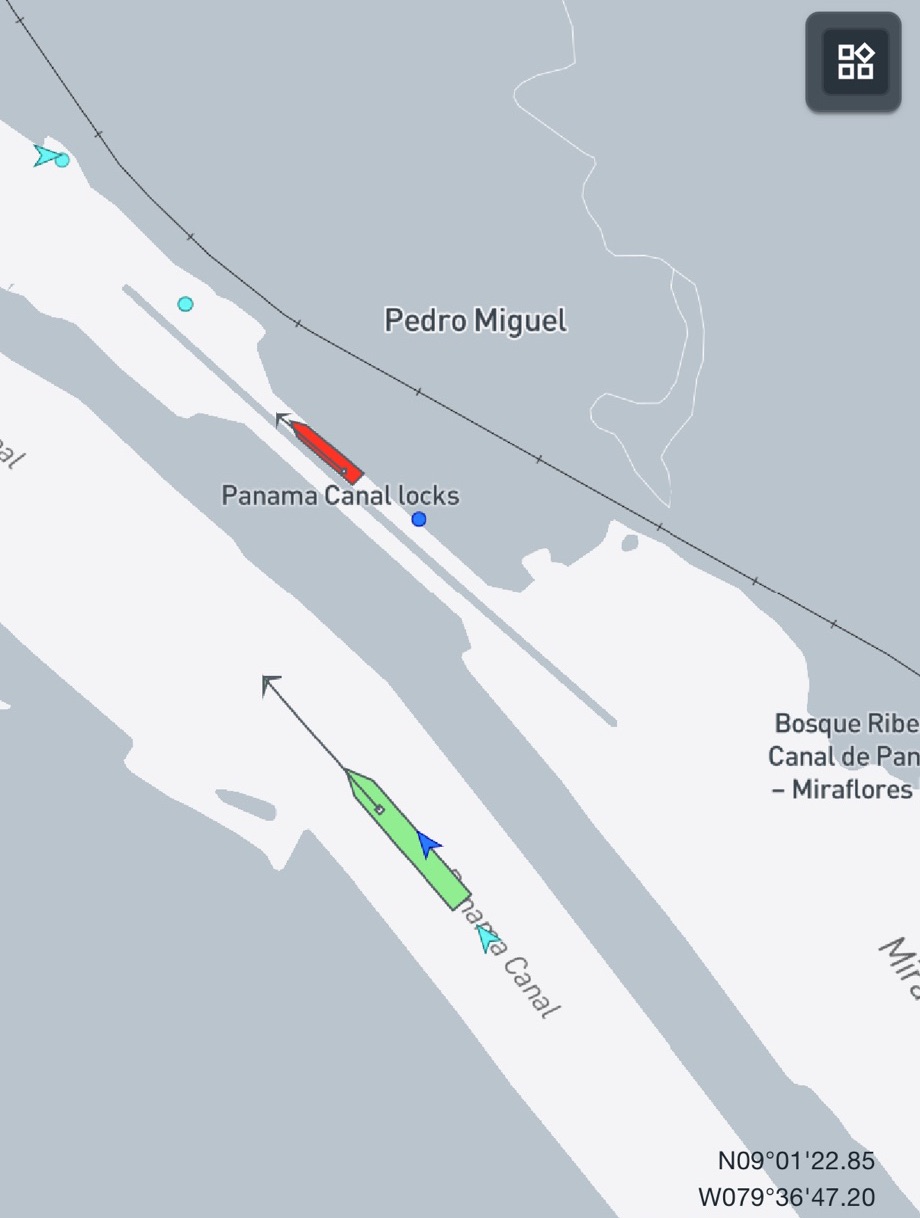
The new channel is only for exit and entry – all vessels share the lake and main navigational pathways once inside the canal. The canal operates 24 hours a day, with roughly 12 hours northbound and then 12 hours southbound (they to wait for biggest vessels to clear the narrowest parts before they can begin allowing traffic through in the opposite direction). It handles roughly 35-40 vessels per day. 8,000 people are employed by the Canal Authority (it’s the largest employer in Panama).
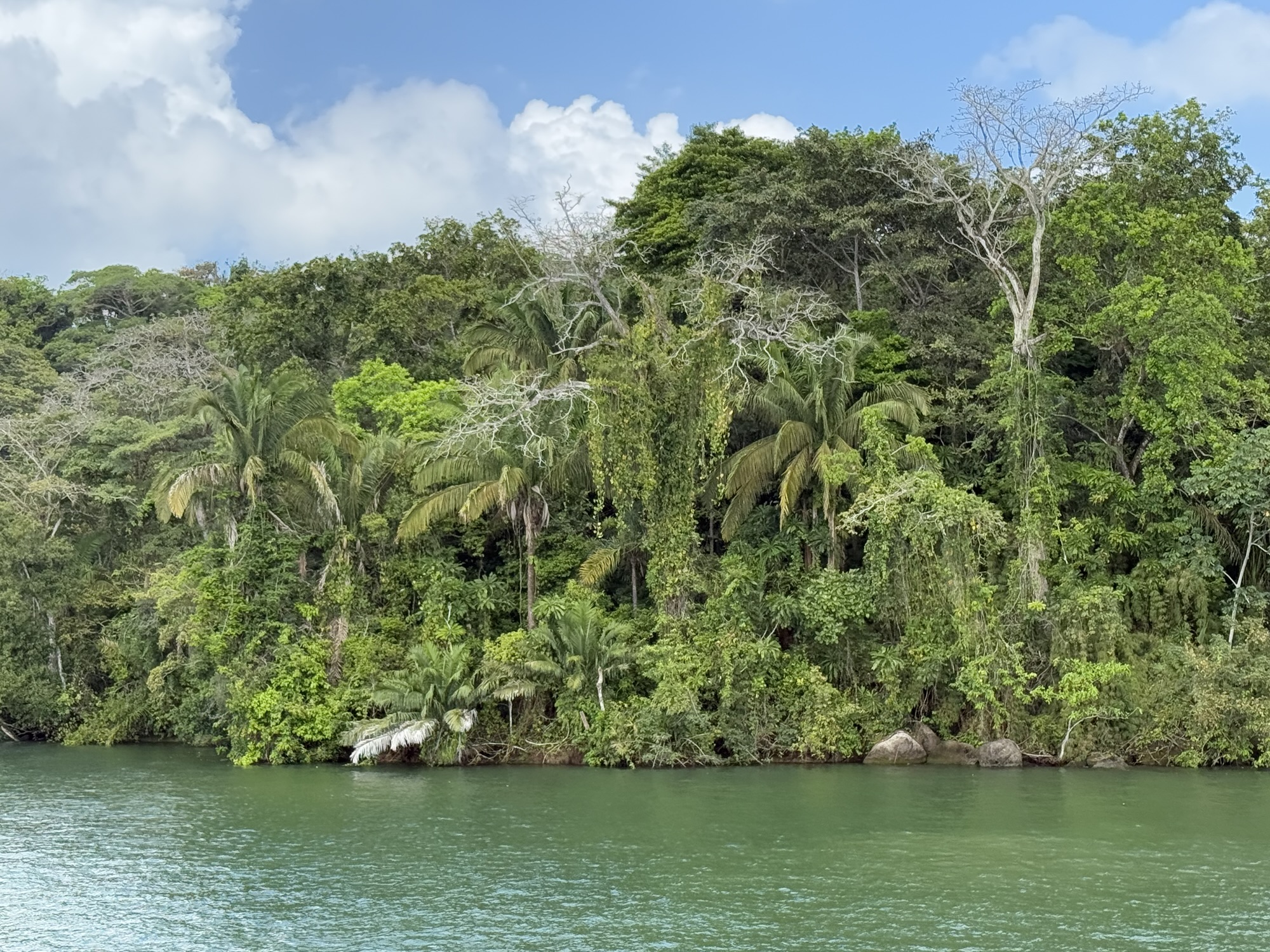
Gatún lake was the largest man-made lake in the world for ages. It took 10 years after the dam was built for the water level in the lake to stabilize, and has since remained remarkably stable thanks to Panama’s generous rainy season. The land all around is protected to maintain the foliage and humidity needed to maintain that water level, although climate change is starting to impact the area. La Niña weather years now bring longer dry spells to Panama, which is not good for the canal. Too little water and the locks will not work, and there is no plan B for global commerce.
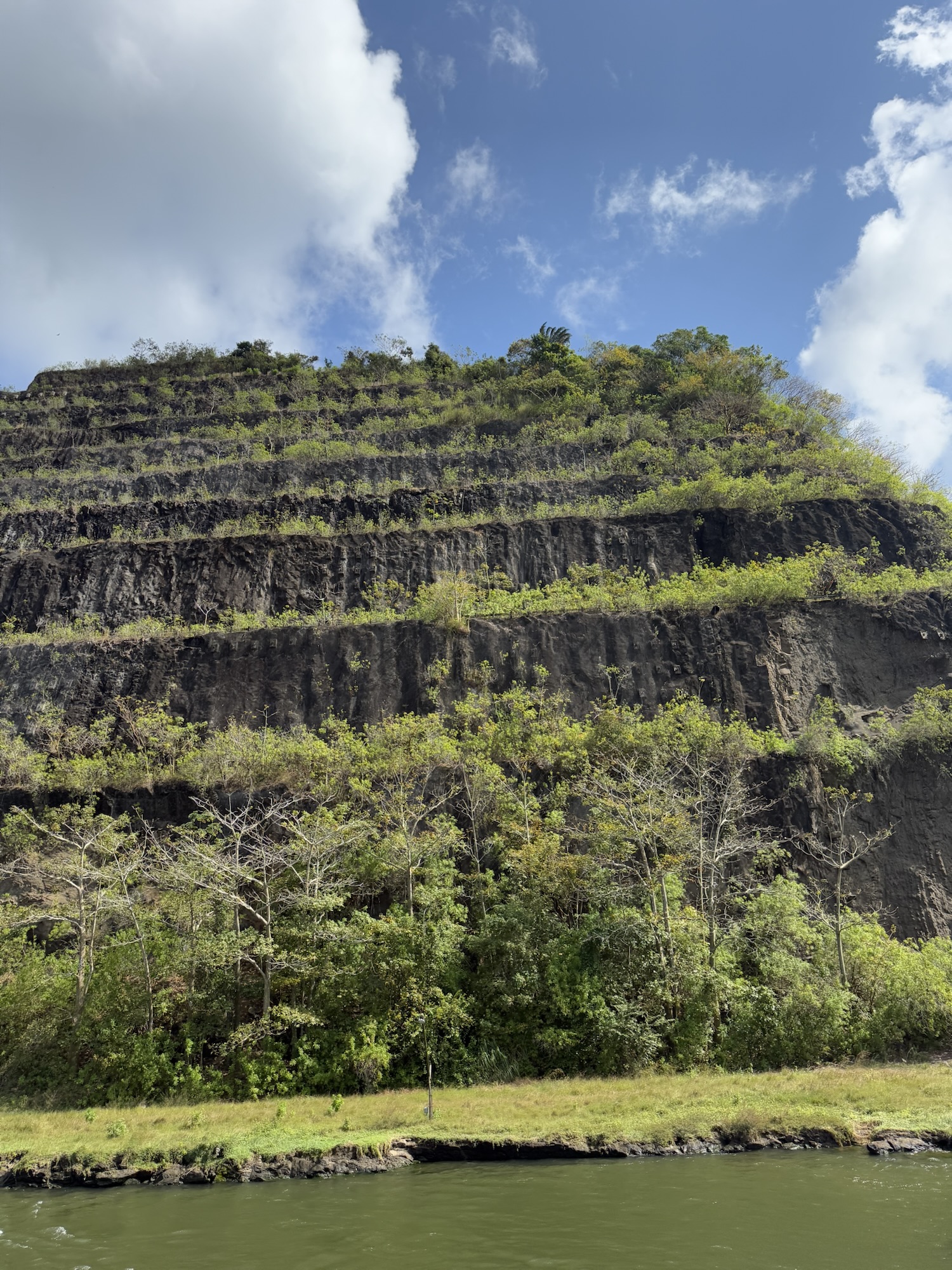
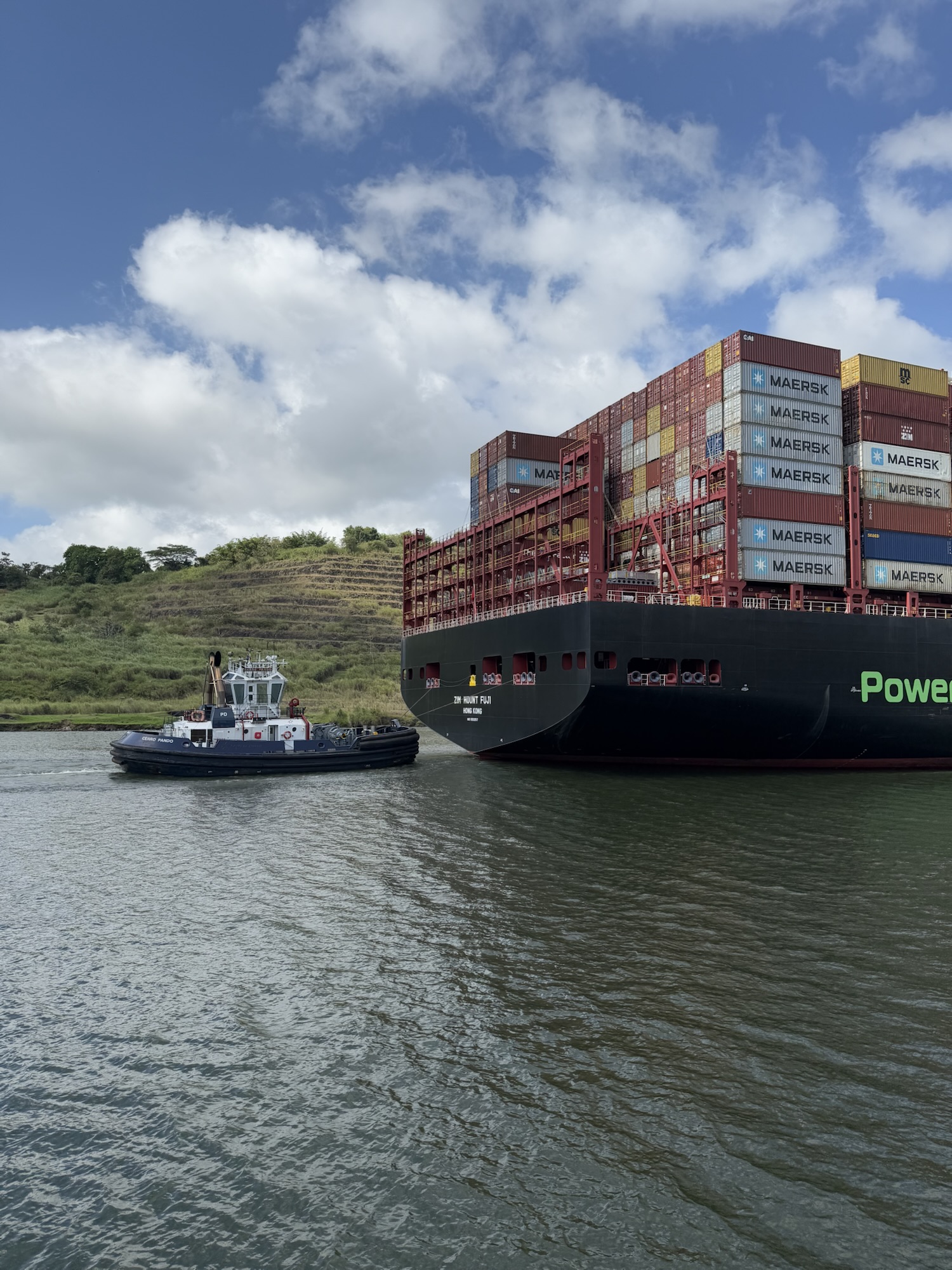
I was fascinated at how the massive Zim Mount Fuji traversed the narrow cut and how it navigated the specific channel in the lake that could accommodate its depth. Tugboats are tethered via massive steel cables to the back of the boat. It uses its own engines for forward movement, and the tug boat pulls one way or the other to adjust the direction, like a lever.


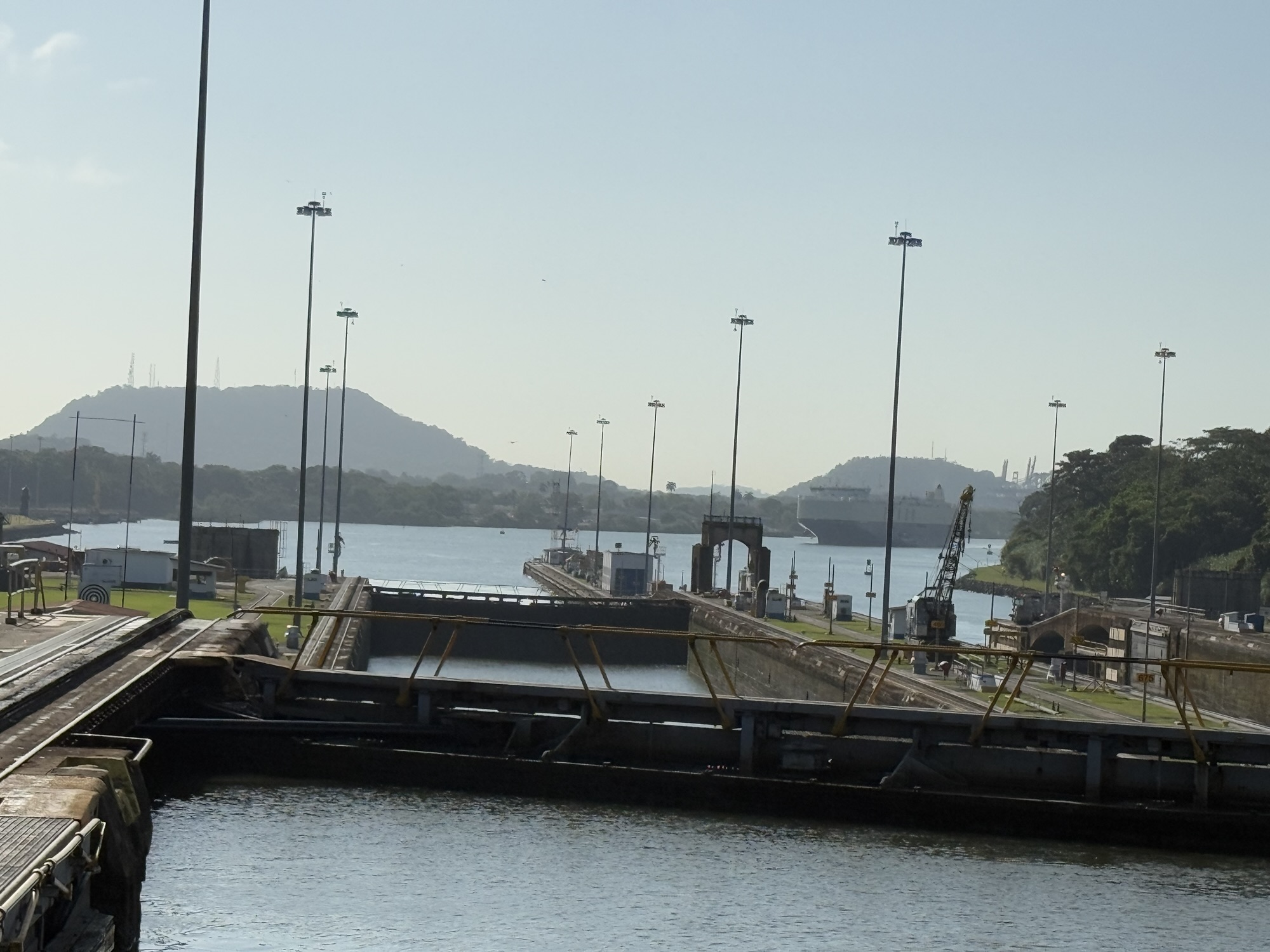
Gatún locks (northbound) lower boats over 85’ to the Caribbean Sea level via 3 chambers. We arrived first this time, and we had to wait almost an hour for the Mari Couva to join us. From our front-row seat, we had a clear view of the two gates holding us in at the upper chamber. Past the 2nd gate (with the yellow railings on top), the 2nd chamber awaits, nearly 30’ lower than where we were to start.
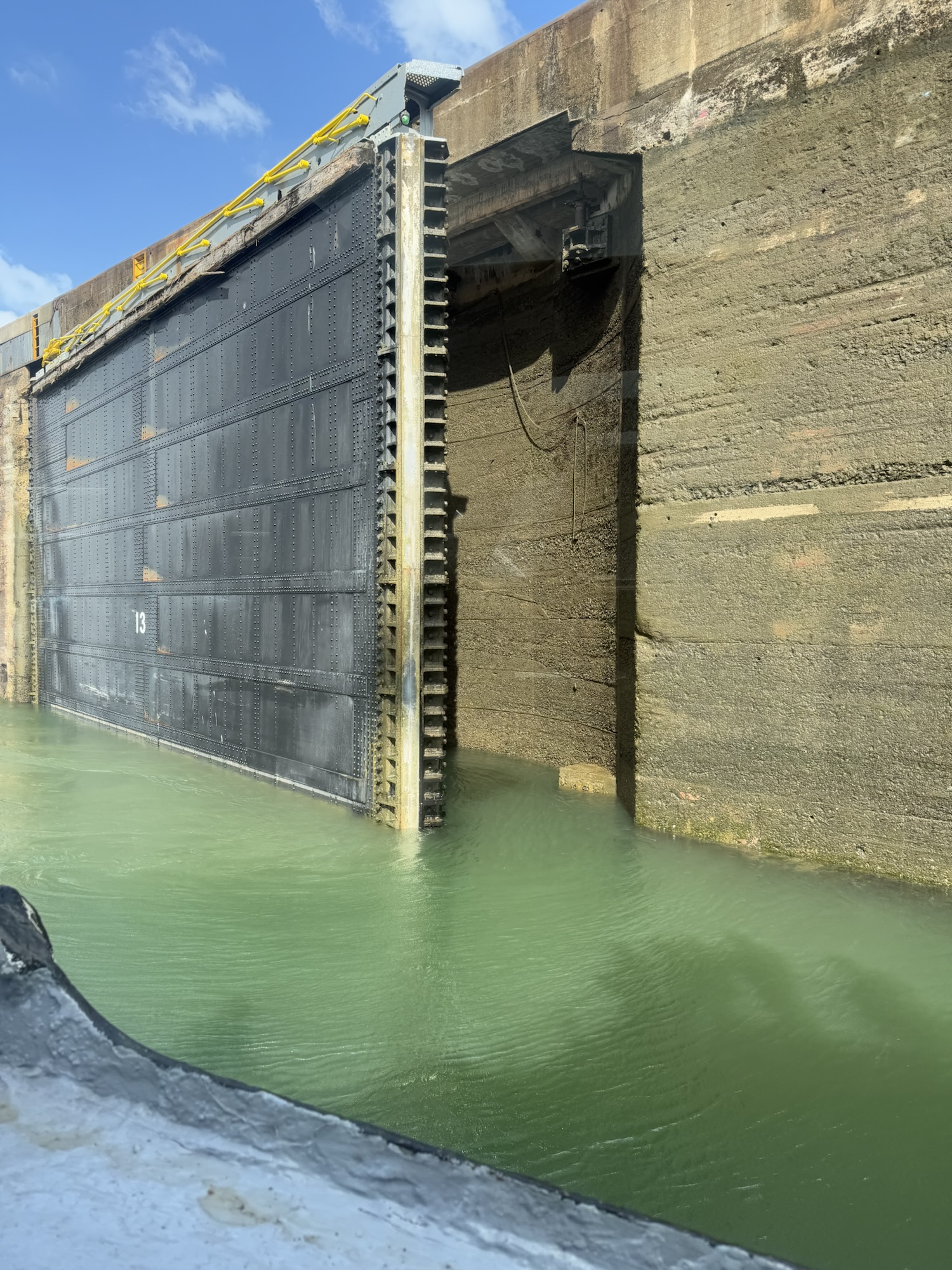
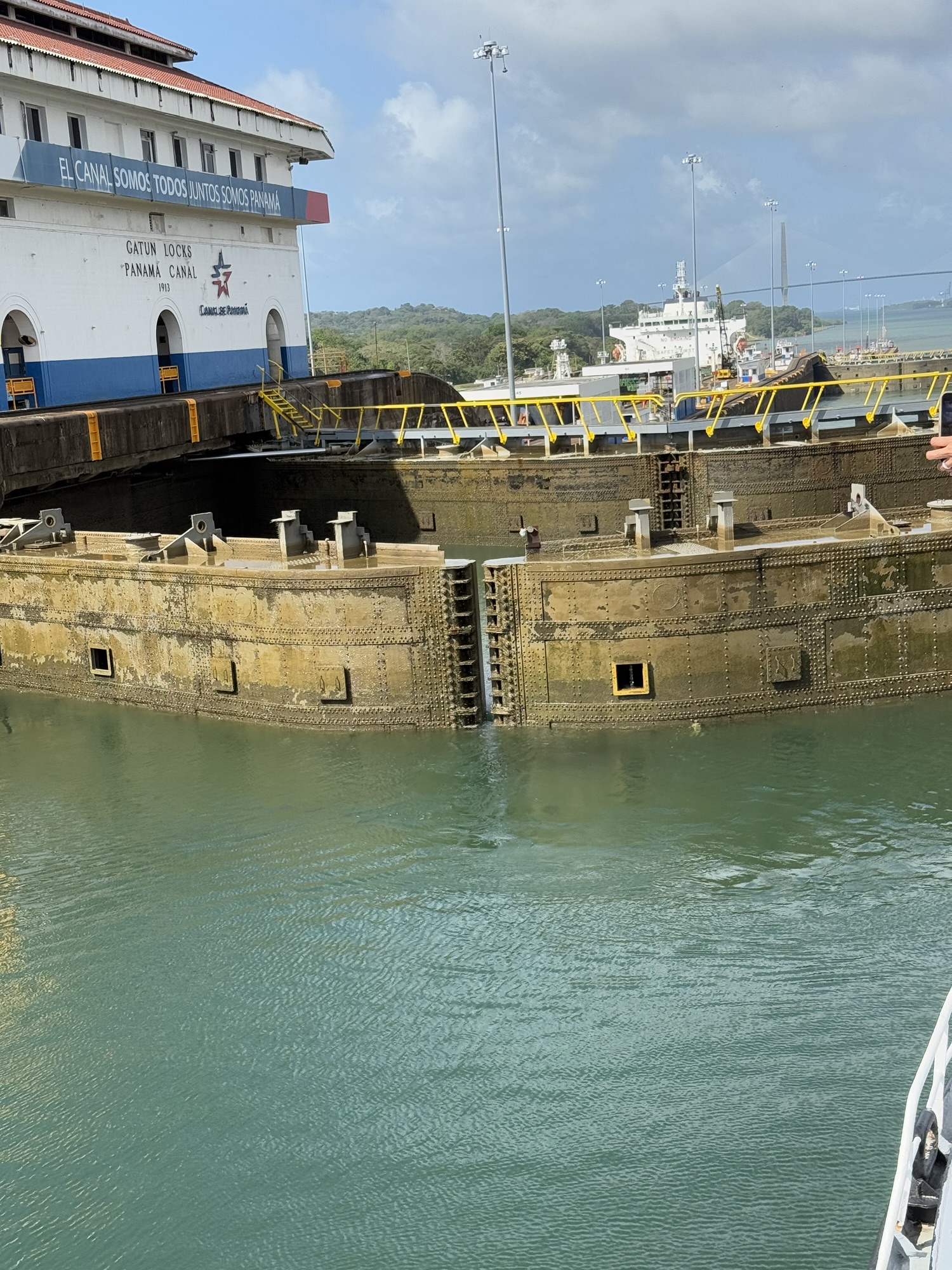
Transiting the canal is not necessarily a thrilling journey. Instead, it’s more like seeing the pyramids at Giza or being at Manchu Picchu where the grand scale of achievement is on display. That a group of people could get together and then plan and build something like the Panama Canal is inspiring (especially since they were doing this at the start of the 20th century without computers or heavy power equipment). So much of global trade is possible because of this canal.
Panama is a moderate income country, but it isn’t wealthy by any stretch. The canal is a major operation with massive costs for operation and maintenance, and it requires a trained workforce to keep it humming along safely. While the canal transit prices sound high at first, when you see the canal functioning and all that goes into it, it suddenly seems like a pretty good bargain.
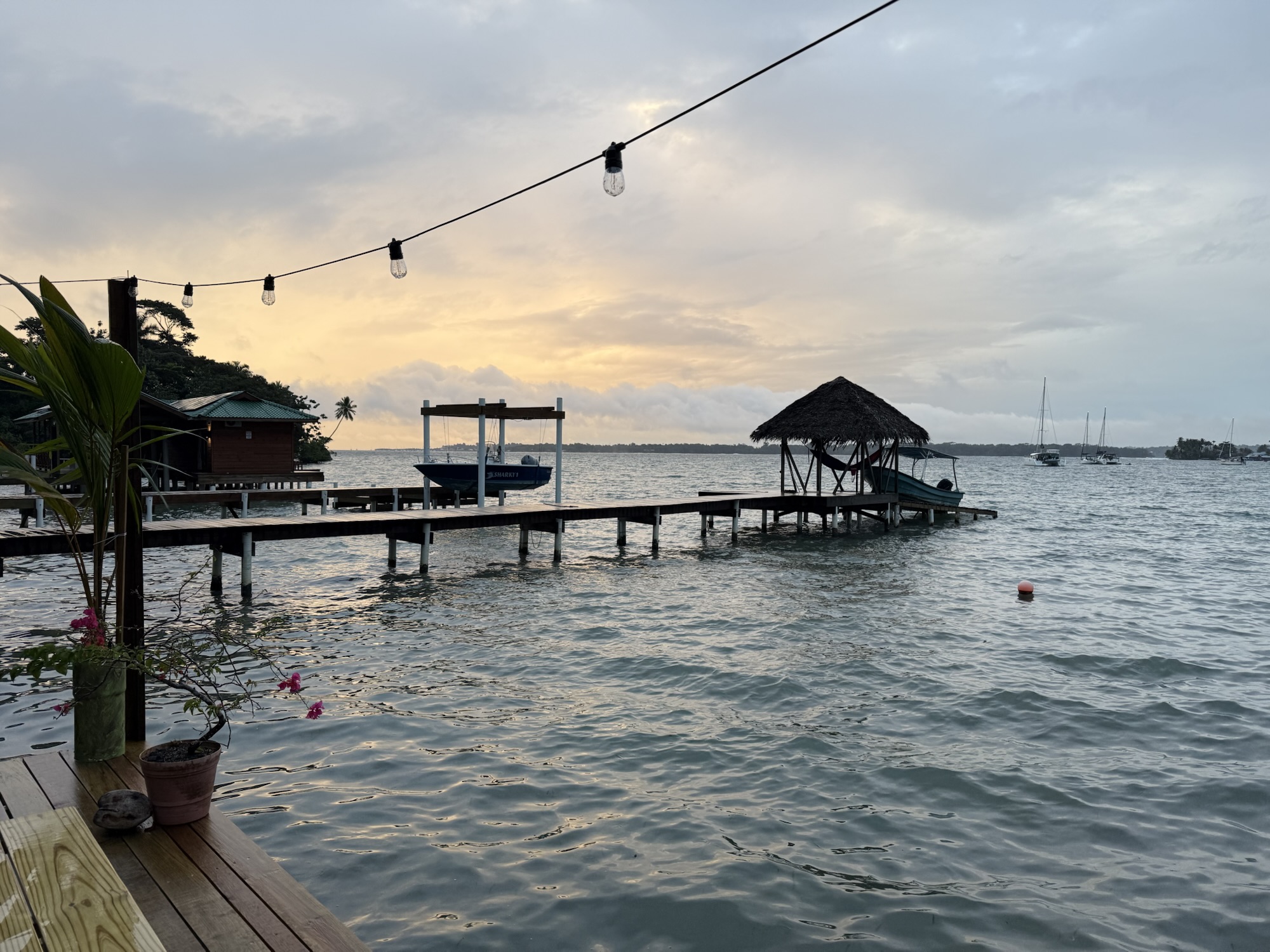
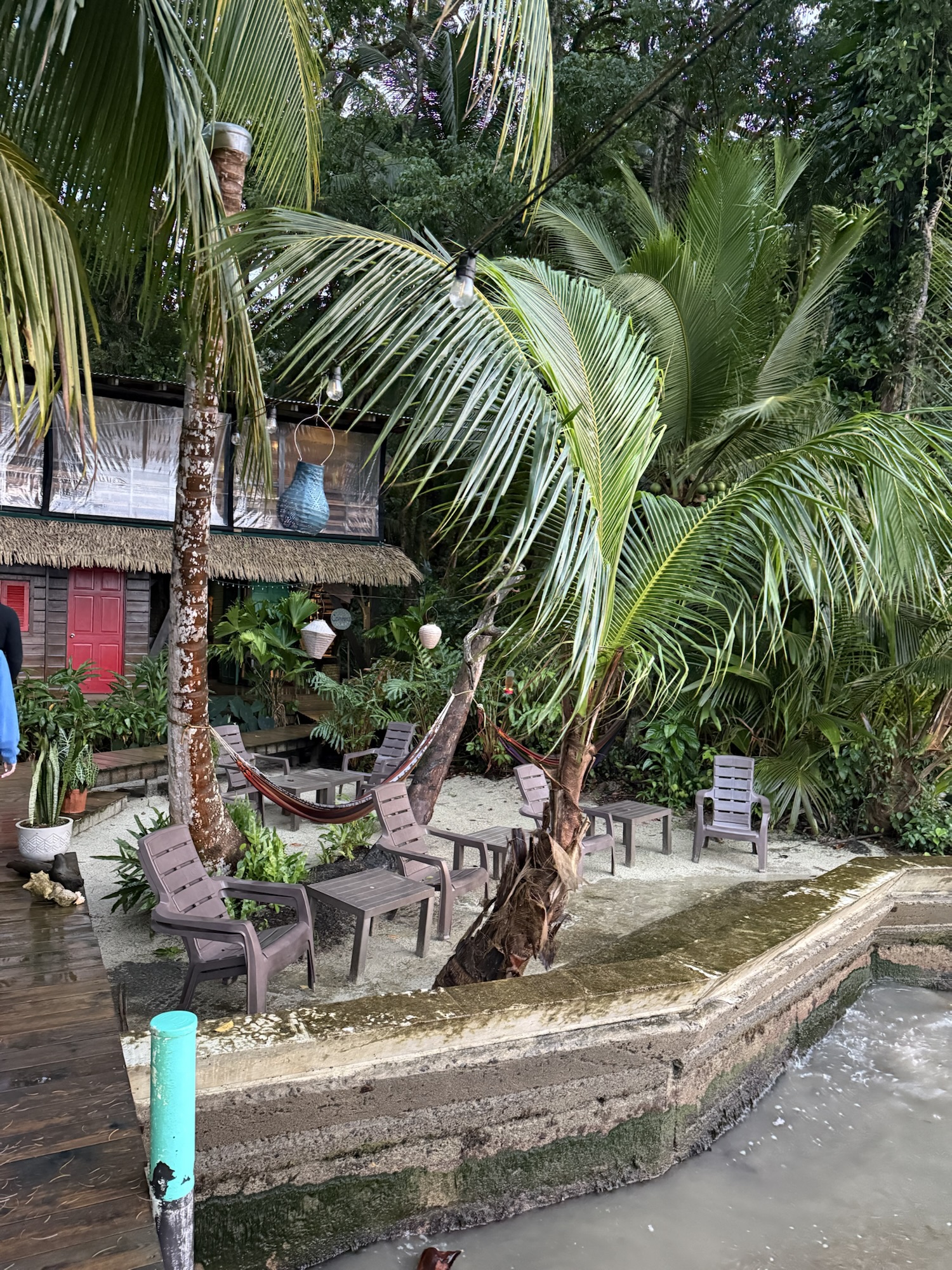
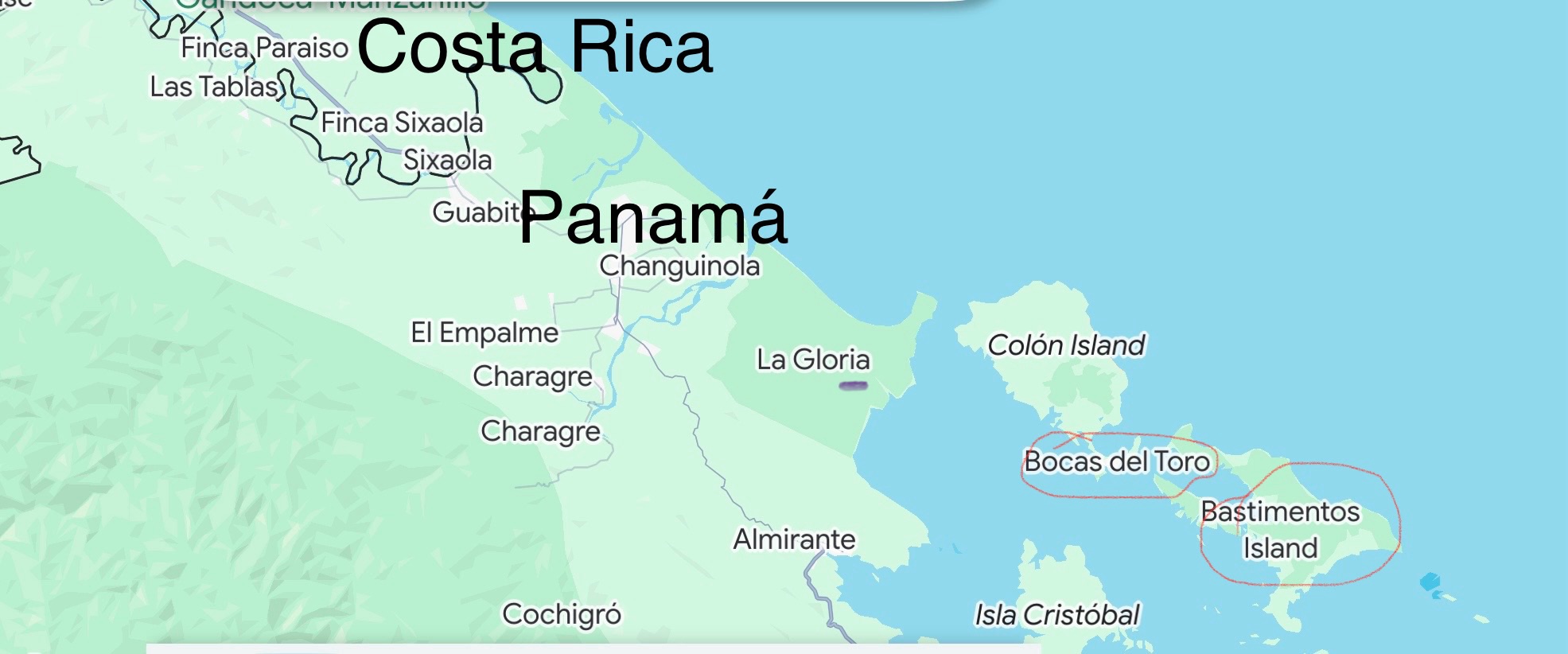
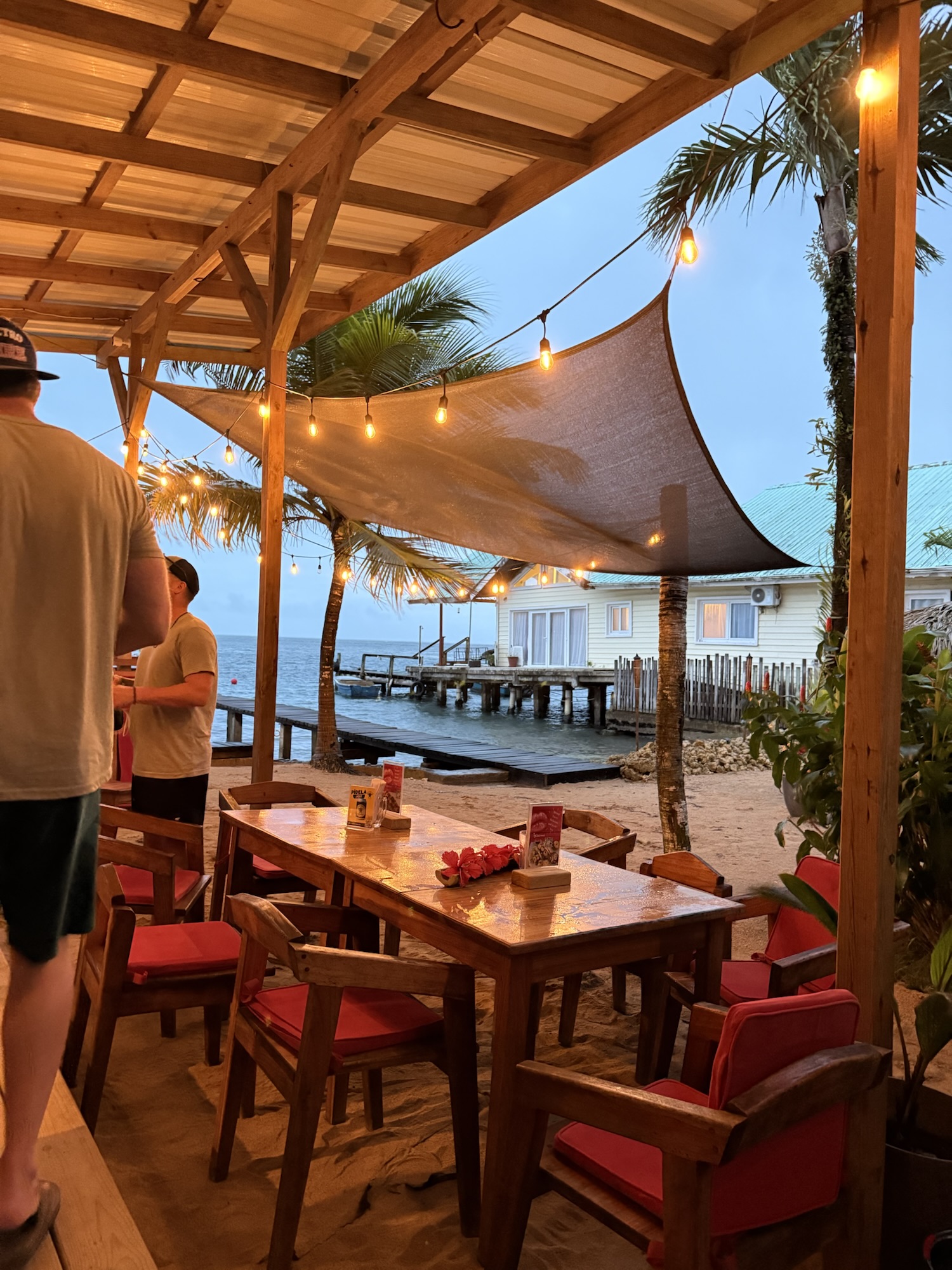
All in all, Panama was great. While I didn’t dislike it, per se, I would probably not go back to Bocas del Toro (somebody described it later as Panamanian Margaritaville, and that seems spot on to me). Panama City is much more cosmopolitan than most other Central or South American cities, and that’s both a positive (safe water, tons of great food, more access to English speakers) and a negative (more things that cater to tourists, more expensive, less authenticity in places). I’m more of a Colombia fan, personally, but I would happily return to Panama and explore other regions – especially those less frequently visited by tourists.

 Vacation Days