Cartagena

I didn’t expect to say this, but Cartagena was my least favorite part of this trip. It has its charms, for sure, but it is also touristy in a way that I don’t find enjoyable. Street vendors approach you every 10 feet (or less). Restaurant staff are on every corner flashing menus in your face. Things cost a lot more than they should.

I don’t want to imply that I didn’t enjoy a day here – I certainly did – but I feel that I covered 2/3 of what I’d want to see in just 8 hours. When I make it back to Colombia, I’ll probably skip Cartagena and instead spend more time in the Salento area, Medellín, and maybe other parts of the coast.

After a *fabulous* breakfast in our luxurious hotel, we went up to the rooftop pool for a quick dip. That’s a great way to start what will surely be a hot day! Then we each enjoyed a proper shower (we’d been on the island for the previous 2 days so we hadn’t had a decent shower since Medellín). Ok, we were finally ready to take on the city!

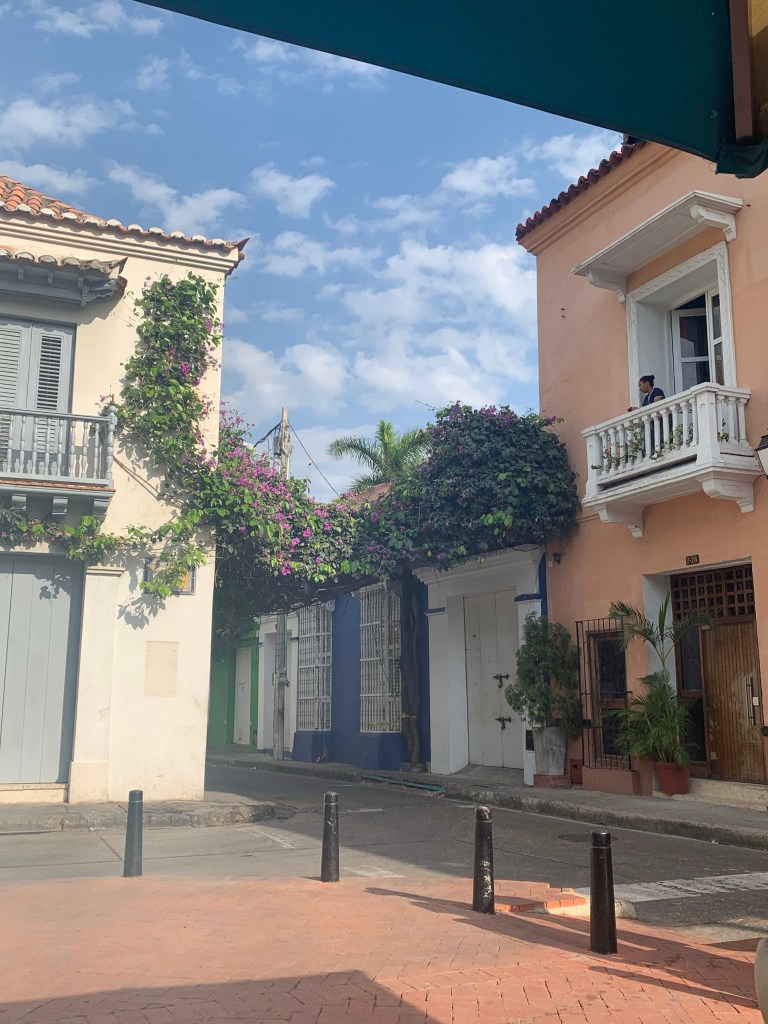
We meandered down the streets of the Walled City, or El Centro, as it’s called. Adorable shops and restaurants line the narrow streets, along with street vendors selling almost anything imaginable. We went into one building which served as a market for local artists and made some retail investments. 🛍🛍
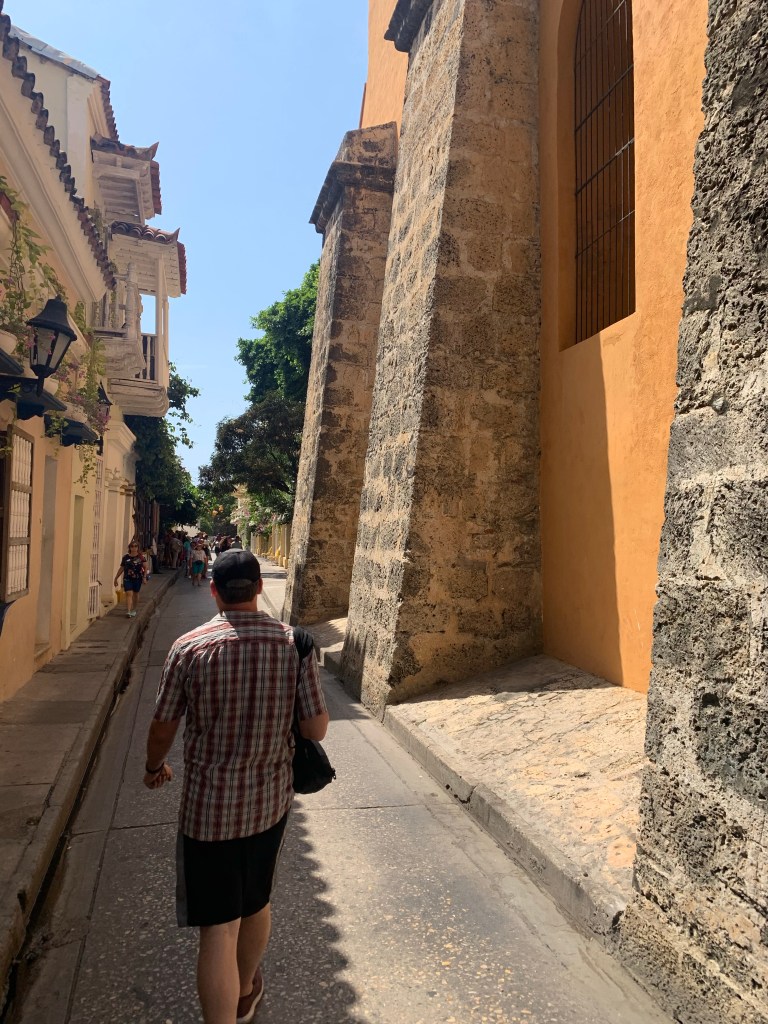
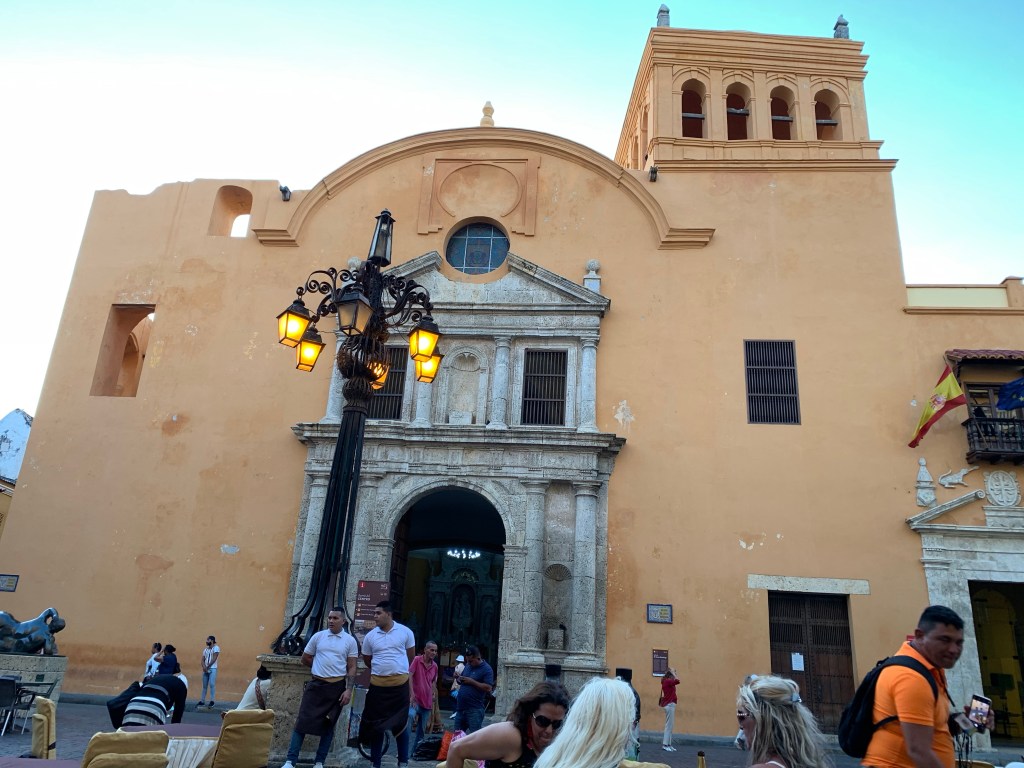
Cartagena was a major port of call for the Spanish, and it was the largest city for the slave trade of the Colonial European imperial era. As such, pirates were frequent visitors. To prevent maritime attacks, a giant, thick wall was erected along the city’s coastline. While there are few pirate threats now, the walls still stand and are great places to stroll and take in the view of the city on one side and the Atlantic waters on the other.

Castillo de San Felipe

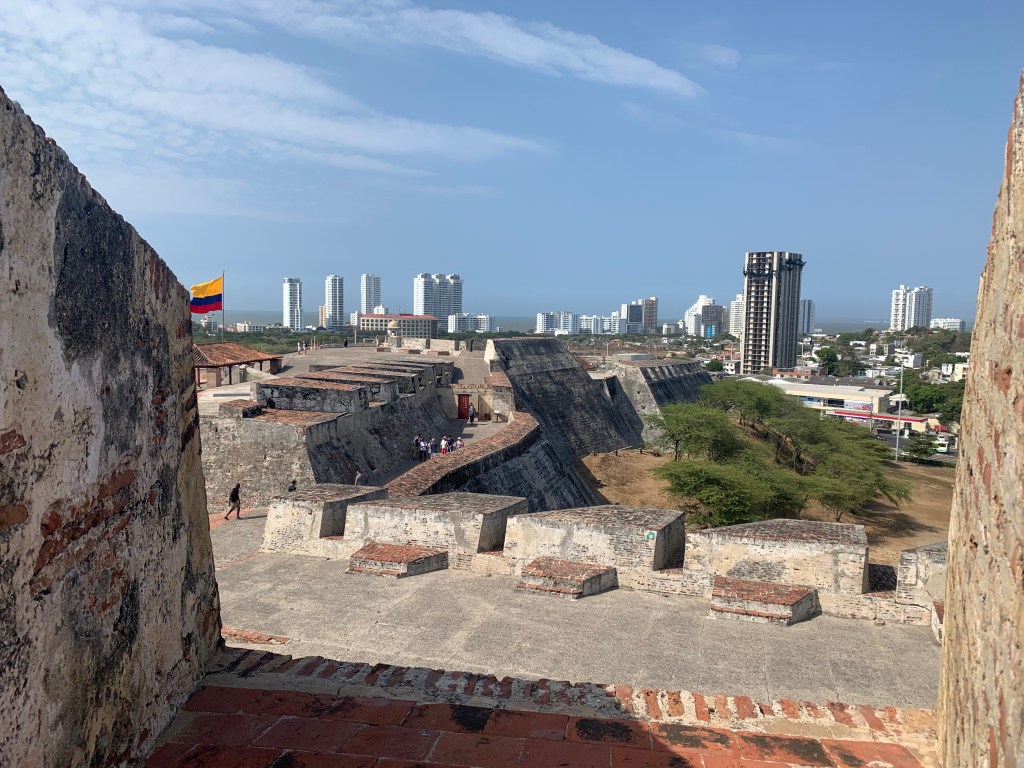
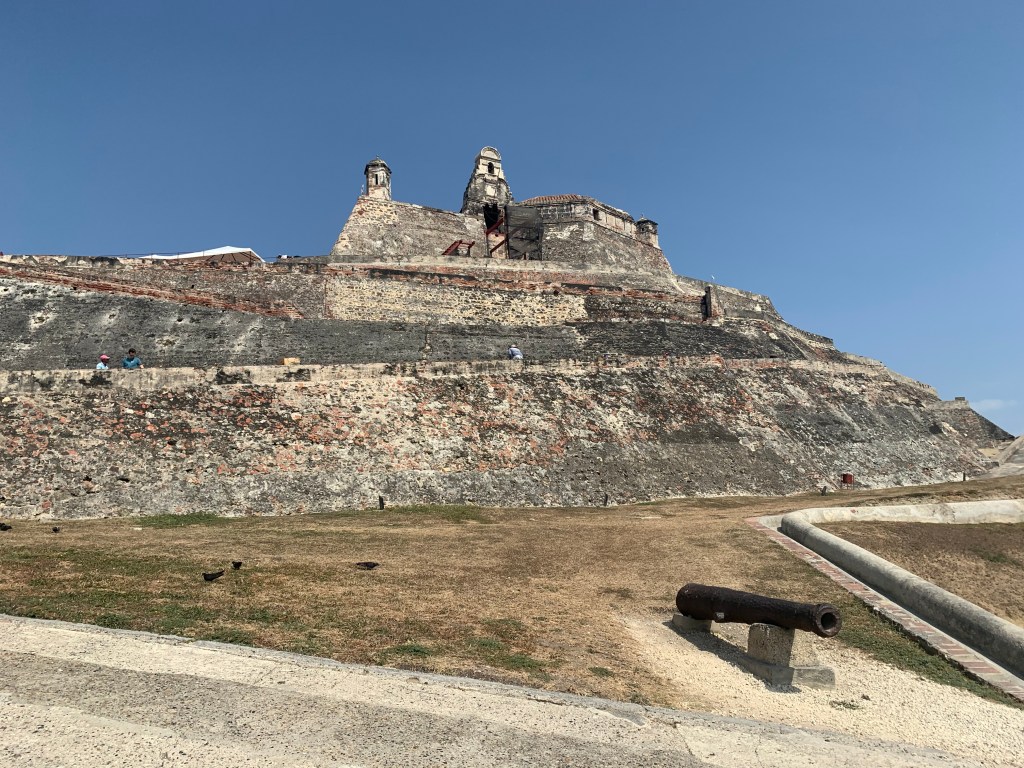
After an exhilarating taxi ride (the only kind offered in Colombia), we next toured Castillo de San Felipe. This fortress was designed to protect the city from attacks by land. It reminded all of us of Castillo del Morro in San Juan, Puerto Rico – same builders, same era. So no surprise there.

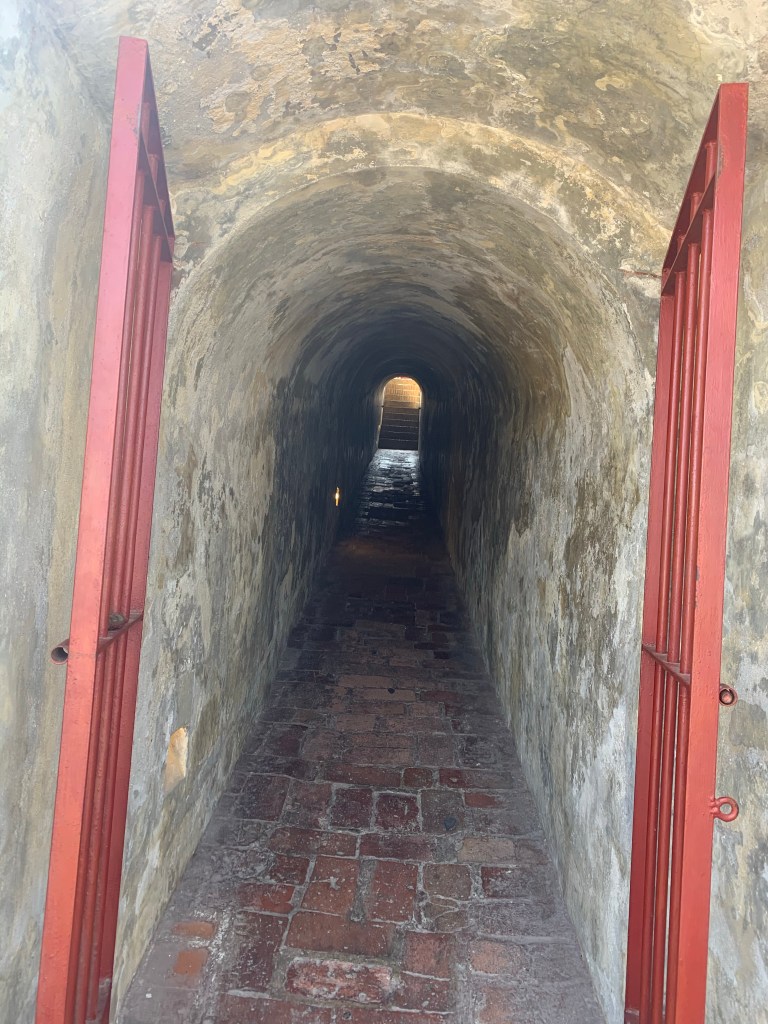
This fortress had tunnels built along the perimeter. Within the tunnels were packed gunpowder barrels so that the soldiers could blow up parts of the tunnels and devastate advancing ground enemies if needed. we walked through them a bit, but when they sloped steeply downward we all agreed we got the idea and backed out. It did strike me as interesting that none of us enjoyed the experience of being in a short (6 feet maximum), narrow, dark tunnel, but when that tunnel slopes deeper into the earth we all stopped at nearly the same time and expressed that we didn’t want to continue. We turned around and made very good time getting back up to the surface. No miners in this family!
Oops

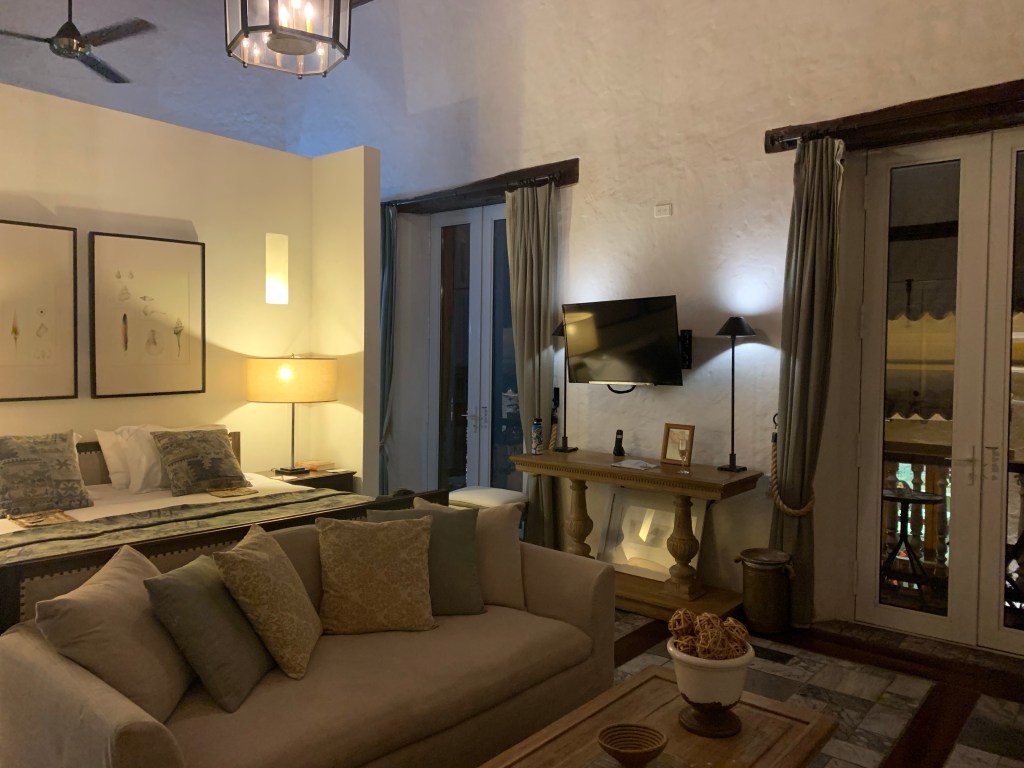
When booking our Cartegena hotel, I waited a bit too long. Finding a place in the city center which could accommodate 3 people was tricky, so I had to bite the bullet and spend $250 on a hotel room (which, as my family will tell you, I NEVER do). It turns out that $250 in Cartegena gets you a pretty nice suite in a luxury hotel. This wasn’t was I was shooting for, but I’ll take it!
Half of our room
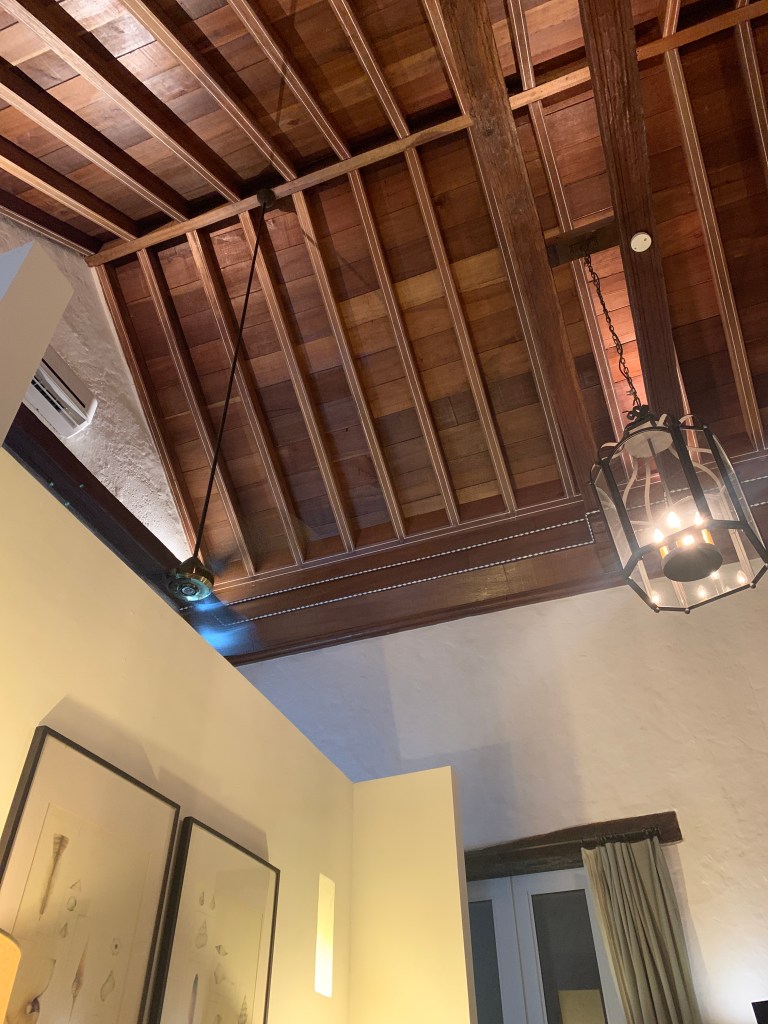
Vaulted ceilings must be 3 stories high
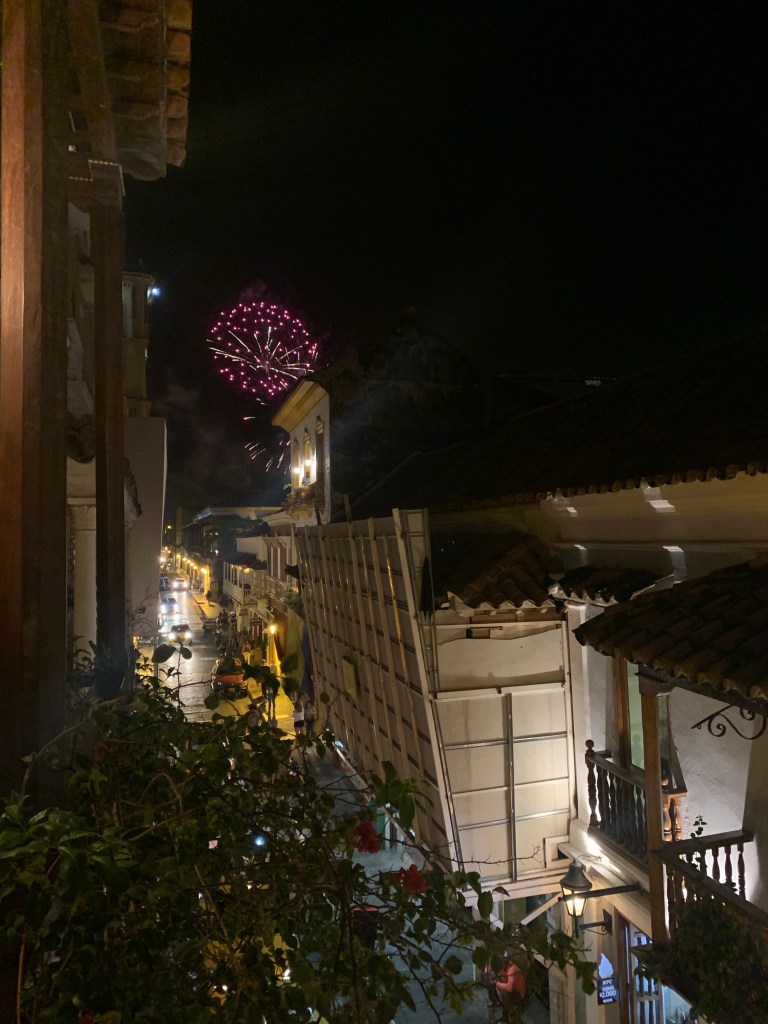
Fireworks off our private balcony
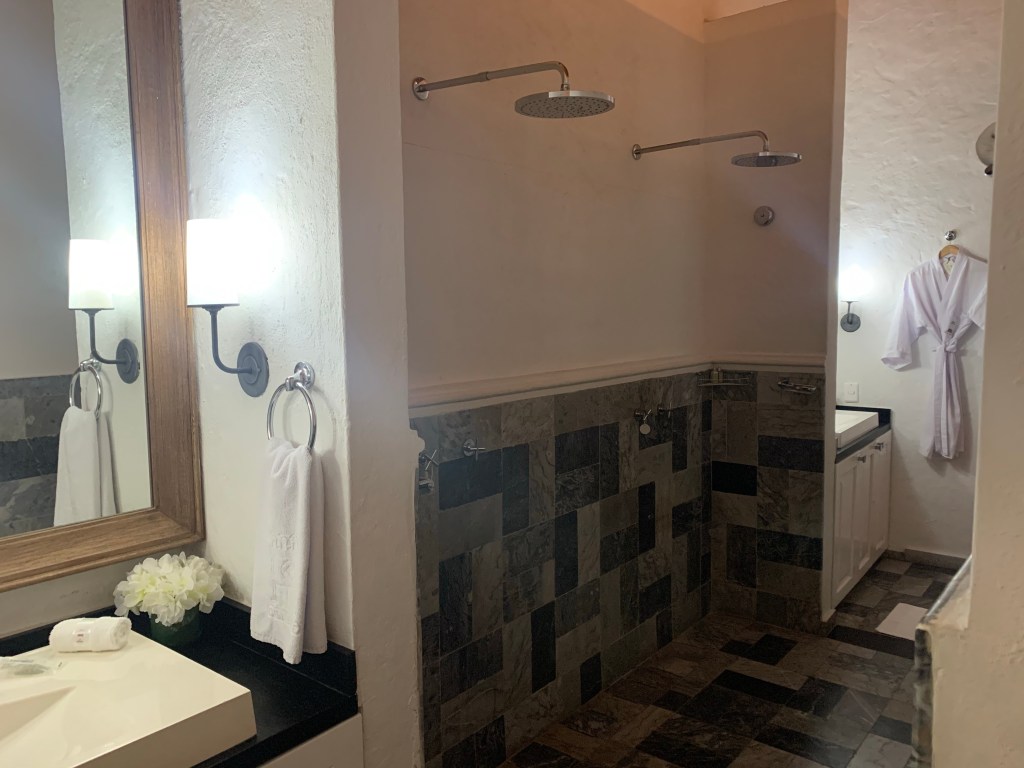
Bathroom with 2 showers and 2 sinks – making up for last night when we had none of either!
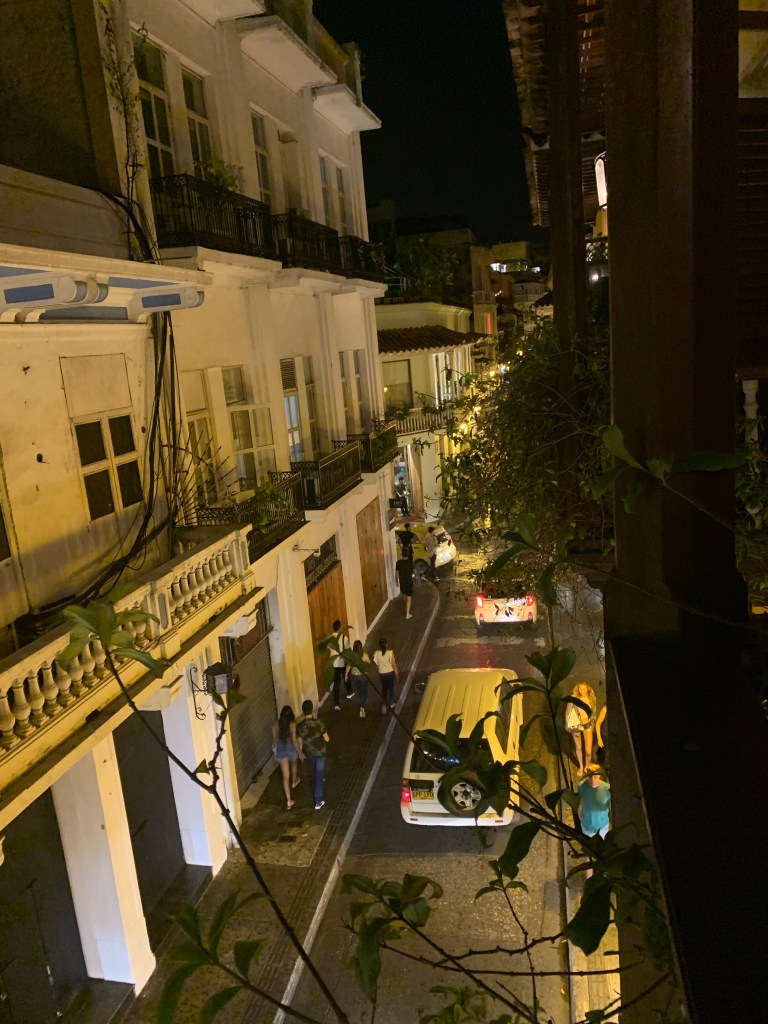
View from our private balcony

Navigating Colombia

“A qué hora es el proximo autobús a Cartagena?“

What time is the next bus to Cartagena? A simple enough question, except in Colombia. Time is measured here differently (if at all).

After an exhilarating boat ride from Isla Fuerte to Paso Nuevo (in which the boat turned around to pull up onto the shore and we got hit broadside with a huge wave, nearly capsizing the boat), all of the passengers worked together to arrange a collectivo to Lorica. Traveling together gave us better negotiating power. 40 minutes, they said.

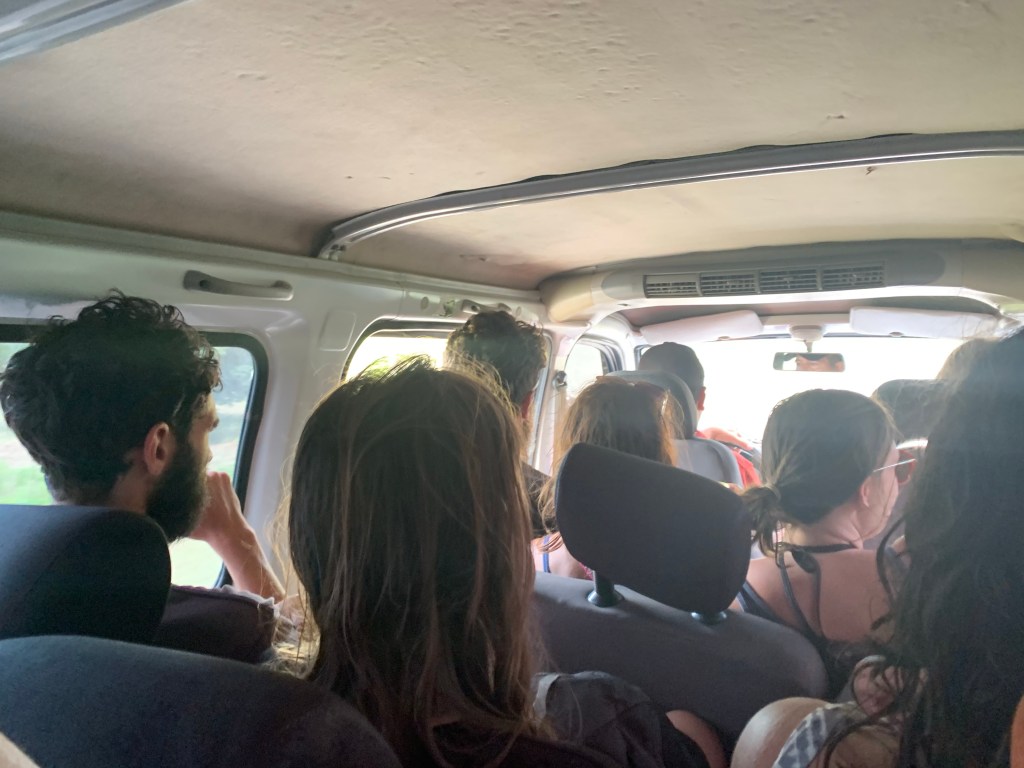
Nearly 90 minutes later, 11 passengers loaded into a small minivan which was definitely more than the vehicle’s suggested/recommended/physical capacity. Two people from our boat opted to hire motorbikes instead, and I’m glad because I can’t fathom where they were going to sit in this vehicle!

Our cramped collectivo to Lorica

After an hour, we arrived at the Lorica bus station. Men ran around selling bus tickets, taxi and moto rides, beverages, snacks, and who knows what else. When we arrived a bus was ready to leave, but after the cramped collectivo ride we opted to wait for a later bus. Thus my question of what time for the next bus. The guy told me it was at 2 in the afternoon. Since it was 12:30 we opted to wait and get some food.

As we had a snack in the station café, the ticket salesman comes to tell us the bus is here and leaving soon. It was barely 1:00! But since we didn’t want to be in Lorica all day we got on. We will have to be sure to have a nice dinner or Luke night riot – missing meals isn’t his favorite.

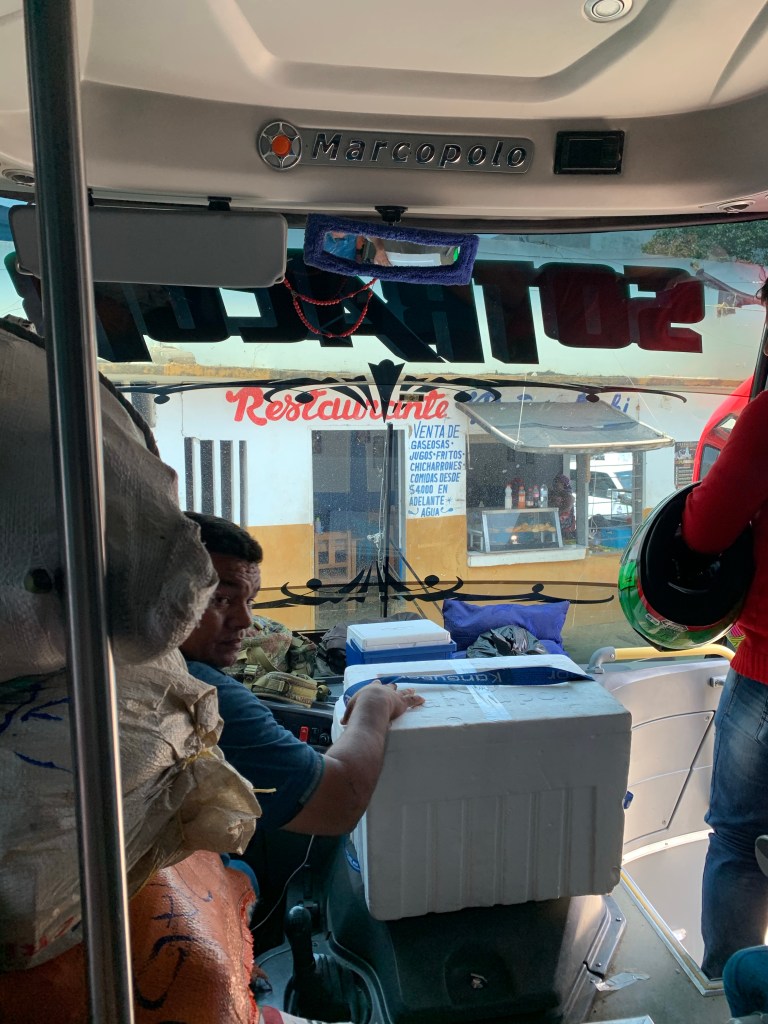
The bus looks like a modern interpretation of the bus scene from Romancing the Stone. It’s a modern coach bus with AC (thankfully), but amongst the passengers are bushels of bananas, bags of rice and potatoes, and assorted luggage items. Only the bags of bananas behind the driver’s head are tied down – the rest is just wedged in wherever it fits. I’m writing this with a 10 liter drum of paint at my feet. Thankfully there are no chickens, although I feel pretty confident that if a passenger with a live bird wanted to board nobody would bat an eye.

Despite my propensity for feeling car sick, I’m writing this from the bus to distract myself from the ride. We are casually careening amongst motorbikes, trucks with all manner of cargo, and men pushing handcarts on the road. Our driver clearly gets paid extra for early arrivals because we are flying along roads that warrant substantially more restraint with the gas pedal than he is willing to engage.

With some good fortune, we will be in Cartagena in about 4.5 hours. 🤞

UPDATE

I lost my paint bucket footrest about an hour into the ride. It seems that the bus picks people up along the way, and the number of passengers isn’t limited to the number of seats. One of our mid-route arrivals needed a seat so he got the paint bucket. How luxurious!

UPDATE 2

Said passenger who took my paint bucket for his seat had the bus stop a few miles outside of the city to pick up a box of CHICKENS!

Isla Fuerte

Amanda and Ian would be so proud to know that this city girl – one who had never been camping before they took me when I was 25 years old – is enjoying time in a hut on the beach without water or electricity. I’ve made some pretty solid progress as far as adaptability goes (I say, patting myself on the back).

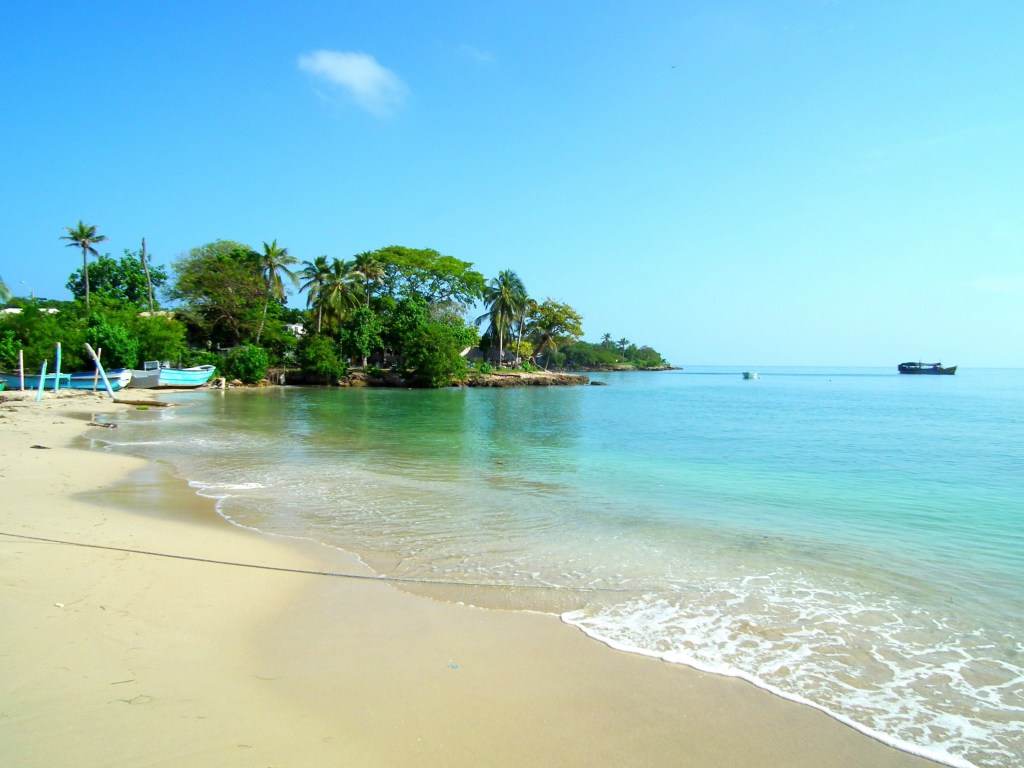
Isla Fuerte was billed as an idyllic Caribbean island with aqua waters and a gentle ocean breeze on all sides, and it doesn’t disappoint. Given its remote location and tiny size, the island relies entirely on generators, bottled water, and boats to ferry across all the necessities of daily life. Yet somehow the simplicity is comfortable. Odd, given that I consider myself to be the ultimate urbanite.

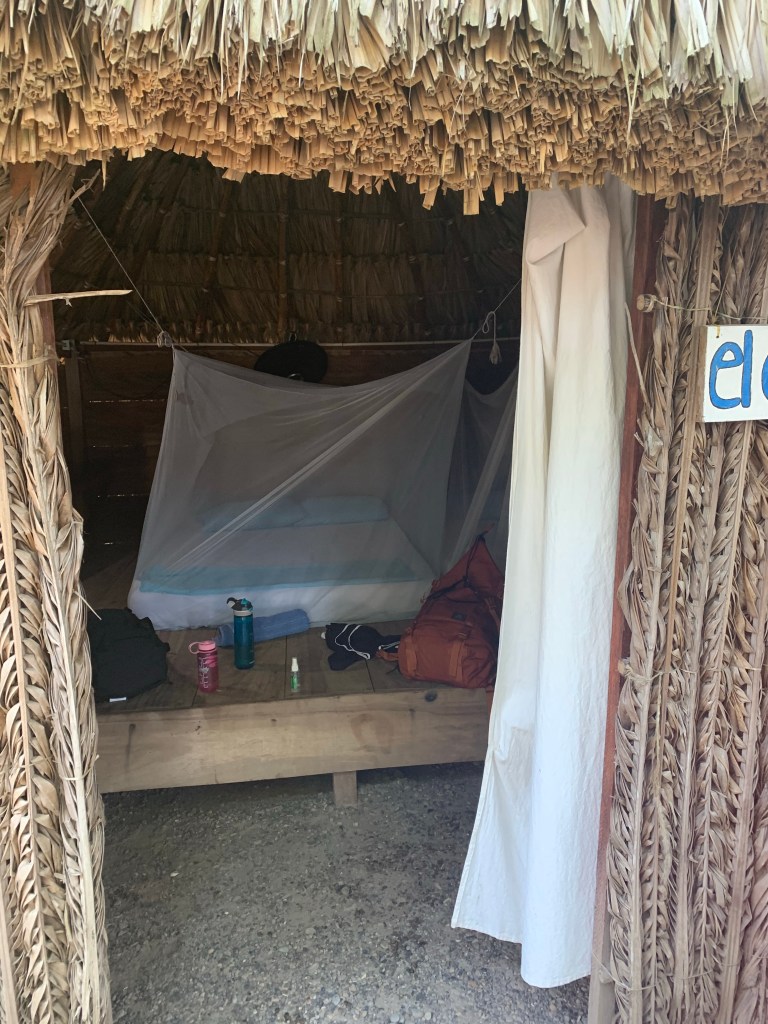
Our accommodations are rustic. A reed hut with an elevated platform for the mattress, a mosquito net hung from the ceiling, and a curtain drawn across the “door” for privacy. The showers are only on for 2 hours in the morning and at night (except for when we tried to use them tonight and there was no water). Toilets are flushed manually by pouring a bucket of seawater into the bowl.

Our “bedroom”

Today we wanted to walk over to Playa San Diego. It’s supposed to be gorgeous, and there are sloths frequently in the area. Sloths! We asked at the reception desk how to find the sloths (after missing our mark yesterday) and were told to ask a local in town. Easier said than done – the Spanish here is incredibly fast and with an accent that I struggle to understand.

So we decided to head out and see what we could find. Halfway through town we saw some folks sitting outside a store and they confirmed that we were on the correct path (there are no roads or signs; this island is too small to have motorized vehicles – only donkeys). After about 20 minutes we find the beach, and it was definitely worth it!

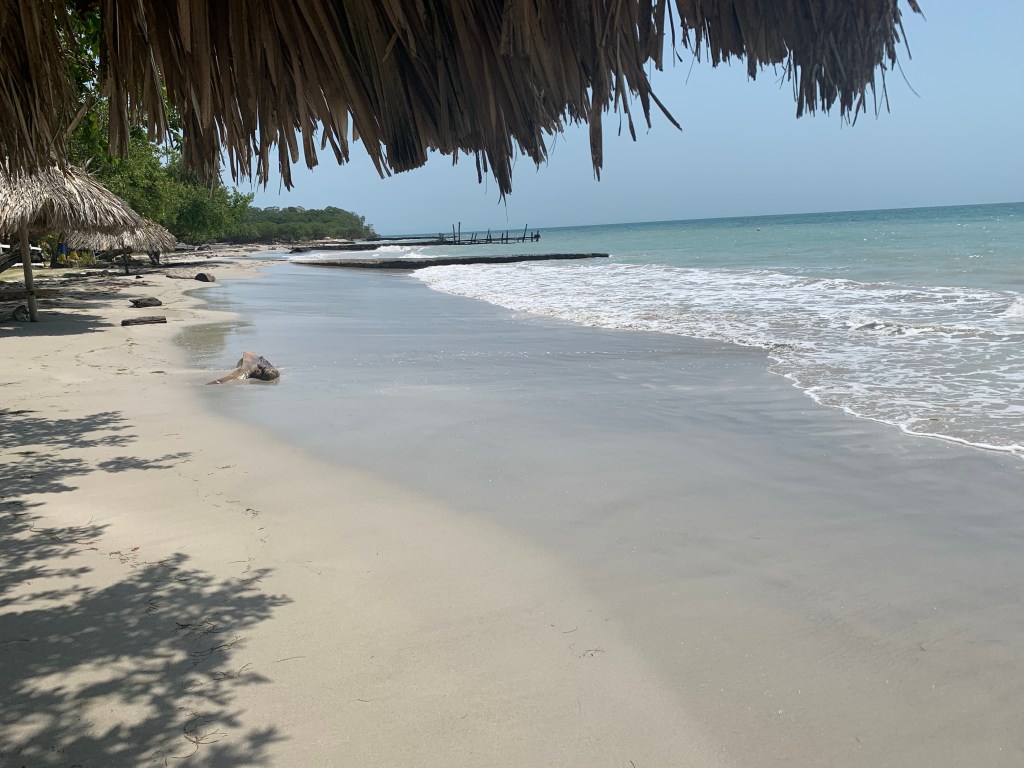
Playa San Diego

We spent several hours here. The beach is really quite narrow with little room to sunbathe and definitely no amenities beyond the single stand selling basic food and drink. But the water….heaven. The air temperature was in the low 90s and the water temperature was easily in the mid 80s to low 90s. It was actually a bit hot in places! I loved it.

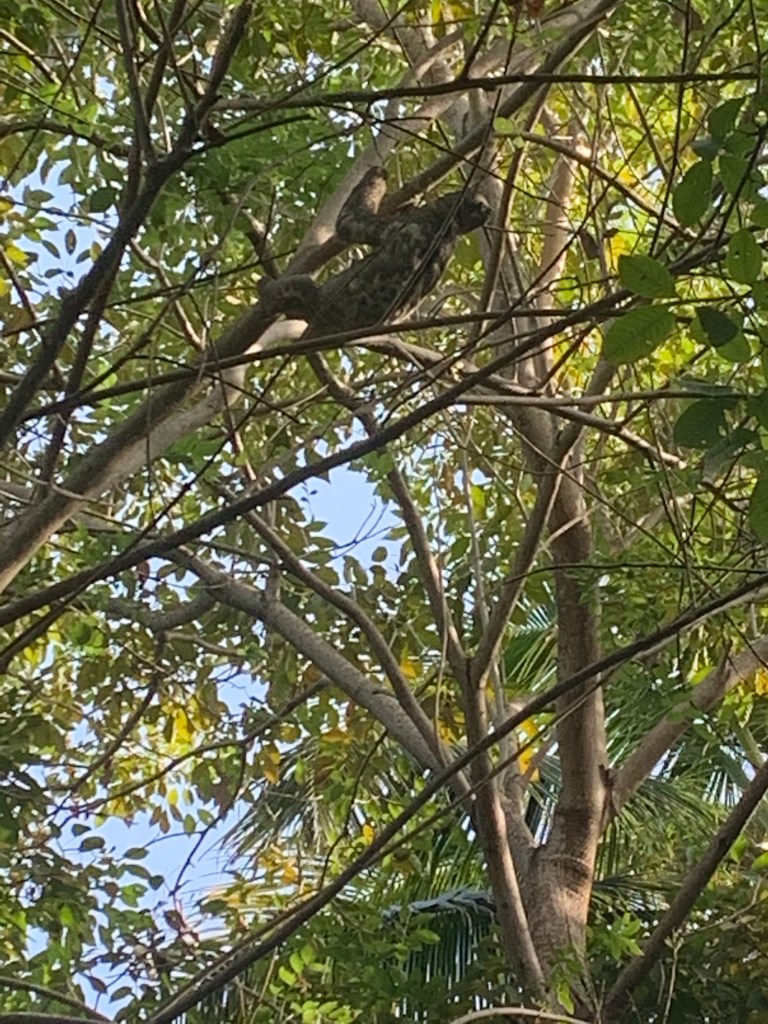
On the walk back we tried to look for the sloths. Sloths are hard to find. Really hard. At one point, a local carrying a machete looked at us – obvious gringos – and said “perezosos”? “Sí, ¿sabe dónde están?“ I replied. And he put down his machete and motioned for us to follow him along down the path. Sure enough, he pointed out two sloths about 100 feet back. Sloths!!! Anna-Sophia and I made poor Luke walk back to the hotel and then back again to the sloths so we could get our good cameras. I mean, sloths!!! And it turns out there was a third one right above our heads. These little guys are hard to find!

1 of 3 sloths we saw!!

Tomorrow we get to figure out how to get a boat back to the mainland (there isn’t a clearly defined system – you just show up at the spot where the boats come and go and hitch a ride with a local). Then we get to figure out how to get a bus to go the ~150 miles to Cartagena. It will be exciting, if nothing else!

Grocery shopping, killing my family, and other mundane aspects of travel

Grocery shopping

In the US, I’ll go to extraordinary lengths to avoid grocery shopping. Truly, it is my least favorite of all domestic activities. My father would be disappointed to hear this, but I don’t check the sale circular or clip coupons – I just go in, grab what I need, and get out.

So why is it that I LOVE exploring grocery stores in other countries? I suspect in my mind it is more of an anthropological survey activity and less of a routine errand.

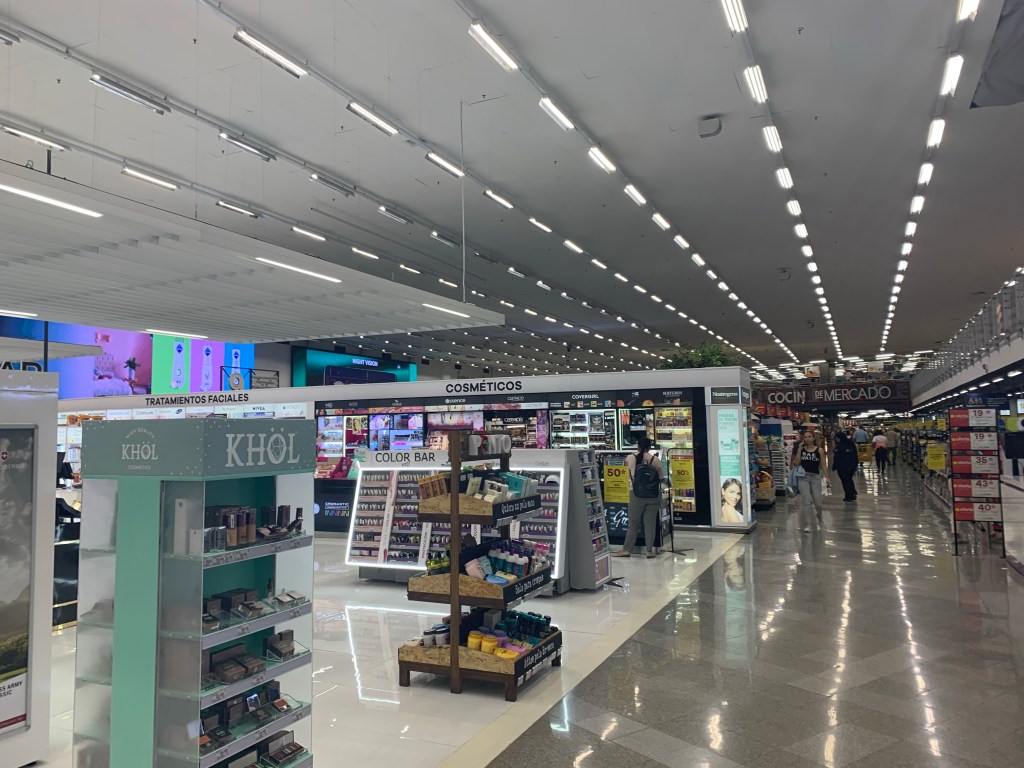
Éxito department store in Medellín

Anna-Sophia and I spent way too long in this store, examining how they market potato chips, bottled water, and crackers. And I loved every second of it!

Killing folks slowly

I love warm, sunny weather. Give me clear skies and 82 degrees and I’m about as happy as I can be. Warmer is just fine with me! Thus our travels to Kenya, Colombia, South Africa, Botswana, and soon to Mozambique.

Luke and Anna-Sophia, however, melt easily.

Anna-Sophia claims to love Iceland, Scotland, and Seattle weather. I’m not sure what Luke likes, but it is most certainly a temperature in which butter remains solid at ambient temperature and most certainly lacks sun. One of these days I am pretty sure I’m going to kill my family through overheating or overexposure to the sun. Both Luke and Anna-Sophia needed to nap to recover from the sun today, while I seem to absorb energy from the heat and sun and am way to jazzed up to contemplate sleep. And that is why I’m the one up writing this – the others are nearly dead.

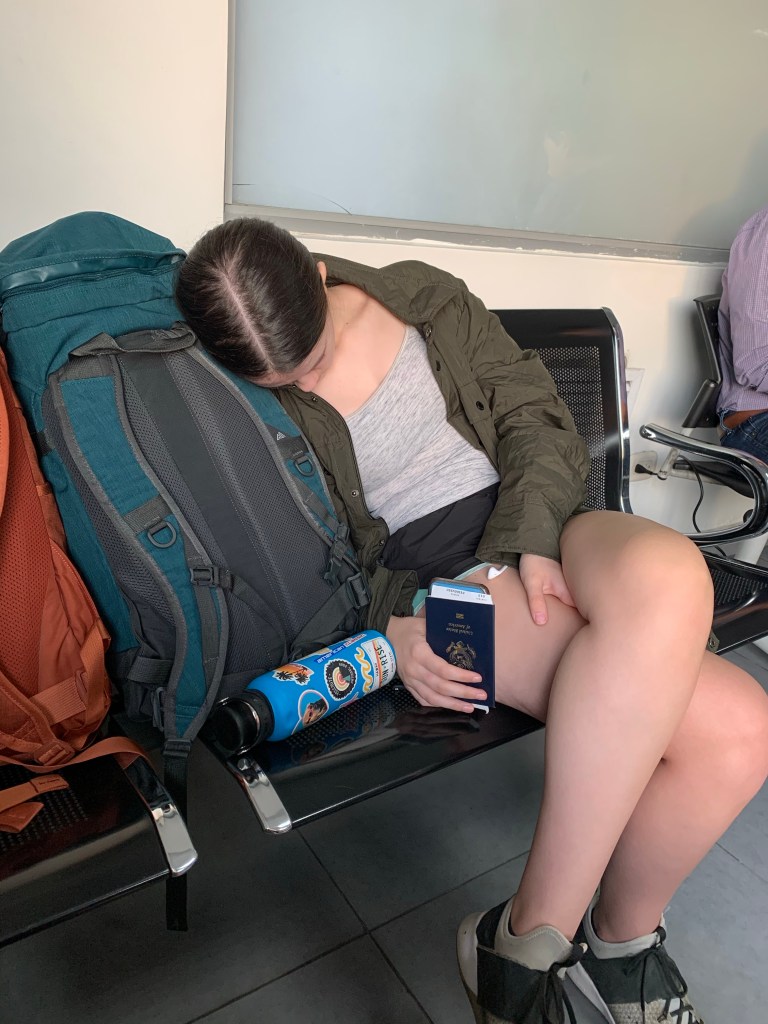
Anna-Sophia snoozes in the Pereira airport

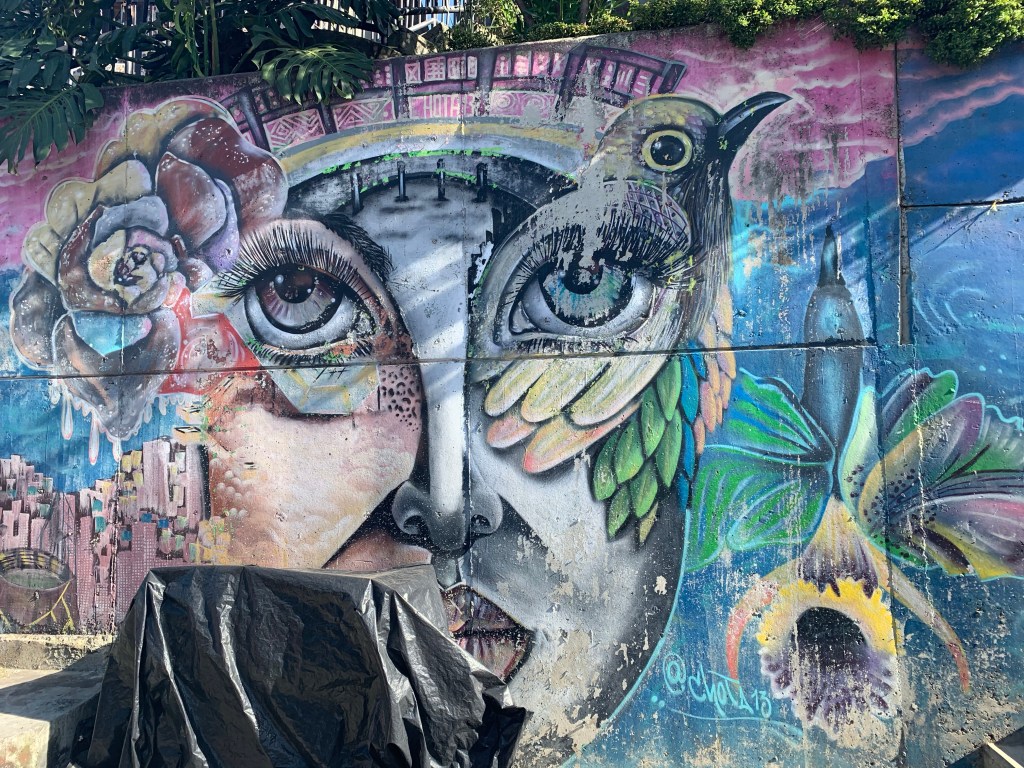
Comuna 13

Medellín has 16 comunas, each of which is comprised of several smaller neighborhoods. None has a reputation like Comuna 13, and for that reason, I had some very mixed feelings heading there. I worried that it would be a perverse mix of dangerous urban underbelly wrapped up in the tourism boom; like being at a zoo, but with impoverished families on display instead of giraffes and pumas.

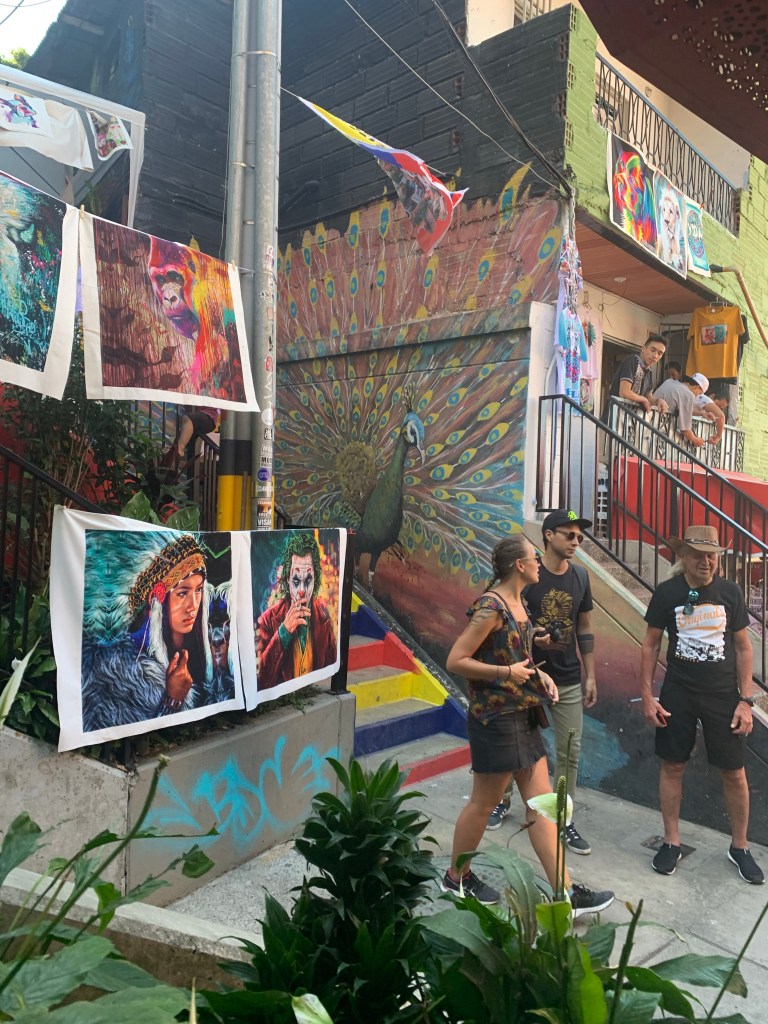
I was amazed at the vibrant, proud community that we found. Poverty is present, for sure, but it isn’t the kind of oppressive poverty that one sees in the slums outside of Nairobi or Johannesburg, and it isn’t the hopeless kind of poverty found in inner cities across the United States. Instead, this community was embracing the gritty aspects and turning them on their head to improve the lives of residents. They leverage the creativity of their residents by selling hand-crafted items that either showcase Comuna 13 as a “brand” or that mimic the style of the famous street art on routine items like shirts and hats.

Comuna 13 still faces struggles common across Colombia – poverty, limited access to education, and violence. But miraculously, the residents of this comuna have found a way not only to survive, but to aim higher and improve their lives by claiming their community as a source of pride.

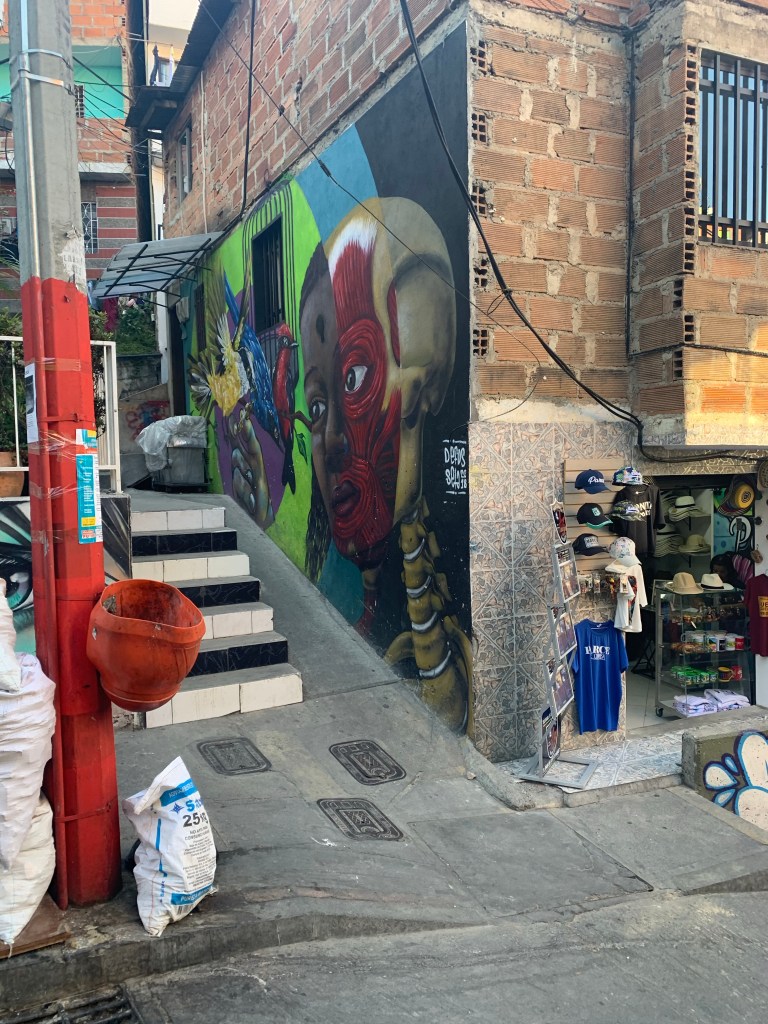
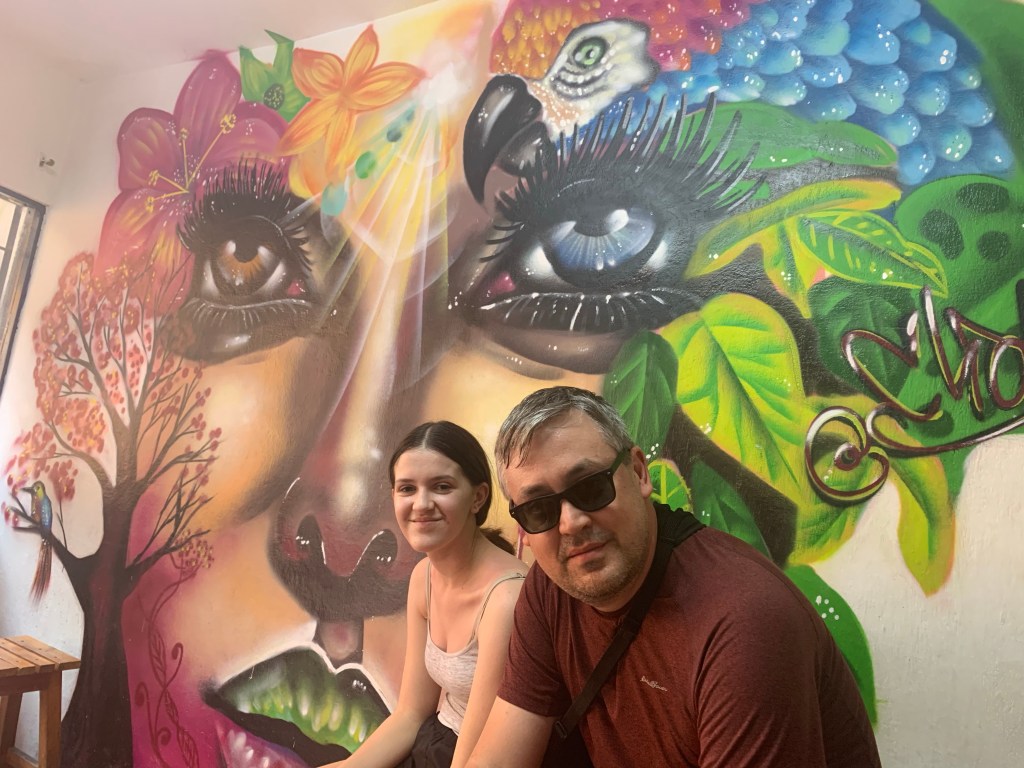
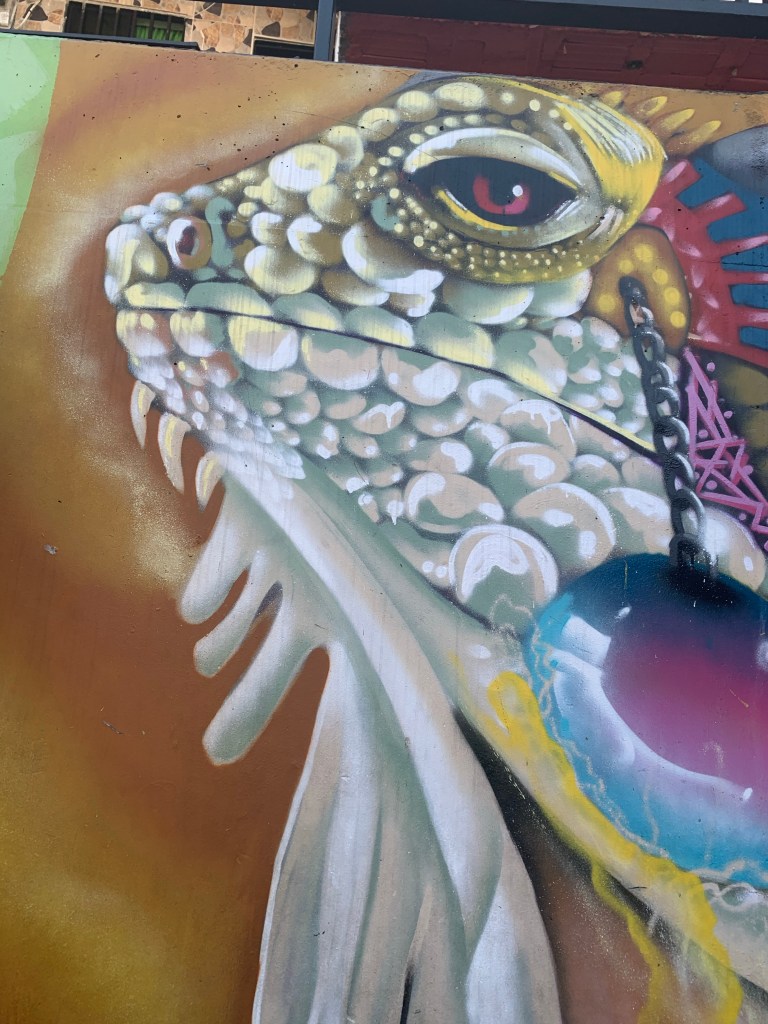
Street art found throughout comuna 13

Medellín

Well, this is definitely not what I was expecting!

Pablo Escobar, cocaine, and the terror the two caused is what most people my age think of when they hear Medellín. But today the city is a massive, forward-thinking urban center with eyes toward the future. I was very surprised – and impressed!

Medellín is truly innovative in how it approaches community development, and was named the world’s most innovative city by Forbes in 2013. It partners with communities to identify areas of need (rather than a central government office dictating its priorities to citizens). Wikipedia has a decent short summary of the city’s development program that’s worth reading.

Escobar

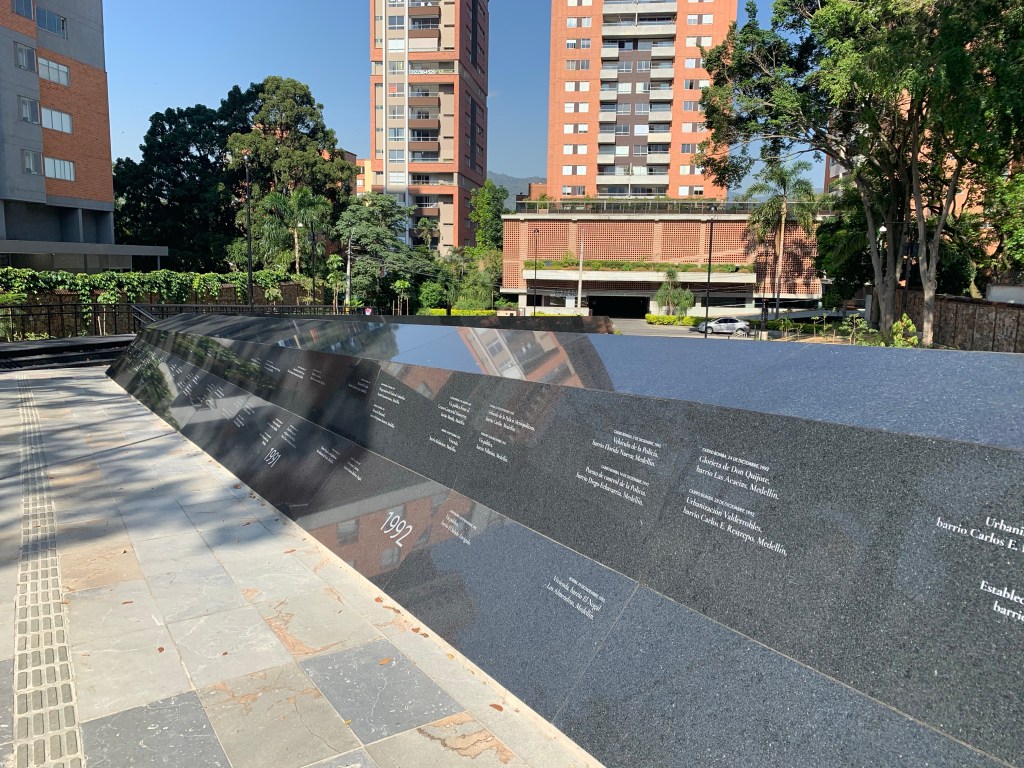
Since we only had 1 day in the city, I hired a private guide to show us the highlights and teach us about the city. First stop: a bit of history. At the site of one of Pablo Escobar’s former properties is a memorial to those who lost their lives in his reign of terror. It is a very well-done memorial. In the long, stone monument, one side has a timeline with events attributed to Escobar – the method of murder, date, location, and number killed.

Timeline side of the memorial

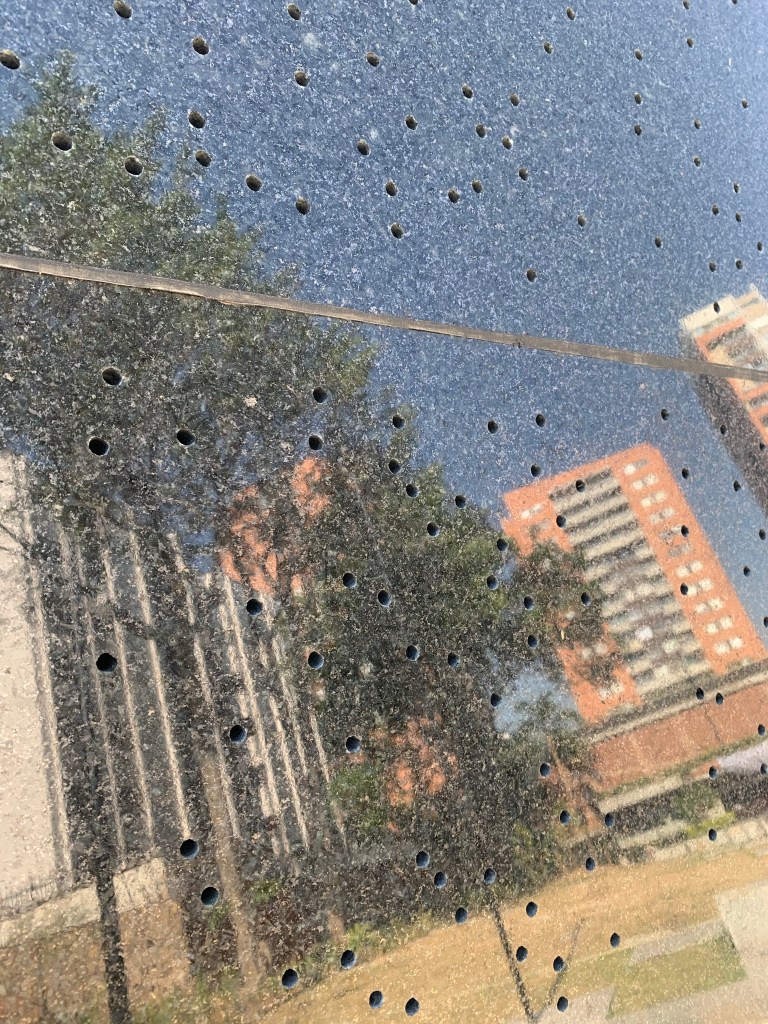
The other side is a simple, black granite slab with thousands of small holes drilled in to it. Some are filled with flowers in memory of those who lost their lives at his hands. Each represent one human life lost. I never would’ve guessed how impactful something so simple could be, but it certainly managed to convey the message in a manner that didn’t require translation.

Each hole represents an individual who lost their lives because of Pablo Escobar. This image cannot capture more than 1% of all the holes in the memorial.
Downtown

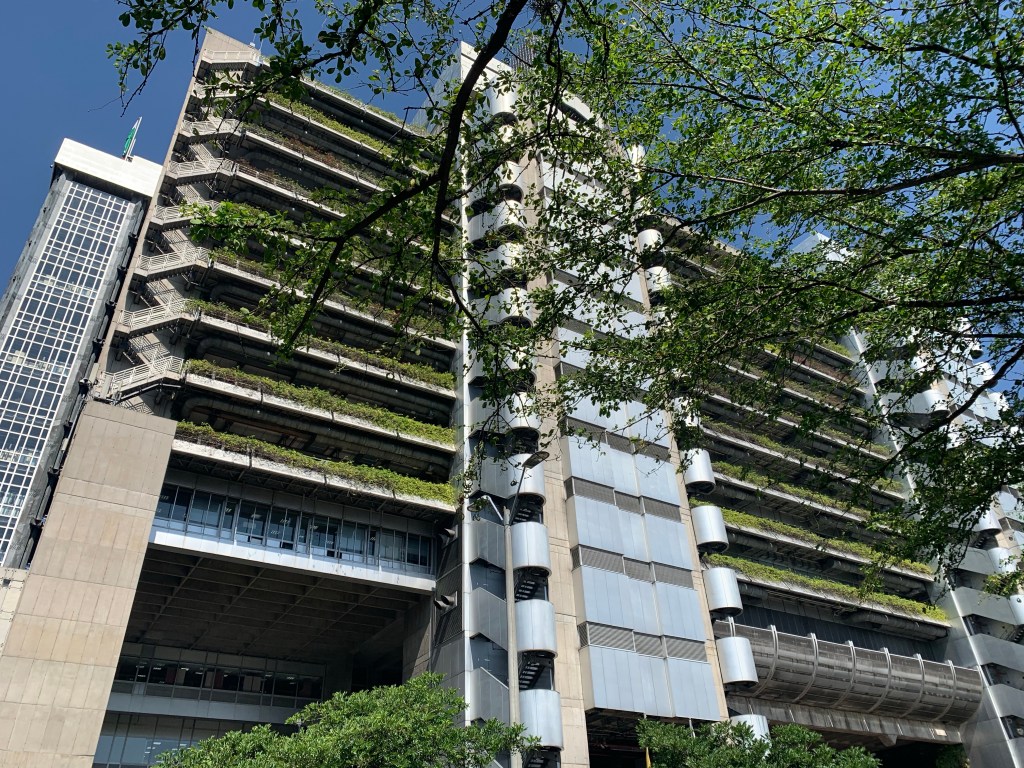
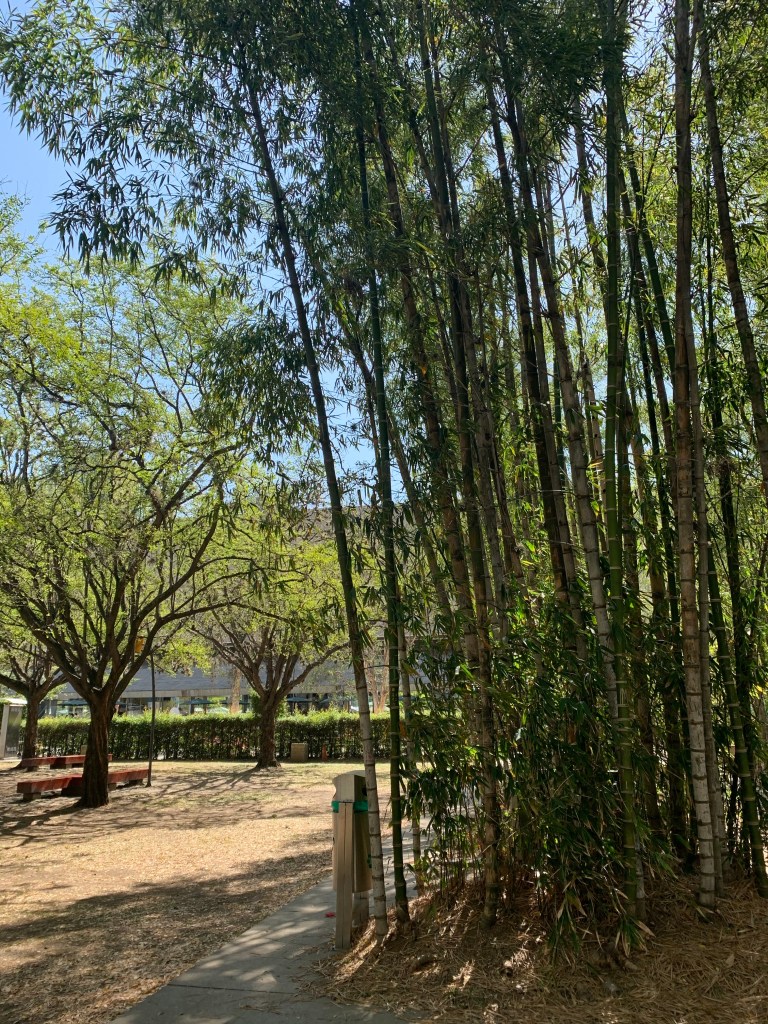
Next up was a tour of Medellín’s downtown. First we went to the EPM building. This is a fascinating organization. They serve as a public electricity and water utility for city residents, but also is involved in many other municipal programs, including street cleaning, river cleanup, and trash collection. The building is energy efficient and features quite a few “living walls” of lush greenery, as well as a public bamboo garden across the street.

EPM building
Bamboo garden

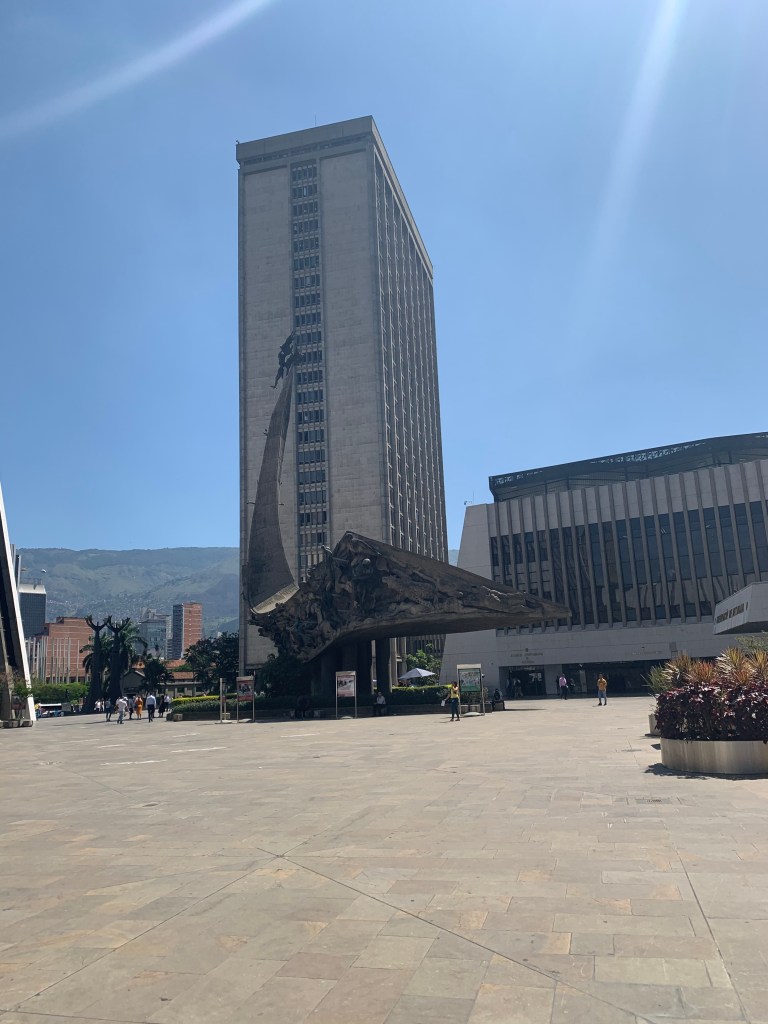
We then strolled through downtown. Everywhere there are green spaces, public squares, parks, shade trees, and public art. The city is fundamentally pleasing to look at in a way I’ve never seen in other metropolitan areas.

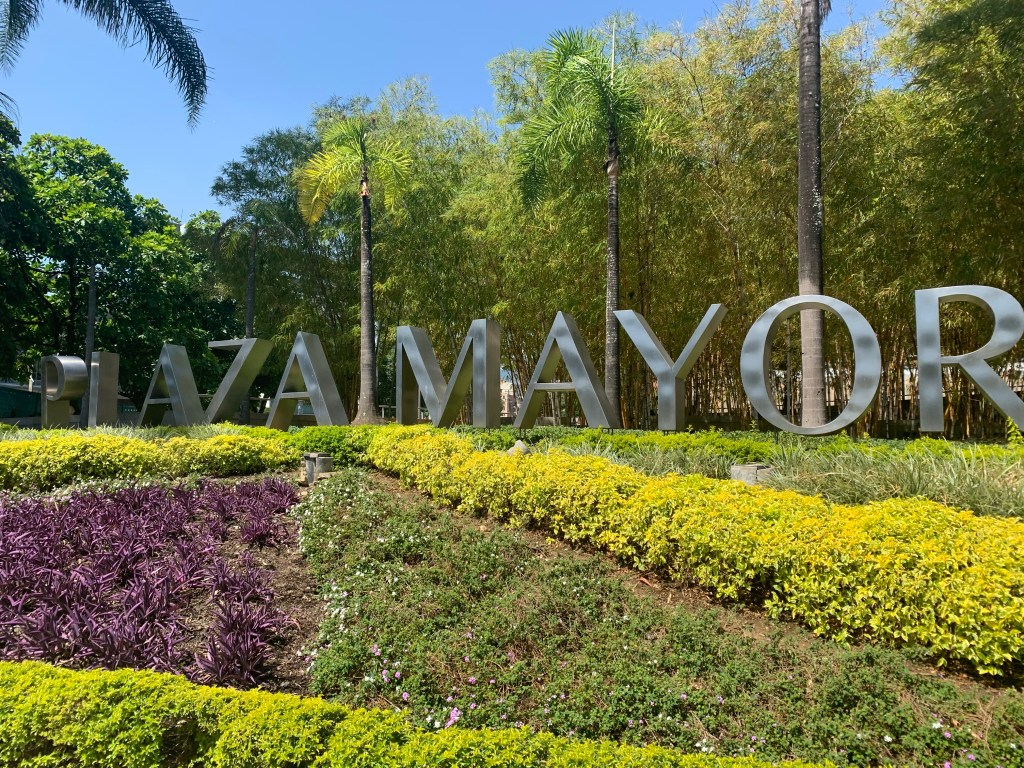
Plaza Mayor
Sculpture in front of city and department buildings
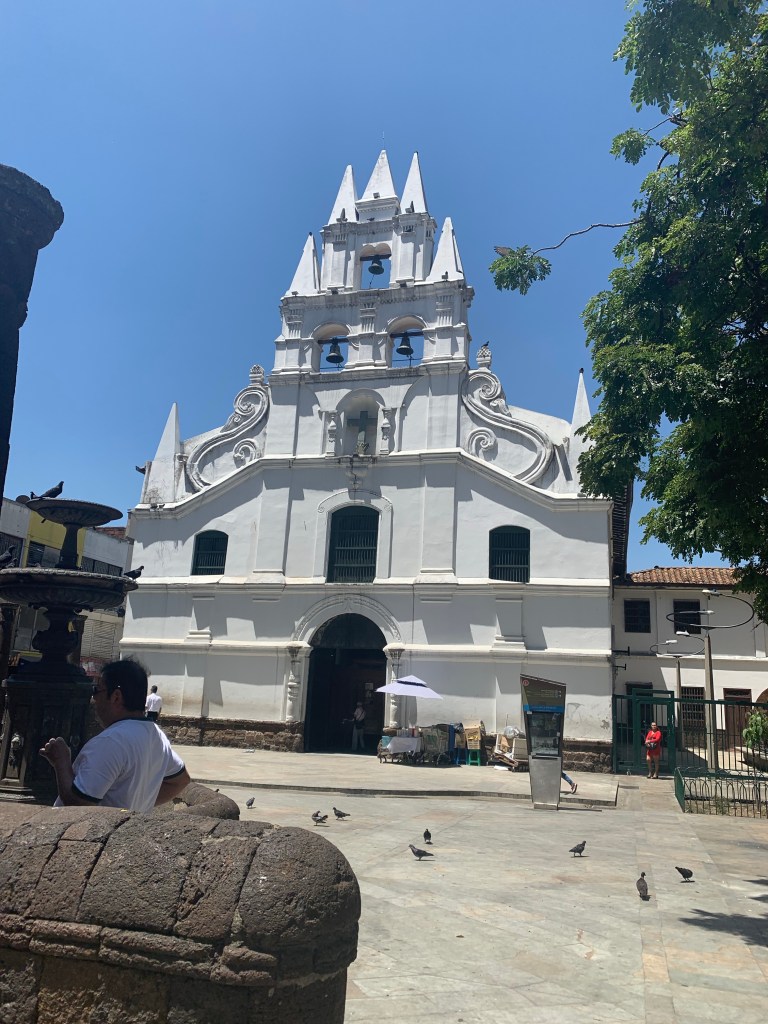
Church of the Veracruz
Pájaros

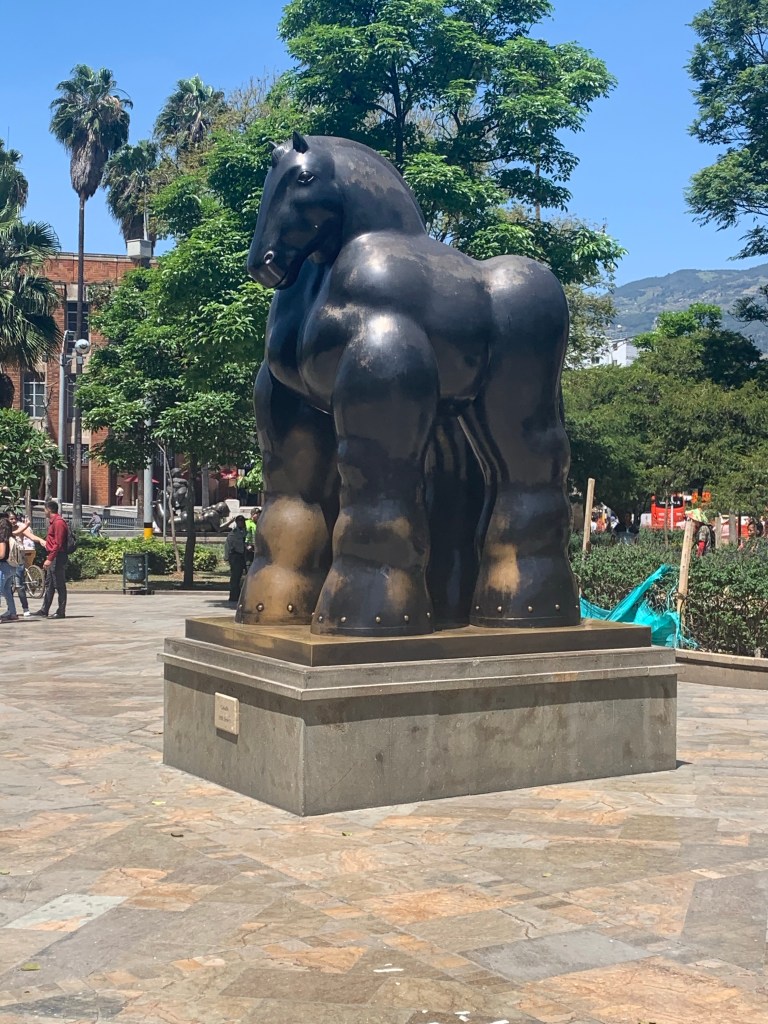
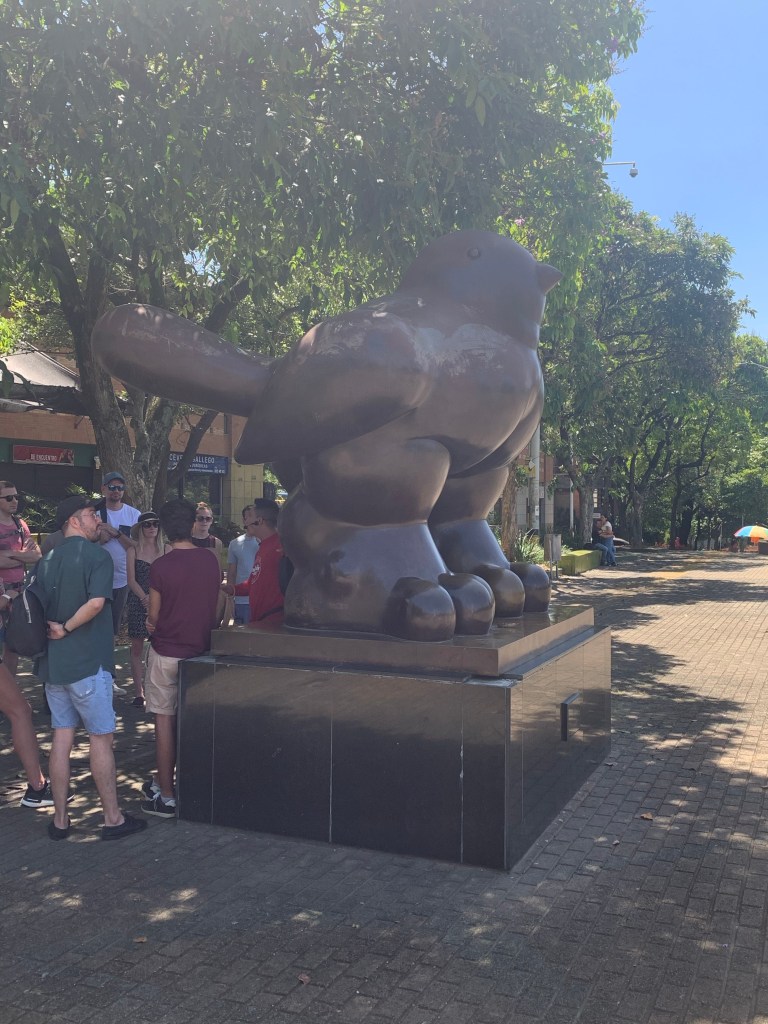
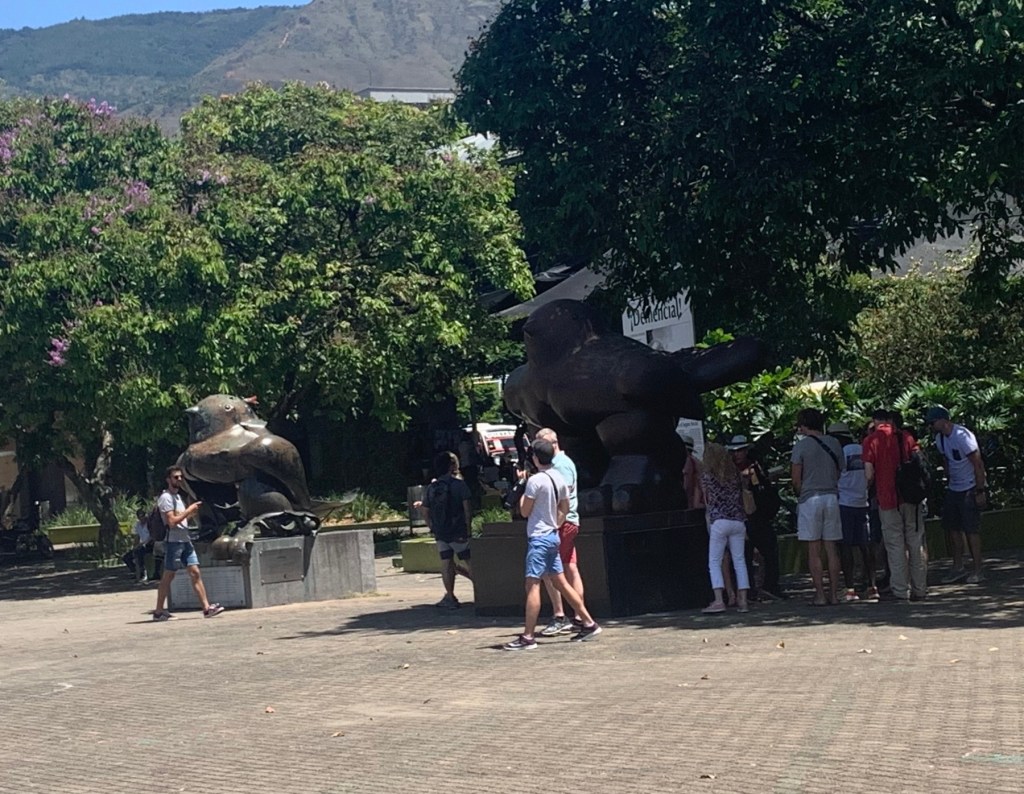
Fernando Botero, a Medellín artist, creates fabulous statues and paintings of adorably chubby characters – human and animal. In Plaza San Antonio, you can find a statue of a pigeon. Cute!

Pájaro

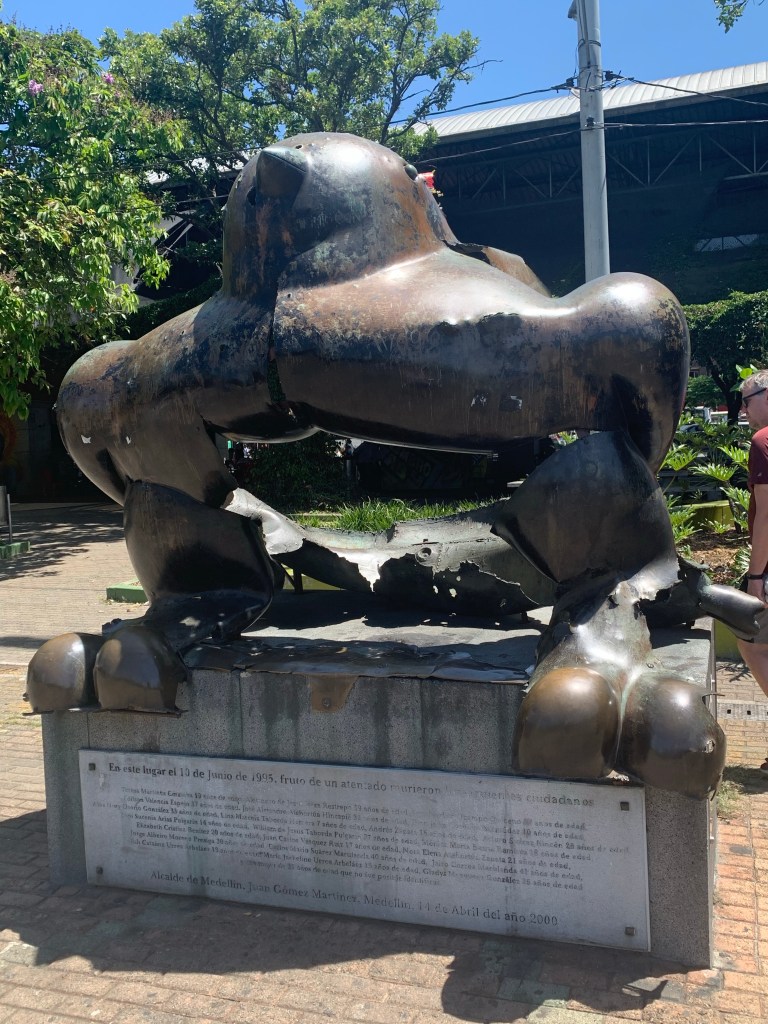
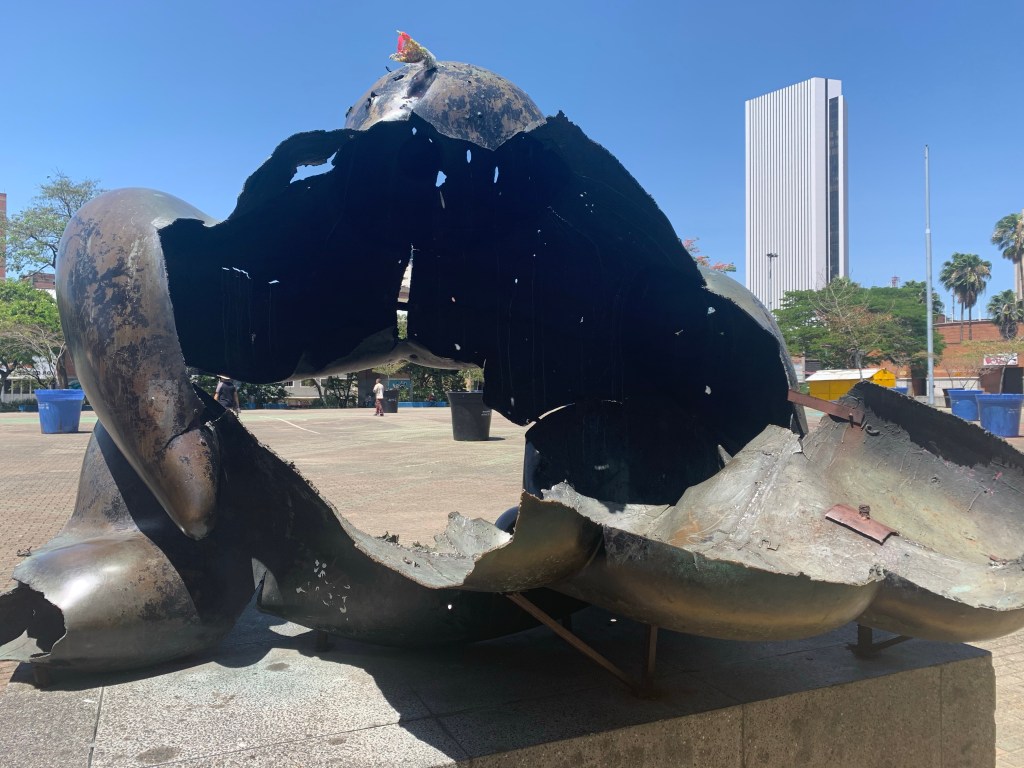
Next to this guy is another, but one with a tragic story. In 1995, terrorists placed explosives at the statue’s feet, blowing it apart and killing 30 innocent people – including several children – attending a concert.

The artist donated the 2nd bird to the city, naming them Birds of Peace, as a reminder of the tragic event and as a symbol for peace.

Birds of Peace
Pollo

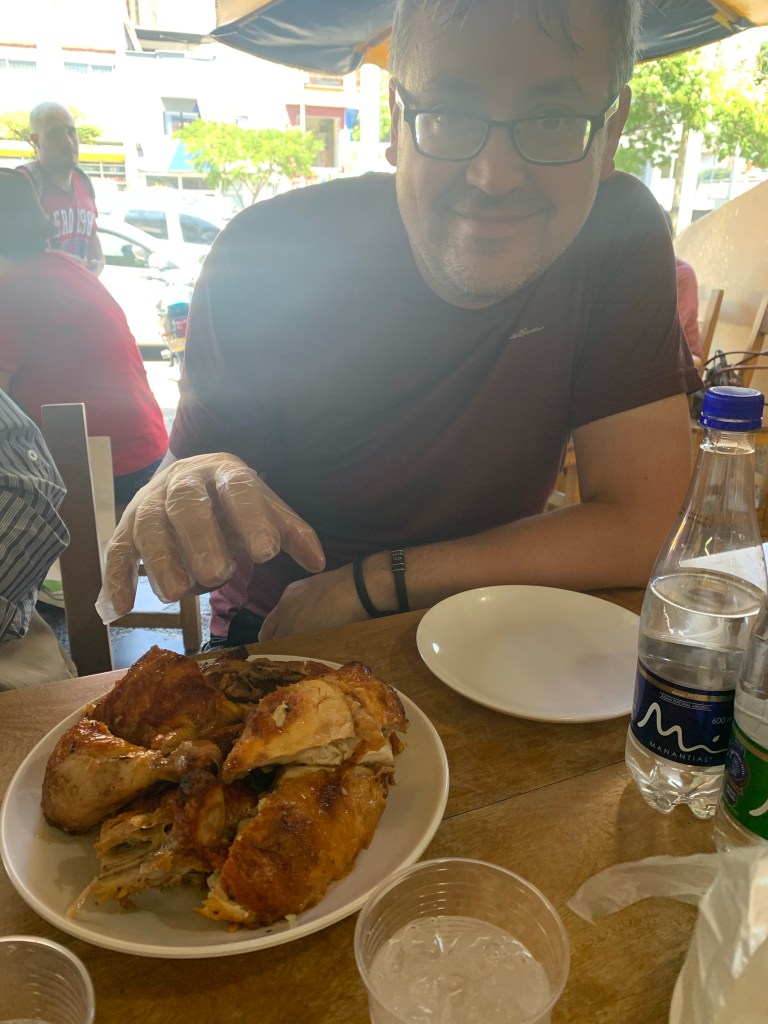
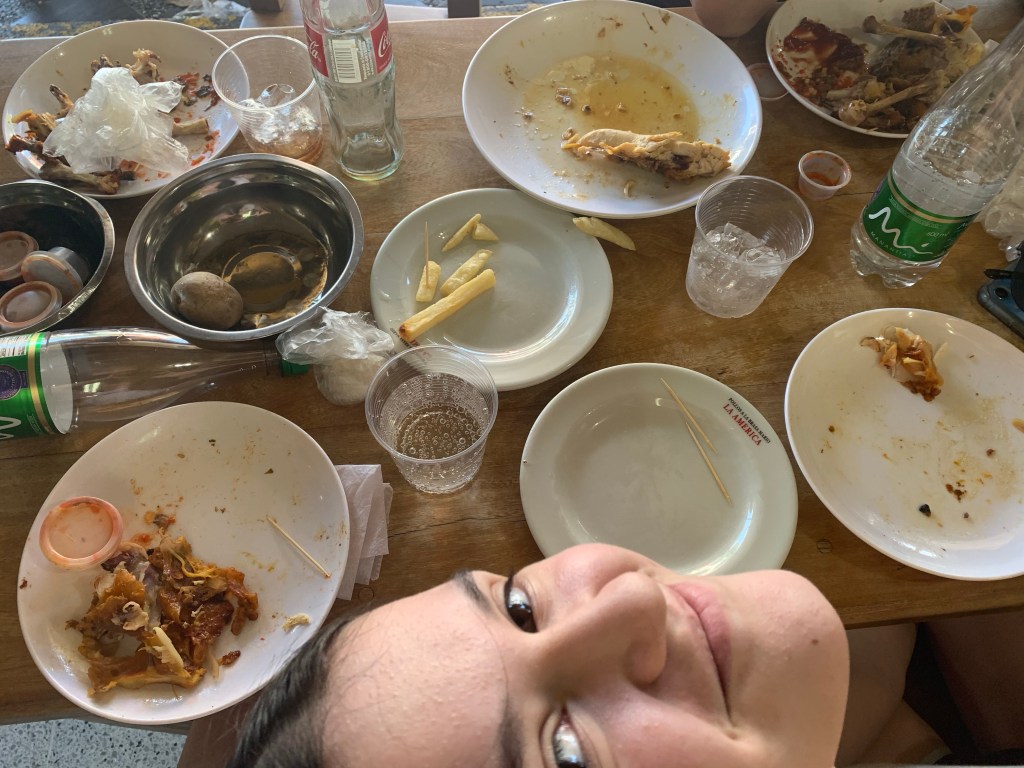
I don’t eat meat, but when traveling it sometimes requires me to soften my dietary restrictions or face a day of packaged food and potatoes. Colombia seems to consider vegetarianism as a fictitious concept because it was nearly impossible to find anything vegetarian, so when we found ourselves at a lunch restaurant that has exactly one thing on the menu – pollo (chicken) – I don’t have a lot of choice.

No cutlery here – just plastic gloves

I’ve never liked chicken. It’s pretty much always dry or bland. Except for this – it was moist, tasty, tender, and fabulous! If chicken always tasted like this I would eat it more often. (And since I generally hate chickens as animals, I don’t have much trouble seeing them on a plate).

Clearly the food was good (thanks for the photobomb, kiddo)
Cable car

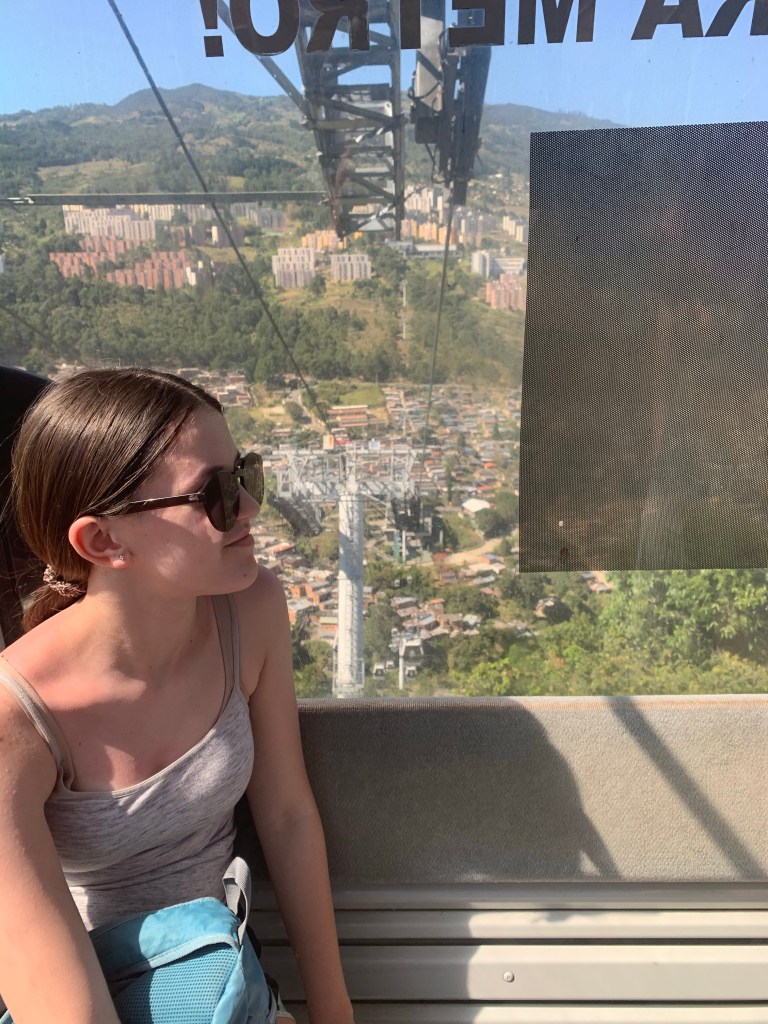
What this city has done with public transportation in 25 years is simply amazing…Boston really should be ashamed.

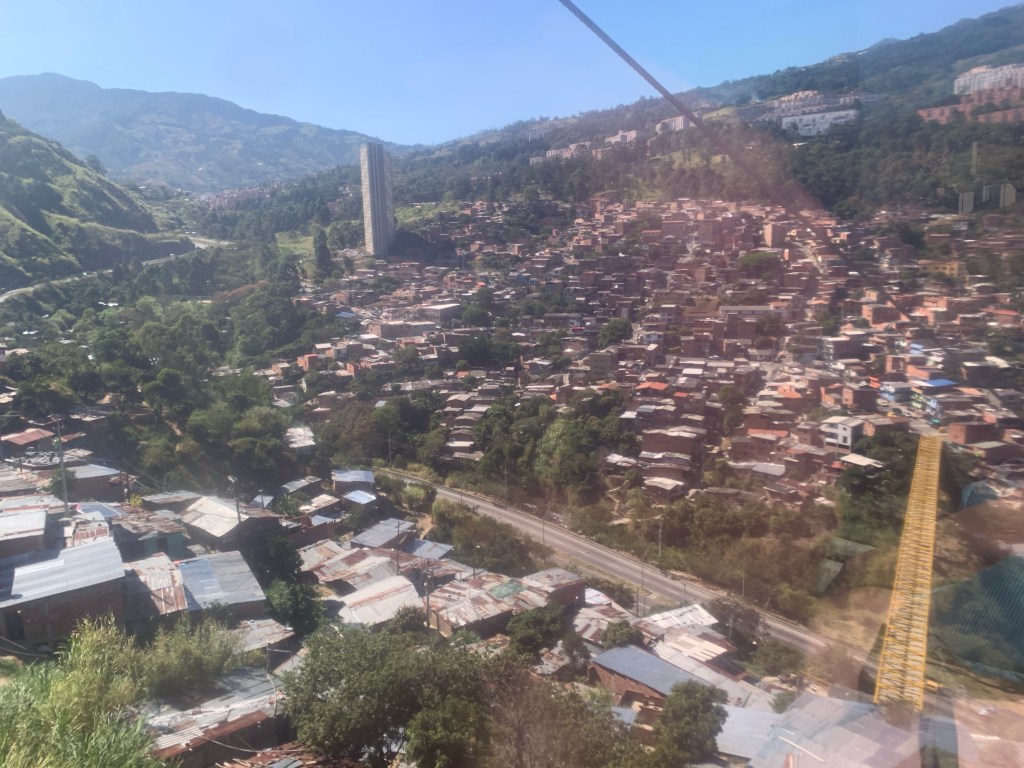
Medellín sits in a valley surrounded by 7 (or was that 8?) mountains. Many of the city’s comunas are located on the hillsides, some of which are incredibly steep, and were historically where the lowest income residents lived. Of course, that type of geographical segregation means that those who would most benefit from the jobs typically found in the city center are those with the least ready access to the city center.

In the mid-1990s, Medellín began investing in public transportation, beginning with the Metro, a rail line that is connected to numerous bus lines. Then, in 2004, the city opened the cable car – a new part of the Metro system that connects the existing bus and rail lines to some of the comunas and informal housing areas in the steepest parts of the city and on the other side of the mountain.

Informal housing on the hillside

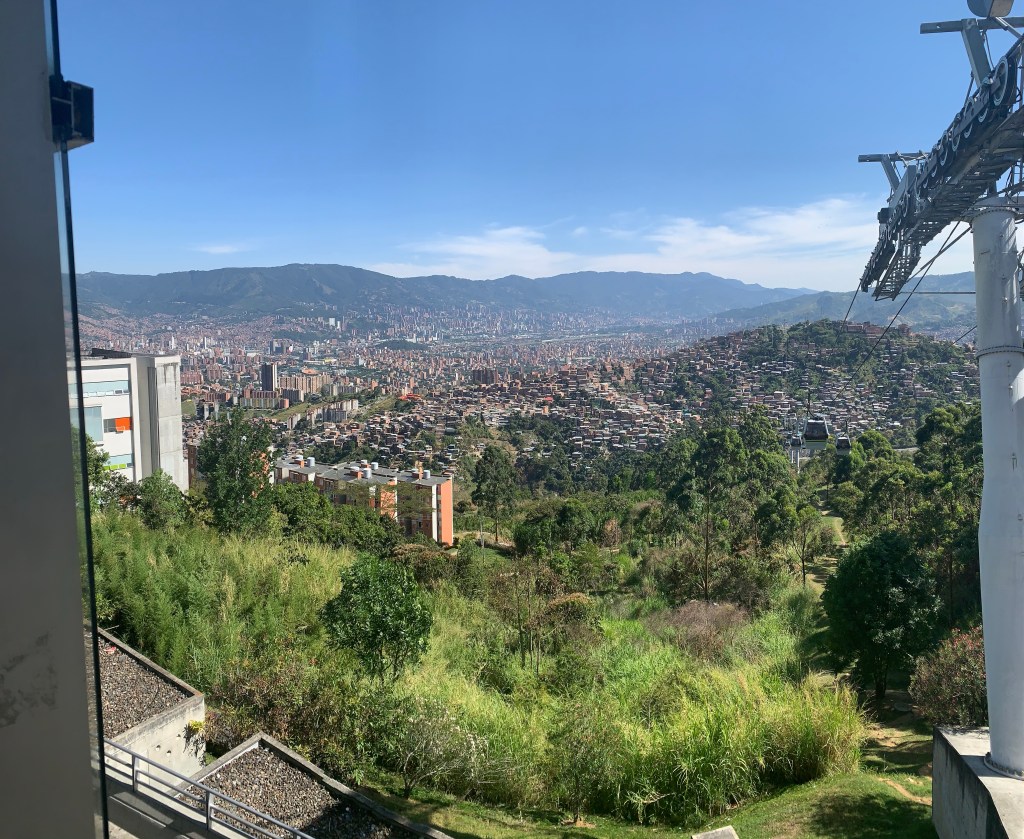
There are 5 stops on the cable car system, so it covers a substantial distance. On the way back down, we rode with 2 residents who told us about how much better their lives are with the cable car. Now, when the system is taken down because of storms or for maintenance, they marvel at how they managed life before. They also talked about how much safer their communities have gotten over the past few decades – they never saw gringo tourists in the old days, but now…! 🙂

View of Medellín from the last cable car stop

Valle de Cocora

I’m not wild about trees. At least, not wild about them in the sense that I can’t tell a pine from a fir and I definitely don’t care enough to pay attention to them most of the time. (For the record, I like trees as a concept – I just don’t feel compelled to get to know them personally).

Anyway, I’d seen some photos of wax palms and was intrigued. What I found so interesting about these trees is:

  • They exist only in the mountainous valleys of Colombia (thus the national tree designation)
  • They cluster together on steep mountain sides

Valle de Cocora is famous in Colombia for these wax palms, and since it’s so close to Salento, I wanted to check it out (plus, it promised some light hiking). The drive there was simply stunning, with lush green hills and valleys, dotted with the occasional (actually, very rare) farmhouse. The cows manage to perch along the hillside and not fall off, which changed our perception of cows a bit – although not much since Anna-Sophia still referred to them as “dinner” all day.

Driving to Valle de Cocora

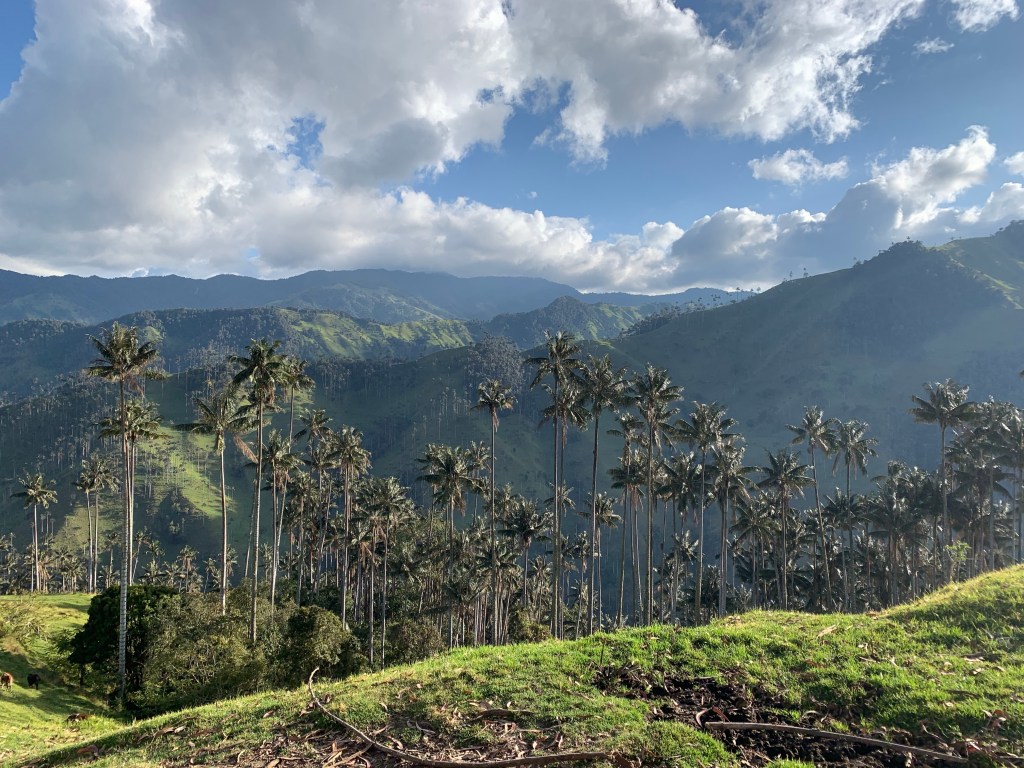
Wax palm is a dumb name for these trees. Without looking anything up on Wikipedia, I’d guess they grow to be 60-75 feet tall – they are tremendous – but like other palm trees, they have nothing but a trunk and a handful of leaves on top. They are simply the silliest-looking trees…that is, until you see them in person and words like “silly-looking” are immediately replaced by “majestic” and “impressive.”

Wax Palms of Valle de Cocora

Salento

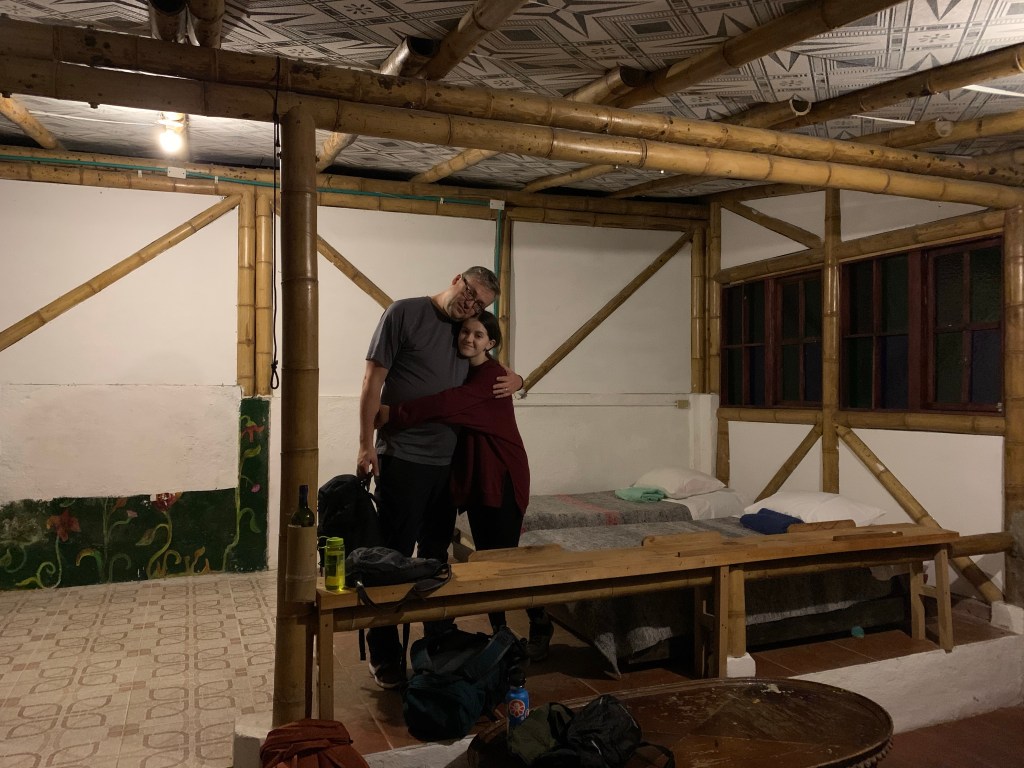
After arriving in Pereira at 11:15pm, we had an hour long taxi ride to The Plantation House – our lodging in Salento. After 3 flights and nearly 20 hours of travel, we were desperate to get some sleep. The braying of the donkeys, crowing of the rooster, and barking of the dogs didn’t bother us at all.

Luke and Anna-Sophia pose for one photo before collapsing into their beds.

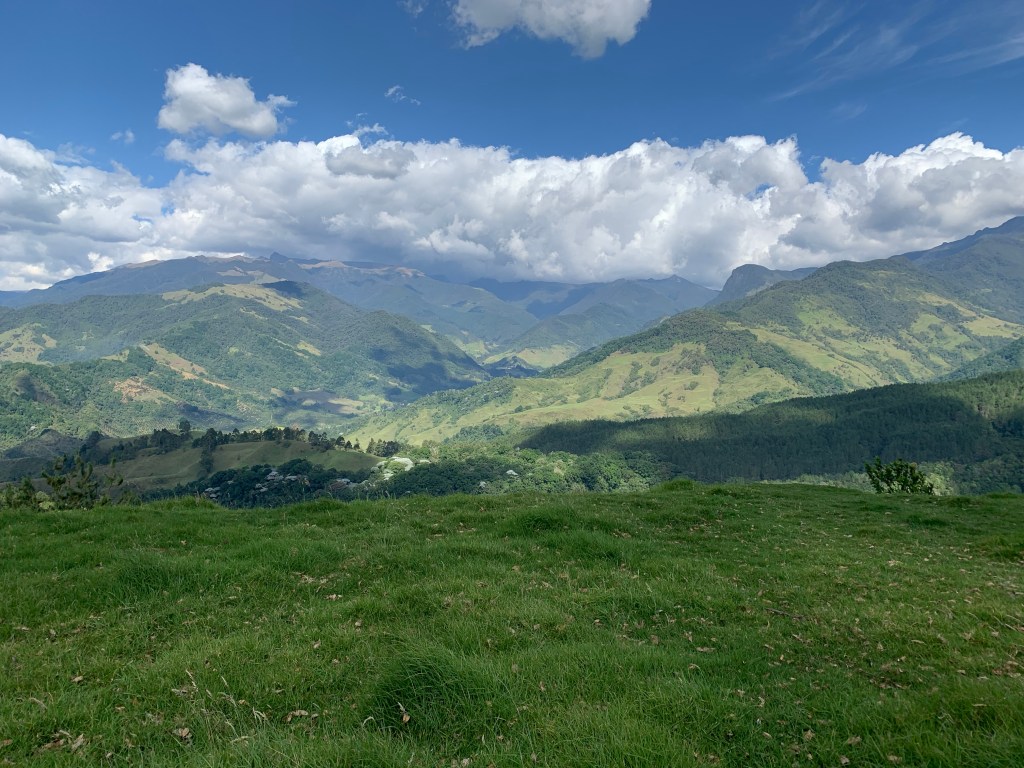
Since we arrived at night, we didn’t have much cognizance of our surroundings – other than the hills which strained the taxi’s engine. When we woke up, however, the stunning beauty of the mountains and valleys was on full display.

View from Don Eduardo Finca

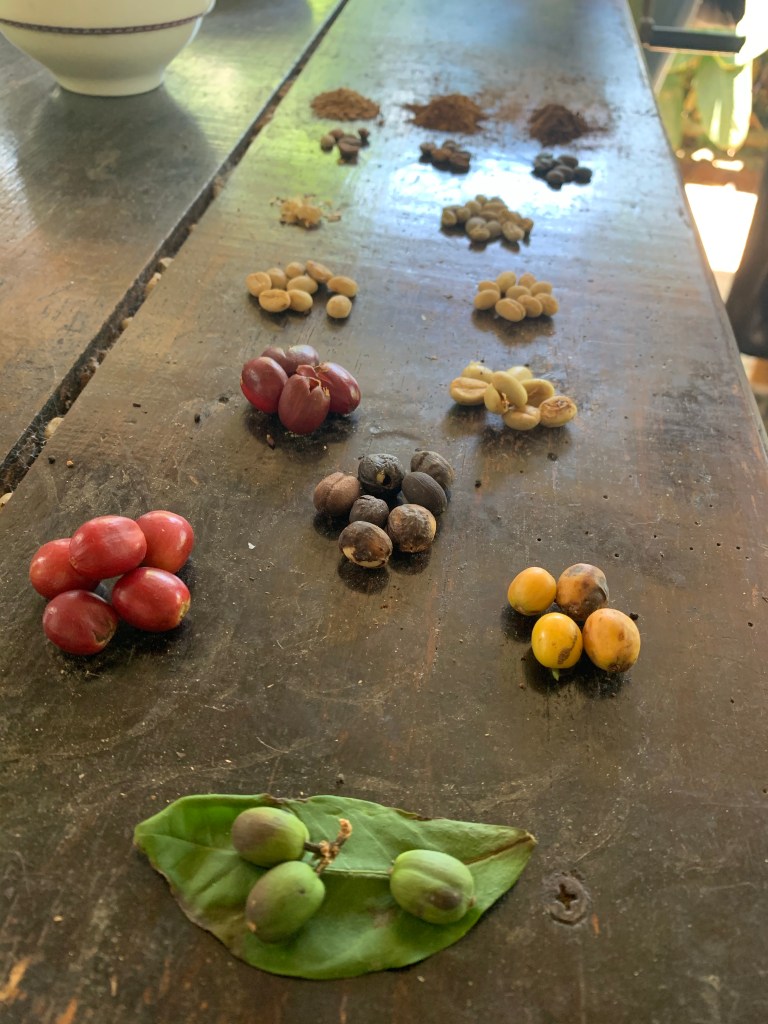
We started the day with an in-depth tour of the finca, or coffee plantation. I will spare details here, but just know that we now know nearly all there is to know about how coffee is grown, harvested, classified, roasted, and marketed. We were able to taste two different kinds of beans roasted in 3 different ways to fully explore the impact of the roasting process on the flavor.

Coffee in all its various stages en route to my cup

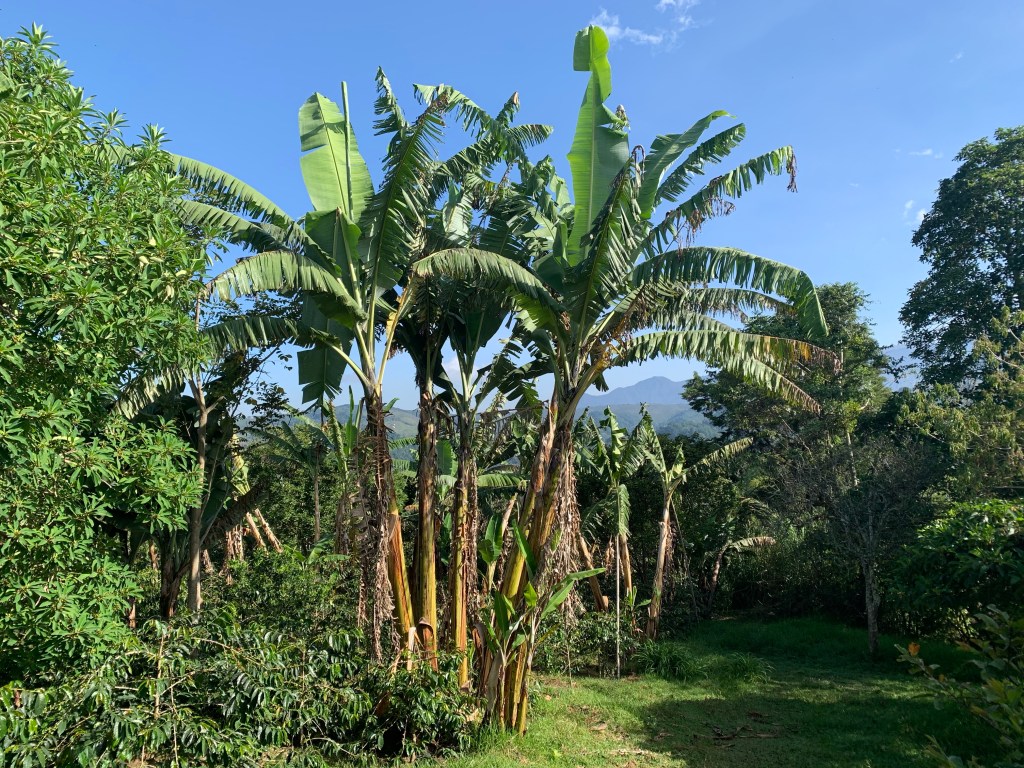
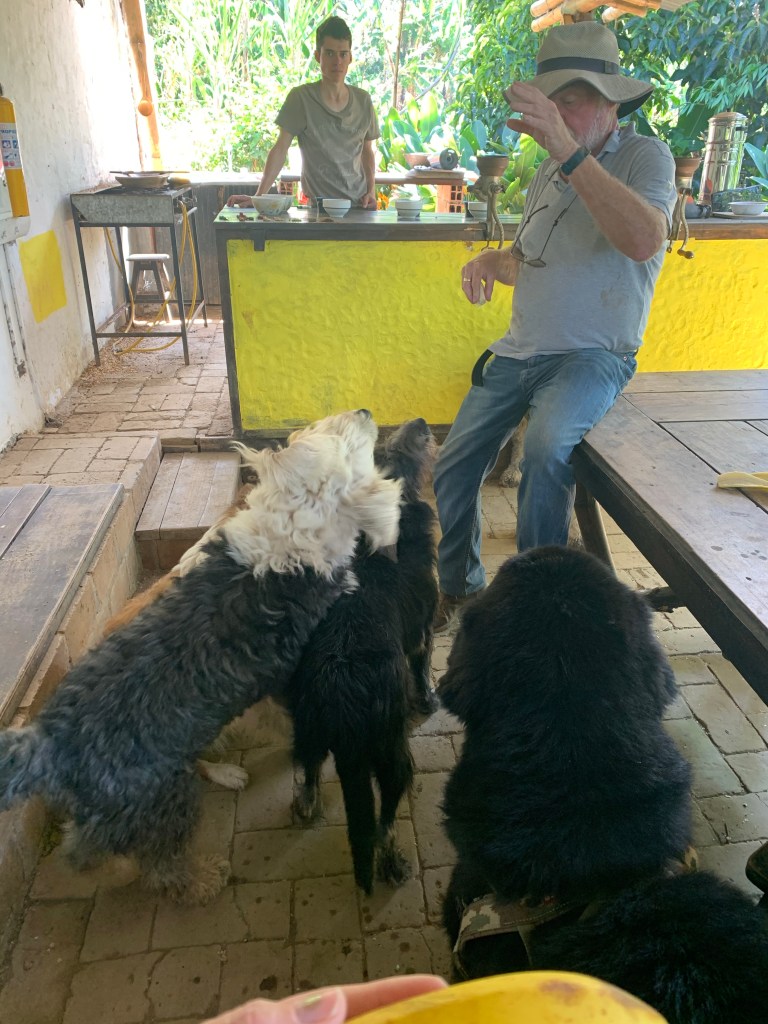
Plus, DOGS! The finca owner has half a dozen dogs who were our adorable co-guides.

Canine co-guides begging for banana

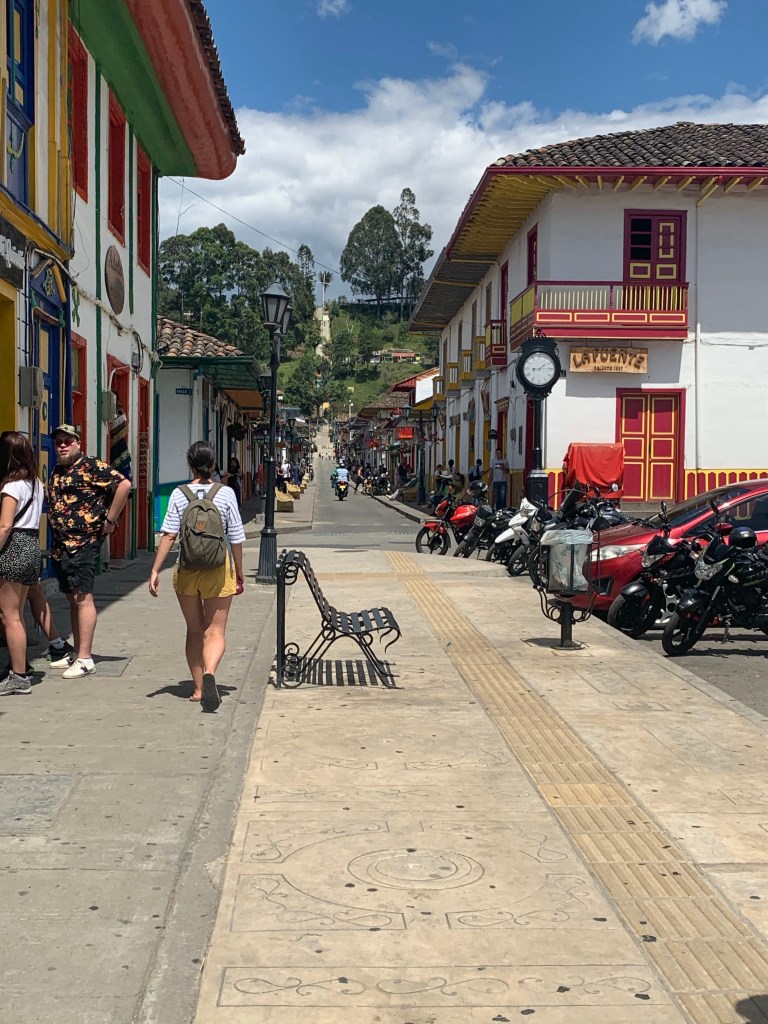
After a quick walk through town, we had a fabulous brunch at a place ingeniously named Brunch. Salento is bigger than I expected, and with a much more visible tourist population. I’m not surprised – it is a gorgeous place surrounded by phenomenal natural beauty and a wide array of outdoor activities.

Salento

And we’re off!

Colombia.

Pablo Escobar, drug cartels, murder, kidnapping, cocaine capital of the world.

That’s my childhood impression, but Colombia has come a long way from the 1980s. It appears on numerous lists of top travel destinations for the adventurous traveler, which is how we find ourselves heading there now (well, that and some phenomenally cheap airfare thanks to Scott’s Cheap Flights).

Itinerary:

Sunday: Fly Boston -> Atlanta -> Bogotá -> Pereira

Monday: coffee plantation tour, hiking among Colombia’s wax palms, soaking in mountainous hot springs and waterfalls

Tuesday: fly to Medellín, city tour

Wednesday: fly to Montería, bus, taxi, and boat to Isla Fuerte

Thursday: Isla Fuerte (sloths and a giant walking tree)

Friday: depart Isla Fuerte, boat, taxi, and bus to Cartagena

Saturday: Cartagena, late night flight to Bogotá

Sunday: Bogotá -> Miami -> Boston

Isla Fuerte